Search
  • Information
    • About
    • Contact
    • Privacy Policy
  • Blog
  • Subscribe
  • Tutorials
    • Tutorials
    • Doll Clothes: Photos and some Patterns
  • Suggested Reading
  • Quilts: My Original Designs
  • Gallery: Color Studies
  • Gallery: Quilts I've Made
  • Doll Making Blog Posts
  • Recent blog posts
  • Quilts Based on The Improv Handbook for Modern Quilters
Close
Menu
Search
Close
  • Information
    • About
    • Contact
    • Privacy Policy
  • Blog
  • Subscribe
  • Tutorials
    • Tutorials
    • Doll Clothes: Photos and some Patterns
  • Suggested Reading
  • Quilts: My Original Designs
  • Gallery: Color Studies
  • Gallery: Quilts I've Made
  • Doll Making Blog Posts
  • Recent blog posts
  • Quilts Based on The Improv Handbook for Modern Quilters
Menu

Sleeping Dog Quilts

SLEEPING DOG QUILTS

September 21, 2015

"Dogs at the Farmer's Market" Fabric Collection: Quick Projects

by Judy Tucker


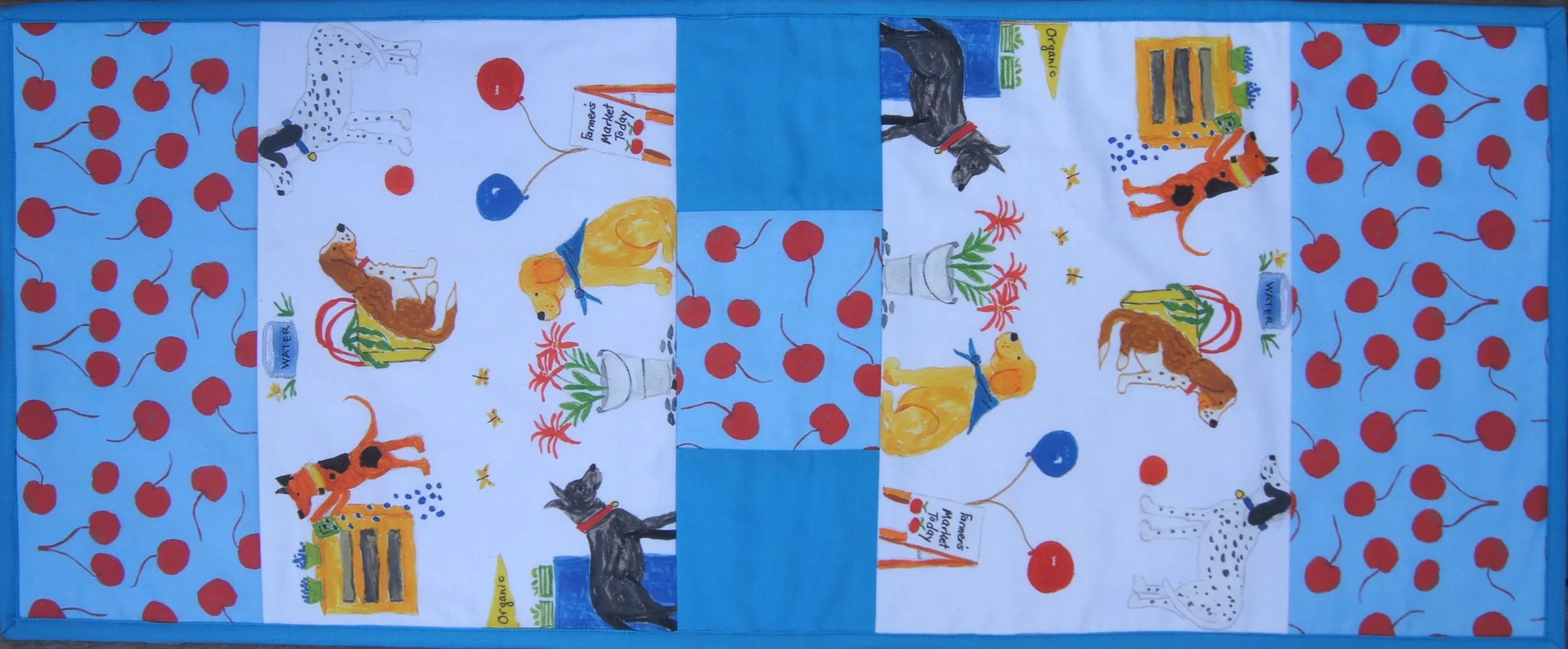
Table Runner 14 x 35.5 inches using "Dogs at the Farmers Market" fabric collection available at Spoonflower.com

Table Runner 14 x 35.5 inches using "Dogs at the Farmers Market" fabric collection available at Spoonflower.com

Table Runner 14 x 35.5 inches using "Dogs at the Farmers Market" fabric collection available at Spoonflower.com

Table Runner 14 x 35.5 inches using "Dogs at the Farmers Market" fabric collection available at Spoonflower.com

Here are a couple quick projects using the fabric I designed, "Dogs at the Farmers Market" available from Spoonflower.com.   I've listed fabric requirements and cutting directions but not sewing instructions.

Dogs at the Farmers Market Table Runner 14 x 35.5 inches

Fabric Supplies:

  • 1 Fat Quarter Farmers Market Cherries
  • 1 Fat Quarter Dogs at the Farmers Market
  • 1/3 yard Width of Fabric  Kona® Cotton "Alegria" 405
  • 1/2 yard x Width of Fabric fabric of your choice for back
  • Scrap of quilt batting 14.5 x 36 "

Cutting Instructions:

Cherries at the Farmers Market

  • Cut 2 rectangles 6.5 inches high x 14.5 inches wide
  • Cut 1 rectangle 5 inches high x 5.75 inches wide

Dogs at the Farmers Market

  • Fussy cut 2 rectangles 9.75 inches high x 14.5 inches wide

Kona® Alegria Solid Blue

  • Cut 2 charms squares 5 inches x 5 inches
  • Cut 3 binding strips the width you prefer 2 to 2.5 inches x width of fabric

Backing

  • Cut 1 piece 15.5 inches high x width fabric of your choice

I assembled my table runner by the Quilt As You Go method, but it can be pieced any way you prefer.  If not using this method, piece the blocks, sandwich the table runner and quilt as desired.  Make a binding from the strips and sew it onto the table runner. Enjoy!
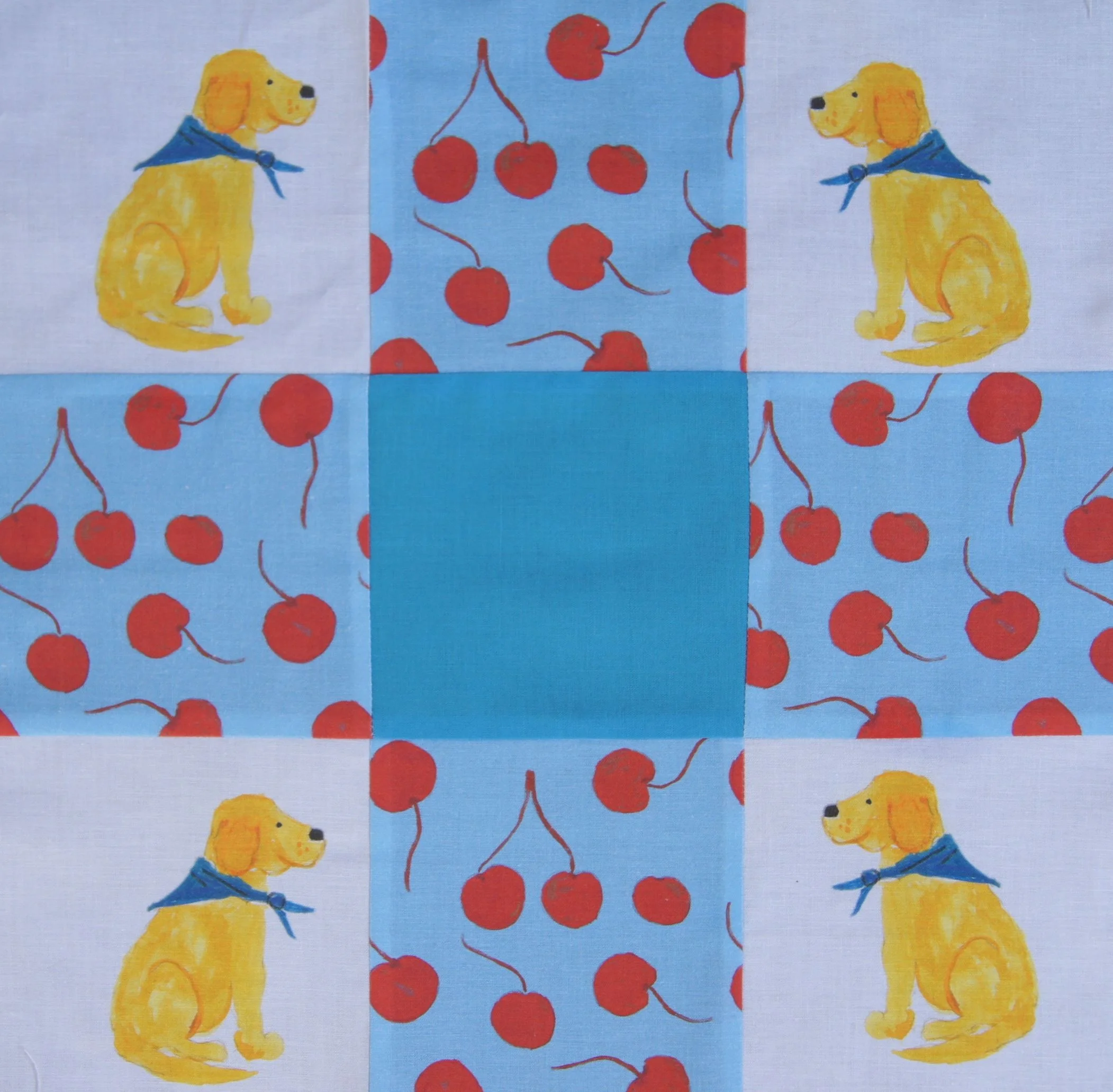
13.5 inch finished 9 Patch Block

13.5 inch finished 9 Patch Block

Here is a 9 patch block using 5 x 5 inch squares.  This block finishes at 13.5 inches. 

Fabric Requirements

  • 1 Fat Quarter  Paired Springers and Golden Retrievers
  • 1 Fat Quarter   Farmers Market Cherries
  • 1 5 x 5 inch Charm Square Kona® Cotton Alegria 405 or color of your choice

This could be one block in a quilt.  With a single Fat Quarter of the Paired Springers and Golden Retrievers you will be able make another block like this one using just Springer Spaniels or you could make 3 blocks mixing up the Springers and Golden Retrievers in each 9 patch blocks. 

I used my 9 Patch Block to make a pillow cover, using red ric-rac as a detail. Like the block, it finished at 13.5 inches, an odd size for a pre-made pillow form.  But a 14 inch pillow form with some stuffing removed works just fine!
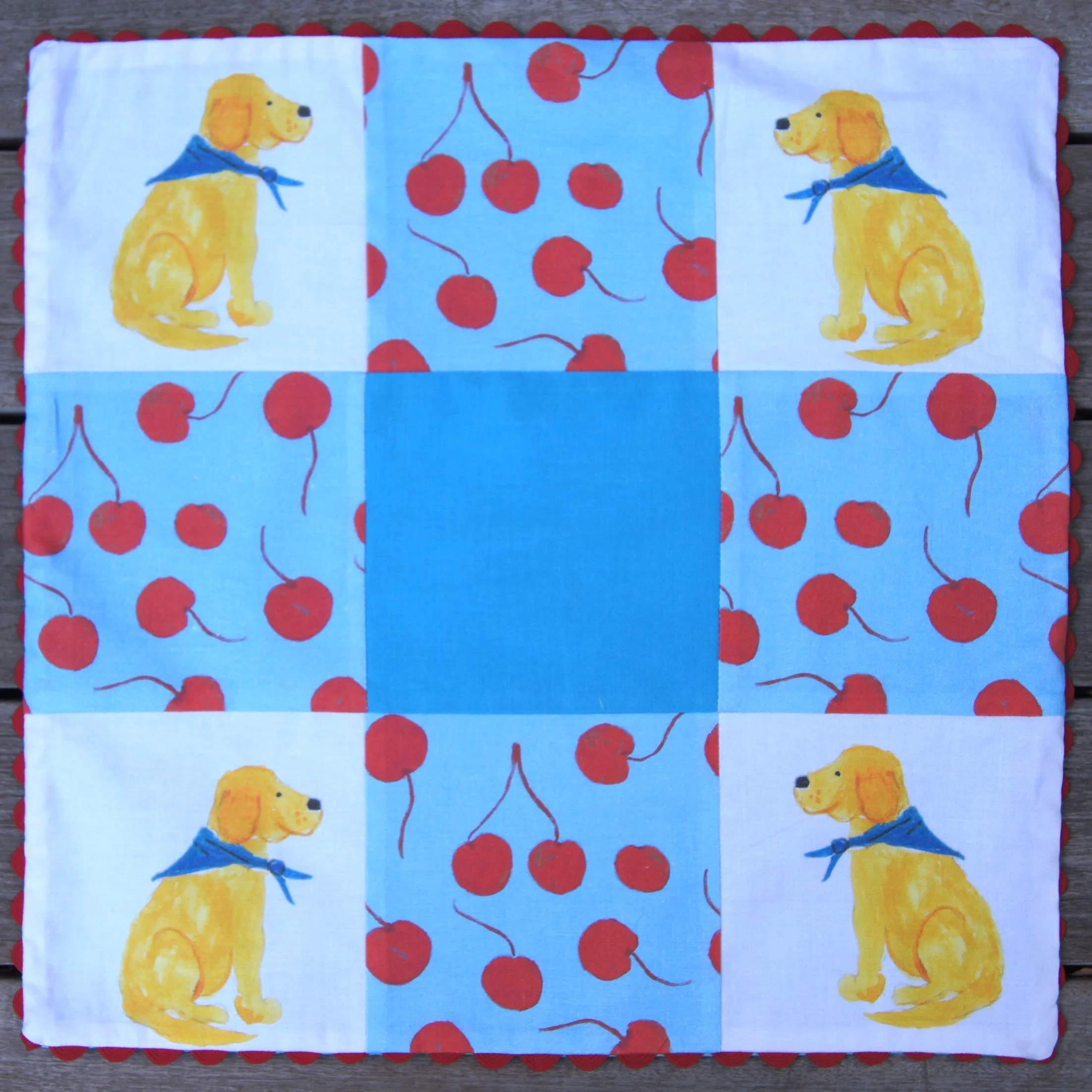
13.5 inch Pillow Cover with Ric-Rac detail
13.5 inch Pillow Cover with Ric-Rac detail
TAGS: Dogs at the Farmers Market, Dogs, Table runner, Cherries, English Springer Spaniel, Springer Spaniel, Pointer


September 14, 2015

Adventures in Designing Fabric printed at Spoonflower.com

by Judy Tucker


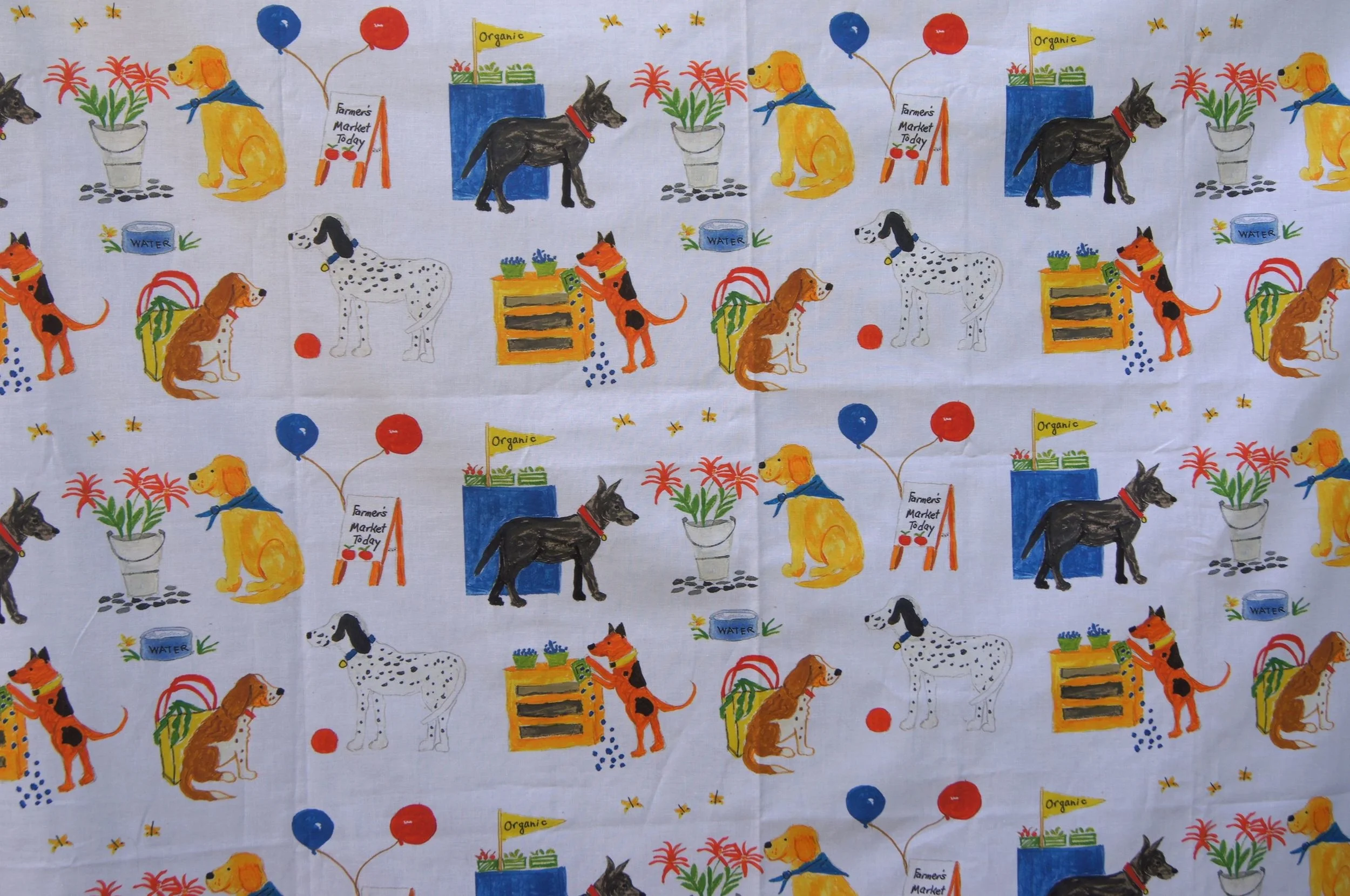
"Dogs at the Farmer's Market" Focus Fabric 40 inches wide

"Dogs at the Farmer's Market" Focus Fabric 40 inches wide

"Dogs at the Farmer's Market" Focus Fabric 40 inches wide

"Dogs at the Farmer's Market" Focus Fabric 40 inches wide

One of my primary activities in August was trying my hand at designing fabrics. 

Earlier this year I was completely mesmerized watching the How to Design Fabric Work-Along on CreativeBug.com.  This comprehensive work-along features Lizzy House, Heather Ross and Denyse Schmidt.  Each of these well know designers of modern fabrics shares their skill and some of the techniques they use to create fabric lines.  It is totally amazing. 

Lizzy House shows step by step how to create repeats in a design by hand using a linoleum block. Heather Ross does the same in Adobe's Photoshop and Denyse Schmidt uses Adobe's Illustrator.  

Even if you never plan to do any surface designing yourself, most quilters will be fascinated just watching Chapter 5 of the Work-along. In this chapter, the 3 designers talk about how they create  a commercial fabric line. It is really interesting. 

So after watching this fabric design work-along a couple times I decided I had to try it myself!  Spoonflower.com makes printing your own designs totally doable. It is possible to order as little as an 8" swatch or a fat quarter, or multiple yards of fabric.  And they have so many types of fabrics they can print--from Kona® cotton to canvas and knits.  

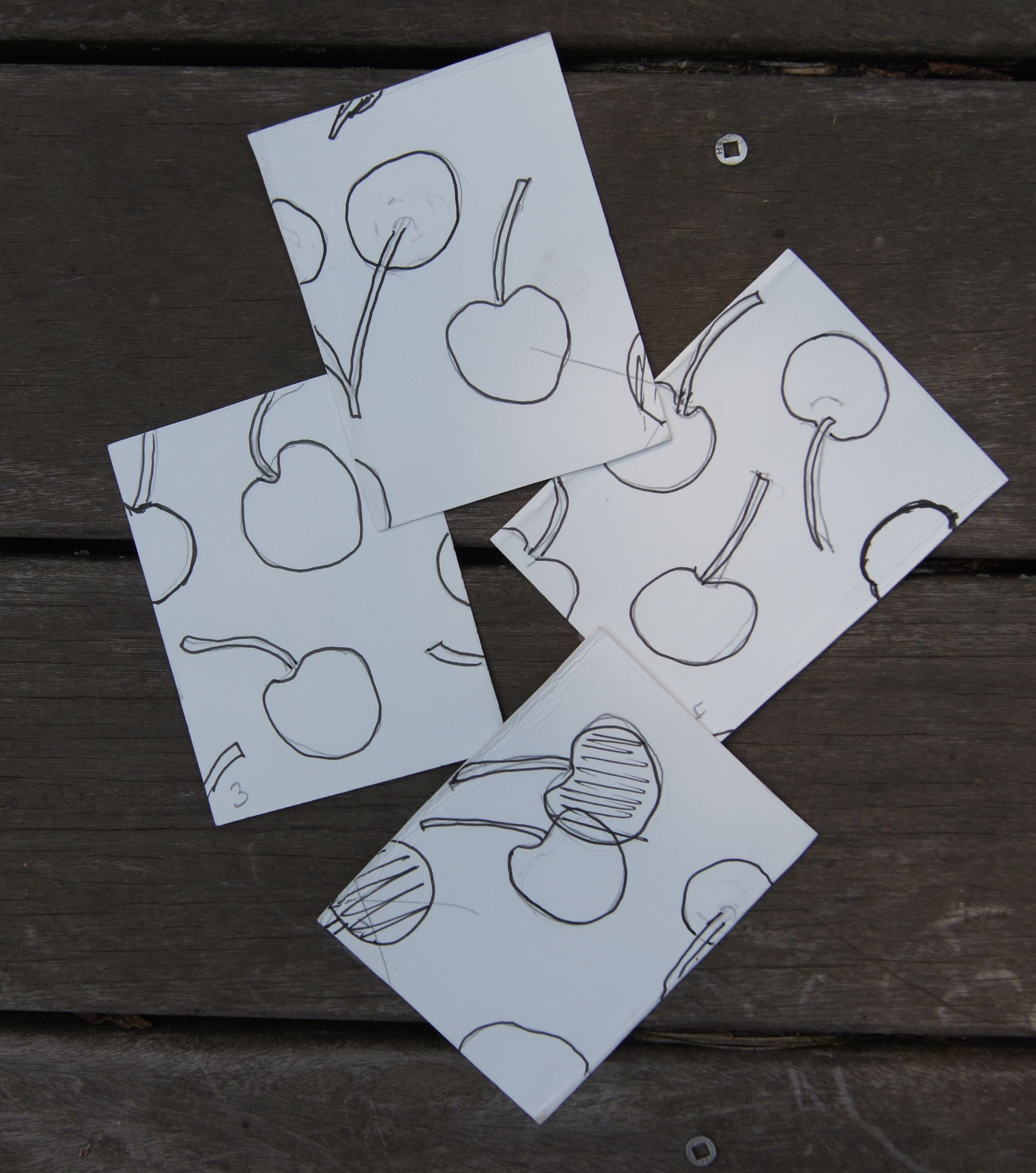
To try to understand how to create a workable repeat in the fabric I drew out a design and followed along with Lizzie House's directions for creating repeats by hand. I learned a lot but since I wasn't going to hand print fabric I decided to try Photoshop. 

The cut cards used to explore creating repeats by hand

The cut cards used to explore creating repeats by hand

Adobe's Photoshop is a fairly intuitive program. It has a lot of elements which are similar to drawing on by hand. I spent several days watching an intro course on Lynda.com.  I was quite overwhelmed on that first day watching the training videos.  But by day three I was able to start using the program to create and manipulate scanned designs. Thanks to the segment by Heather Ross on making repeats I was able to do my own repeats.  It wasn't easy at first, but with each new design I began to understand how to create artwork than easily could be placed into repeats.  And I learned how to work in Layers in Photoshop to correct problems in the JPEGs of my artwork that Spoonflower. com uses to print the fabric. 

In all, between the designing and getting printed swatches to check for color and problems with the repeats, it took me most of August to create a small line of 5 fabrics which I call "Dogs at the Farmer's Market."  But I had so much fun and learned so much!  And it is such a thrill when the printed fabric arrives from Spoonflower.com! 

For those of you interested in trying to design your own fabrics, on September 1, 2015, Spoonflower.com released The Spoonflower Handbook which is a guidebook to designing and printing surface designs. It's a great resource. I wish it had been available when I started working with my designs.

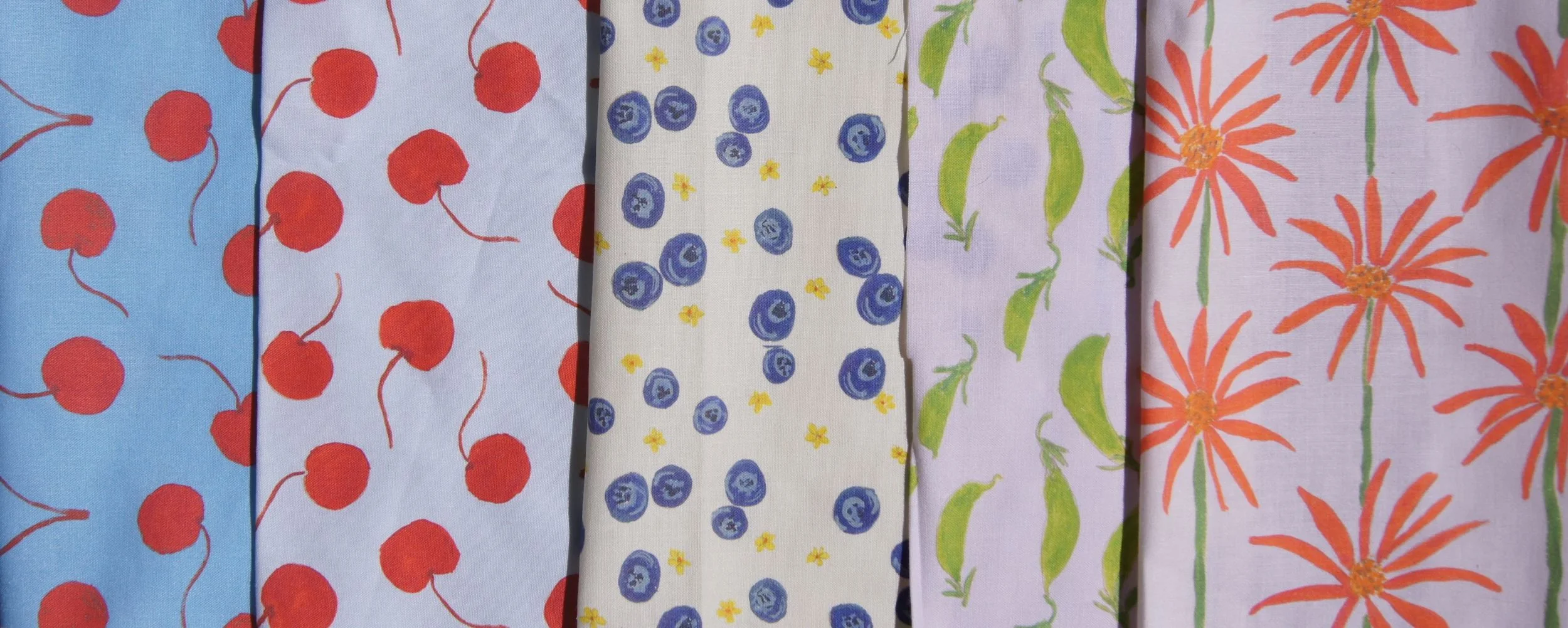
At the top of this post is a photo of the "mother print" which is the focus fabric of my "Dogs a the Farmer's Market" fabric collection.  And here are the coordinating prints which go with it.

Cherries on a medium blue, cherries on light blue, Blueberries, Sugar Snap peas, Cone Flowers

Cherries on a medium blue, cherries on light blue, Blueberries, Sugar Snap peas, Cone Flowers

In my next post Thursday this week,  I'll show you a baby size quilt that can be fussy cut using just 1 single fat quarter of each print in this collection and pieced with coordinating Kona® Cotton Solids.

TAGS: Fabric design, Creating Repeats, CreativeBug.com, Spoonflower.com, Adobe Illustrator, Adobe Photoshop, Dogs, Farmers Market, Sugar snap peas, Coneflowers, Cherries, Blueberries


April 16, 2015

Mending Contemporary Quilts

by Judy Tucker


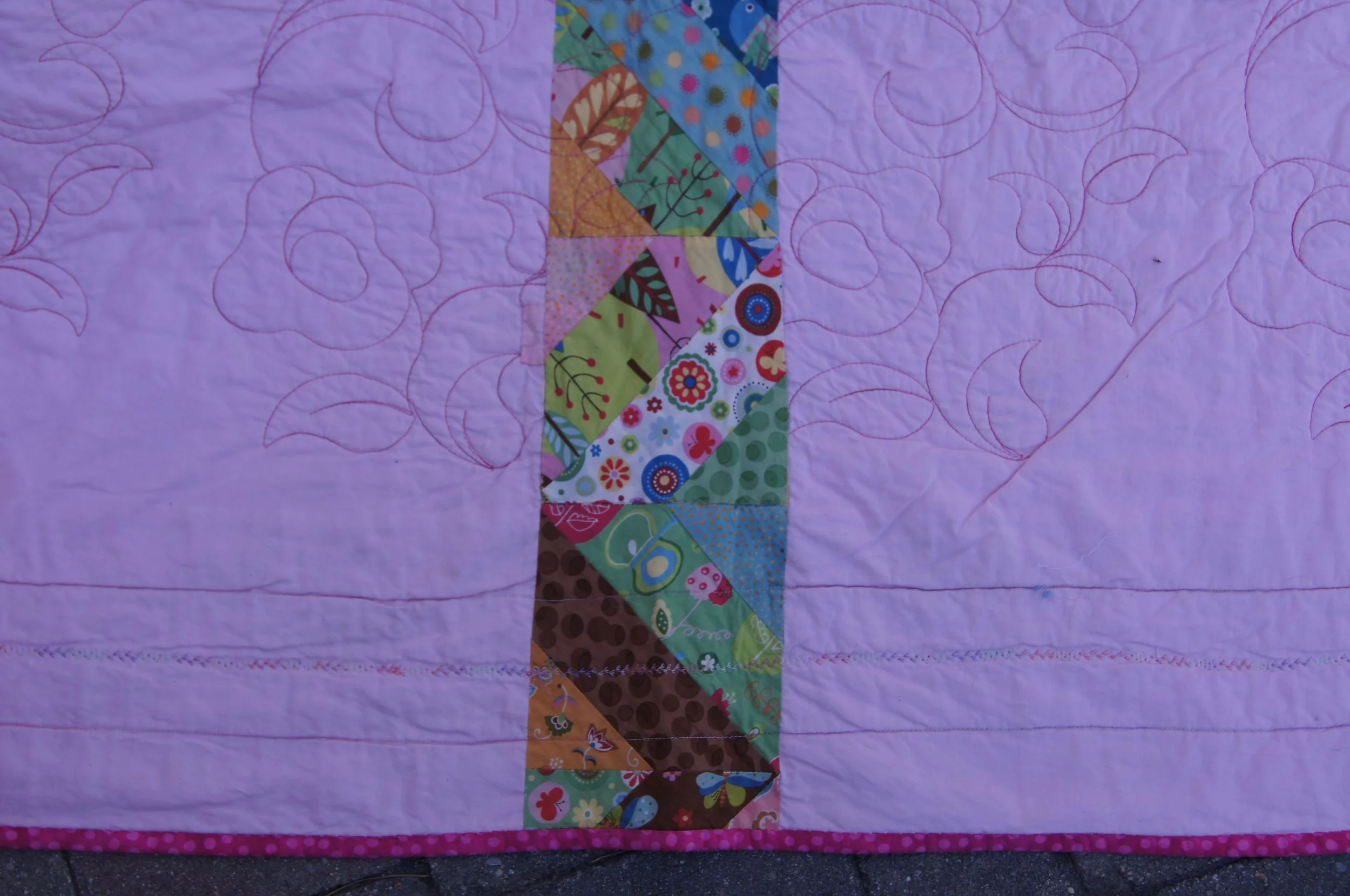
Mending on the back of Cats in Trees Quilt

Mending on the back of Cats in Trees Quilt

Mending on the back of Cats in Trees Quilt

Mending on the back of Cats in Trees Quilt

Puppies and quilts:  unless you have a strict no-dogs-near-my-quilts policy, eventually you will need to do some quilt repairs.  So I thought I'd share some of my quilt repair projects.  These are contemporary quilts.  Antiques need to be repaired by a professionals, with fabrics the same age as the quilt.  

I have 3 examples to show you. 

The damage to my first example, Cats in the Trees, was a heart breaker.  I'd just finished the quilt. All the quilting was done by long-arm and I had used 2 different computerized designs, one of the body of the quilt and another for the outer borders.  It was my pride and joy and I was enjoying using it on my bed.  Unfortunately, Hazel was on the bed too. She was chewing a nylon bone. The quilt apparently got bunched up and Hazel chewed the fabric along with the bone.   The result was a large, ragged hole, right through the quilt, with the batting completely mangled. 

Fortunately, I had 4 or 5 orphan blocks from this quilt.  This was a jelly roll quilt and the orphan blocks were less desirable color schemes, but perfect for mending this quilt! 

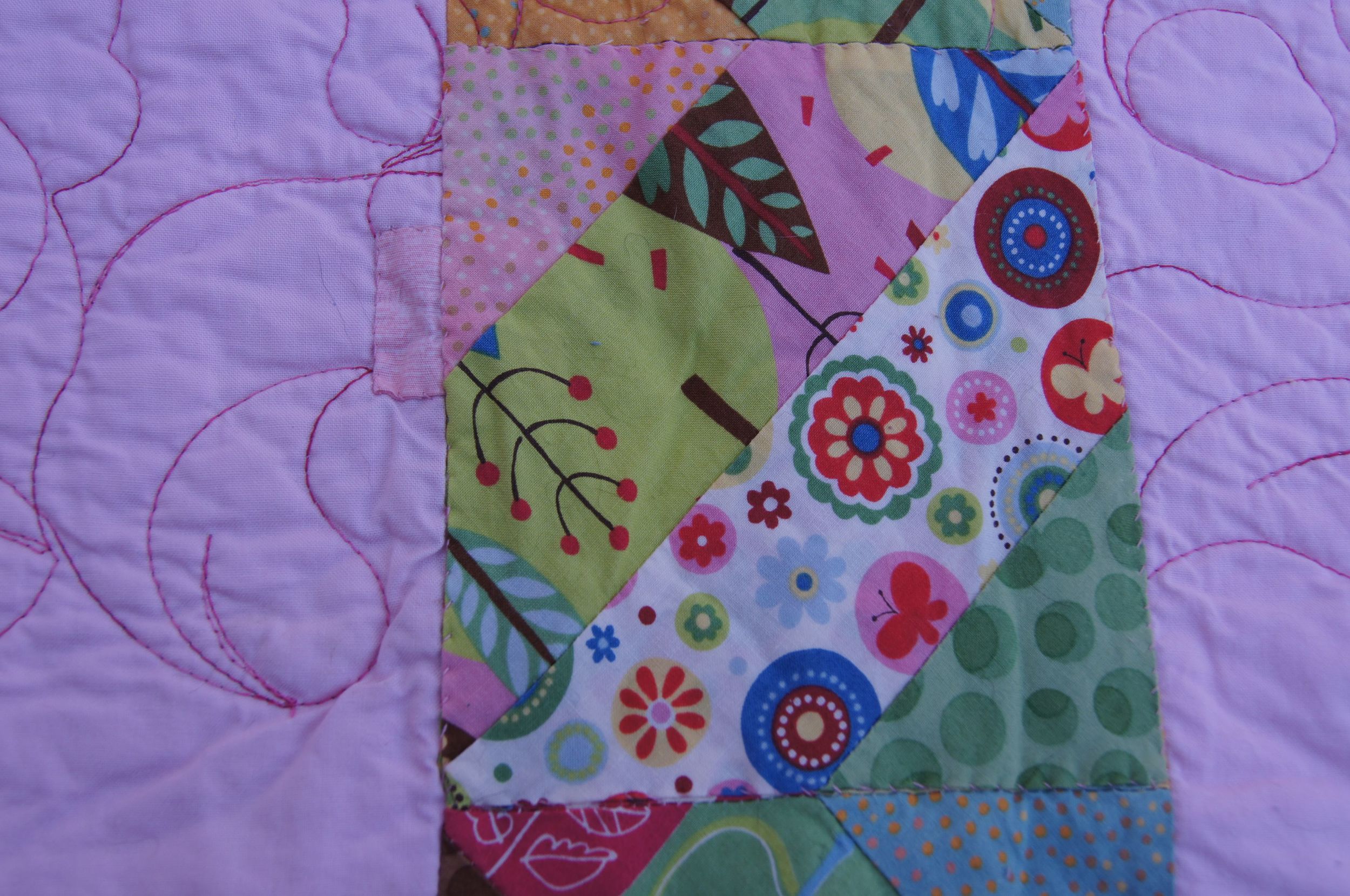
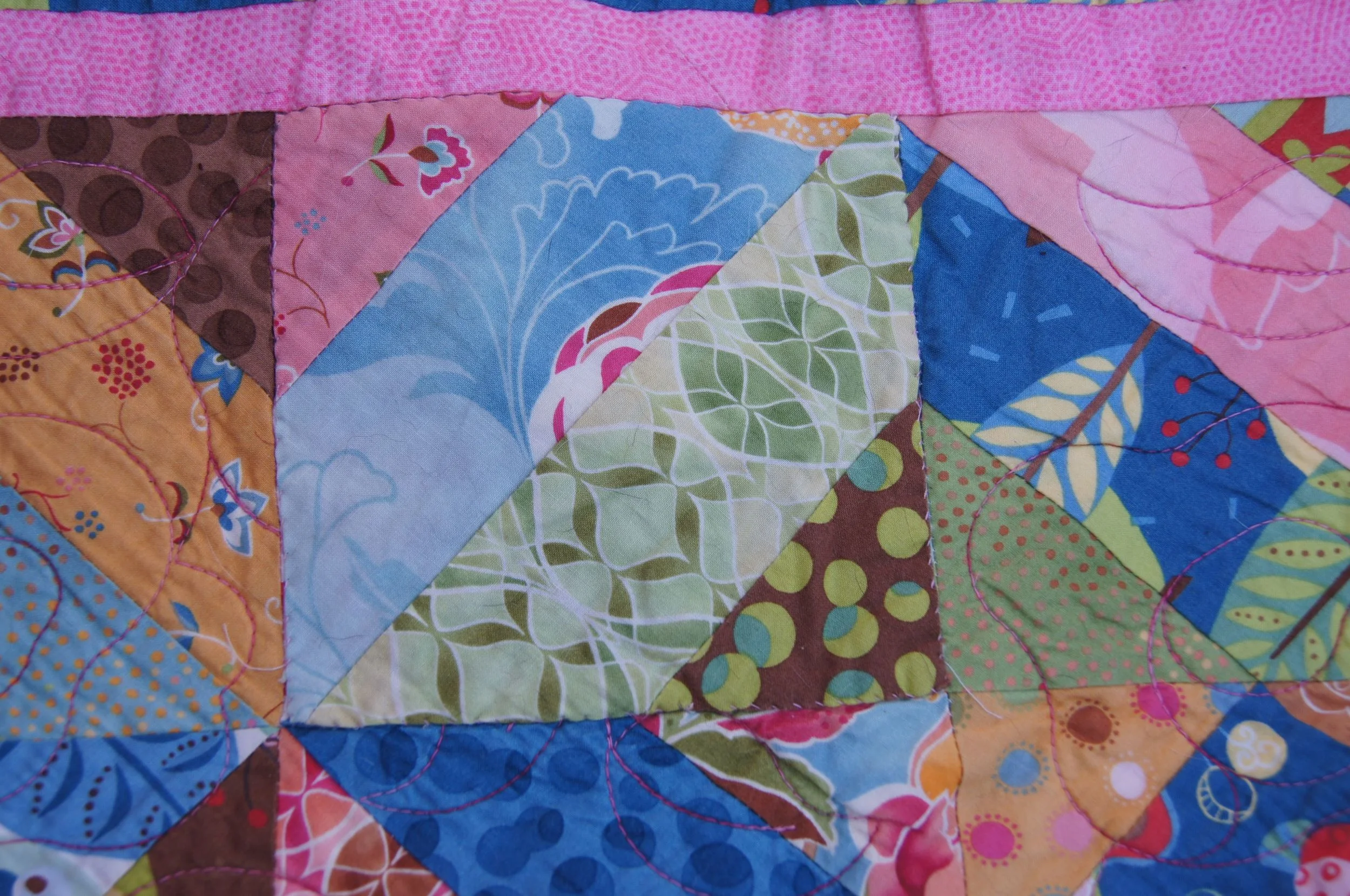
I slid a square of new batting into the open edges of the damaged quilt.  I probably tacked that in with a few stitches. I had to put in a small patch of pink fabric on the back. Then I slip-stitched on orphan blocks on the front and back of the quilt to cover the damaged area. 

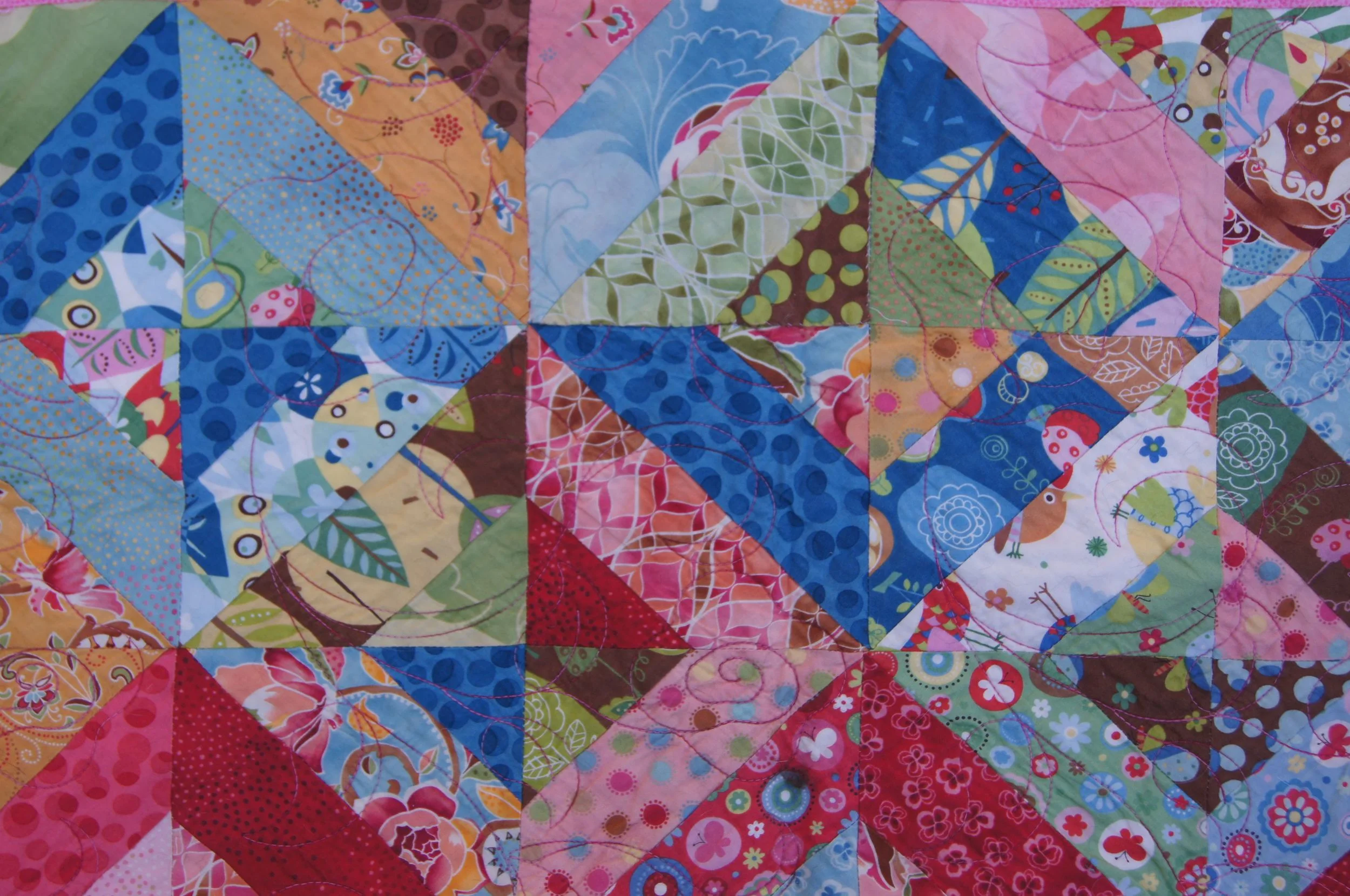
Mending on the front of the Cats in Trees quilt

Mending on the front of the Cats in Trees quilt

I wasn't doing free motion quilting at the time, so I didn't even try to replace the lost quilting.  Fortunately it wasn't a large area.

At a distance, the mending is barely noticeable.  In fact, I had to turn the quilt around 3-4 times to find when I took it out to photograph it for this post!

Quilt Mending cat in trees back wide view.jpg
Quilt mending cat in trees front wider view.jpg

The other quilt which was damaged by a dog chewing it wasn't so painful. This was a quilt I'd made FOR the dogs. I often through it over the bed so that they can lie on it. 

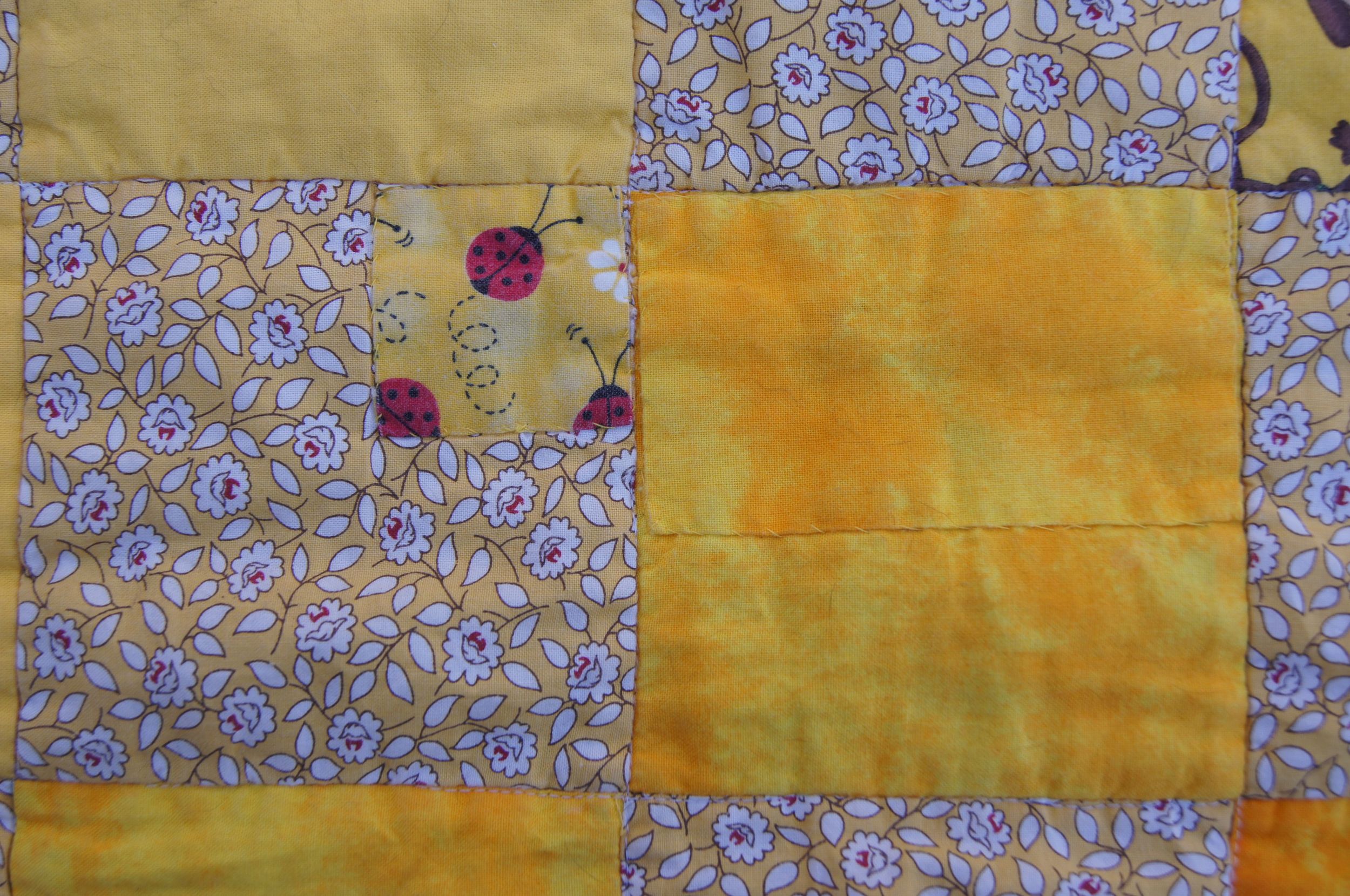
Patching on the front of a quilt

Patching on the front of a quilt

This quilt has a poly-fil batting. That was actually a bit trickier to replace than the cotton batting which tends to adhere better to the original batting.   You can see in the photo above that I put in a small lady bug patch to cover one hole in the flower fabric and then used the original fabric to make a half-square patch to cover the damage in the yellow block.   The lady bug patch actually makes this quilt more interesting.  It's also the same fabric as the backing of the quilt. 

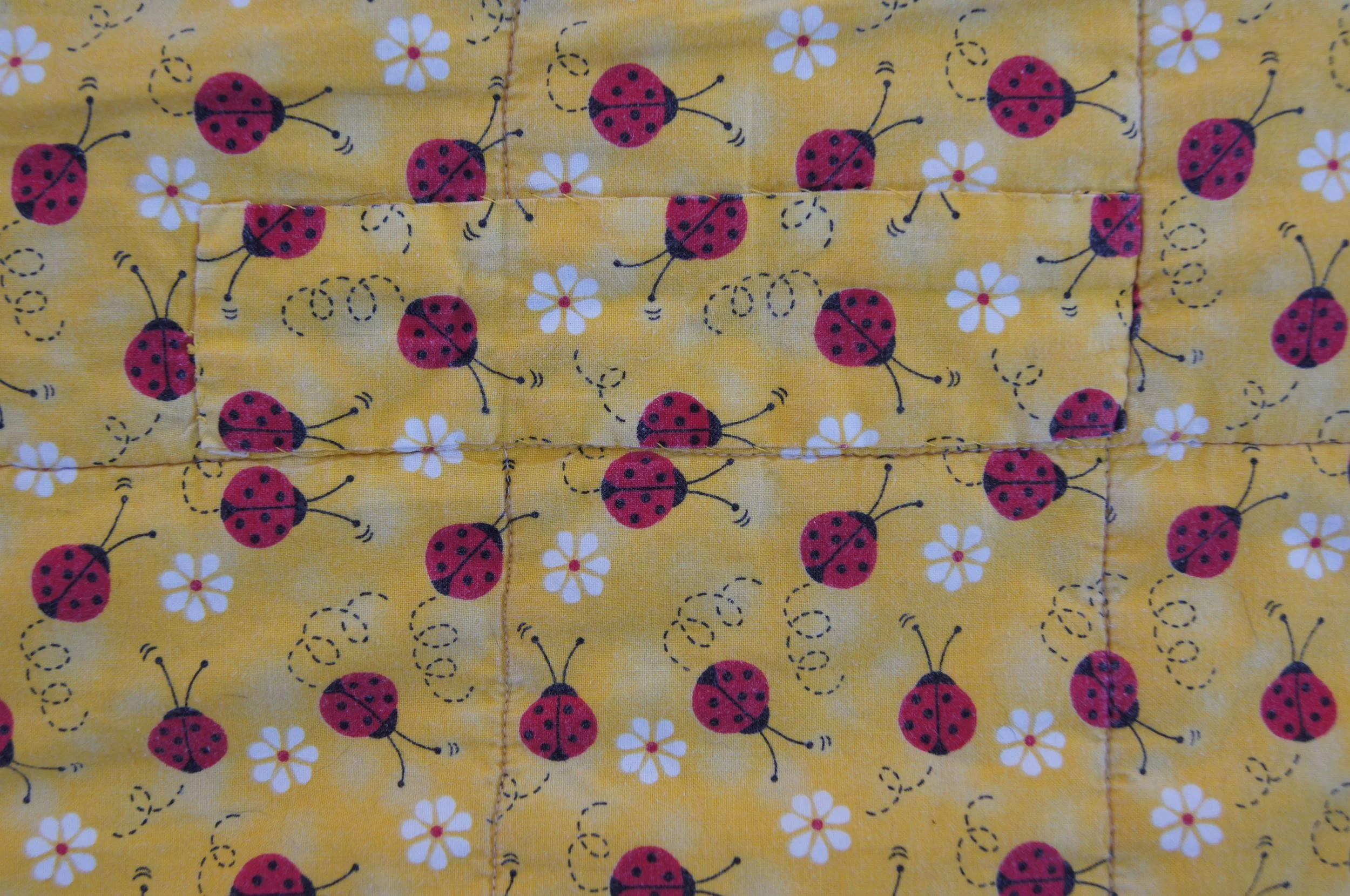
On the back, I needed to slip stitch on a rectangular patch to cover the damage. 

Rectangular patch on back of the quilt.

Rectangular patch on back of the quilt.

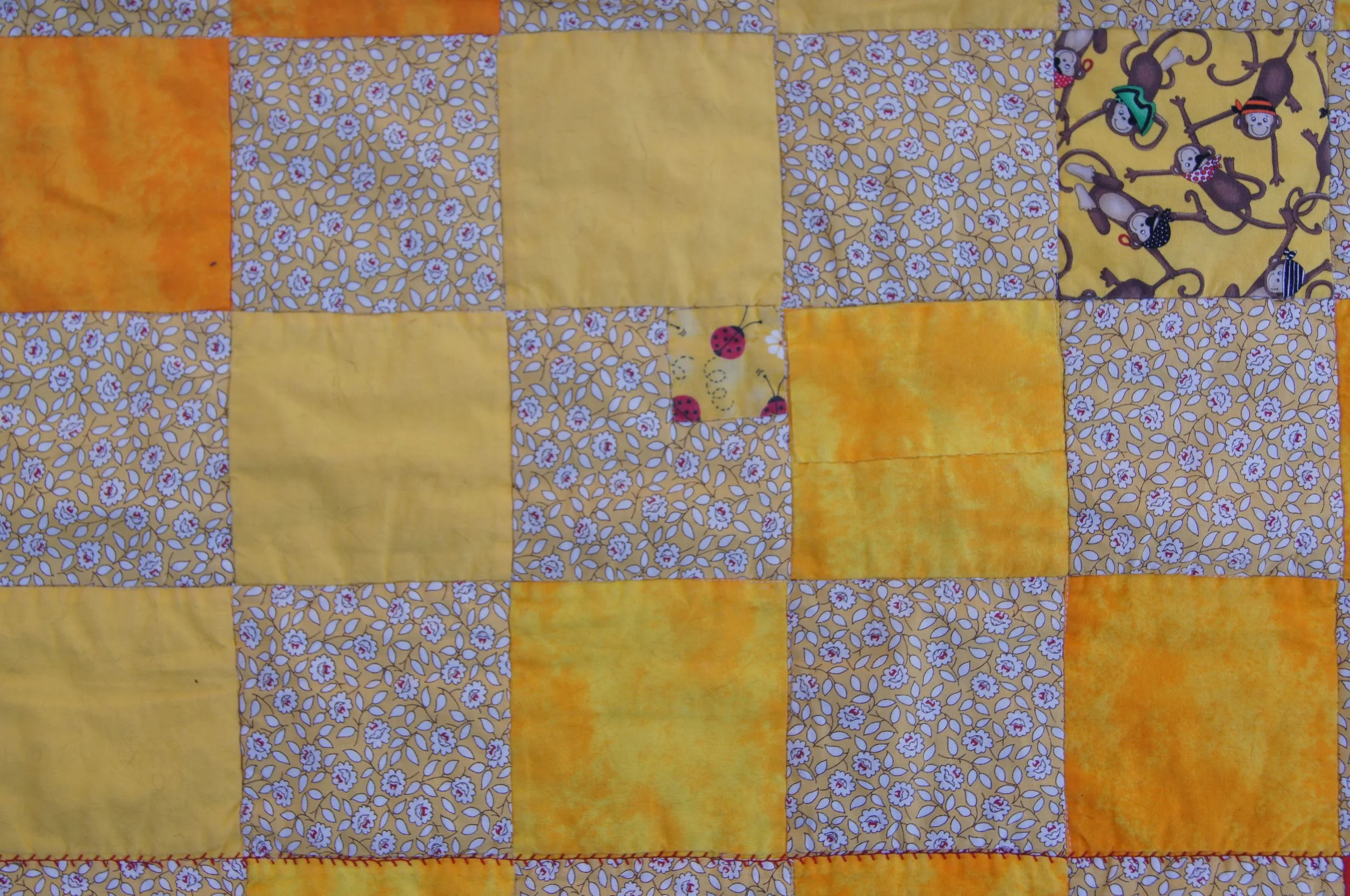
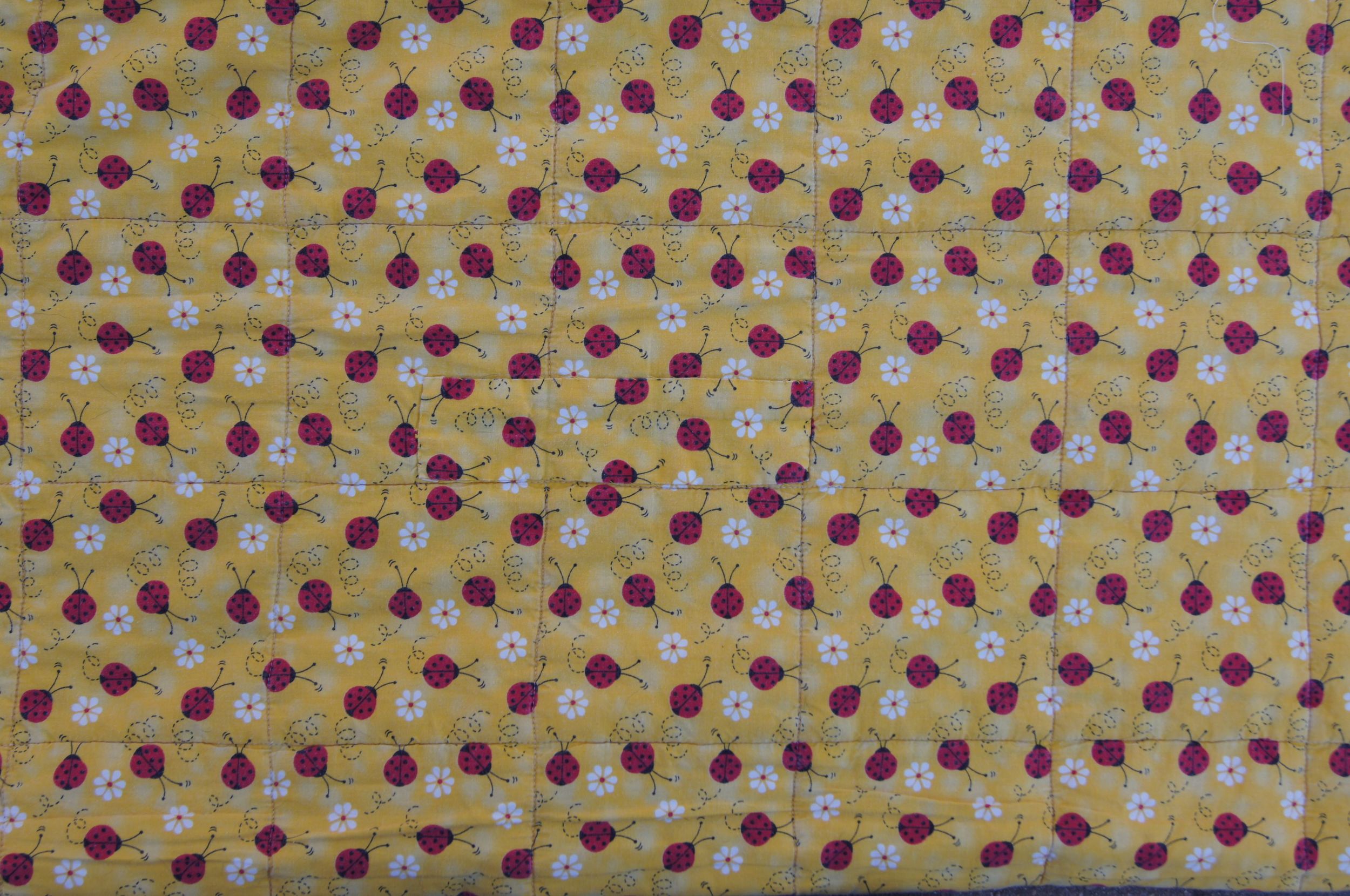
Here are photos of the patches on the front and back in a wider view.  The ladybug patch is obvious but the other mends blend into the quilt.


Quilt mending ladybug 1.jpg
Quilt mending patch ladybug back.jpg

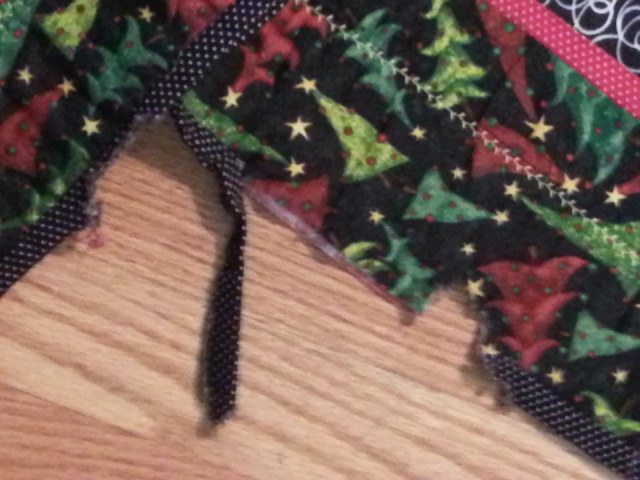
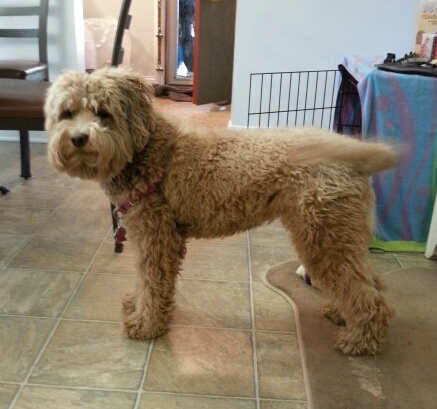
Then there is the fine work done by my niece's puppy, Zoe!   She managed to chew several small chunks out of the quilt's border and at least one corner of the quilt. 

Quilt Mending Lani's Christmas.jpg
Zoe April 2015.jpg

I didn't have any fabric or supplies to mend this quilt while I was visiting with them last week, so I asked my niece to send to me if she'd like me to fix it.

I still have some fabric left from this quilt which I made 2 years ago.  It might be possible to replace all the divots missing from the quilt edges.  But I'm thinking that I will probably just trim off the damage and re-bind the quilt.  This quilt is a small Christmas lap quilt.  I think it will be just fine if the repair results in a quilt a couple inches smaller.

My other common repair?   Bindings.  I recently took off 2 tattered double thickness bindings and attached brand new ones.  More often I find myself needing to slip stitch a few inches of binding which has come loose on a quilt.  More and more now, I'm attaching my bindings all by machine.  I hope they hold up better in the wash!

If you have a quilt with a hole, try patching it!  It's rewarding and (almost!) fun.  

TAGS: Mending quilts, Dogs, quilt binding repair


December 11, 2014

Using Quilting Scraps to Celebrate the Holidays

by Judy Tucker


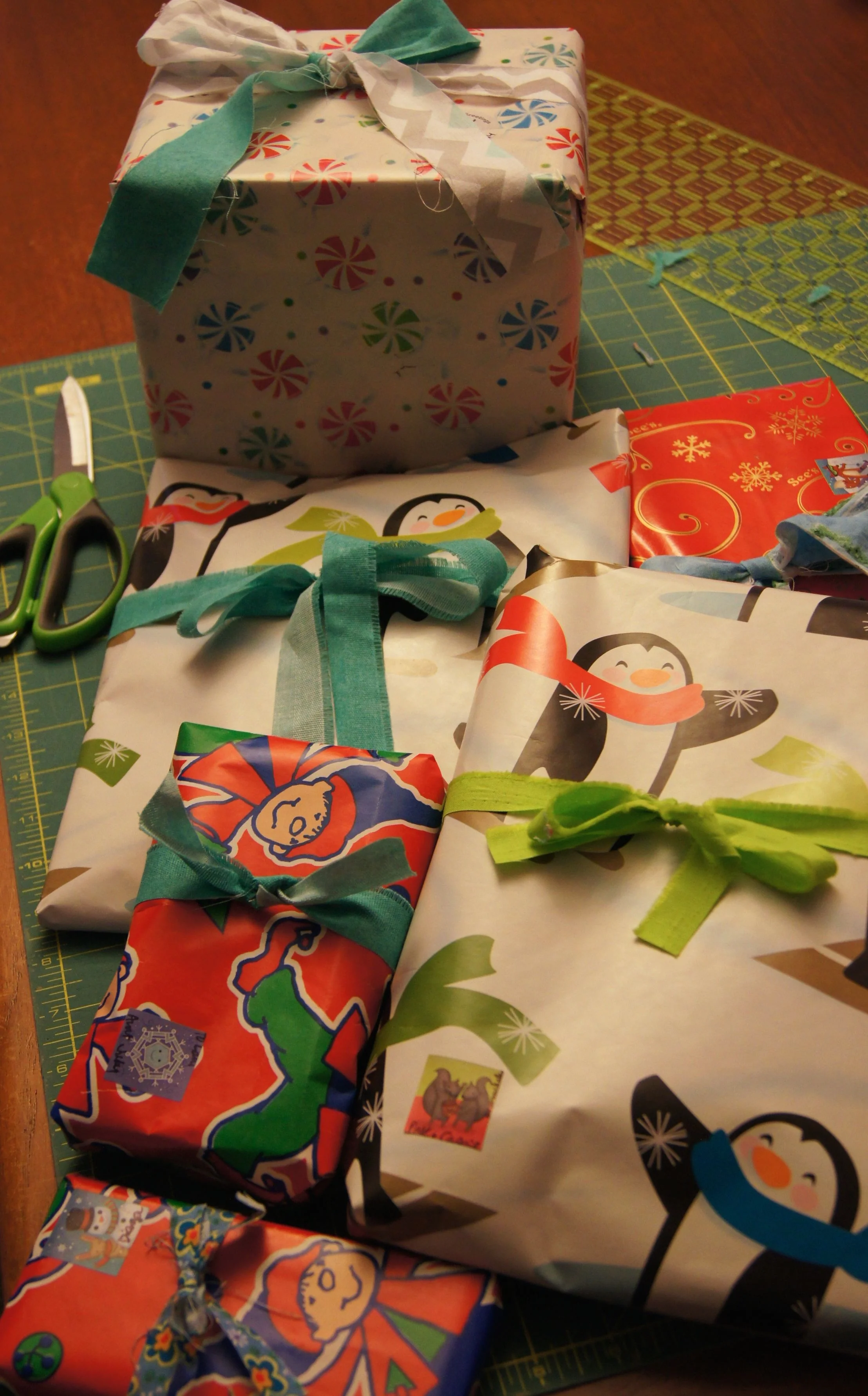
Gifts with fabric strip scraps in place of ribbons

Gifts with fabric strip scraps in place of ribbons

Gifts with fabric strip scraps in place of ribbons

Gifts with fabric strip scraps in place of ribbons

I settled down at my dining room table the other day to wrap holiday presents.  The table is a nice big surface and it is where my cutting mat lives.  I had brought out the wrapping paper but not the ribbons and I was at the point where I was ready to tie some bows.  

On the table was a mound of trimmings from my recent projects--strips from straightening fabrics for cutting, a few pretty selvages and a few wider trimmings from cutting the backing after a quilt was done and ready for binding.   My mom, a knitter, used yarn remants instead of ribbons on the presents she wrapped.  I decided to use my collections of odd strips to decorate my packages--carrying on a family tradition, but as a quilter!

TIP:  If you wrap presents on your cutting mat, don't use any wrapping or cards with glitter. One fleck of glitter will ruin your rotary cutter blade.   GOT GLITTER?  Put the cutting mat away until you are done and your surface has been cleaned and is glitter free.

Gifts wrapped, I looked over at the greeting cards which were propped on a table in the living room.  And I noticed that the table needed to be dusted. Only a few cards have arrived but I know more are coming. Did I want to pick them all up every time I need to dust?  Not really. 

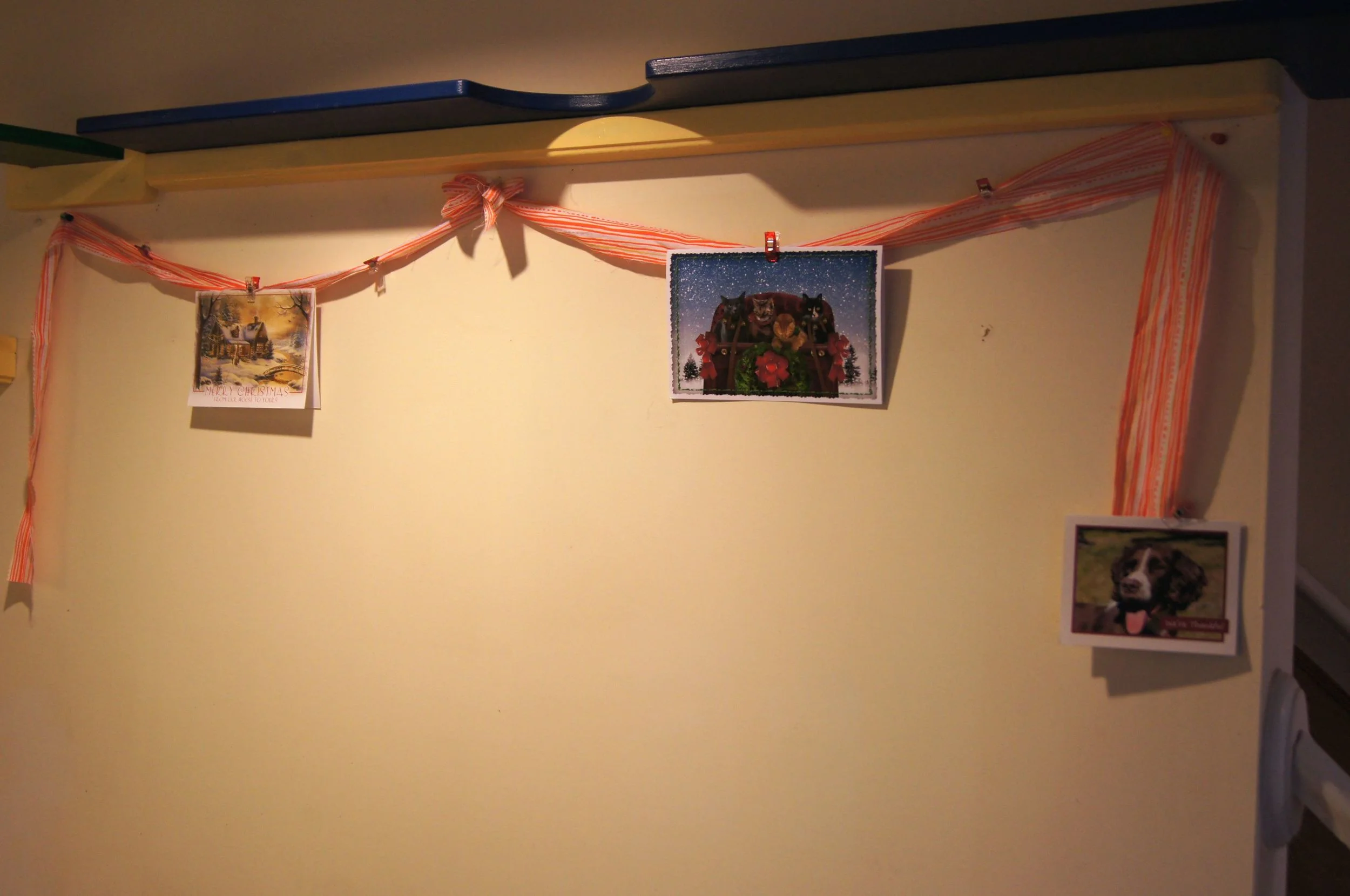
I have sometimes hung my cards to ribbons taped to the wall.  Another Ah-Ha moment--strip scraps would make a great, colorful card swag!  And to carry on the quilting theme, I used Clover Wonder Clips to attach the cards to my swag.  Those little red clips are the best--good for all sorts of things in addition to keeping a binding in place during sewing!

Scrappy Holiday Swag with Greeting cards.  (The wooden structure at the top of the photo is the cat walk my brother build for the cats)!

Scrappy Holiday Swag with Greeting cards.  (The wooden structure at the top of the photo is the cat walk my brother build for the cats)!

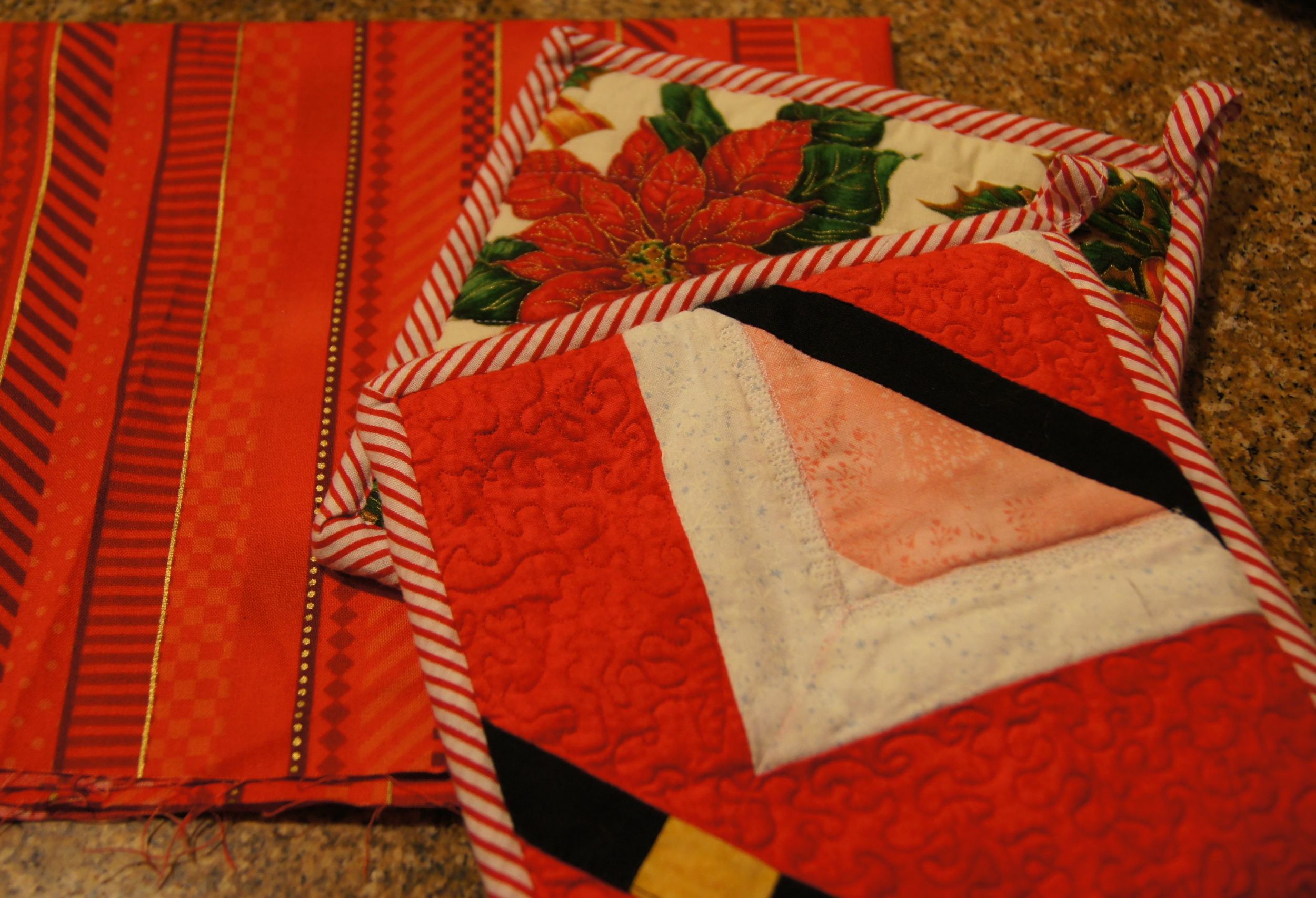
The evening I that I wrote this post I went to the annual holiday party at the Proper Bostonian Quilters Guild.  We always have a Yankee swap.  When all the swapping was done, I came home with a set of 3 beautifully quilted Santa potholders.  The wrapping for this present was a fat quarter of fabric, not paper!  I appreciated this quilter's use of fabric in place of  disposable wrapping paper!   Here are 2 of the potholders on top of the FQ wrapping.  Aren't they fun?

Quilted Santas on one side of the potholders, poinsettias on the flip side.  Quilter--PBQ Guild member, identity unknown

Quilted Santas on one side of the potholders, poinsettias on the flip side.  Quilter--PBQ Guild member, identity unknown

Have fun with your Holiday preparations.  Try using some of those quilting scraps!  What else can you do with them?  Leave me a comment if you have other Holiday uses for your quilting scraps!  I'd love to hear what you're doing!

TAGS: Scraps, Holiday decorations, Wrapping presents, Christmas stockings, Dogs, Glitter


Powered by Squarespace 7