Search
  • Information
    • About
    • Contact
    • Privacy Policy
  • Blog
  • Subscribe
  • Tutorials
    • Tutorials
    • Doll Clothes: Photos and some Patterns
  • Suggested Reading
  • Quilts: My Original Designs
  • Gallery: Color Studies
  • Gallery: Quilts I've Made
  • Doll Making Blog Posts
  • Recent blog posts
  • Quilts Based on The Improv Handbook for Modern Quilters
Close
Menu
Search
Close
  • Information
    • About
    • Contact
    • Privacy Policy
  • Blog
  • Subscribe
  • Tutorials
    • Tutorials
    • Doll Clothes: Photos and some Patterns
  • Suggested Reading
  • Quilts: My Original Designs
  • Gallery: Color Studies
  • Gallery: Quilts I've Made
  • Doll Making Blog Posts
  • Recent blog posts
  • Quilts Based on The Improv Handbook for Modern Quilters
Menu

Sleeping Dog Quilts

SLEEPING DOG QUILTS

January 18, 2016

Eiffel Tower Color Block Pillow Cover

by Judy Tucker


Eiffel Tower Pillow Cover 17 x 17 inches

Eiffel Tower Pillow Cover 17 x 17 inches

Eiffel Tower Pillow Cover 17 x 17 inches

Eiffel Tower Pillow Cover 17 x 17 inches

We lived in Paris for about a year when I was 6.  My brother loved being there.  So when I saw Michael Miller's "Eiffel Tower" fabric line last year I purchased 1/2 yard in red and black.  (This fabric line is still available for purchase). The other fabrics are from my stash. 

Cutting Instructions for finished 17 x 17 inch cover for a 16 x 16 inch pillow form:

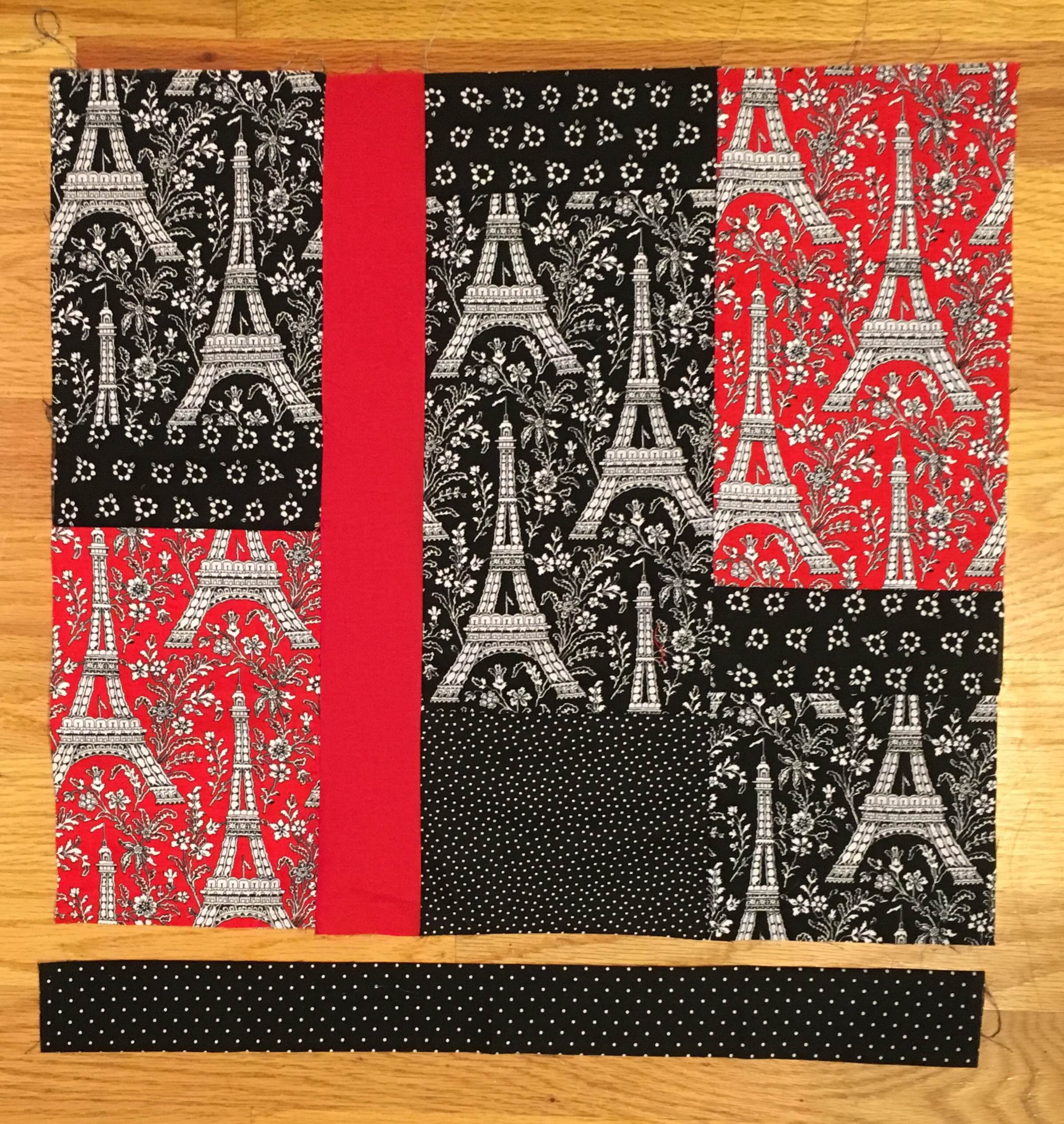
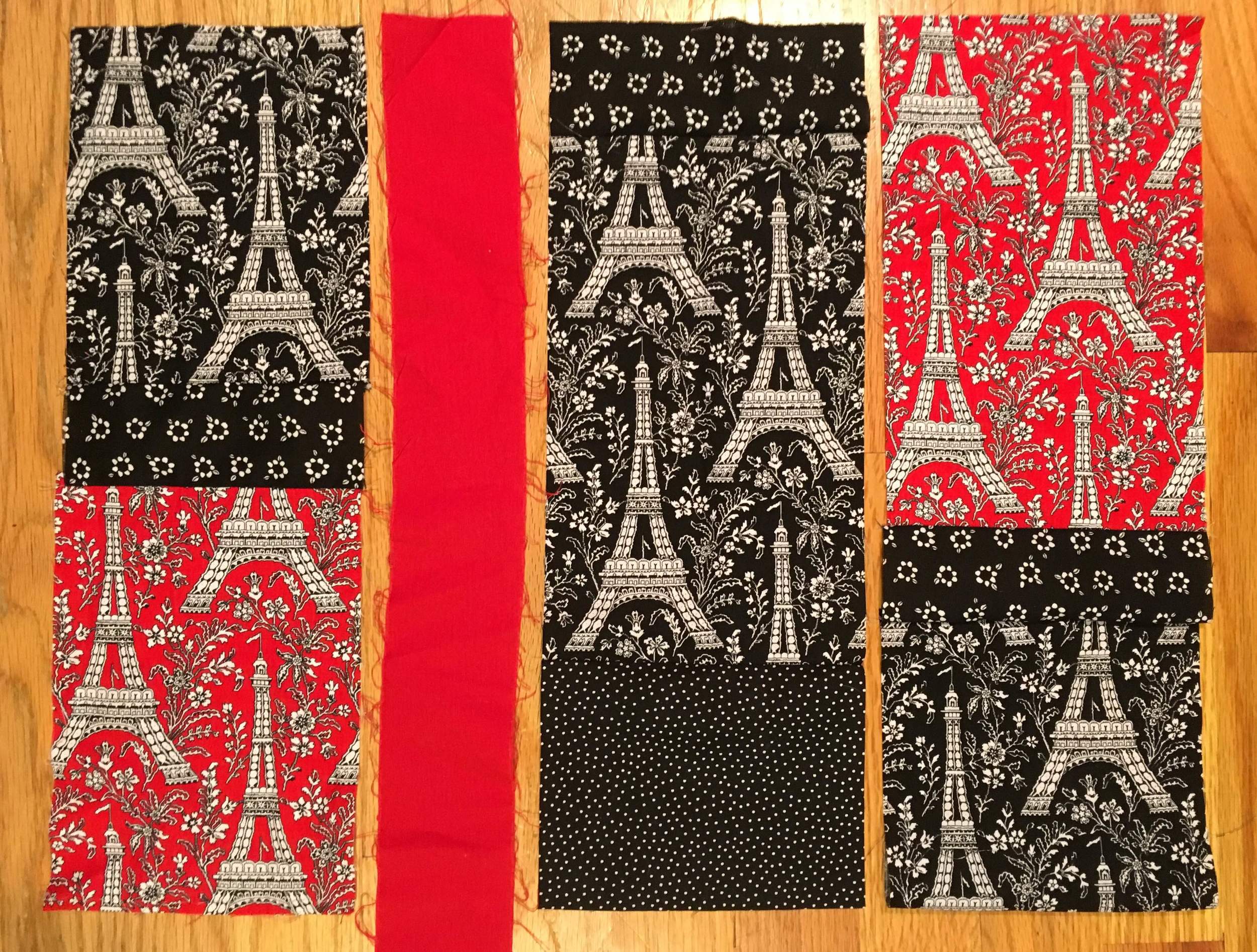
  • Left column:  5 1/4 x 6 3/4" Black Eiffel Tower fabric, 2 1/2 x 5 1/4" black floral, 5 1/4 x 8" Red Eiffel Tower fabric
  • Red accent strip 2 1/2 x 17 1/2"
  • Middle column: 2 1/2 x 6" Black floral, 6 x 10 3/4" Black Eiffel Tower fabric, 6 x 4 1/2" Random dot 
    • Right column: 5 1/4 x 10" Red Eiffel Tower fabric, 5 1/4 x 2 1/2" Black Floral, 5 1/4 x 5" Black Eiffel Tower Fabric
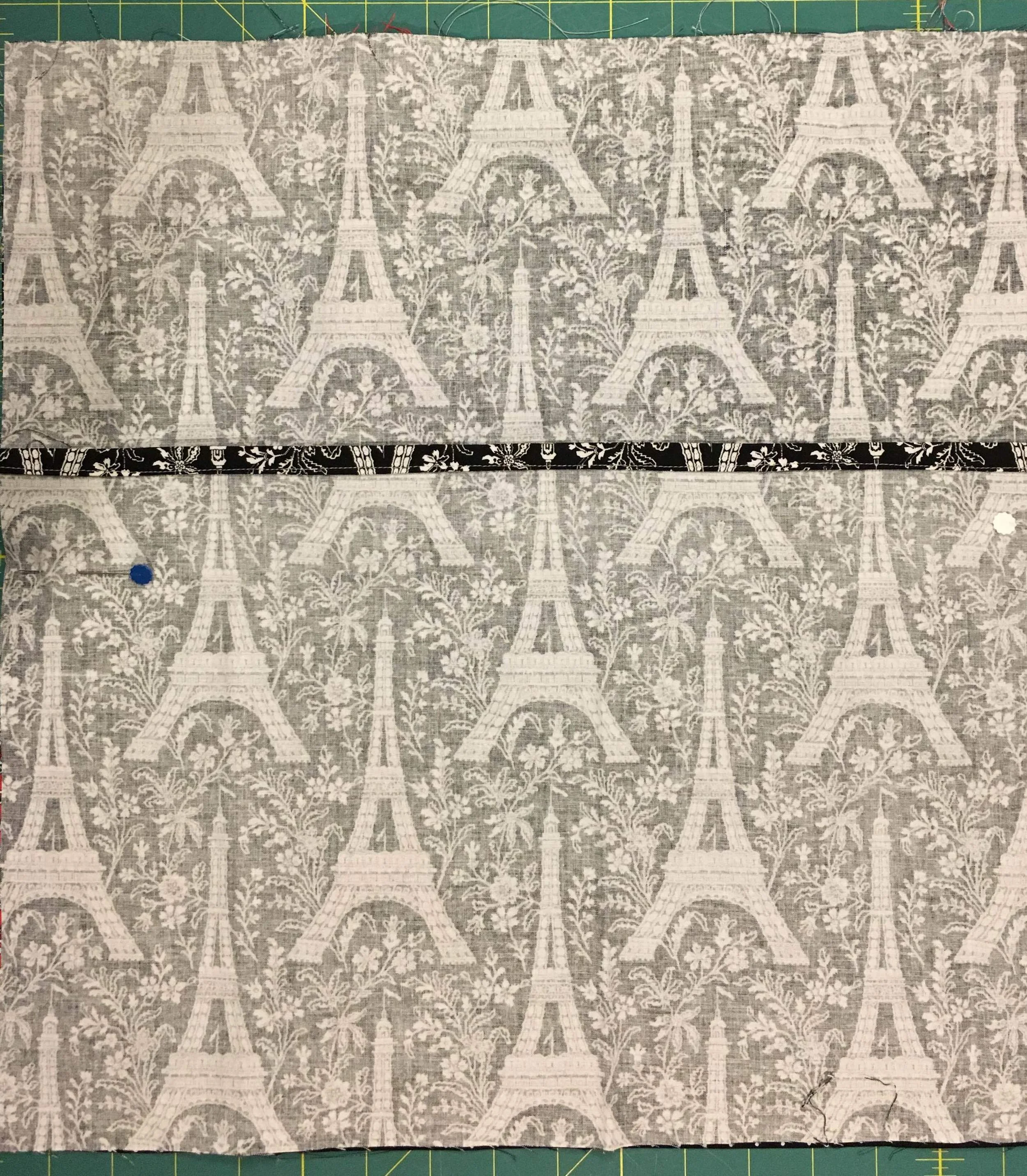
  • Bottom Strip: 1 3/4 x 17 1/2" Black polka dots.  
  • Back--cut 2 sections 11 1/2 x 17 1/2 inches

Stitch together the columns, then sew them together. Add the bottom strip.
Pillow Eiffel Tower strips.jpg
Pillow Eiffel Tower last strip.jpg

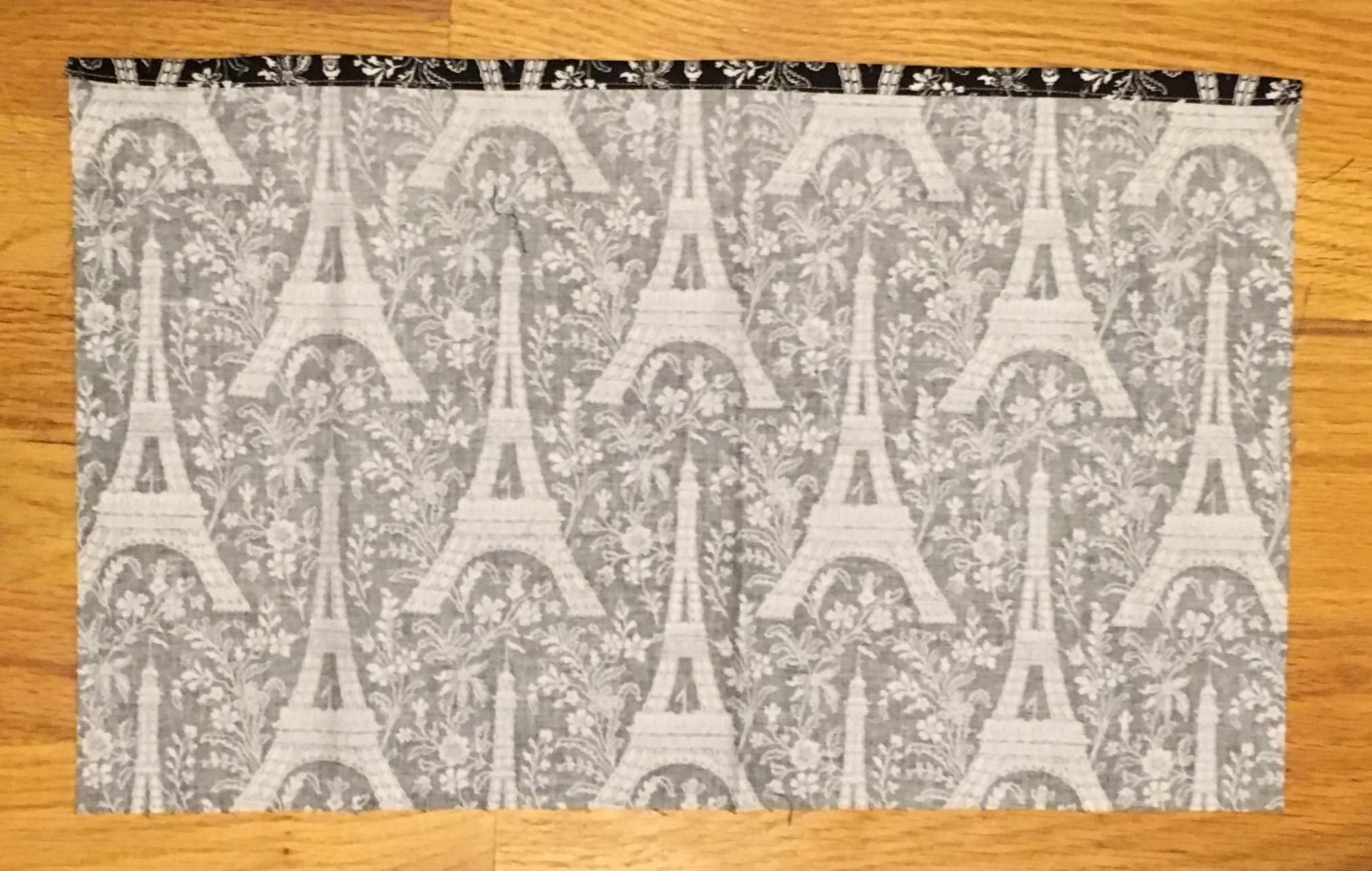
Make the back cover.  Fold the top edge of the bottom section under 1/4 inch twice, press and stitch along the bottom edge of the fold.  Fold the bottom edge of the top section under 1/4 inch twice, press and sew along the edge.  

Put the Top section of the back down first, the put the BOTTOM section on top of it to create an envelop opening. 
Pillow Eiffel Tower back section.jpg
Pillow Eiffel Tower back cover.jpg

Sew the back to the front of the pillow, right sides together.  Turn right side out and press.  Finish by top stitching 1/4 inch around all 4 sides of the pillow cover to give a decorative edge.  I didn't pre-wash the fabrics I used so I left the cover large to allow for shrinkage when washed and dried.  If you did pre-wash your fabrics, top stitch in 1/2 inch. 

Enjoy a bit of Paris at home!! 


TAGS: Eiffel Tower by Michael Miller, Eiffel Tower pillow cover, Pillow Cover


July 27, 2015

Pillow Cover with Envelope back and Binding Edge

by Judy Tucker


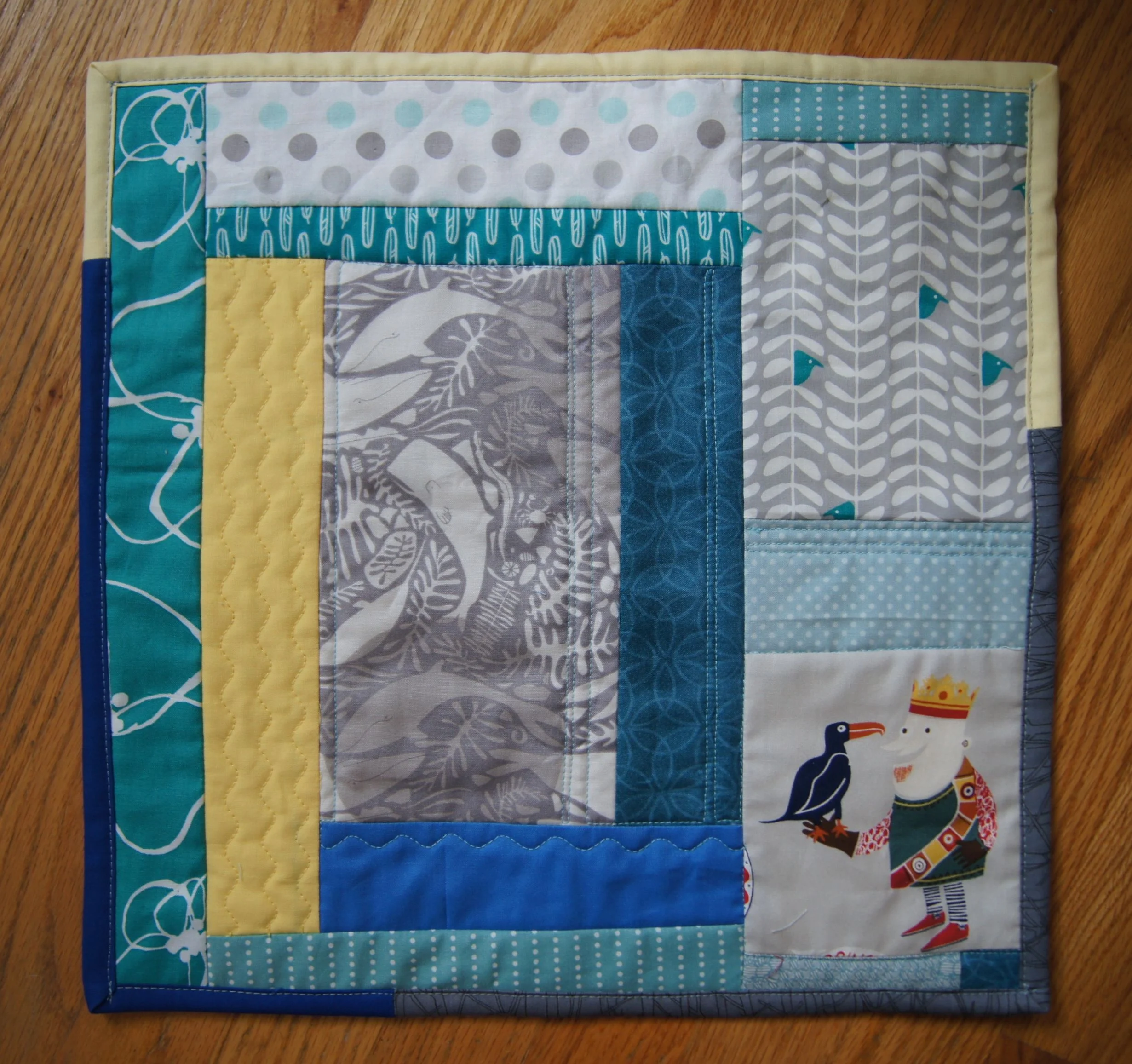
Quilting As You Go Pillow Cover 15 x 15 Inches

Quilting As You Go Pillow Cover 15 x 15 Inches

Quilting As You Go Pillow Cover 15 x 15 Inches

Quilting As You Go Pillow Cover 15 x 15 Inches

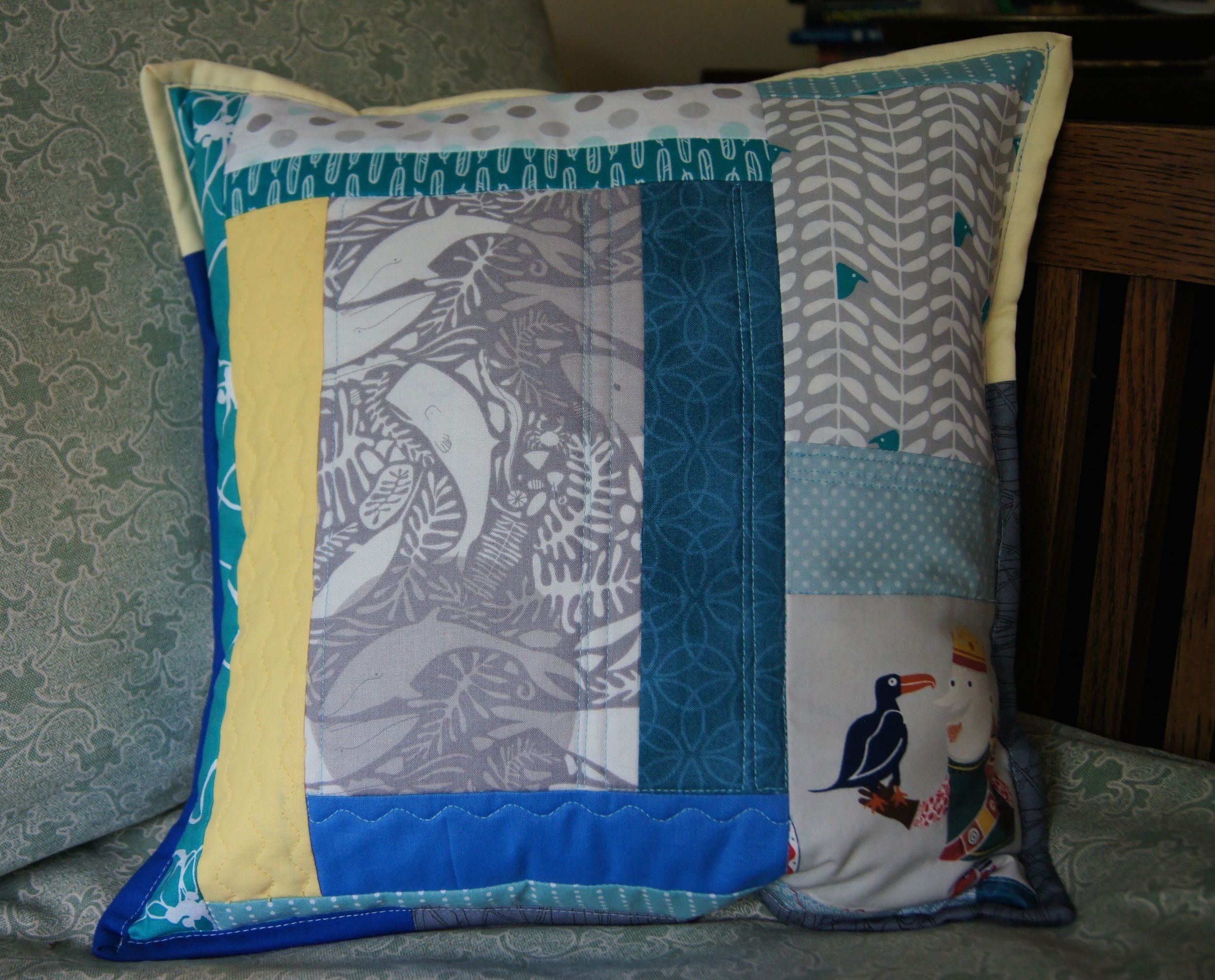
My sofa has been in need of a new look.  I made a pillow cover as a project for Proper Bostonian Quilters and a couple Quilt-As-You-Go Blocks for a Boston Modern Quilt Guild charity quilt. I realized that a Quilting As You Go Block would make a lovely pillow cover but you could just as well use an orphan block or piece a block by a different method to make a pillow cover this way.  

I had a bit of whale fabric from the back of my "Bjorn & Bjorn" Viking quilt, a couple of fussy cut Vikings left over from that quilt, and lots of batting scraps so this pillow cover is a total scrap bag project!  Here's how I made my pillow cover.

Notes:

  1. This post isn't a Quilt-As-You-Go tutorial.  If you would like more information about the Quilt-As-You-Go technique, the new book, Quilt-As-You-Go Made Modern by Jera Brandvig is a great resource.  Jera has a chapter in the book on making pillow shams using a different final assembly method.
  2. If you don't know how to bind a quilt, here's a great binding tutorial from Connecting Threads. 

Making a Pillow Cover with an Envelope Back and Binding Edge:

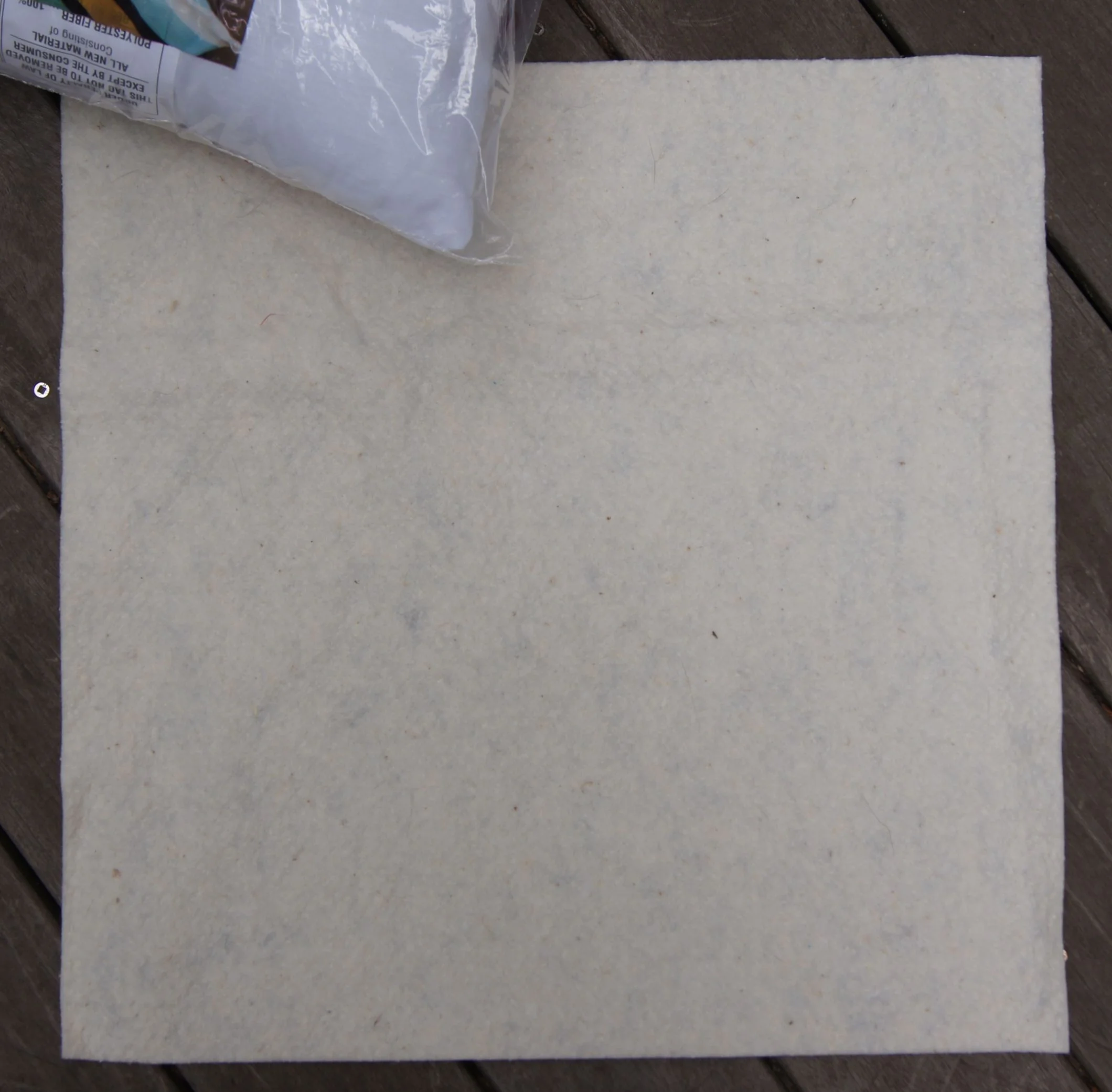
  1. From left over quilt batting, I cut a piece of batting 1 inch larger on all sides than the pillow form. I used a 14" purchased pillow form so I cut a 15 x 15 inch piece of batting. 
PillowformandBatting.jpg

        2.  I cut a piece of scrap fabric the same size as the batting.  This fabric is inside the pillow, never to be seen. It would be a great way to use up a bit of ugly fabric!

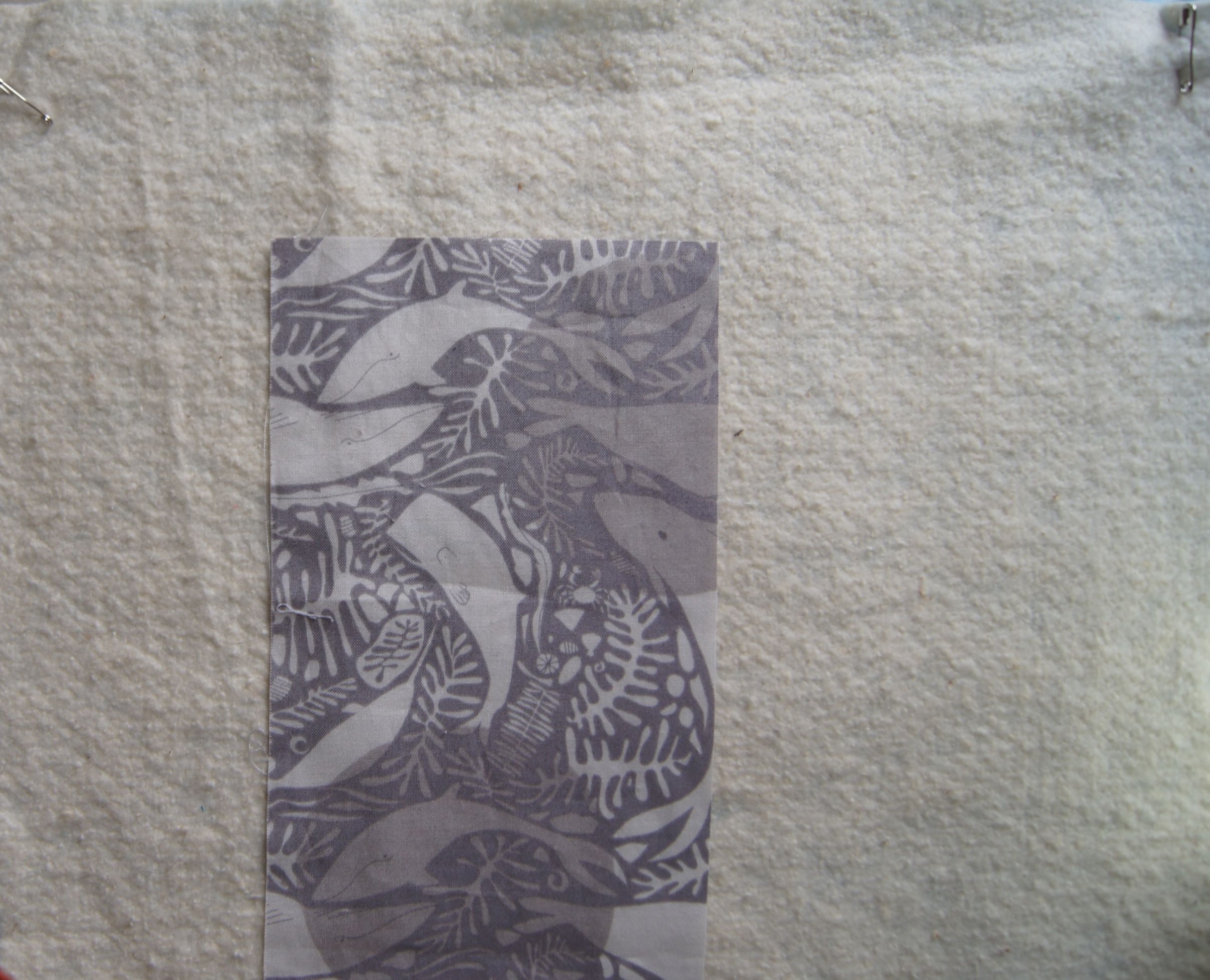
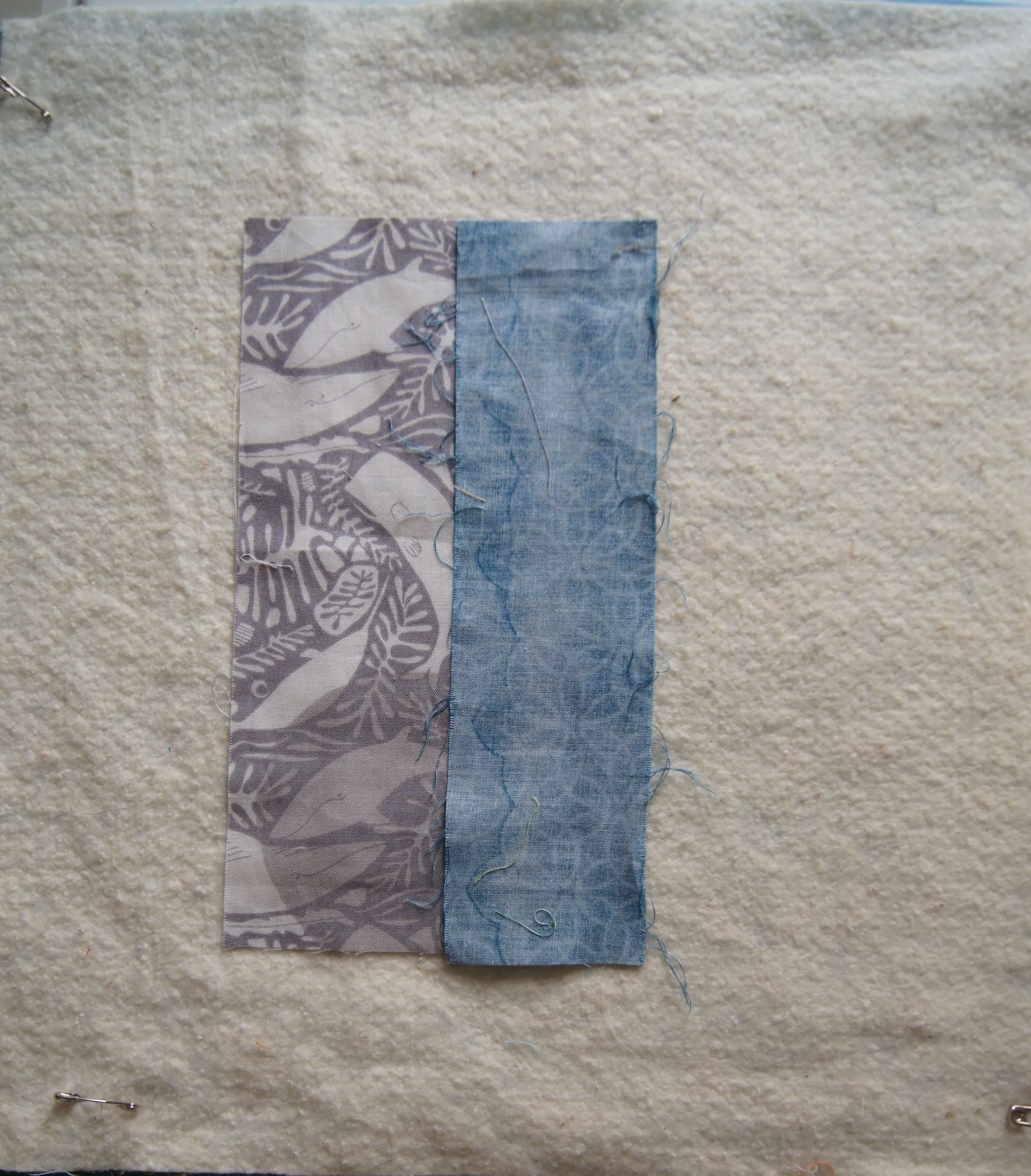
        3.  A Quilting As You Go Block is built a bit like a Log Cabin block. Each new piece attached has to match the length of the previous piece. I sewed each new section on using a 1/4 inch seam with a walking foot and pressed each piece away from the previous section.

Pillow cover tutorial 2.jpg
Pillow cover tutorial 3.jpg


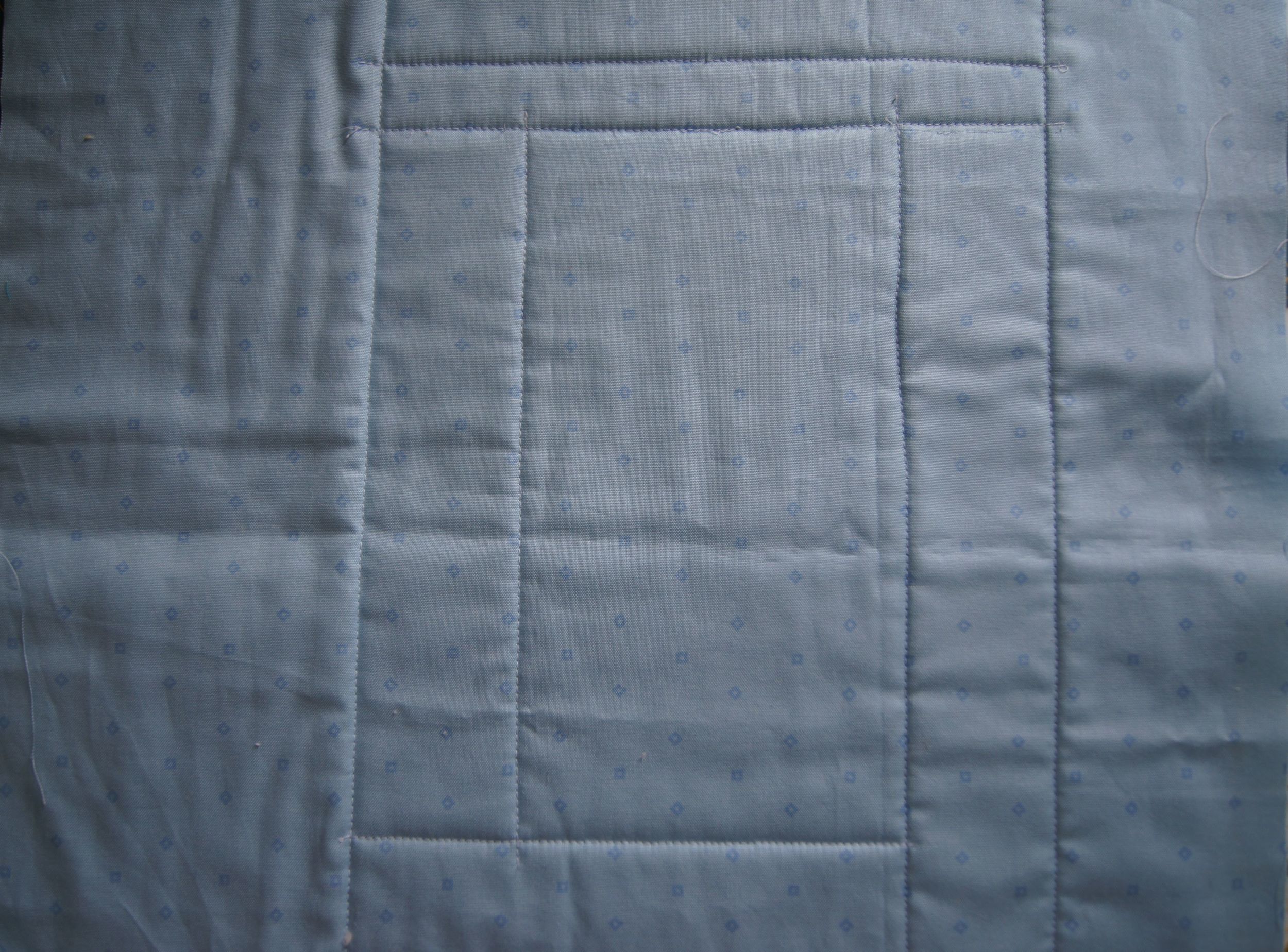
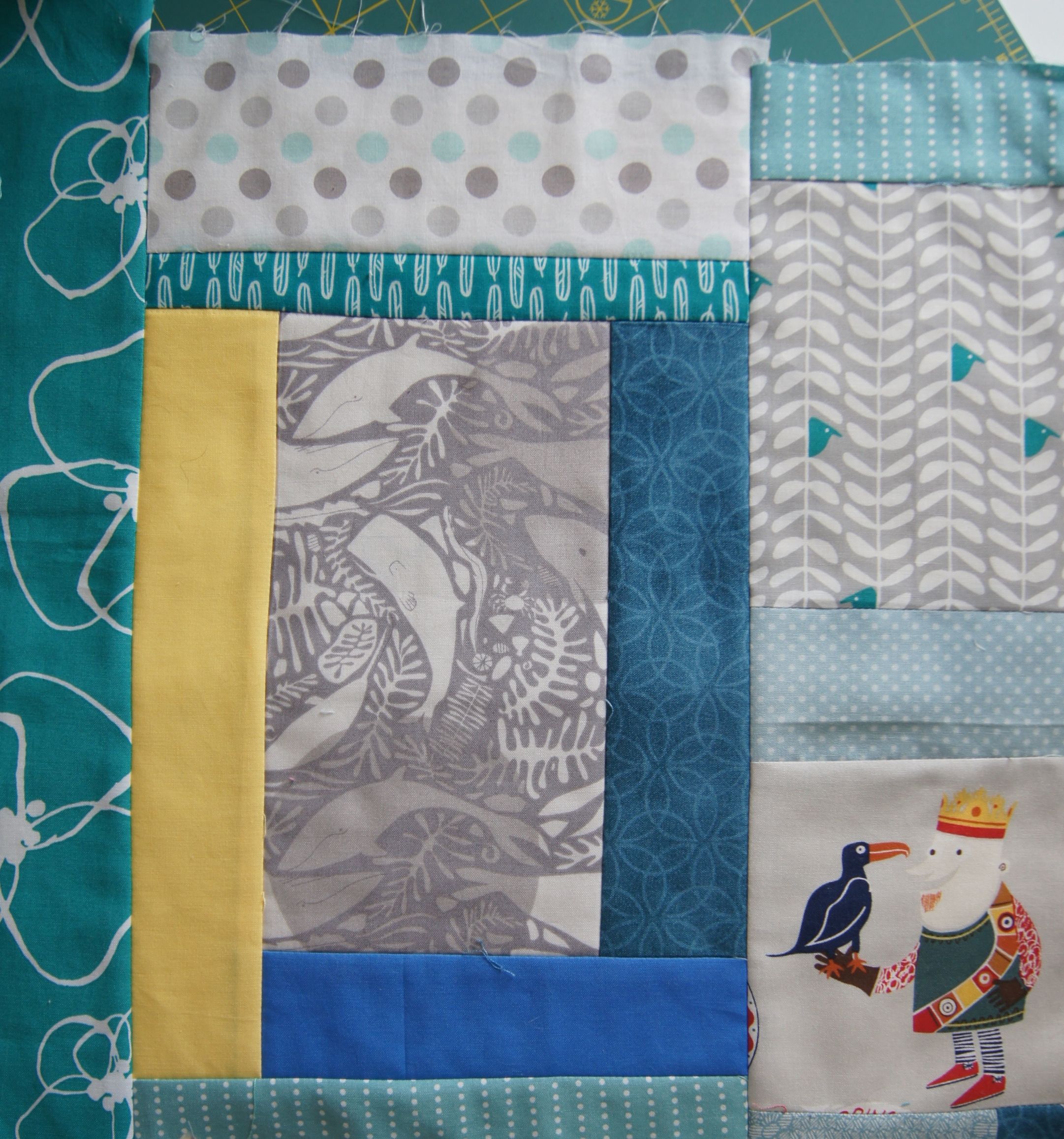
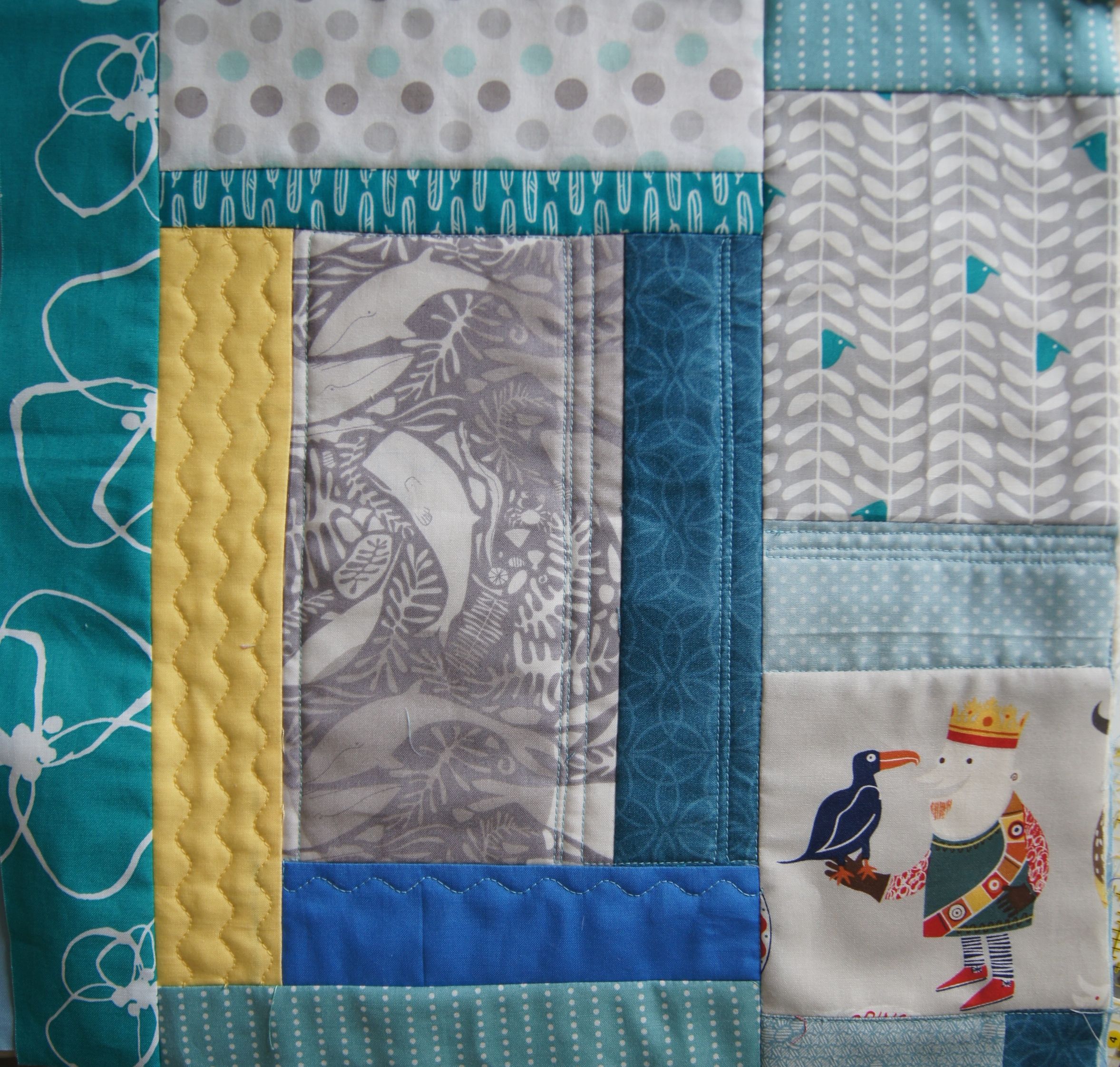
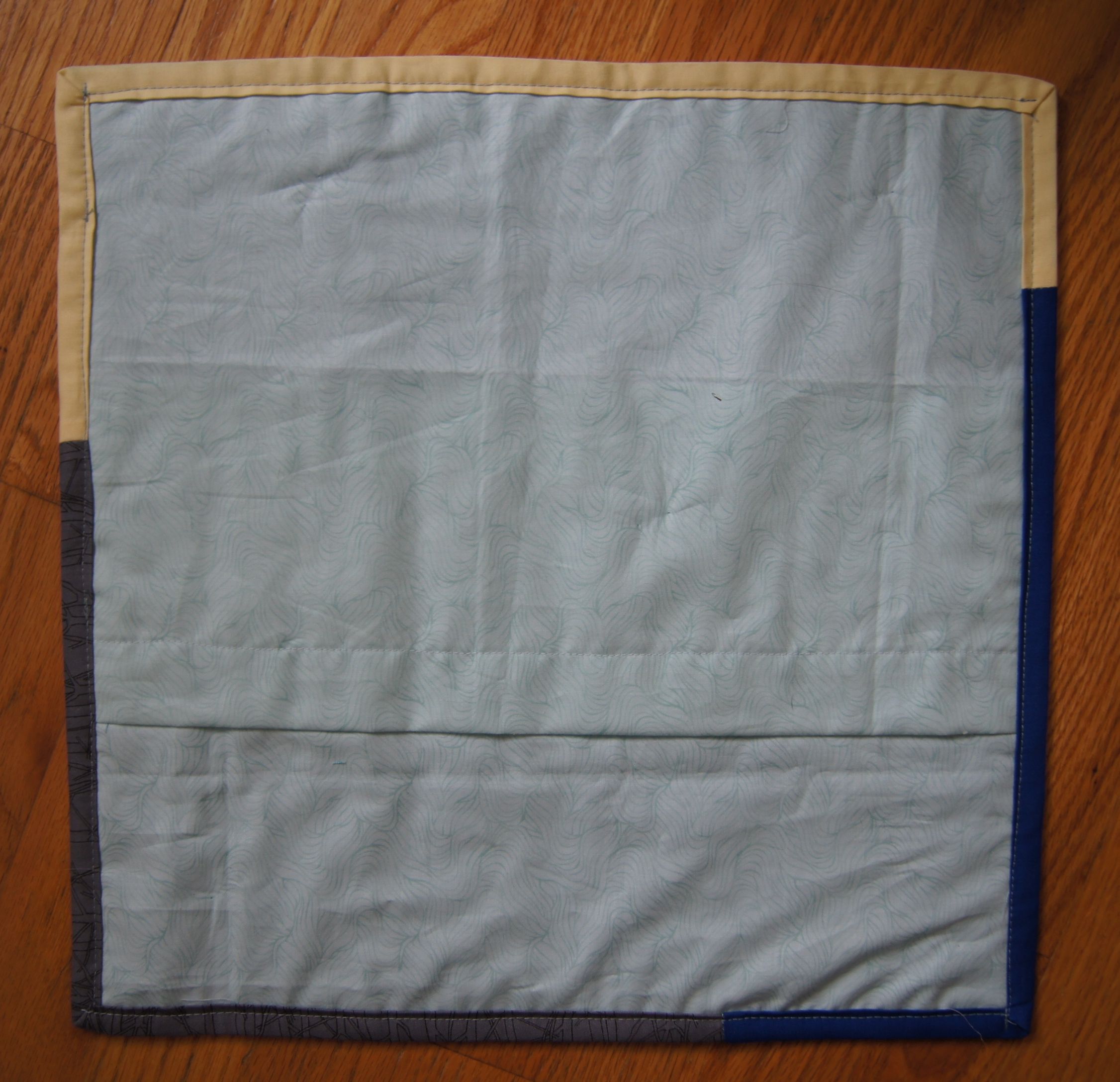
    5.  Because each new bit of fabric is sewn onto the block through the batting and backing, the completed block already quilted on the back side.   I added some straight stitches and some serpentine quilting to the front side of my block to make it more interesting and to give it some extra texture.  Here are photos of the back, the block prior to doing any quilting on the front of the block and the front of the block with added quilting.

Pillow cover tutorial 5.jpg
Pillow cover tutorial 6.jpg
QuiltingOnPillowCover.jpg

    6.  Once it was quilted, I trimmed the block. It ended up a tad smaller than 15 x 15 inches.  That's fine because I cut the batting 1 inch larger than the pillow form.  Because the pillow cover has a binding my block had to be at least 14 1/2 x 14 1/2 inches which it was.

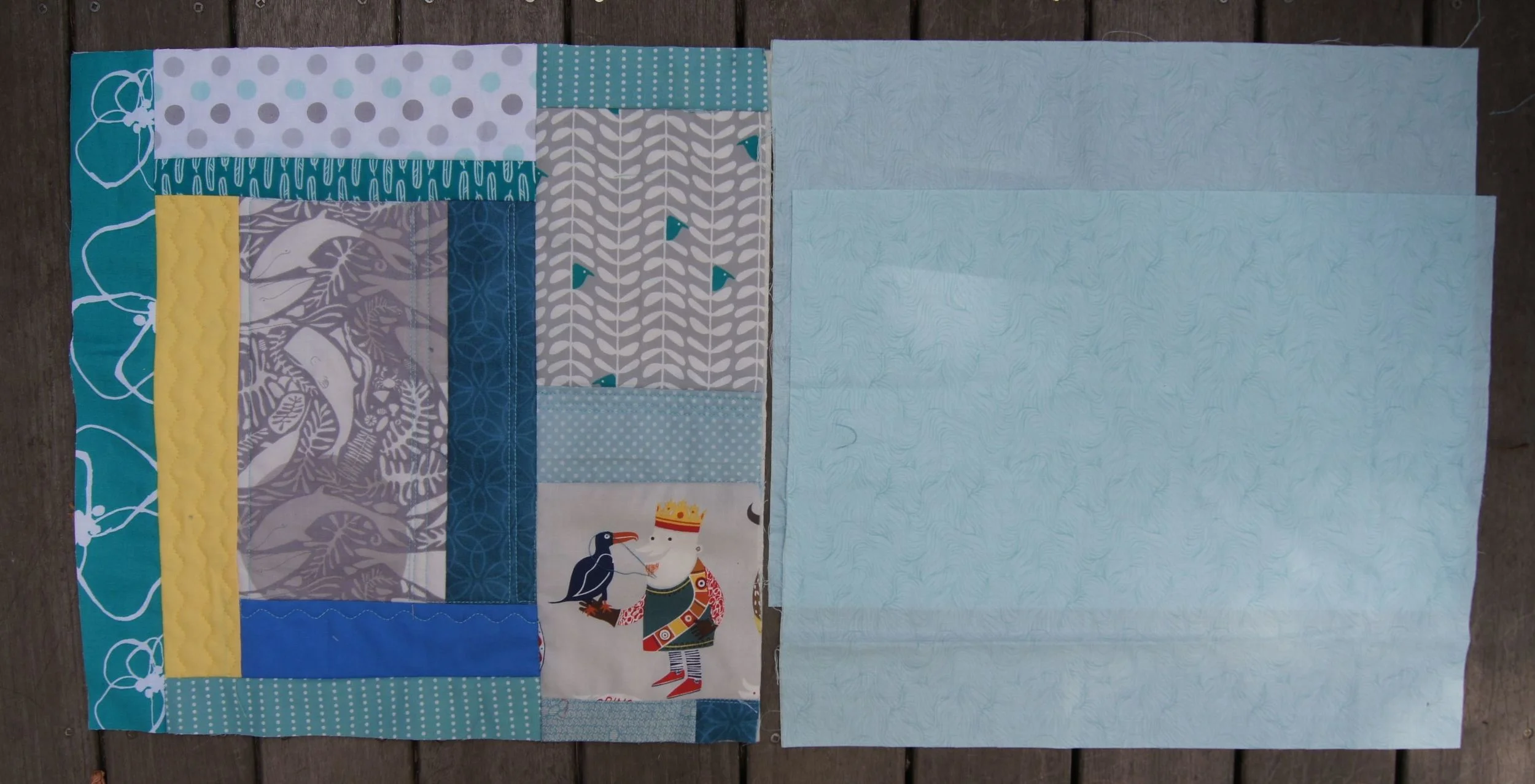
    7.  Next I made the envelope back for the pillow cover.  I cut 2 pieces of fabric the same width as the Quilting As You Go block and  3/4 of the height of my finished block.  For my pillow cover, the back pieces are 15 inches wide and 12 inches high.

Pillow cover tutorial 8.jpg
Pillow case tutorial 9.jpg

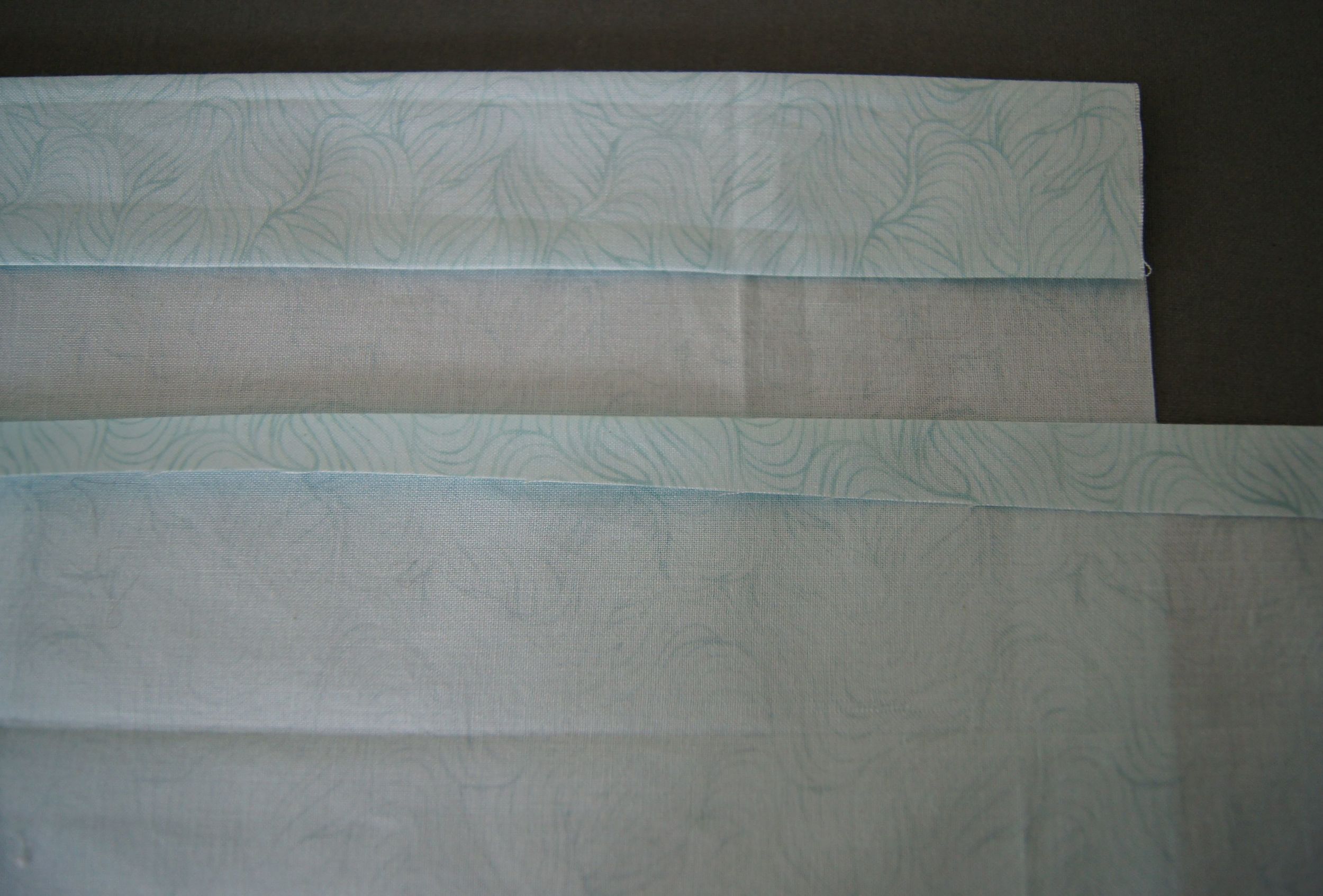
    8.  On each of the 2 back pieces I hemmed the width of one horizontal side.  I turned the edge under 1/4 inch and pressed. Then I turned the pressed edge under 1 inch and pressed again.  Finally I sewed the edge down, stitching 1/8 inch from the edge of the fold.

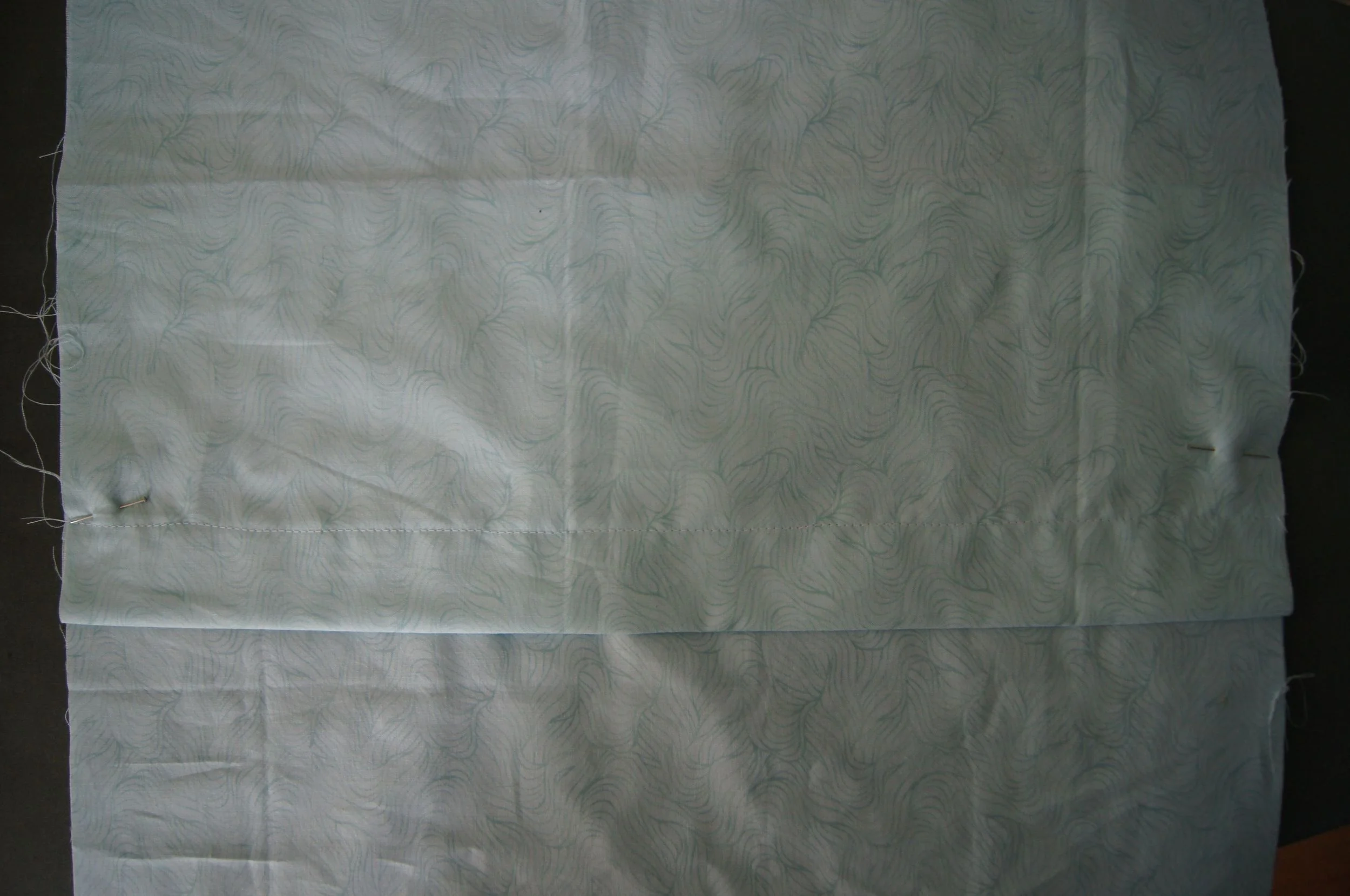
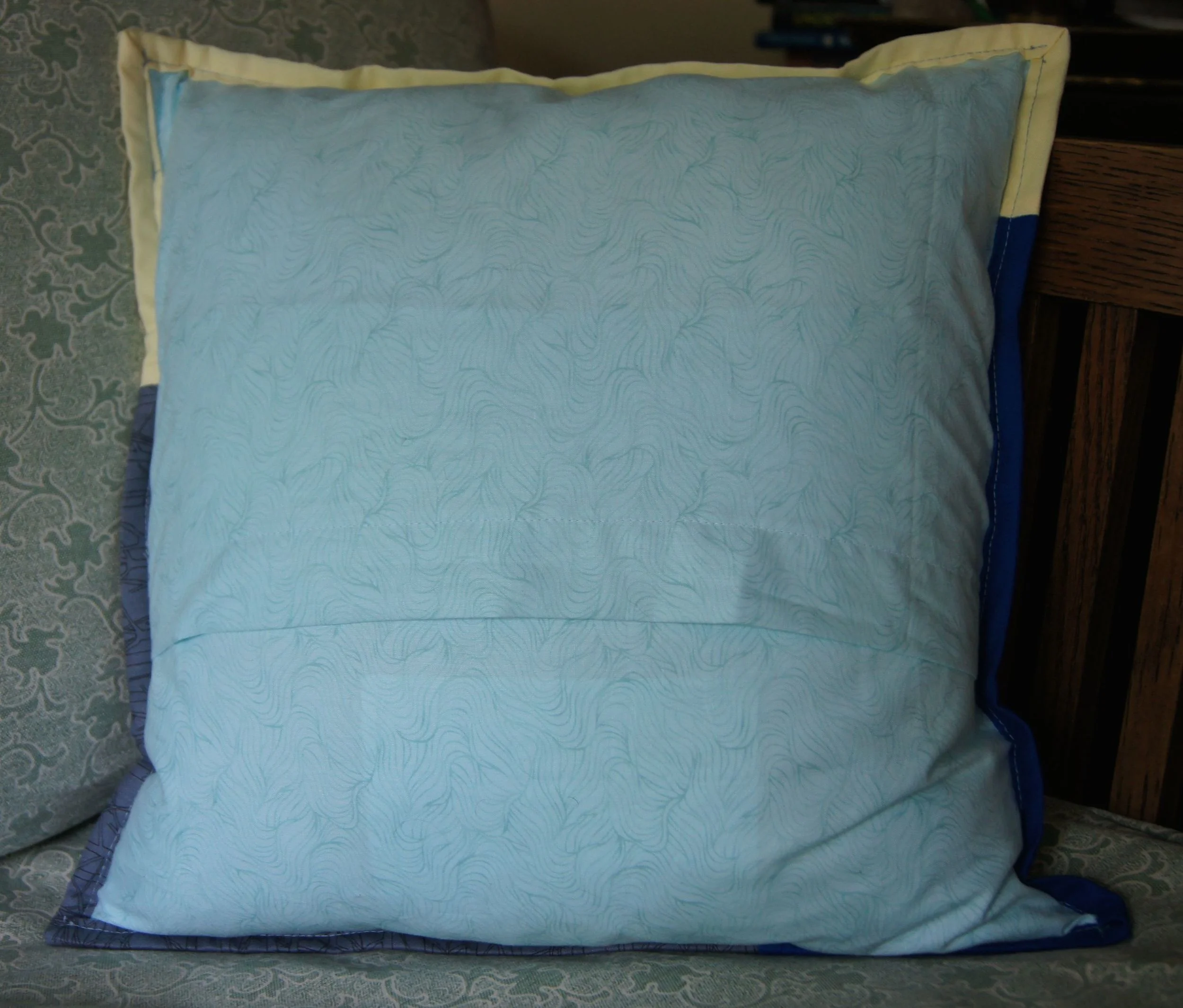
    9. To attached the envelope back I put quilted block right side facing DOWN. With RIGHT side up, I put the lower half of the envelop back on top of the quilted block. Then I put the upper half of the back on top of the lower half. It over-laps the lower half by several inches. The back pieces need to be adjusted so they exactly cover the pieced block.  I pinned all the pieces in place so they wouldn't shift.

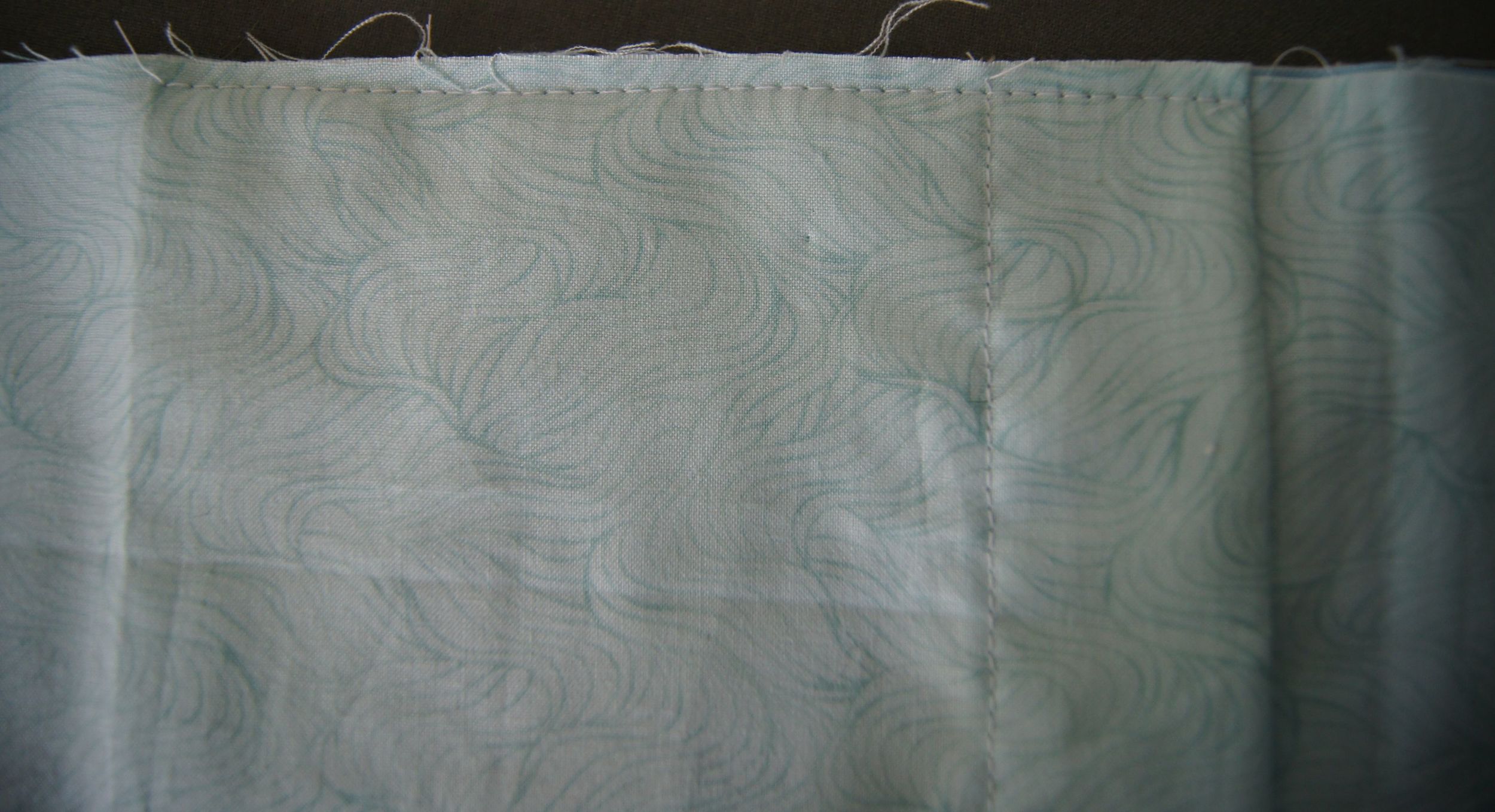
   10.  Then I tacked down the over-lapping sections of the 2 envelope pieces sewing a very scant 1/4 inch along the edge of the block so that this basting line would hidden inside the binding. 

Pillowcase tutorial 10.jpg
Pillowcase tutorial 11.jpg

   11.  With so many layers of fabric using a binding is a perfect way to finish this pillow cover.  I made a scrappy binding out of left over bits of bindings from other projects. I sewed on my binding entirely by machine, but any binding application method will work.

Completed Pillow Cover without the pillow form

Completed Pillow Cover without the pillow form


    12.  A photo of the finished quilt is at the top of the post.  Here's the back of the pillow cover. 

Pillowcase tutorial 13.jpg
Pillowcase tutorial 15.jpg

My sofa has a great new look!  I think this is absolutely (maybe!) the last post with the Vikings!

TAGS: Quilt As You Go, Pillow Cover, Tutorial, improv piecing, Quilt-As-You-Go Made Modern, Jera Brandvig


Powered by Squarespace 7