Search
  • Information
    • About
    • Contact
    • Privacy Policy
  • Blog
  • Subscribe
  • Tutorials
    • Tutorials
    • Doll Clothes: Photos and some Patterns
  • Suggested Reading
  • Quilts: My Original Designs
  • Gallery: Color Studies
  • Gallery: Quilts I've Made
  • Doll Making Blog Posts
  • Recent blog posts
  • Quilts Based on The Improv Handbook for Modern Quilters
Close
Menu
Search
Close
  • Information
    • About
    • Contact
    • Privacy Policy
  • Blog
  • Subscribe
  • Tutorials
    • Tutorials
    • Doll Clothes: Photos and some Patterns
  • Suggested Reading
  • Quilts: My Original Designs
  • Gallery: Color Studies
  • Gallery: Quilts I've Made
  • Doll Making Blog Posts
  • Recent blog posts
  • Quilts Based on The Improv Handbook for Modern Quilters
Menu

Sleeping Dog Quilts

SLEEPING DOG QUILTS

February 28, 2019

Visible Mending on a Mitten

by Judy Tucker


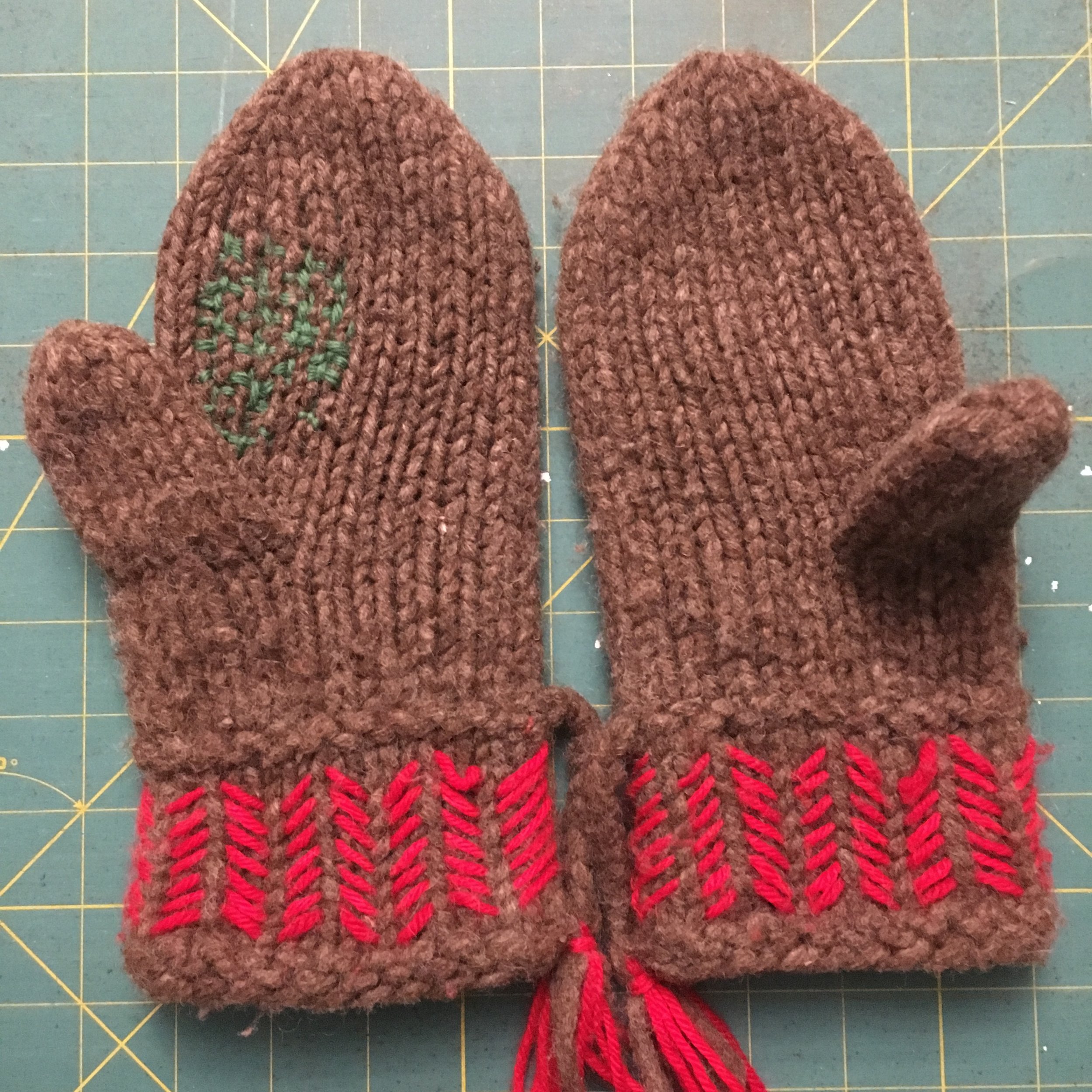
Darning repair of a wool mitten

Darning repair of a wool mitten

Darning repair of a wool mitten

Darning repair of a wool mitten

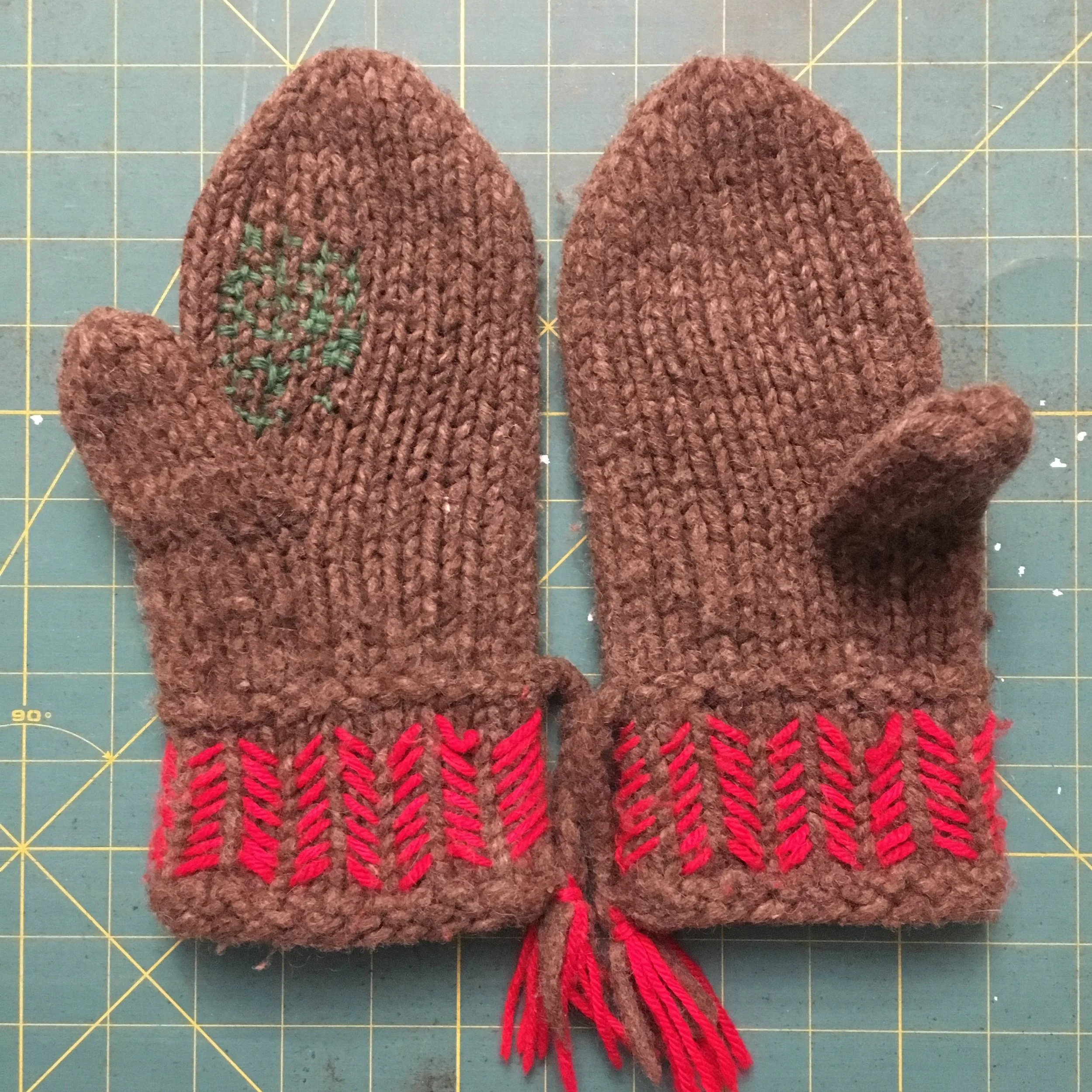
My niece gave me this pair of hand knit mittens for Christmas a few years ago. I often wear them to walk the dogs.

I use a two hand hold on dog leads. The right hand holds the lead with the handle loop over my right right thumb. The left hand holds the lead on the side that is attached to the dog. It allows me a very secure hold and allows me to steer the dog, to bring her closer to be or let her have more length. As a result, the lead slides along the palm of the left mitten a lot.

With time, the yarn on the left palm was getting thin. And even worse, the mitten was getting drafty!
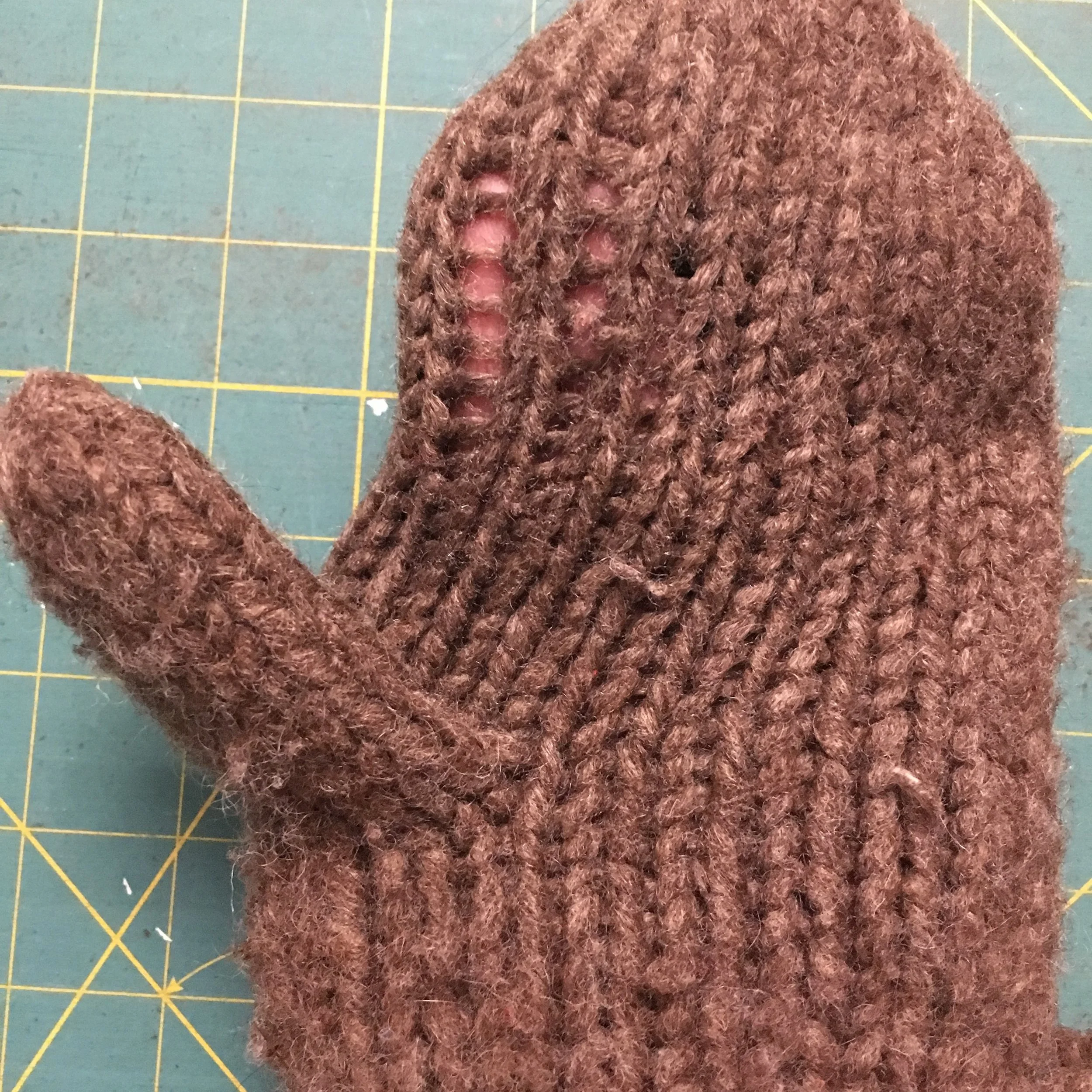
Thinning yarn on a mitten

Thinning yarn on a mitten

For this repair I referenced Visible Mending by Jenny Wilding Cardon and Tom van Deijnen’s great mending blog, tomofholland .

I used a basic woven darn. I used plain green worsted wool yarn which I knew would felt from the heat of my hands as I wear the mitten. In fact, after just a few days, the repair is already starting to settle and felt into the brown wool of the mitten!

I stitched an vertical in-and-out on the “ladders” between the rows. After doing that in all the threadbare areas, I wove in and out across horizontally across the rows. It was a bit tricky—the horizontal green yarn kept sliding under the larger brown yarn. As a result, my darning isn’t perfectly woven, but it has turned out to be just fine.
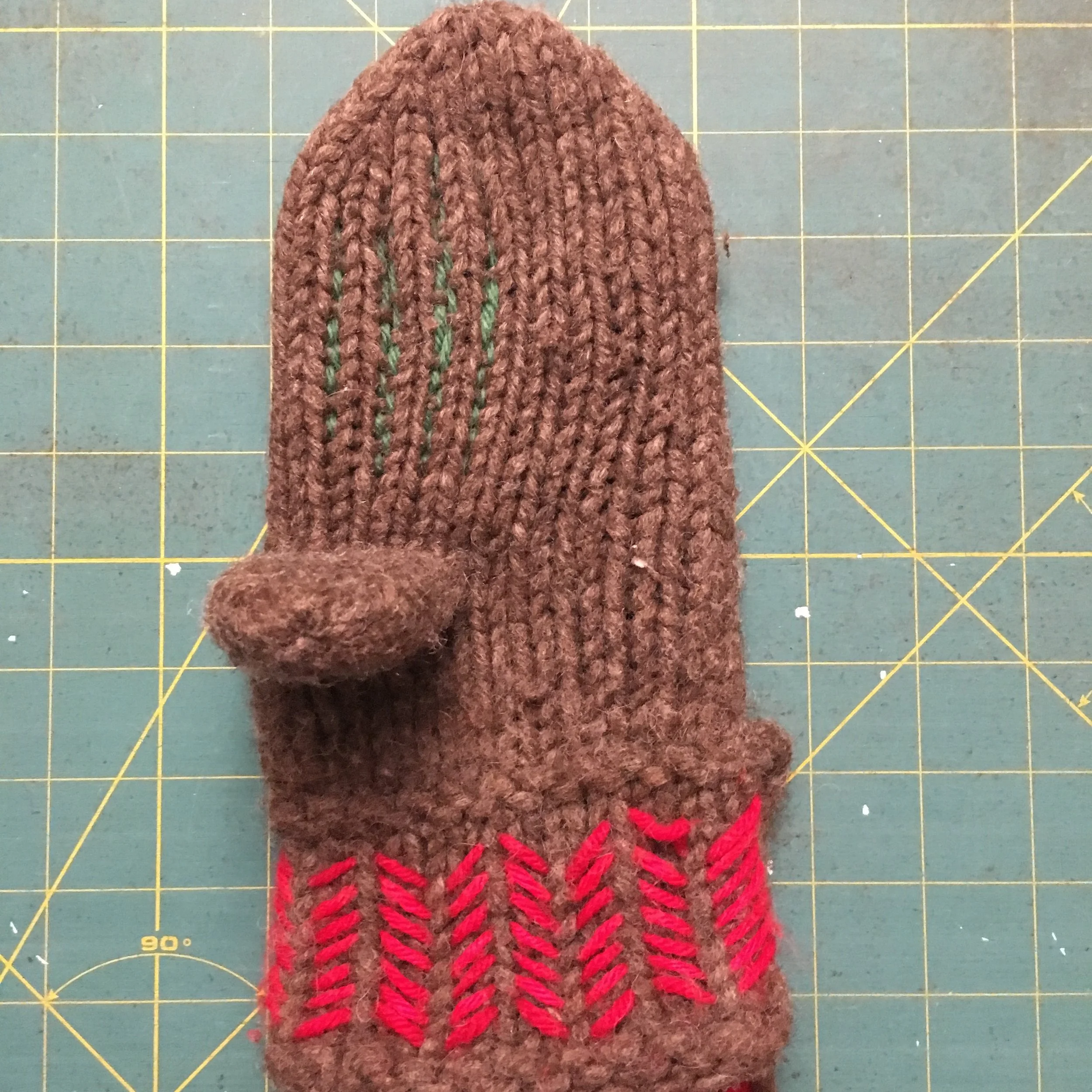
IMG_8871.JPG
IMG_8873.JPG

This project wraps up my mending month of February! I had a lot of fun learning more about mending and am happy to have repaired a pair of pants, a mitten and a quilt!

And that’s not all! At the Proper Bostonian Quilt Guild meeting the day before Valentine’s Day, we had a hands-on workshop on Japanese Boro mending which uses multiple layers of patches with sashiko stitching. We were told there was going to be a Valentine workshop but not what we where going to be doing. So I was delighted to find out it was another take on what I’d been doing all month!

Here is my Boro Valentine. All supplies, including the hand-painted wood frame, were supplied by the woman running the workshop. Pretty sweet!!

BoroValentine.jpg


Notice: This blog is not monetized: I do not use affiliate links. When there are links in a post, they are to give credit to another creative person, because I like or have used a product, or to help the reader easily find supplies for a project.
TAGS: Visible Mending, Mending visibly, Visible mending knit mitten, Visible mending of a knit, Boro mending, sashiko mending, sashiko, Darning repair of a mitten, Darning mitten repair


February 7, 2019

Book Review: "Make and Mend" by Jessica Marquez

by Judy Tucker


IMG_8784.JPG
IMG_8784.JPG

Continuing the mending theme, I want to share two books I recently acquired. There are other books on mending but I’ve only purchased two. Today I’ll review a book about sashiko stitching and next week on mending book with a wider focus.

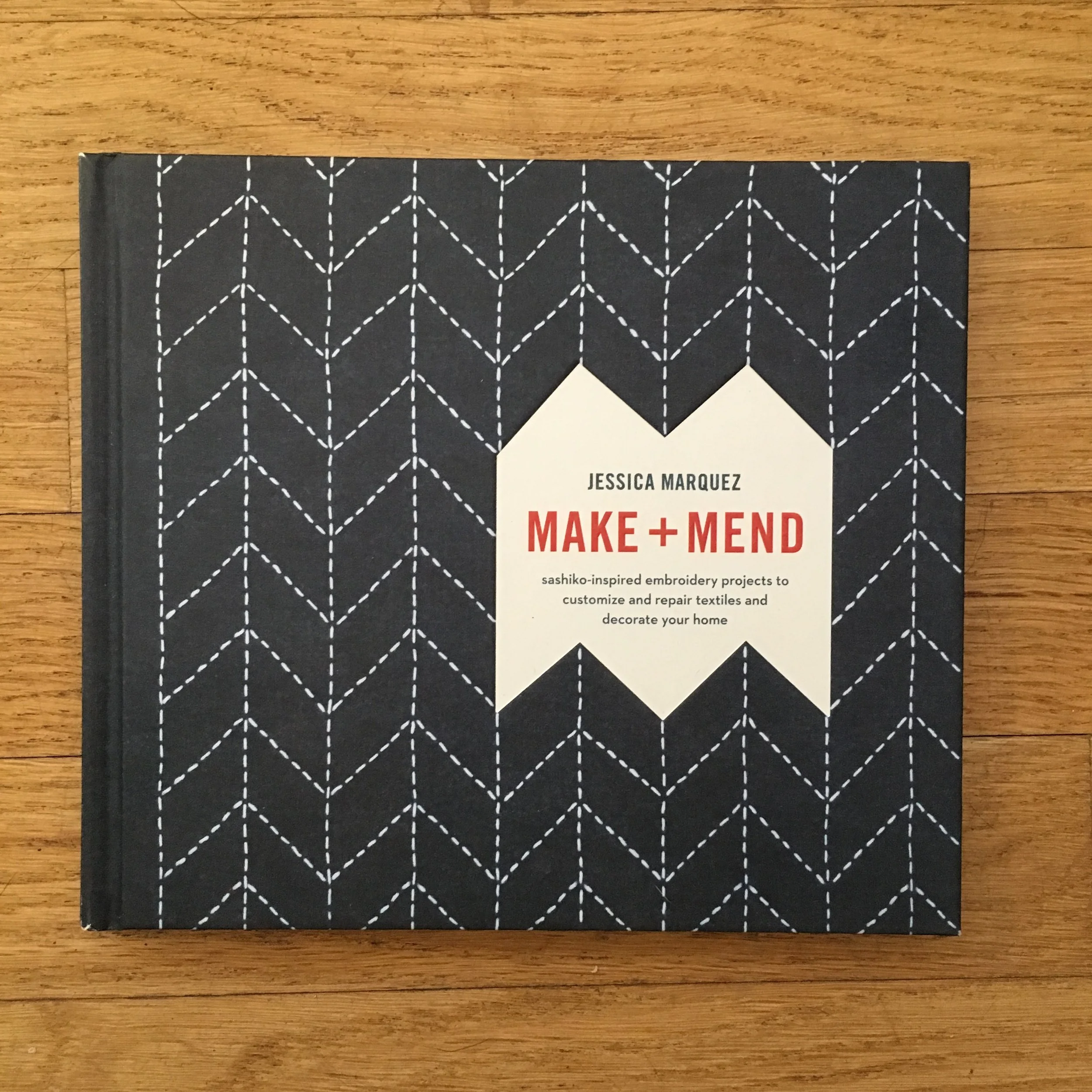
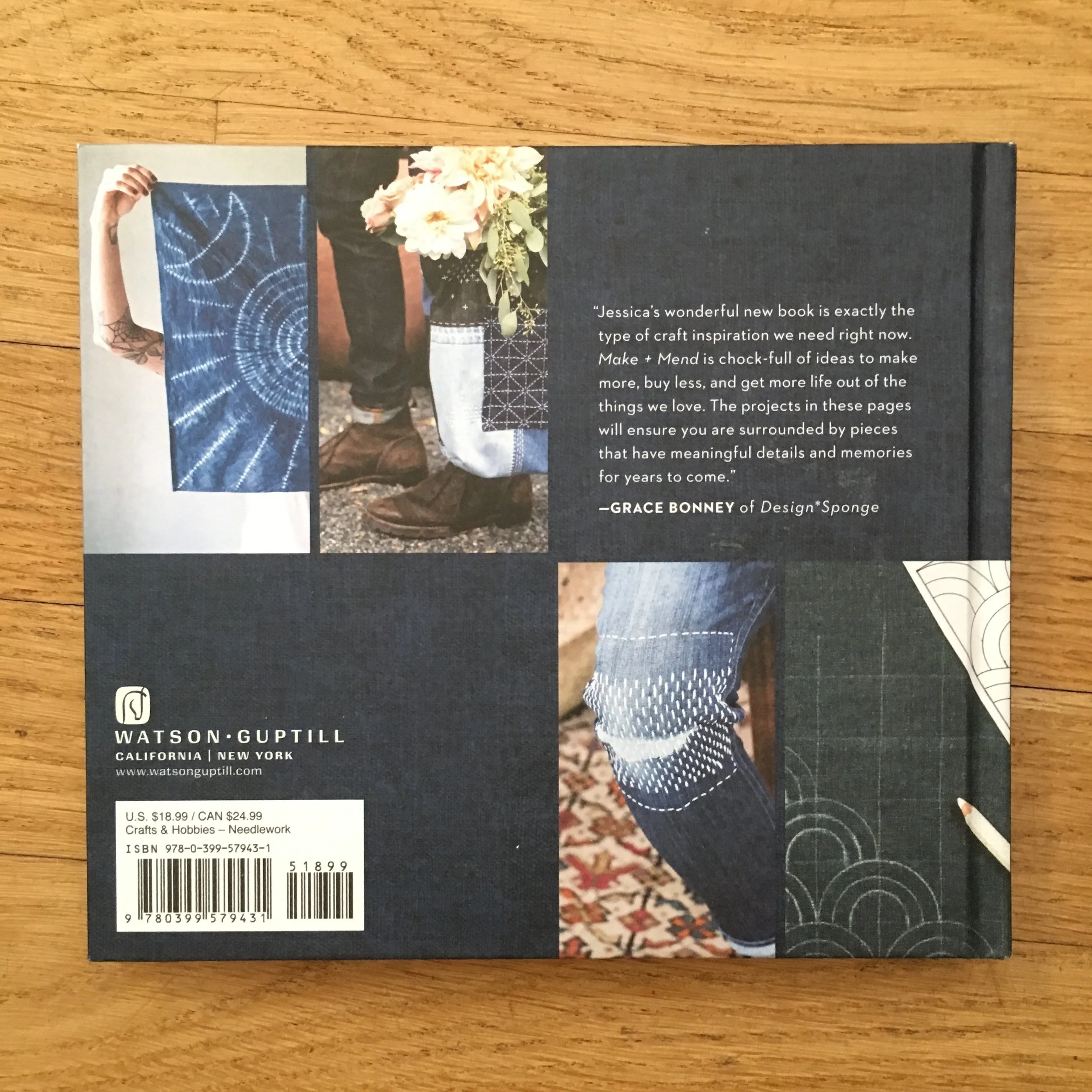
Jessica Marquez’s book, Make and Mend, covers the art of Japanese sashiko stitching. Sashiko is a straight running stitch that is usually sewn in geometric patterns. The first part of the book discusses the technique, tools and thread and then has a variety of new projects that can be made. The projects run from a simple sachet to a really great market tote bag (see the back cover below for a glimpse of the tote).

The second part of the book is about mending. Techniques include patching jeans, darning using a pattern of stitches, applique and three ways to change a hem.

Finally, at the end of the book, there is a great collection of 20 sashiko pattern samplers with instructions on how to stitch the patterns.

This is a beautiful book. It’s the sort of book that makes book lovers sigh with contentment. Just holding it makes me happy!

If you want to learn sashiko stitching, or if you are a perfectionist and want your mending to be truly beautiful as well as functional, this this the book you should get!

IMG_8785.JPG

As much as I love this book, I’m not a perfectionist. Next week I’ll review a book that is closer to my style—have fun, do it well, and get it done!

TAGS: sashiko, sashiko mending, Mending clothes, Mending visibly, Visible mending


Powered by Squarespace 7