Log Cabin Wonky Star Variation Tutorial

by Judy Tucker


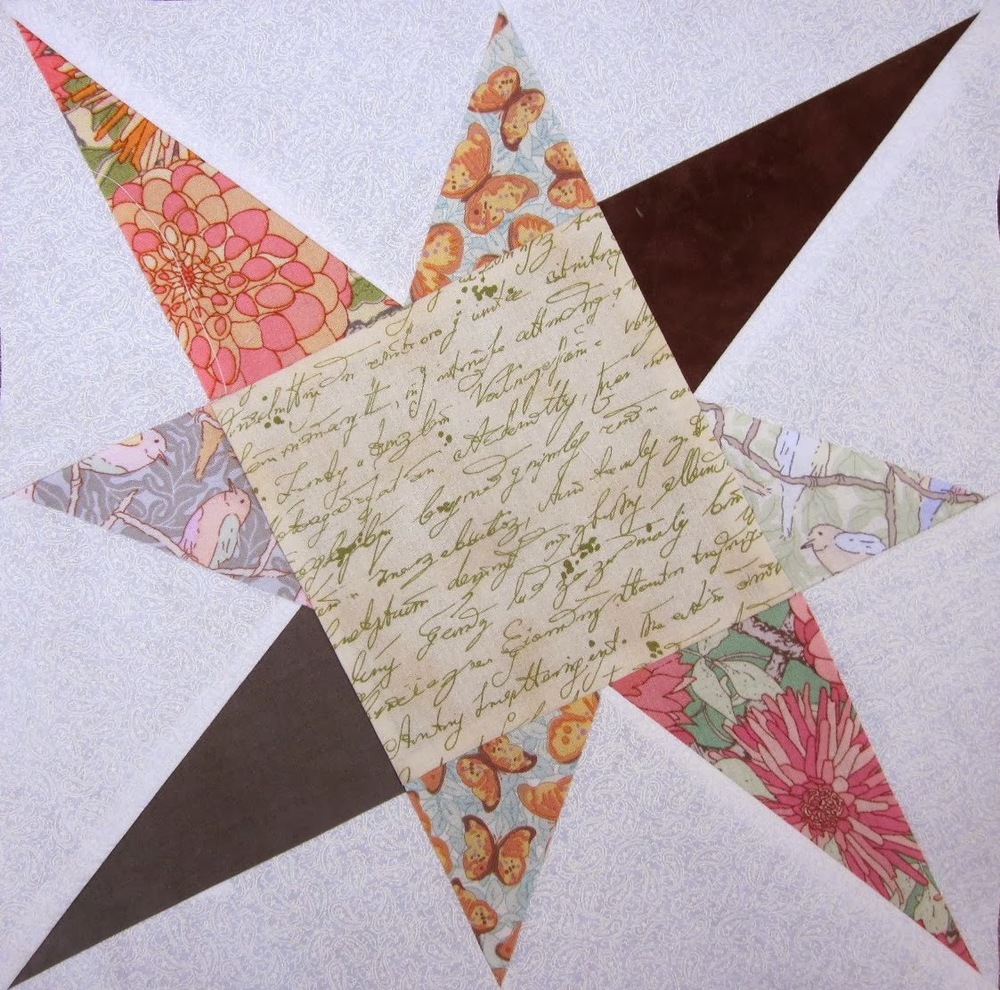
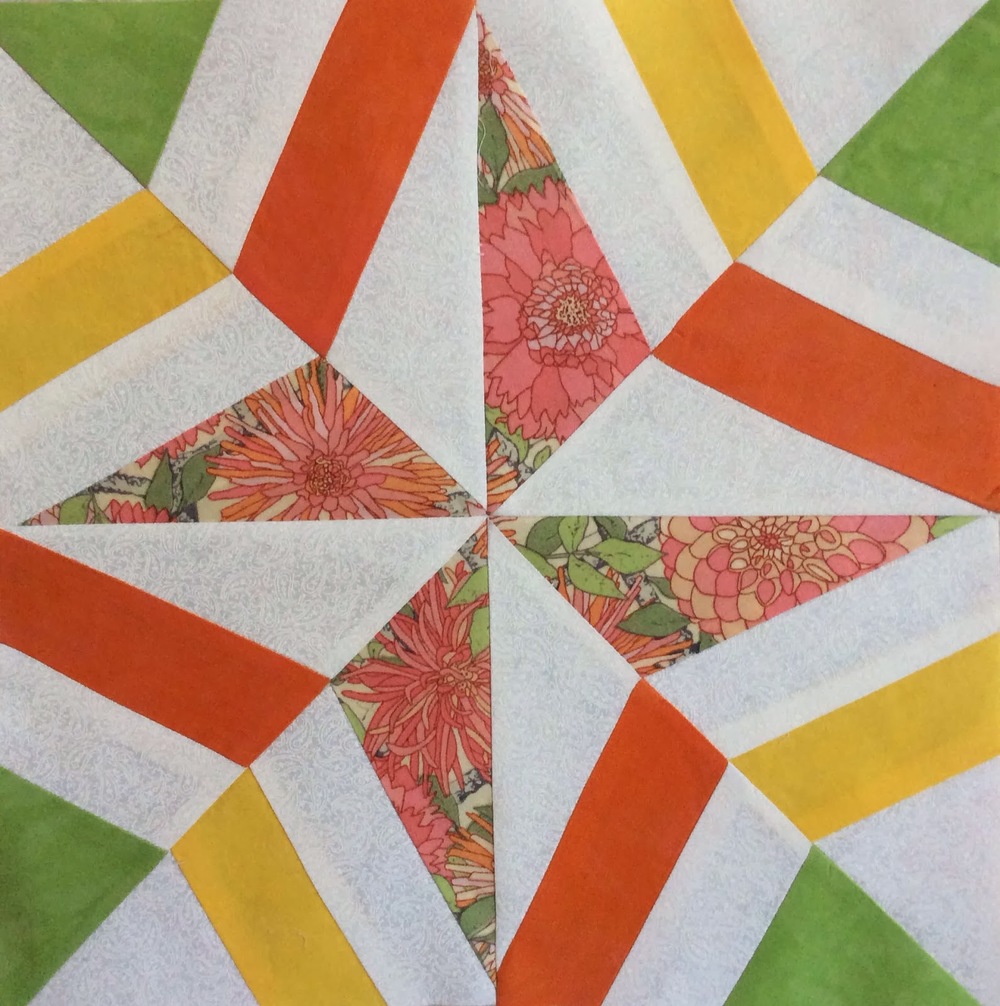
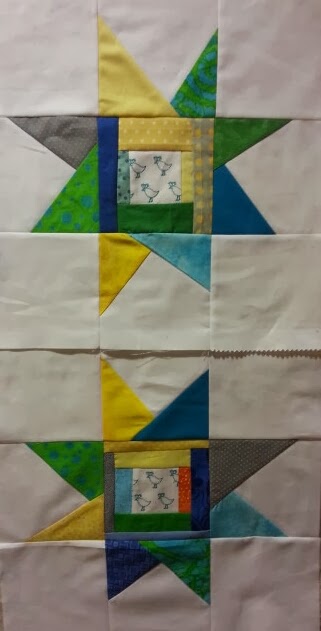
To make a Log Cabin Variation of the Wonky Star Block


Materials needed:
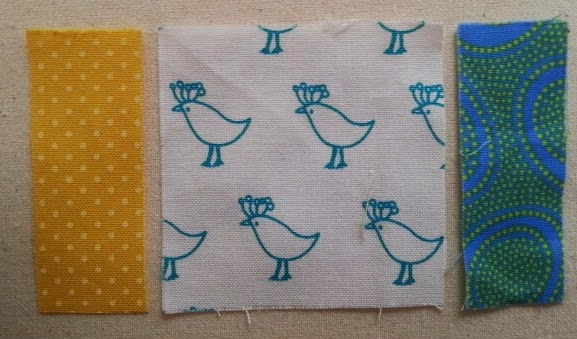
    2.5 inch square for the center of the Log Cabin block
    6-8 strings (strips 3/4 inch to 1.5 inches wide)  They can be symmetric widths or asymmetric. It's a modern block so it's up to you!

Directions:

The center block for the Wonky Star needs to measure 5 inches (finishes at 4.5 inches)

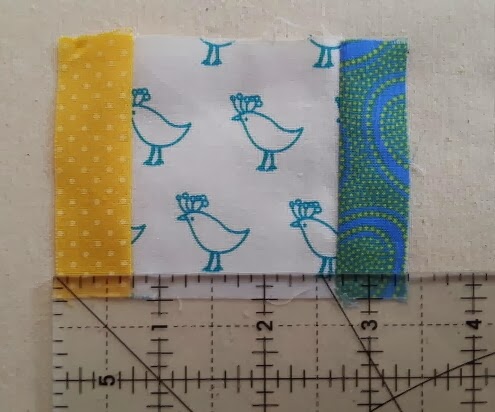
Cut the first 2 strings 2.5 inches and sew to the right and left sides of the center square


Measure the width of the block you have just sewn


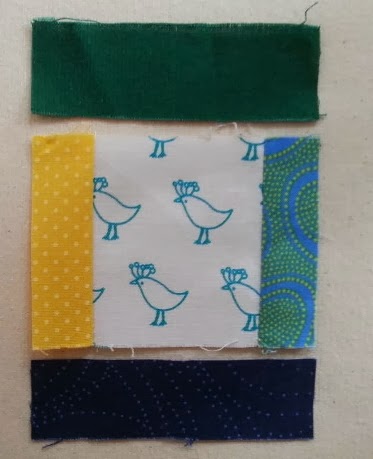
Cut 2 more strips to and sew to the top and bottom of the block.  


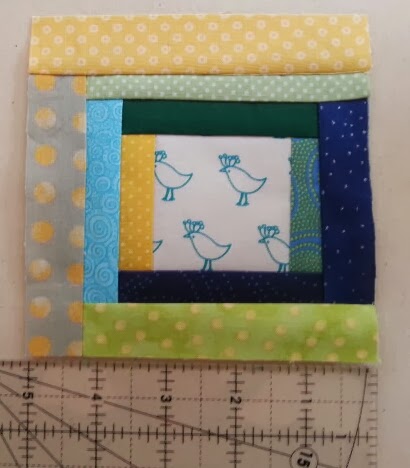
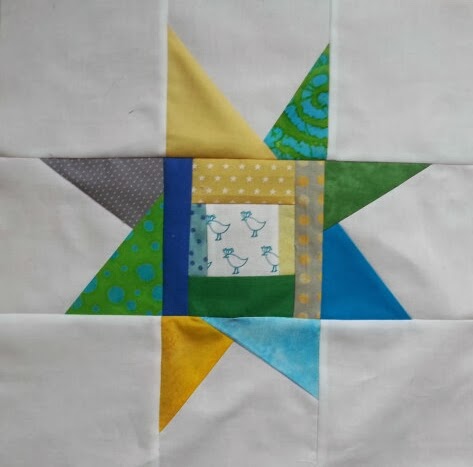
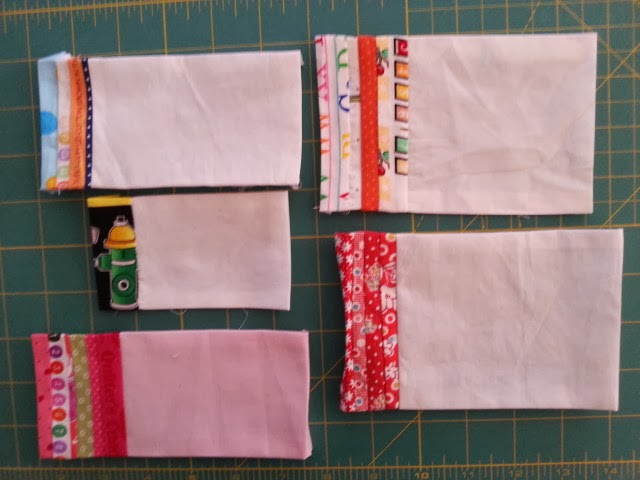
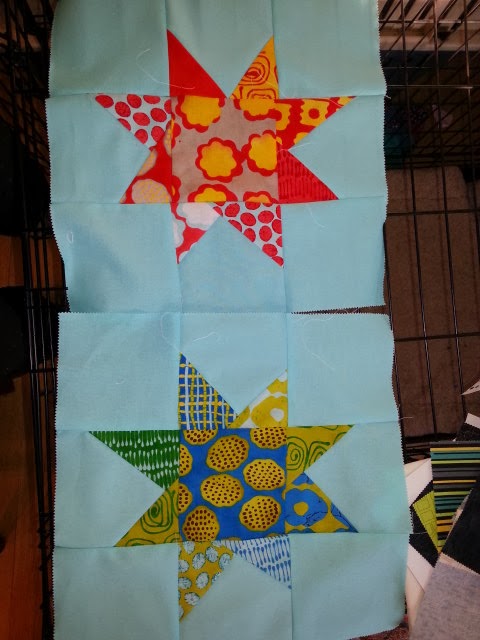
Continue to build this block until you have a block at least 5 inches square.   If your block is larger than that, trim it to 5" square.  This block ended up asymmetric when it measured 5 inches.  That's fine. 


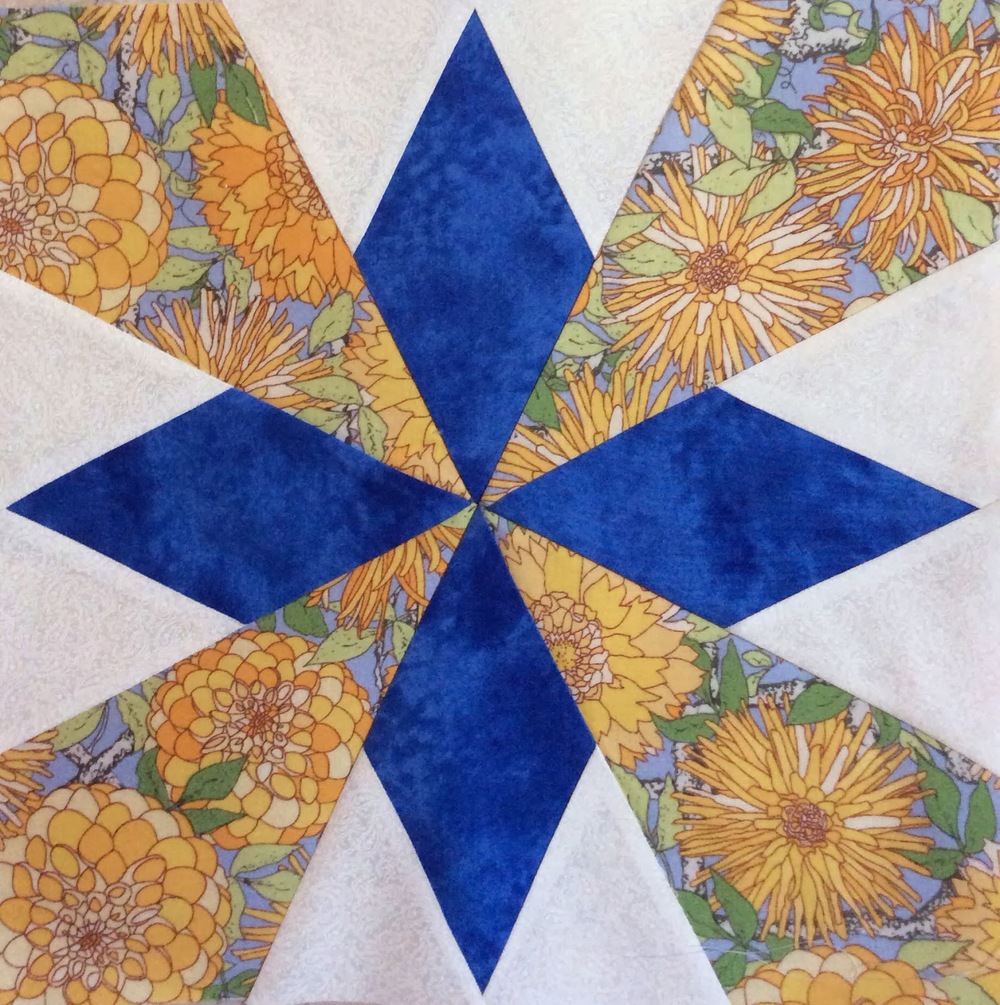
Now you are ready to make your Wonky Star.  I recommend that Victoria Gertenbach's  excellent Wonky Star Tutorial to make the Wonky Star block.

Have fun!


Log Cabin Variation of the Wonky Star Block

by Judy Tucker


Recently my friend Janet was asked if our guild, Proper Bostonian Quilters, would be interested in making a Log Cabin quilt for The Somerville Homeless Coalition.  They Coalition would like to raffle the quilt at a concert in December to raise funds for their charity.

Janet was really excited about doing this project and the Guild president approved the project.  We sat down to think about colors, design and logistics for making the quilt.

Our guild made a Log Cabin raffle quilt, Cabin in the Woods, 3 years ago for our biennial show.  And a couple months ago we made "Urban Cabin" from Modern Designs for Classic Quilts by Kelly Biscopink and Andrea Johnson.  We wanted the guild members to be excited about making a block for the quilt.  Would they have Log Cabin block fatigue?

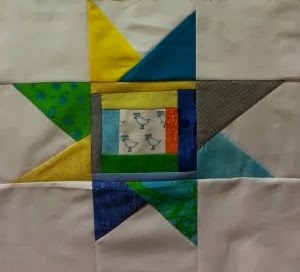
At the last meeting the group really enjoyed seeing the Wonky Star Quilts from our New Years Day Quilt Along.  Our guild has been very interested modern quilt blocks this year and this one is fun and easy to make.  But it isn't a Log Cabin. But then I realized we could put a Log Cabin in the center of some of the blocks.  We could have a modern block with a Log Cabin!


Janet was reading about Log Cabin blocks and discovered that red is often added to the block to symbolize the hearth in the home.  So we decided to add a little hot orange to 3-5 blocks in the quilt. 


The quilt will have 30 blocks.  10-12 blocks will have Log Cabin Centers.  The other blocks in the quilt will have solid center squares which we are supplying so that the quilt has some continuity. Each member making a block will supply the fabric from the star points from their own stash. 

Our background fabric is Kona White. 
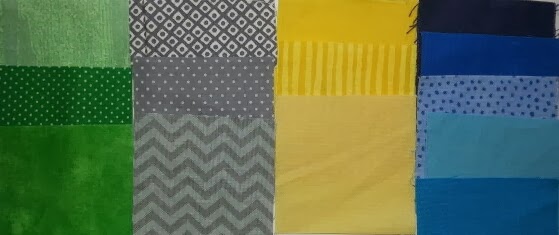
Here is our color scheme for the stars:


We are distributing the fabric for the blocks at our guild meeting tonight.  I'll keep you posted as our project progresses.

Two days after I designed this block, the new catalog arrived from Connecting Threads.  It has a kit for a classic Ohio Star with a Sunshine and Shadow Log Cabin in the center block!  I wonder, is going to be a new hot trend?

To make a Log Cabin Variation of the Wonky Star Block

Materials needed:
    2.5 inch square for the center of the Log Cabin block
    6-8 strings (strips 3/4 inch to 1.5 inches wide)  They can be symmetric widths or asymmetric. It's a modern block so it's up to you!

Directions:

The center block for the Wonky Star needs to measure 5 inches (finishes at 4.5 inches)

Cut the first 2 strings 2.5 inches and sew to the right and left sides of the center square


Measure the width of the block you have just sewn


Cut 2 more strips to and sew to the top and bottom of the block.  


Continue to build this block until you have a block at least 5 inches square.   If your block is larger than that, trim it to 5" square.  This block ended up asymmetric when it measured 5 inches.  That's fine. 


Now you are ready to make your Wonky Star.  I recommend that Victoria Gertenbach's  excellent Wonky Star Tutorial to make the Wonky Star block.

Have fun!


Notes on making a Pressing Board

by Judy Tucker


I've been watching the Craftsy quilting course, Inspired Modern Quilts taught by Elizabeth Hartman. It's great class and Elizabeth is an excellent teacher.
In the second class she shows several options for making a design wall and how to make your own pressing board.

I use the fuzzy flannel back of  a plastic picnic tablecloth for a design wall so I was all set in that department.  But I didn't have a pressing board so I decided to follow her directions and make one.

Elizabeth's video tutorial in the Craftsy class is excellent.  She also has a tutorial on her blog using a TV tray rather than the piece of plywood board used in the video.  Here is the link to the tutorial on her blog,  "Oh, Fransson!" :  TV Tray Pressing Board Tutorial.  If you want to make your own board, I recommend that you either take the on-line Craftsy class or use the tutorial in her blog.

This project only took me about 15 minutes.  Well, actually it took a bit longer because my staple gun was 2 staples short of a completed project!  But I learned something when I went to refill the staple gun:  5/16 inch staples work beautifully tacking the canvas to the plywood board but 1/2 inch staples where just too long and didn't staple flush to the board.

I did add one extra step when I made my pressing board that wasn't in her Elizabeth's tutorial.
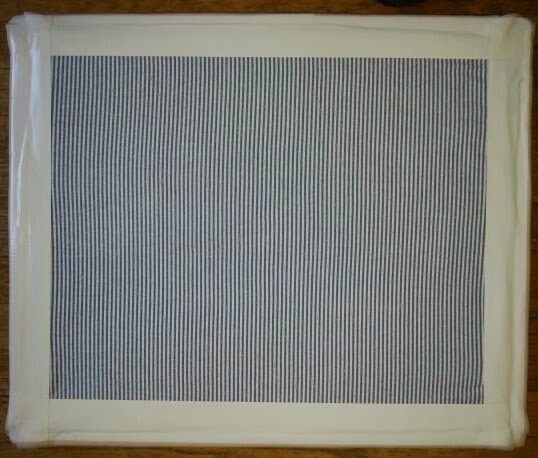
I put a piece of flannel backing to the back side of board to cover up the exposed plywood.  I was concerned the unfinished plywood might scratch a surface when I put the board down to use it or if rested the board against something when not in use. The flannel prevents that potential problem.

Make your own pressing board!  It's a quick project and a lot of fun to do.


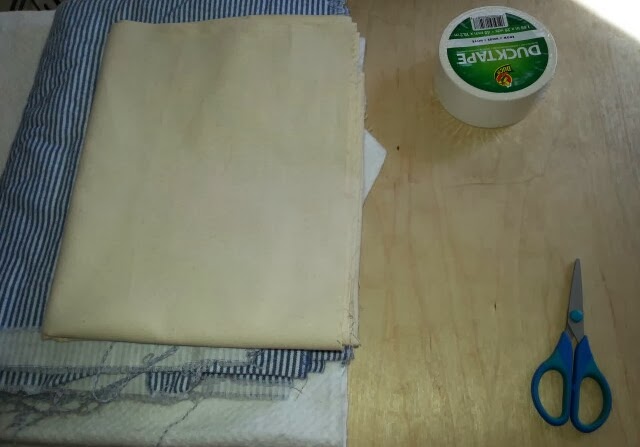
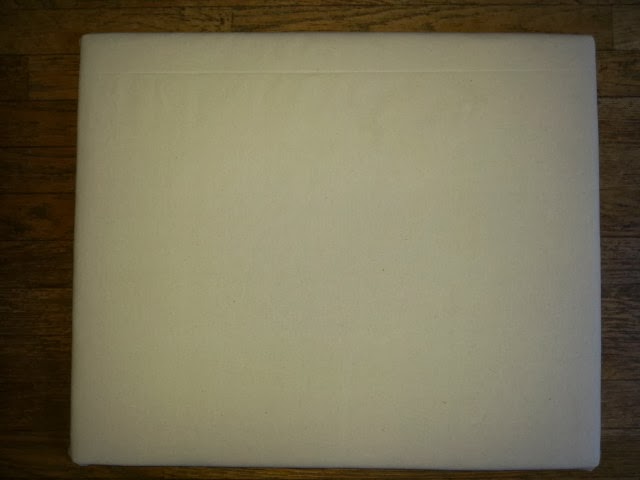
Supplies: 1/2 inch plywood board, canvas, 100% cotton batting, duct tape
and a staple gun (not shown)

Finished pressing board

Back of the pressing board with the flannel covering

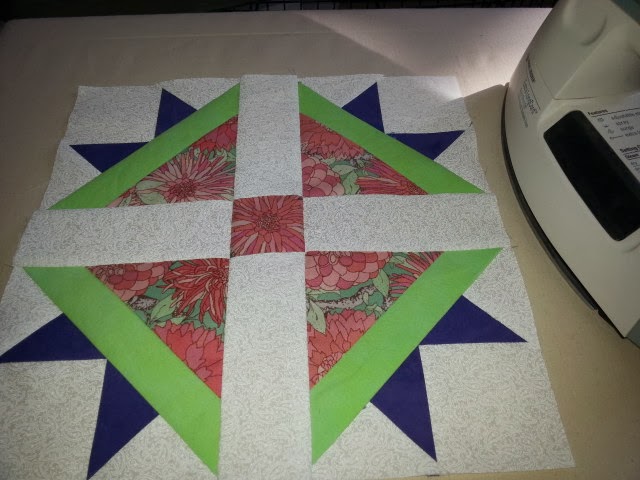
The new pressing board in use!


Sewing Partial Seams in a Quilt Block: Vintage Quilt Revival

by Judy Tucker


Today's challenge included making 2 more blocks for the Flickr Group Vintage Quilt Revival Block Along.  As the weeks go by, the block assembly is getting increasingly difficult.

Last week, for the first time, there was a block with a partial seam.  I had never made a block with a partial seam.  I took a quick look at the instructions and went for it. Not the best plan! I needed to do some un-sewing and a bit of fudging to complete the block.  It looks all right, but I know it could have been better.


Classic Tilted Star Block
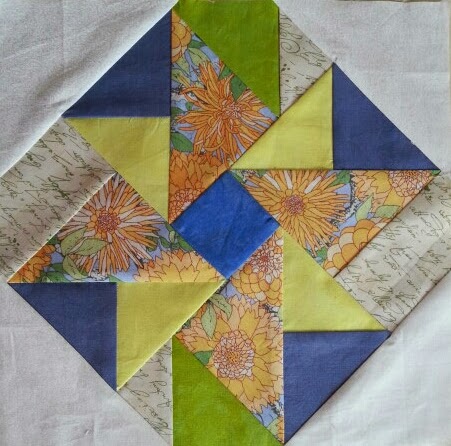
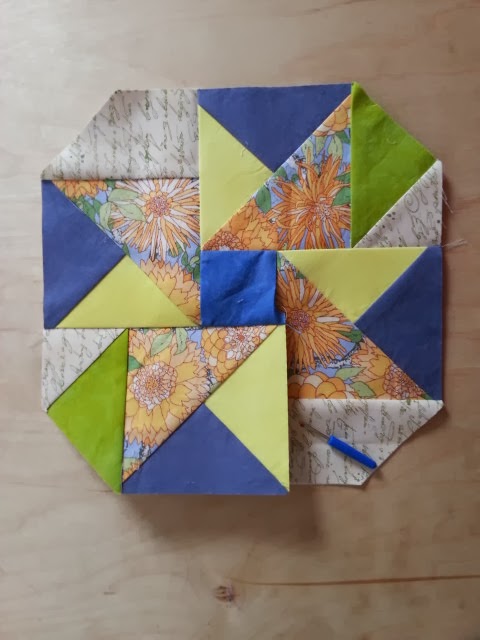
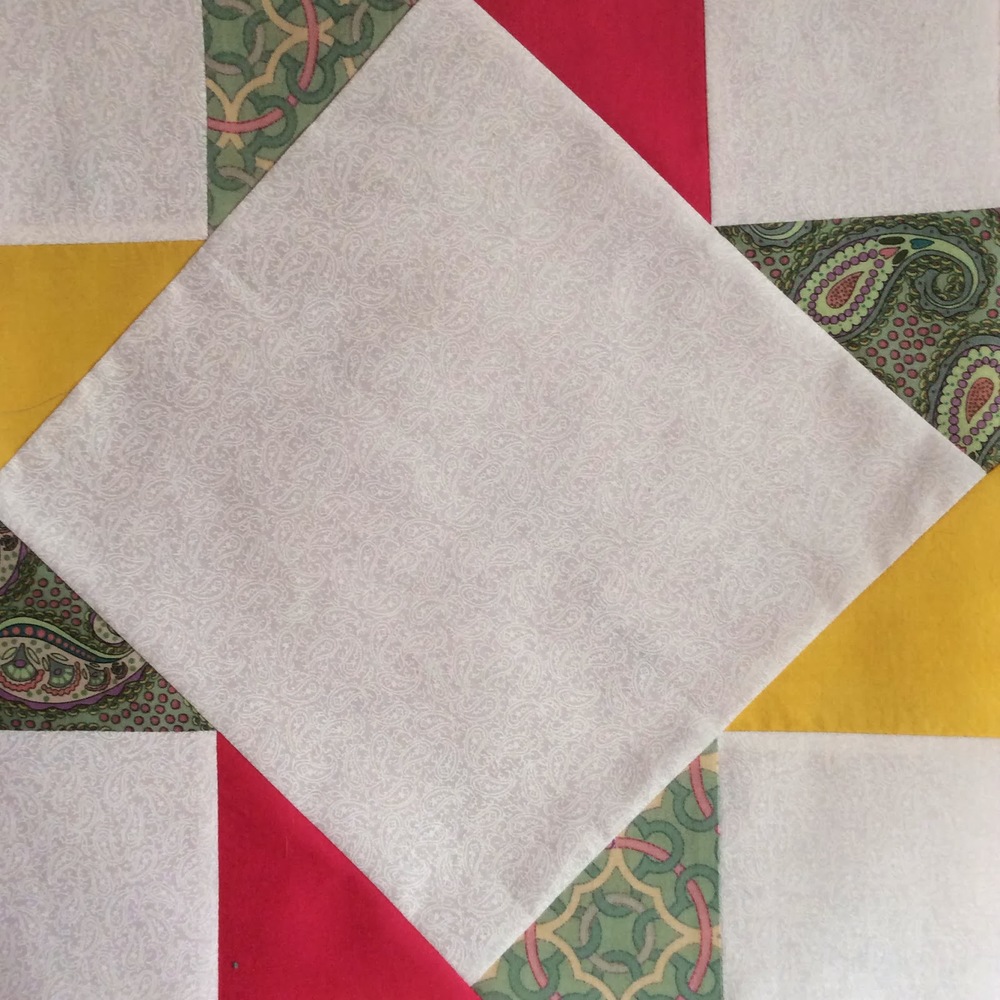
So this week, the Classic Double Windmill block, also has partial seam in the construction of the block. This time I decided to carefully read the instructions and study the excellent diagrams in the Vintage Quilt Revival book before I started to sew. The tricky component in this block is the central square. You have to build the block around it. 

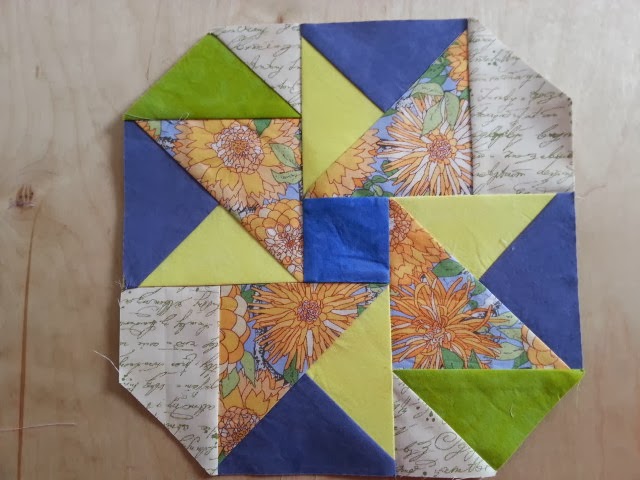
Classic Double Windmill Block

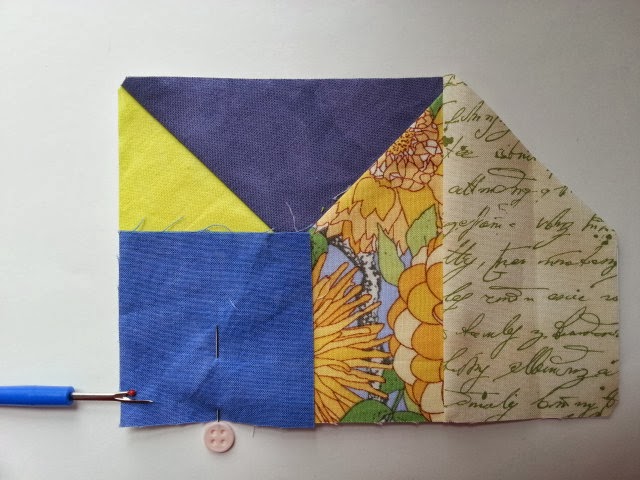
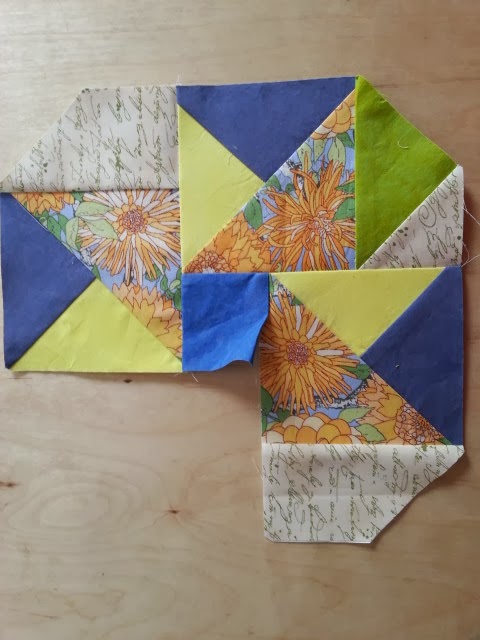
I paper pieced the 4 basic components of block. Then I started to sew them to the bright blue center square.  The first seam is sewn from the left edge where the seam ripper is pointing, stopping HALF way across the blue square where the pin is located. That will leave half the square piece loose so the 4th piece of the block can be attached to it.
 

Here is the block with the completed half seam.


The next piece of the block is attached to the longest side of the block.


 Add the 3rd piece.  So far, so good.


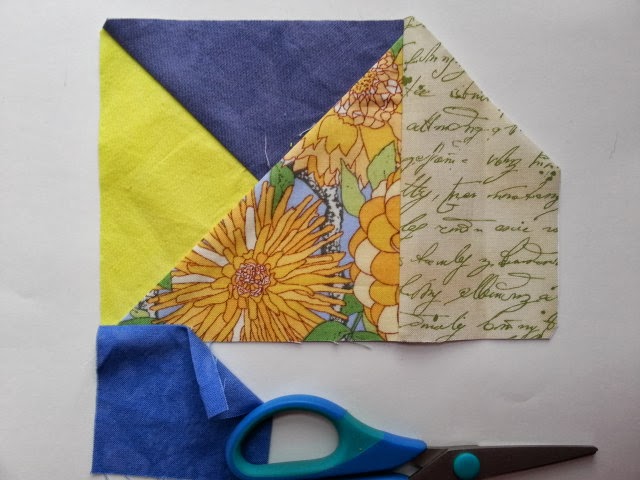
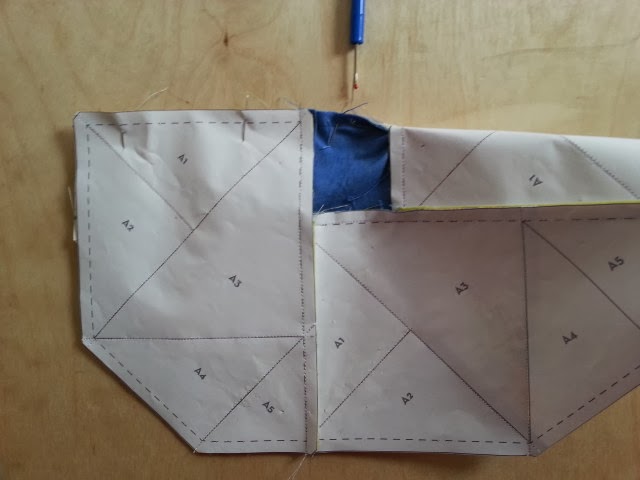
Now the fun begins.  The 4th piece of the block is attached to the long side of the 3rd piece of the block which includes the last full free edge of the blue central square.  The photo below shows the block after that seam has been sewn.
You can see there is a open edge (indicated by the seam ripper) that includes the partial seam of the blue central block


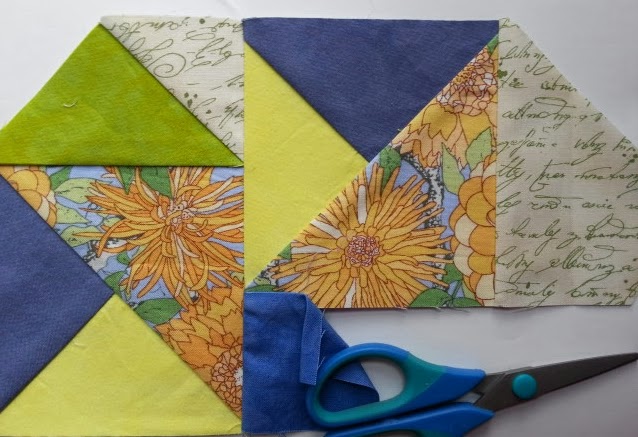
Finally sew together the last seam of the block.  Start sewing at the middle of the blue central square (indicated by the seam ripper) and sew away from it toward the outer edge of the block.  That helps prevent a lump in the middle if your pieces don't exactly match perfectly. 


It works!!  This turned out really well.  It just needs 4 white triangles added to the sides of the block to complete it. (See finished block above).


Here is the other block I completed today.  It has a lot of pieces but it wasn't hard to assemble.  A quilt made with just this block is really fun.  The outer arc on the block connect to arc in the adjacent block making a  concave diamond, which has star qualities, as a secondary pattern!   I only have one block but the book has a great photo of the completed "Make it Spin Again Quilt."  

Classic Wheel of Fortune Block

I wonder if any of the blocks for next week have partial seams….


Selvage Quilt Labels

by Judy Tucker


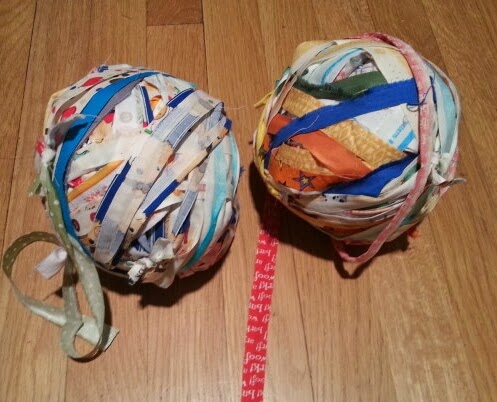
I started thinking about saving and using my selvages after reading Amanda Jean Nyberg and Cheryl Arkison's  Sunday Morning Quilts.  It's a great book of modern scrap quilts.   In the book the showed knitted a little rug with selvages they had tied together end to end.  (The instructions are for knitting a selvage rug are in the book).

Well.  That got me going!   I collected 2 rolls of selvages and knit myself a bath mat.  It's a bit wonky because I'd never knitted with cotton fabric strips and it took me a while to get my tension even.   After finishing the rug I  realized it is best to use brightly colored strips when you start and finish the rug.  It is fine to have all white scattered in the middle of the rug but the margins should be bright, not white.

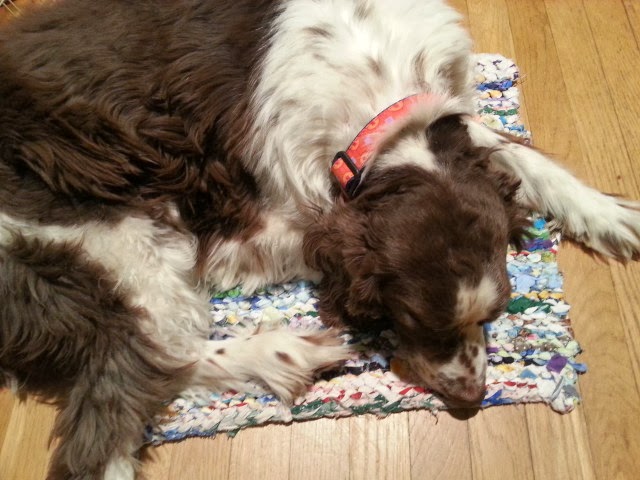
I tried to get a photo of the knit rug but Tipper had another plans!

I now have 2 more rolls of selvages waiting to be used! Treasure!


If you want to see some amazing projects using selvages, check out Aylin's Selvage Love tab on her blog ayliN-Nilya.blogspot.de.

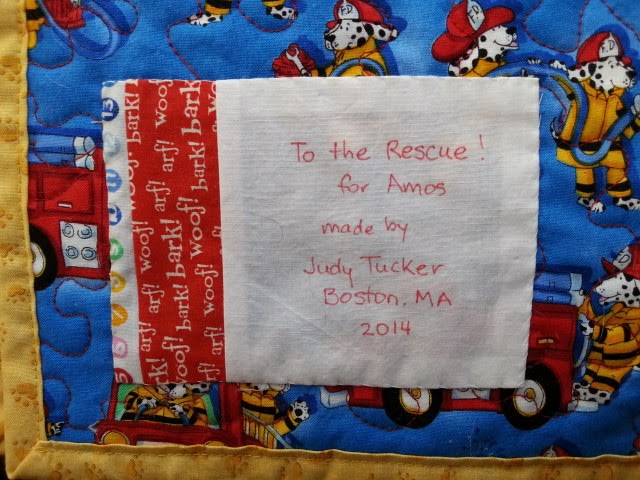
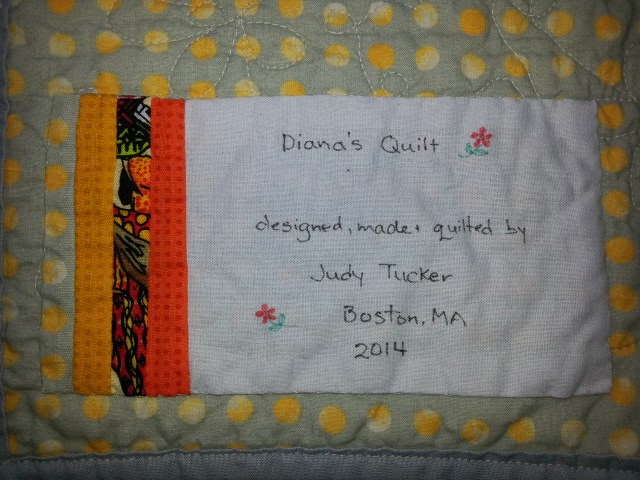
Recently I have been using selvages to make quilt labels.  I sew several selvages together with 1/8 inch seams and attach a piece of plan fabric to write the quilt information. I try to use selvages from the fabrics in that quilt.  The selvages strips aren't very flexible once they are sewn together so I've starting adding a piece of fabric trimmed from a block, border or backing of the quilt.   Here are some of my Selvage labels:


They are a lot of fun and sometimes they add a bit of design information to the quilt! Give it a try!

Strip Pieced Baby Quilt Finished with Hexagon Stop Light: To the Rescue!

by Judy Tucker


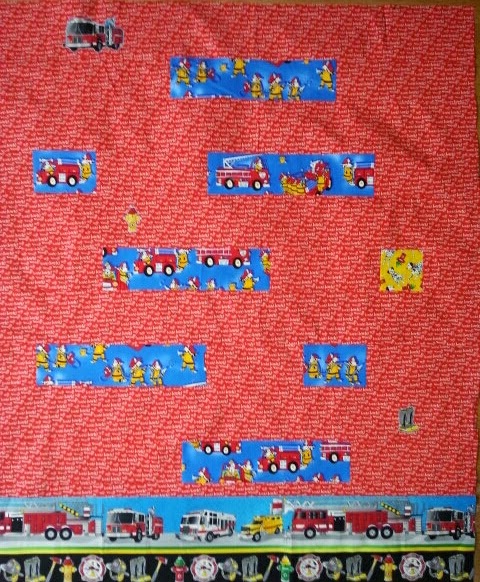
The Doggie Firefighter quilt is done!   After I posted it as a WIP several days ago, I keep thinking about it.  I really thought the design could still be improved more.

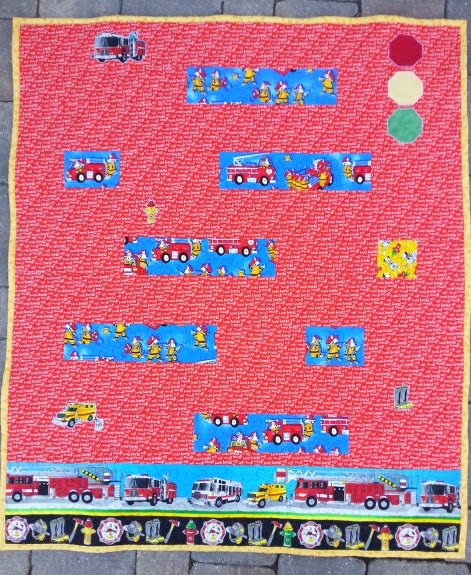
I ended up adding one more vehicle  appliqué--the yellow fire truck.  And I dug in my stash and found red, yellow and green 3 inch squares.  I trimmed the squares into hexagon shapes and added them as appliqués to make a stop light.  That turned out to be a great addition to the design and adds some extra fun to the quilt.


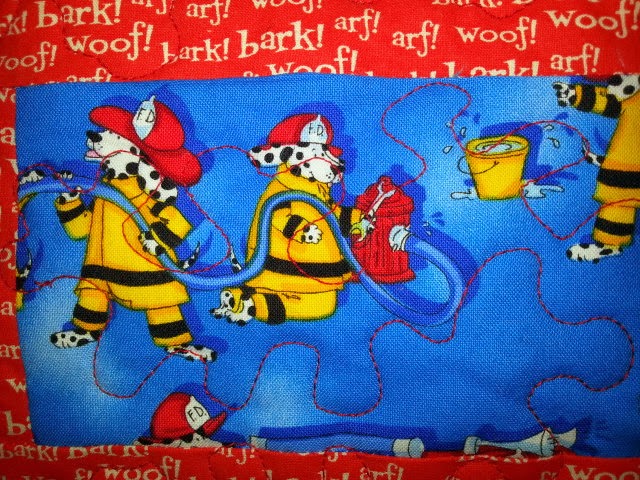
Today I did the quilting and the binding.  The body of the quilt has a meandering quilting pattern with scattered stars.  I slowed my quilting pace in the blue accent bars and did my best to make the meandering look like puzzle pieces.  Since small children play with large piece puzzles, I think my young neighbor might find the quilting design fascinating when he gets older.


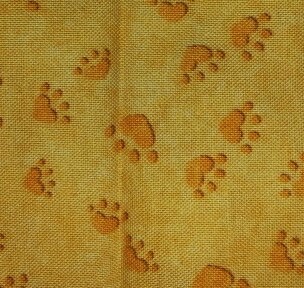
The binding fabric is a tiny dog paw pattern, gold feet on yellow back ground.  It's a perfect finish for this Doggie Firefighter quilt!


This was an interesting project. I learned a lot about how to improve a design in the process of creating this quilt.

Now that the the sewing all finished, the quilt is in the washing machine, getting clean, soft and baby friendly!

Crocus Machine Applique: Spring Breaks Out

by Judy Tucker


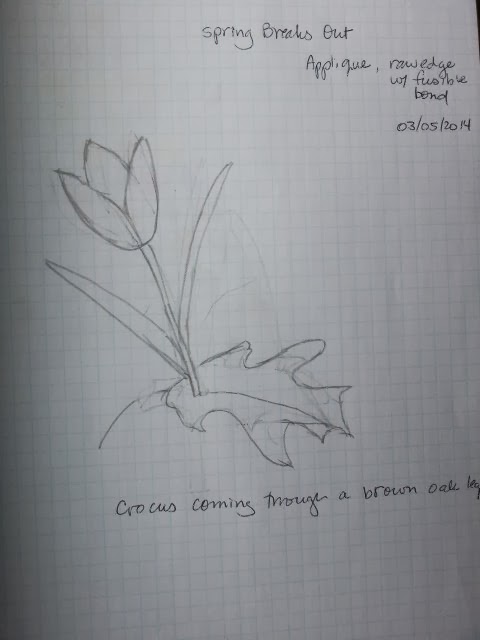
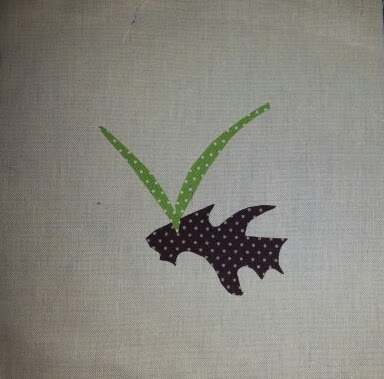
With temperatures in the 20s again today and everything in the yard under a thick layer of icy snow, I was thinking about Spring and crocuses coming up through last Fall's fallen oak leaves.  It's going to be a few weeks before that will happen here, so I decided to make a crocus block!

I drew out a design and sat back and looked at it.  It was going to be difficult to turn this one into a paper pieced pattern but it is well suited to machine appliqué.


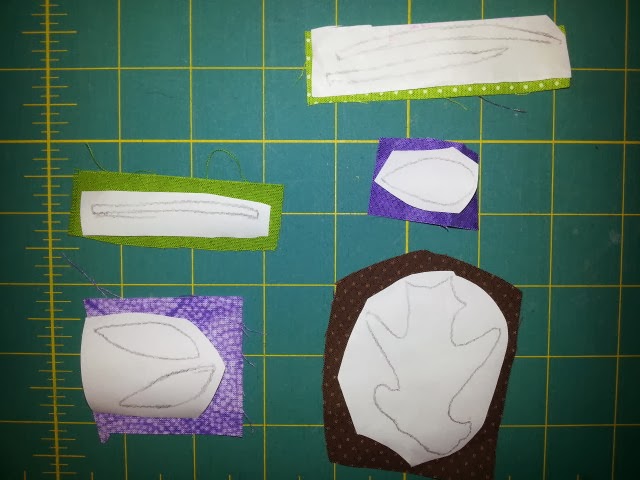
I traced the parts of the flower and leaves individually with a seam allowance where the pieces overlap so I could tuck the edge of one fabric under its neighbor.
Then I scanned them into my computer.  Once scanned, I flipped the image horizontally to create the mirror images needed for the fusible appliqué.


I chose Heat-n-Bond lite to fuse the appliqué to the background material because I could see through it to trace the pattern pieces onto the paper on the back side of the product. Use what you have or like using.

Cut out the appliqué pieces so you can fuse them to the back of the fabrics for your flower and oak leaf.
Leave room around the your drawn lines. You will cut them to the exact shapes needed after fusing the Heat-n-Bond to your colored fabrics.


Place the cut pieces on BACK side of your fabric.  Double check to make sure you aren't fusing the pattern to the front of the fabric.


Fuse the Heat-n-Bond lite to the fabric per the directions. Then cut out the individual pieces of the appliqué.

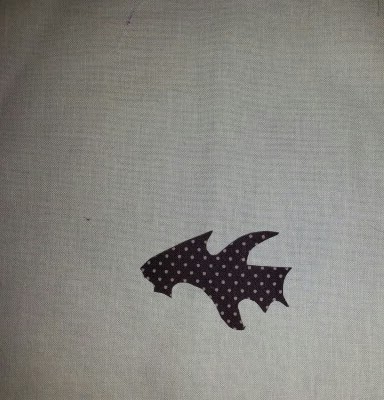
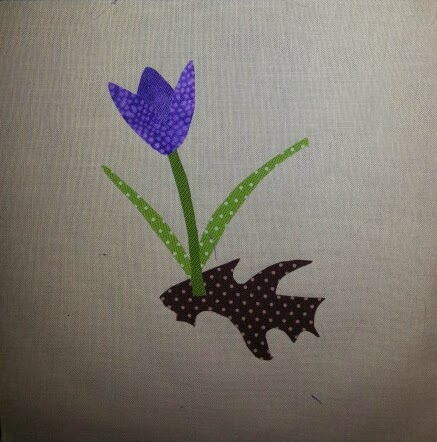
Fuse them to the background fabric in this order:
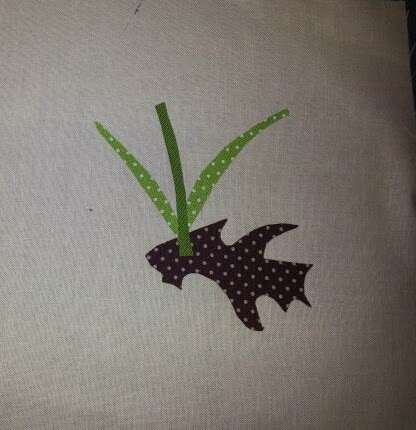
     Oak Leaf
     Right and Left crocus leaf
     Stem
     Center of crocus flower with Right petal next and Left petal overlying the center and Right petal.


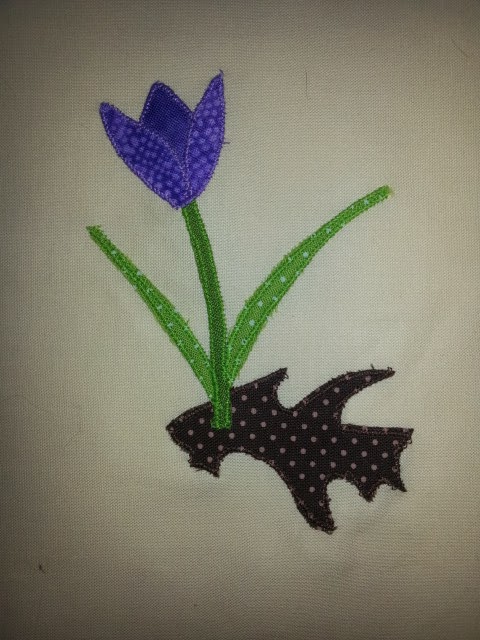
Machine appliqué the pieces with colorless mono filament thread in the bobbin, changing the upper thread to match the appliqué pieces.  Sew them down in the same order that you applied them to the background fabric.


Trim this block to 6 inch square.
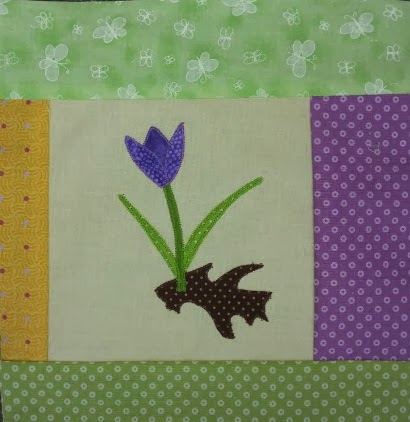
Add fabric scraps to both sides, then the top and bottom of the block.
Trim the final block to an 8.5 inch square.


 Spring has arrived!

 I don't have a plan for this block yet.  I think I'll put it away and see what else happens!

Here is a PDF you may download if you want your own crocus block. This design is copyrighted. You may only use the block for your own use.

 Crocus machine applique pattern: Spring Breaks Out


Wonky Star New Year's Day Quilt Along 2014

by Judy Tucker


New Year's Day 2013 three quilting friends and I got together to sew up an on-line New Year's Day Mystery Quilt.  We all had a great time sewing together but we were less thrilled about the process of doing a mystery quilt in a day.

We decided that this year everyone would be using same pattern (not a mystery) but everyone would use different fabrics.  We wanted the scope of the project limited in size so that the quilt blocks could be done in one day. That meant we needed a pattern for a lap sized quilt, preferable using pre-cut fabrics, so we could quickly get to sewing.

Green Fairy Quilts had a great sale on 5 inch Charm square packs in December.  They were selling out quickly so I ordered the Charms in 5 different fabric lines.  Having done that, I started searching the Internet for Charm friendly patterns.  When I found the Wonky Star Tutorial on The Silly BooDilly blog I knew I'd found our New Year's Day Project.  One of the women in the group checked it out and gave it the thumbs up.  No one else in the group knew what pattern we were using nor what fabrics they would get.  So it was a bit of a mystery until New Year's Day arrived. Very exciting.  

Everyone was instructed to bring their sewing machine and extension cord, a ruler, rotary cutter, and a culinary contribution for our potluck lunch.

Each New Year's Day quilter received 2 stacks of patterned Charm squares, 2 stacks of background Charm squares and 1 yard of the background material.  The expectation was that each person would sew 9 Wonky Star blocks.  Borders, backgrounds, bindings and backings were up to each person's ingenuity (and stash)!

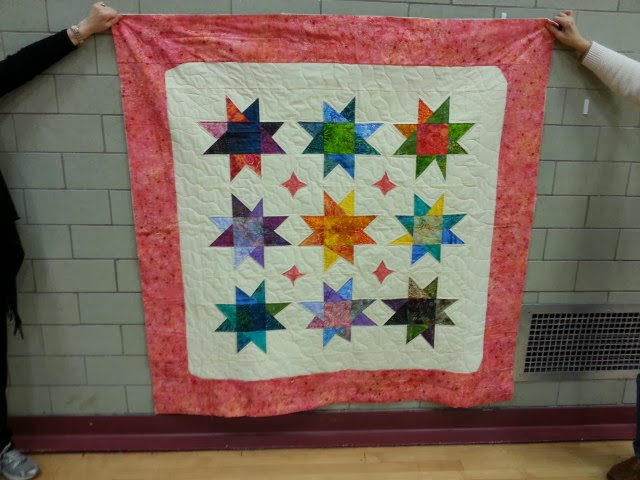
Each set of fabrics was numbered and the numbers were all put in a container. Everyone pulled a number and that was their fabric.  That turned out to be a huge part of the fun.  Ginny who normally works with blues and greens got orange fabrics…and discovered she loved working with them.  Janet got batiks of multi-colors which she found really challenging.  Kace had lights and darks in her stack of patterned charms and some of the light charms just didn't work in the stars. In the end, everyone felt challenged by the fabric but is delighted by the resulting quilt!

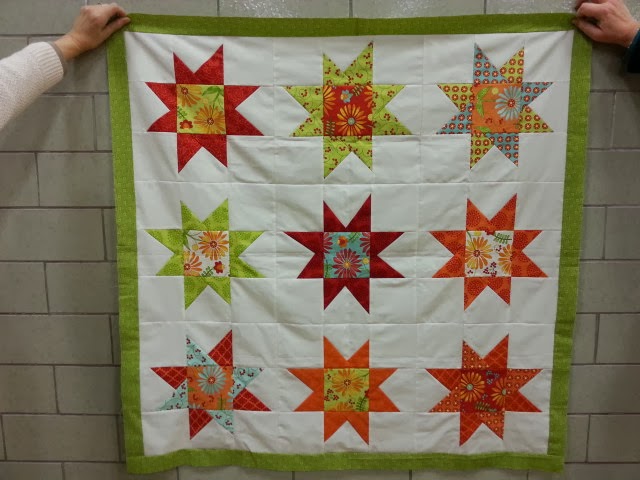
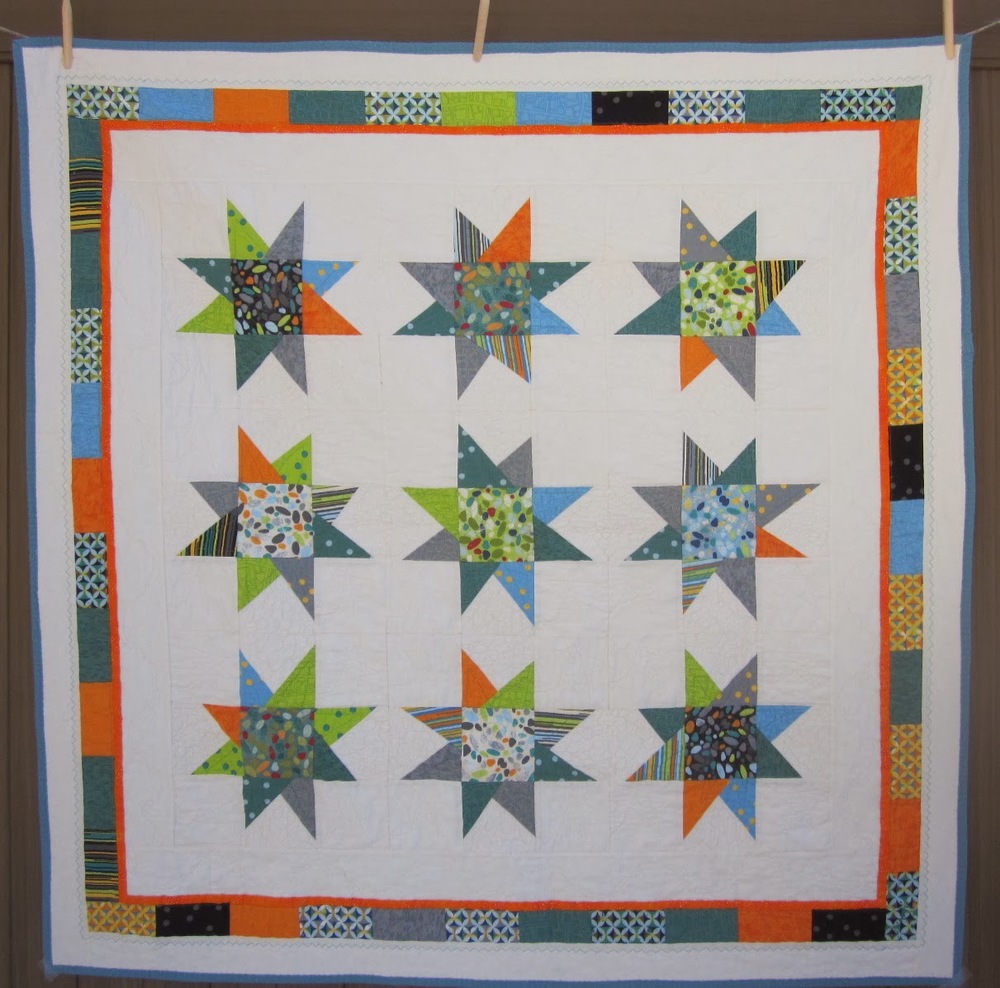
4 of the 5 of us were at Guild the other evening.  Everyone brought their quilt or WIP (work in progress) to show at Show and Tell.
Here they are!
Kace

Ginny

Janet

Judy

Sharon's WIP. (Photo taken on New Year's Day)

We have had such a great time working on this project!  
We are already talking about New Year's Day 2015!  

Strip pieced Baby Quilt: To the Rescue

by Judy Tucker


Making this baby quilt turned out to be a good lesson in designing a quilt. A design that looks great on paper doesn't always look so wonderful once it is sewn together!

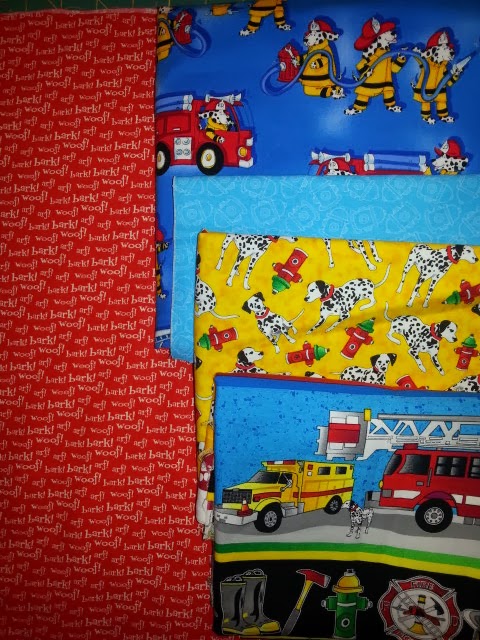
I wanted to make a quick baby quilt for a neighbor who just had a baby boy.  I wanted the quilt to be cute, but I didn't want to spend a lot of time making it.  I had 2 sets of left over fire and rescue children's fabric and and some text fabric that I didn't use in another project.  I had ample fabric to make a small baby quilt.


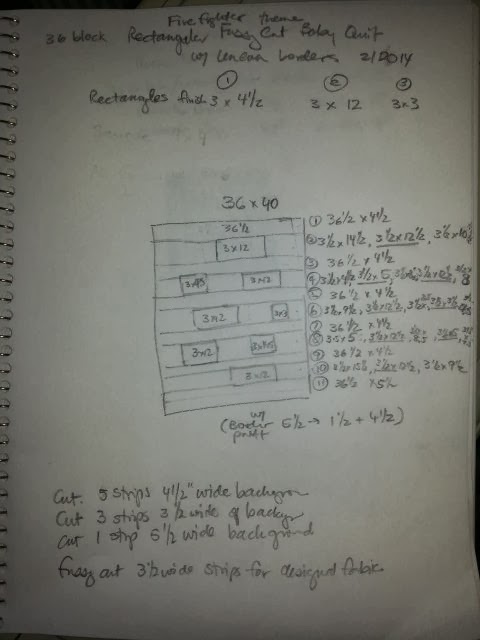
Here is my sketch for the quilt, and the initial cutting instructions.  One strip came turned out to be 1 inch too long when the pieces were sewn together, but I never expect a pattern I'm designing by hand to 100% mathematically accurate.


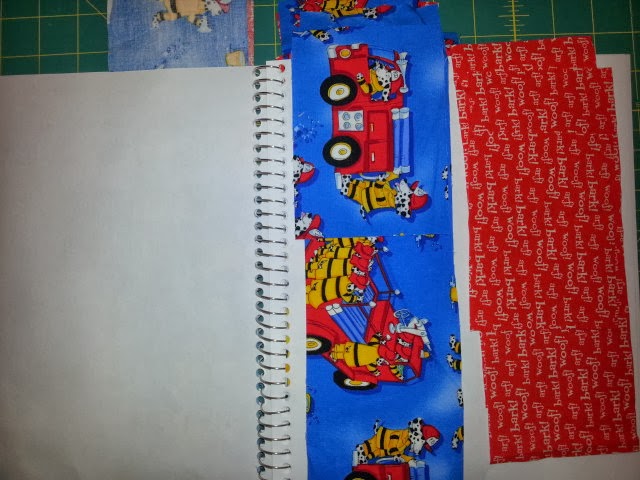
When I'm making strip quilts I put all the pieces of each strip between subsequent pages of my design book.  This does a good job of keeping the strips separate and in order.


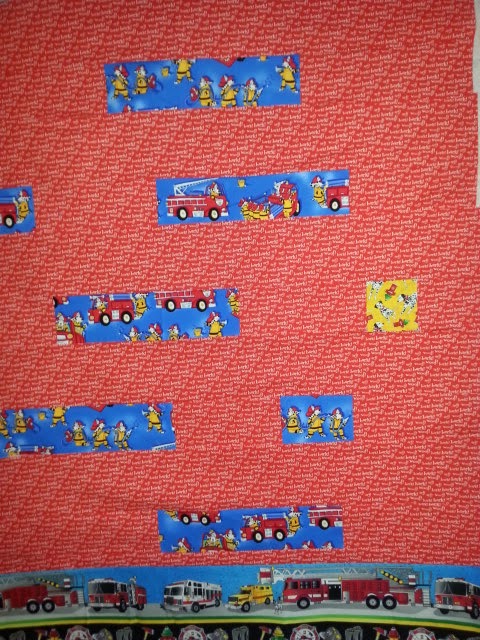
The quilt top went together very quickly.  I was feeling really pleased thinking this pattern was going to turn out to be a zippy "quilt top in an afternoon" project. But before I finished sewing all the strips together,  I put them up on the design wall.  Hmm.  There wasn't anything wrong with it, but it just looked boring.


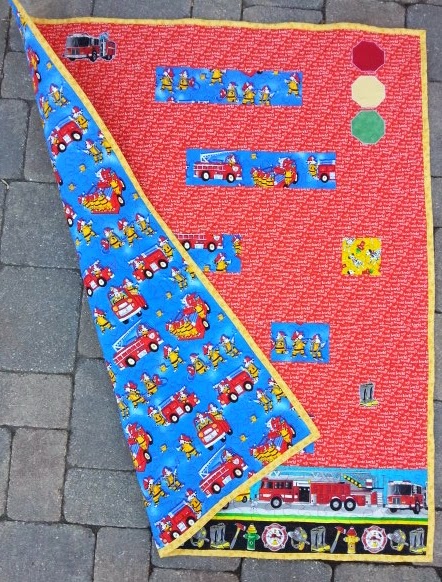
Appliqué to the rescue!  I had a bit of extra material from the bottom border.  I to cut out a fire engine, a fire hydrant and pair of boots. I machine appliquéd them onto the strips before I finished sewing the strips together.  The appliqués add a bit of movement and now I am pleased with it.  The back is a solid piece of the firefighter dogs which I fussy cut for the strips. It will give the quilt an extra depth and make it even more interesting.


What would I do differently the next time I'm designing a quilt like this?  Next time I would cut shorter focus blocks and space them out in a pattern designed to make the viewer's eye dance over the pattern.
Cutting the quilt, piecing it and sewing on the appliqués took me about 4 hours.  So this really is a quick quilt.  I'm going to leave sandwiching the quilt and quilting it for another day!

Sewing Along: Update on my Vintage Quilt Revival Sampler Quilt

by Judy Tucker


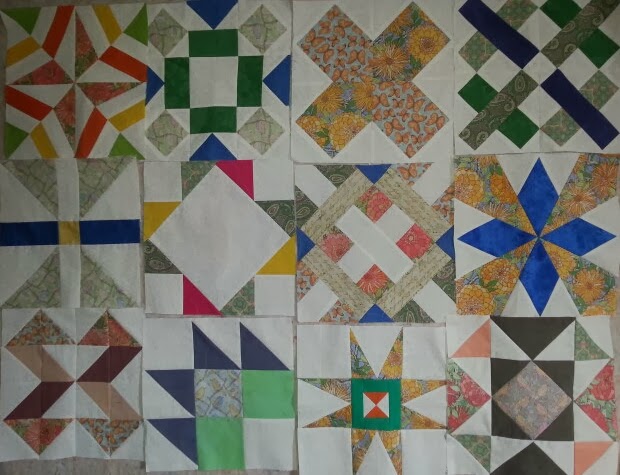
As of this week I have 12 blocks made for my Flickr Vintage Modern Quilt Revival Block Along  sampler quilt!  This quilt is getting more interesting every week.


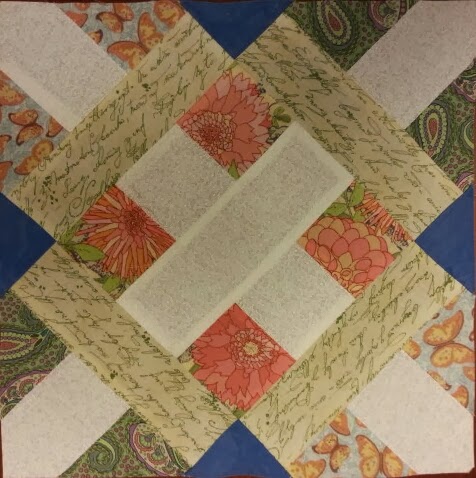
This week I made one of my favorite blocks to date:  The Classic Crosspatch block.
It's a paper pieced block. The pattern on the CD that comes with the book, Vintage Quilt Revival.


This was the first block in the series that called for a cream colored fabric.  There wasn't any cream in the 2 fabric collections I have been working with.

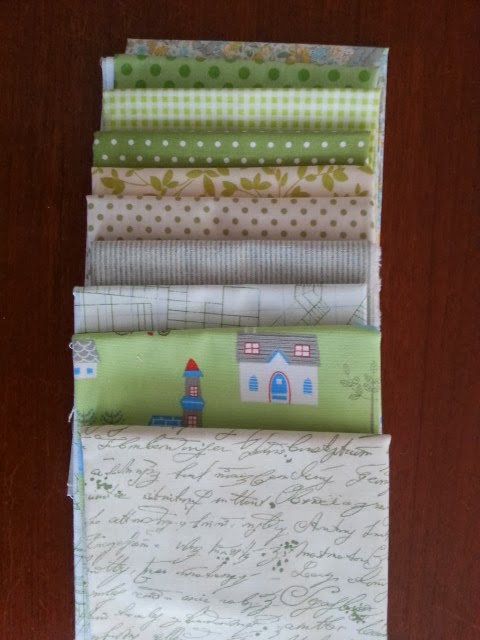
Then I remembered that I had recently purchased a set of low volume greens from the Sew me a Song
Etsy shop. I'm thrilled with the assortment!

The text fabric at the front of the set below has the perfect character for the Modern Victorian fabric collection I have been using and I think it is great substitute for a cream fabric.  It's called "Script in Cream and Green Sage" from the Timeless Treasures Library Collection.  Background of the fabric behind the green script is a subtly mottled cream and tan. It's really an interesting design.


I think it looks great with the floral and paisley fabrics and adds some motion to the block.

There is a cream fabric in one of next week's blocks too.  I can't wait to see out it the green script works out that block. I'll let you know when I have it made!

Happy March!  In like a Lion (we're having unseasonably cold temperatures and snow is predicted tomorrow night in Boston) but hopefully at the end of the month, March really will go out like a Lamb!
One good thing about cold weather and snow:  it's good excuse to stay home to work on quilting projects!  Happy sewing!


Finish Them February: Part 2. Gallery of Quilts completed this month.

by Judy Tucker


There is nothing like telling the world at large that you are going to finish up your UFOs to actually get them completed!  I've had my nose to the grindstone for the past couple weeks, but…they are all done except the one top I need to take to quilt on a long-arm machine!!

All the quilting was done on my domestic Bernina sewing machine.  I used both free motion quilting with the stitch regulator and the walking foot for long straight lines.
Here's what I got done this month:

"Irish Rose" Bonnie Hunter 2013 Celtic Solstice Mystery Quilt
Free motion quilted.


"Reveille" from another Bite of Schnibbles by Carrie Nelson, Martingale and Co, 2011.
Piecing finished up and then free-motion quilted.


"Colorful Path to Market" Original pattern.  
Free motion quilted.


Wonky Star Reindeer, Wonky Star pattern from Silly BooDilly: Wonky Star Tutorial
Piecing completed, free motion quilting and detail with the walking foot. 


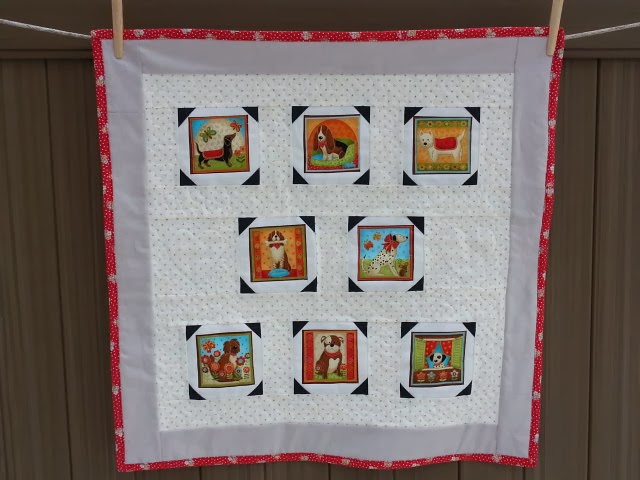
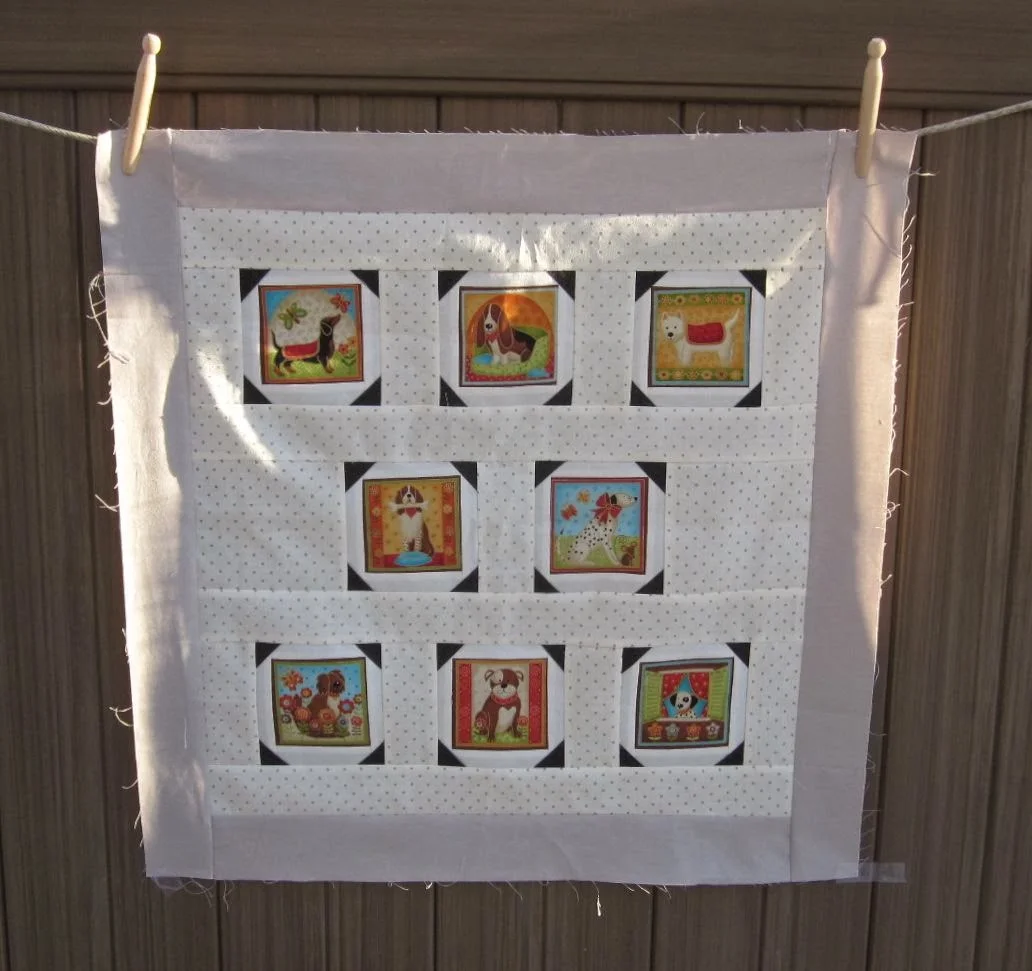
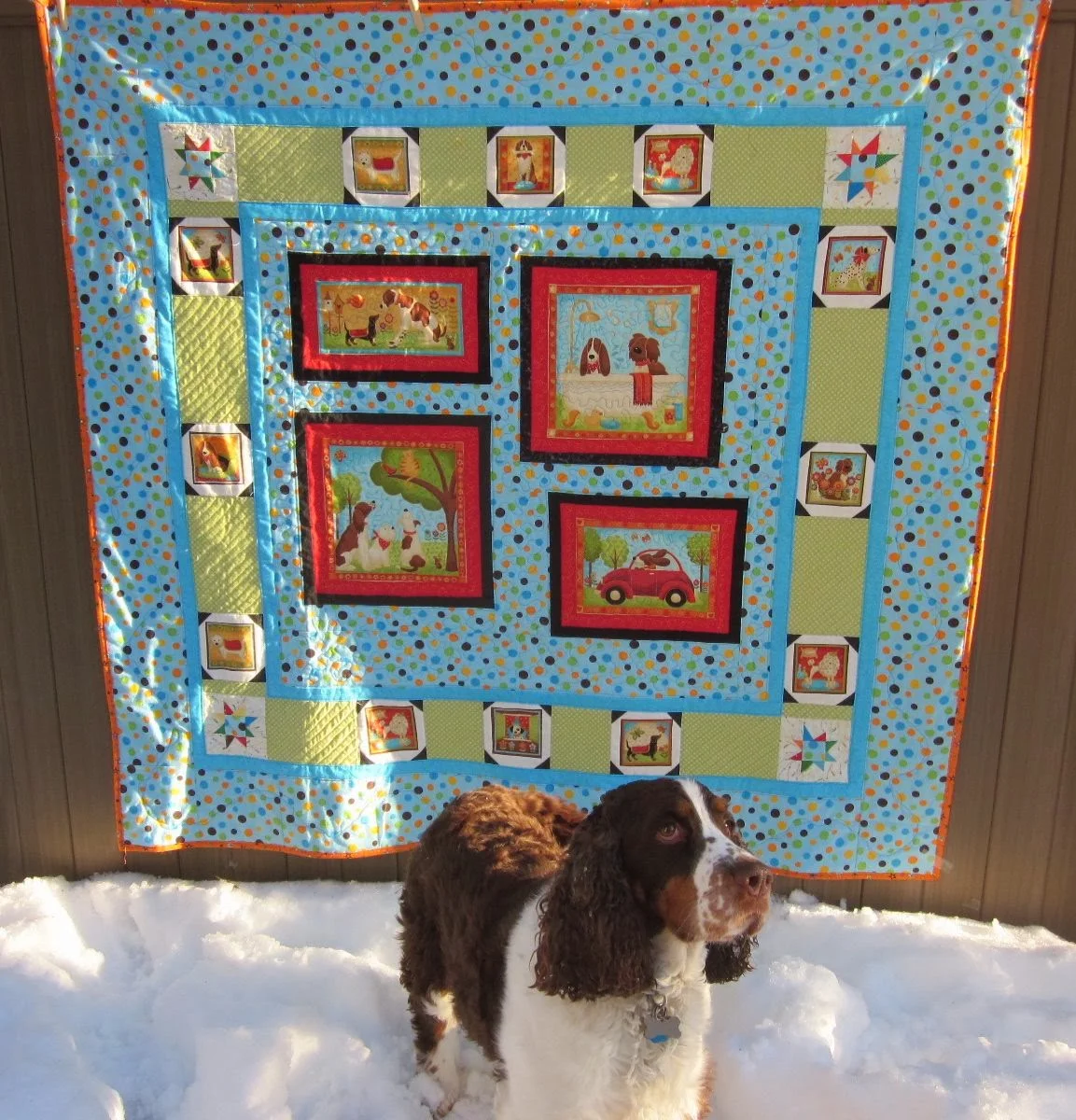
"Dog Friends Photo Gallery" Original Design with Wonky Stars in the corners.
Free motion quilting


Flickr {Big} City Girl Quilt Along Quilt, block patterns from Flickr group, Hamburg block left upper corner is my original design
Free motion quilting


Vintage Photo Album Wall Hanging.  Original Design. 
Pieced and finished with Free motion Quilting


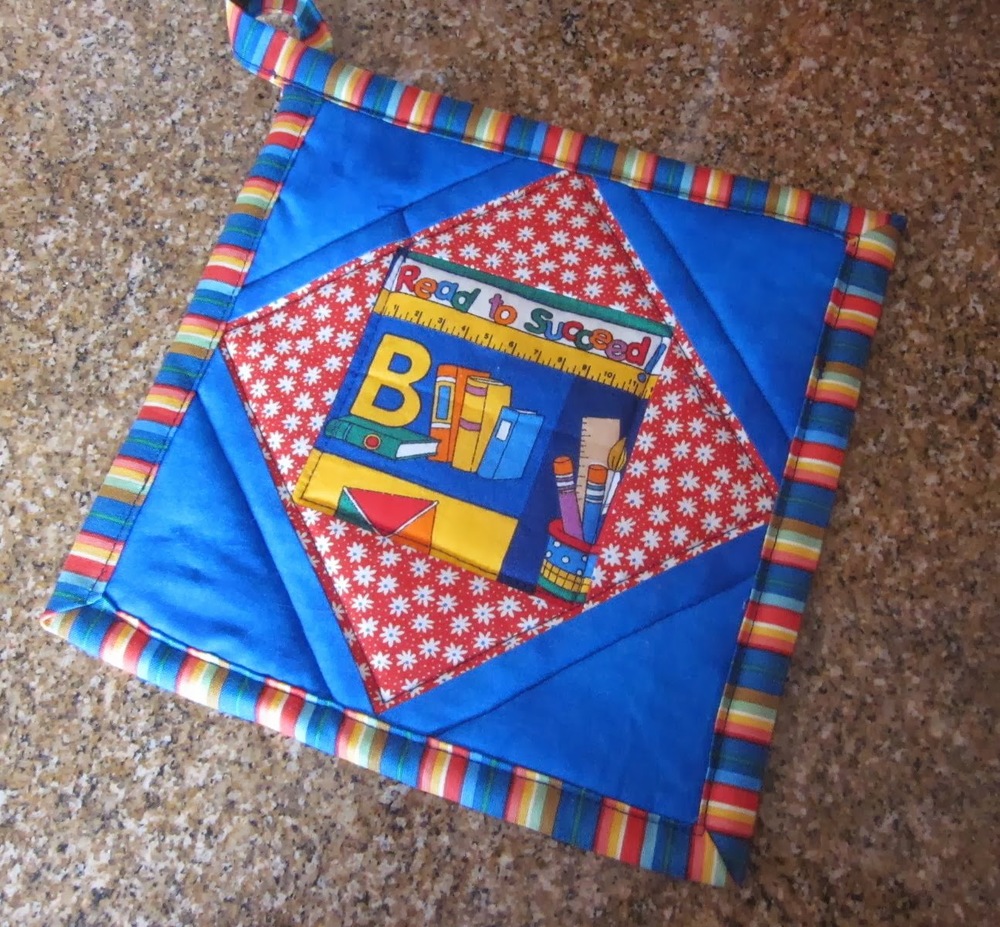
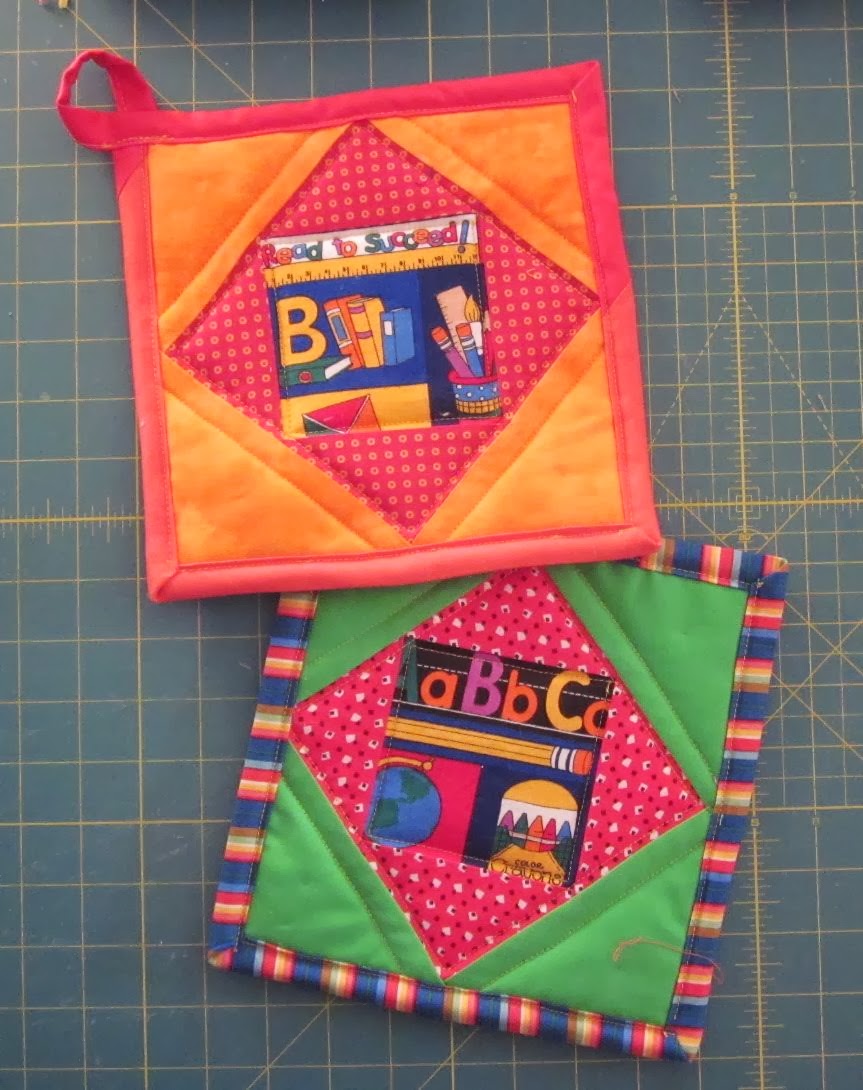
3 Economy Block Potholders round out the month!  
Whew!  That's a lot of sewing for the shortest month of the year.  
Now I can look forward to some Spring sewing!  


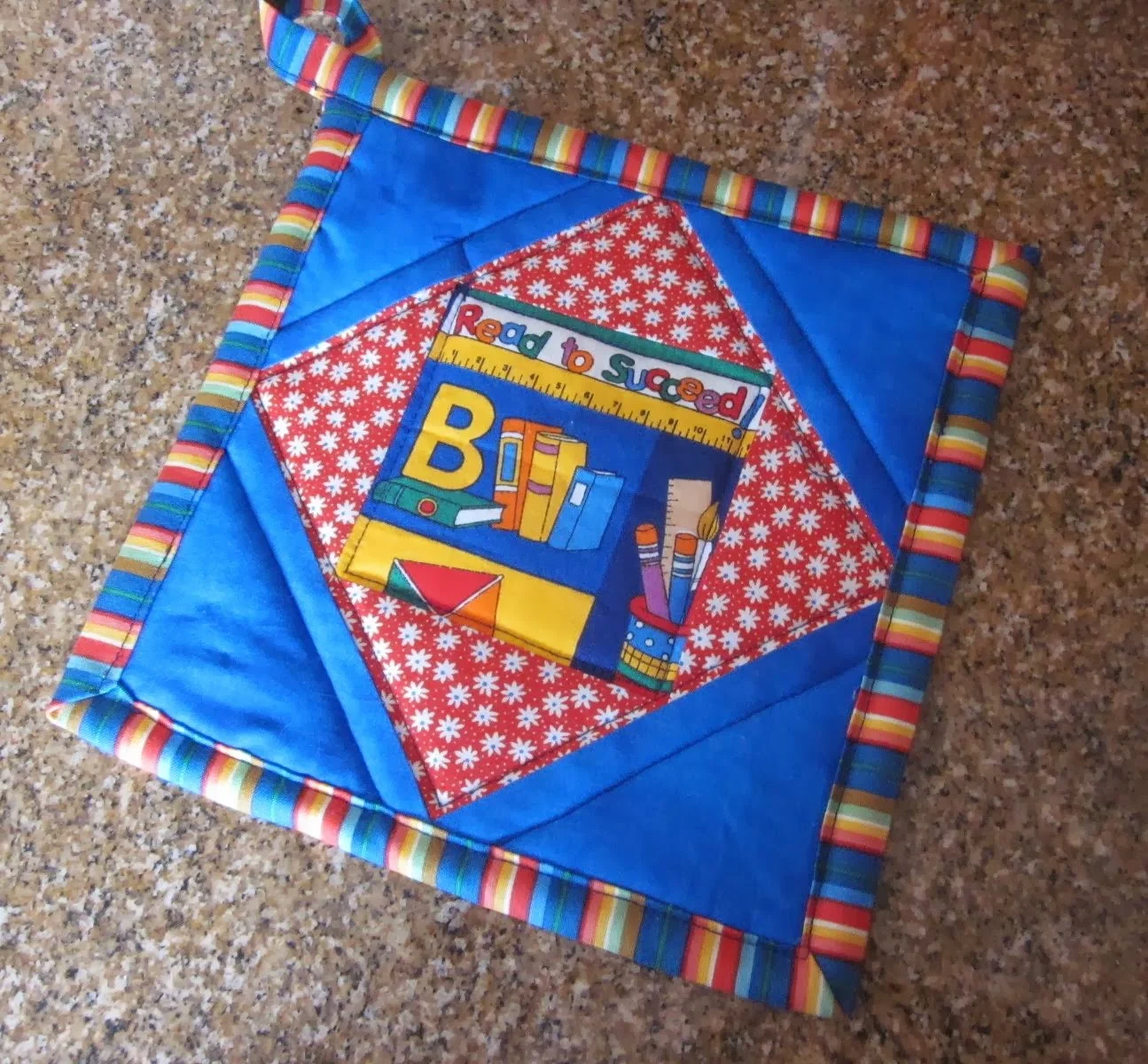
Economy Block for 8 inch Square Potholder Tutorial

by Judy Tucker in


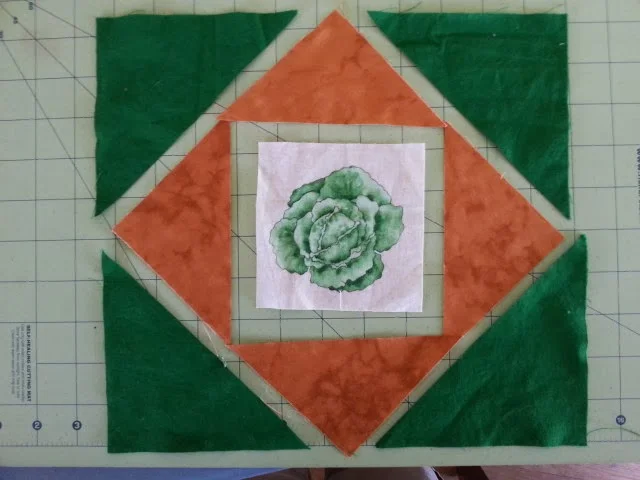
Economy Blocks are just so much fun to make and I really like the way this blocks showcases fussy cut fabrics.  The go-to

Economy Block Tutorial

 is on the Red Pepper Quilt blog.  Her blocks have 3 inch center blocks and finish at 5.5 inches.   I recommend you use her tutorial to make the block.

I wanted to make an Economy Block potholder, finishing at 8 inch square. It turns out that that is the perfect size to use a pre-cut 5" Charm square for the outer square!

To make the 8" Economy block you need:

    One  4 inch center square

    Two 4 inch squares cut on the diagonal to make 4 triangles

    Two 5 inch squares (Charms) cut on a diagonal to make 4 triangles.

    One 8 inch square for the back of the potholder

    Bias binding or make your own for the border (about 38-40 inches).  I used binding left over from a couple of quilts.

To insulate the potholder you need:

    One 8 inch square of Insul-Bright insulated lining made by The Warm Company.  This material reflects heat so you don't get burned when you pick up something hot. You'll find it with the quilting products in your fabric store.

    One 8 inch square of

cotton

batting. This is needed to absorb any moisture.

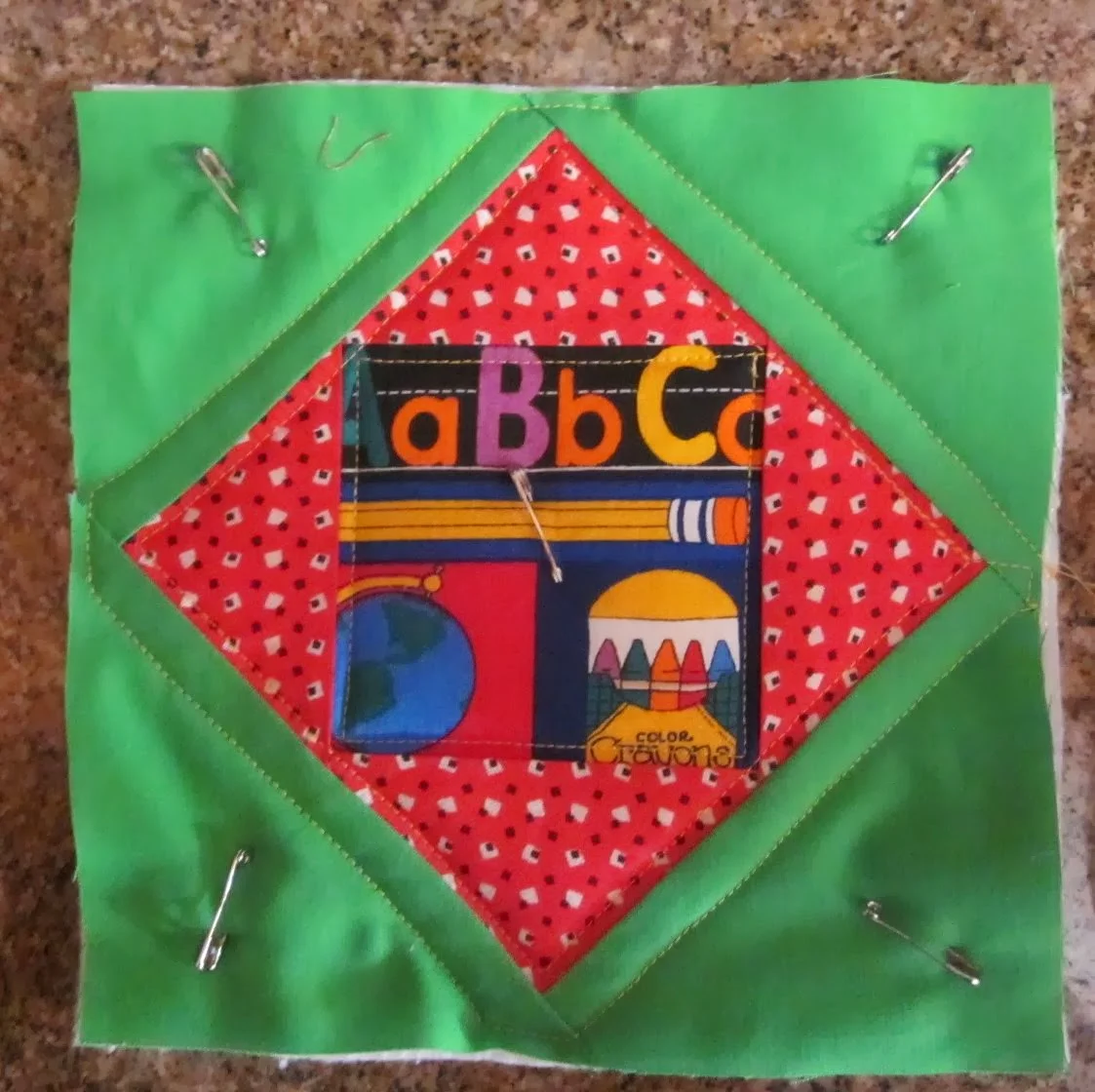
1.  Assemble the Economy Block.  The outer triangles just finish at 8 inches. You won't have much to trim so make sure to keep that 1/4 inch seam on the scant side.

2.  Make the sandwich for your potholder:

        Economy block

        Insul-Bright square

        Cotton batting square

        Backing square

It doesn't matter which way you pair the batting and Insul-Bright. It will work either way.

3. Quilt as desired.

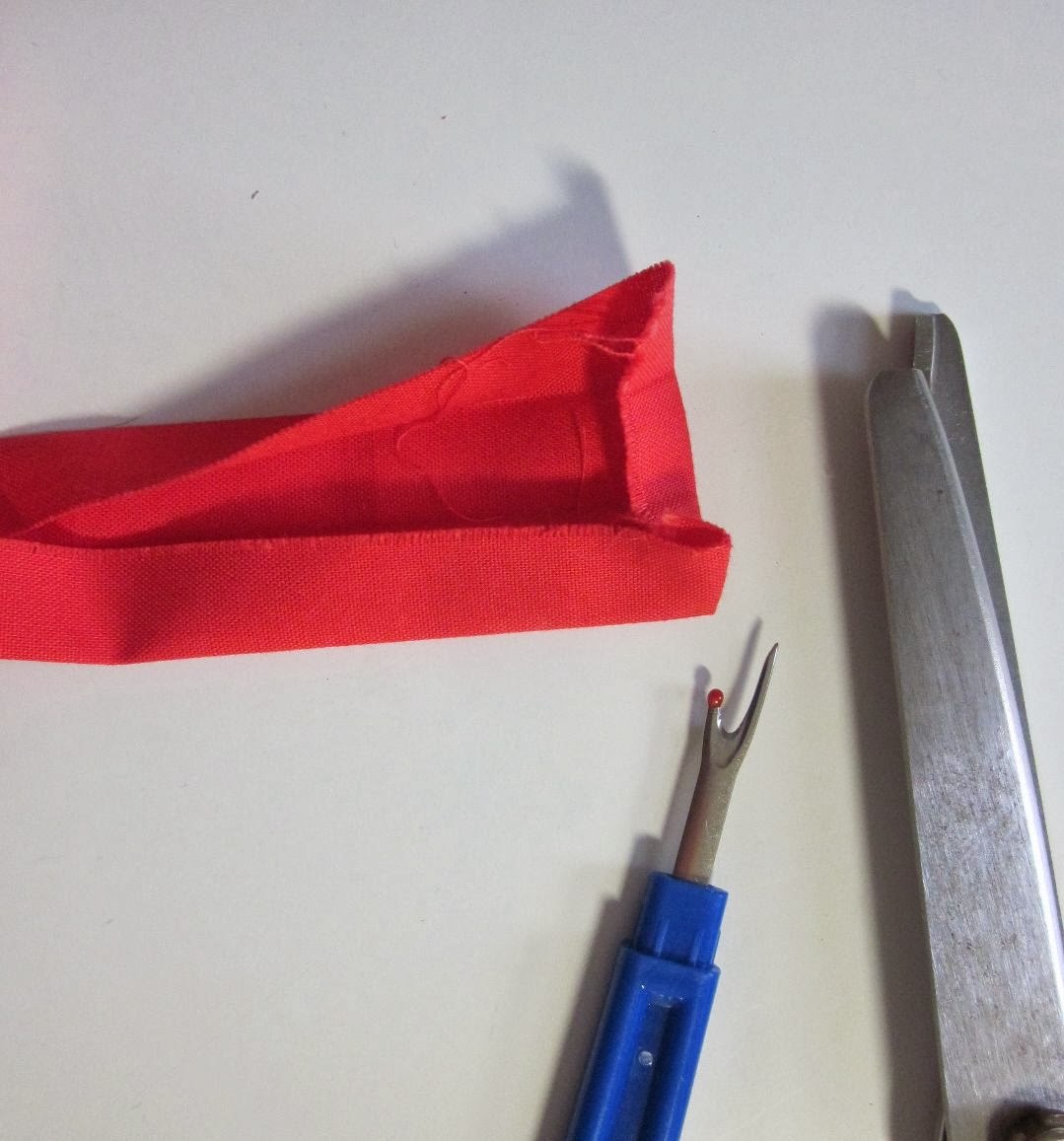
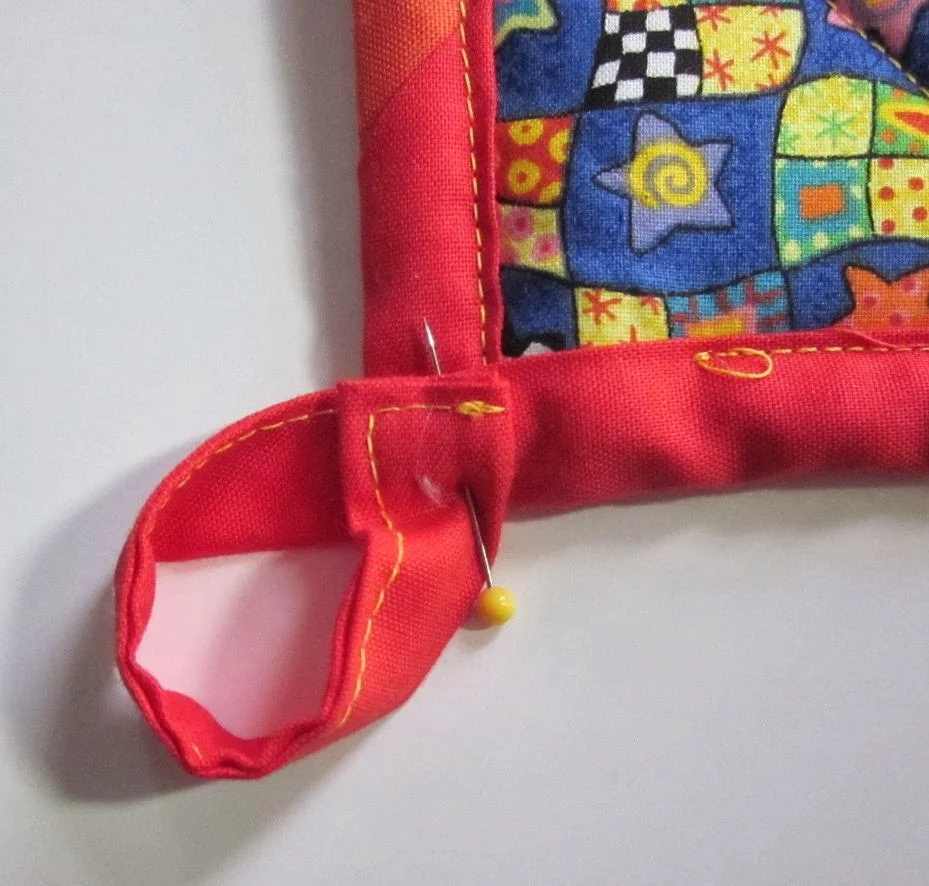
4.   Fold under the raw edge of your bias tape.  

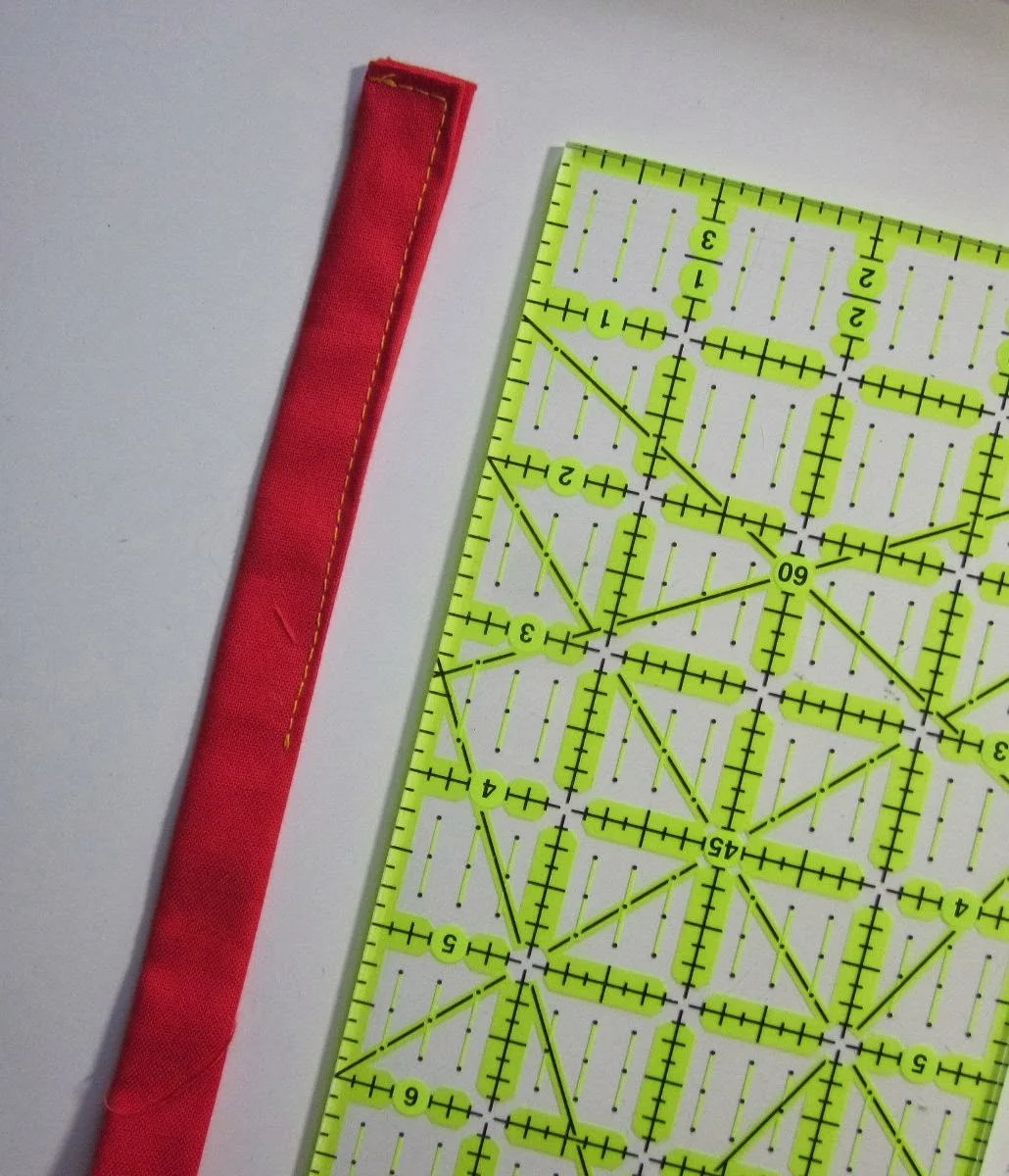
5.  Sew together the folded end and the first 4 inches of your bias tape. 

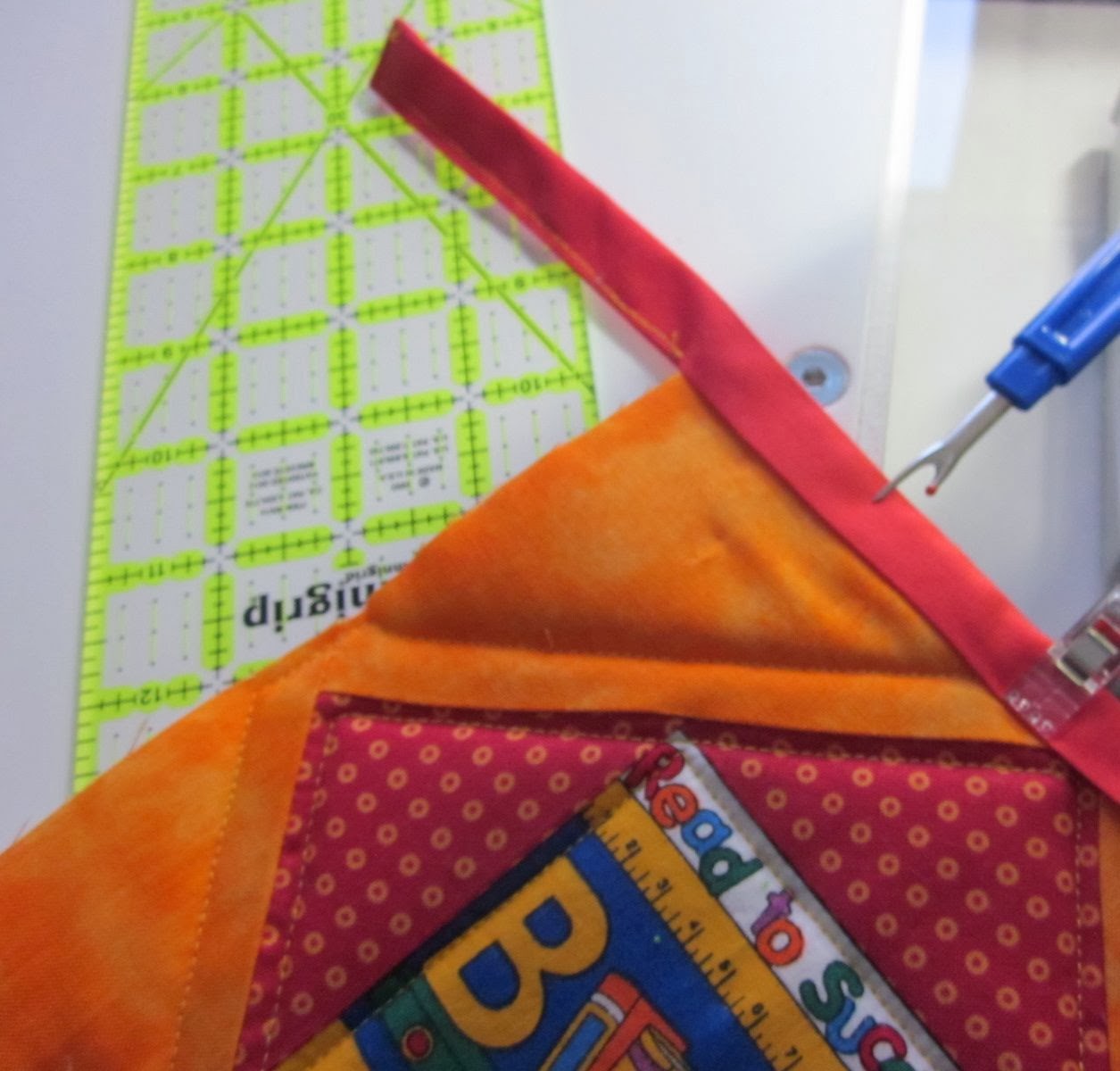
6.  Place the tape over the top edge of your potholder.  Start sewing about

1 inch from the corner.

 Continue sewing around the 4 sides of the potholder, mitering the corners as you go around the block.

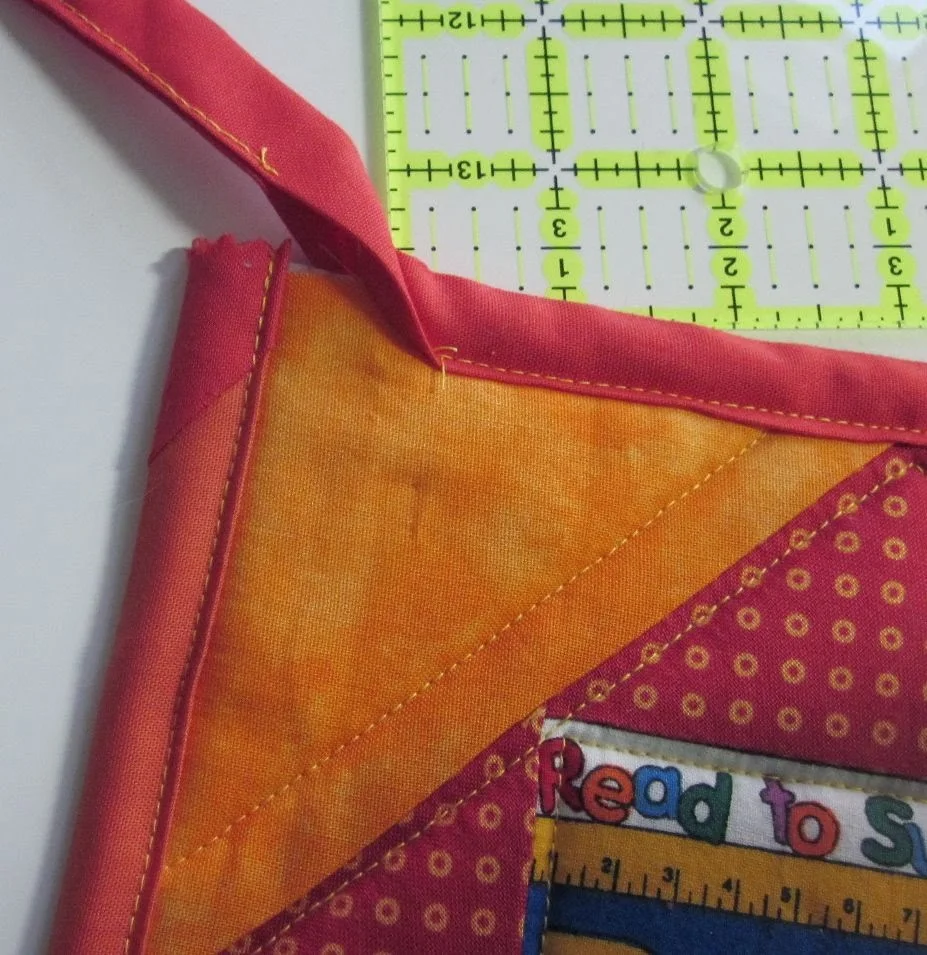
7.  Trim the bias tape at the upper edge of the potholder.

8.   Now tuck the open tape from step 6 over the top edge of the potholder, covering the cut edge of the bias tape where you just finished sewing.  

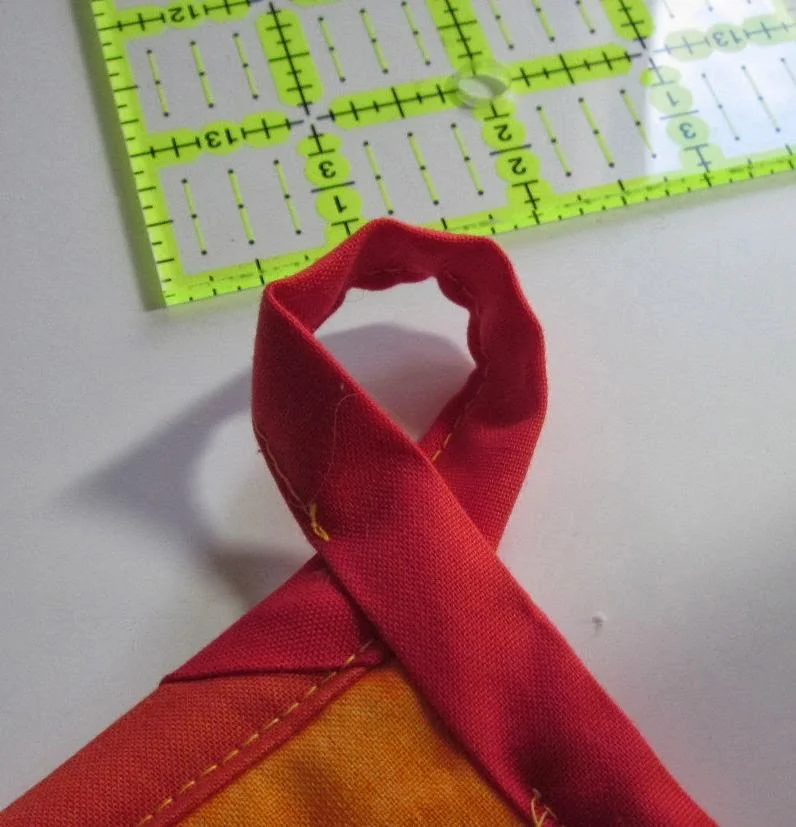
9.  Make a loop out of the 4 inch of bias tape you sewed together in step 5.

10.   Sew all the layers together, closing the open tape and catching the loose edge of the bias tape loop on the back of the potholder.

That's it!   Time to head to the kitchen to bake something.


Using sticky notes for as templates to mark a quilt for free motion quilting

by Judy Tucker


Yesterday I was looking at a wall hanging and thinking about how I wanted to do the free motion quilting on it.  I decided I wanted to put a heart in each of the areas of the wall hanging which had some negative space.  I do a lot of free motion quilting without planning or marking but in this case I wanted my hearts to be symmetric, in the center of the space and the right size.  That just wasn't going to happen with spontaneous quilting.  

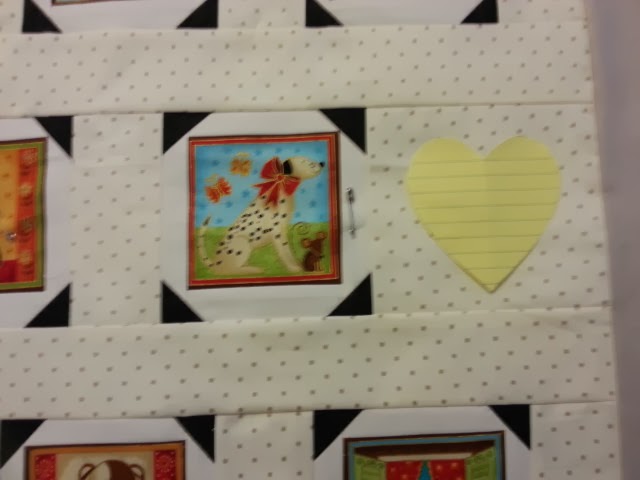
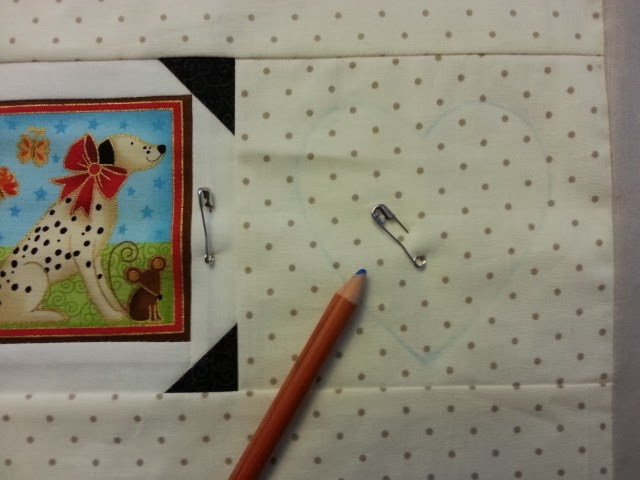
I looked around to see what was at hand to draw my template heart.  There was a pad of sticky notes that looked about the right size.  I drew my heart, cut it out and put it down on the quilt.   And it stayed in place!  The adhesive on the paper was just enough to keep it still so it didn't shift as I drew around the template--brilliant!  Now that's a serendipitous moment!

Later in the day I used it again to put a circle at the intersection of 4 blocks in a quilt where I needed to just tack down the quilt a bit more.  I tried sewing around the paper but it wasn't sticky enough to do that.  So, it's great if you just want a template for marking a few designs but not useful as a template during sewing.

Here's the sticky note template on the quilt.


Here's the marked quilt.  I used a blue Dritz pencil.  I don't have a favorite marking pencil. Sometimes I use tailor's chalk, sometimes chalk pencils and sometimes this one.


s
Here is the circle on the other quilt.

This worked really well for me.  Give it a try!

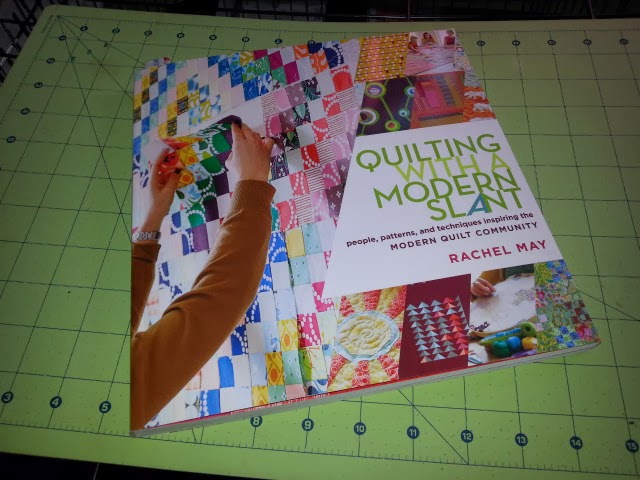
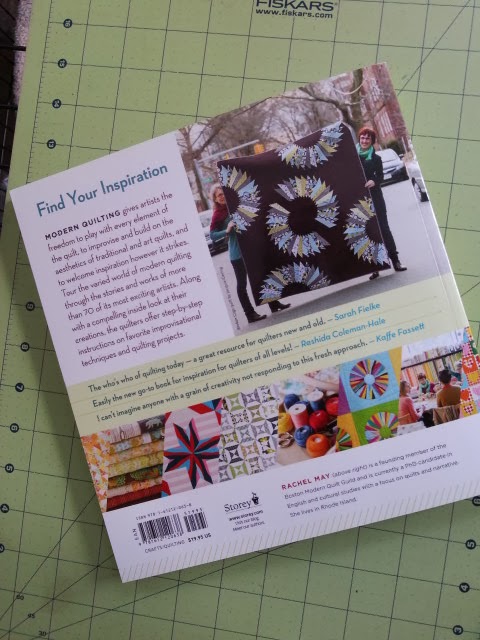
Book Report: Quilting with A Modern Slant by Rachel May

by Judy Tucker


Are you one of those people who like to read cookbooks and quilting books at bedtime?  Are you active in the Modern Quilt movement or just curious to learn more about it?  Then you are going to really enjoy  Quilting With A Modern Slant, people, patterns and techniques inspiring the Modern Quilt Community by Rachel May. ( Storey Publishing, North Adams, MA 2014).


Rachel May has interviewed men and women who are an active part of Modern Quilting.  She has 1-4 pages  on each person. Each new interview Chapter starts the the heading "Meet…then the person's name" and a subheading giving a clue to what their speciality or interest is.  I love this format--I really do feel like I am being introduced each of these artisans!

One of other layout features that that I really like is green bar at the bottom of some of the pages that has definitions of quilting terms or suggestions about how to do something. It makes me smile because it reminds me of the school closure list on TV on a snowy day!

The book has hundreds of full color photos which run the spectrum of modern quilts. There are patterns for some of the quilts and other projects. And there are tutorials on techniques including finishing a quilt, doing free motion quilting, doing fusible web appliqué and even dyeing fabric in pinks and purples using an avocado pit!

This book is a visual joy and so much fun to read.  Pick up a copy.  You'll be glad you did!


Quilting Along: {Big} City Girl QAL quilt is done!

by Judy Tucker


Last fall I joined the {Big} City Girl QAL, a quilt along group on Flickr.  I heard about the group when our quilt guild, Proper Bostonian Quilters, was given a challenge to make Amy Friend's Boston's Zakim Bridge Block.  If you scroll down that link to her blog, you'll see the block all the great entries submitted by our guild.

Designers from around the globe were asked to create a quilt block that reflected the city were they live.
There were pieced blocks, appliqué blocks and paper pieced blocks.  All the blocks are beautiful.  Some of the blocks were easy to make, some were challenging!  My paper piecing skills definitely improved working on this project!

Group members were invited to create blocks of other cities and share them on the site.  Some beautiful blocks were added by QAL members.  You can see all the blocks at  the {Big} City Girl Flickr site.
Capetown, Pretoria, Istanbul, Melbourne, Munich, Vienna, London, New York were some of the great added blocks. The project ended at the end of November, 2013, but folks are still out there sewing which is awesome.  A beautiful San Francisco block showing the Painted Ladies houses with the Golden Gate Bridge in the background was just recently added.

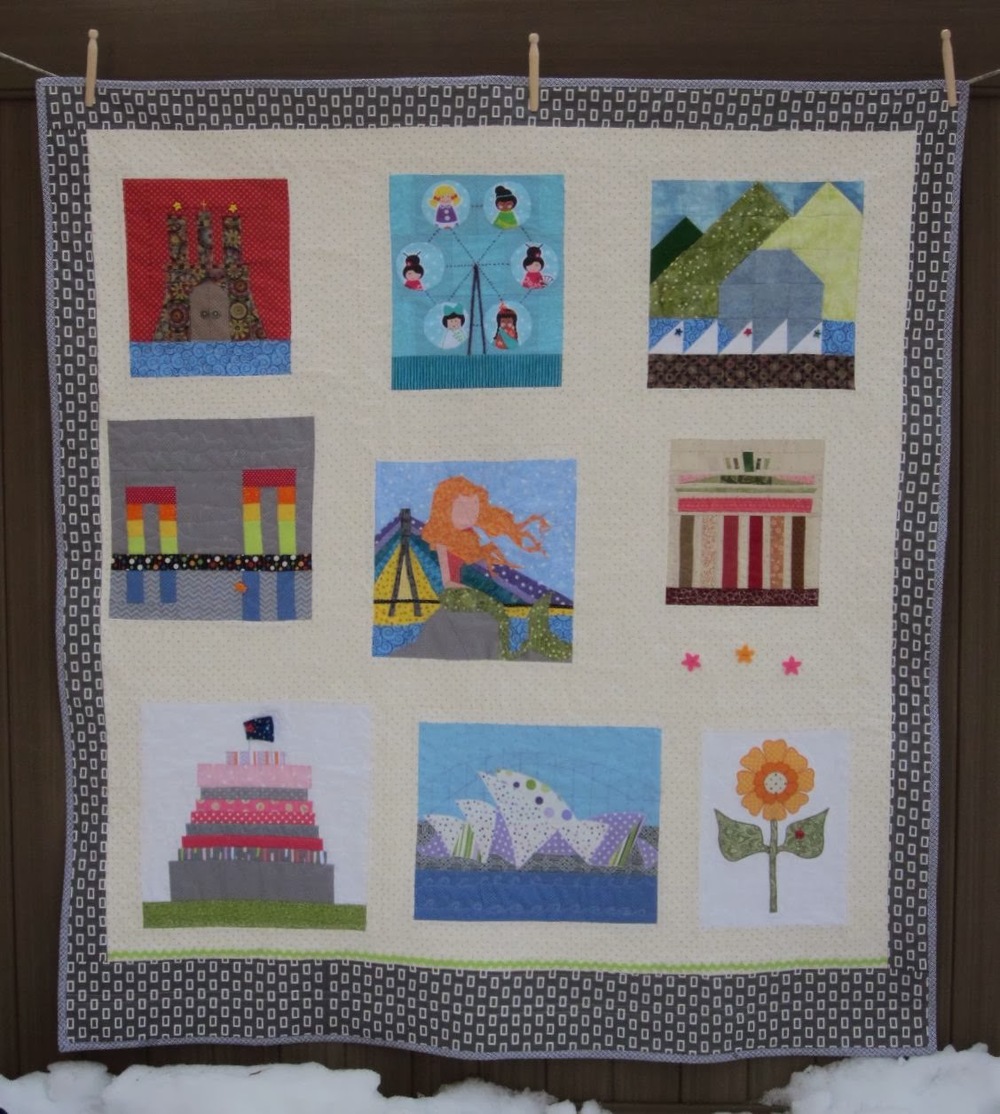
I'd never made a paper pieced pattern but wanted a block for Rome and a friend wanted a Hamburg block.  Some of the designers used EQ to design their blocks but others designed the blocks by hand.  Seeing how the hand drawn blocks were put together encouraged me to give it a try too. I drew the picture I wanted, scanned it into the computer and then flipped that image horizontally on the computer.   That gave me the mirror image of picture which you need to use to paper piece a block. Then I cut out the pieces pasted them to another sheet of paper and drew seam allowances around the pieces.  The last step was to rescan the cut pieces for my final pattern.  It took a few tries but it worked!  The original Hamburg block is in my quilt.  But the pattern I gave to my friend has the doors open so she cut add a family photo to the doorway!  It was so much fun adding the opening and closing doors and having that pattern work!

I thought I was just going to make a wall hanging of some of the cities where I've lived:  Rome, Boston and Paris.

But the blocks were all so beautiful and so much fun to make that I ended up with enough blocks for a quilt too!  It's finally finished.  I love it.

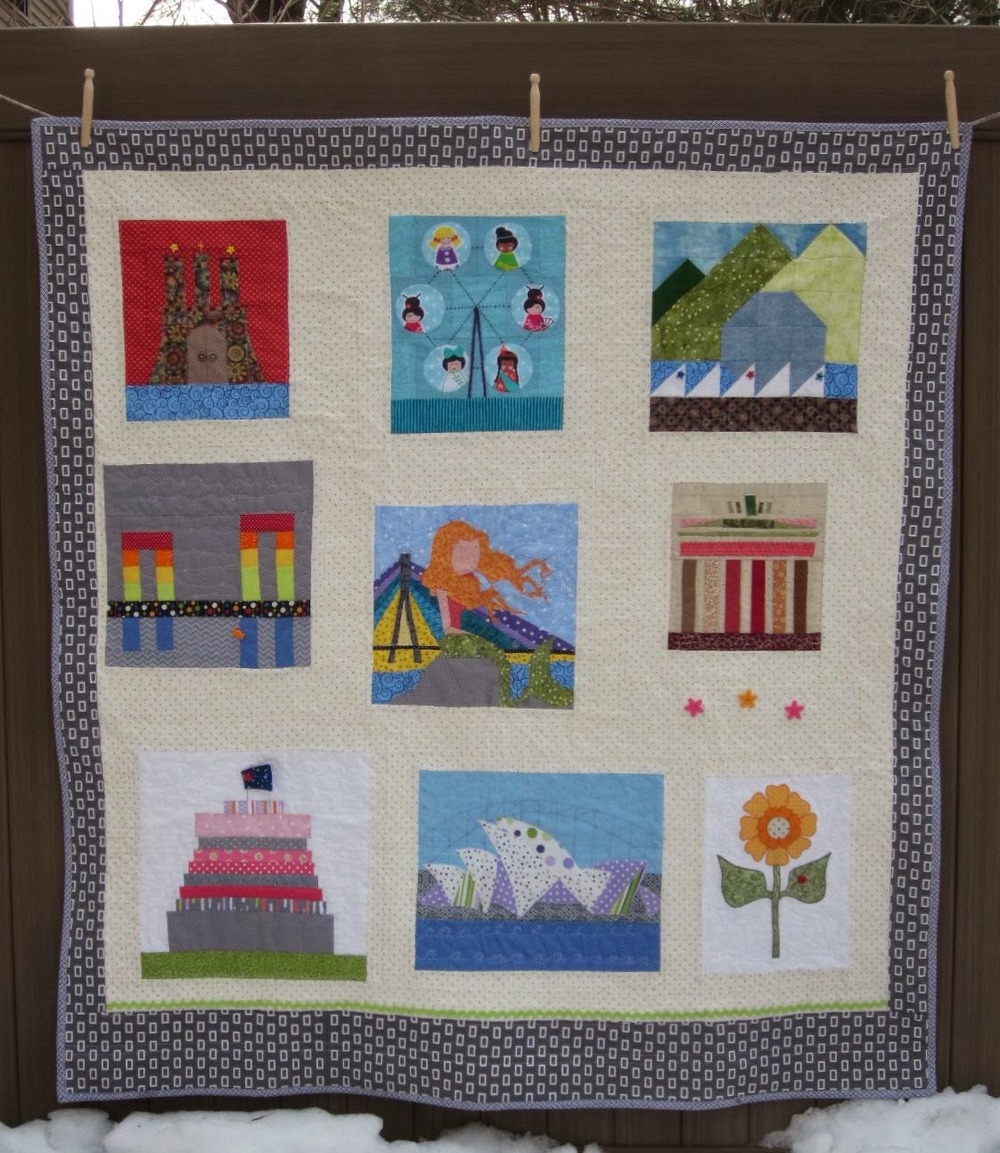
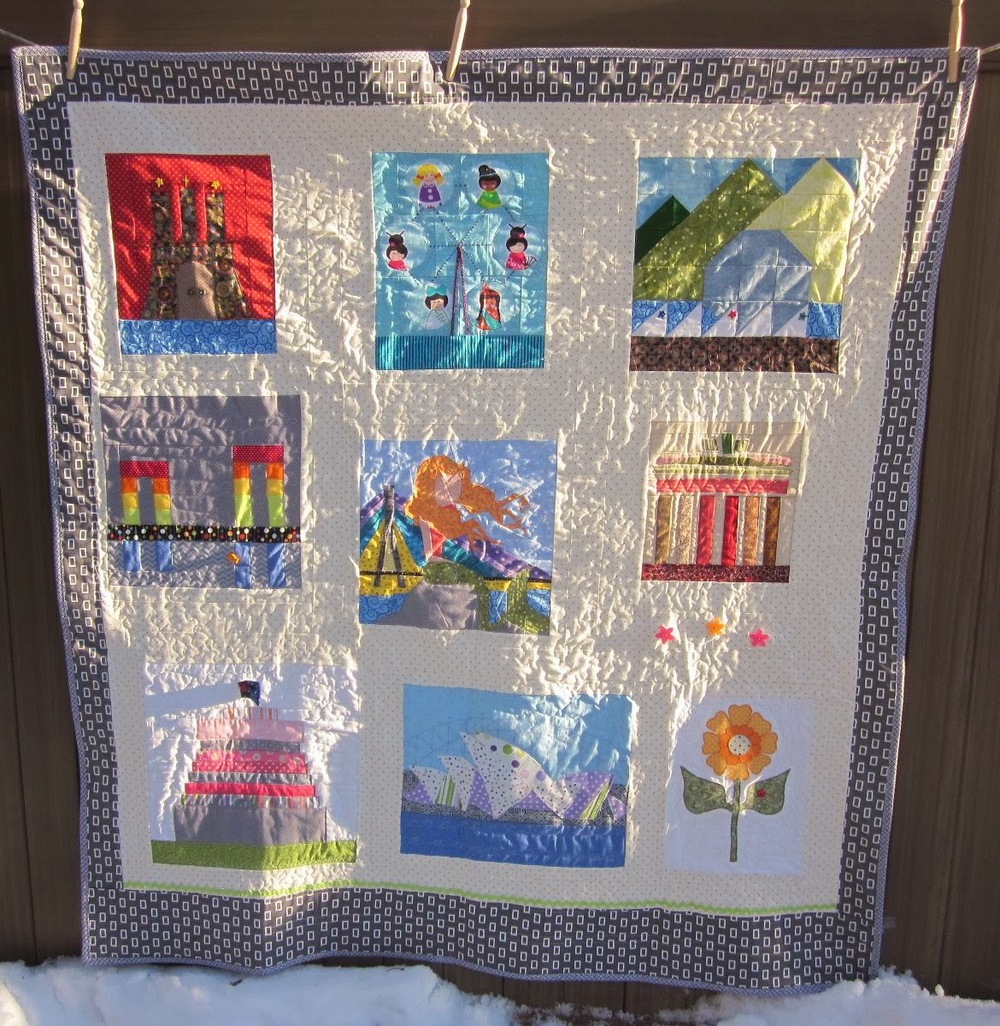
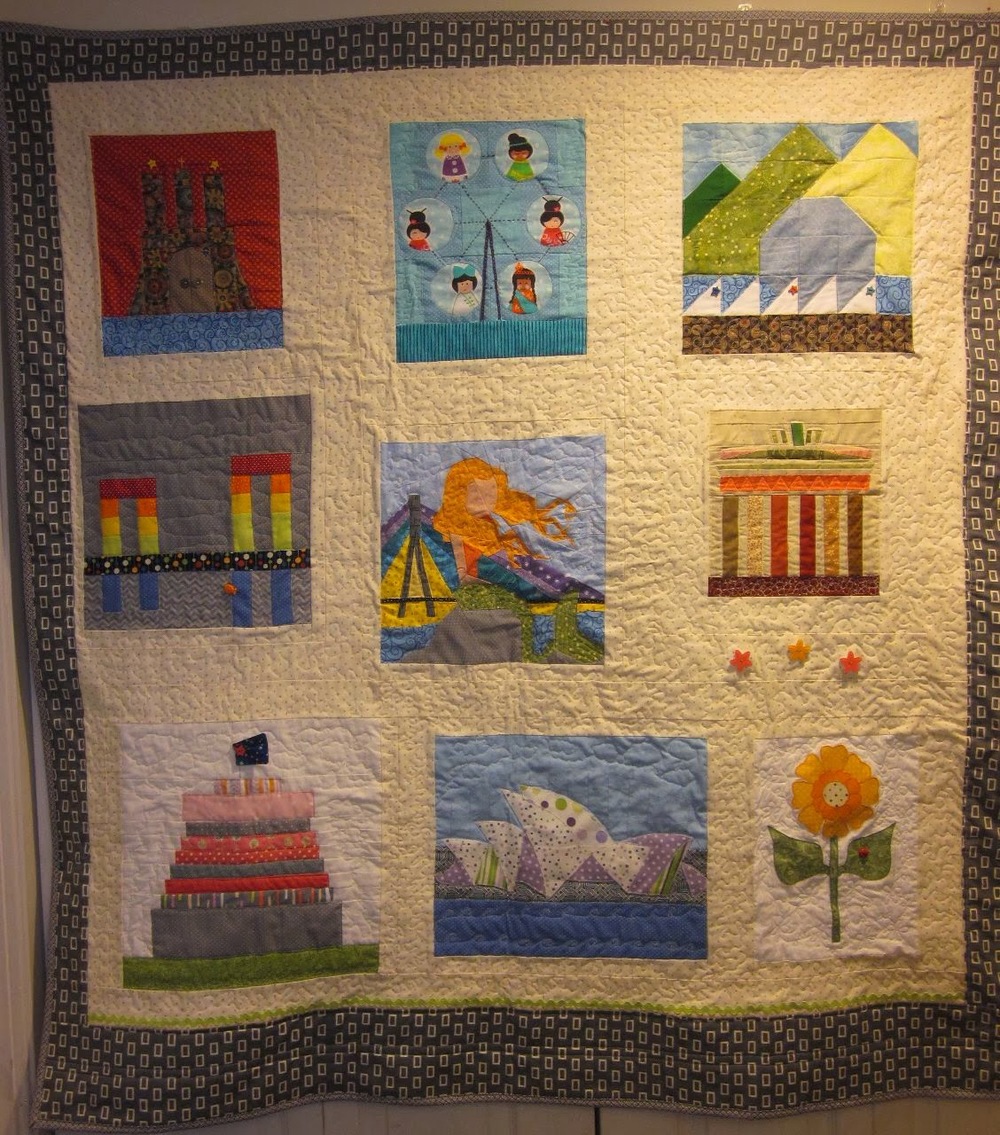
The cities included in my quilt are, from left to right, Hamburg, London, Vancouver, Tokyo, Warsaw, Berlin, Wellington, Sydney and Alesund.

Here all 3 photos of the quilt taken in different light. They all show different aspects of the quilting.


Outdoors, cloudy day.  This has the best color and is the best overall photo of the quilt, but it doesn't show off the quilting.

Outdoors, late afternoon winter sun.  This shows off the texture from the quilting but it's hard to see the blocks.


Indoor lighting shows the quilting details nicely.  While  Fluorescent light may be good for the environment,  it  dulls and alters the colors of the quilt.


You can still get the patterns for the blocks by going to the {Big} City Girl link on Aylin's blog at Aylin-Nilya.blogspot.de.   Thanks so much to Aylin and Amy for moderating this fabulous QAL and for the amazing designers who contributed blocks of their home town!  I have had the best time working this project!


Vintage Photo Album Block Tutorial

by Judy Tucker


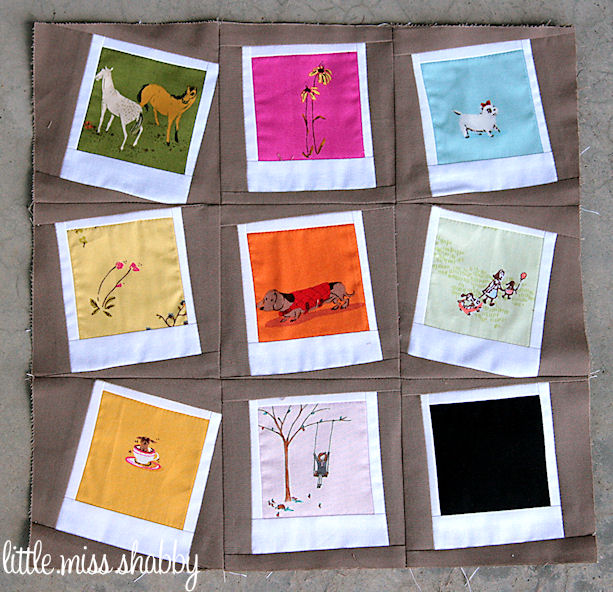
When I first saw Little Miss Shabby's 

Polaroid Quilt Block

 I was really impressed with its modern simplicity and the potential for using it a variety of ways.  But I never had a Polaroid camera so I wondered if I could use the idea of a fussy cut "photo" and take it in another direction.

And then it came to me.  Do you remember those little black picture corners your folks or grandparents used to paste photographs in albums with plain black paper pages?  That was it!

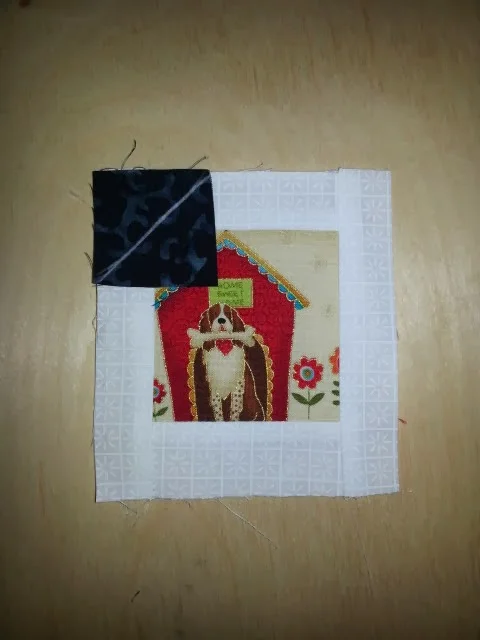
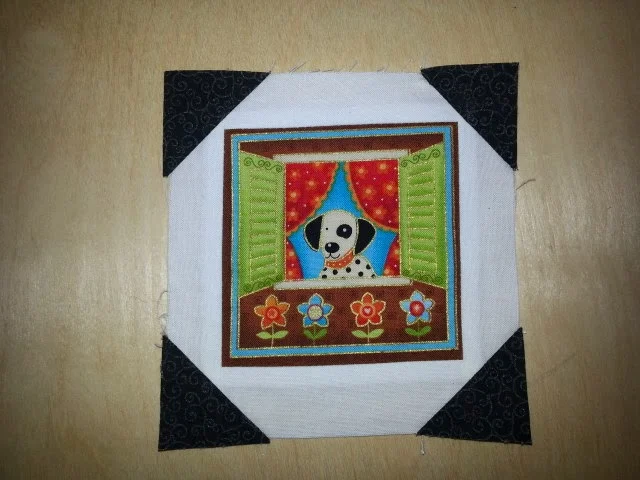
My "photo" has a narrower lower border than the Polaroid Quilt Block since the deep lower border was just found on Polaroid photographs.  I sewed black triangles to make the picture corners.

I've used my Vintage Photo Album block in a couple quilts with fussy cut quilt blocks...mostly dogs "photos"!

Here is a a wall-hanging Work In Progress that I was working on today:

Here's how to make the blocks:

Materials:

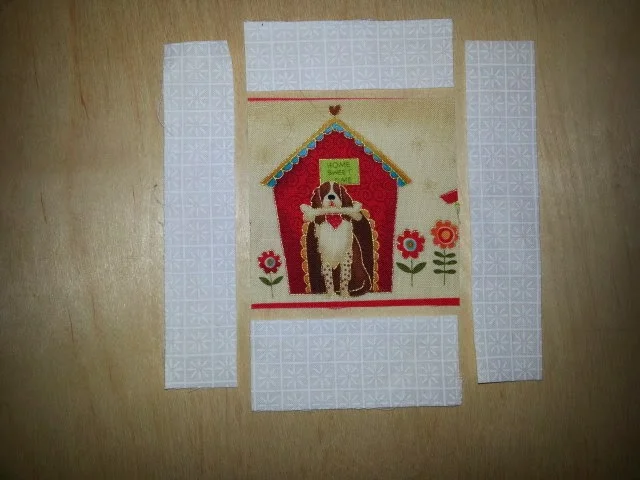
   Solid white or light cream fabric for the margin of the photo

   Solid black or black patterned fabric to make the picture corners.  Great way to use those little scraps!

   Fabric you want to  fussy cut or print actual photos onto fabric

Step 1:

--Fussy cut your "photos" or print your real photos on fabric.  

Step 2:

--Cut a 1" wide strip and a 1.25" wide strip

 of white or light cream fabric.

          Cut the 1" wide strip into 1 piece the width of your fussy cut piece. This will be at the top of your photo.

          Cut 2 pieces of the 1" wide strip the length of your fussy cut piece adding 1.75". These will be the sides of your photo.

           Cut the 1.25" strip to the width of your fussy cut. This is the bottom of your photo.

--Cut a 1" wide strip of black or patterned black fabric.  

          Cut this strip into 1" squares. You need 4 for each photo. Theses will be the photo corners.

Step 3:

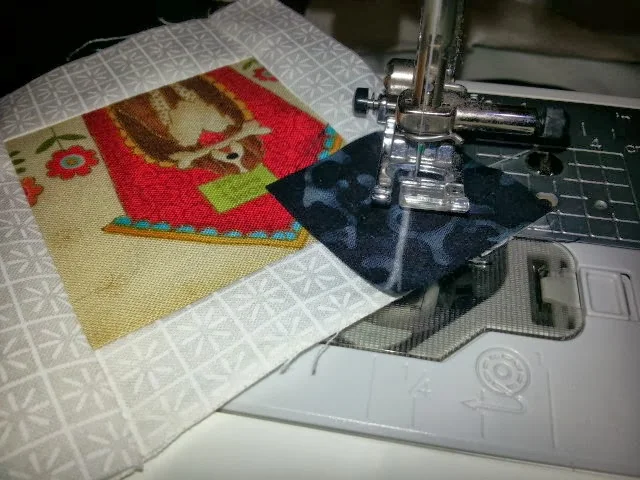
--Draw a diagonal line on the back of the black squares.  I used white tailor's chalk to draw the line.   This line will be a guide for your sewing.  

--Move your needle 1-2 places 

to

 the right so that you sew just to the right of the line drawn on your black square.

Sew a black square on the first corner of your block

Step 4:

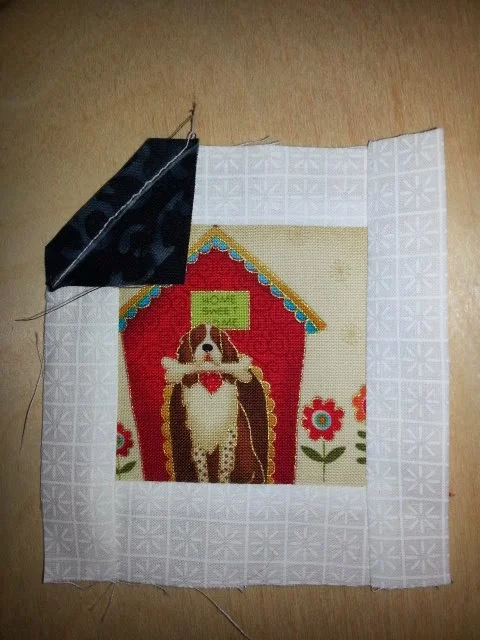
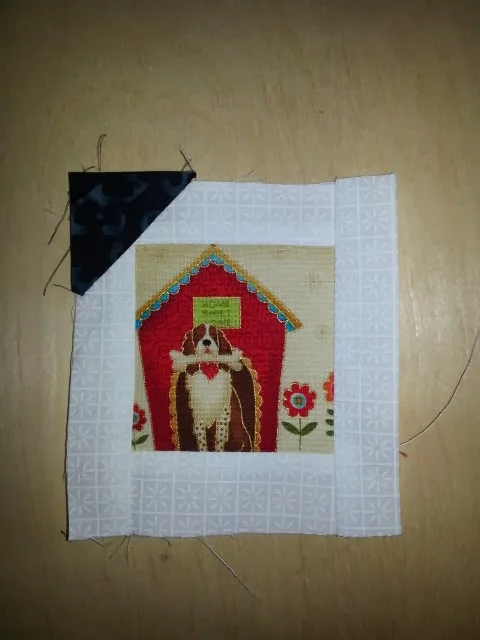
  --Fold back the the inner edge of the square making a triangle.  Press and trim the seam UNDER the new corner to 1/4".  This keeps the block from getting too bulky.

Step 5: 

--Sew a black square on all 4 corners. That's it!  Your Vintage Photo Album Block is 

ready

 for you to use in your project! 

Here's a quilt I made using the Vintage Photo Album Block. It has some "framed pictures" too!

Hope you've had fun and will enjoy using this block. Let me know what you do with it!


Sewing Along: Vintage Quilt Revival

by Judy Tucker


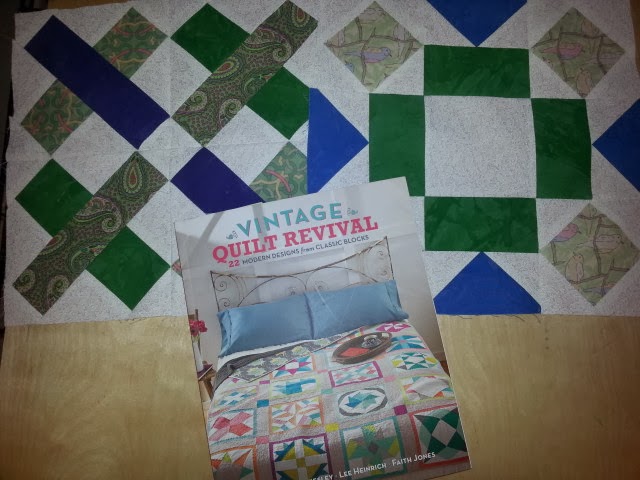
I'm having a great time participating in the Flickr Group Vintage Quilt Revival Block Along which started in January.  The group is making blocks in the book, Vintage Quilt Revival: 22 Modern Designs from Classic Blocks by Katie Clark Blakesley, Lee Heinrich and Faith Jones.   The authors have taken classic quilt blocks and put a modern twist on them.  The book has some stunning modern quilts they made for examples.

The blocks are rated Beginner, Intermediate and Advanced.  The book has photos of quilts made with just 1-2 of the blocks as well as suggestions for 3 sampler quilts.  A CD included with the book has patterns for paper piecing the more complicated blocks and for a couple other projects. I've found the paper piecing patterns have worked beautifully.  There were some typos in the book that affecting cutting the pieces.  Corrections can be found here: Pattern Errata

I'm using my stash for my blocks.  I had some half yard cuts from the Victorian Modern line from Andover Fabric which was designed by Weeks Ringle and Bill Kerr, some small cuts from  Fiber on a Whim which were cut from hand dyed fabric which weren't evenly dyed enough to be sold as yardage.  I've added some odds and ends when I needed some larger pieces of fabric. 

I've found working on a sampler quilt a real challenge.  Each week I have to choose the colors for 2 new blocks from my stack of fabrics so it's like designing a new quilt every week.  And each block has it's own learning curve.  As the weeks go on the learning curve has been getting steeper every week.  But my paper piecing skills are getting better too so it has been totally doable   We are half way through the Block Along.  Here are the blocks so far: 

                                                        This week's 2 blocks with the book.

Blocks from the previous weeks.


Check out the Flickr site to see all the great blocks that other folks are making. I'll post my progress as the project continues.  There are 5 more weeks to go!

Colorful Path to Market Quilt

by Judy Tucker


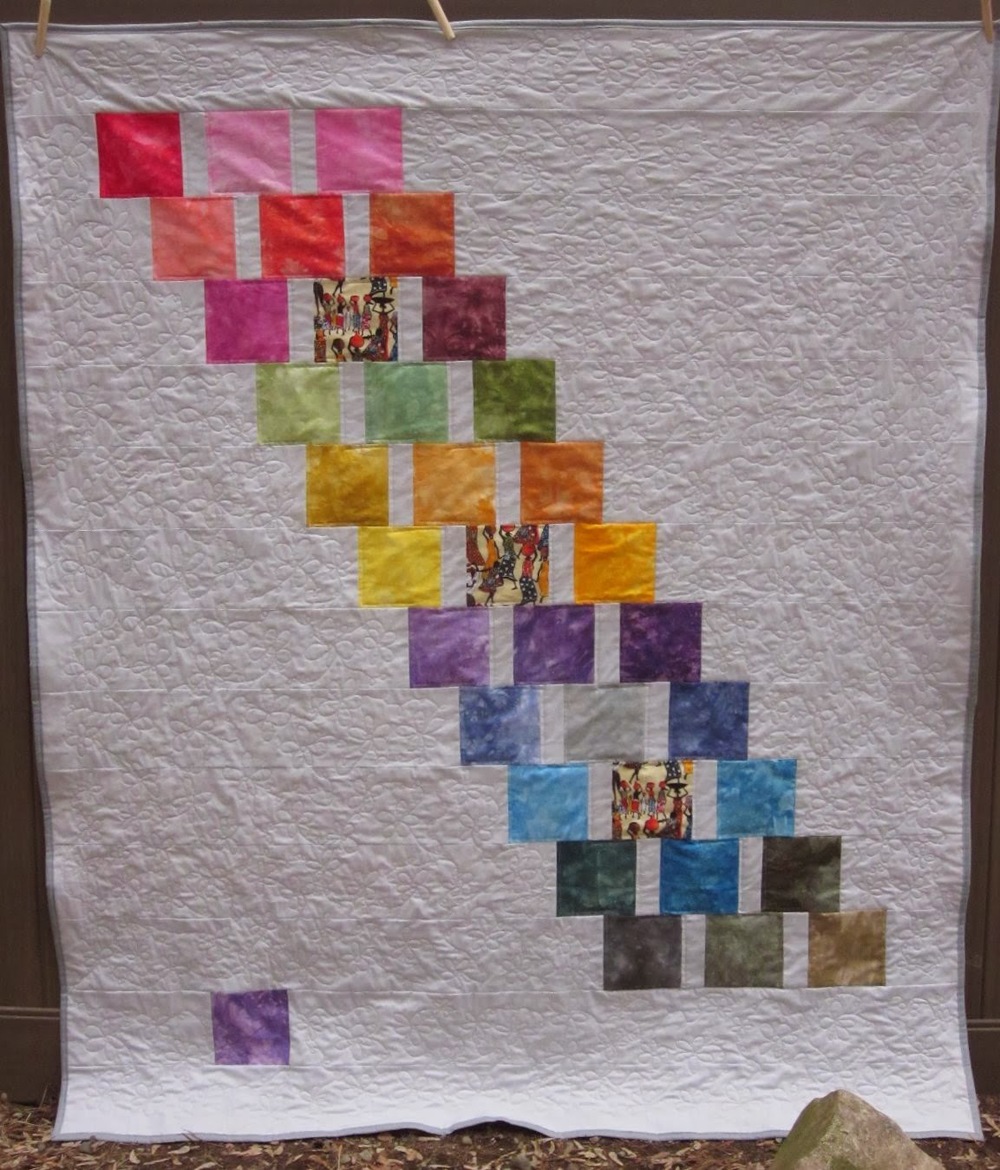
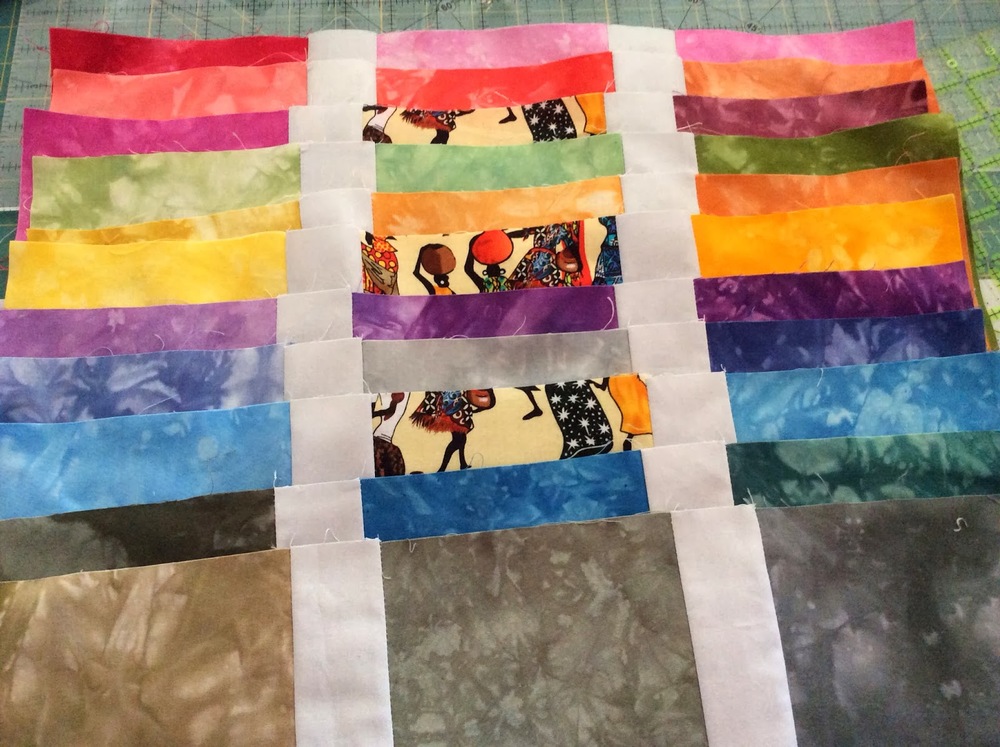
Last summer I heard about hand dyed fabrics from Fiber on a Whim.  I wanted to see (and touch!) some of their fabric so ordered their Kona Pack 5.5, a stack of 35  5.5 inch squares, all dyed in different colors.  Such fun!  I knew I wanted to make a Modern quilt with them but didn't have a plan when I ordered them.  They have great original Crayon Box Pattern for their Kona Pack available on their website but I wanted to try something else.

I found the inspiration for the pattern I designed for this quilt after seeing Ashley Newcomb's Modern Hexagon Quilt on The Modern Quilt Guild blog.  
I really liked what she did with the cascading hexagons and the outlying blocks.  

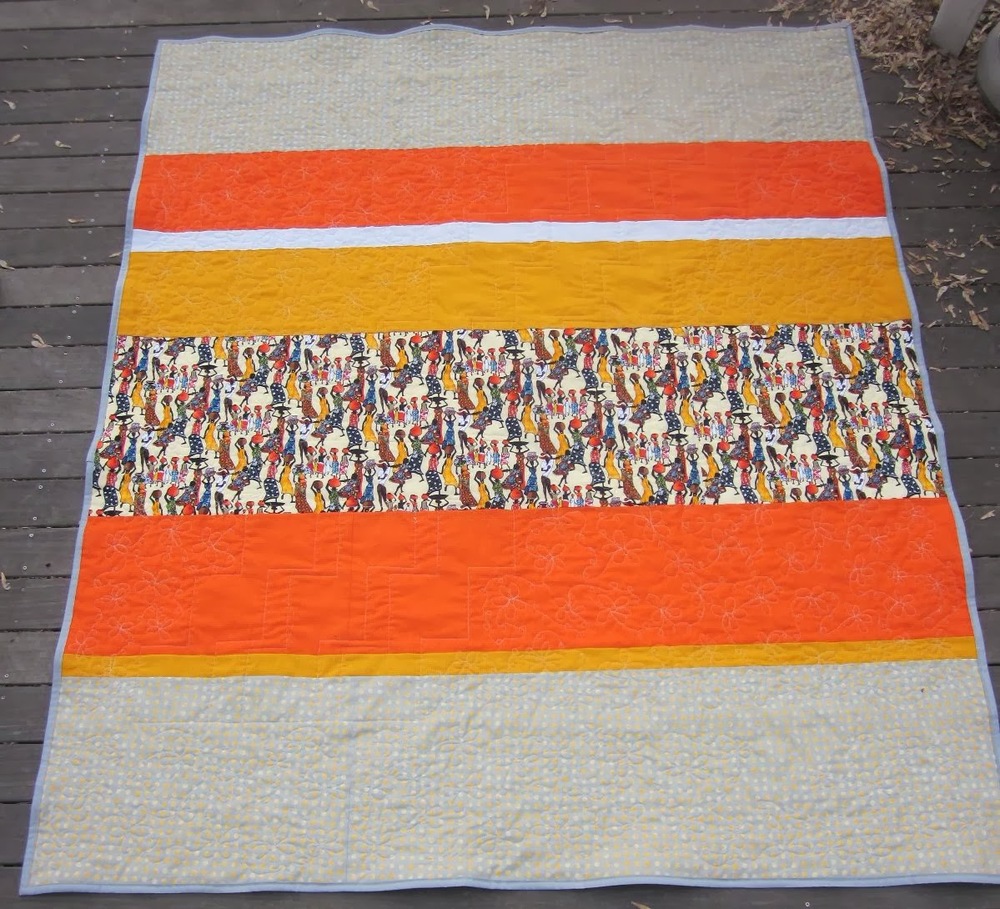
I made this quilt is for one of my dog trainers.  She has some African print art work and the African print fabric echoes her art. I was so excited to find it!

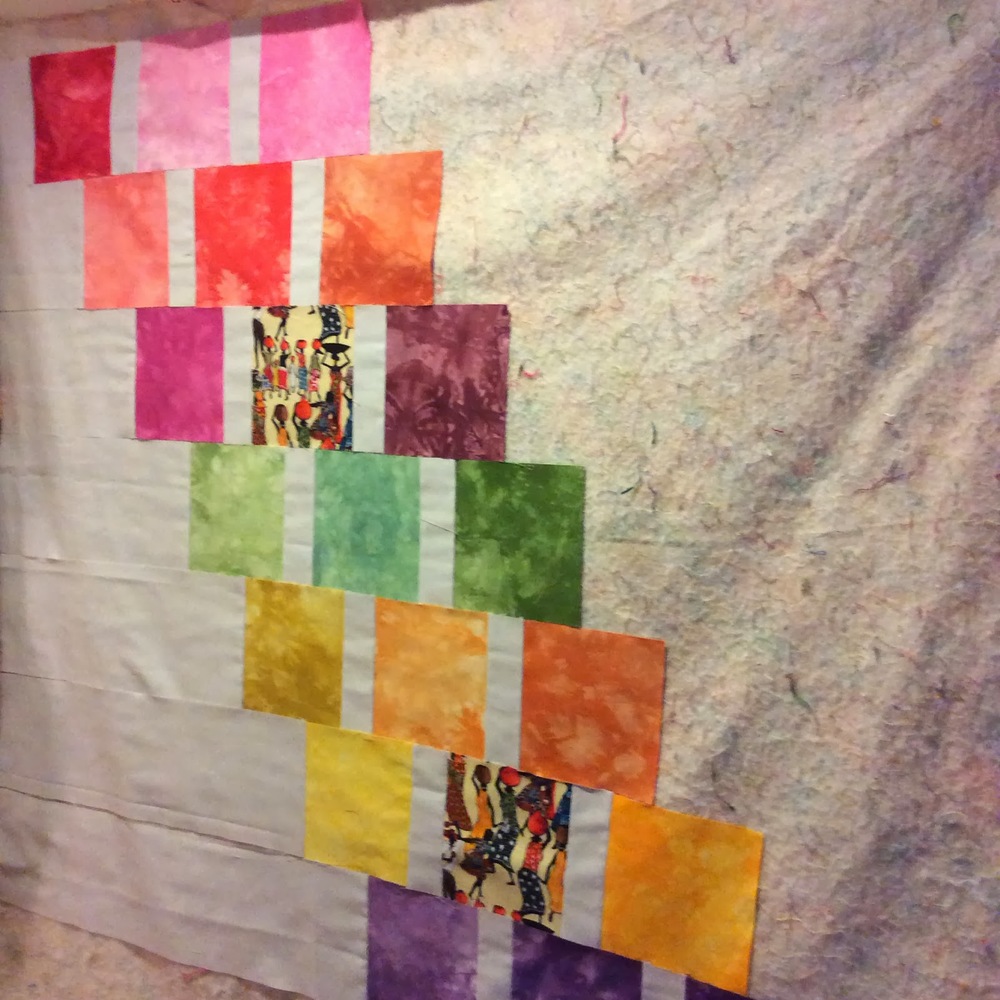
Front of quilt


Back of Quilt


SEWING THE QUILT
Sewing the color blocks

                  Color strips all done!
In process on the design wall

COLORFUL PATH TO MARKET  PATTERN                                                                          


Finished size after washing: 54.5 x 65”  (approx. 58.5 x 69 unwashed)

Fabric requirements:
-- 34  5.5” squares.  Use all color blocks or add some patterned blocks if desired
(Note: Charm packs have 5” squares so this pattern won’t work for them).
--3 yards solid light grey for background.
--3 yards for backing
--1/2 yard for binding

I recommend using design wall to keep your strips and steps organized.  If you don’t have one, you can mark the backs of each strip with the Row number and Right or Left to keep them in order.

Cut from grey fabric:
Step 1:
14   5.5” strips WOF (width of fabric).  You will recut these in Step 2 and you will need to use your scraps so save them.
22   2 x 5.5” strips

Step 2:
The quilt is strip pieced. There are 14 horizontal strips in the quilt.  Cut the grey WOF strips from step one as noted below:

Strip 1 AND 14:  58.5” grey strip (use 1 WOF strip and scraps from other steps to get the full length)
Strip 2:  From grey WOF strip, cut one 5.5” piece to use on left side of the color blocks and one 35.5 piece to use on the right side of the color blocks. 
Strip 3:  From grey WOF strip, cut one 8.5” piece to use on left side and one 32.5” piece for right side
Strip 4:  From grey WOF strip cut 11.5” piece for left side and 29.5” piece for right side
Strip 5:  From grey WOF strip cut 14.5” piece for left side and 26.5” piece for right side
Strip 6:  From grey WOF strip cut 17.5” piece for left side and 23.5” piece for right side
Strip 7:  From grey WOF strip cut 20.5” piece for left side and 20.5” piece for right side
Strip 8:  From grey WOF strip cut 23.5” piece for left side and 17.5” piece for right side
Strip 9:  From grey WOF strip cut 26.5” piece for left side and 14.5” piece for right side
Strip 10:  From grey WOF strip cut 29.5” piece for left side and 11.5” piece for right side
Strip 11: From grey WOF strip cut 32.5” piece for left side and 8.5” piece for right side
Strip 12:  From grey WOF strip cut 35.5” piece for left side and 5.5” piece for right side
Strip 13:  Use grey WOF strip, one color block and scraps to make a 58.5” wide strip
Strip 14: Same as strip 1

ASSEMBLE STRIPS
--Sew the color block sections first:
         Color block, 2 x 5.5” strip, color block, 2 x 5.5” strip, color block

--Then attach the grey strips as cut in Step 2. 

--Sew the horizontal strips together in order.  To help keep the rows from warping, sew the even numbered rows starting from the Right side and the odd numbered rows from the Left side.

--Back and quilt as desired.


Copyright 2014 Judy Tucker, SleepingDogQuilts@blogspot.com.  You may use this pattern for your personal use only. 


Finish them February: Part 1

by Judy Tucker


I think it's great that Lee, who blogs at Freshly Pieced Modern Quilts, hosts WIP (Work in Progress) Wednesday and Amandajean, who blogs at Crazy Mom Quilts, runs Finish it up Friday.  Both are Linky parties that encourage folks to keep working on their quilts and then link up to share their photos.

So...
At the beginning of the month, I declared that this month is going to be my Finish them February!
I had a stack of quilt projects that I had bumped last fall so I could work on the Bonnie Hunter Celtic Solstice Mystery Quilt and to have time to finish some presents for the holidays.  Some of the quilts were partially pieced and others needed to be sandwiched and quilted.  The stack of UFO projects on top of the dog's crate was looking more and more like the leaning tower of Pisa!  Not good!

It has been very cold and snowy since the beginning of February which has really helped my progress!  The month is half over and the news is good.  All the piecing is done and only one more quilt needs to be sandwiched.  Here is my stack of quilts waiting to be quilted.


My First February Finish was my Bonnie Hunter 2013 Celtic Solstice Mystery Quilt.  My quilt has a slightly different color combination than the one suggested in the pattern.  Bonnie's color way was orange, green, blue and neutral shirting fabric.  I switched out the orange (not my favorite color) for hot pink.  I've named my quilt My Irish Rose.  It is very rosy!

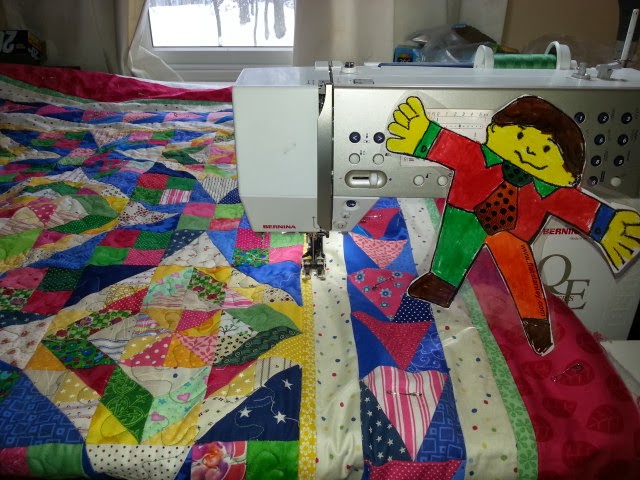
Flat Stanley was here visiting me from my nephew's second grade class while I was working on the quilt.  We had a big snow storm so he helped me with the quilting!


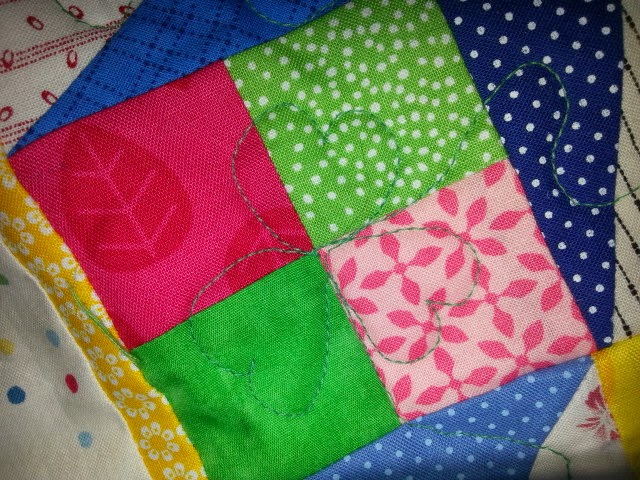
There is a shamrock free motion quilted in each of the 4 square blocks.


Somewhere in the quilt there is a single 4 leaf clover.  I have no idea where it is!  I love the idea that there is  hidden treasure in the quilting!

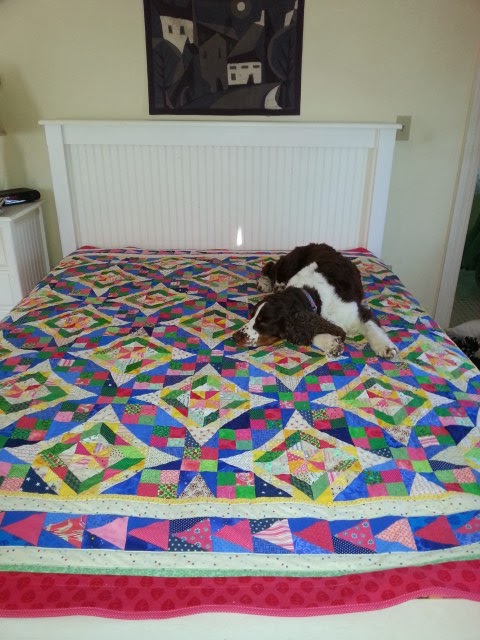
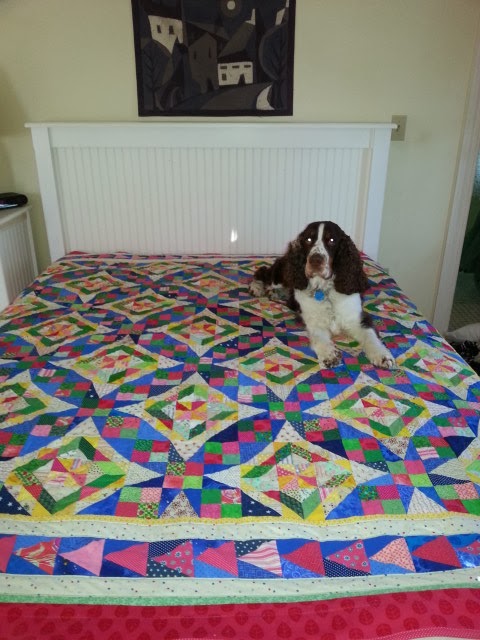
Here is the finished quilt.  It didn't take long before Taffy found it on the bed!  This is a great project and I'm thrilled how it turned out!


I'll keep you posted as I continue make progress on Finish them February!  Post a comment if you get some of your own February Finishing done!

Applique quilts from the early days

by Judy Tucker


I got some great lessons in quilting while I was a college student in the upper Midwest.  The grandmother of one of my college roommates taught us both how to do hand quilting with the quilt on a large quilting frame.  That was so much fun. She taught us how to hide our knots and how to keep our stitches small and even. 

I didn't have a sewing machine of my own until I started to work after college, so mostly I did hand appliqué with turned edges.  I spent a lot of time doing appliqué at the laundromat!  Come to think of it, I stopped doing hand appliqué once I got a washing machine in my apartment! 

I drew my own patterns for the appliqués on both of the quilts below. 

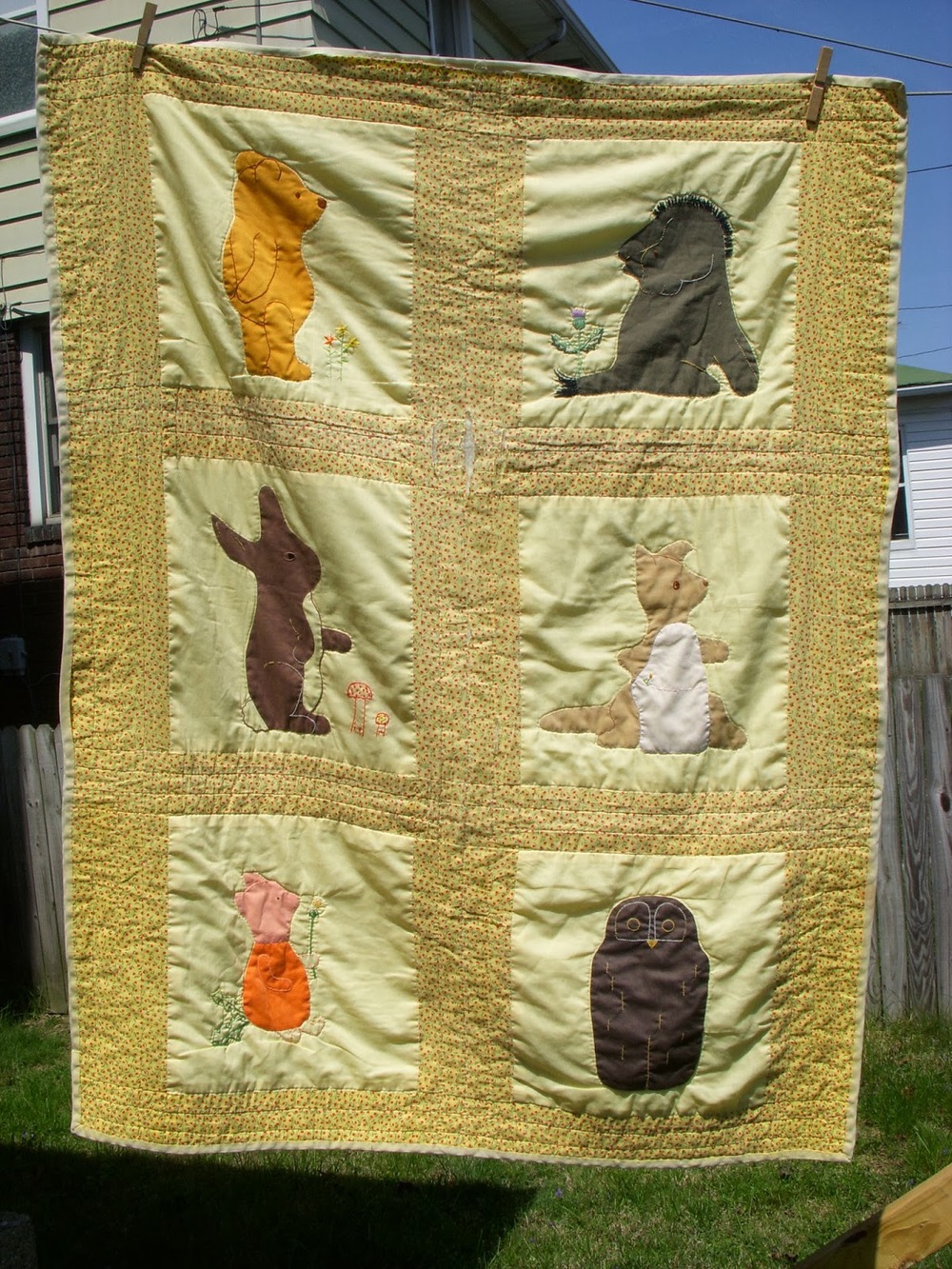
Here's my godchild's well loved Winnie the Pooh theme baby quilt. It was a mix of cotton calico and cotton-poly broadcloth. The broadcloth has survived but the cotton calico has worn thin and shredded. 
I am thrilled it was used so much that it has gotten worn out!


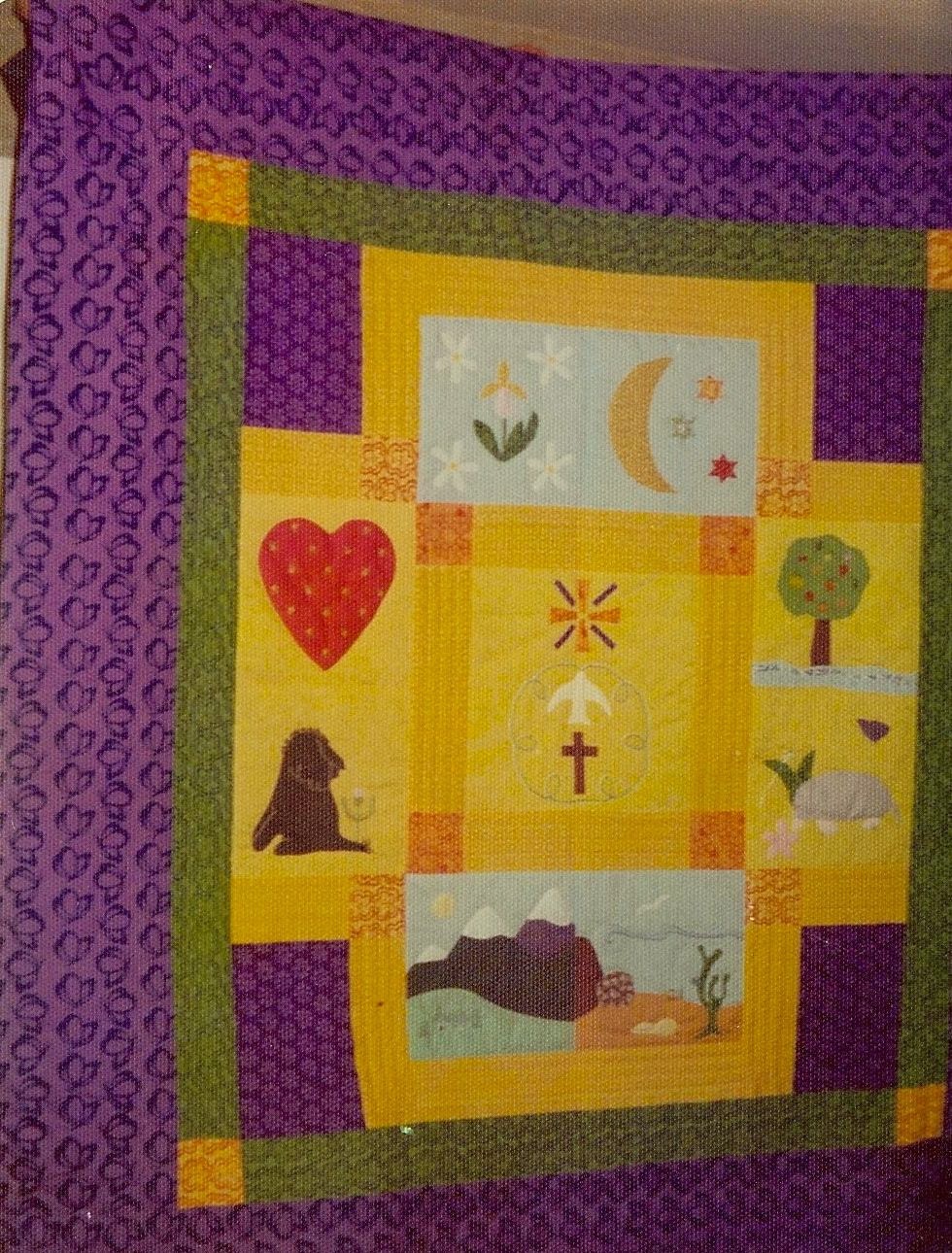
This quilt was a wedding present a friend. The appliqués are all things that were important and special to the bride.  The bold prints are hand prints from Marblehead Handprints which was in a small fabric company in Marblehead Massachusetts in the 1970s.  I remember many happy hours of sewing in the laundromat working on this quilt, as well as the fascination of the other customers!


So that's it for my introduction. 

These days I mostly am making pieced or paper pieced quilts, but occasionally I will do a fusible appliqué. For the past 2-3 years I've been making about 2 quilts a month. 

I have lots of projects in the works and ideas for a lot more!  I enjoy making both traditional and Modern quilts.  I do use patterns but I love creating my own designs too.  It's color that I find really exciting.  Solids, '30s prints, modern prints, they all make me happy!  

So welcome! I hope you enjoy following along on my quilting and sewing adventures.