Search
  • Information
    • About
    • Contact
    • Privacy Policy
  • Blog
  • Subscribe
  • Tutorials
    • Tutorials
    • Doll Clothes: Photos and some Patterns
  • Suggested Reading
  • Quilts: My Original Designs
  • Gallery: Color Studies
  • Gallery: Quilts I've Made
  • Doll Making Blog Posts
  • Recent blog posts
  • Quilts Based on The Improv Handbook for Modern Quilters
Close
Menu
Search
Close
  • Information
    • About
    • Contact
    • Privacy Policy
  • Blog
  • Subscribe
  • Tutorials
    • Tutorials
    • Doll Clothes: Photos and some Patterns
  • Suggested Reading
  • Quilts: My Original Designs
  • Gallery: Color Studies
  • Gallery: Quilts I've Made
  • Doll Making Blog Posts
  • Recent blog posts
  • Quilts Based on The Improv Handbook for Modern Quilters
Menu

Sleeping Dog Quilts

SLEEPING DOG QUILTS

October 11, 2018

Star Braiding Tools for Making Cords

by Judy Tucker


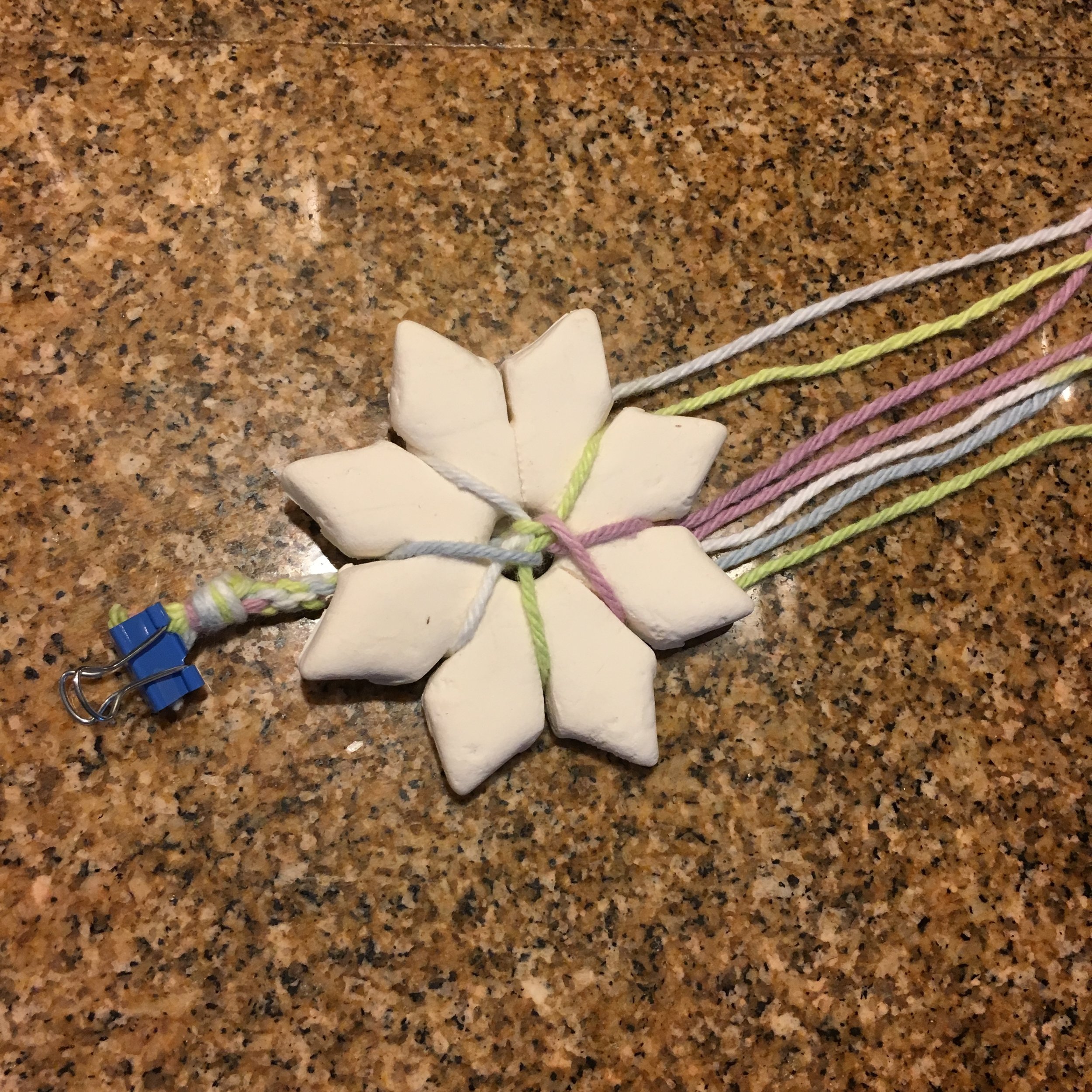
Braiding Star made from Crayola Model Magic Modeling Material

Braiding Star made from Crayola Model Magic Modeling Material

Braiding Star made from Crayola Model Magic Modeling Material

Braiding Star made from Crayola Model Magic Modeling Material

I recently discovered braiding stars. They are used to braid cords with 7 strands. The braiding stars are very easy to use and make beautiful cords. Children use them to make friendship bracelets, shoe laces or other cords.

I purchased a wooden braiding flower (same tool, variant name) from the Etsy shop, Cranberry Creek Forest. I’ve been using mine to make cording from Sugar ‘n Cream® cotton yarn. It’s a project than can go anywhere and doesn’t require a lot of concentration.
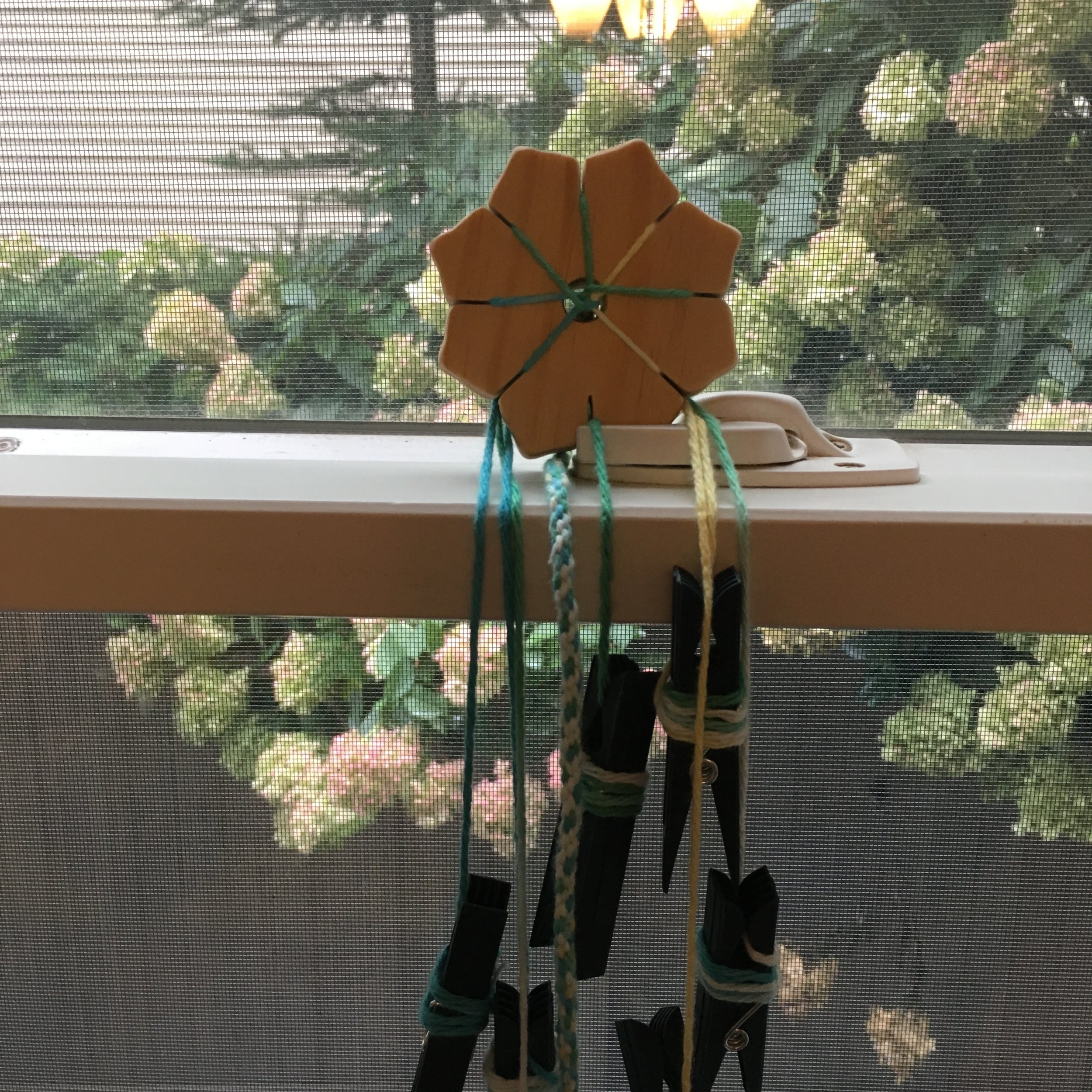
Braiding Flower made by Etsy shop Cranberry Creek Forest (*See note below)

Braiding Flower made by Etsy shop Cranberry Creek Forest (*See note below)

How does the Braiding Star work?

  1. Cut 7 pieces of yarn (cotton or wool) or perle cotton at least 1/3 longer than the desired length of the finished cord. (These yarns are available at craft stores. The Perle cotton will be with the embroidery thread).

  2. Line up the pieces of yarn and tie an knot in one end.

  3. Put the knot through the hole in the braiding star. If you have one, attach a little binder clip to the knot so it doesn’t pull through the hole as you start to braid.

  4. Put one strand of the yarn in 7 of the 8 slots in the star. Now you are ready to braid!

  5. Line up the empty slot so it faces you.

  6. Count two slots to the right of the empty slot. Pick up the yarn from the next slot (the third one) and put it in the empty slot in front of you.

  7. Turn the star clockwise, so the new empty slot faces you.

  8. Count 2 slots and pick up the yarn in the 3rd slot and put in the slot in front of you. That’s it! Continue until you have the braid you want.

  9. Occasionally pull on the braid that is forming on the underside of the star. That helps to tighten the braid.

  10. When there is about 1 to 1 1/2 inch of yarn left, take the braid out of the star. Tie the loose ends in a knot to the cord doesn’t ravel out. Trim the ends with scissors so the fringe is straight.
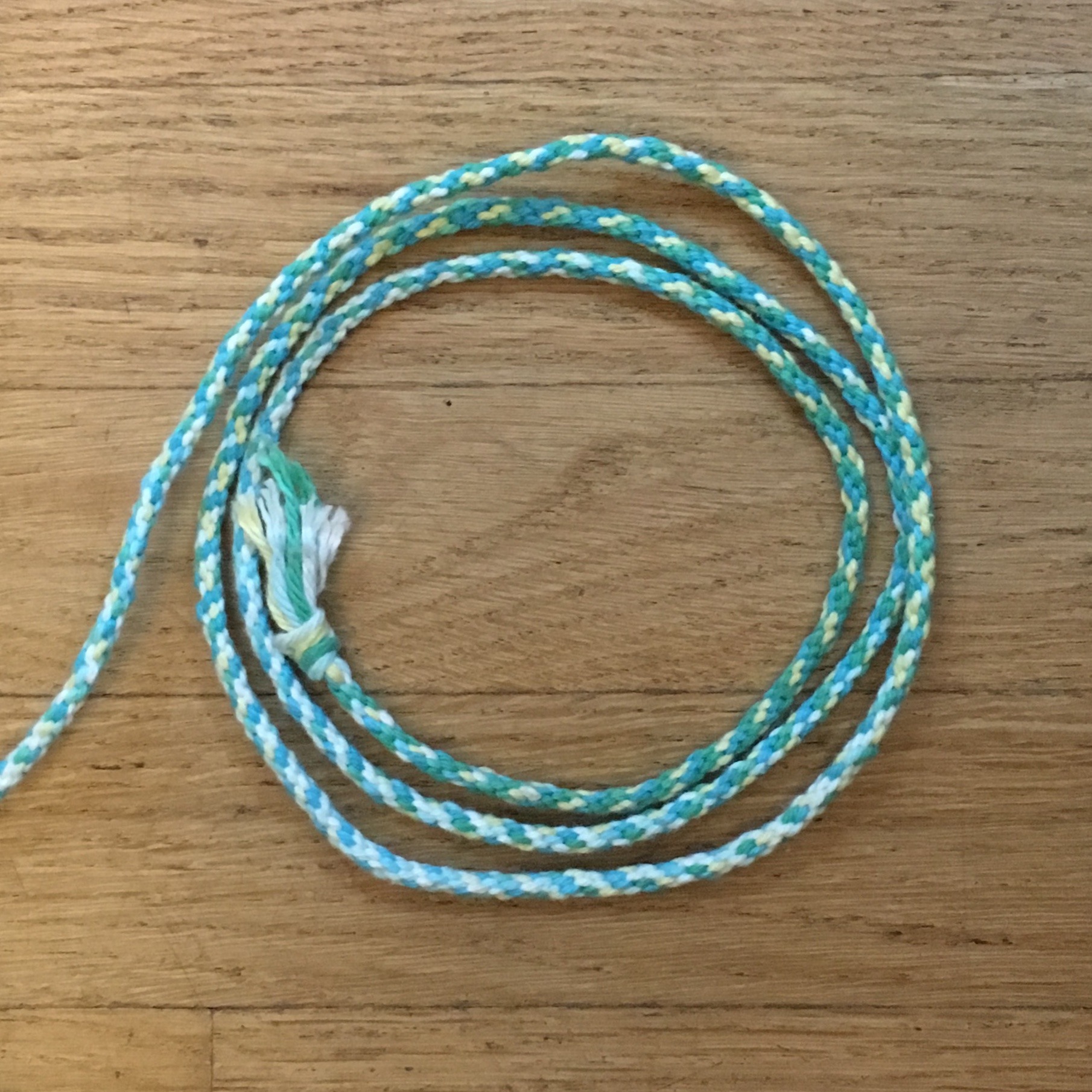
BraidedCord.jpg


I love my wooden braiding flower but I wanted to make braiding stars myself. I don’t have any woodworking skills, so I’ve been experimenting with other substrates. I’ll share my adventures in the next post!


*The cording I’m making is about 6 feet long. I’ve wound my yarn around clothes pins to keep it from tangling.

Notice: This blog is not monetized: I do not use affiliate links. When there are links in a post, they are to give credit to another creative person, because I like or have used a product, or to help the reader easily find supplies for a project.
TAGS: Braiding Star Tool, Braiding Flower Tool, Braiding Tools


October 4, 2018

Two More Classic 13 inch Waldorf Type Dolls

by Judy Tucker


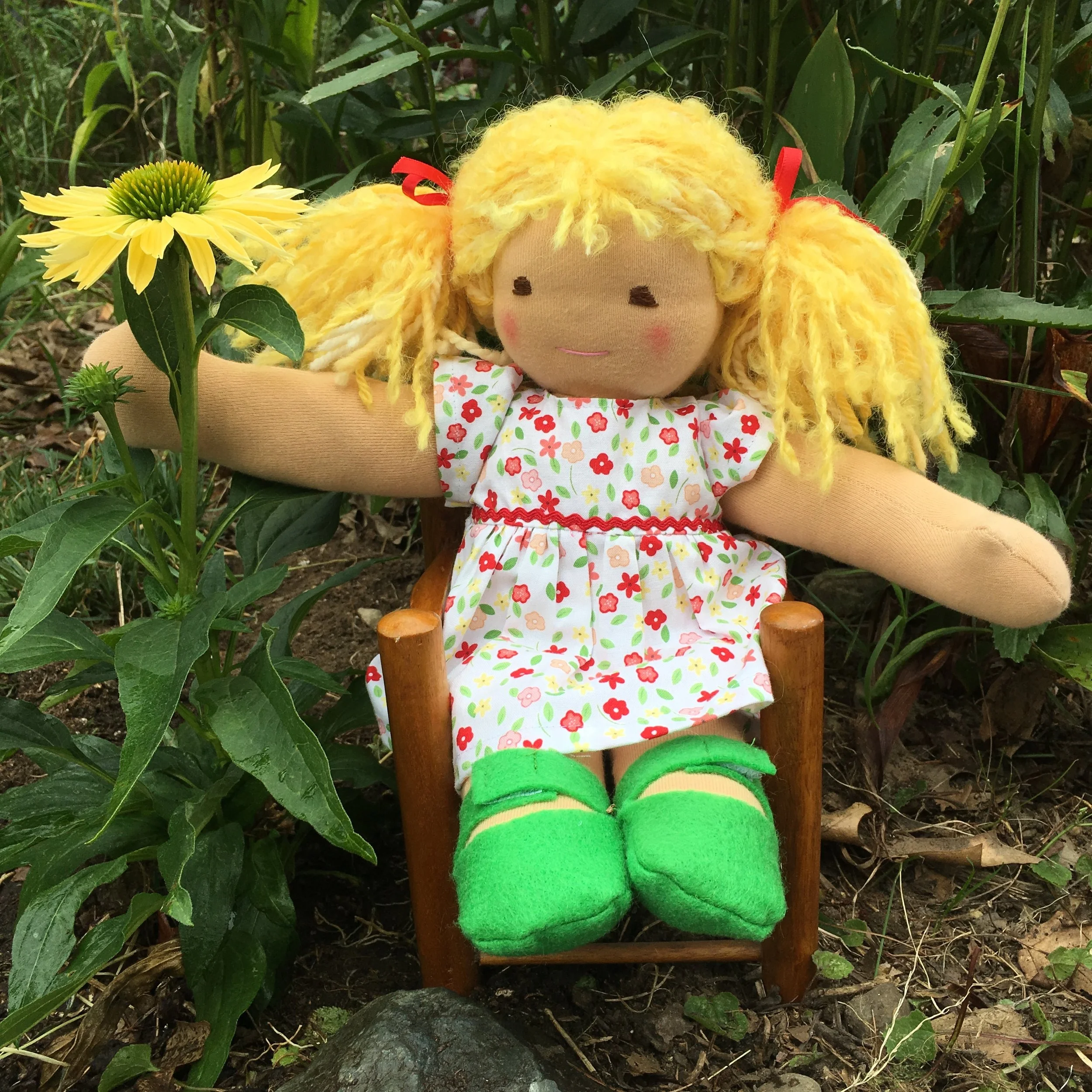
13 inch classic Waldorf Type Doll with sunkissed skin and mohair boucle and wool yarn hair

13 inch classic Waldorf Type Doll with sunkissed skin and mohair boucle and wool yarn hair

13 inch classic Waldorf Type Doll with sunkissed skin and mohair boucle and wool yarn hair

13 inch classic Waldorf Type Doll with sunkissed skin and mohair boucle and wool yarn hair

I really have fun making the medium size, 13 inch, classic Waldorf Type dolls using the pattern in Maricristin’s book, Making Waldorf Dolls.

I made two more in August when it was hot and humid, and sitting in front of my portable air conditioner was the only smart thing to do!

The little girl above, with the bright yellow mohair boucle and shades of white and yellow wool yarn is sitting next to an echinacea variety called Chacita that is in my front yard. When her hair is down, it’s just shoulder length. It’s the first time I’ve put short hair on a doll that isn’t a baby. I think it is pretty cute!

Here is the other 13 inch classic Waldorf Type doll. She is a present. I chose the skin color and hair yarns based on what a 9 year friend told me she liked when she surveyed my collection of dolls. I can’t wait to give it to her!

13 inch Waldorf type doll with dark tan skin and a variety of yarns in her hair

13 inch Waldorf type doll with dark tan skin and a variety of yarns in her hair

The fun thing about these size dolls is that they can share clothes with Bamboletta Cuddle Dolls. And the girl getting this doll has a Cuddle Doll! Here’s a link to page of Bamboletta doll clothes. Their inventory changes weekly on Wednesday so there are always new clothes! There sometimes aren’t clothes for every size of doll they make, but they do restock regularly.

Notice: This blog is not monetized: I do not use affiliate links. When there are links in a post, they are to give credit to another creative person, because I like or have used a product, or to help the reader easily find supplies for a project.


TAGS: Waldorf type doll, 13 inch Waldorf type doll, Medium size Waldorf type doll, Bamboletta Cuddle doll, Making Waldorf Dolls by Maricristin Sealey


September 27, 2018

Completed Christmas "Lolly" Quilt

by Judy Tucker


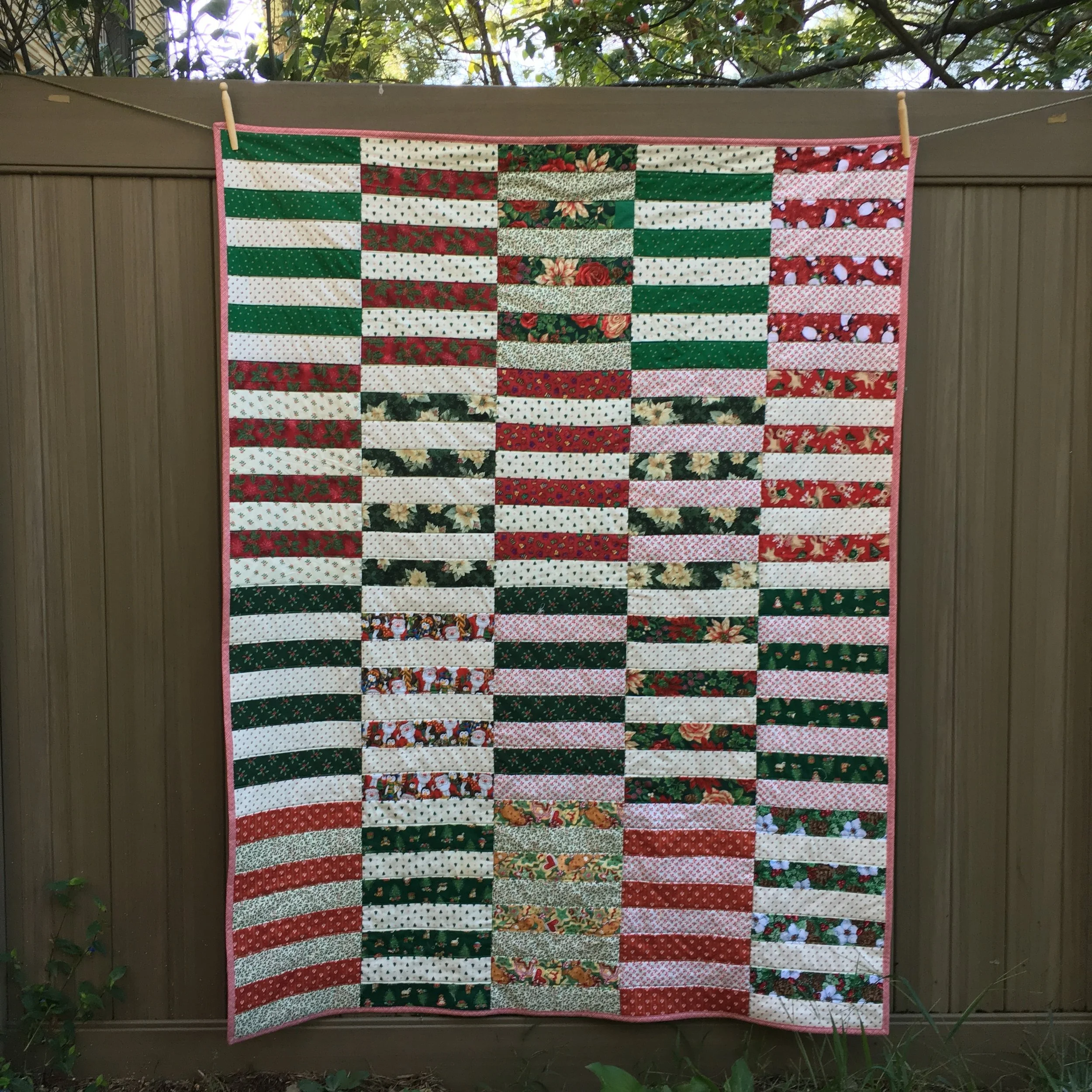
Christmas version of Tula Pink’s “Lolly” pattern, 46 x 61 inches

Christmas version of Tula Pink’s “Lolly” pattern, 46 x 61 inches

Christmas version of Tula Pink’s “Lolly” pattern, 46 x 61 inches

Christmas version of Tula Pink’s “Lolly” pattern, 46 x 61 inches

Here’s my Christmas version of Tula Pink’s “Lolly” quilt. This pattern can be found in the book, Dear Quilty by Mary Fons and Team Quilty.

Tula Pink used 2 1/2 inch jelly roll strips from one of her fabric lines when she made the quilt in the book. I cut up fabric which had been donated to our quilt guild, scraps I had from making dog bandanas and other scraps that were odds and ends from some other of my projects.

The cutting took rather a long time, but sewing this quilt was surprisingly easy. I thought it would be hard to get all the bars in the blocks to match but they lined up beautifully.

I quilted using straight line quilting, using my walking foot, following the blocks. The vertical stitching is in the ditch between each block. The horizontal quilting is 1/8 in on one side of each of each strip running across the blocks. It only took about 2 hours to do all the quilting!

This quilt will be donated, along with other quilts made by our guild, to be given to children and teens in the hospital at Christmas time. I really had a lot of fun making the quilt.

This is the end of series on quick charity quilts. But I had some orphan blocks so you may see a few doll quilts later this fall!

Notice: This blog is not monetized: I do not use affiliate links. When there are links in a post, they are to give credit to another creative person, because I like or have used a product, or to help the reader easily find supplies for a project.
TAGS: Christmas Quilt, Quick Charity Quilt, Tula Pink's "Lolly" quilt pattern, "Dear Quilty" by Mary Fons & Team Quilty, Scrappy Quilt Top


September 20, 2018

Starting off the Next Generation of Sewers

by Judy Tucker


Homemade Pumpkin Sewing Card

Homemade Pumpkin Sewing Card

Homemade Pumpkin Sewing Card

Homemade Pumpkin Sewing Card

I have a young friend who is 4 1/2 years old. She loves Waldorf dolls so I thought she might have fun with some sewing cards. I remember enjoying cardboard sewing cards when I was about 5.

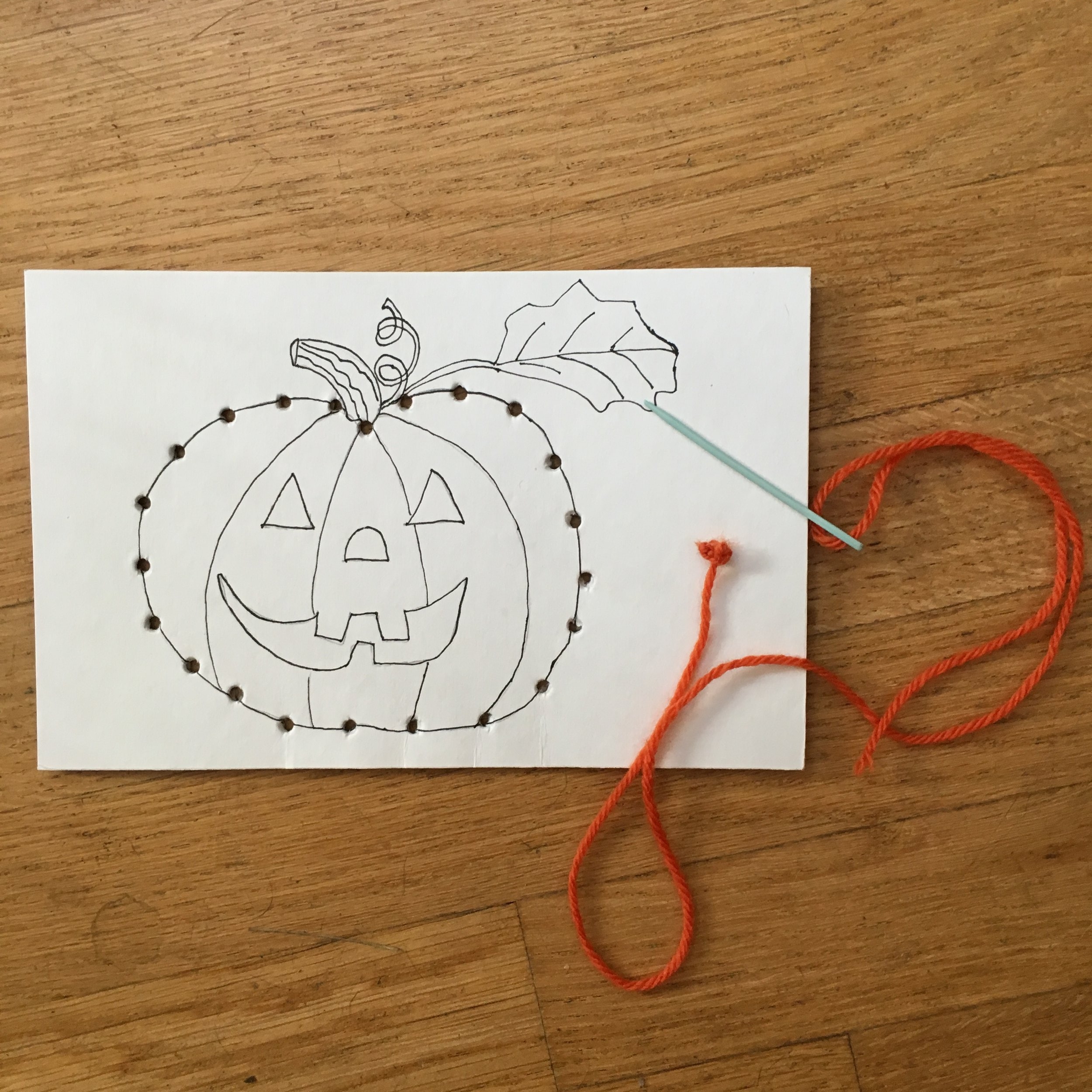
She loves Halloween so I made this sewing card for her. I used white chipboard, a cardboard product that is usually used for book bindings. I had 8 1/2 x 11 inch white chip board on hand but it also comes as 6 x 6 inch squares which is a great size for sewing card.

I cut my sheet of chip board in half with a paper cutter. Then I drew my pumpkin design.

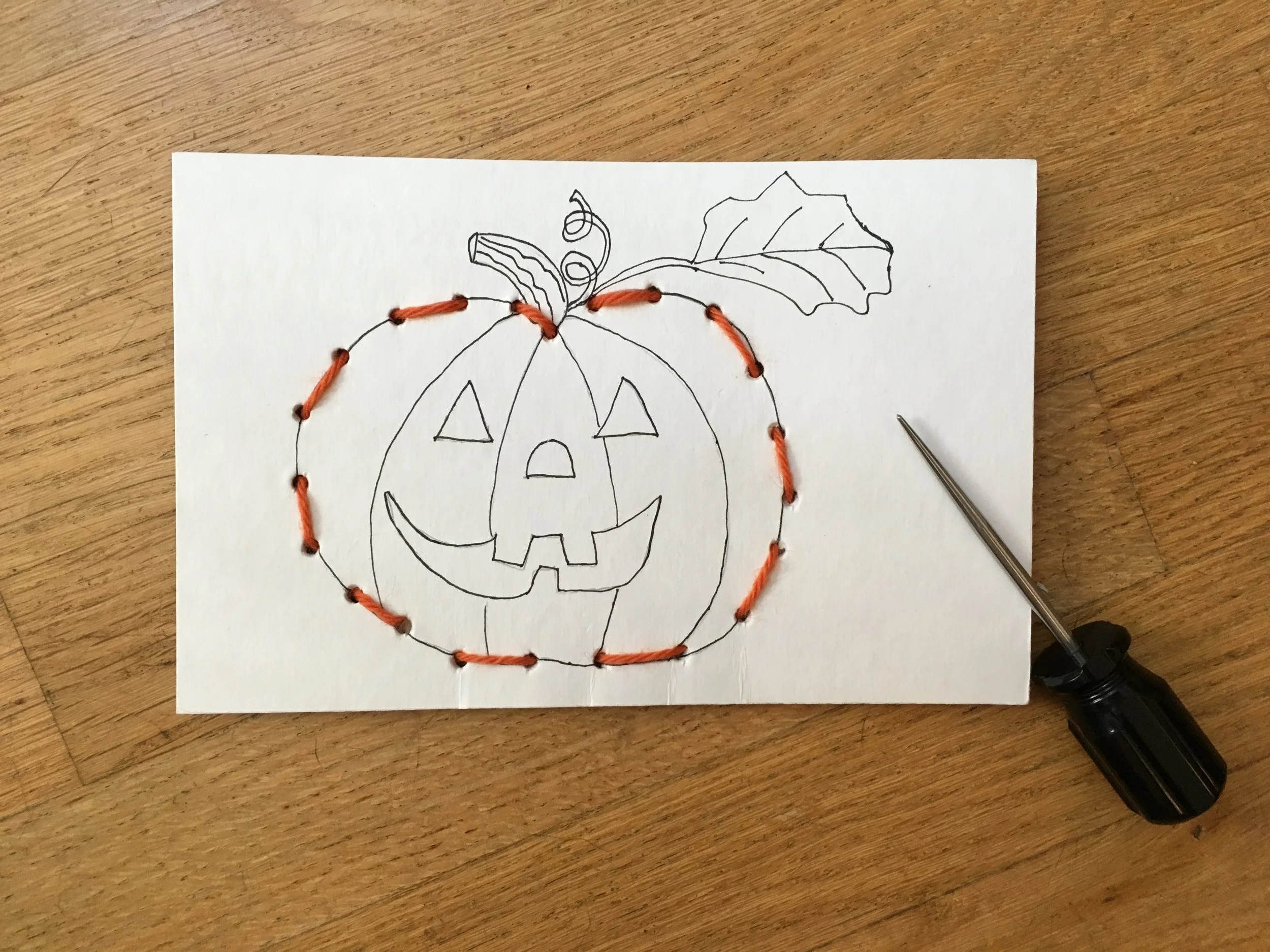
I made the holes with a awl I got at the hardware store, spacing them about 1/2 inch apart. Be careful not punch holes with the awl on a surface you could damage. Make sure to punch and EVEN number of holes so that the last stitch finishes on the back of the card.

Completed sewing card and with awl used to punch the holes

Completed sewing card and with awl used to punch the holes

I cut pieces of wool yarn. I needed to tie several knots so that it didn’t pull through the hole when i was sewing. The sewing needle is a plastic yarn needle that is sturdy enough but not sharp.

I wrote instructions on the back of the card.

Color in the picture first, then sew using the yarn and the yarn needle.

This chip board is sturdy enough that the yarn can be pulled out and the card sewn again, at least several more times. I put about 5 pieces of yarn, with knots already tied, with the sewing card.

I had fun making this. I hope my young future doll maker and sewer has fun using it!

TAGS: Homemade Sewing Card, Halloween sewing card, Child's sewing card, Making a child's sewing card


September 13, 2018

One More Idea for Easy Quilts Using Homemade Precut Strips

by Judy Tucker


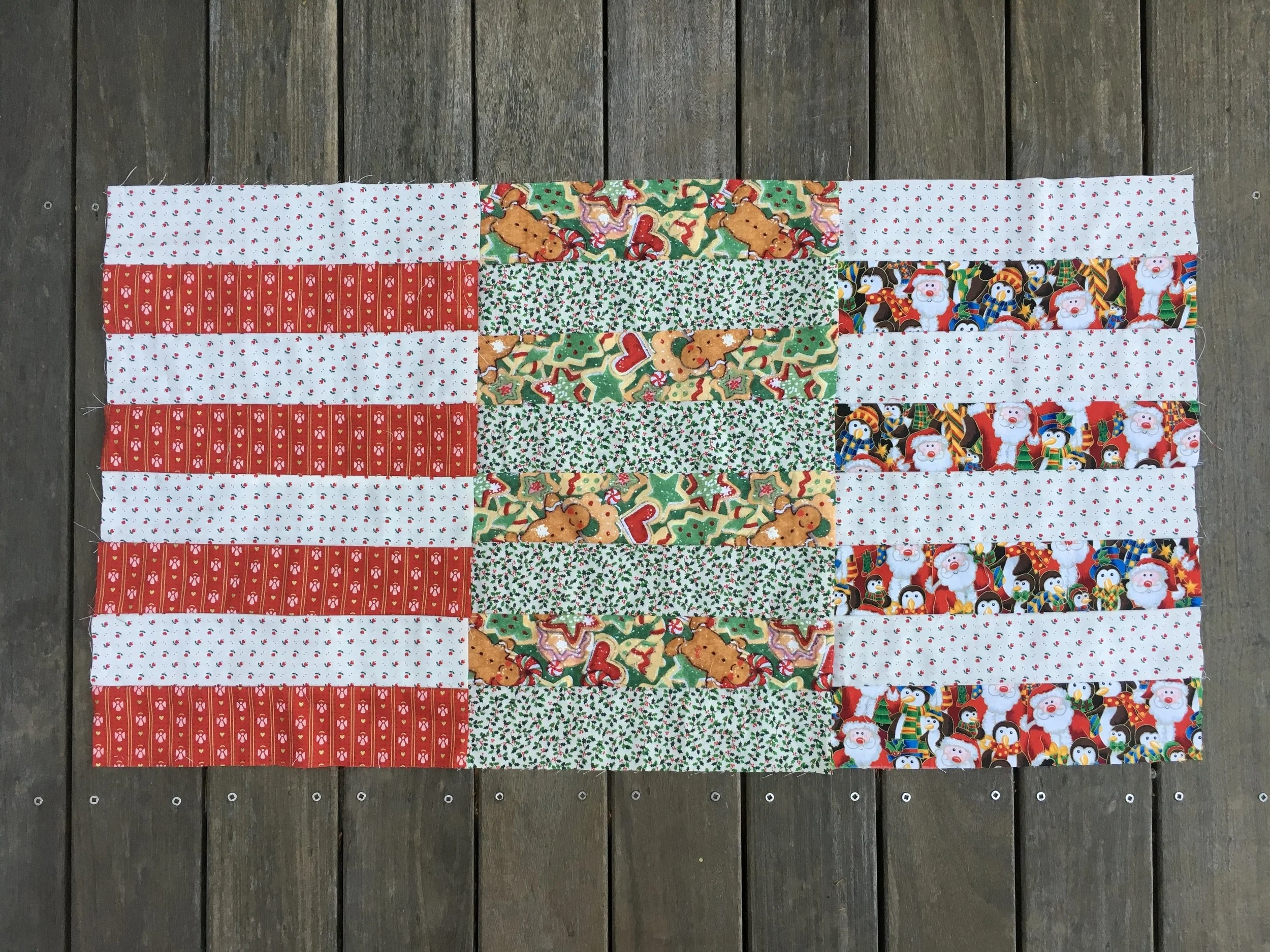
Blocks for Tula Pink’s “Lolly” Quilt

Blocks for Tula Pink’s “Lolly” Quilt

Blocks for Tula Pink’s “Lolly” Quilt

Blocks for Tula Pink’s “Lolly” Quilt

Looking through my library of quilt books for another quilt pattern that could use our Guild’s precuts (2 1/2 inch and 5 inch strips, 5 inch squares and 10 inch squares) I found Tula Pink’s
”Lolly” pattern in Dear Quilty by Mary Fons and Team Quilty,

This pattern uses 2 1/2 inch strips to make blocks. The used jelly rolls for the quilt in the book, but I used strips I cut myself from donated fabrics and fabrics from my own stash. Some of my fabric was scraps from making dog bandanas and that was really scrappy!

I followed the directions for the quilt in the book, but you could cut the 2 1/2 inch strips any length you like and also choose a different number of strips in each block.

It’s a straight forward design, but I think it will be a fun Charity Christmas quilt when it’s all put together.

TAGS: Quilts from precut strips, "Dear Quilty" by Mary Fons & Team Quilty, Tula Pink's "Lolly" quilt pattern, Charity quilt using pre-cut fabrics


September 6, 2018

More Ideas for Easy Quilts using Homemade Pre-Cut Fabrics

by Judy Tucker


Bricks and Squares Quilt  28 x 36 inches

Bricks and Squares Quilt  28 x 36 inches

Bricks and Squares Quilt  28 x 36 inches

Bricks and Squares Quilt  28 x 36 inches

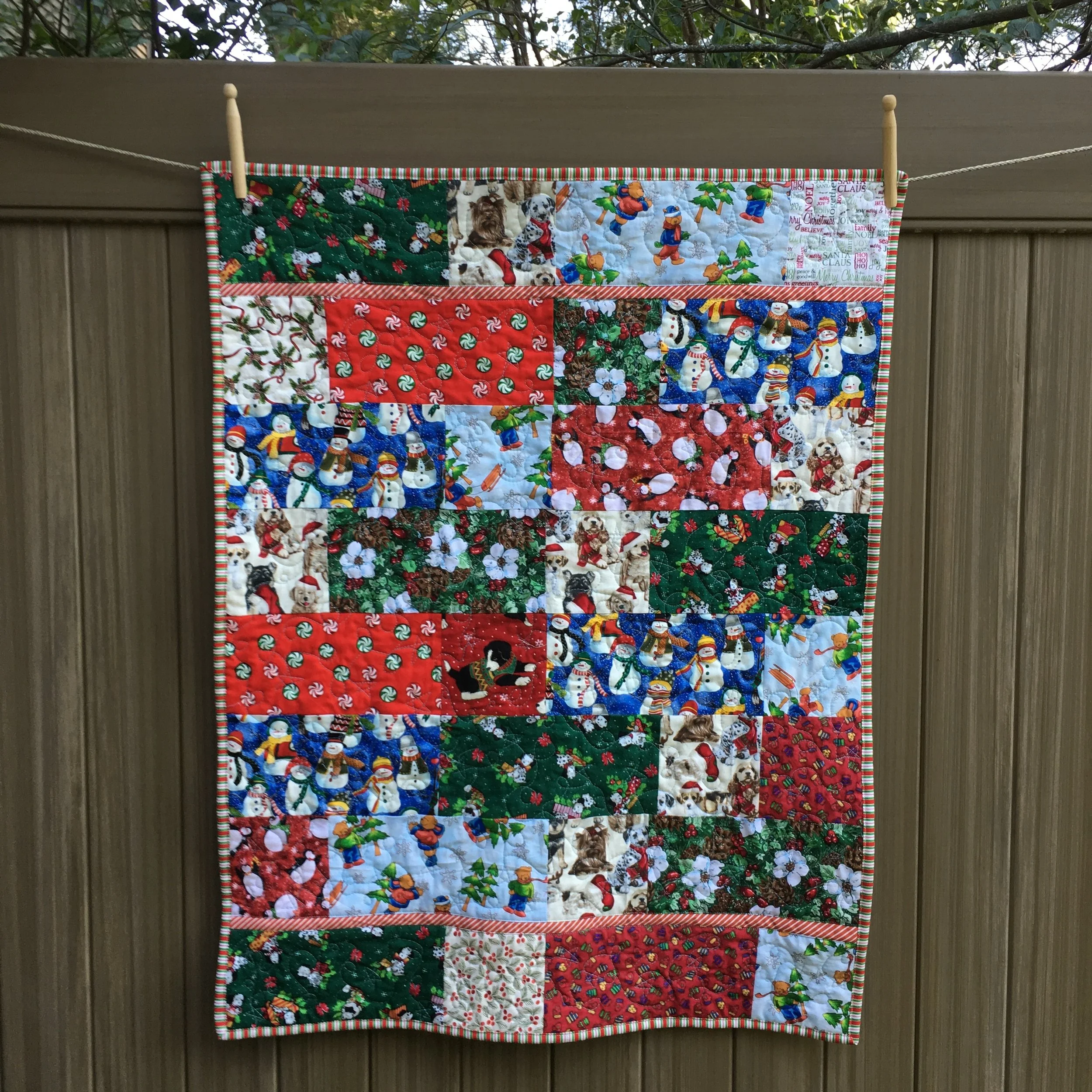
The pre-cut Charity Quilt project I discussed in the last 2 posts was so much fun that I pulled out my stash of Christmas fabrics to make a another quilt. I made this one for my dog* but it will be an example to show at the Guild meeting when there is a discussion about ways to use the fabrics that were pre-cut this past summer.

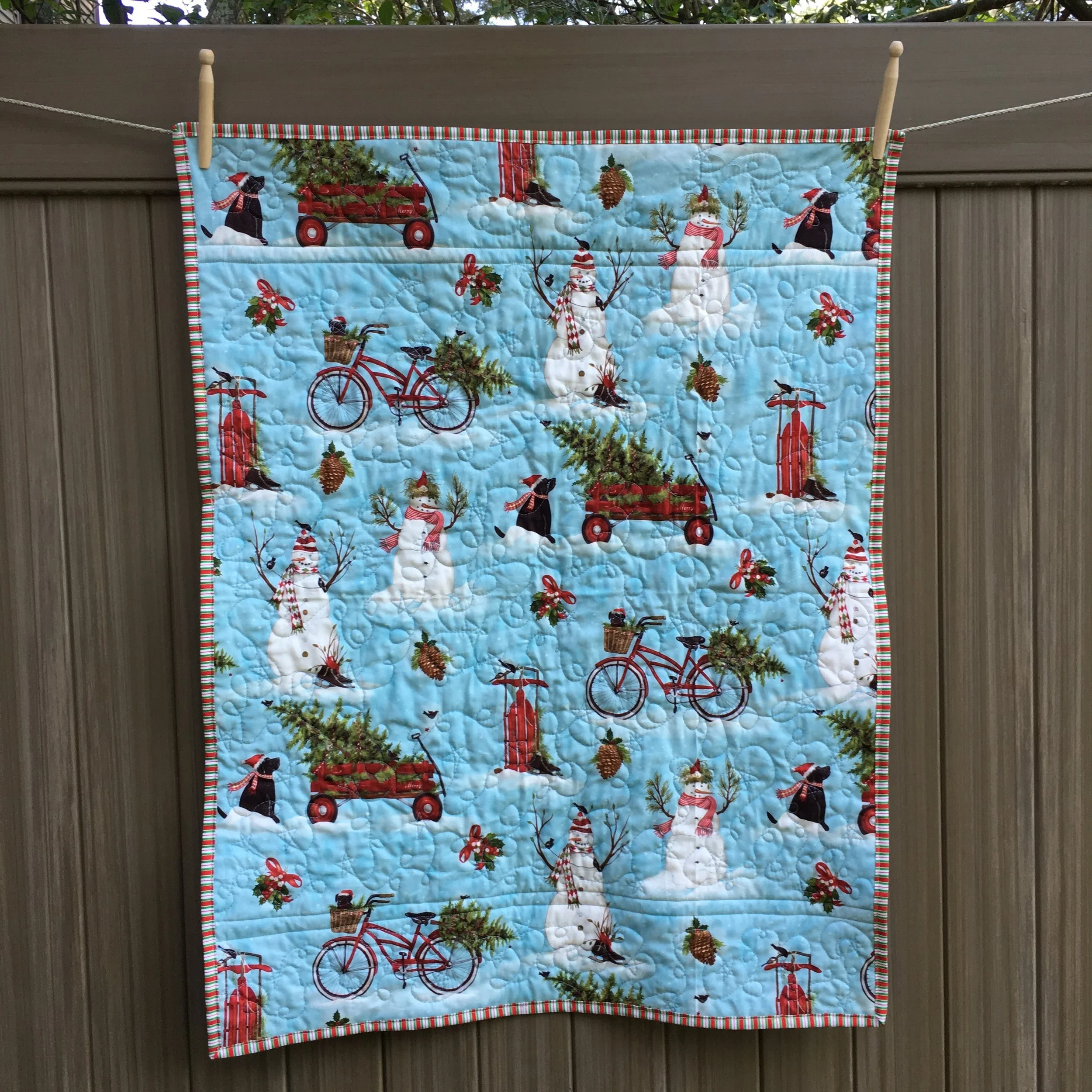
This quilt was made with just 10 x 5 inch bricks and 5 inch squares. There are an equal number of each block in each row. There is a narrow strip of fabric at each end of the quilt to give it some definition.  The back has a large print Christmas pattern, so this quilt is actually reversible.

Reverse of quilt at top

Reverse of quilt at top

*The Christmas quilt I use on my bed has a red Irish Chain with white blocks. I'm going to put this quilt son top of that quilt for my quilt-loving Lab-mix to sleep on!  Hopefully this little quilt will keep my quilt clean!

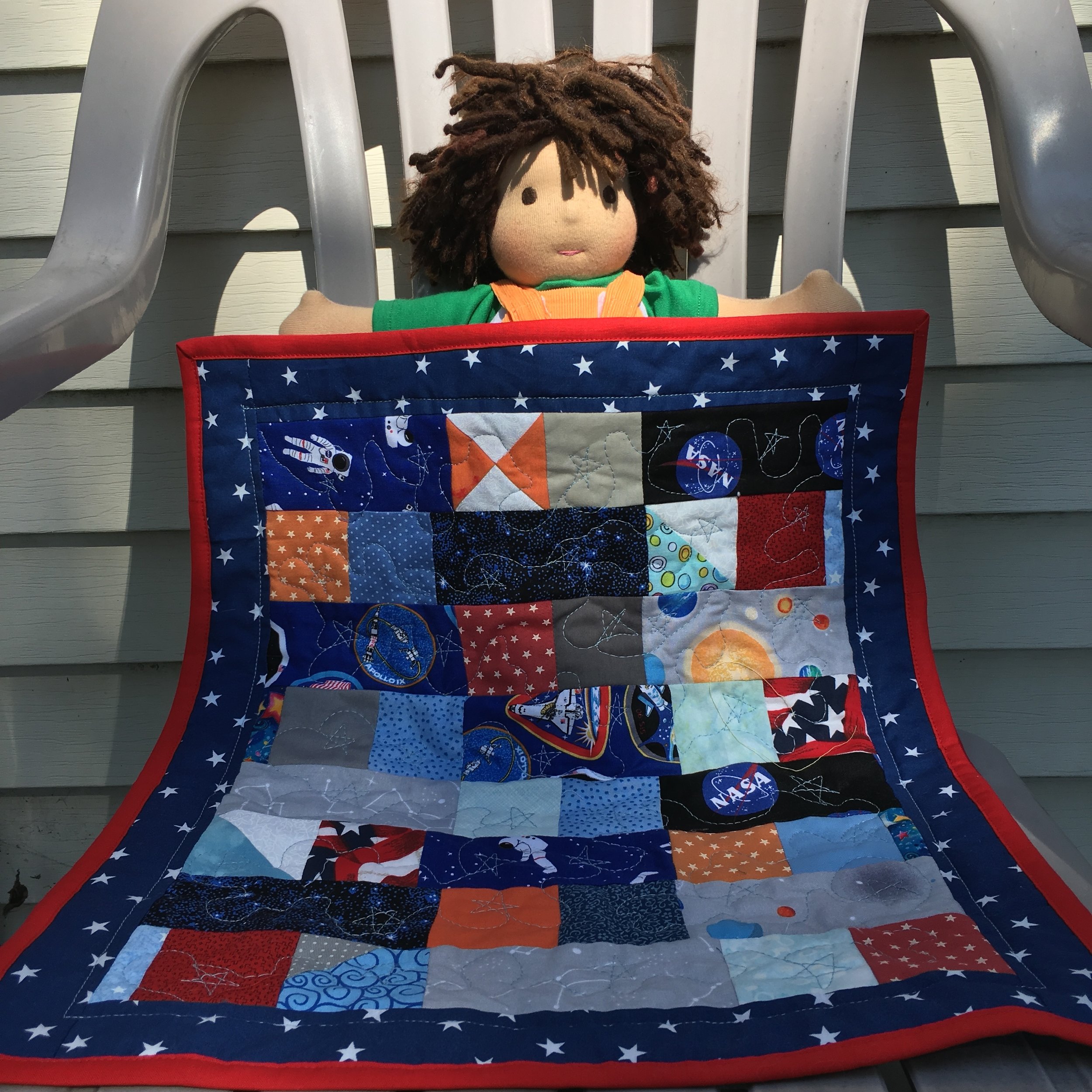
On a roll, I made one more quilt--this one doll size. An Etsy company sent me four 5 inch charm squares of space fabrics as a bonus to my fabric order.  Making a doll quilt seemed like a perfect way to use those squares plus some of the bits and pieces in my stash.  
 

Micah, a Bamboletta Cuddle Doll, with the Space Doll Quilt, 16 x 19 inches

Micah, a Bamboletta Cuddle Doll, with the Space Doll Quilt, 16 x 19 inches

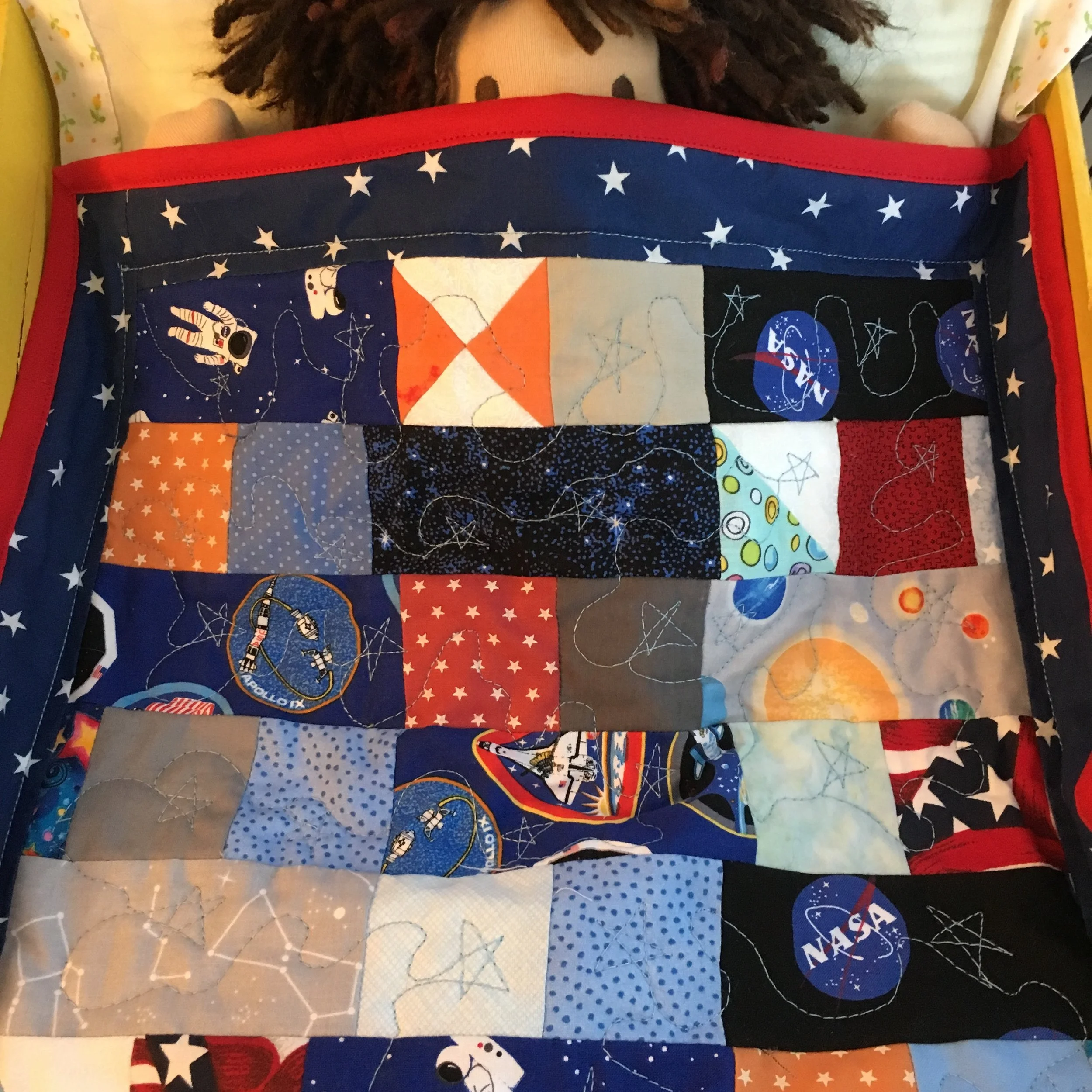
I decided to cut the 5 inch space fabric squares in half and use 2.5 inch squares from my stash.  Good thought but....what works in algebra doesn't work in quilty math!  I didn't put 2 and 2 together until I had sewn all the strips of blocks for the quilt long to discover that they weren't the same length. Right:  in quilting a 2.5 square + 2.5 square = 4.25 x 2.5 block, not a 5 x 2.5 inch block!

It was too late to cut down the 2.5 x 5 inch blocks so I just added a bit of fabric on alternating ends of each row, making it a scrappy improv Space quilt. Problem solved, but I did have a good laugh....How long have I been quilting???  Long enough, but even an experienced quilter can get tripped up by not checking the math before cutting! 

Micah suggling under the Space Doll Quilt

Micah suggling under the Space Doll Quilt


TAGS: Doll Quilt, Bamboletta, Charity quilt, Quilt Charity Quilt


August 30, 2018

Completed Candy Cane Charity Quilt

by Judy Tucker


Completed Candy Cane Charity Quilt 39.5 x 46 inches

Completed Candy Cane Charity Quilt 39.5 x 46 inches

Completed Candy Cane Charity Quilt 39.5 x 46 inches

Completed Candy Cane Charity Quilt 39.5 x 46 inches

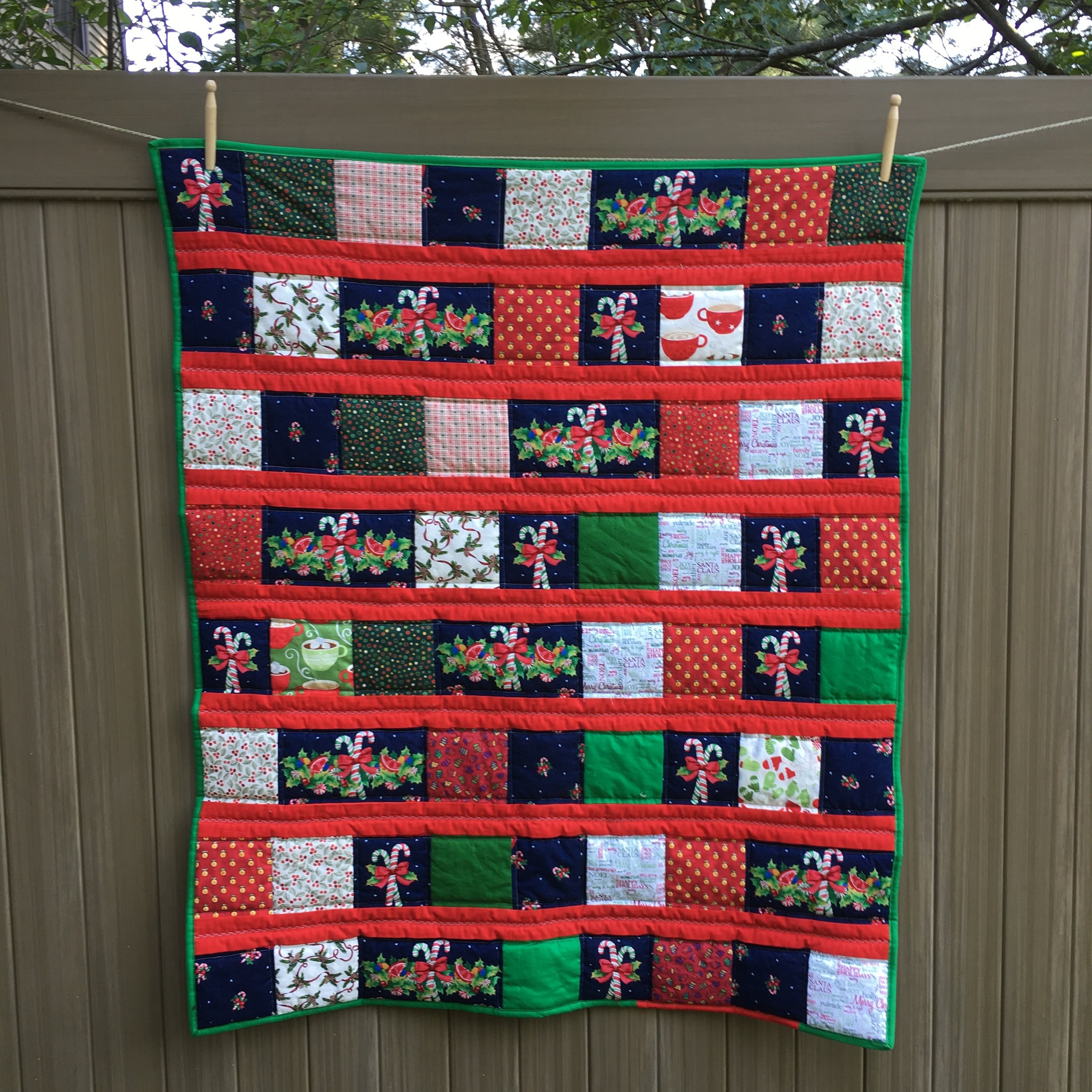
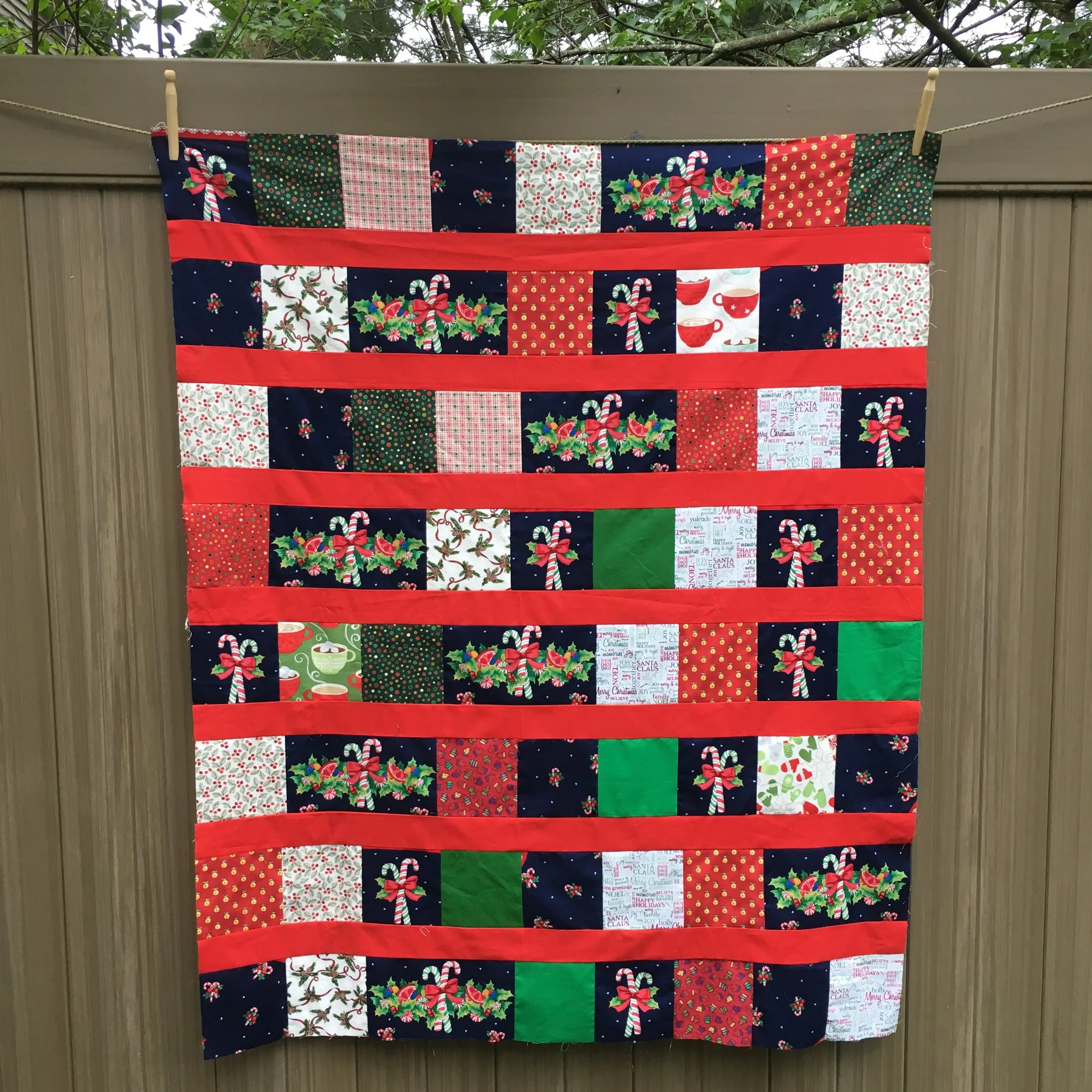
Here is the completed Candy Cane charity quilt I discussed in my last post.  It has a fairly thick polyester batting (what I had on hand in the right size) that makes it light and puffy.  I know it will be warm and snuggly!

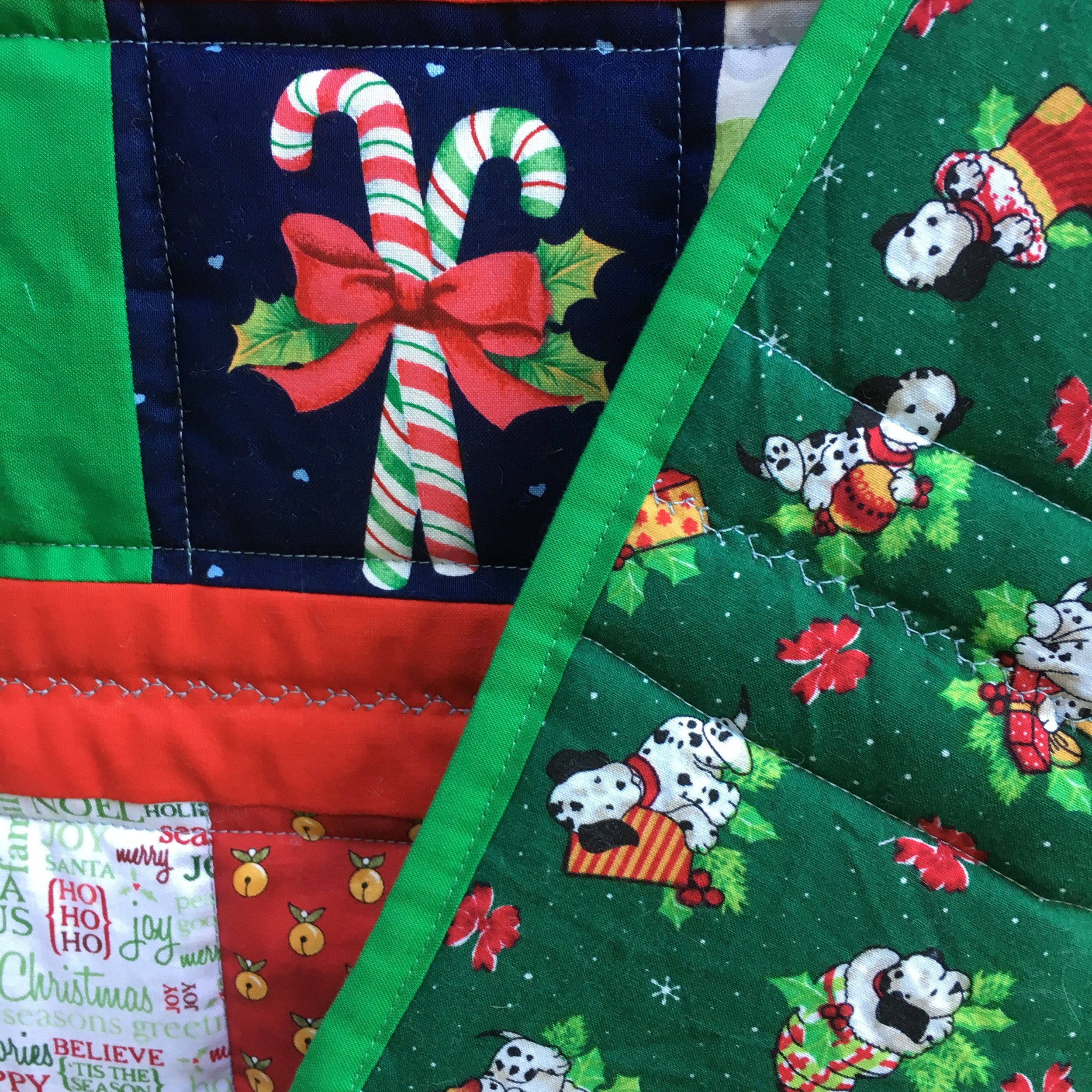
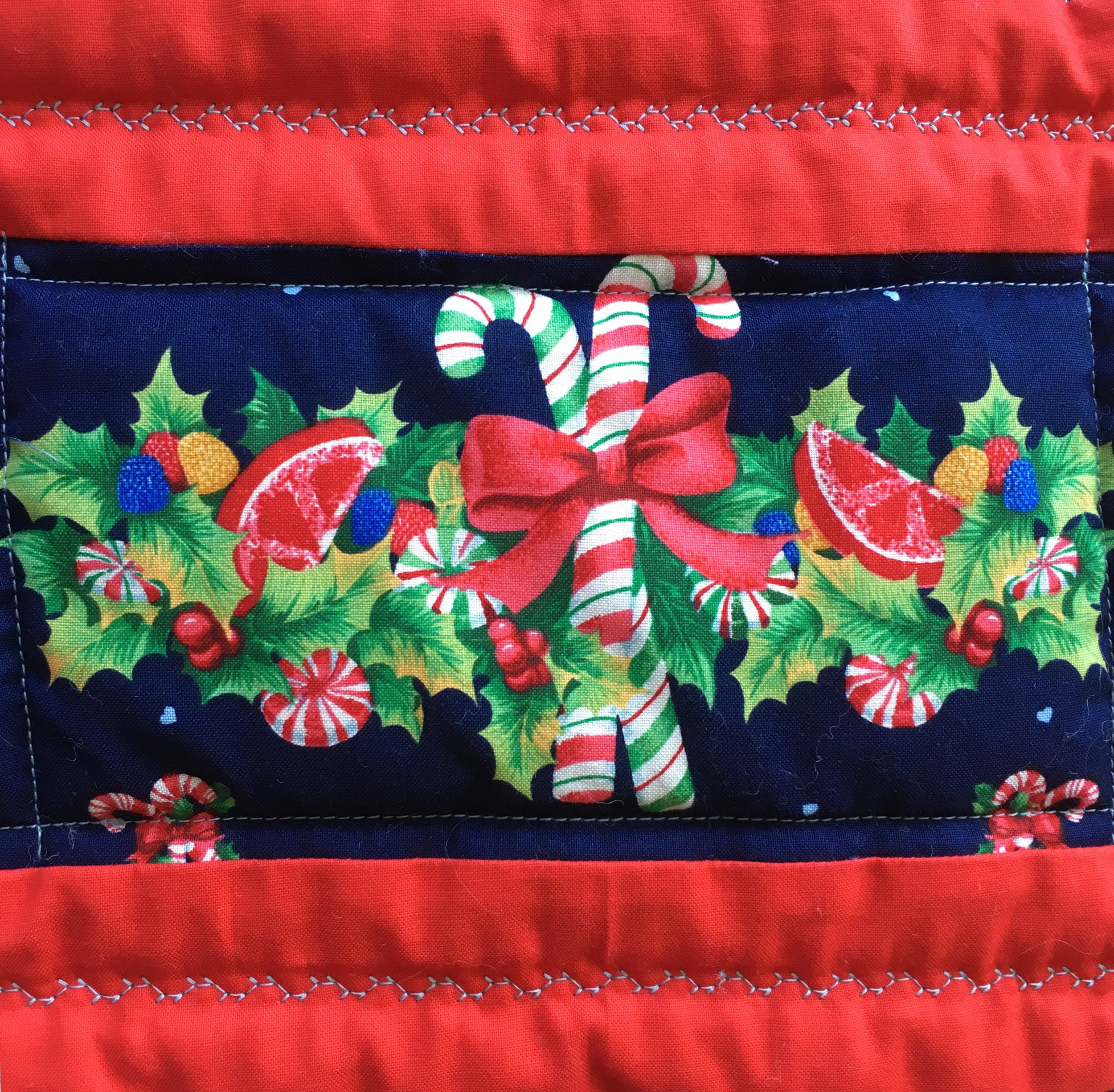
The back is one piece of fabric with a Christmas/Dalmation Dog print.  Below is a close up of the quilting in the solid red strips.

IMG_7553.JPG
fullsizeoutput_e0e.jpeg

This project was so much fun that I pulled out my stash of Christmas fabrics to make a another quilt. I'll share that quilt in my next post.

TAGS: Charity quilts, Quick Charity Quilt, Charity quilt using pre-cut fabrics, Easy Christmas Quilt


August 23, 2018

An Idea for Using Donated Fabrics for Charity Quilts

by Judy Tucker


Lap size Quilt top approx 40 x 50 inches

Lap size Quilt top approx 40 x 50 inches

Lap size Quilt top approx 40 x 50 inches

Lap size Quilt top approx 40 x 50 inches

Our quilt guild has an active charity quilt program.  We make lots of quilts for children as well as some for veterans, seniors and even dog shelters.  We are blessed to get lots of donated fabric from a variety of sources.

This year our Charity Coordinator has decided to try something new.  We have been assembling kits using 10 inch squares, 5 inch squares, 5 inch strips x width of fabric or whatever is available width-wise, and 2.5 inch strips.  Several different small groups of members have spent some pleasant summer mornings hanging out and cutting up fabric using these guidelines and assembling kits to be distributed in the Guild this Fall.

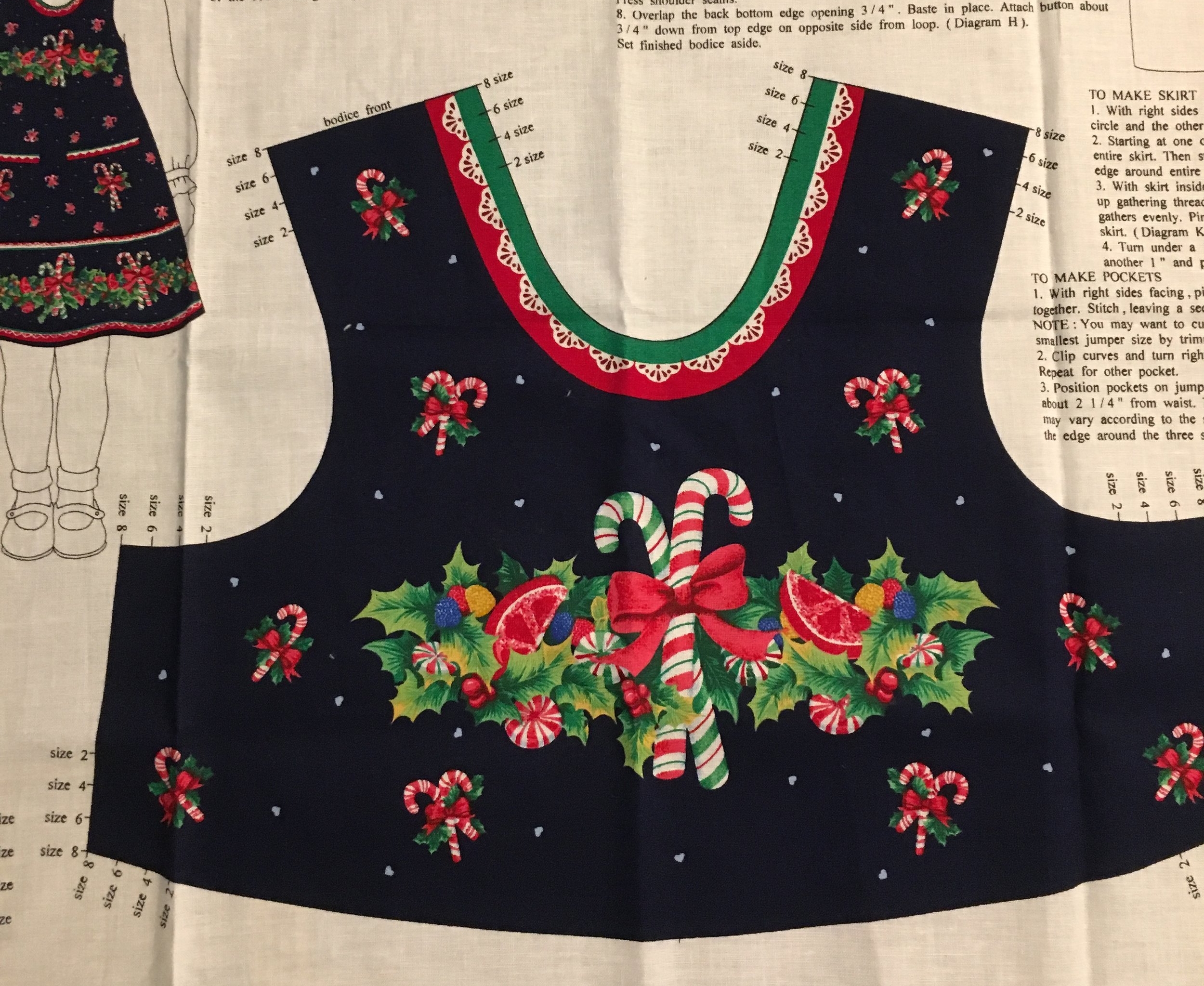
Last time I went, my friend passed me a stack of 9 pre-printed cut and sew jumper patterns. JUST the bodice piece and printed sewing instructions, not the skirt! "See what you can do with these," she said. Hmmm.

Bodice of Cranston's VIP "Candy Cane Girl's Jumper"

Bodice of Cranston's VIP "Candy Cane Girl's Jumper"

I found I was able to cut a 9 x 5 inch block from the front bodice,  5 inch squares from the back bodice and a few 2.5 inch squares which will get used for something else.  I still had 2 panels left to cut when it was time to head home. So I took the set home to make sure it all stayed together.

I really enjoyed working with this navy blue, red and green pattern.  I've seen lots of light blue holiday quilts (think snowmen) but navy blue is unusual. I liked this fabric so much that I decided to go ahead and make a quilt.

The 9 x 5 inch blocks didn't meet our criteria so I needed to create a design.  I thought about adding a strip of fabric to make the blocks 10 inches but life is short!  I decided to put them in horizontal strips with an assortment of 5 inch squares I already had. I supplemented those by cutting some squares more from my own scrap stash. 

There is one 9 x 5 inch block in each wide strip and then assorted 5 inch squares to make the strip the desired width. In between the wide strips there is a solid color bright red 2.5 inch strip. Those bright red strips are eye catching and as a bonus, they also eliminate the need for perfect piecing!

I really like the quilt top.  Despite it's dark color, it's going to be a bright and happy quilt!

Yes, with a bit of imagination and ingenuity you can make a beautiful quilt from even unlikely fabric donations!  If you have fabric you aren't sure how to use, give this a try!  It's a lot of fun!


TAGS: Charity quilts, Quick Charity Quilt, Fabric Donations for Charity Quilts, Strip quilt, Easy Christmas Quilt


August 16, 2018

Summertime Doll Dresses

by Judy Tucker


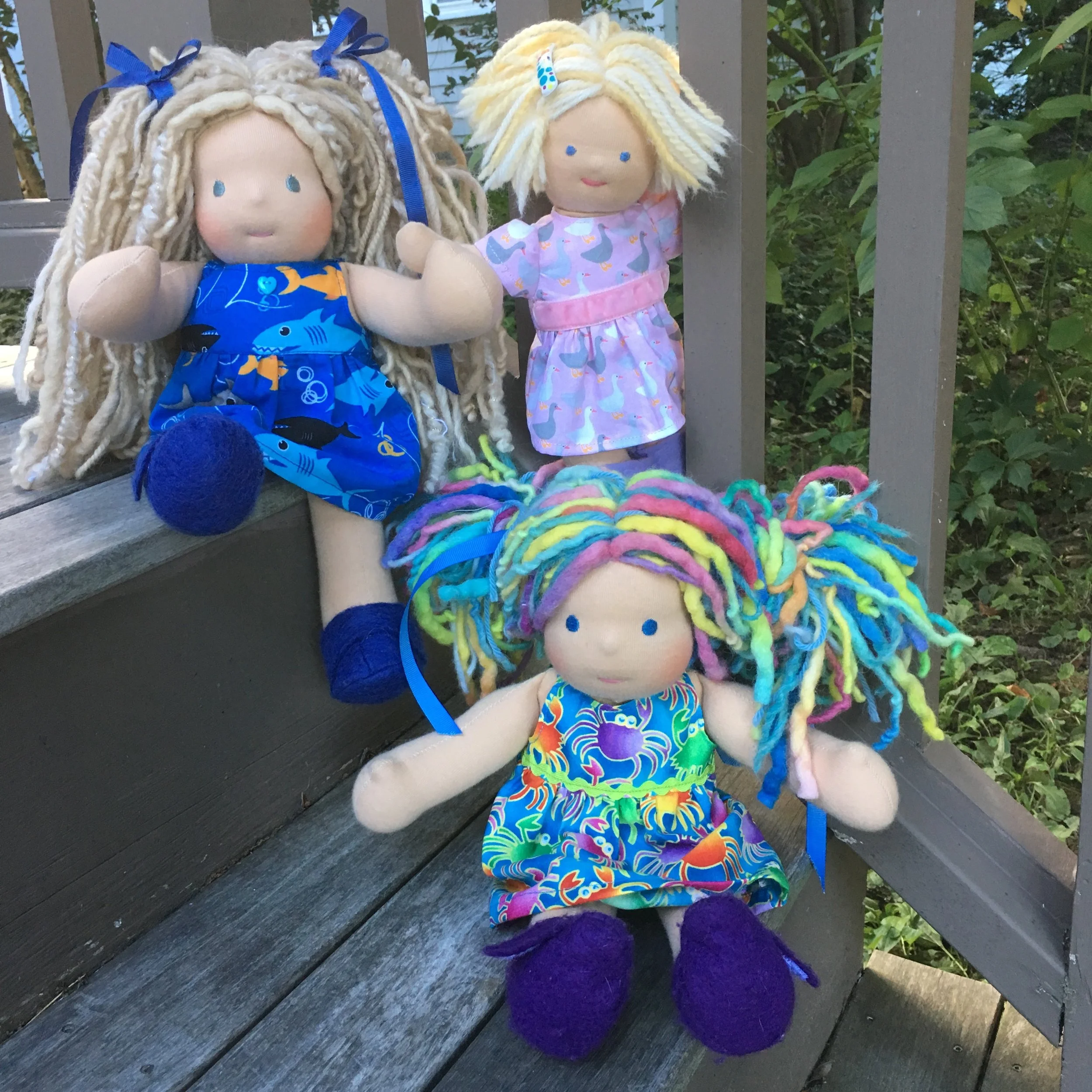
Summertime doll dresses:  sharks, crabs and ducks!  Bamboletta Cuddle Dolls, left and right, my Waldorf type baby doll in the center. 

Summertime doll dresses:  sharks, crabs and ducks!  Bamboletta Cuddle Dolls, left and right, my Waldorf type baby doll in the center. 

Summertime doll dresses:  sharks, crabs and ducks!  Bamboletta Cuddle Dolls, left and right, my Waldorf type baby doll in the center. 

Summertime doll dresses:  sharks, crabs and ducks!  Bamboletta Cuddle Dolls, left and right, my Waldorf type baby doll in the center. 

It's high summer and I've been having so much fun making summery dresses for the extended doll family! 

The dress patterns I draft are usually for dresses with short sleeves. I figured that if I skipped the sleeves and just overcast the raw edges of the fabric, turned it under the 1/4 inch seam and sewed it up, I'd have a perfect sleeveless dress.

That was a good idea, but doesn't quite play out perfectly in real life! It turns out, I really need to add some width to the front of the dress bodice, otherwise the dress have a bit of a halter look (see above).  For some reason, the bodice back is better than the front.

Here's a closer view to show why it would be better to use a bit wider pattern for the bodice of a sleeveless dress.  Not horrible, but it could be better!

Sleeveless dress with a bodice that's not quite wide enough. The doll is a Bamboletta Cuddle Doll.

Sleeveless dress with a bodice that's not quite wide enough. The doll is a Bamboletta Cuddle Doll.

I went back and redrafted the front and back bodice pattern pieces.  This version is better.

Revised bodice on the same Bamboletta doll as in the photo above

Revised bodice on the same Bamboletta doll as in the photo above

Here are a couple photos of dolls I made wearing dresses with short sleeves.

Little limbed doll, pattern in Mariecristin Sealey's book, "Making Waldorf Dolls"

Little limbed doll, pattern in Mariecristin Sealey's book, "Making Waldorf Dolls"

15" Waldorf type doll made with my own pattern

15" Waldorf type doll made with my own pattern

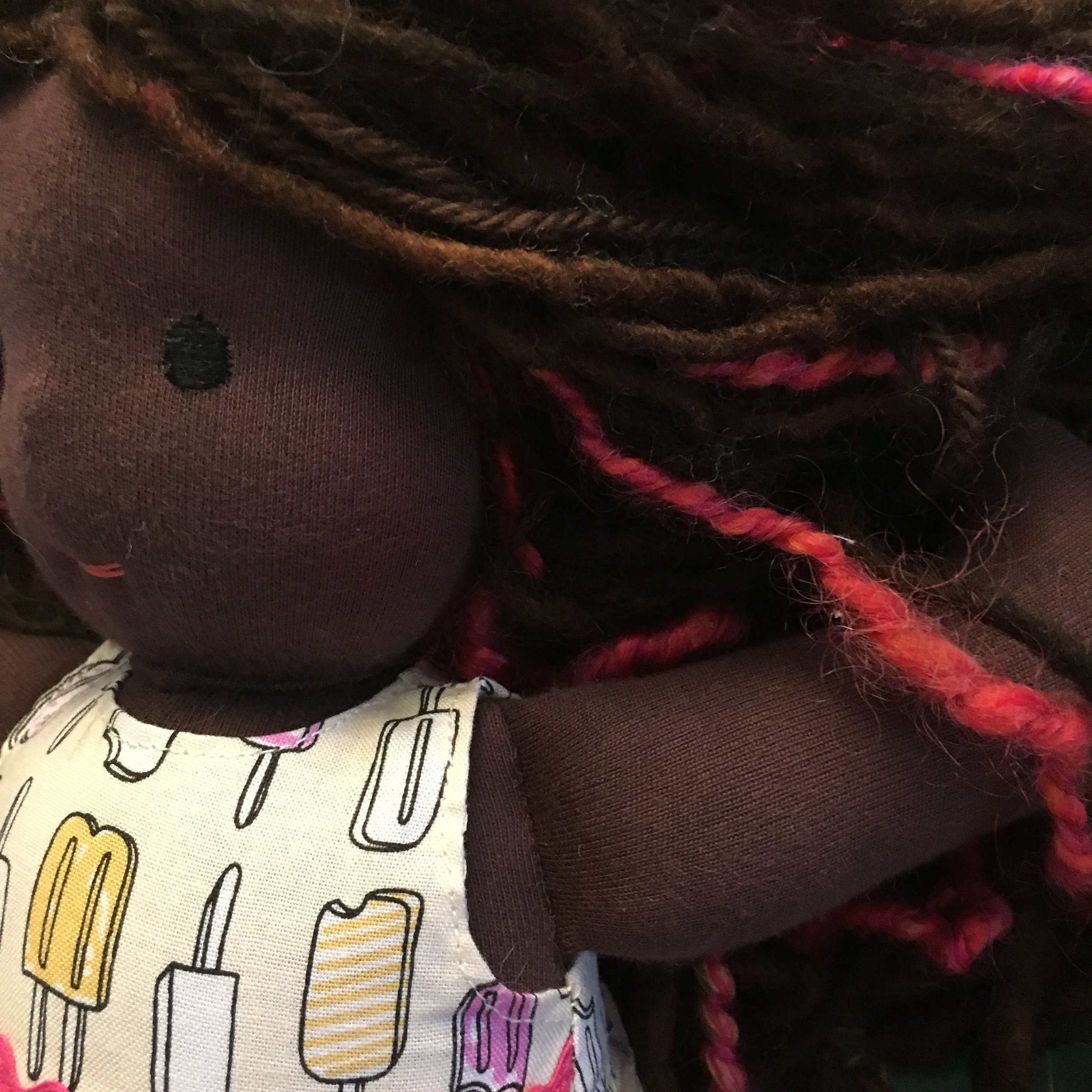
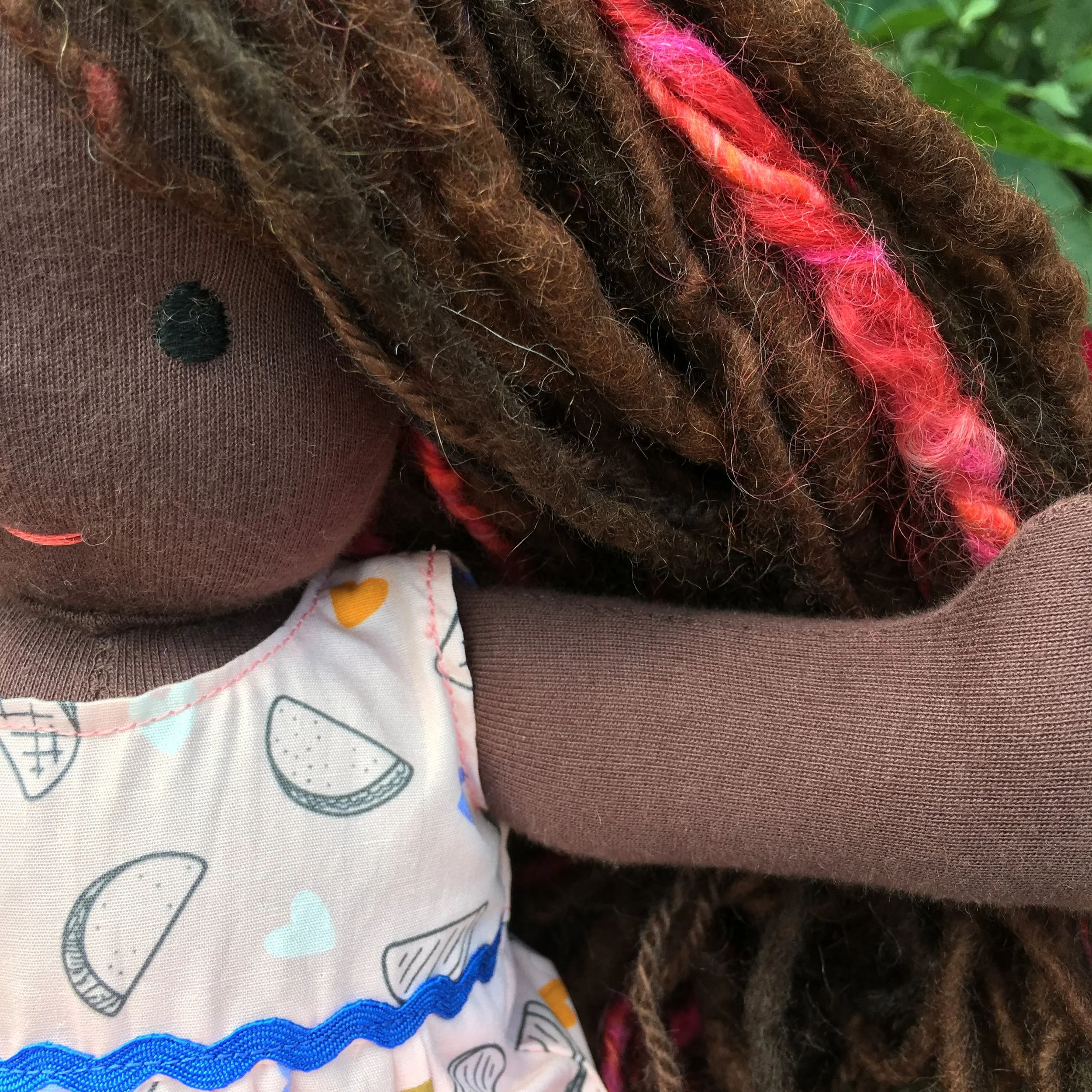
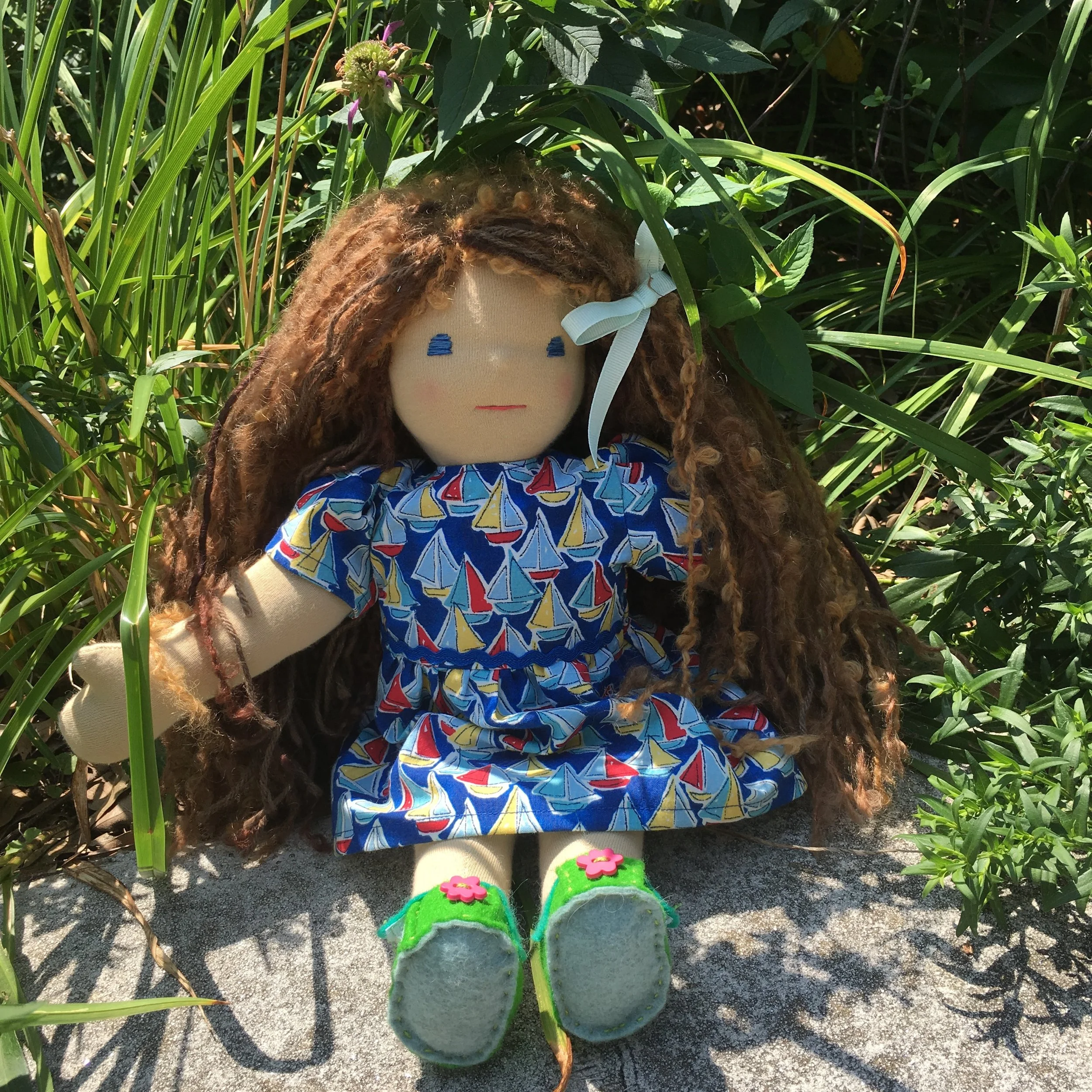
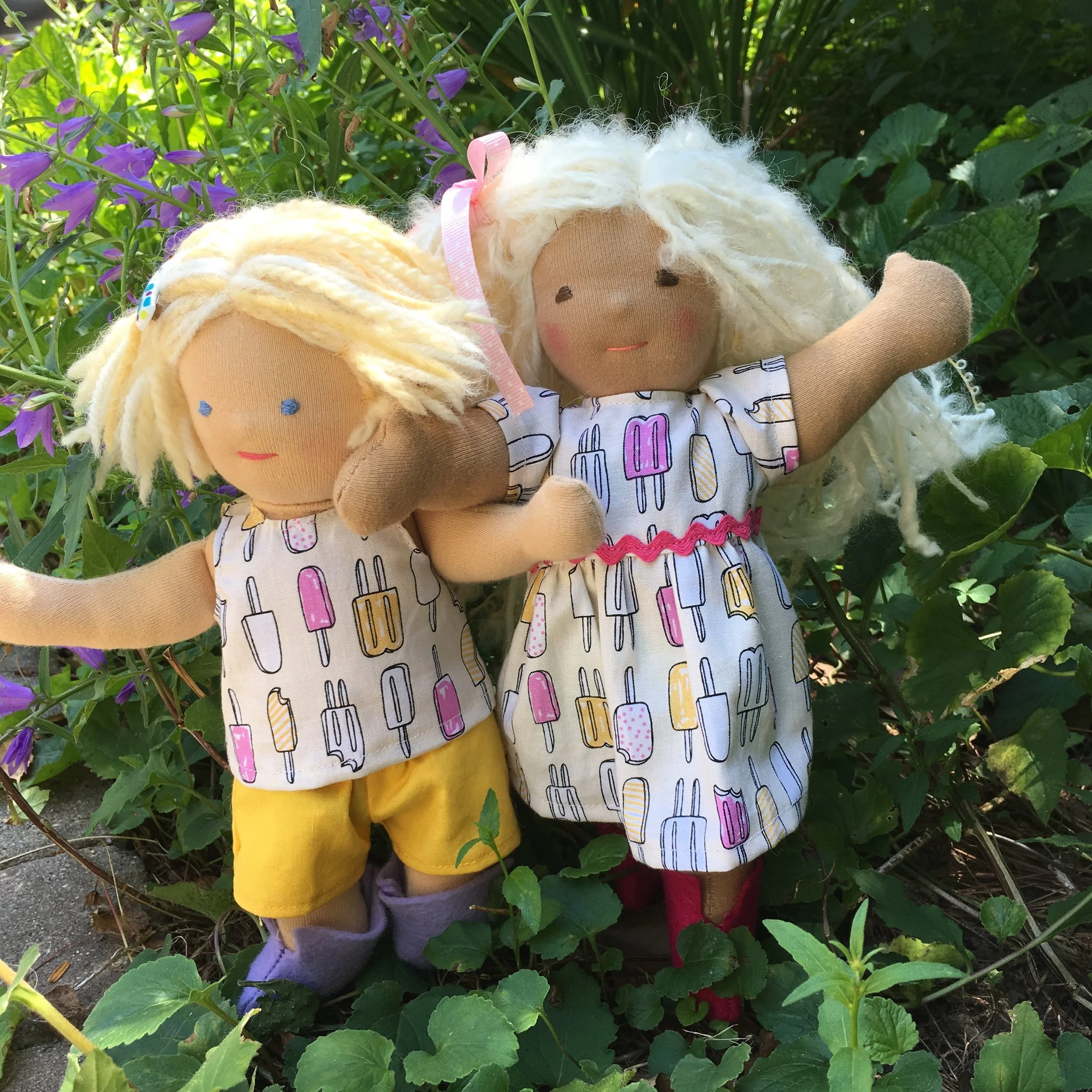
It's been so much fun making dresses with these summer fabrics--sharks, crabs, sailboats, ducks (or maybe they are geese), frozen treats on a stick, tacos, and flowers!


TAGS: Summery doll dresses, Sleeveless doll dresses, Bamboletta Cuddle doll, Waldorf type doll


August 9, 2018

Two 12 inch Traditional Waldorf Type Dolls

by Judy Tucker


12 inch Josie, a traditional Waldorf Type Doll

12 inch Josie, a traditional Waldorf Type Doll

12 inch Josie, a traditional Waldorf Type Doll

12 inch Josie, a traditional Waldorf Type Doll

Even though I've drafted patterns for my own Waldorf type dolls, I particularly enjoy using the patterns for the traditional Waldorf Type Dolls in Mariecristin's book, Making Waldorf Dolls.  There is a lot of hand sewing in the assembly of these patterns.  That may be why I enjoy making them.  There is no need to try to get the joint of an already-stuffed arm or leg to run though the sewing machine.  That's  always been my nemesis with my own patterns!!

I made both dolls on this page, using the pattern for the middle size doll in the book.  Mine come out to be 12 inches tall.  I've shortened the arm length in the pattern because I think the pattern arms seem a bit long.

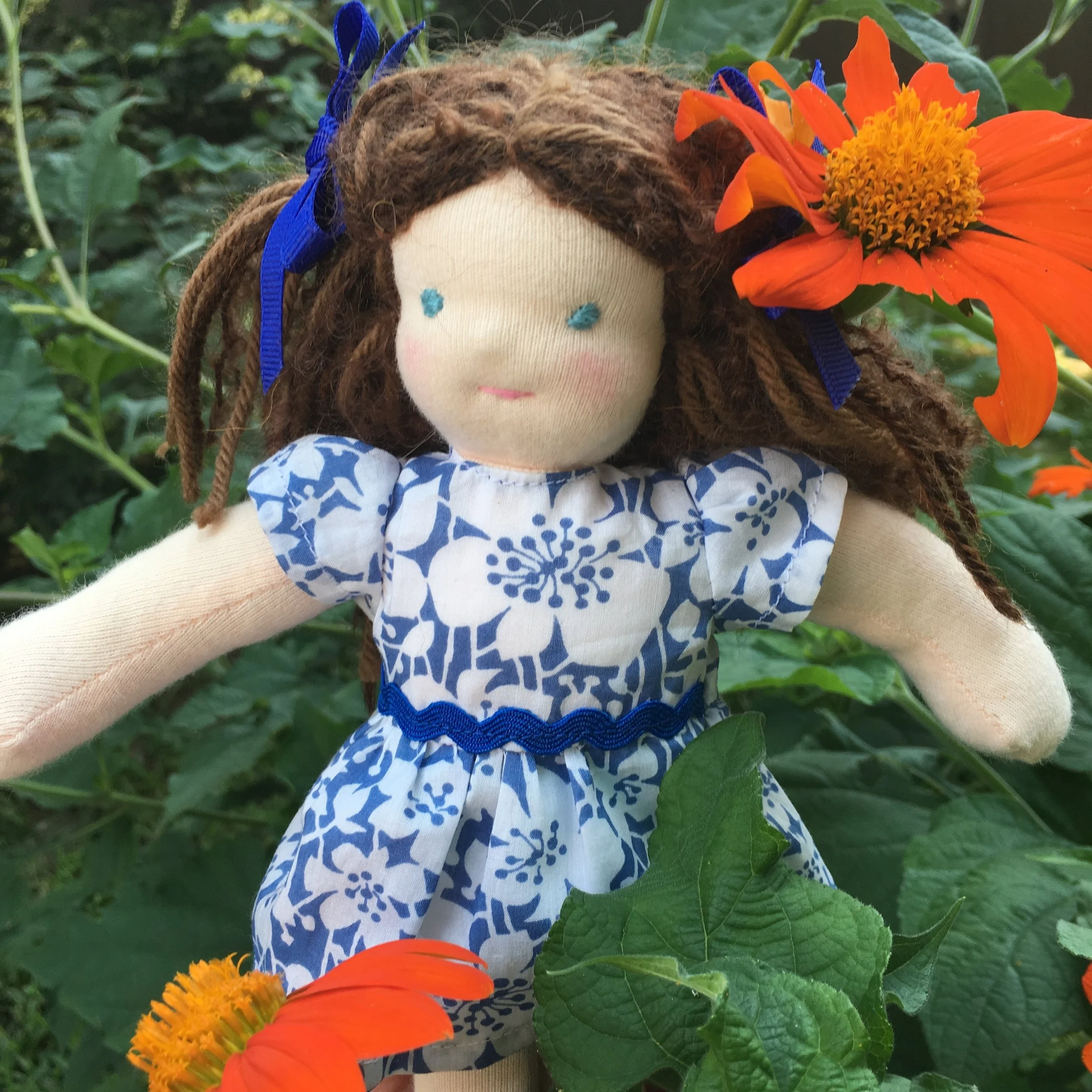
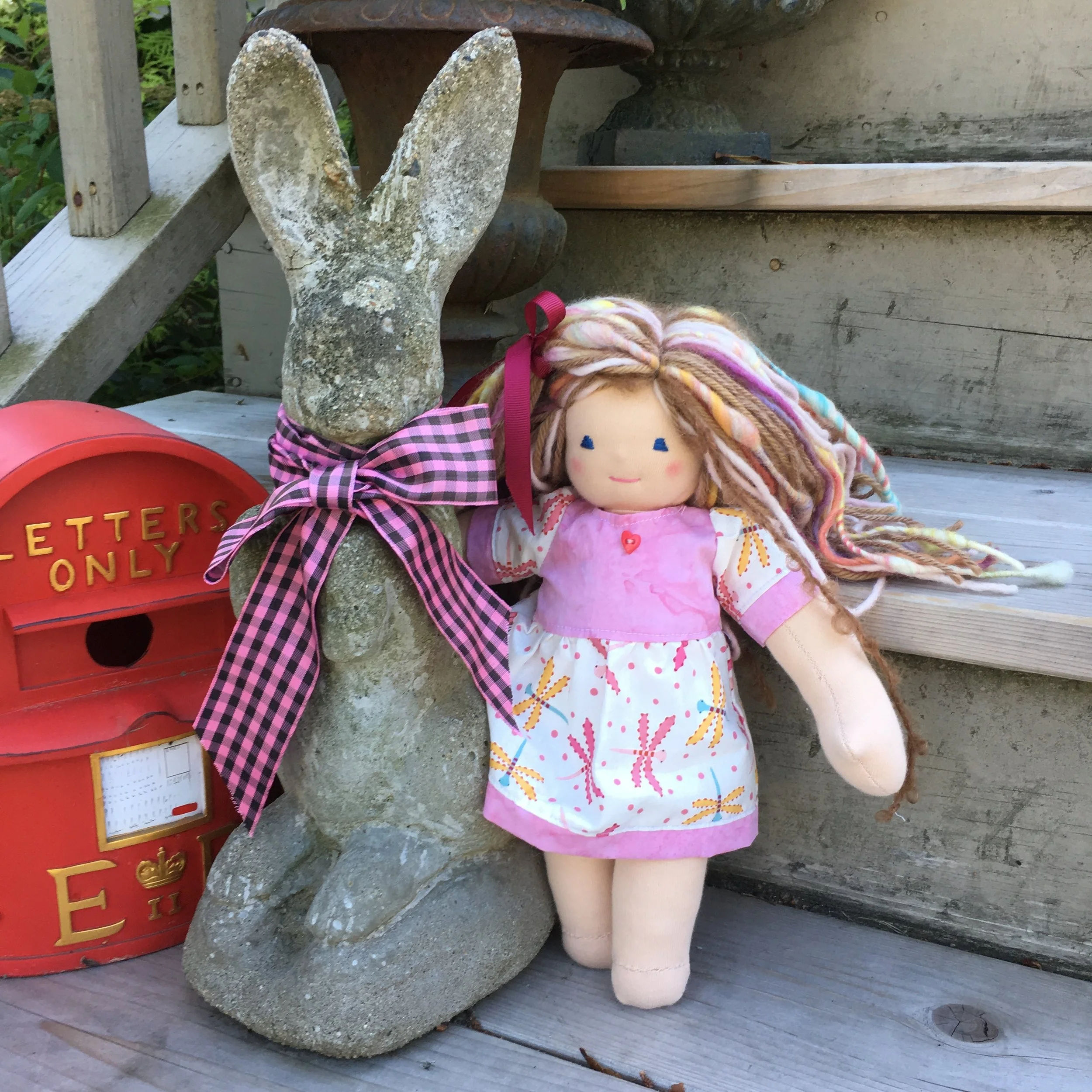
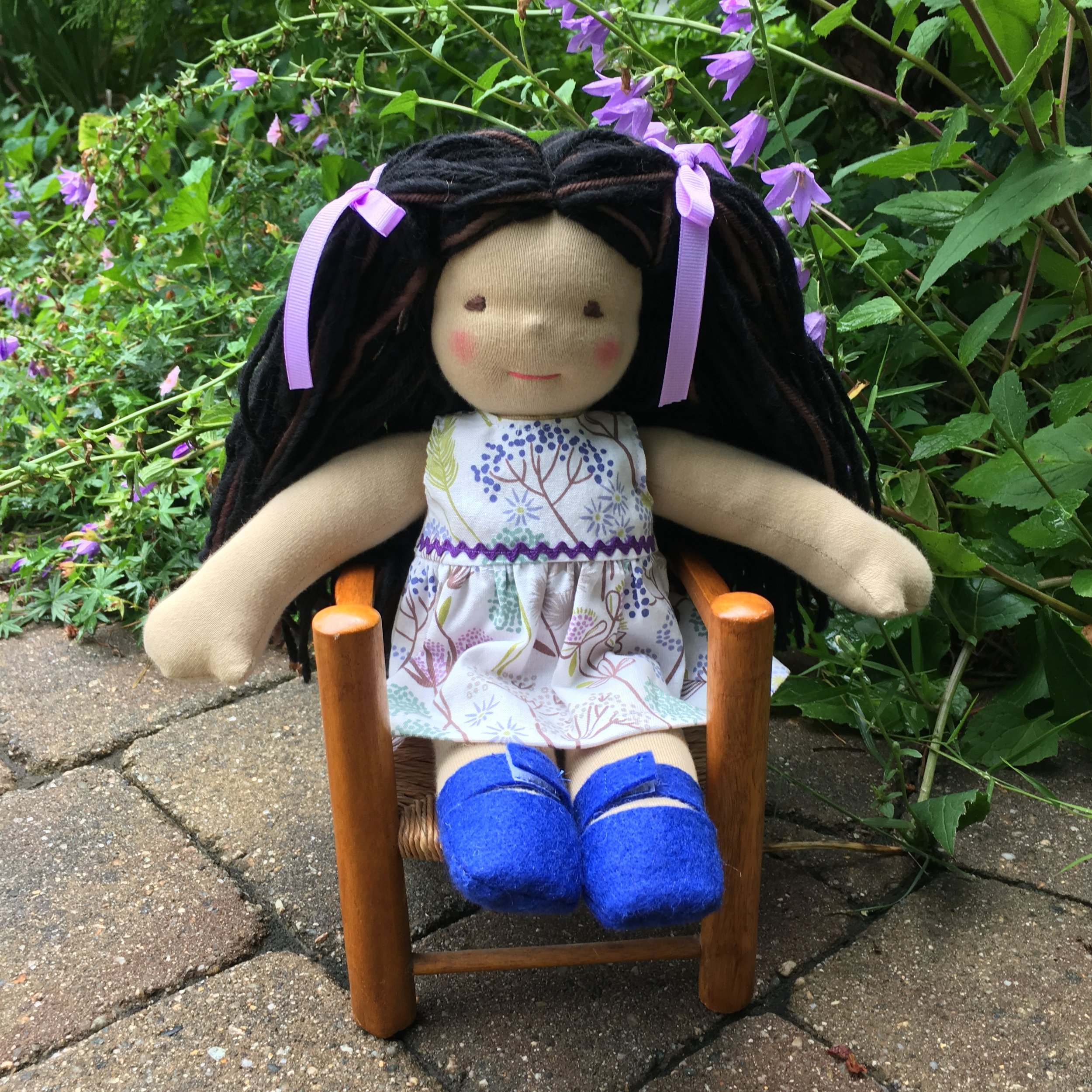
Josie, a doll made with fair skin, is shown above.  She has three different types of (mostly) pink hand spun yarn (purchased at JP Knit & Stitch, my local yarn/fabric shop) in her brown hair.

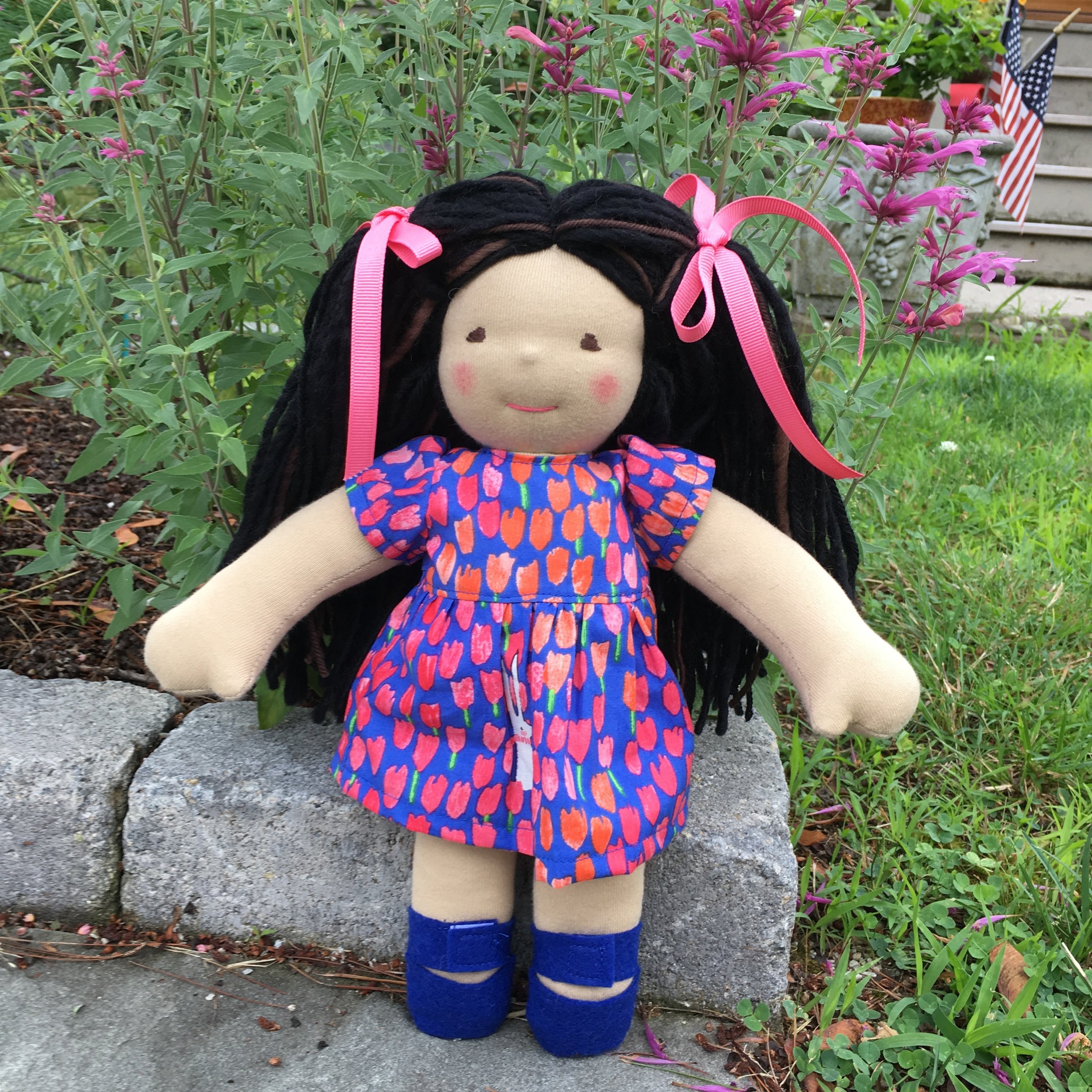
I made the other doll at a request of a friend. She wanted a doll for a child who has mixed Hispanic and Oriental heritage.  I had some beige De Witte  doll jersey which was just the perfect skin tone for this doll. I was so glad had some on hand since it's not a color I typically use. 

Her hair has three types of black yarn and a couple colors of dark brown yarns as accents.  I had so much fun making this doll and I just love how she turned out! 

IMG_7390.JPG
IMG_7418.JPG

Here is a bunny hiding in the tulips in the dress on the left. Can you see? 

TAGS: Traditional Waldorf Type Dolls, Waldorf dolls, Making Waldorf Dolls by Maricristin Sealey, Hand spun yarn in doll hair


August 2, 2018

My 10 inch Baby Waldorf Type Doll Pattern Grows Up

by Judy Tucker


My 10 inch Waldorf-type Baby Lucy Birch and my 10 1/2 inch Waldorf-type Girl, Phoebe

My 10 inch Waldorf-type Baby Lucy Birch and my 10 1/2 inch Waldorf-type Girl, Phoebe

My 10 inch Waldorf-type Baby Lucy Birch and my 10 1/2 inch Waldorf-type Girl, Phoebe

My 10 inch Waldorf-type Baby Lucy Birch and my 10 1/2 inch Waldorf-type Girl, Phoebe

I spent the Dog Days of July, when it was too hot and humid to move much (or quilt anything!), making several dolls.

I've noticed that children play with my 10 inch Waldorf Type Baby doll as if she were an older child even though she has the bowed arms and legs of a baby.  Over the past couple years, I've drafted an extensive wardrobe of clothes for this particular doll, most of them not really baby clothes. It made sense to try and change the baby's pattern to make an older looking doll.

So that's what I did. In the new pattern, the arms have been straightened some and the legs are much straighter and the feet turned so they face forwards.

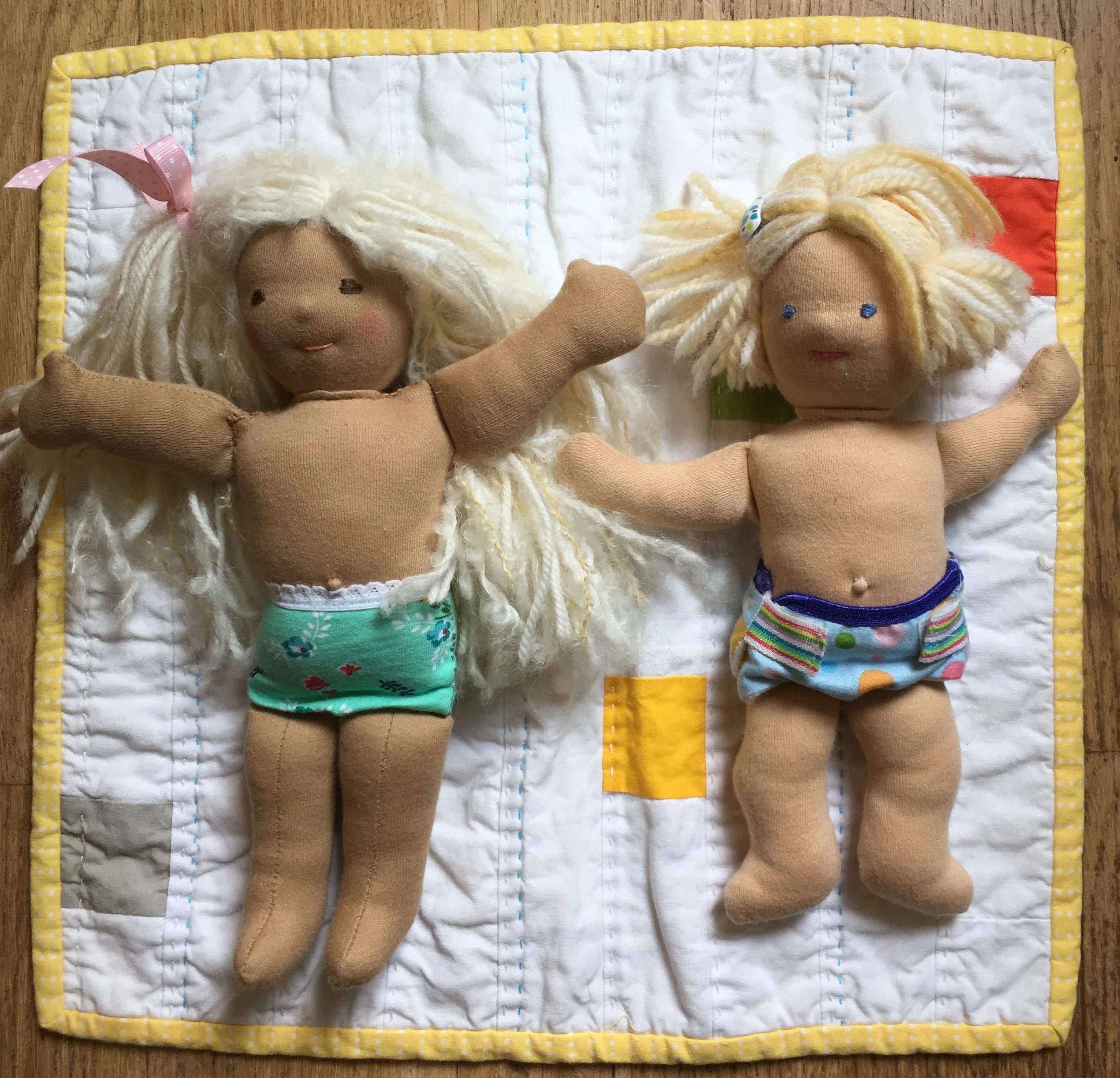
Little girl on the left, baby on the right. Phoebe has dark tan skin and Lucy's is skin is sunkissed

Little girl on the left, baby on the right. Phoebe has dark tan skin and Lucy's is skin is sunkissed

I altered the neck a bit in the new doll and inadvertently the torso became a half inch longer. That meant the dress patterns for the baby doll were just a bit too short for the new doll.  It's easy enough to lengthen a dress, but I've adjusted the child pattern so next time I make one it will be exactly the same size as the baby.

I did have a bit of trouble sewing on the arms of this doll. Her left arm is better than her right. But she's a prototype, so I'm okay with that.

It's so fun to have a new doll that already has a whole wardrobe of clothes patterns that will fit her!

Phoebe sitting in the Crab apple tree

Phoebe sitting in the Crab apple tree

TAGS: Waldorf type doll, Waldorf type baby doll, Waldorf dolls, Re-drafting a doll pattern


July 26, 2018

Hunter's Star Quilt in Fall Colors

by Judy Tucker


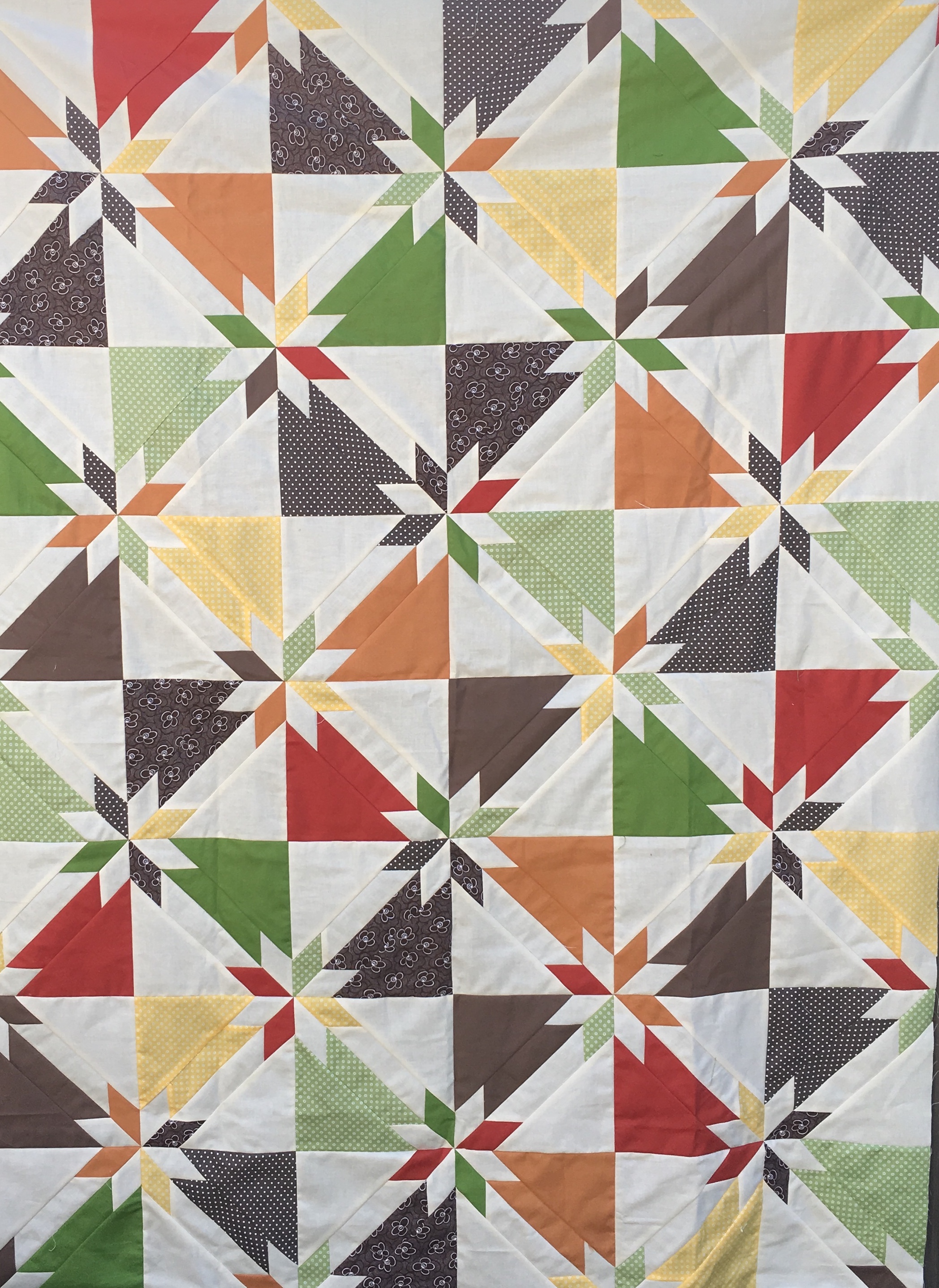
Hunter's Star quilt top in an assortment of fall colors

Hunter's Star quilt top in an assortment of fall colors

Hunter's Star quilt top in an assortment of fall colors

Hunter's Star quilt top in an assortment of fall colors

It's unusual for me to go to quilt classes.  I generally like to work things out by myself.  But I am so glad I decided to take a class offered by my Guild and taught by Kathie Beltz!  It was a Hunter's Star class (that's the quilt pattern above) using the Rapid Fire Hunter's Star Tool created by Deb Tucker (no relation).

I ordered the tool ahead of time. Looking at the instructions, I knew going to a class was the right decision! The instructions look a lot more complicated than they actually are. Kathie Beltz did a great job teaching our class how to use the tool. If you get I chance to attend one of her classes, I highly recommend her!

The smart thing to do with a Hunters Star design is to pick 2 colors. It makes assembling the quilt much easier. Unlike most star designs, the star in the Hunter's Star pattern isn't in its own block.  It's created when 4 blocks meet at the center.

I didn't grasp that when I picked out the fabrics. The handout said we could pick up to 8 light and 8 dark fat quarters.  Thinking each star could be a different color, I picked out 8 dark colors. Fortunately, I picked cream solid yardage for my light color.

I had already pre-cut all my fabrics by the time I realized multiple colors might NOT have been such a great idea.  Well, chalk it up to a learning experience. It could always be a dog quilt!

Fortunately, Kathie wasn't the least bit fazed by my fabric choices and had great suggestions about how to build each of the blocks in my quilt. 

As the day progressed, it gradually became clear that my quilt was going from probable flop to totally fabulous!  How often does that happen??

I'm thrilled with my scrappy fall colors Hunter's Star Quilt top!  I was going to add a narrow border and then piano key border.  I have the perfect backing fabric, but there are only 2 yards. So, it's going to be borderless!

Now, I need a stretch of cool days to get this quilt sandwiched and quilted!

TAGS: Hunter's Star Quilt, Multicolor Hunter's Star Quilt, Quilts with Fall Colors, Deb Tucker Rapid Fire Hunter's Star Tool


July 19, 2018

Washing a Quilt: From disappointing to awesome

by Judy Tucker


Scrappy "Plus Surround" Quilt after washing and drying

Scrappy "Plus Surround" Quilt after washing and drying

Scrappy "Plus Surround" Quilt after washing and drying

Scrappy "Plus Surround" Quilt after washing and drying

If you read my post on June 28, Scrappy "Plus Surround" Quilt, you'll know I wasn't thrilled with the quilting in the negative space. Even though I choose the quilting design, the free motion loops just didn't do much for me.

With nothing to loose, I tossed it into the washer and then the drier. (I have to admit, I do that to most of the quilts I make--IF I'm not planning to put them in a local quilt show),  When I took it out of the drier, the quilting had a lovely nubby texture, the loopy design had essentially disappeared and the quilt was soft and cuddly! 

I was suddenly in love!!  I actually do prefer my quilts to have that antique-like soft puckering that occurs when the quilt is washed and dried. But I can't think of another quilt I've made where washing and drying made such a big difference in how I felt about the quilt!

Detail of the washed quilting

Detail of the washed quilting

Here's a photo of the quilt prior to washing.  I think the change is much more noticeable when you can feel the quilt. It's harder to see the change from the photos.

Here's a photo of the quilt before washing.

Here's a photo of the quilt before washing.

TAGS: Washed Quilt Changes everything, "Plus Surround" Quilt, Scrappy "Plus Surround" quilt


July 12, 2018

Improv Scrappy Block Project 2017 Completed

by Judy Tucker


Improv Scrappy Block Project 2017

Improv Scrappy Block Project 2017

Improv Scrappy Block Project 2017

Improv Scrappy Block Project 2017

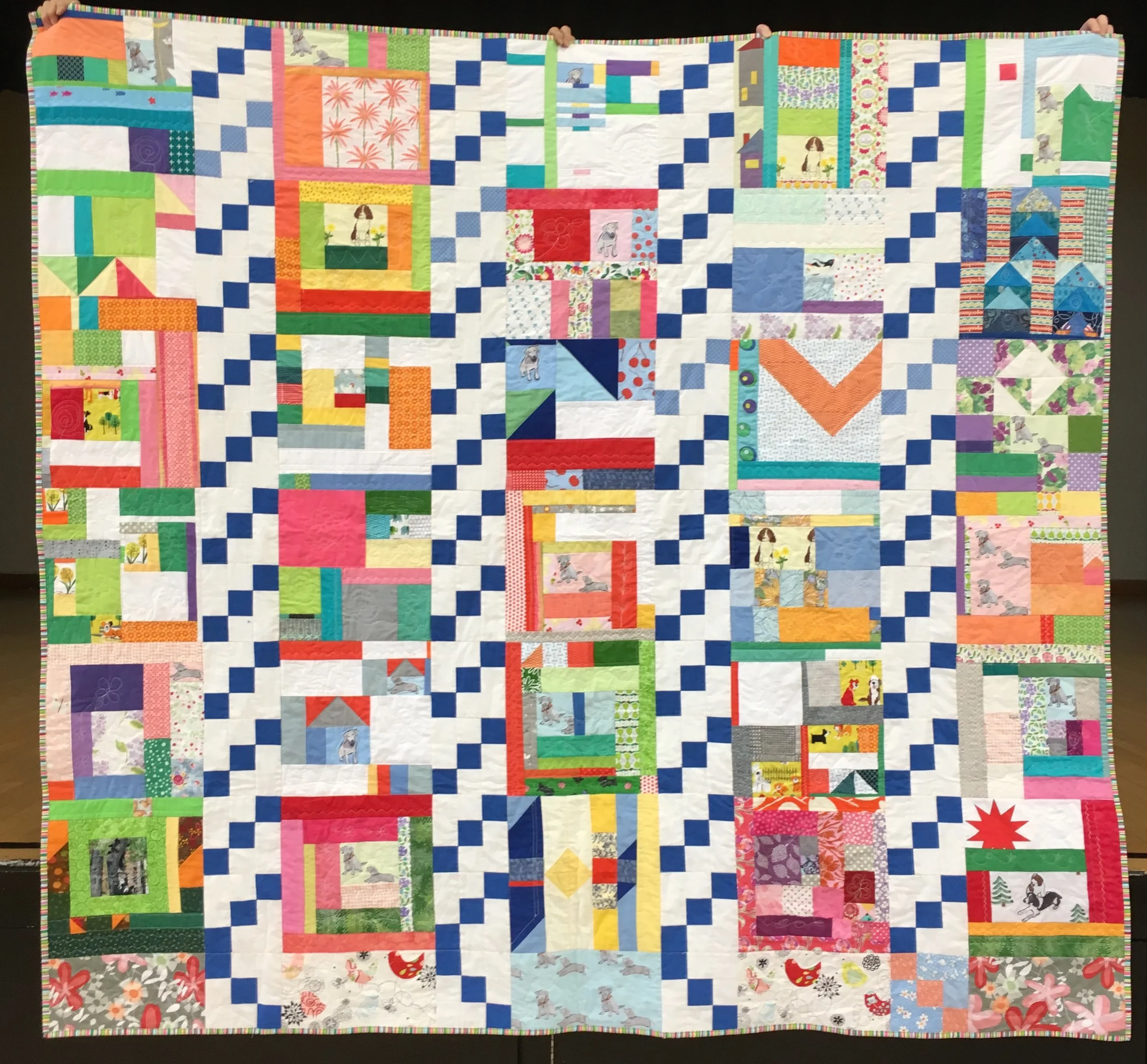
It's (finally) done:  My 2017 year-long Scrappy Block Project!  Every month last year I sewed 2-3 improv blocks from two bags of odd scraps I had collected. At the end of the year I had 30 blocks that were 12 1/2 inches square.

I set the improv blocks between rows of blue and white blocks which were "orphans" from another quilt which I never made. The result is a bit wacky, but this is a quilt that is going to be used and definitely not too precious for the dogs for the dogs to sleep on it!!

The quilting is as improvisational as the blocks themselves!  I took my clues for the quilting from the composition and the fabrics in each block.  The quilting is a mix of straight line walking foot stitching and free motion quilting.  It seemed to take forever!!  But I had a good laugh when I was done and put it on a bed....I'd forgotten how big this quilt is!  I had thought I was quilting a twin size quilt, when reality it's a good size queen!  No wonder the quilting seemed never ending!!

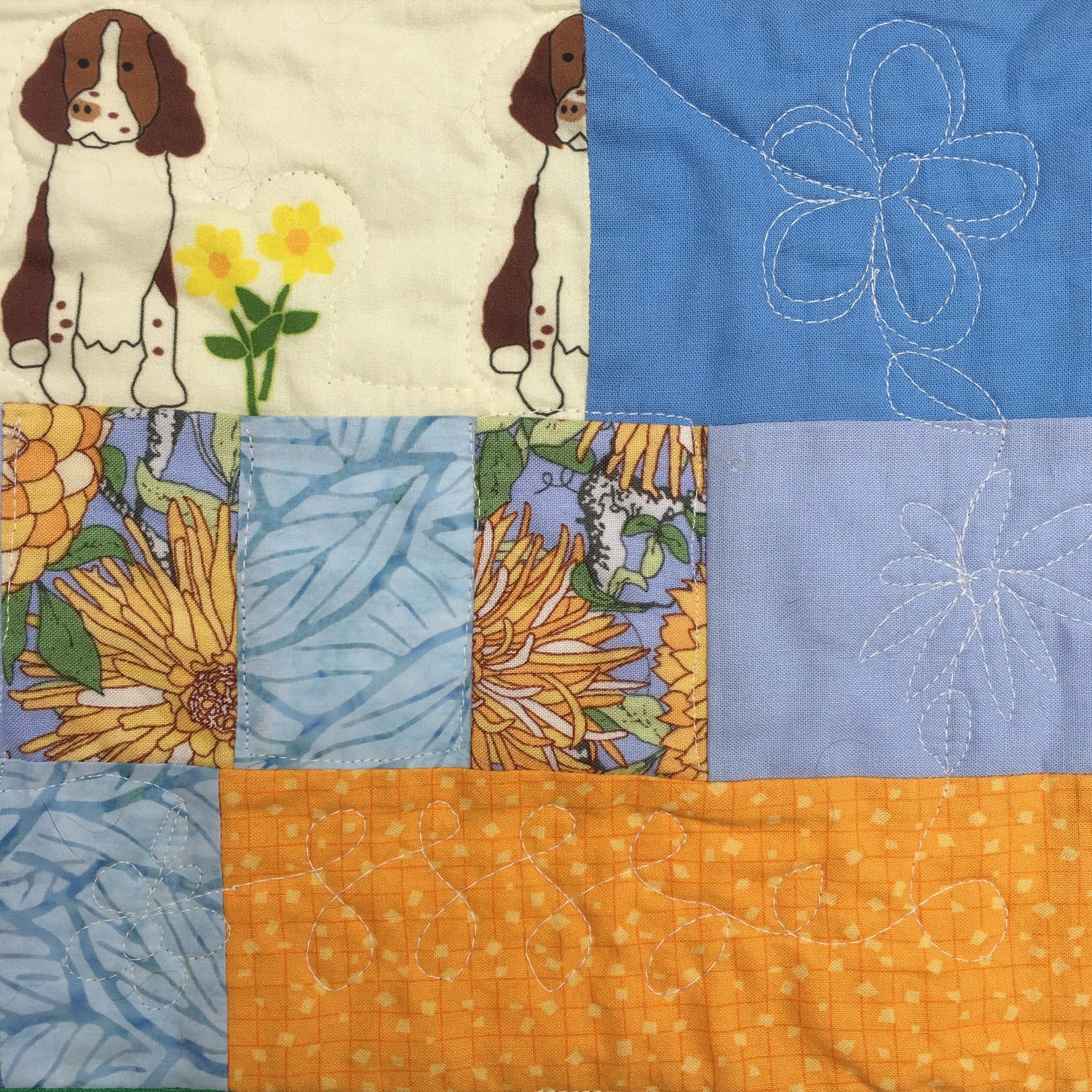
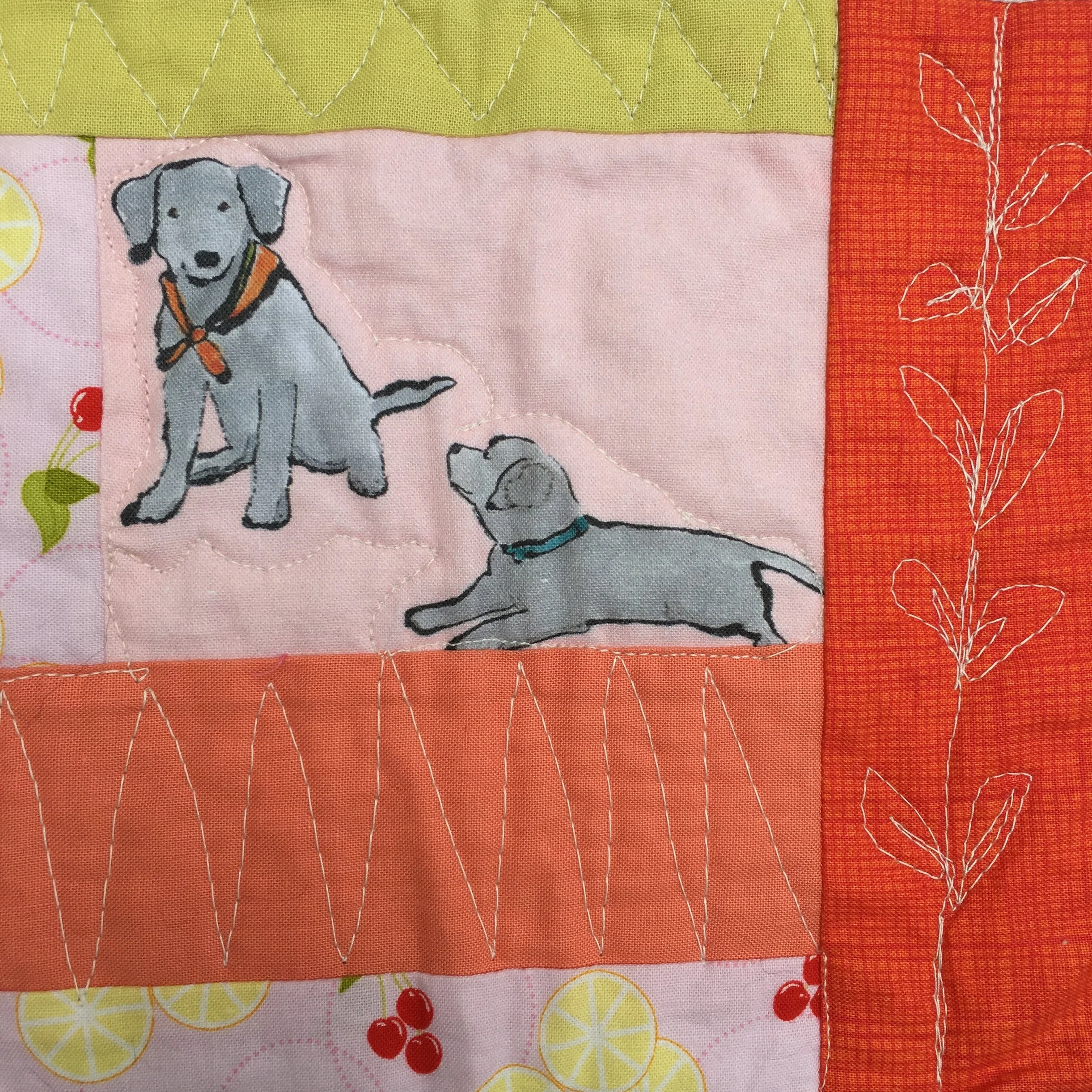
Here are a couple of close-ups of the free-motion quilting in this project. 
IMG_7198.JPG
IMG_7199.JPG

TAGS: Improv Scrappy Block Project 2017, Improv Scrappy Blocks, Free motion Quilting, Orphan blocks


July 5, 2018

Bear Party "Cabin" Utility-Style Picnic Quilt

by Judy Tucker


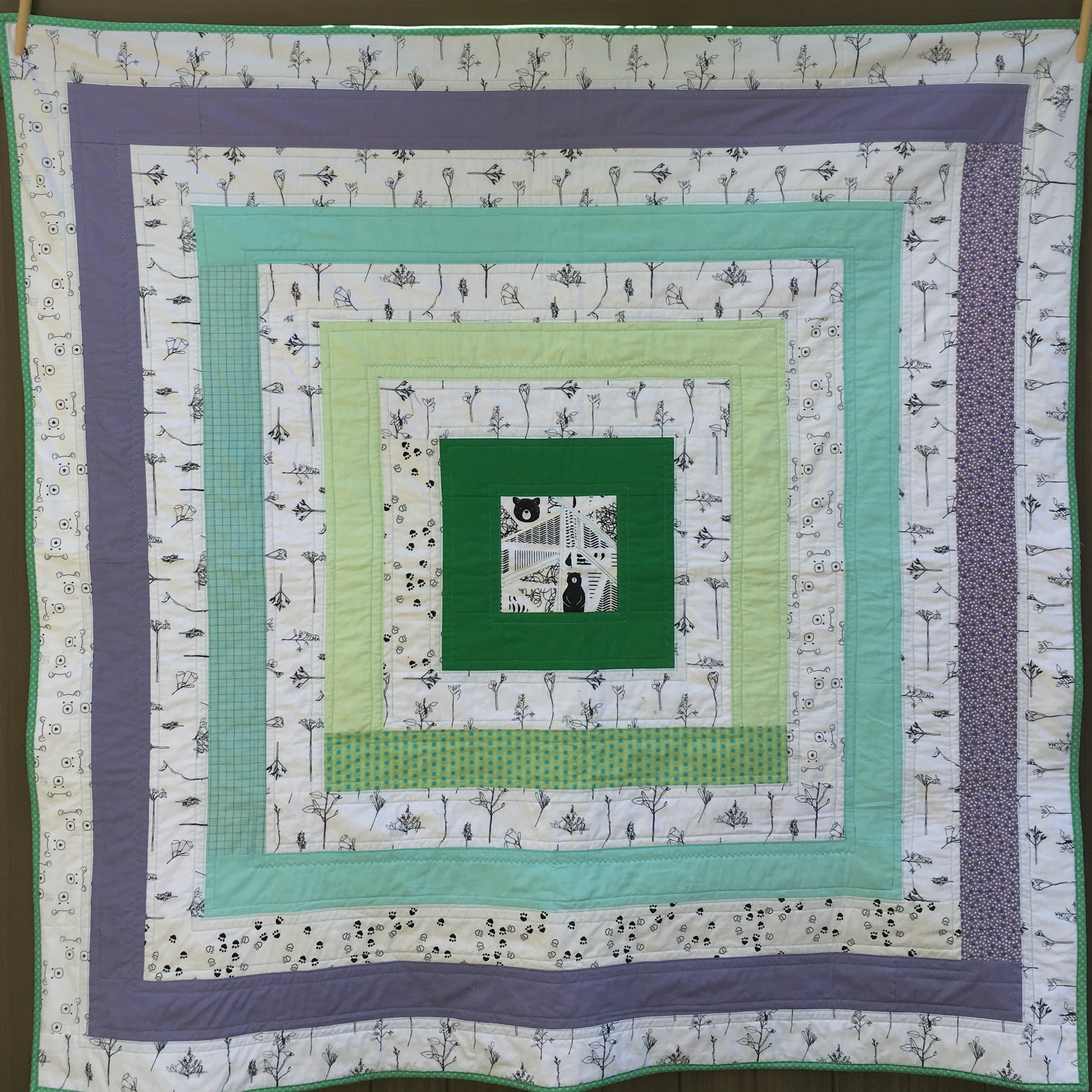
'Bear Party' "Cabin" Utility Style Quilt 54 inches square

'Bear Party' "Cabin" Utility Style Quilt 54 inches square

'Bear Party' "Cabin" Utility Style Quilt 54 inches square

'Bear Party' "Cabin" Utility Style Quilt 54 inches square

Sharon Holland has written a fun book of large patch, easy-to-piece quilts. The log cabin quilt above was made using her pattern "Cabin" in Utility-Style Quilts for Everyday Living.  The quilt is her book is a play on the stripes of the traditional Hudson Bay wool blankets. 

This pattern immediately drew me in--I think it's the perfect quilt for a picnic!  But I wanted to use a different palate and green was was on my mind!

JP Knit & Stitch, a yarn and fabric store in Jamaica Plain, MA, recently changed hands. The new owner brought in a lovely selection of fabrics, including a number of low volume prints. The black prints on white (animal prints and floral prints) and the solid colors are all from JP Knit & Stitch.  I added a couple new colored prints and some fabrics from my stash.

The quilting is all straight line done with a walking foot.
This quilt is really fun and happy!

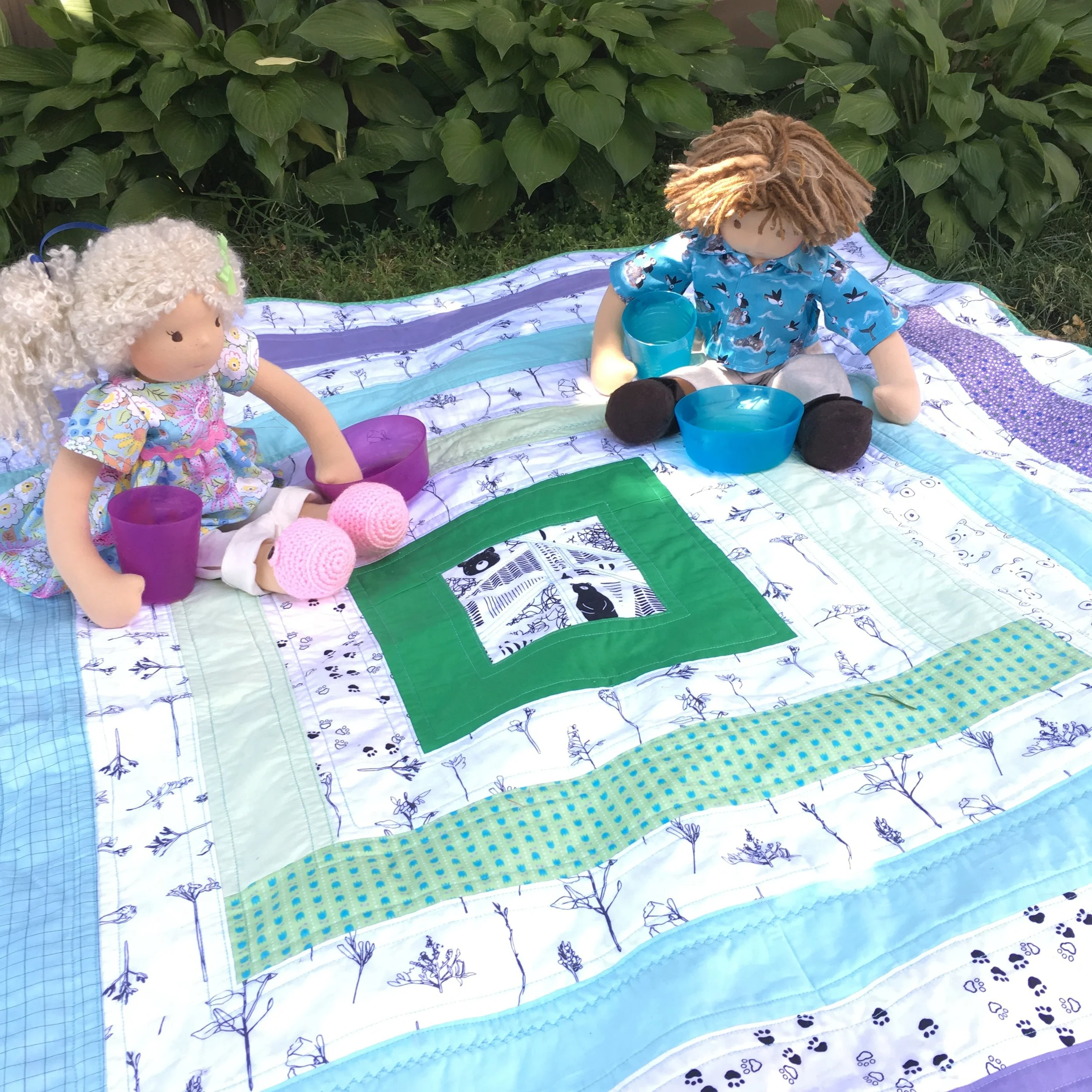
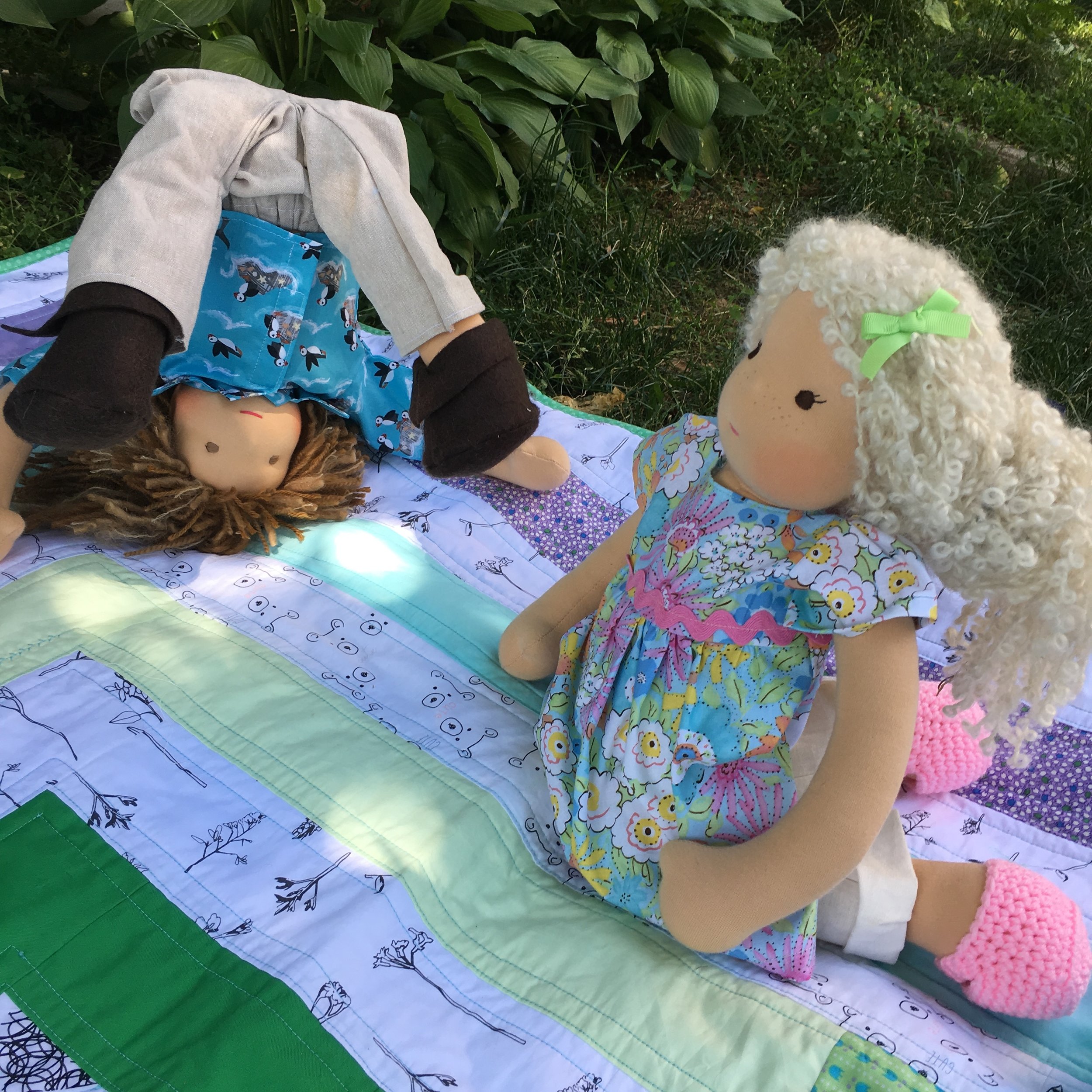
Emmy and Greg, Bamboletta Forever Friends, took the quilt out to the garden for a snack. Turns out this 'Bear Party' quilt is also great for tumbling when the picnic food is gone!
Happy Summer!!

IMG_7132.JPG
IMG_7139.JPG

TAGS: "Cabin" Utility-Style Quilt, Utility-Style Quilt, Picnic Quilt, Log Cabin Quilt, Bamboletta Forever Friend dolls


June 28, 2018

Scrappy "Plus Surround" Quilt from 'Modern Plus Signs Quilts'

by Judy Tucker


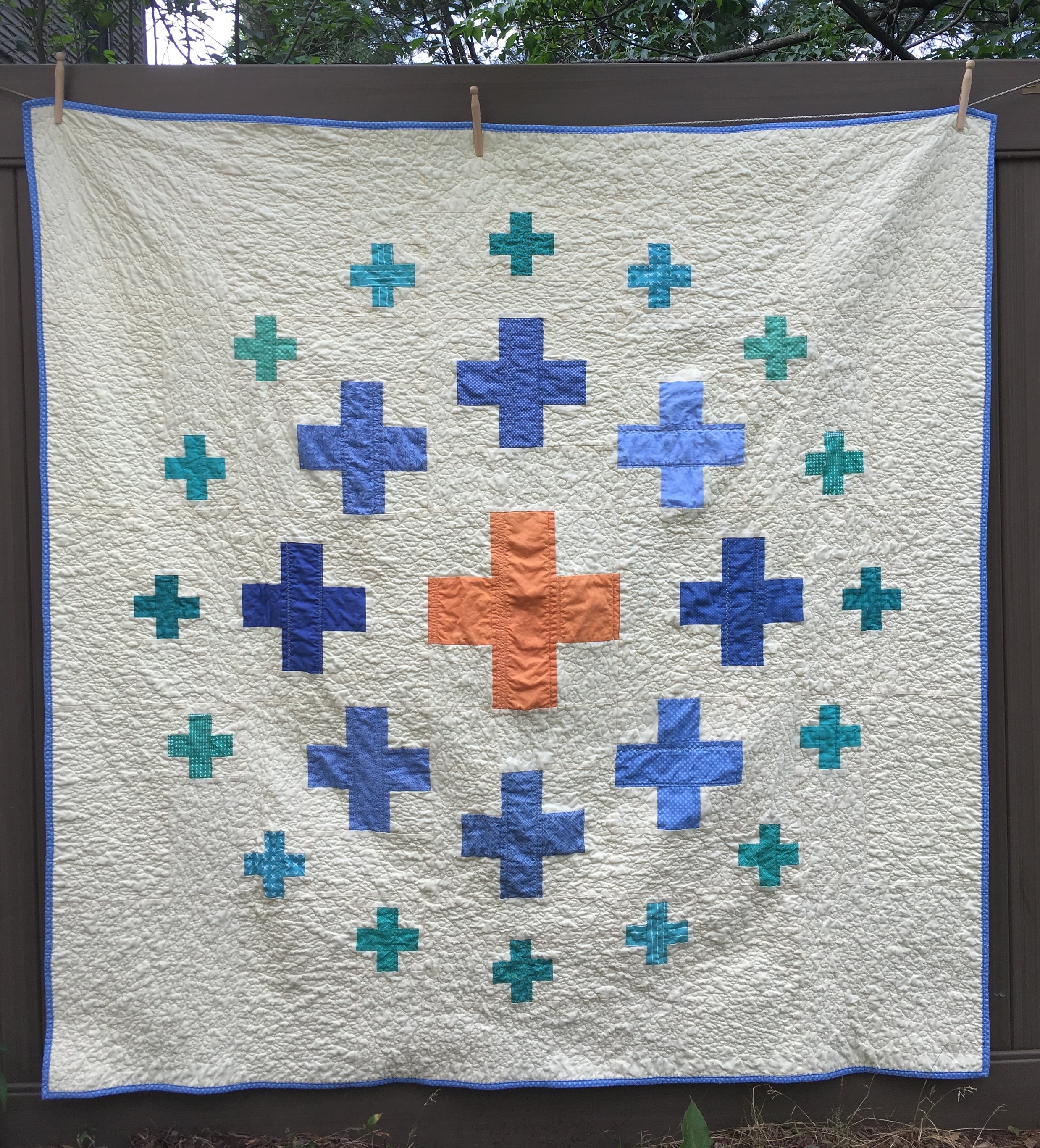
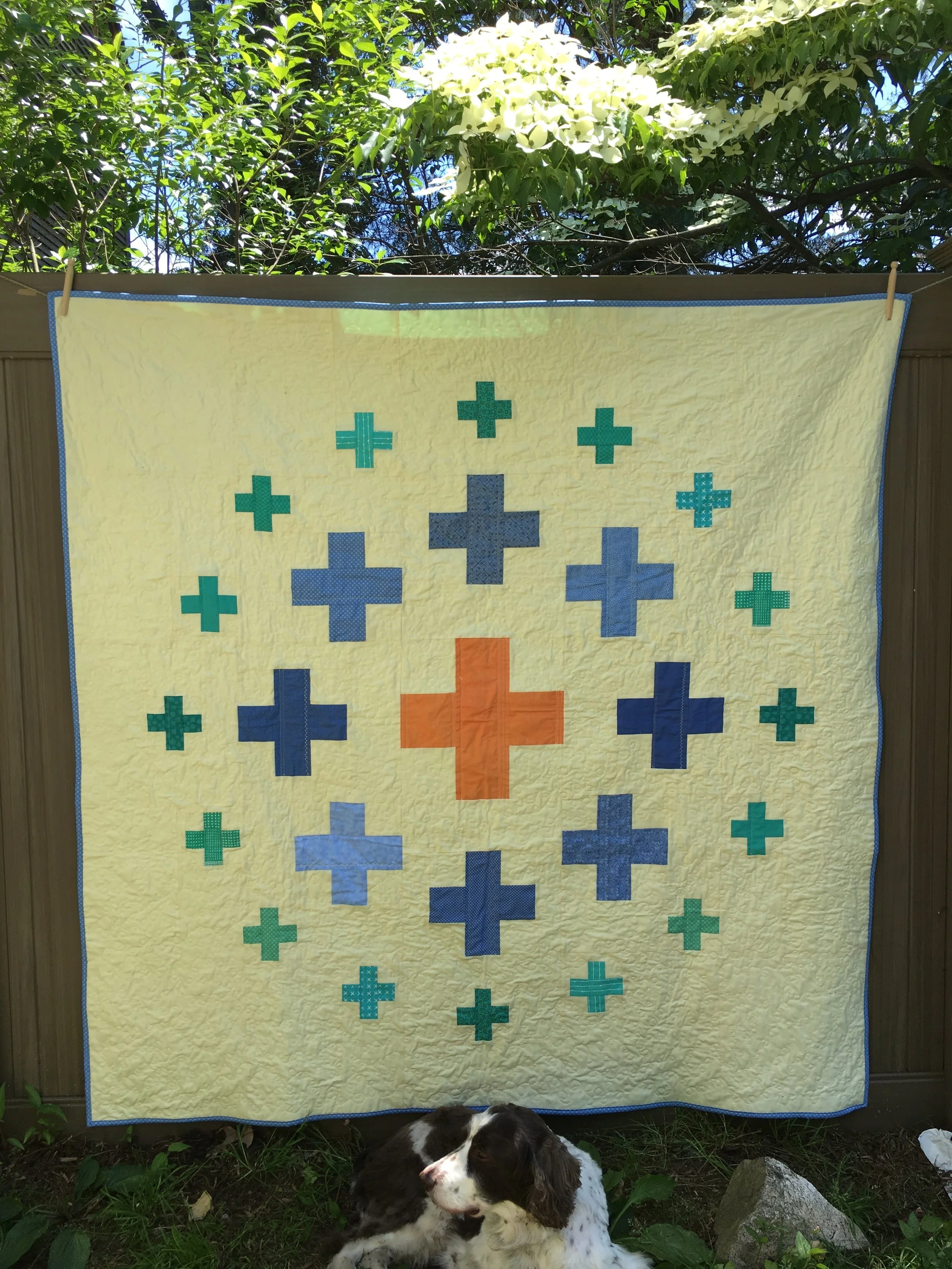
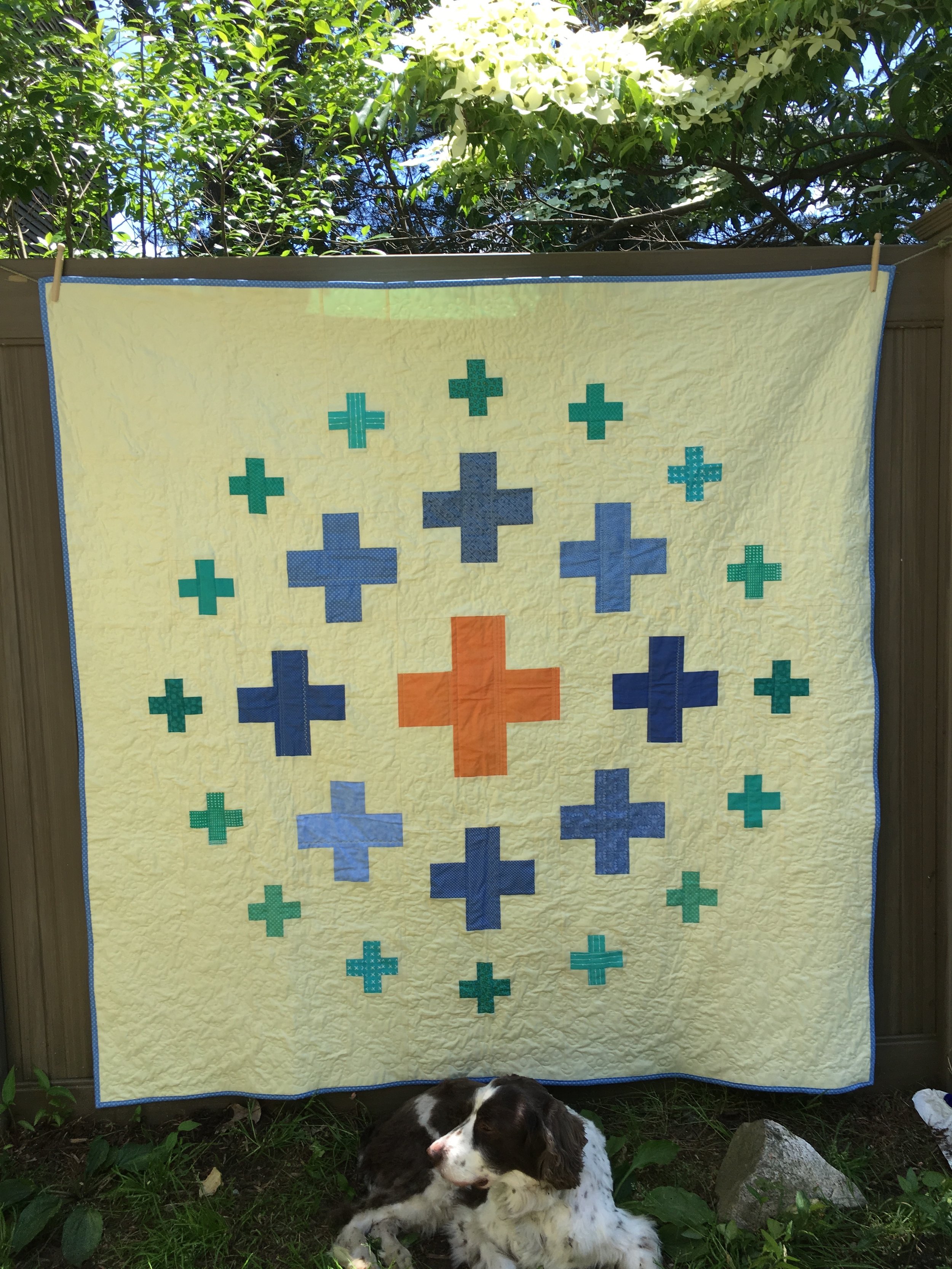
"Plus Surround" Quilt 65 inches square, with my Springer Spaniel photo-bombing the shot!

"Plus Surround" Quilt 65 inches square, with my Springer Spaniel photo-bombing the shot!

"Plus Surround" Quilt 65 inches square, with my Springer Spaniel photo-bombing the shot!

"Plus Surround" Quilt 65 inches square, with my Springer Spaniel photo-bombing the shot!

This is my completed "Plus Surround" quilt from the book, Modern Plus Sign Quilts.  There is review of the book on my March 29, 2018 blog post and discussion about making the quilt on the two subsequent posts.

There is straight line quilting on each of the plus signs which I really like. But I really struggled with how to quilt all of the negative space in this quilt (the yellow background). The quilt in the book has quilting radiating from the center of the quilt. I knew I didn't want to try to copy that. 

Because of the circular design, I decided to quilt the negative space with free motion circular loops. About half way done, I wished I'd done a misty soft linear/loopy fog-like design instead.  But it was way to late to do that!  The circular loops feel a bit too traditional for my taste, but it's growing on me! 

What's the best thing about this quilt? The great design of this quilt. It captures the viewer's attention!


TAGS: Scrappy "Plus Surround" quilt, "Plus Surround" Quilt, "Modern Plus Sign Quilts", Free motion Quilting


June 21, 2018

"Flying Economy" Finished Quilt

by Judy Tucker


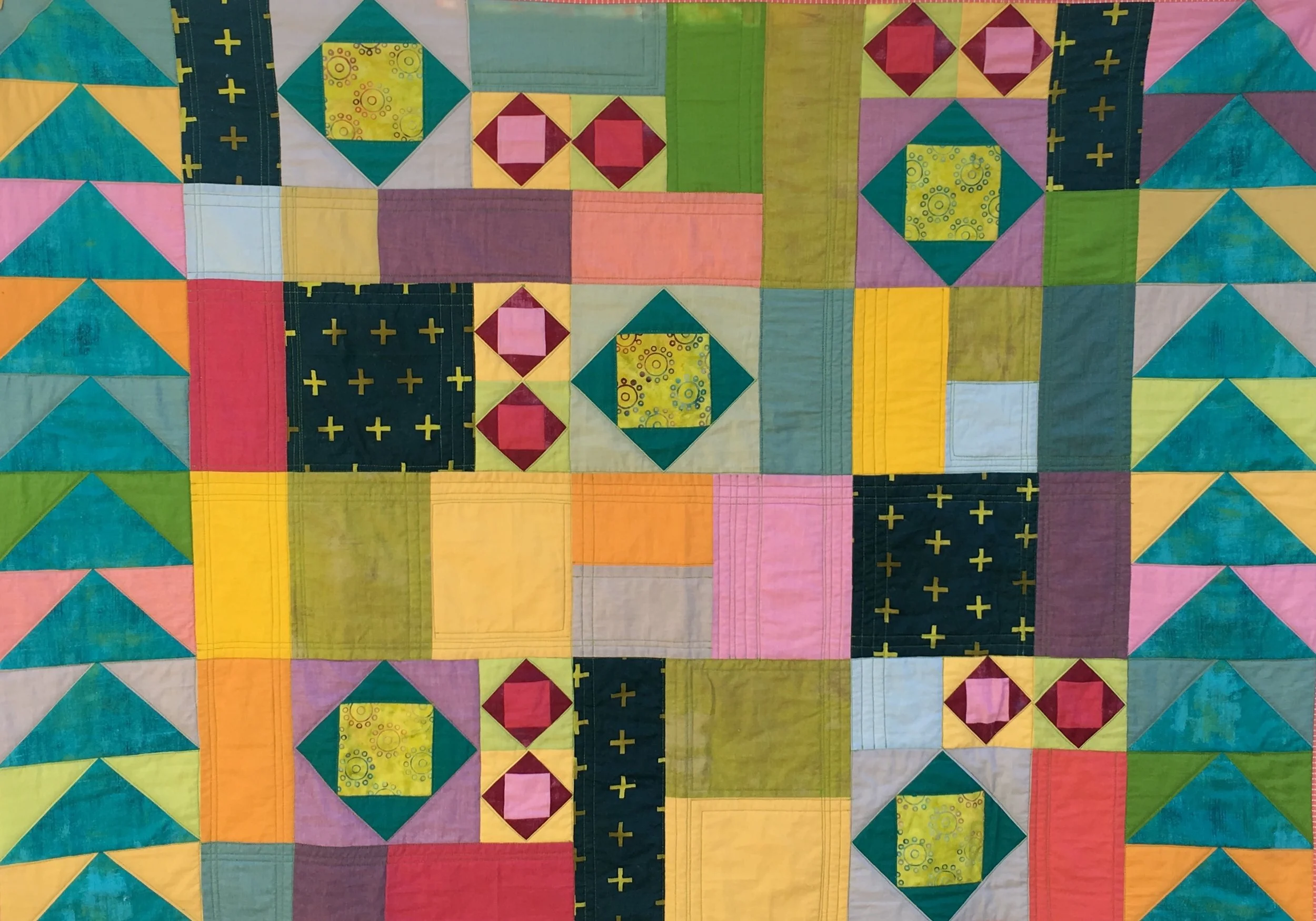
"Flying Economy" Custom Set Blocks in EQ 8, 55 x 39.5 inches

"Flying Economy" Custom Set Blocks in EQ 8, 55 x 39.5 inches

"Flying Economy" Custom Set Blocks in EQ 8, 55 x 39.5 inches

"Flying Economy" Custom Set Blocks in EQ 8, 55 x 39.5 inches

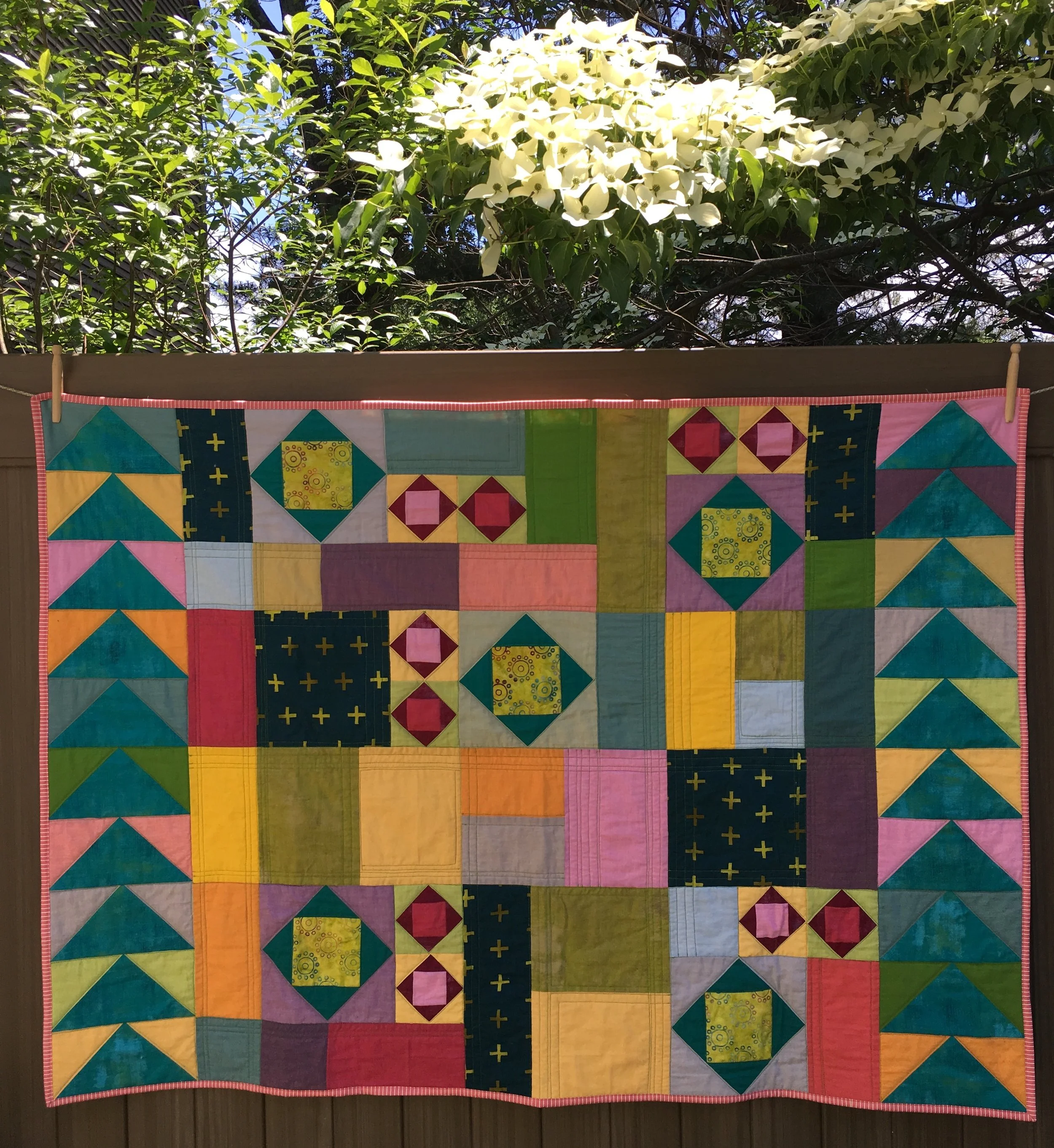
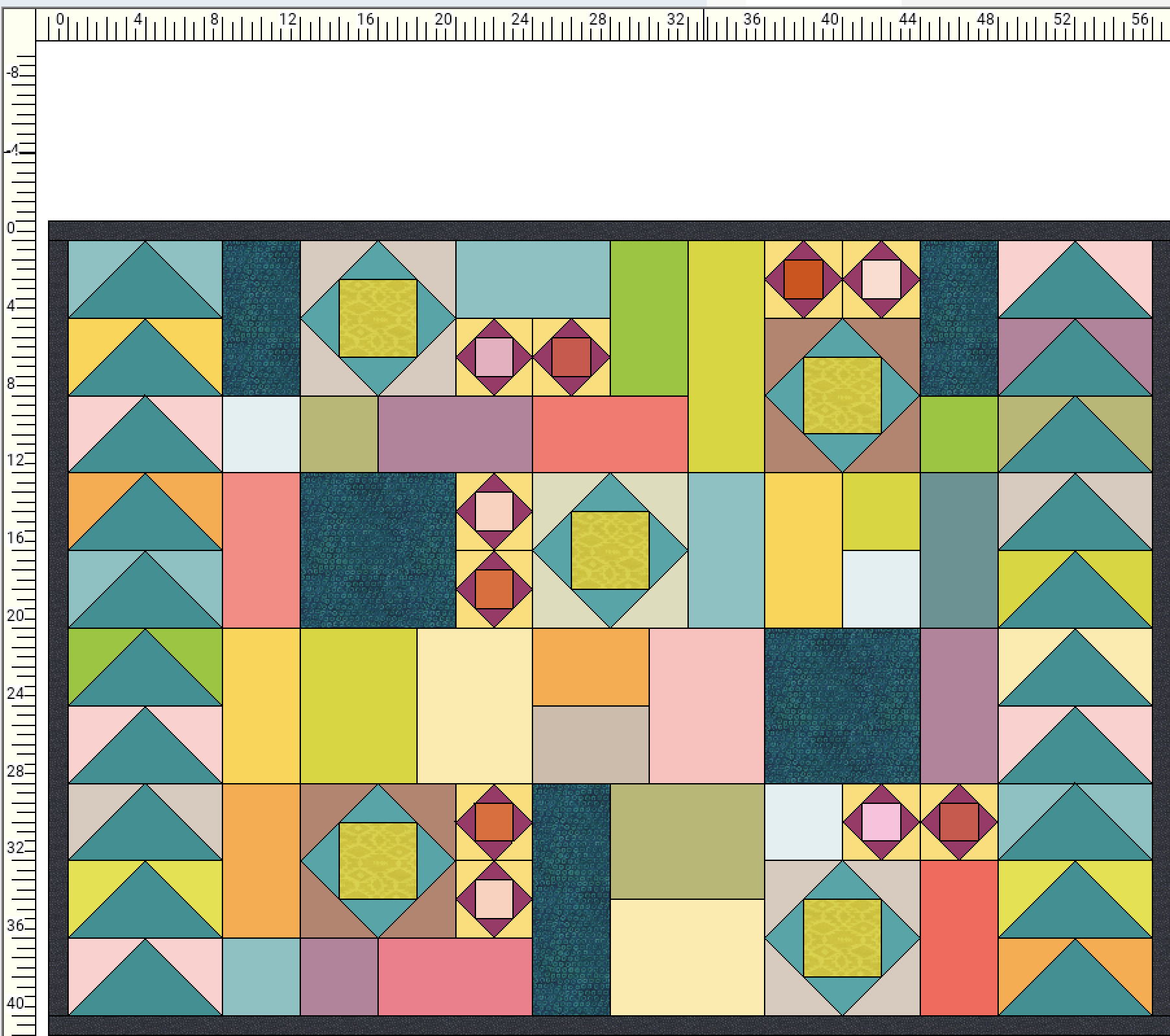
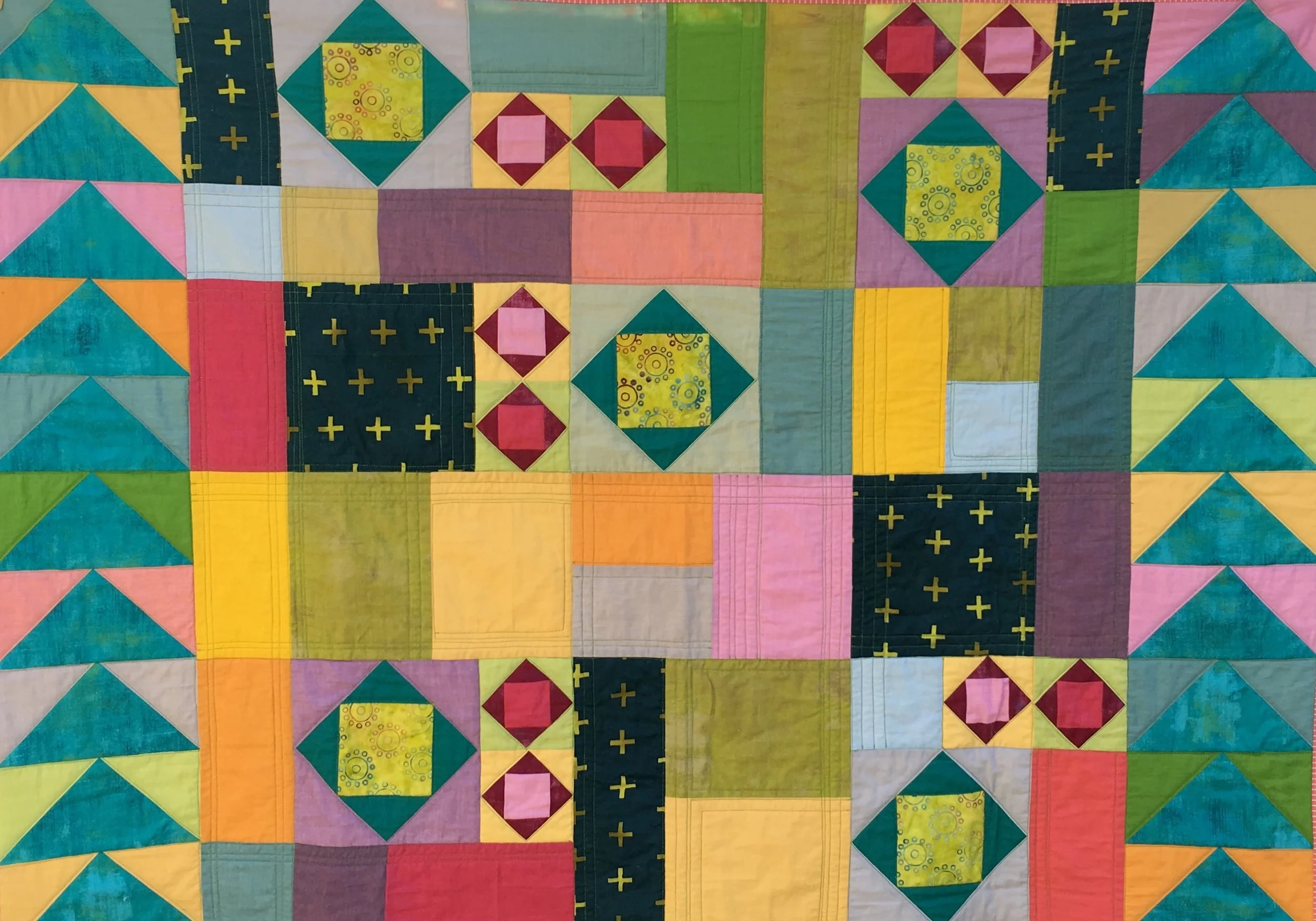
And here it is:  The completed "Flying Economy" quilt that I designed in Electric Quilt 8 (EQ8) using the custom set function. 

This quilt was so much fun to design, sew and quilt. It has fabrics by Alison Glass, Moda Fabric's Grunge, Westminster's Kaffe Fassett's Shot Cotton and even a bit of batik!  I wanted this to be a bright and colorful quilt and it was so helpful to see the colors in place as I designed the quilt in EQ8.  The placement of the final quilt does vary a bit from the original design. I changed some fabric choices will sewing and moved a few things around once the blocks were on the design wall.  I don't think I could have made this quilt without first seeing all the colors on my EQ 8 design.

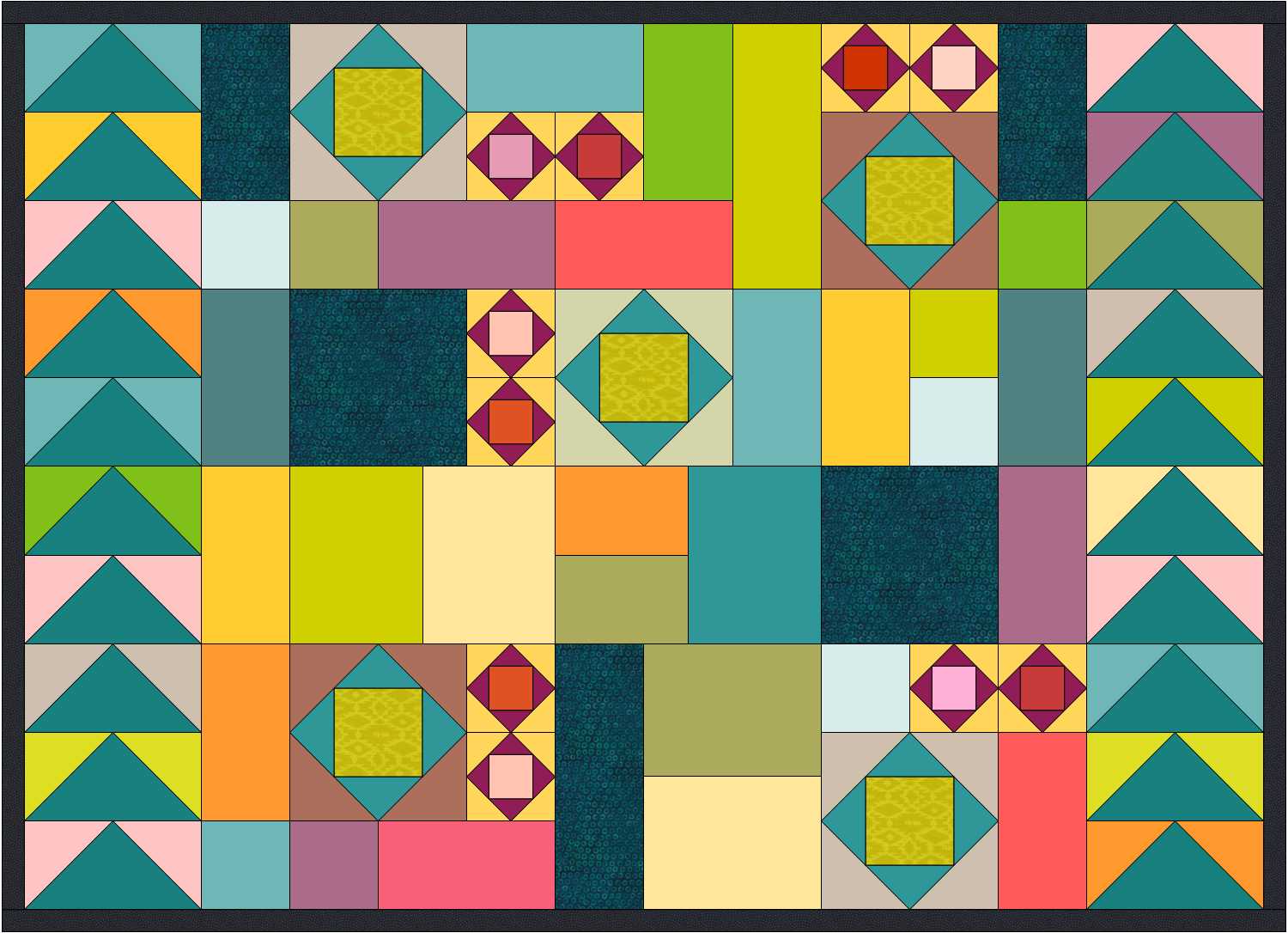
Here they are side-by-side:  Design on the left, completed quilt on the right,

Flying Economy.JPG
fullsizeoutput_d1c.jpeg

The quilting is all straight line done using a walking foot on my trusty domestic Bernina 440. It takes time to do straight line quilting but it was what this quilt needed!

Here's another photo of the finished quilt showing the peachy pink and white stripe binding and my neighbor's beautiful oriental dogwood!

"Flying Economy"onthefence.jpg

At the beginning of June I had a stack of completed quilt tops waiting to be quilted. It was starting to feel like the take-off runway at Boston's Logan Airport!  So I set myself to the task of completing the four quilts before July arrived with its heat and humidity!

All four quilts are done!  The quilt above was one of them.  I'll be posting the other three in the coming weeks. I can't wait to show them to you!

Addendum June 22, 2018: Oops!! Cleaning up my workspace I found a quilt pattern way at the bottom of a pile.  Sam Hunter's "Fourteen on Point" was clearly an inspiration for the design of my quilt.  His quilt is different...he used 3 sizes of simple square-in-a-square economy blocks, while I have 2 sizes of double economy blocks (square-in-a-square-in-another square). The placement of my economy blocks is different than his pattern.  My quilt has 2 flying geese borders while his quilt has one narrow border and one slightly wider border on all four sides and it is wide and narrow.  While I had been thinking this was a completely original pattern, I can see a striking resemblance to the "Fourteen On Point" pattern. I had totally forgotten about having purchased Sam Hunter's pattern. Credit for inspiration for my quilt is definitely due Sam Hunter!


June 14, 2018

"Flying Economy": A Quilt Using Custom Set Blocks

by Judy Tucker


"Flying Economy" the pattern I designed to use fabrics from a Yankee Swap

"Flying Economy" the pattern I designed to use fabrics from a Yankee Swap

"Flying Economy" the pattern I designed to use fabrics from a Yankee Swap

"Flying Economy" the pattern I designed to use fabrics from a Yankee Swap

And here it is: The quilt I designed for my Yankee Swap Fabrics (see May 31, 2018 post) using the Custom Set Blocks option in the Electric Quilt (EQ8) program.

The design is a combination of flying geese, economy blocks in 2 sizes and an assortment of rectangles and squares. The blocks sizes can all be divided by 4. That common denominator makes the blocks in the quilt all compatible and allows for piecing without odd seams.

It is important to check the design to make it actually can be pieced!! It is possible to design a quilt that is essentially impossible, or would be a nightmare, to piece!

The central panel of this quilt can be pieced in 4 strips--two wide ones and two narrow ones. Can you see how looking at the pattern? * The flying geese borders will be pieced and added after the central panel has been pieced.

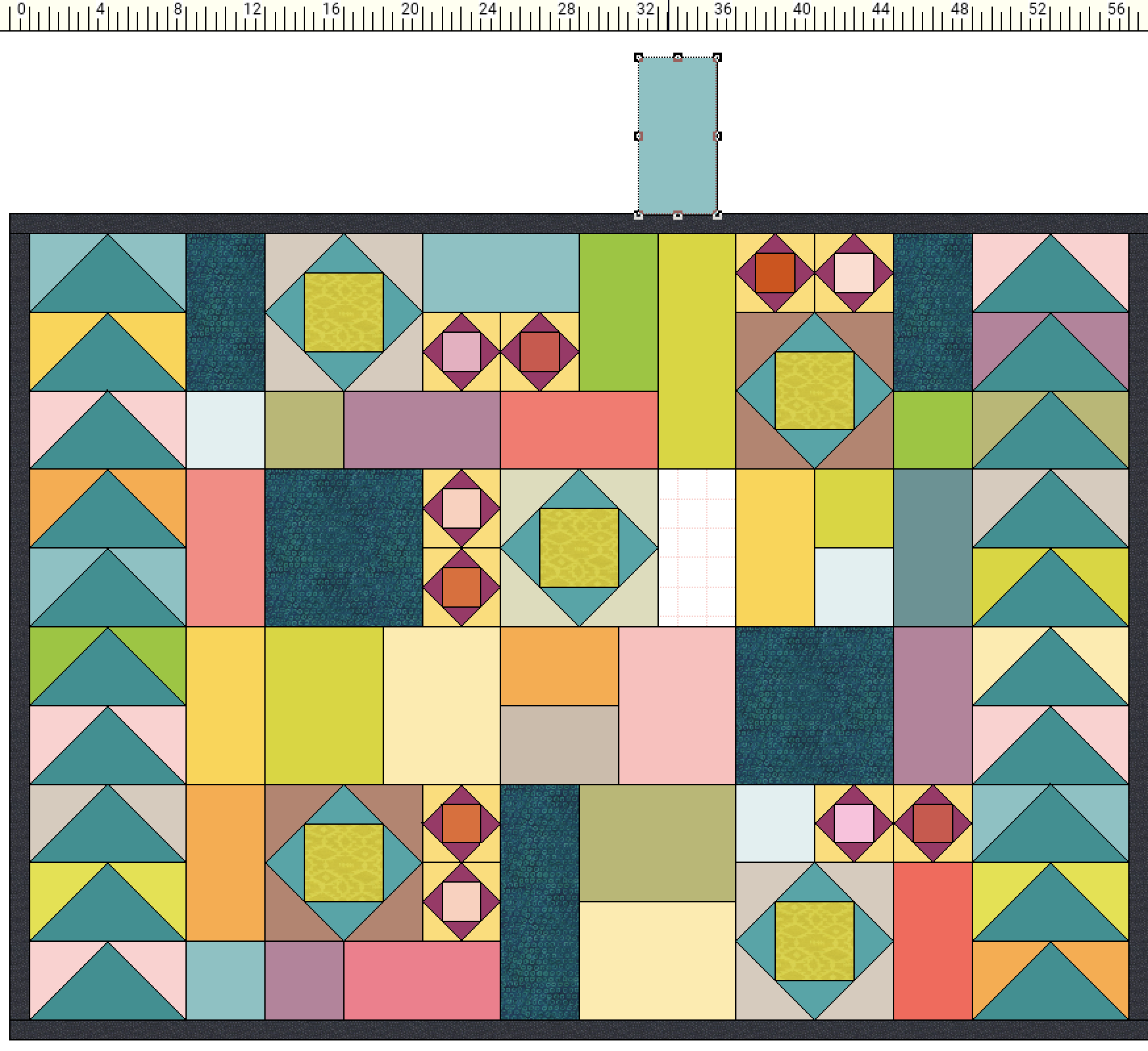
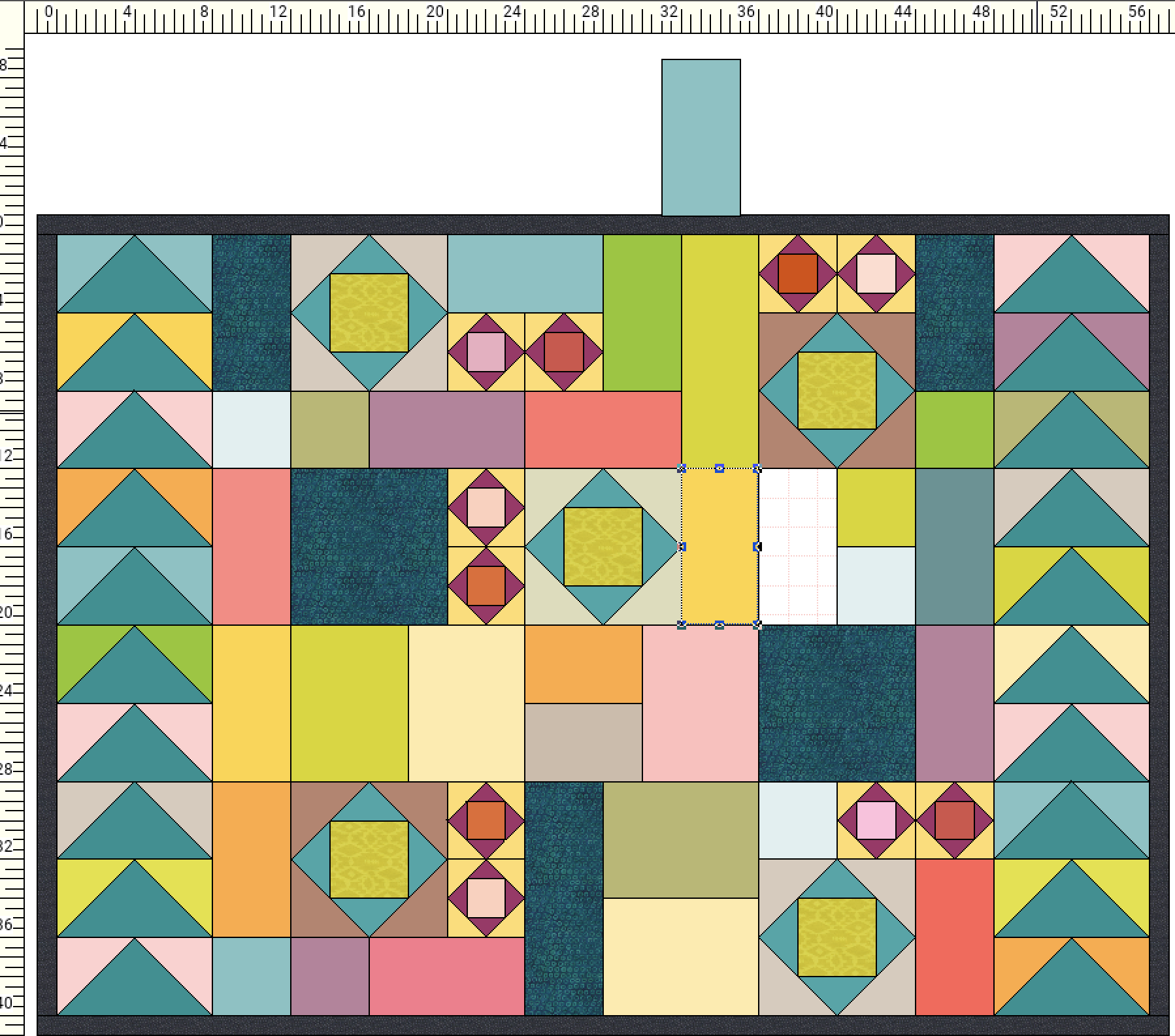
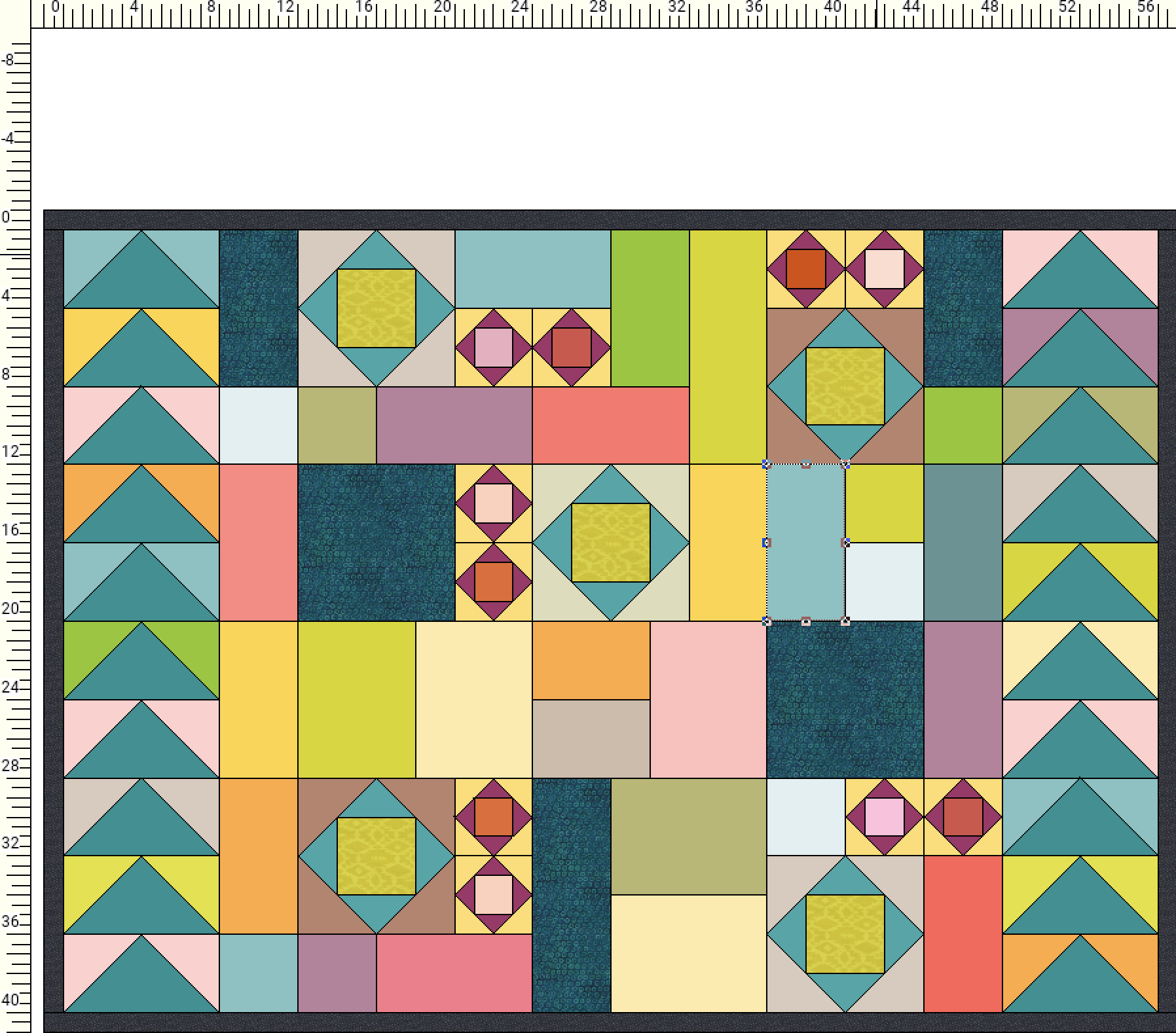
I moved a number of blocks around as I was designing the quilt.  I found I could move one block off the work area, shift another block into that space and then move the first block back into the newly open space. It reminded me of those little plastic puzzles I had as a child where you move pieces around in a plastic square to put them into some sort of order to to spell words!

In the example below, I want to swap the location of the teal and gold rectangular blocks in the right side of the middle row. I lifted the teal block out of the quilt, moved over the gold block to the left and put the teal block in the place where the gold block had been originally.  How cool is that?  (I could also have just recolored them, but I wanted to show that you really can move blocks around very easily in this program).

Screen Shot 2018-05-10 at 3.08.06 PM.png
Screen Shot 2018-05-10 at 3.05.01 PM.png
Screen Shot 2018-05-10 at 3.05.25 PM.png
Screen Shot 2018-05-10 at 3.05.44 PM.png

The colors of the actual quilt won't be exactly the same as the colors in this pattern. But they are close enough so that I know I'll like the design and color distribution.

 Time to cut and start sewing!

* (The top and bottom strips are the wide ones).

Addendum:  I just realized today, June 22, 2018, that this quilt design was obviously inspired by a quilt designed by Sam Hunter. For details, see the addendum at the end of my next post, "Flying Economy" Finished Quilt.


June 7, 2018

Designing a Quilt with Custom Set Blocks in Electric Quilt 8

by Judy Tucker


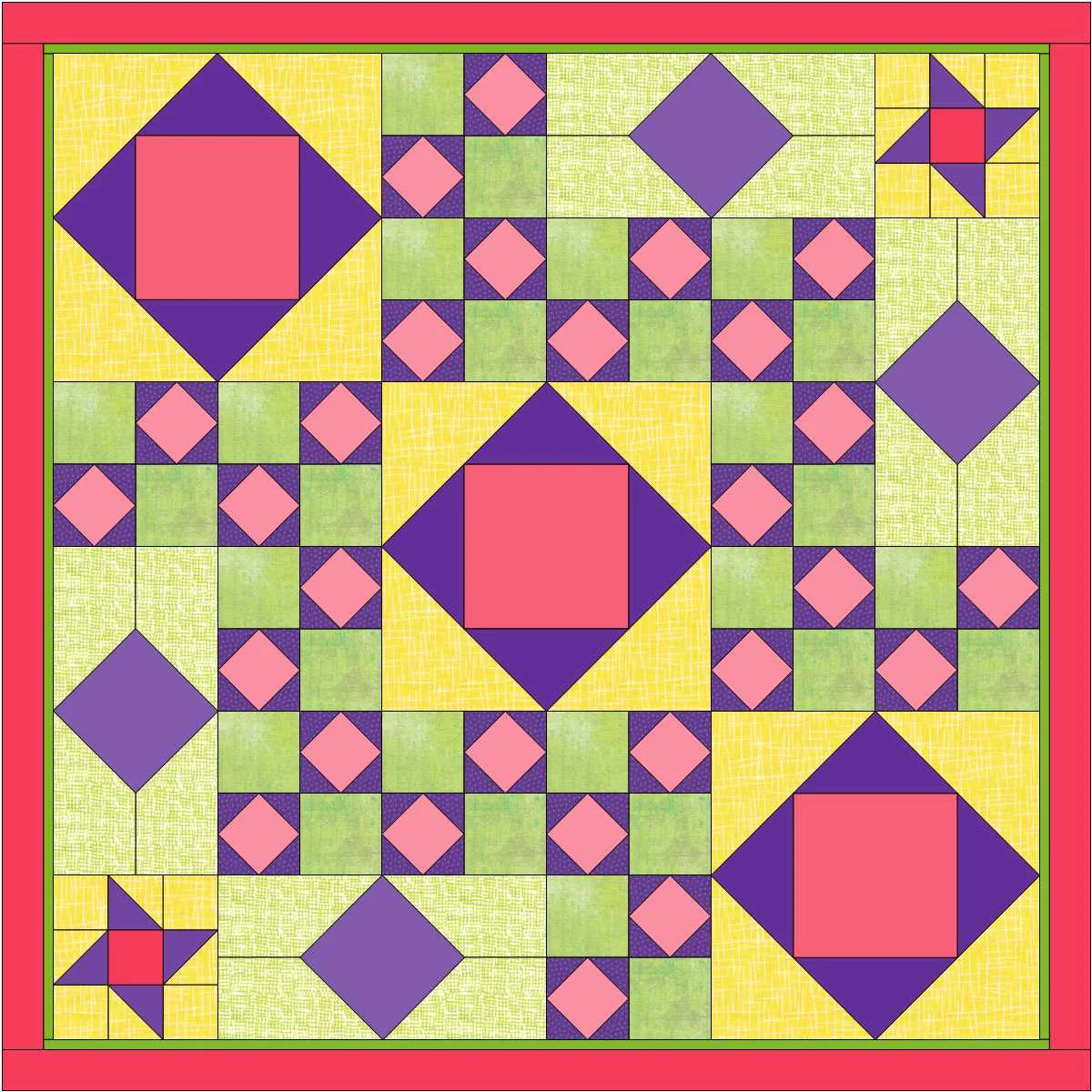
My Practice Quilt from Electric Quilt Blog tutorial "Custom Set Quilt!"

My Practice Quilt from Electric Quilt Blog tutorial "Custom Set Quilt!"

My Practice Quilt from Electric Quilt Blog tutorial "Custom Set Quilt!"

My Practice Quilt from Electric Quilt Blog tutorial "Custom Set Quilt!"

Electric Quilt has a blog that intermittently has hands-on lessons for using their revised program Electric Quilt 8 (EQ8).  The lesson posted on May 1, 2018 was exactly the tutorial I needed to design a quilt using the fabrics from last December's Yankee Swap...Custom Set Quilt!

This lesson teaches how to created a quilt with blocks of different sizes. This allows you to create a template all your own.  I've been puzzled how to do this in the past and have had only  modest success trying to accomplish this. Mostly I've given up because I just couldn't get the blocks to set together happily.

The key turns out to be a "Plain Block" that is written into the program. It existence of the Plain Block not readily apparent. You really have to know it's available.  I use EQ8 on my iMac. The drop down list with the Plain Block can be found by clicking on three light grey dots "..." in the bar over the blocks from the Block library.  (I gather that this drop down list appears in Windows when you click on an empty space between blocks the block tool bar).  

One of the choices in the drop down list is "add plain block".  This adds a plain square to the blocks you can choose from.  Once dropped on the quilt it can be moved around and changed to any size using the "adjust" button. When you have a block you like, you can copy and paste it as many times as you wish. Just brilliant...once you know how.  My design problems now have a very easy solution!

If you have EQ8 and are interested in designing quilts with custom set blocks, I highly recommend clicking on the link above and working through the tutorial. It's lots of fun and well worth the time.

I designed the quilt above working through the Custom Set Quilt tutorial.
Having worked through the tutorial, I now have the necessary skills to design a quilt that will use the Yankee Swap fabrics I showed in my last post on May 31, 2018. I'll show that quilt design in my post next week

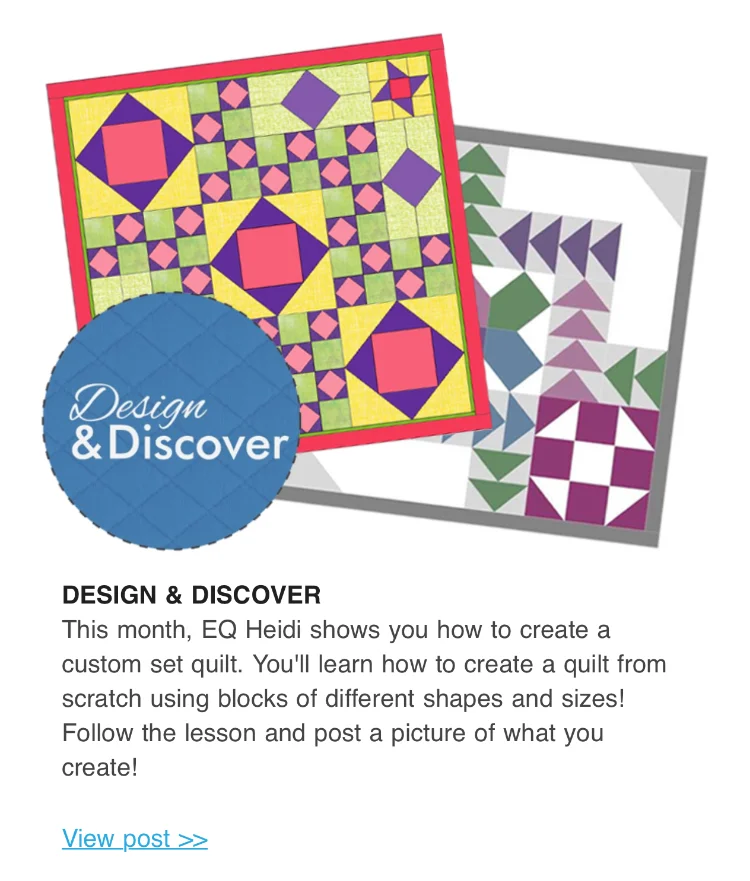
PS: I did this tutorial in May.  Look what popped up on the May 13, 2018 Electric Quilt Newsletter!  It was fun to find my project quilt highlighted. I had shared this photo at the end of the lesson on their website. I don't have any business/financial ties to Electric Quilt--clearly they liked what I designed so they shared in their newsletter.  (The link in the photo below isn't active. But it is the same as the link in the first paragraph above).

ElectricQuiltusingmyquiltinaNewsletter.jpg

TAGS: Electric Quilt 8, Electric Quilt Computer Program, Custom Set Blocks, Custom Set Quilt! DoYouEQ Blog, Quilt Design, Creating a Quilt Design


May 31, 2018

Using Fabric from a Holiday Yankee Swap

by Judy Tucker


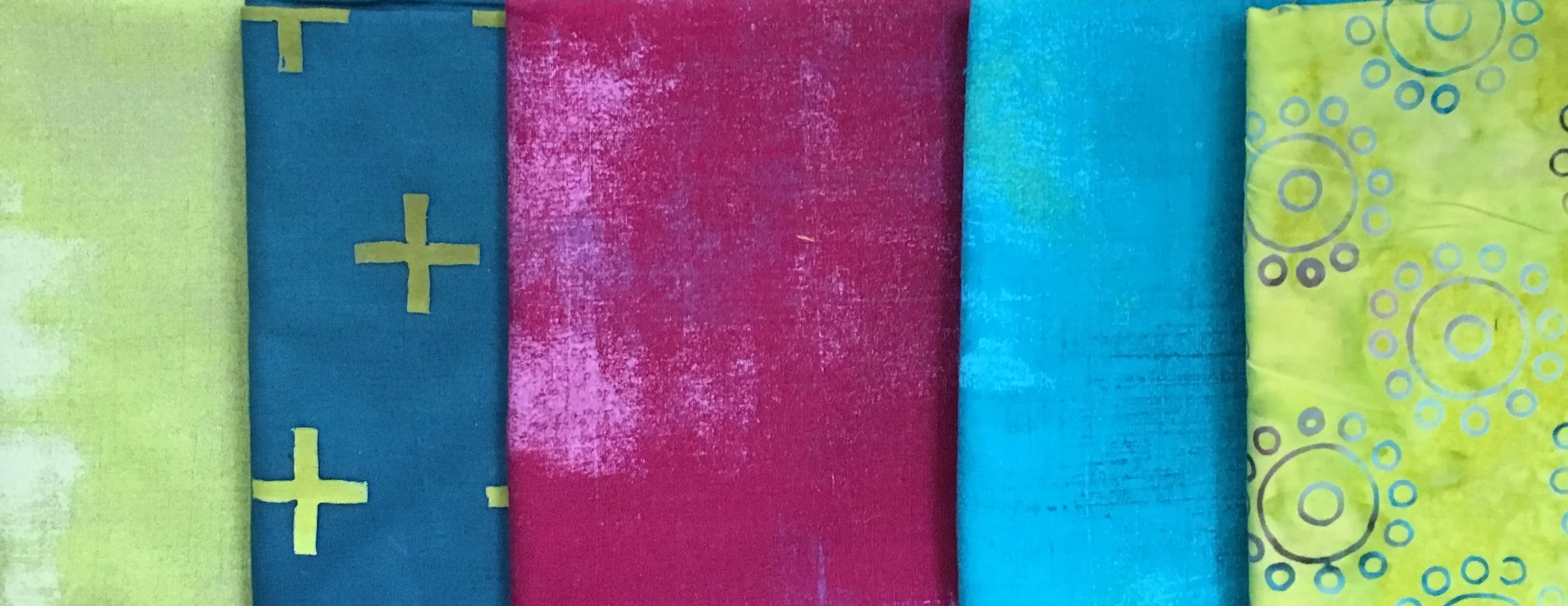
Five half yards I won at last year's Holiday Yankee Swap

Five half yards I won at last year's Holiday Yankee Swap

Five half yards I won at last year's Holiday Yankee Swap

Five half yards I won at last year's Holiday Yankee Swap

Our quilt guild has a holiday party with a Yankee Swap.  It used to be a real high-spirited swap where you were guaranteed to have an awesome gift stolen away. But the guild now has over 100 members so in the past several years it has been musical chairs with packages. You get what you get when the music stops. No more stealing something you see on the far side of the room!

This year my package contained these 5 half yards of fabric. A creative, generous gift. One Alison Glass Handcrafted fabric, two grunge fabrics and one coordinating batik. Three of the colors are in my palette:  the maroon way out of my comfort zone!  What to do with them?

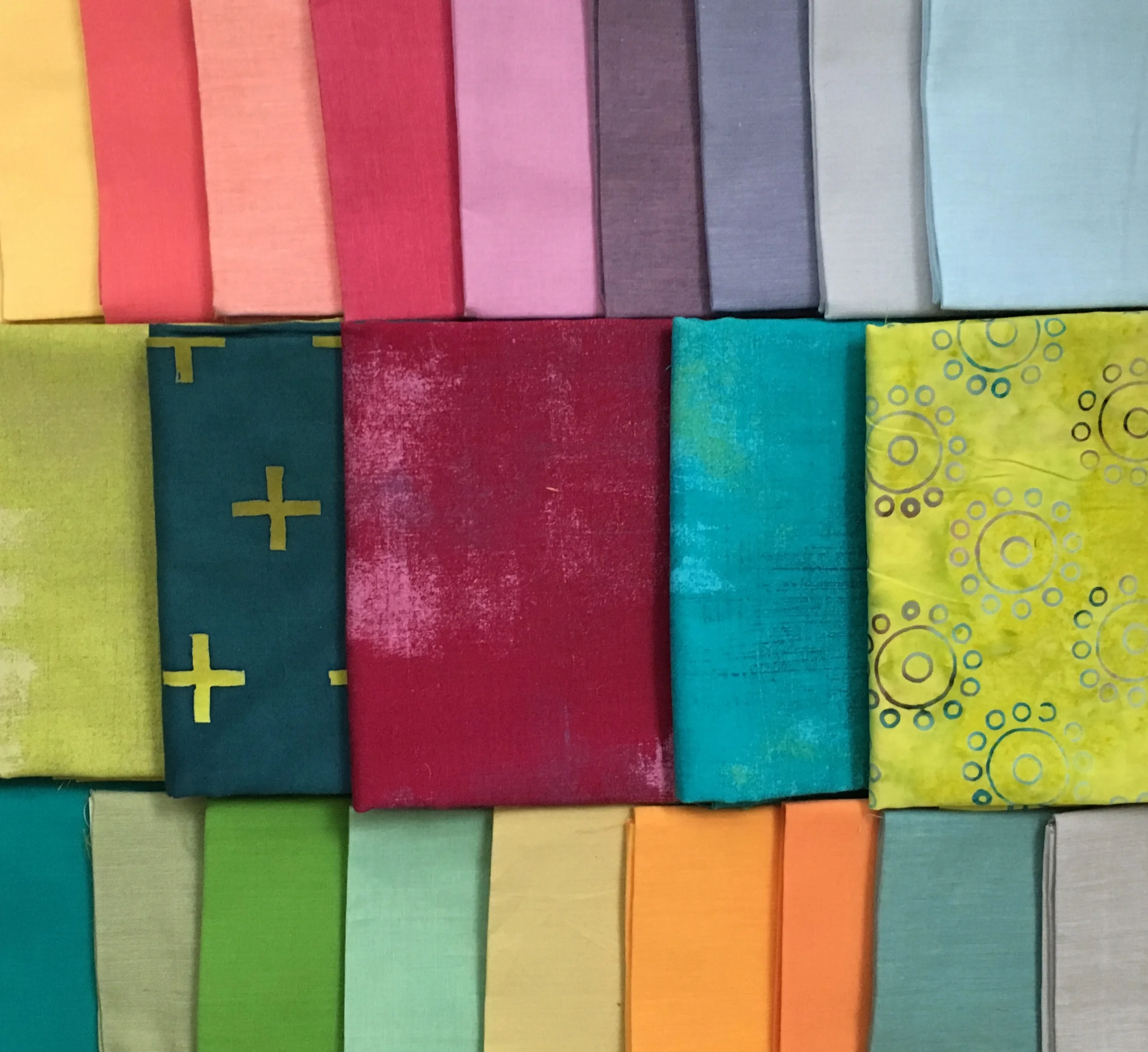
This is clearly just a head start on a fabric collection for a quilt. These 4 half yards need to be augmented with more fabrics. So I went searching in my stash. I found a whole stack of Kaffe Fassett Shot Cottons fat quarters that are a perfect complement to these feature fabrics. 

Feature fabrics with stack of Kaffe Fassett Shot Cottons

Feature fabrics with stack of Kaffe Fassett Shot Cottons

This looks like fun. So I'm off to my Electric Quilt 8 program to design a quilt. These fabrics are too special to be cut without a good plan!

TAGS: Using a Yankee Swap Gift of Fabric, Kaffe Fassett Shot Cotton


  • Newer
  • Older

Powered by Squarespace 7