Search
  • Information
    • About
    • Contact
    • Privacy Policy
  • Blog
  • Subscribe
  • Tutorials
    • Tutorials
    • Doll Clothes: Photos and some Patterns
  • Suggested Reading
  • Quilts: My Original Designs
  • Gallery: Color Studies
  • Gallery: Quilts I've Made
  • Doll Making Blog Posts
  • Recent blog posts
  • Quilts Based on The Improv Handbook for Modern Quilters
Close
Menu
Search
Close
  • Information
    • About
    • Contact
    • Privacy Policy
  • Blog
  • Subscribe
  • Tutorials
    • Tutorials
    • Doll Clothes: Photos and some Patterns
  • Suggested Reading
  • Quilts: My Original Designs
  • Gallery: Color Studies
  • Gallery: Quilts I've Made
  • Doll Making Blog Posts
  • Recent blog posts
  • Quilts Based on The Improv Handbook for Modern Quilters
Menu

Sleeping Dog Quilts

SLEEPING DOG QUILTS

June 27, 2019

Peg Dolls - Pea Sprouts: A Tutorial

by Judy Tucker in Tutorial


Peg Doll Pea Sprouts

Peg Doll Pea Sprouts

Peg Doll Pea Sprouts

Peg Doll Pea Sprouts

Ever since I planted my sugar snap peas in my kitchen garden at the beginning of April, I’ve been planning to make peg doll Pea Sprouts. And this week, I finally did! While I used a leaf from my sugar snaps to make the doll leaves, these dolls could be almost any kind of seeding. They are really simple to make.

You will need:

  • Peg dolls. These are large regular pegs dolls, 2 3/8 inches tall

  • Fine sandpaper

  • Non-toxic watercolor paints

  • Beeswax polish

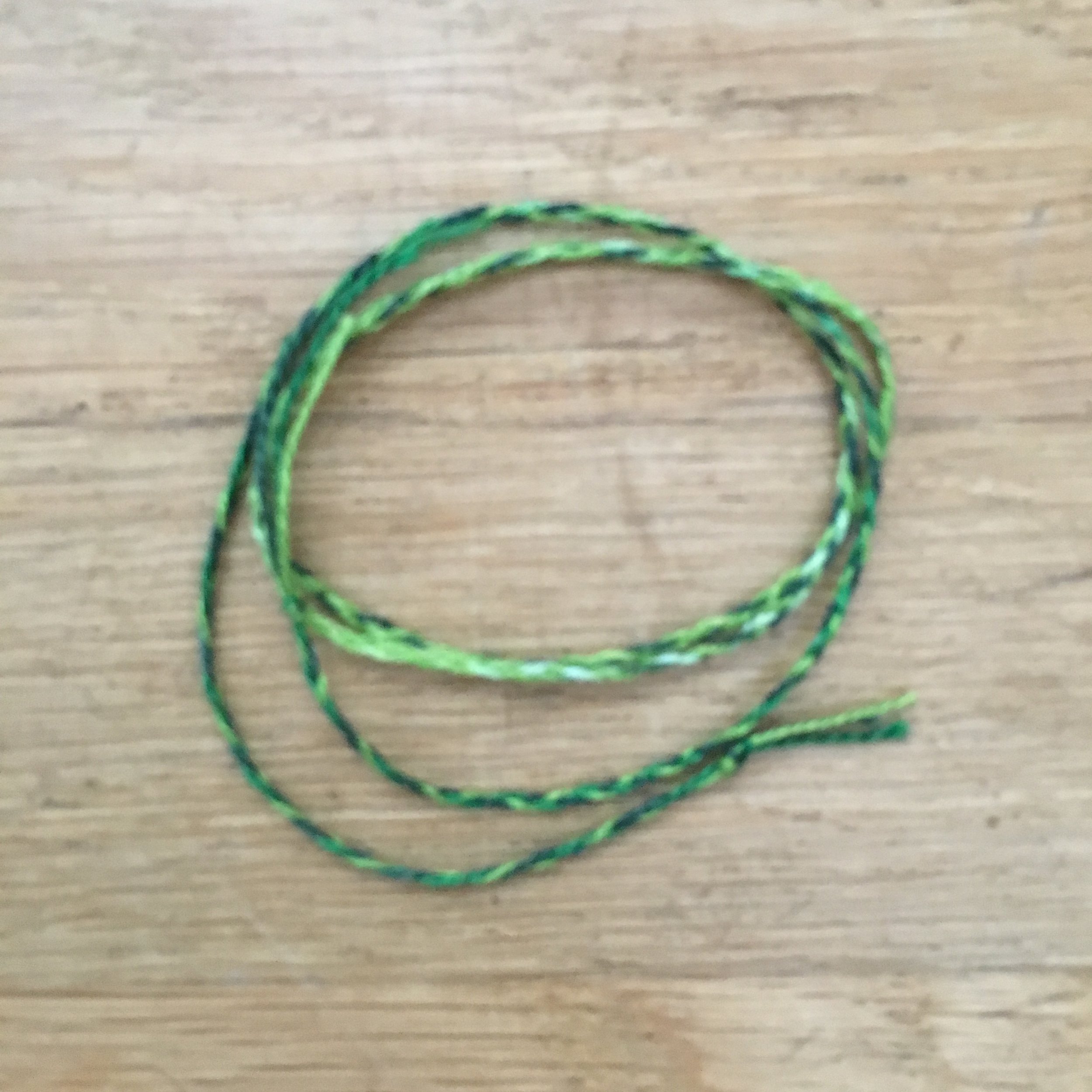
  • Green Perle Cotton or Embroidery Thread or 1/8 inch ribbon with a needle with a large eye

  • Green felt. Wool felt is my favorite

  • Markers to draw the face if you want facial features

  • Scissors and an craft knife with a sharp blade. (Safety note: The craft knife should only be used by an adult).

Instructions:

  1. If your pegs feel rough, smooth them with fine grain sandpaper, following the wood grain.

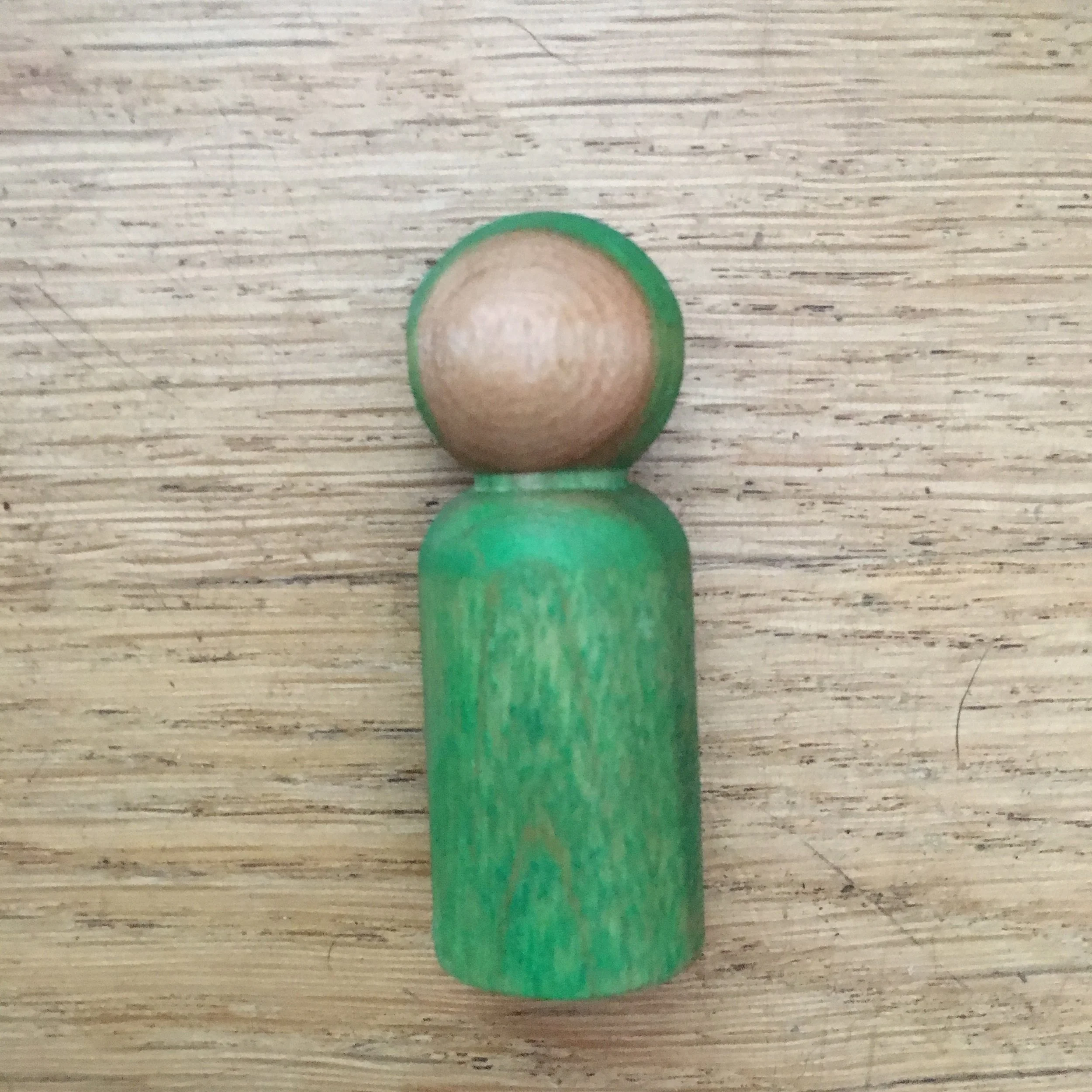
  2. Paint the pegs with the water color paints, leaving an unpainted circle for the face. The wood grain on the peg often can be used as as a guide for the facial placement. I used two different shades of green, applying one green and then the other next to each other on the peg. Allow them to completely dry before preceding.

  3. Apply the beeswax polish to the entire peg, including the face. The watercolors look brighter and deeper in color after the polish is applied. Allow the polish to soak in for several hours, or overnight. Then rub the peg with a soft rag before continuing to assemble the doll.

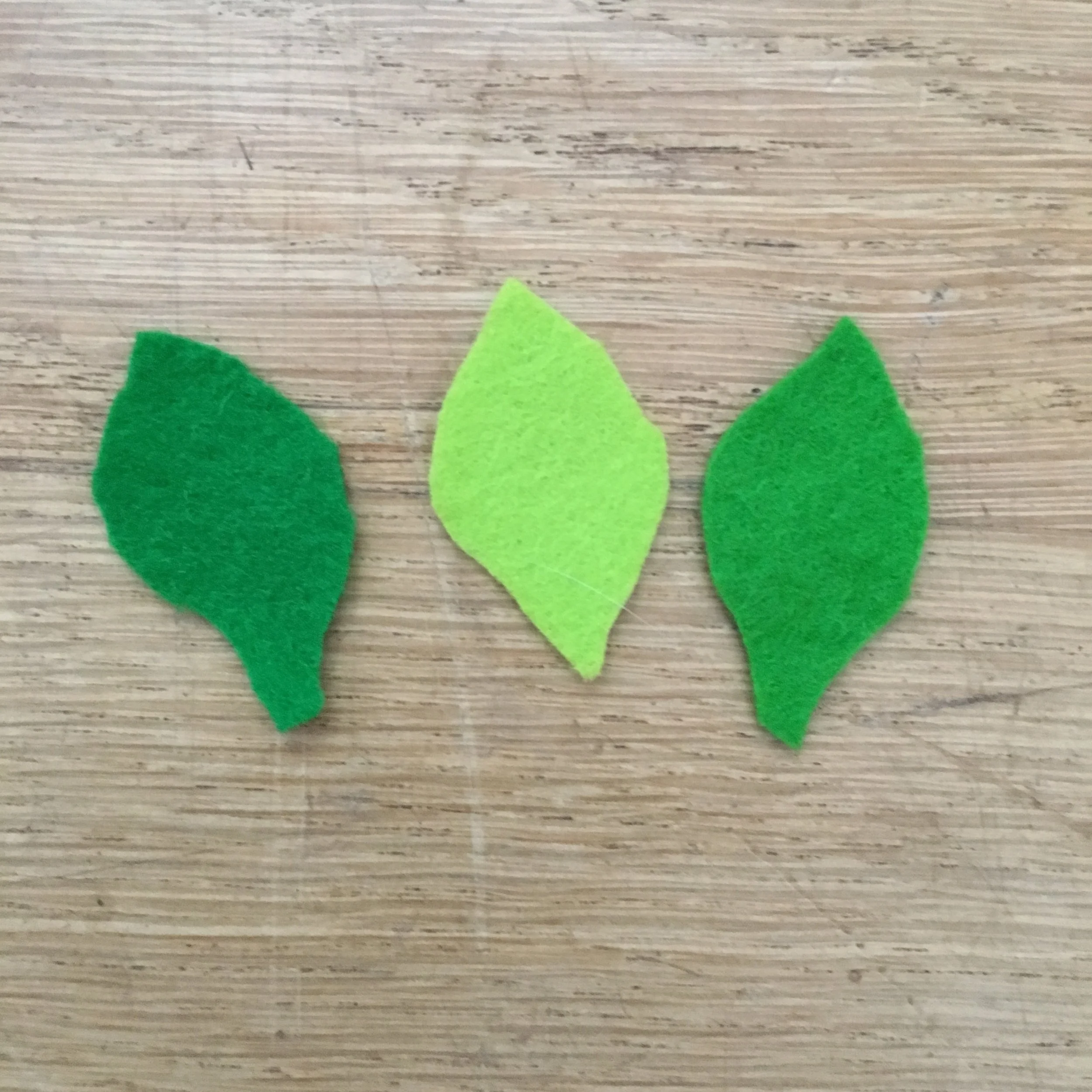
  4. While you are waiting for the bees wax polish to soak into the wood, cut out out the leaves for the pea shoots. Each leaf is about 1 1/4 inch long and 3/4 inches wide. You can draw a template or just cut them freehand if you feel comfortable doing that.

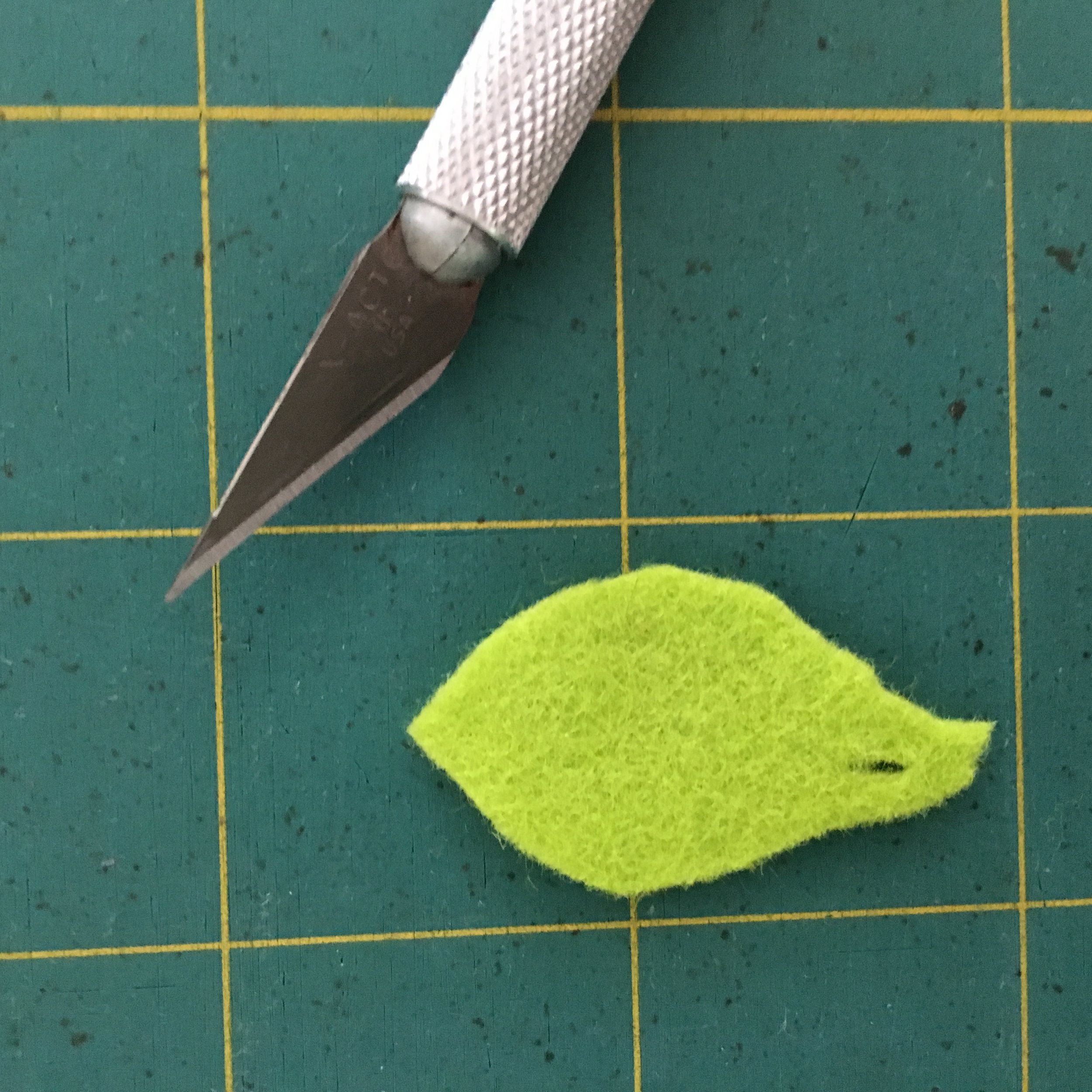
  5. Using the craft knife, cut a 1/4 inch slit at the base of each leaf so that you can run the braid or ribbon through it.

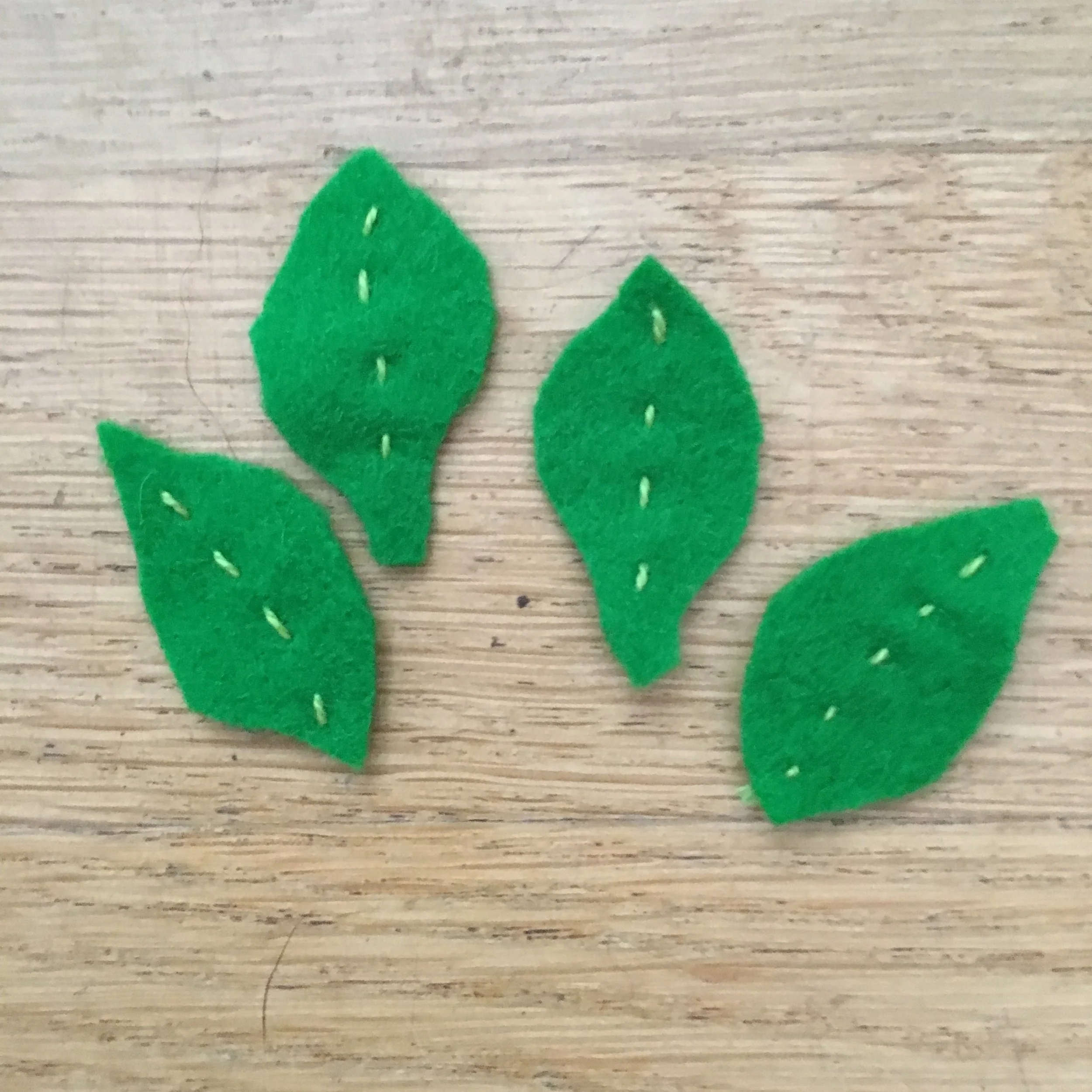
  6. If you wish, use embroidery thread to embellish the leaves. I used a simple running stitch down the center of half of the leaves.

  7. Cut three strands of the Perle cotton. I used strands about the length of my forearm and that made a braid long enough for 4 peg dolls. Braid the 3 strands of thread. (I you use embroidery thread, use 3 strands for each piece. If you use ribbon, you can cut that the length you want when you assemble the dolls).

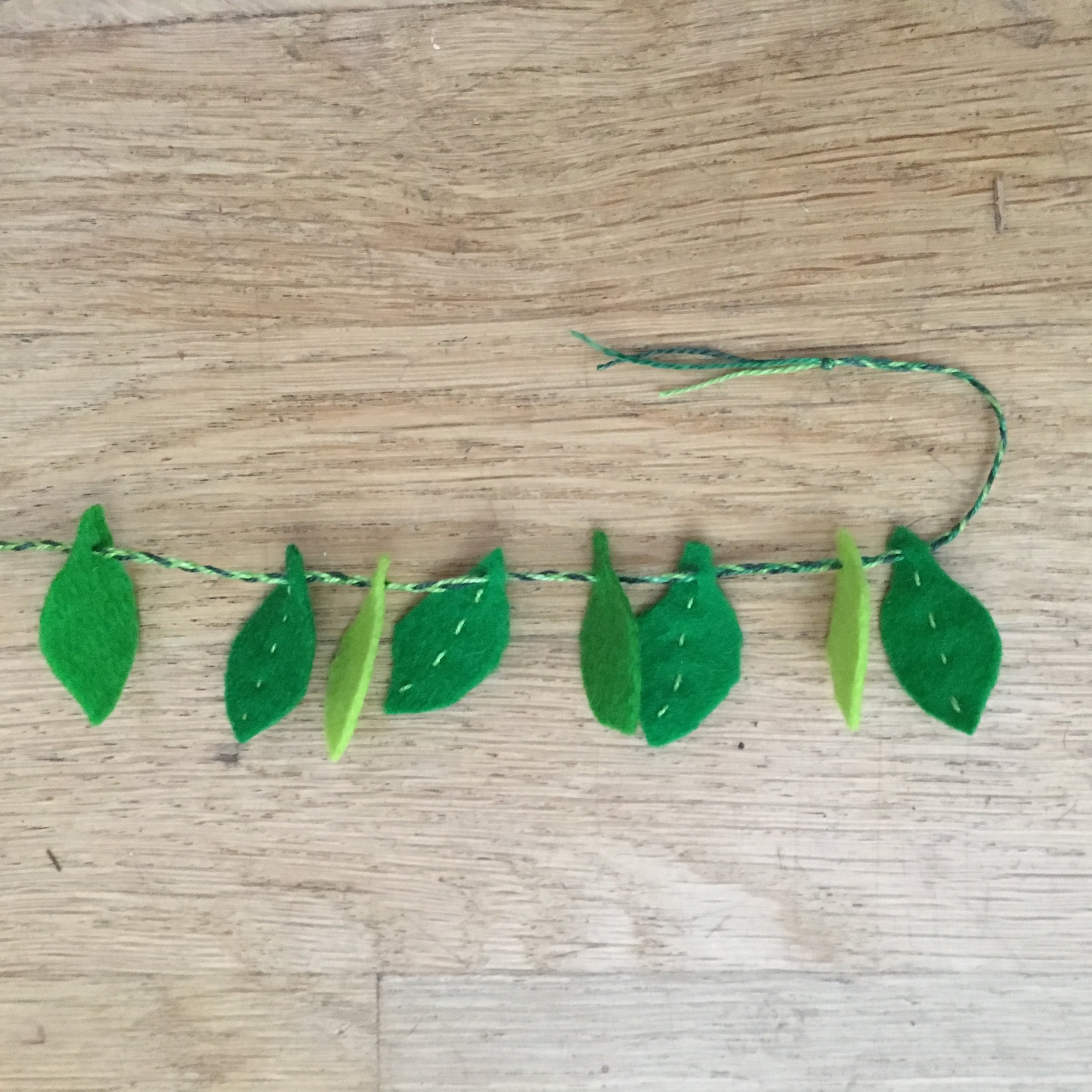
  8. Thread all the leaves onto the braid you just made. Pull two leaves the toward one end of the braid, away from the other leaves. Using that end, tie the braid around the doll’s neck, with two leaves behind the head. Cut the braid the length desired and immediately tie a knot in the end on the doll’s side and the new end on the braid with the rest of the leaves. I was worried the braid with unravel right away, but found I had time to tie both knots without any problem.

  9. Complete the rest of the dolls if you are making more than one.

  10. Draw a face on the dolls using makers if desired. I found that the markers don’t run into the wood grain and can still draw well on wood sealed with the beeswax polish.
IMG_9979.JPG
IMG_9975.JPG
IMG_9980.JPG
IMG_9983.JPG
IMG_9985.JPG
IMG_9986.JPG

I wish I could tell you that I’m enjoying eating the sugar snap peas that I planted in April. So far I’ve only harvested 4 delicious sugar snap pea pods. As it turns out, the neighborhood groundhog thought the pea shoots were very tasty and ate the tips off most of the plants. The peas are in the process of recovering. I’m seeing some blossoms, so there is hope if we don’t have a heat wave too soon.

In the meantime, I am enjoying my little Peg Sprouts.
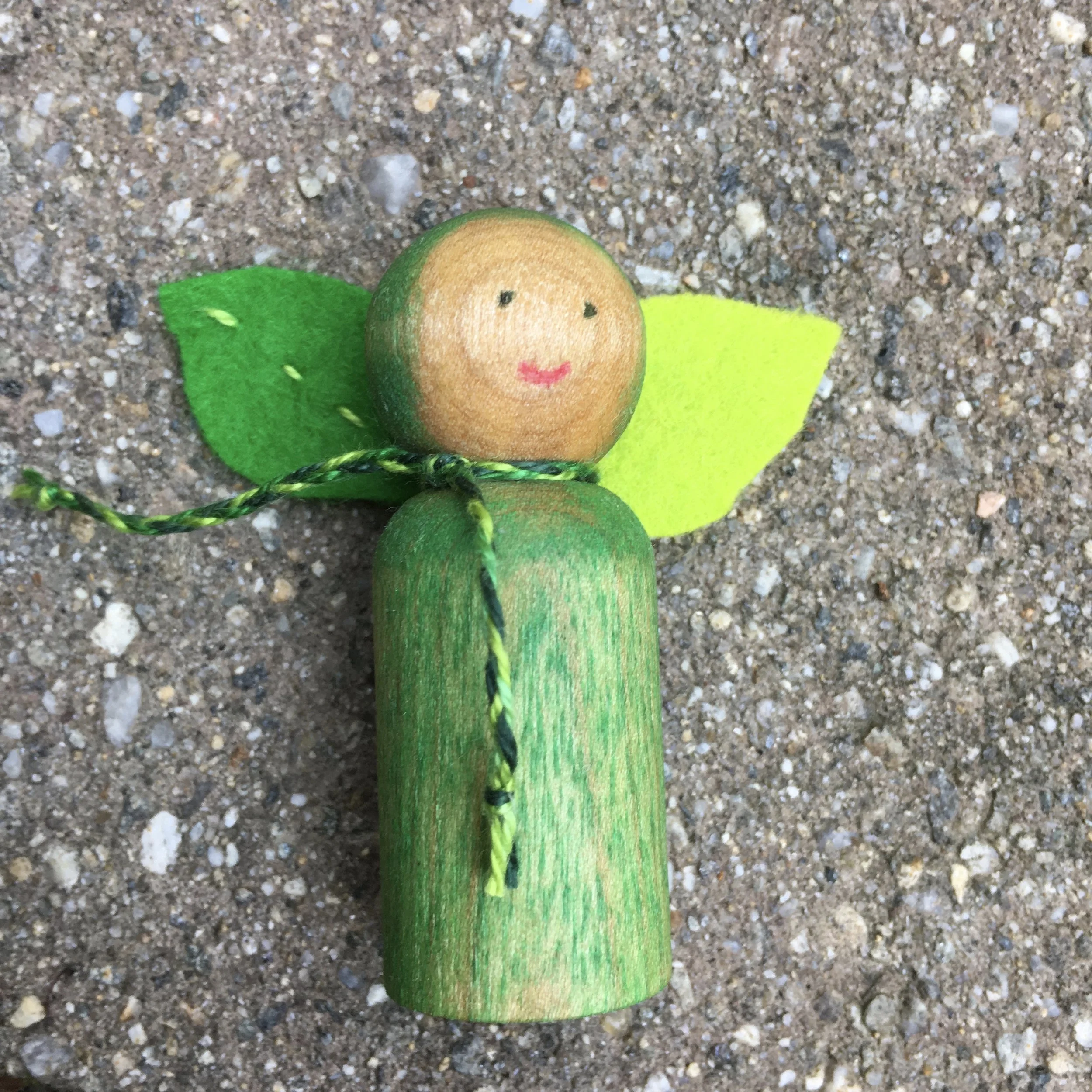
Completed Pea Sprout Peg Doll

Completed Pea Sprout Peg Doll

Notice: This blog is not monetized: I do not use affiliate links. When there are links in a post, they are to give credit to another creative person, because I like or have used a product, or to help the reader easily find supplies for a project.
TAGS: Peg Dolls, Pea Sprout Peg Dolls, Plant Peg Dolls, Wooden Peg Dolls, Painting faces on wooden peg dolls


June 20, 2019

Ordinary Time Pulpit Banners

by Judy Tucker


Pulpit Hanging for Ordinary Time

Pulpit Hanging for Ordinary Time

Pulpit Hanging for Ordinary Time

Pulpit Hanging for Ordinary Time

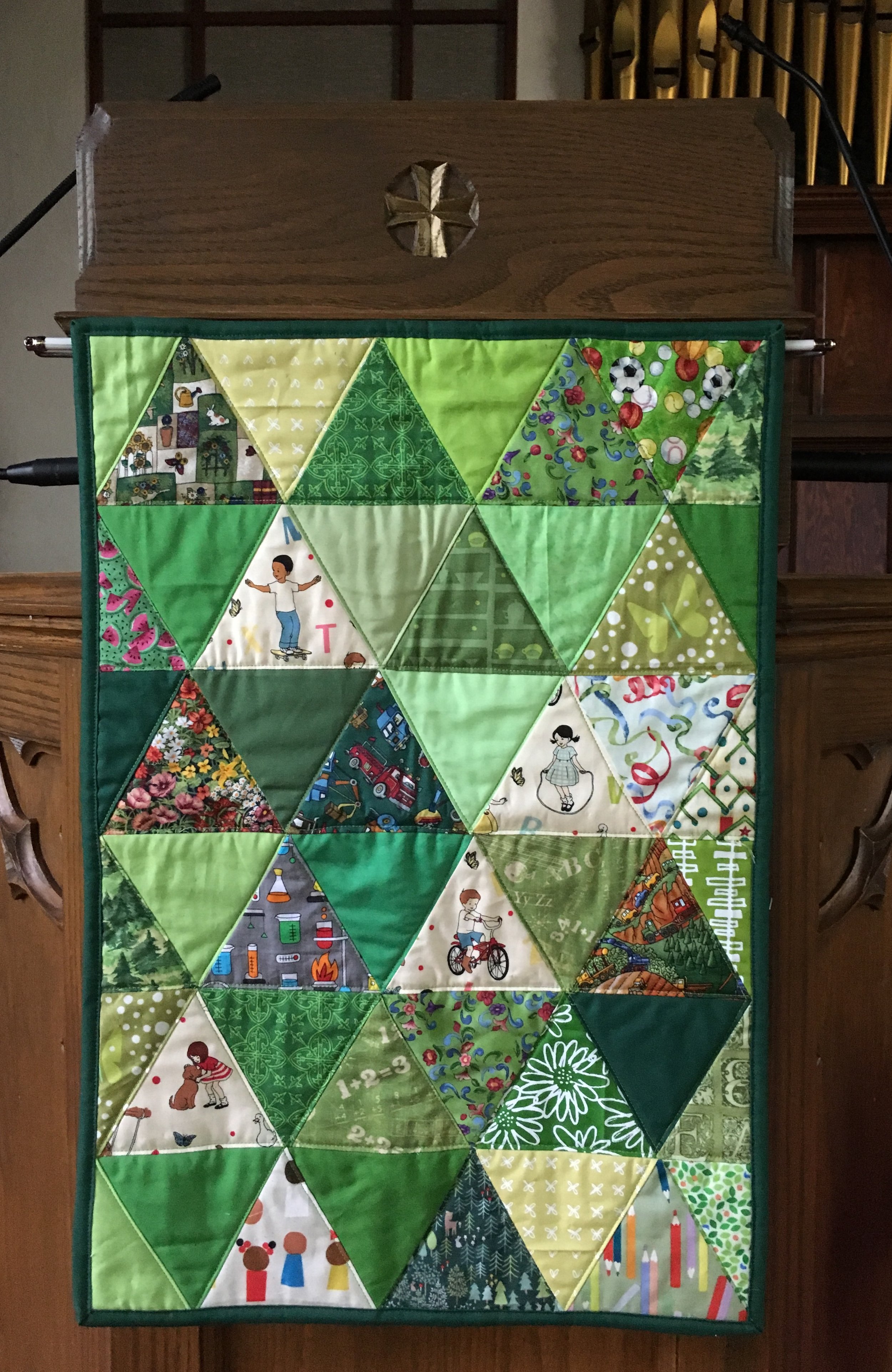
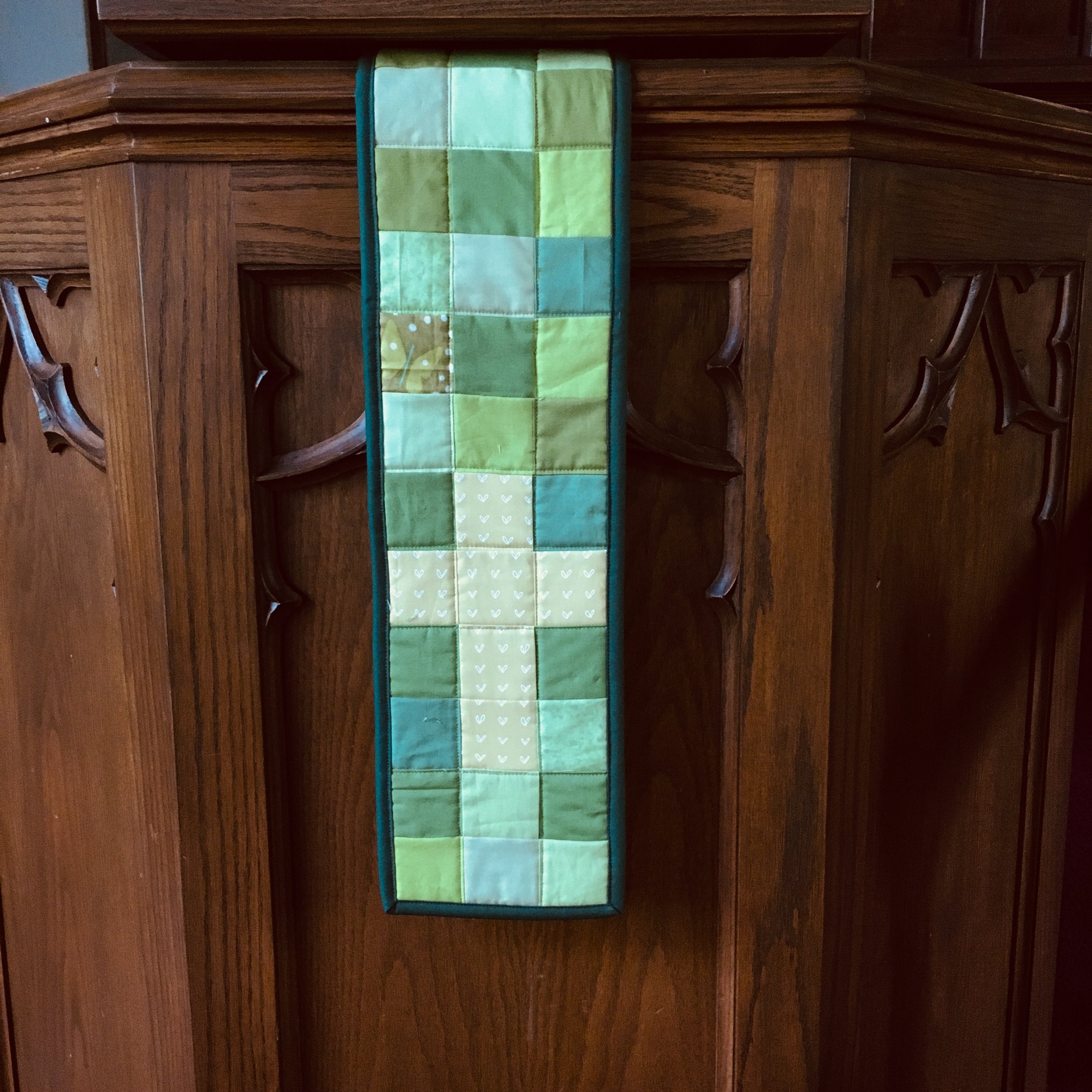
I’ve made one more set of pulpit hangings. This set is for Ordinary Time, weeks in the liturgical calendar that start the Sunday after Pentecost and extend until the first Sunday in Advent. The liturgical color for Ordinary Time is green.

I wanted to have ordinary time reflect the gifts and talents of the congregation of our church. And I wanted it to be fun for the children. So there are children of various ethnic groups in the blocks, doing a variety of fun activities. Also to be found:

  • a numbers block for the accountants and mathematicians

  • a fire truck for first responders

  • test tubes for the doctors, nurses and scientists

  • construction trucks for the builders

  • colored pencils for artists

  • cups and saucers for homemakers, cooks and wait staff

  • a dog for all the dog people!

  • gardening equipment for gardeners and landscapers

  • balls for athletes

  • ribbons for celebrations

  • and a butterfly which is a symbol of Christ’s Resurrection

For the lectern side, a Cross and a butterfly

OrdinaryTimesLecternHaning.jpg


The pulpit hanging is much simpler to make than it looks. The blocks are cut out using a 60 degree quilting triangle ruler. Then the triangles are sewn together, one the point up, the next with a flat side at the top. These alternating patches make a straight strip. The strips need to be two triangles wider than the finished piece so that the sides can be trimmed straight, cutting through the outermost triangles on each side.

If the fabrics that are used are directional prints, pay very careful attention so that they don’t accidentally end up upside down!

TAGS: Pulpit Hangings for the weeks after Pentecost, Pulpit hanging for Ordinary Times, Quilted Pulpit Hanging, 60 degree triangle quilted pulpit hanging


June 13, 2019

Pinwheel Baby Quilt

by Judy Tucker


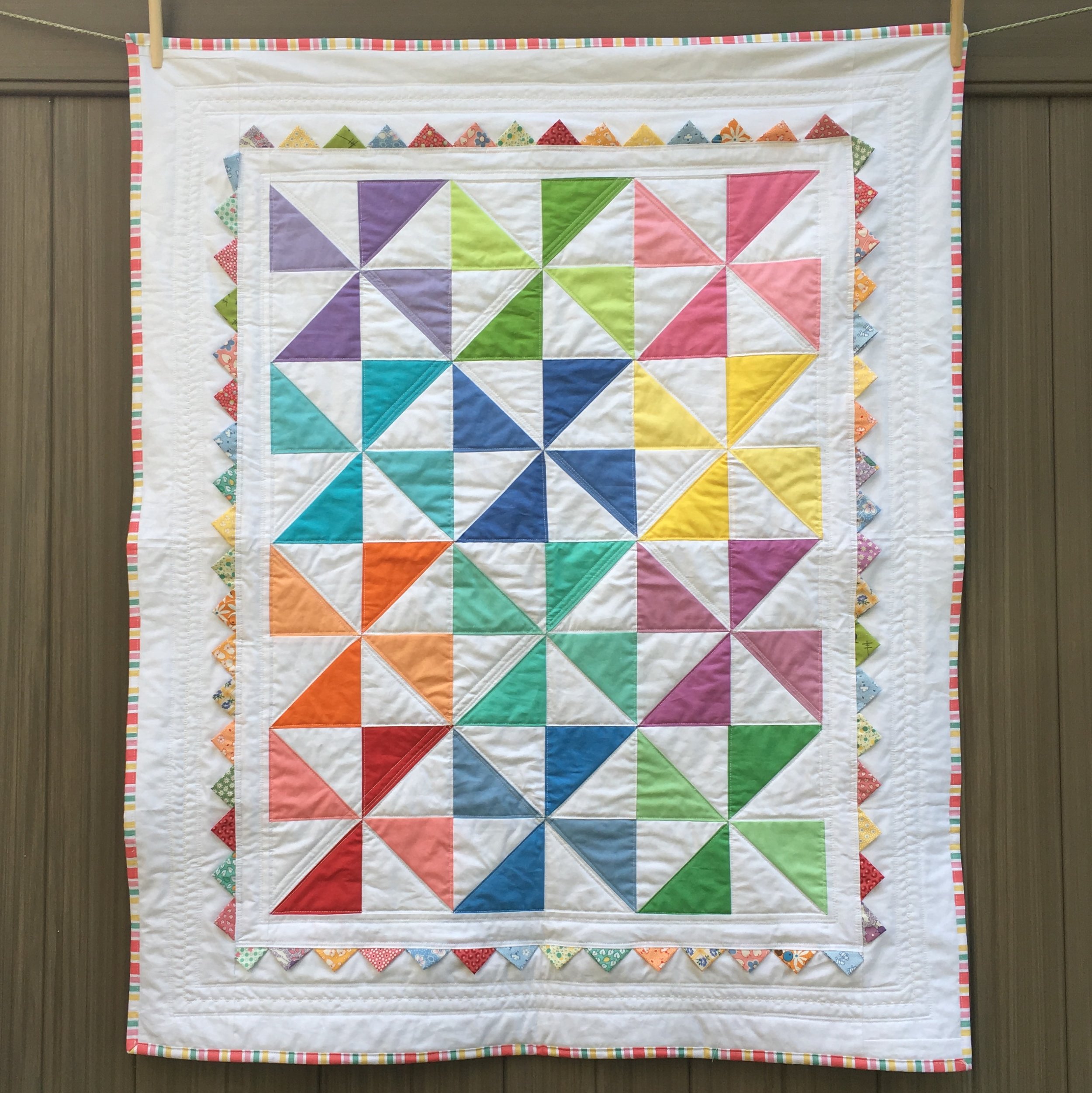
“Pinwheel Baby Quilt” by Jodi for Moda Bake Shop, 36 x 44 inches

“Pinwheel Baby Quilt” by Jodi for Moda Bake Shop, 36 x 44 inches

“Pinwheel Baby Quilt” by Jodi for Moda Bake Shop, 36 x 44 inches

“Pinwheel Baby Quilt” by Jodi for Moda Bake Shop, 36 x 44 inches

After my serious Poppy Quilt, I made this quilt just for the pure fun of it!

The Pinwheel Baby Quilt* is a pattern by Jodi from the Moda Bakeshop. The solids are from Connecting Threads. I used 5 inch Color-Wheel Solids charm squares. I bought a set of true rainbow colors and a set of pastel rainbow squares. The little triangle in the border are 2 1/2 inch squares which are folded on the diagonal twice. The are called prairie points. I made the prairie points from 1930s reproduction fabrics that I had in my stash.

Bamboletta Big Baby enjoying a little time in some dappled sunlight under our Crab apple tree.

Bamboletta Big Baby enjoying a little time in some dappled sunlight under our Crab apple tree.

I have to say, I just love this quilt!

*Okay. This is just sad. I found this quilt pattern on Pinterest a couple months ago and was able to link to the pattern at Moda Bakeshop website. The quilt is still on Pinterest but the link is no longer live. Neither does the pattern doesn’t come up on a search of modabakeshop.com. Looks like it’s been officially retired.

Notice: This blog is not monetized: I do not use affiliate links. When there are links in a post, they are to give credit to another creative person, because I like or have used a product, or to help the reader easily find supplies for a project.


June 6, 2019

Easy Baby Gift: T Shirt Applique

by Judy Tucker


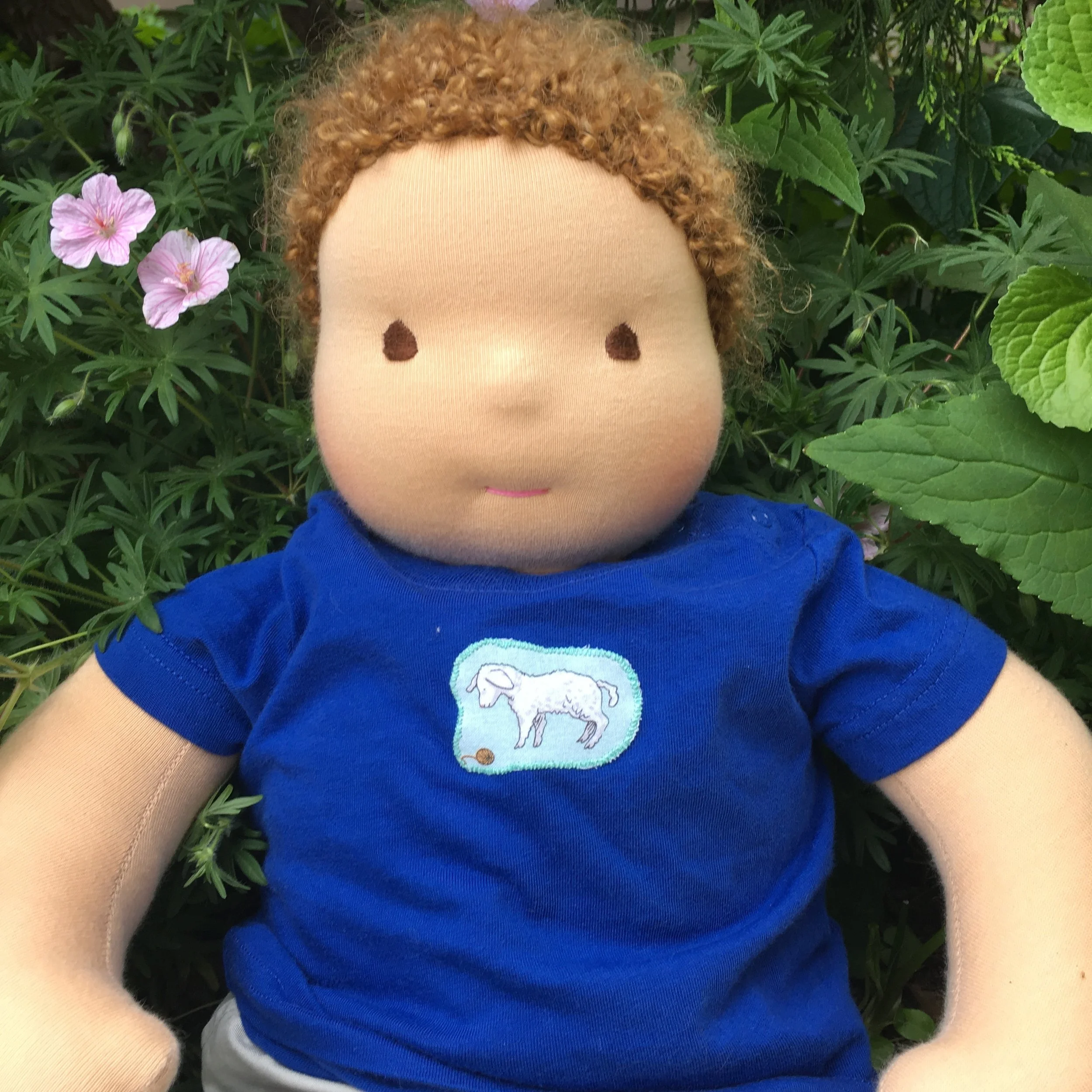
Bamboletta “Big Baby”, sitting in for a real baby, wearing a T Shirt with an Applique

Bamboletta “Big Baby”, sitting in for a real baby, wearing a T Shirt with an Applique

Bamboletta “Big Baby”, sitting in for a real baby, wearing a T Shirt with an Applique

Bamboletta “Big Baby”, sitting in for a real baby, wearing a T Shirt with an Applique

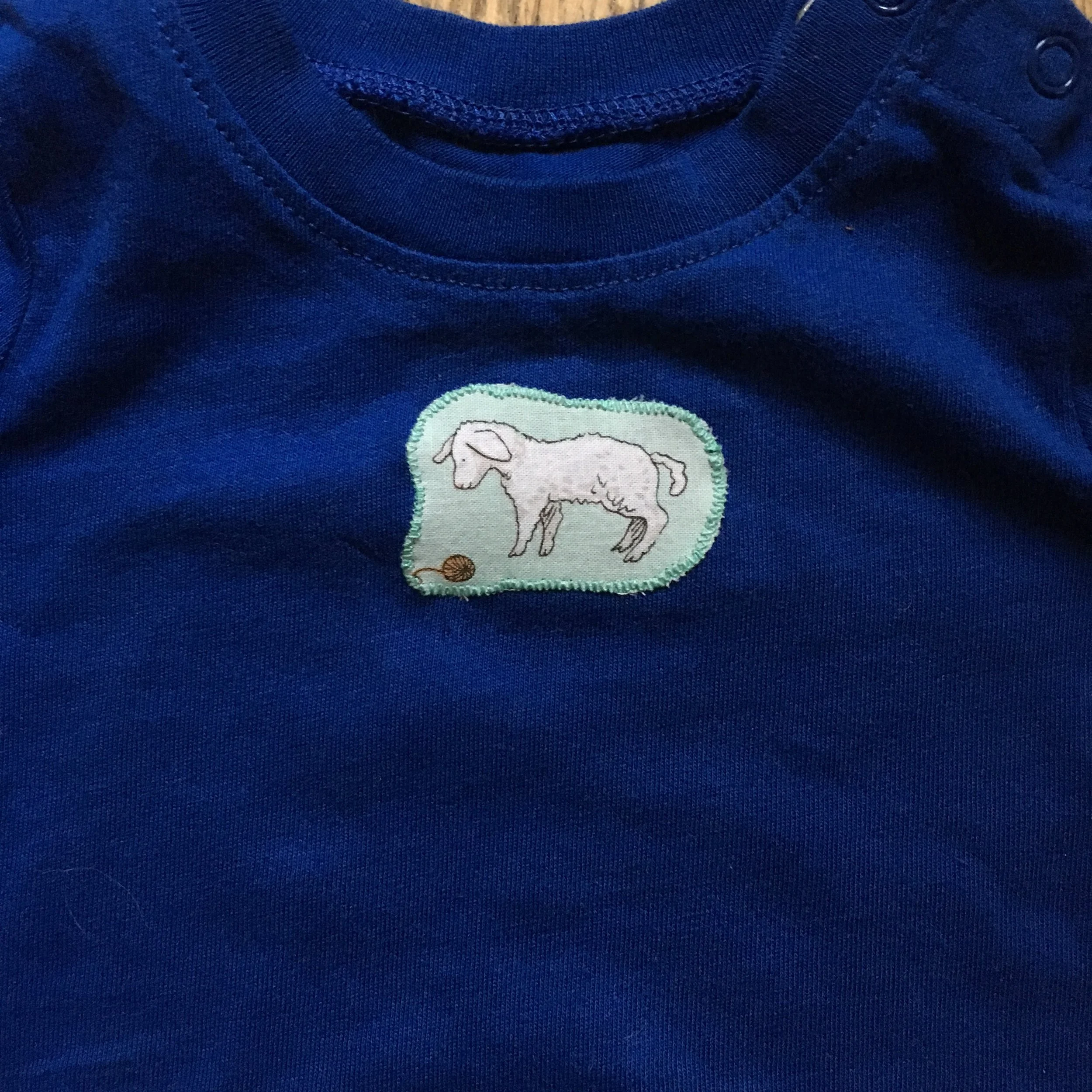
Handmade items for newborn babies are such a nice gift. I’ve made lots of baby quilts and some baby clothes, mostly for family and close friends. But what about the folks that you may not be so close too, but still want to make something special for their new baby?

An appliqued T shirt or body suit is a quick and fun present. Two shirts are just as easy to make as one. Most of the time making them is spent collecting the supplies that are needed.

Here is a list of things you need:

  • A couple of cute fabrics with designs that can be fussy cut

  • A pair of scissors

  • An Iron-on adhesive. I like Heat n Bond Lite . (It does require sewing around the outside edge of the applique, but I think that is important for something that is going to be washed a lot).

  • An iron

  • A sewing machine with zig-zag stitch

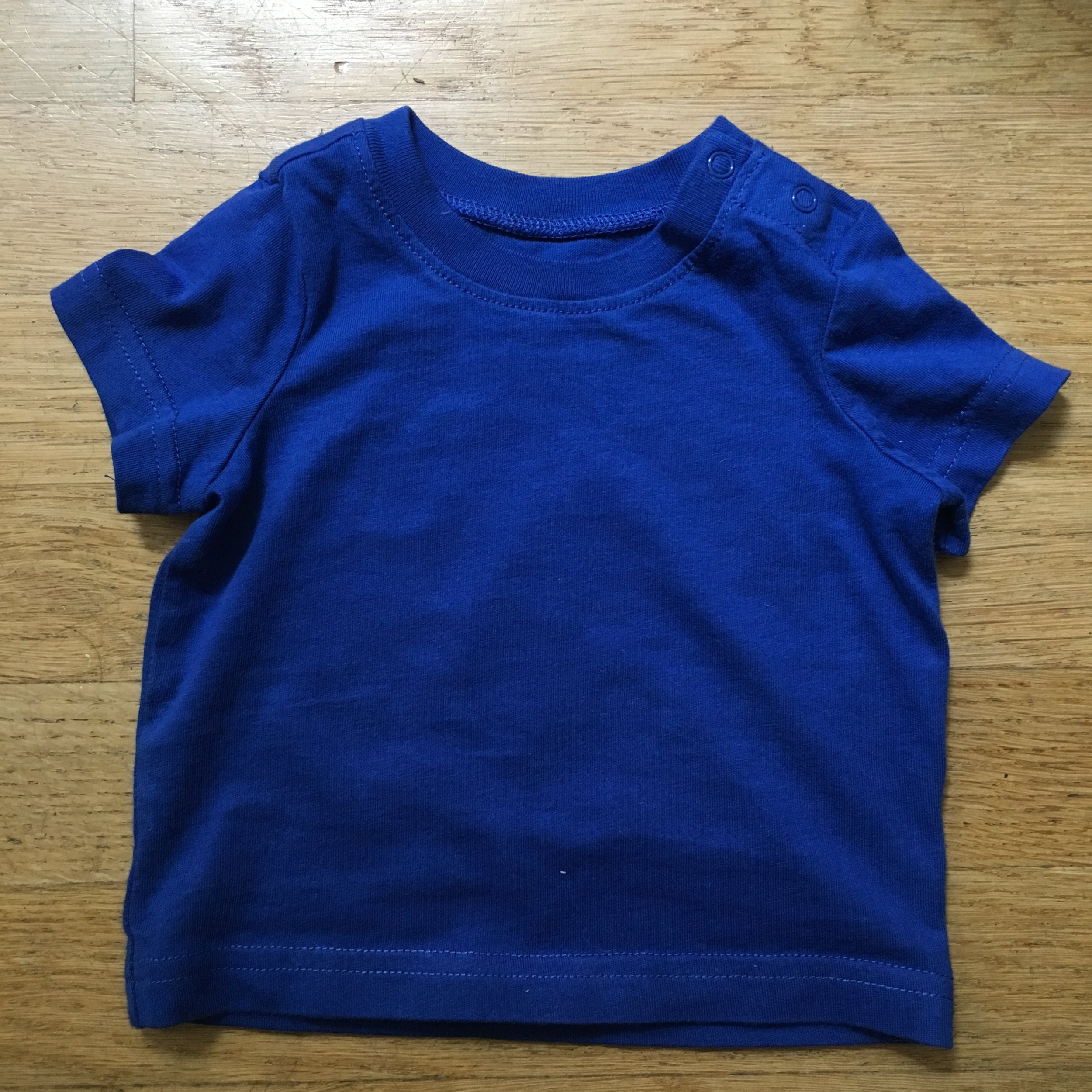
  • T Shirts or body shirts, size 0-3 or 3-6 months. I used a The Baby Tee from Primary.com. They are lovely quality solid color T shirts, with 2 shoulder snaps for easy on-off, and their clothes never have logos on them.

Instructions:

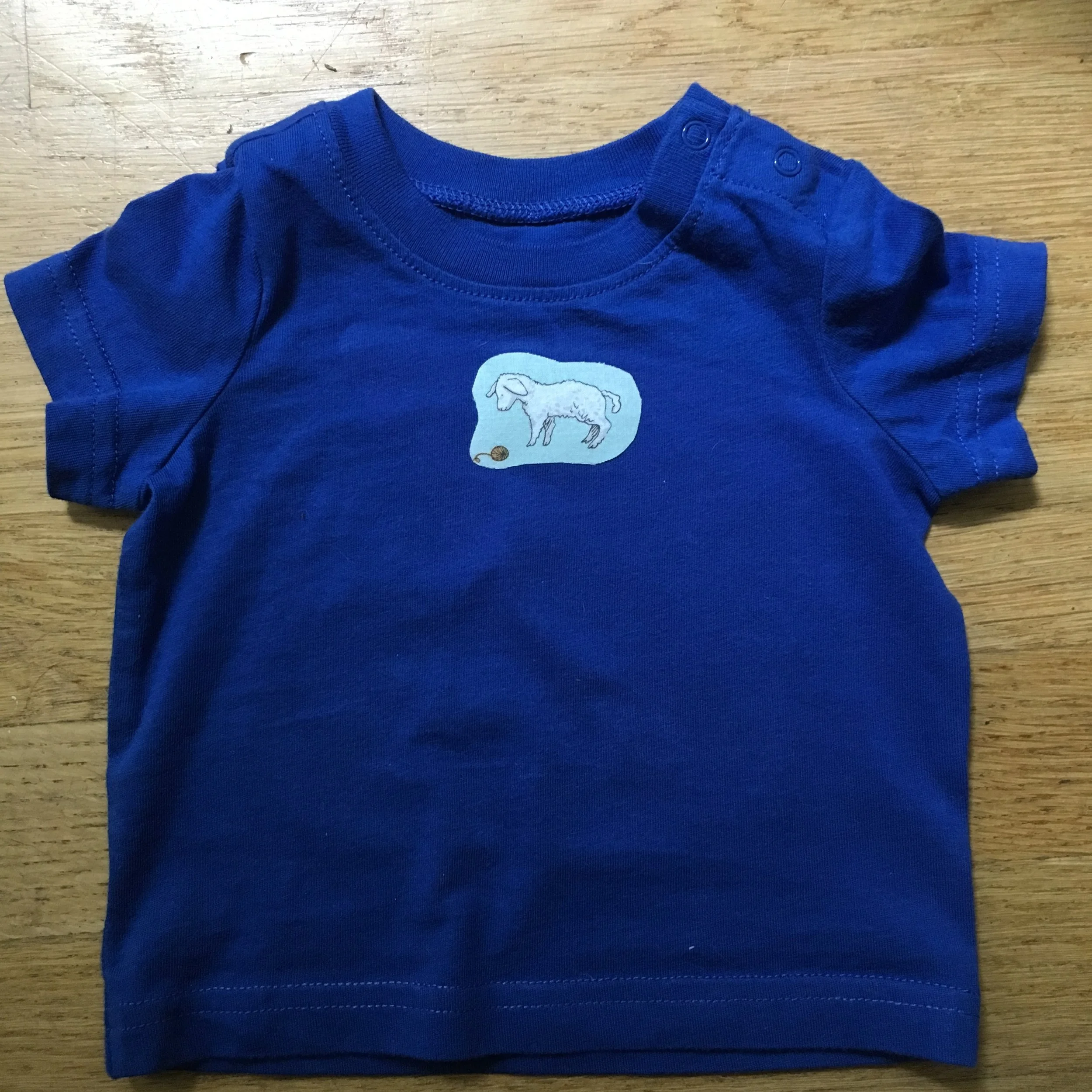
  • Cut out the motif you wish to applique onto the shirt. Cut the piece of fabric with the motif larger than the finished size you plan to use. The motif will get trimmed to size later.

  • Cut a piece of the fusible adhesive to match the size of the fabric. Don’t cut it larger or you may accidentally fuse the adhesive product to your ironing board cover. Not a good outcome!

  • Following the instructions on the fusible adhesive product, fuse the the adhesive product to the WRONG side of the motif.

  • Now trim the motif to the finished size and shape your want.

  • Fold the T-shirt in half and gently press the fold with your finger. That fold line will be your guide to placing the motif in the front center of the shirt.

  • Remove the paper on the fusible adhesive product. Follow the directions and fuse it to the T Shirt.

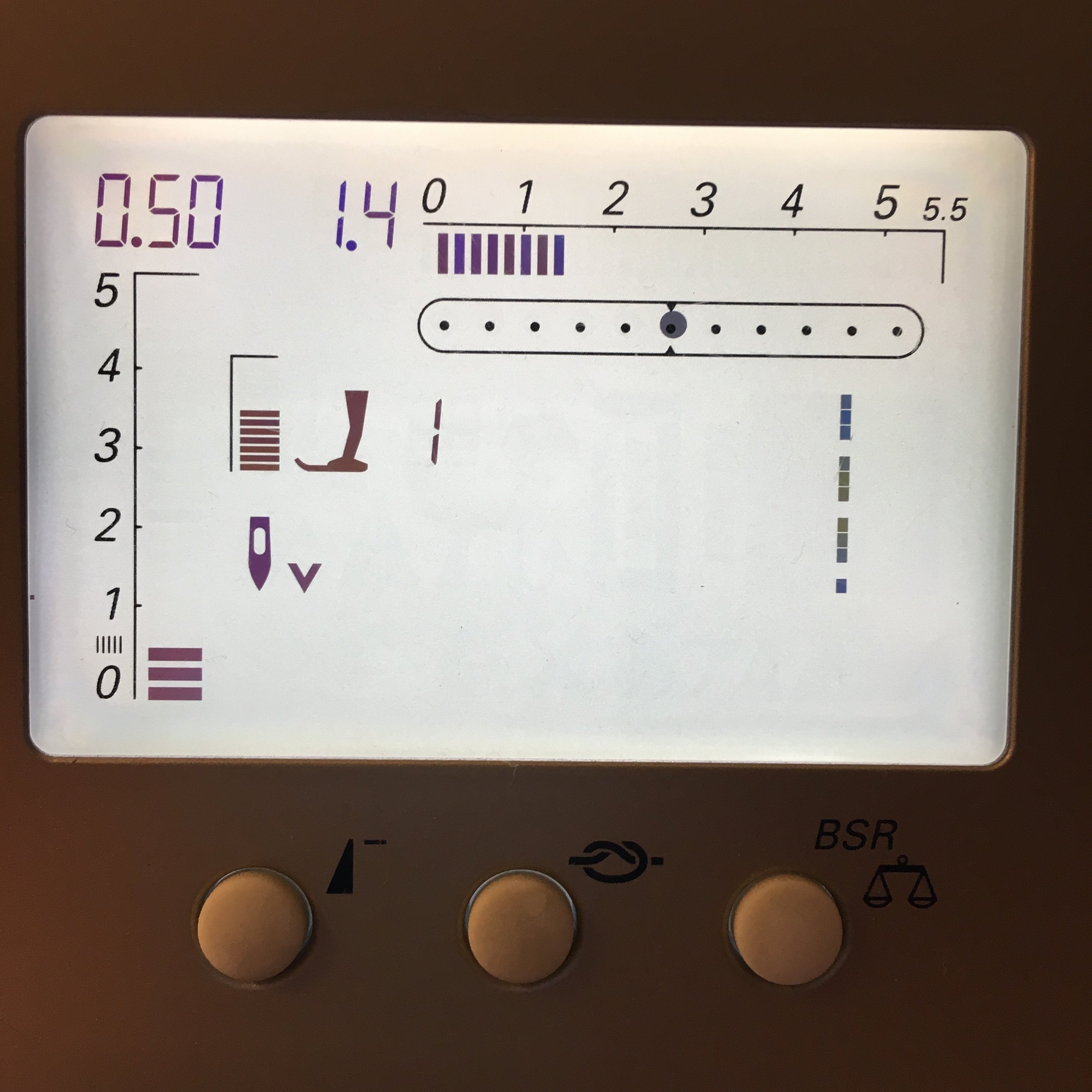
  • Run a tight, narrow zig-zag stitch along the edge of the fabric fused to the T shirt. ( I set stitch length on my machine set at 0.5, stitch width at 1.4. You machine may have other recommendations for sewing appliques. Check your machine’s booklet or look online).

  • You’re done! Isn’t this a fun, easy, homemade baby gift?

IMG_9706.JPG
IMG_9707.JPG
IMG_9753.JPG
IMG_9754.JPG

Notice: This blog is not monetized: I do not use affiliate links. When there are links in a post, they are to give credit to another creative person, because I like or have used a product, or to help the reader easily find supplies for a project.


TAGS: Applique baby T Shirt, Easy Applique Baby Present, Easy Baby GIft: T shirt Applique


May 27, 2019

Poppy Quilt, Thoughts on Memorial Day 2019

by Judy Tucker


Poppy Quilt, 39.5 x 47 inches

Poppy Quilt, 39.5 x 47 inches

Poppy Quilt, 39.5 x 47 inches

Poppy Quilt, 39.5 x 47 inches

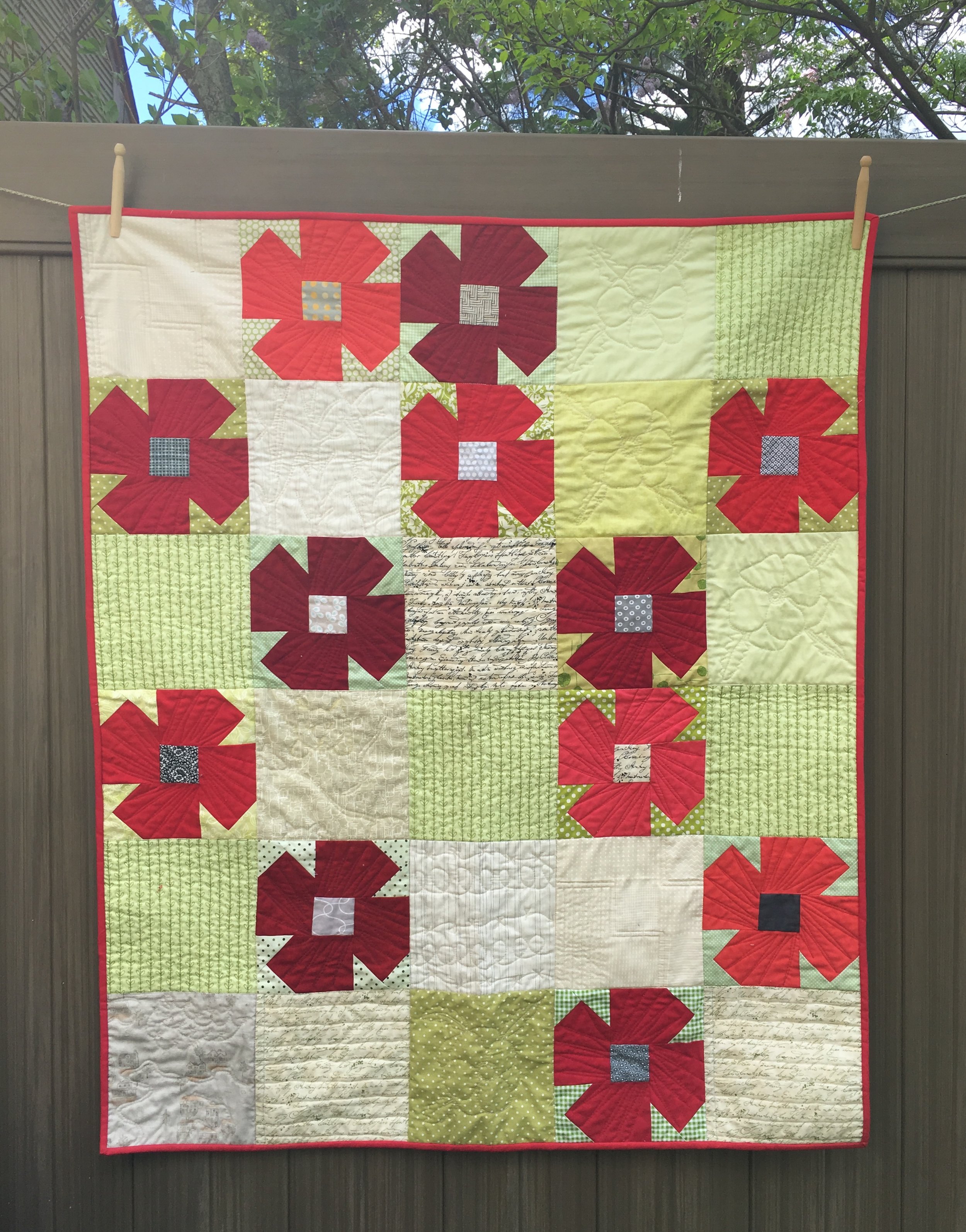
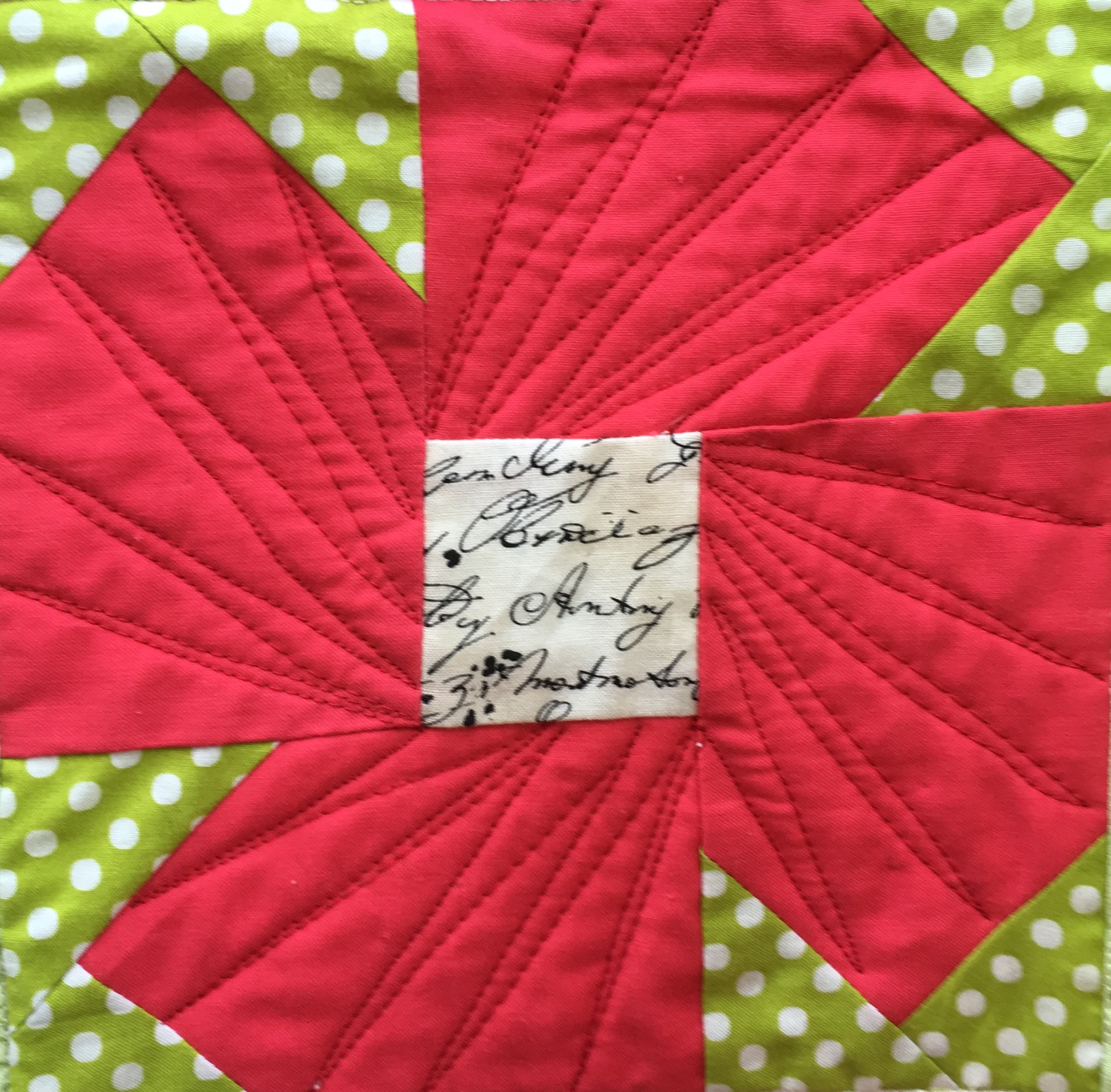
Proper Bostonian Quilters Guild is running a Mystery Sampler Quilt comprised of flower blocks this year. The member running this project said she looked at lots of flower blocks on the internet and then designed the flower blocks for this sampler. She says the flowers are a composite of the designs she has found. She stated that this poppy block can’t be attributed to any specific designer nor can she claim it her own original block.

The first flower block distributed to the guild was this poppy, It was the fall of 2018, just before the 100th anniversary of the Armistice that ended World War I on November 11, 1918. This poppy block resonated with me on many levels. I decided to make a quilt with just poppies, honoring soldiers, veterans and their families.

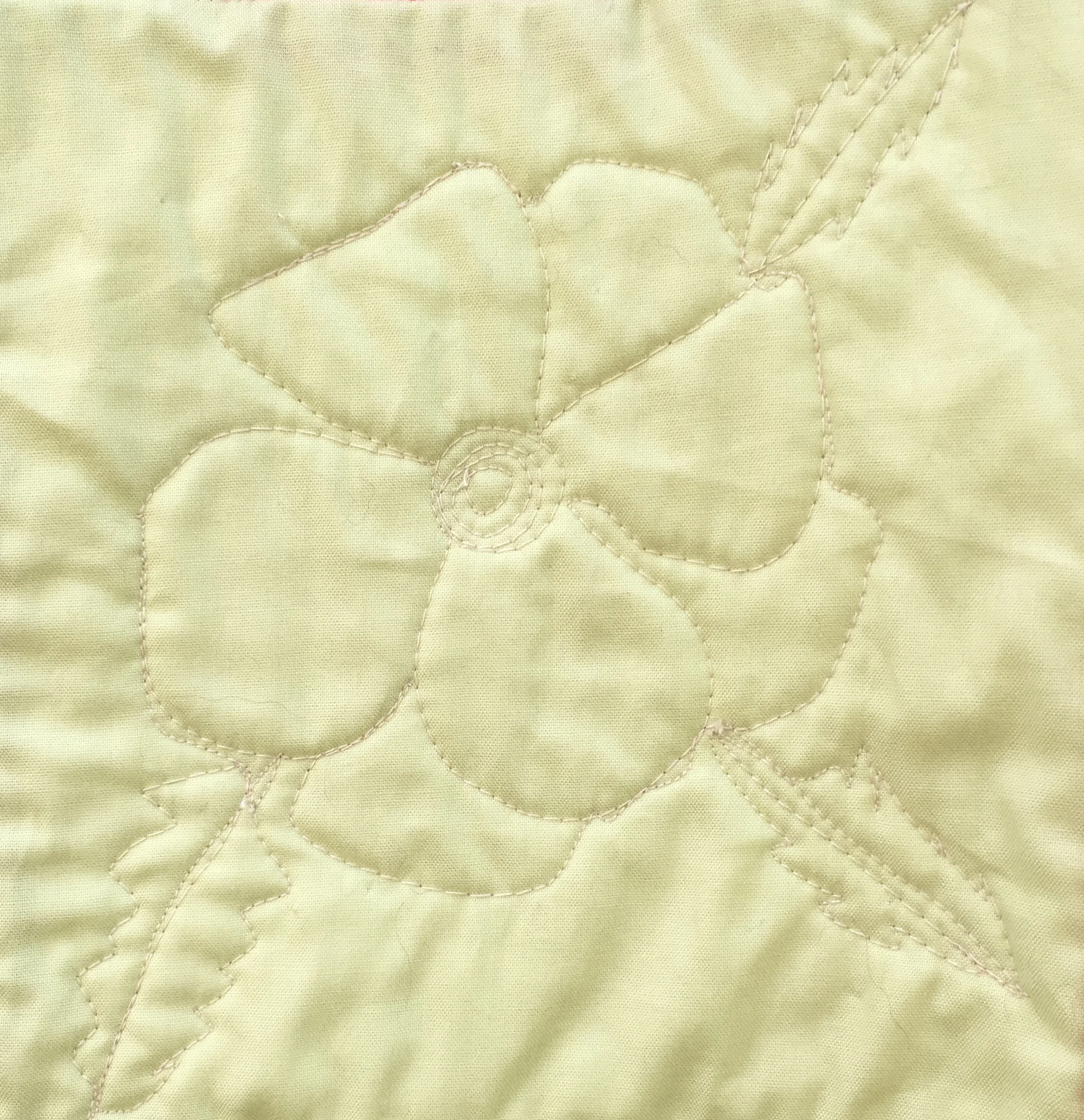
There are red poppies in this quilt, like those in Flanders Field, that mark the loss of a solider. They are also quilted “shadow poppies” for soldiers who died and were never found, and for sailors lost at sea whose graves are usually never seen.

In the fabrics used and in the quilting here are some things you can find.

  • There are trenches

  • There is barbed wire

  • There are bars of straight line quilting which can be the timbers holding up the trench walls or the walls of prisoner of war camps

  • There are trench rats and cats to catch them Yes, cats really were used in the trenches to kill vermin

  • There are fabrics with handwritten words, honoring the letters sent home to family and writing done in the trenches by soldiers and officers

  • There are bare trees, deforestation from the fighting and from chemical warfare

  • There are houses at home, some waiting hopefully, some turned upside down by loss. The stars that shine over these homes also shine on the soldiers on the battlefield

fullsizeoutput_13b0.jpeg
fullsizeoutput_13b1.jpeg
fullsizeoutput_13af.jpeg
fullsizeoutput_13ad.jpeg
fullsizeoutput_13ae.jpeg
fullsizeoutput_13b3.jpeg
fullsizeoutput_13b2.jpeg

Poppies are associated with World War I and with those who died in combat because of the poem, “In Flander’s Field” , which was written a dressing station in Belgium, by Canadian Army doctor Major John McCrae in May, 1915.

But poppies are associated with other wars in other places. They grow in Afghanistan, where the longest war in American history is still being fought, and on other battlefields too.

Poppy flowers are the source of morphine that dulls the pain of injuries sustained in combat. Heroin, morphine derivative, has been used by troops too, with long-lasting consequences for them, for their loved ones, and for our country.

Poppies are as much part of the fabric of a battlefield as they are of the fabric of this quilt. I wish I had a happy way to conclude this post. I don’t.

Memorial Day is about remembering, and this remembering is hard.


TAGS: Poppy Quilt, Memorial Day Quilt


May 23, 2019

Block Printed Scarf in Three Colors

by Judy Tucker


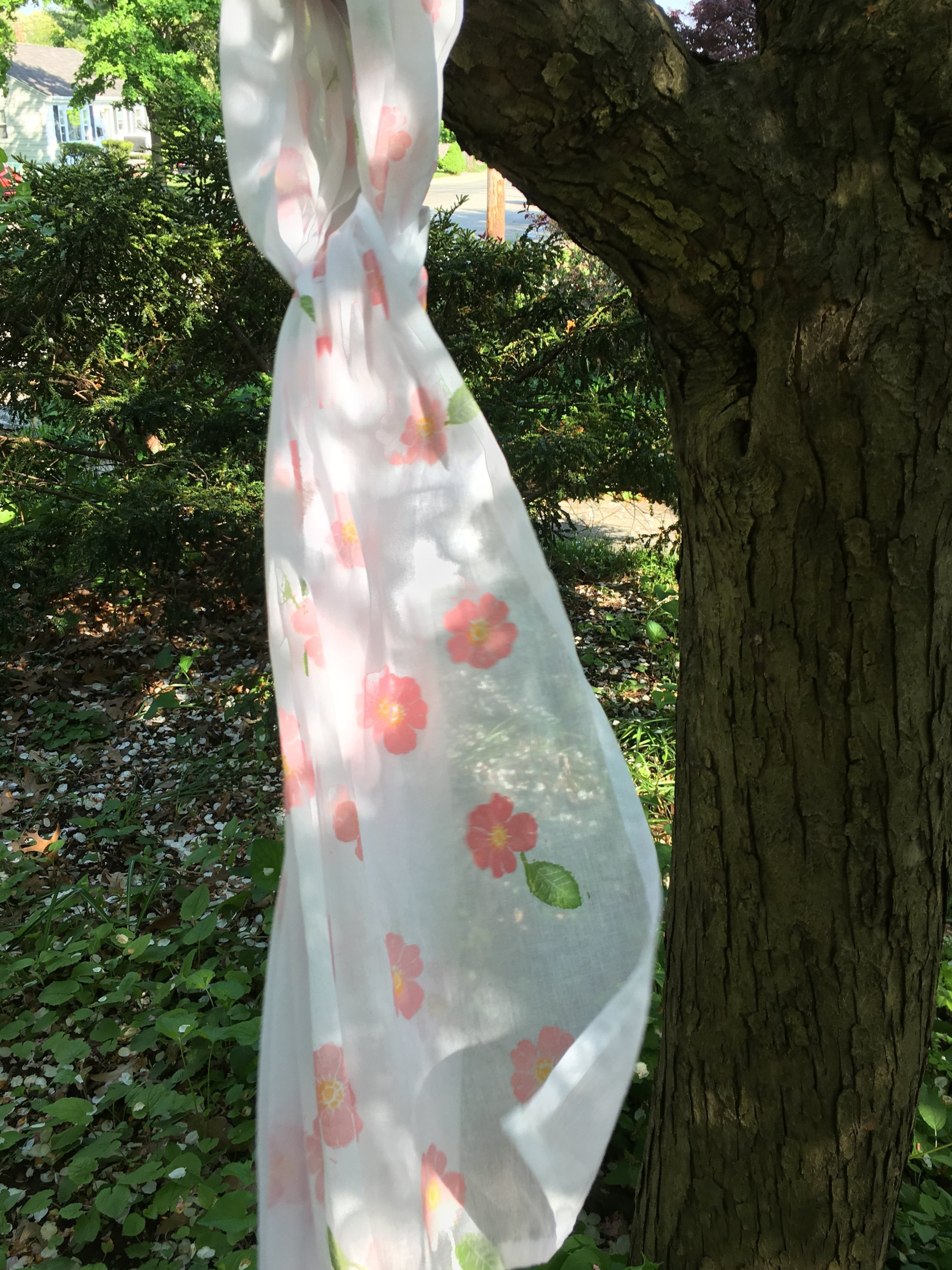
“Wild Roses” Voile Rectangular Scarf  72 x 21 inches

“Wild Roses” Voile Rectangular Scarf 72 x 21 inches

“Wild Roses” Voile Rectangular Scarf  72 x 21 inches

“Wild Roses” Voile Rectangular Scarf 72 x 21 inches

My previous two posts were about making a one color block print on fabric and then using that fabric to sew a bag and a zip pouch.

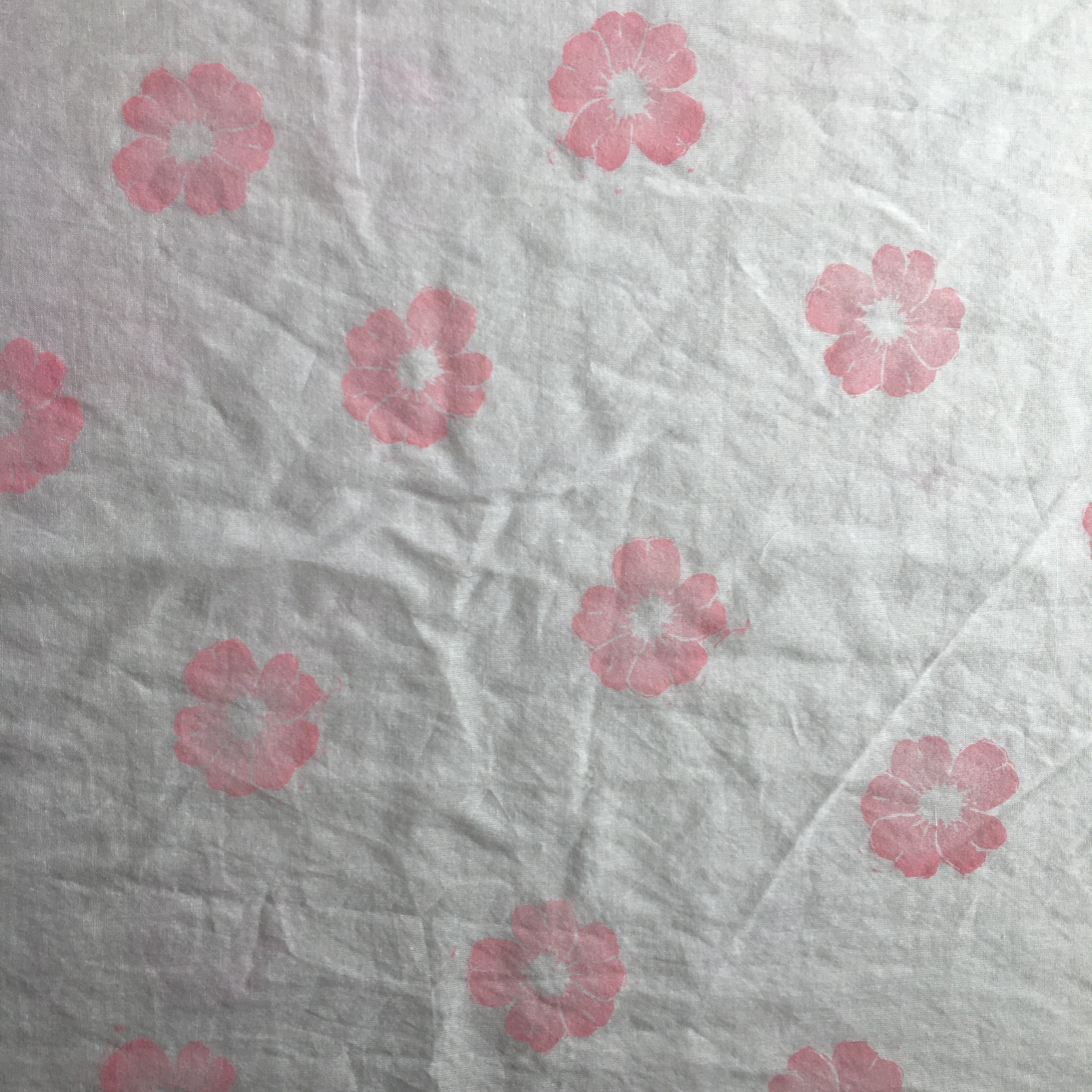
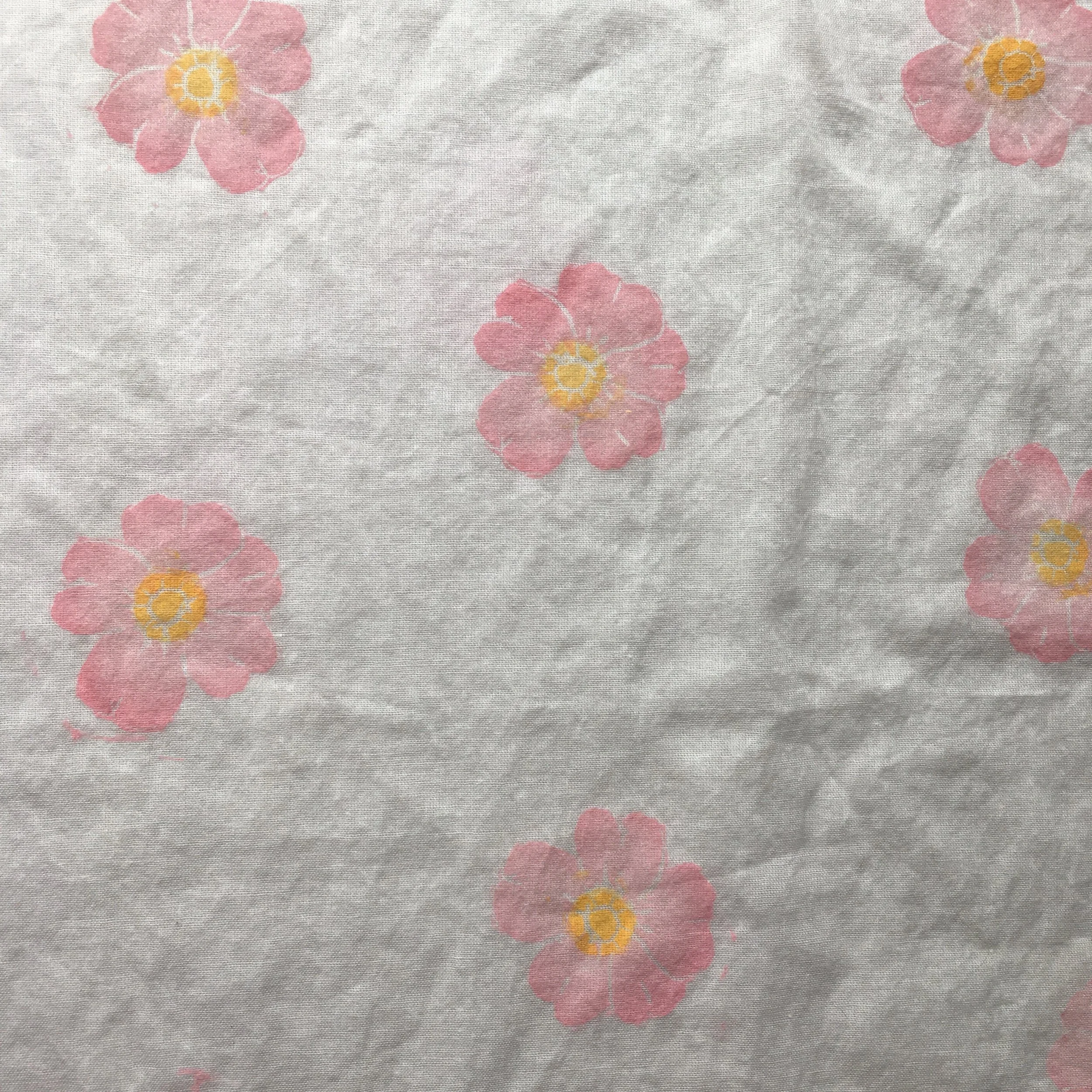
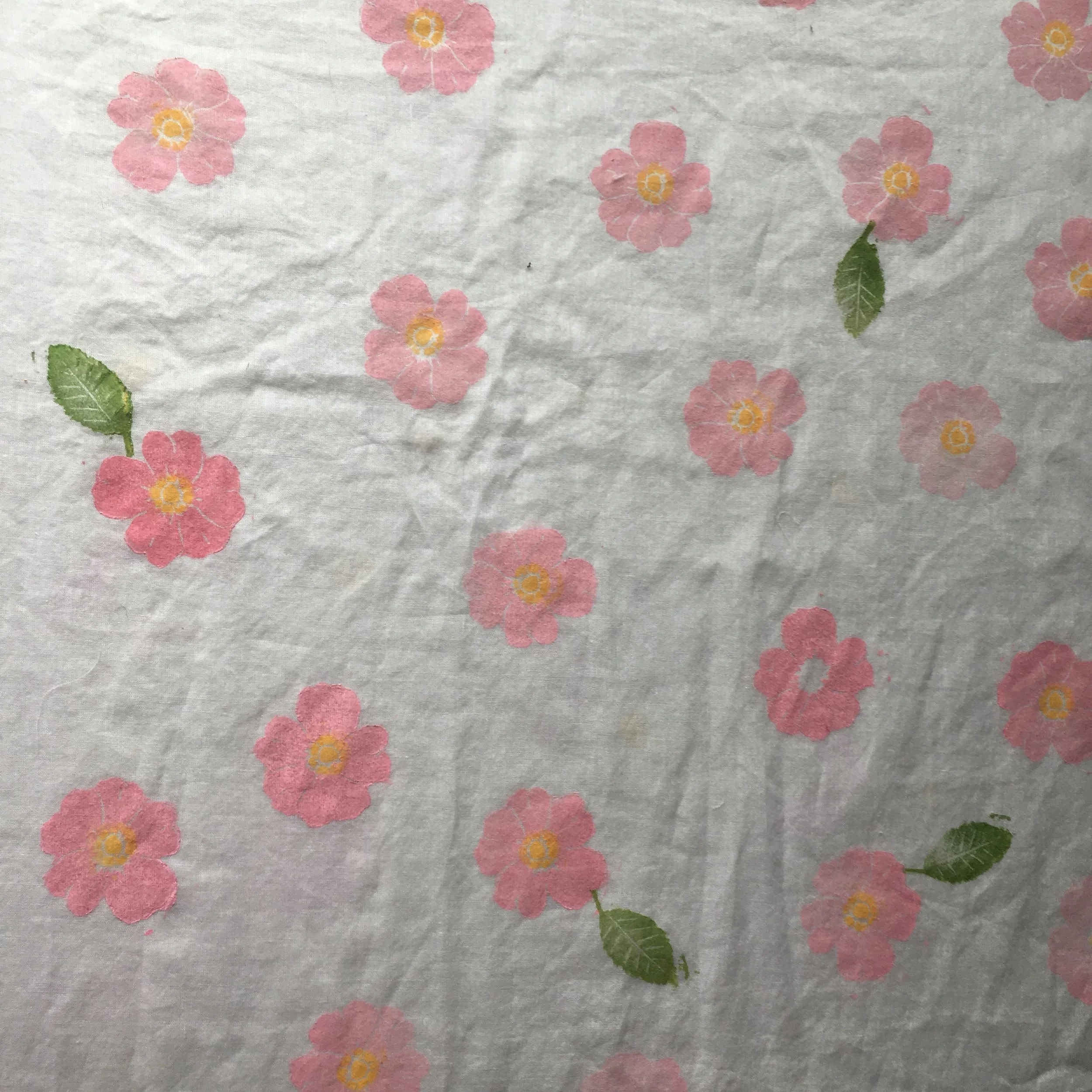
For my second block printing project, I upped the ante and printed a three color design, “Wild Roses.” Each color in the design has its own block and is printed separately. I started with the petals of the roses, then added the stamen, and finally added some leaves to some of the roses.

IMG_9561.JPG
IMG_9566.JPG
IMG_9569.JPG

I printed this design on voile, a very thin fabric. The ink dried very quickly on the voile, so I was able to move from one color to the next as soon as I was done printing a color. Usually the fabric will need more time to dry between different color prints.

I made the rectangular scarf from the book, Print Pattern Sew by Jen Hewett. I shorted the length of the scarf because it felt more comfortable shorter.

This scarf is a gift. I might have to make another one to keep!

TAGS: Block Printing Fabric, block printed fabric, "Print Pattern Sew" by Jen Hewett, Three color block printing on fabric, three color block printing., Block printed voile scarf


May 16, 2019

Block Printed Cross-Body Bag from "Print Pattern Sew" by Jen Hewett

by Judy Tucker


fullsizeoutput_133a.jpeg

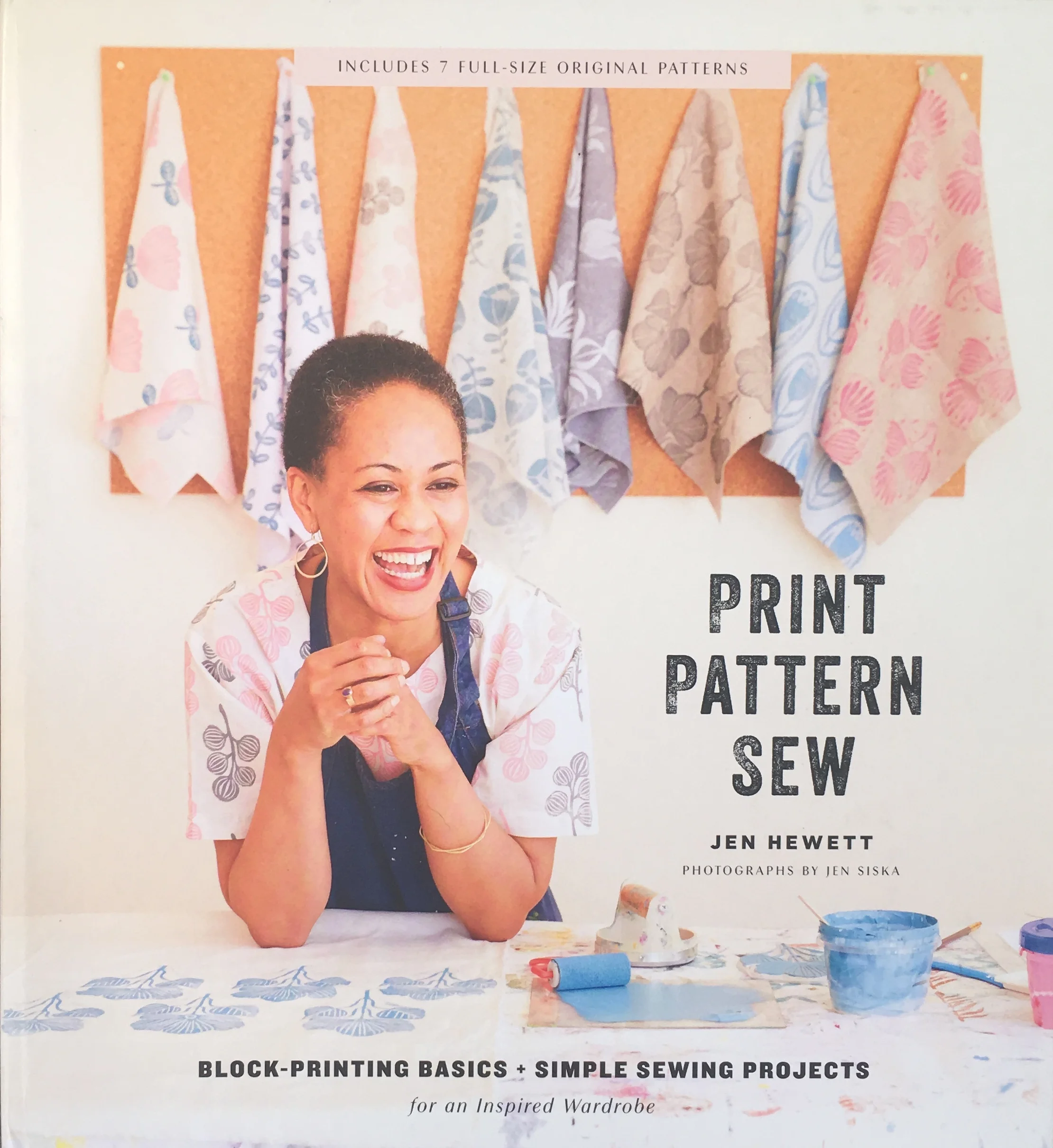
In my last post I mentioned that I had recently purchased a copy of Print Pattern Sew by Jen Hewett. This is a beautifully illustrated spiral bound book that delivers exactly what its title says. There are excellent instructions on how to cut and print blocks. She includes designs for blocks which you can trace and use if you choose. There is a whole chapter on creating and printing repeat patterns—a skill critical for surface design for textiles. And finally there are full size paper patterns so you can sew a variety of simple but classic outfits, as well as some other items, from fabric that you’ve printed.

(NOTE: To save paper, the printed patterns sometimes overlap. You will need to trace the pattern onto Swedish Tracing Paper-Sewing Transfer Paper or Pellon 380 Easy Pattern and use traced pattern for cutting your fabric. If you sew clothes, it’s great to have one of these products on hand. I used the Swedish Tracing Paper all the time. It allows me to trace and use multiple sizes printed on commercial tissue paper patterns. The tracing paper is sturdy and can be reused multiple times).

Book cover

Book cover

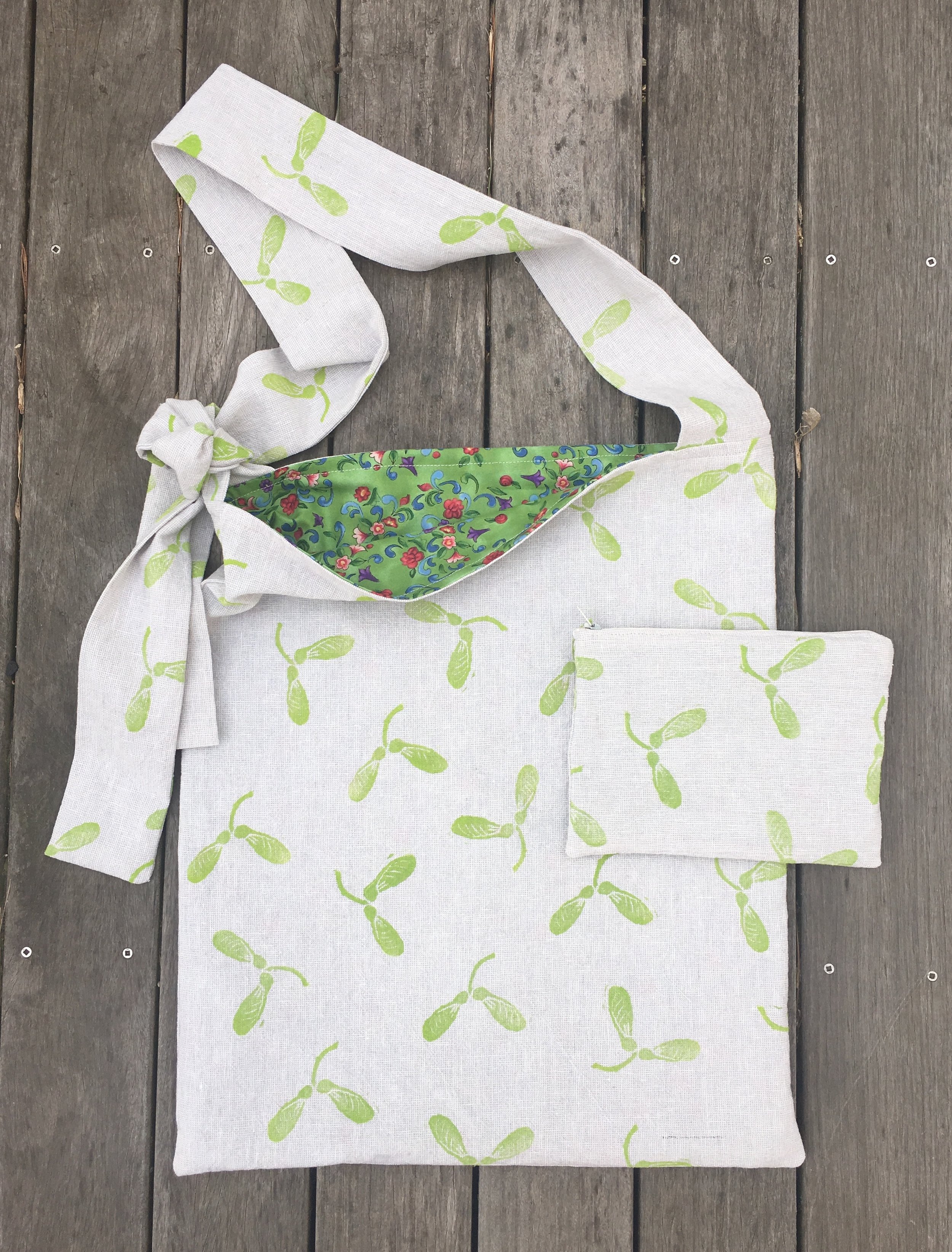
I used the yard of Kaufman Essex Linen I printed with maple seeds in my last post to make the Cross-Body Bag from the pattern in the book. It calls for 1 1/2 yards but I only printed 1 yard. I decreased the size of the pieces for the bag to 15 x 17 1/2 inches and cut the straps 6 inches wide instead of 8 inches. I accidentally cut 2 short straps pieces so I used the extra strap piece to make a matching zipper bag. I still have with a good sized remnant (18 x 18 plus inches) which I can use to make something else.

I’m so pleased with the way that this block-printed cross-body bag turned out. The finished size is 13 3/4 x 15 inches. A tablet and whatever else you need will easily fit in this bag.

If you are interested in learning to block print your own fabrics, I highly recommend Jen’s book!

Notice: This blog is not monetized: I do not use affiliate links. When there are links in a post, they are to give credit to another creative person, because I like or have used a product, or to help the reader easily find supplies for a project.


TAGS: Block printed cross-body bag, "Print Pattern Sew" by Jen Hewett, block printed fabric, learning to block print fabric, Book Review


May 9, 2019

Block Printing for Surface Design

by Judy Tucker


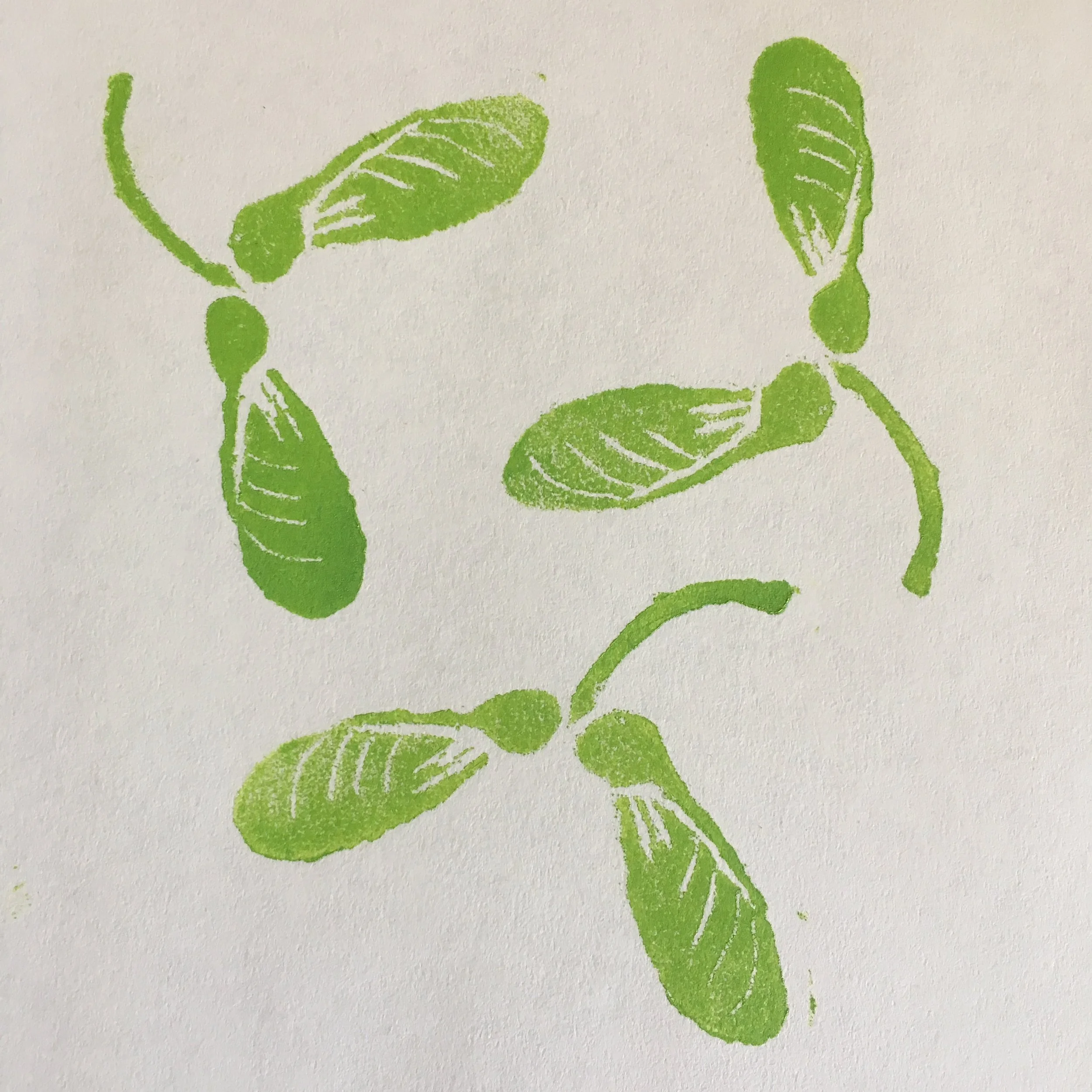
Block print on paper,  “Maple Helicopters”

Block print on paper, “Maple Helicopters”

Block print on paper,  “Maple Helicopters”

Block print on paper, “Maple Helicopters”

It has been years since I last did any printing of any sort, other than using rubber stamps. I recently picked up a book Print Pattern Sew by Jen Hewett and decided to give block printing a try again. Now that there are a variety of blocks made of softer material, it’s a lot easier, and faster, to carve a block. I used Tosnail Rubber Stamp Carving Blocks because they were relatively inexpensive and I didn’t want to spend a lot on a project that I wasn’t certain was going to turn out.

I decided to pick a design that could be printed in a random pattern so didn’t need to any registration marks. Maple seeds (also known as maple helicopters) fascinate me that’s what I decided to used as my motif.

I had an old set of Japanese wood carving tools which I used to start carving this block. But they weren’t very sharp any more and none of the blades in the set was fine enough to cut fine lines. So I purchased a Speedball Linoleum Cutter which had the perfect blades for my design.

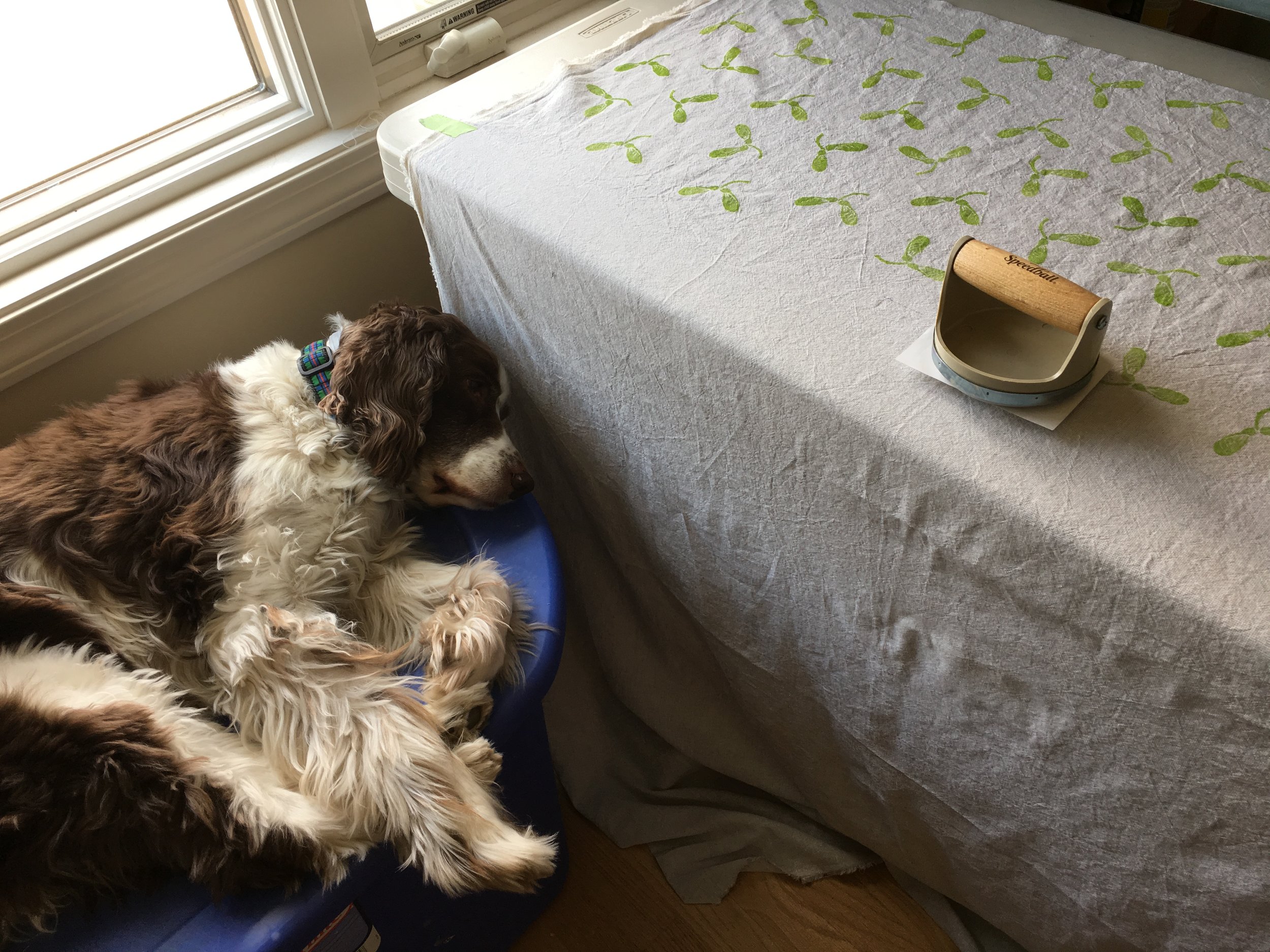
Because I planned to print on fabric, I also purchased Speedball Fabric Block Printing Ink. I found it prints beautifully on both fabric and paper.

It turns out that I think block printing on fabric is lots of fun!

The Block Printers Helper!

The Block Printers Helper!

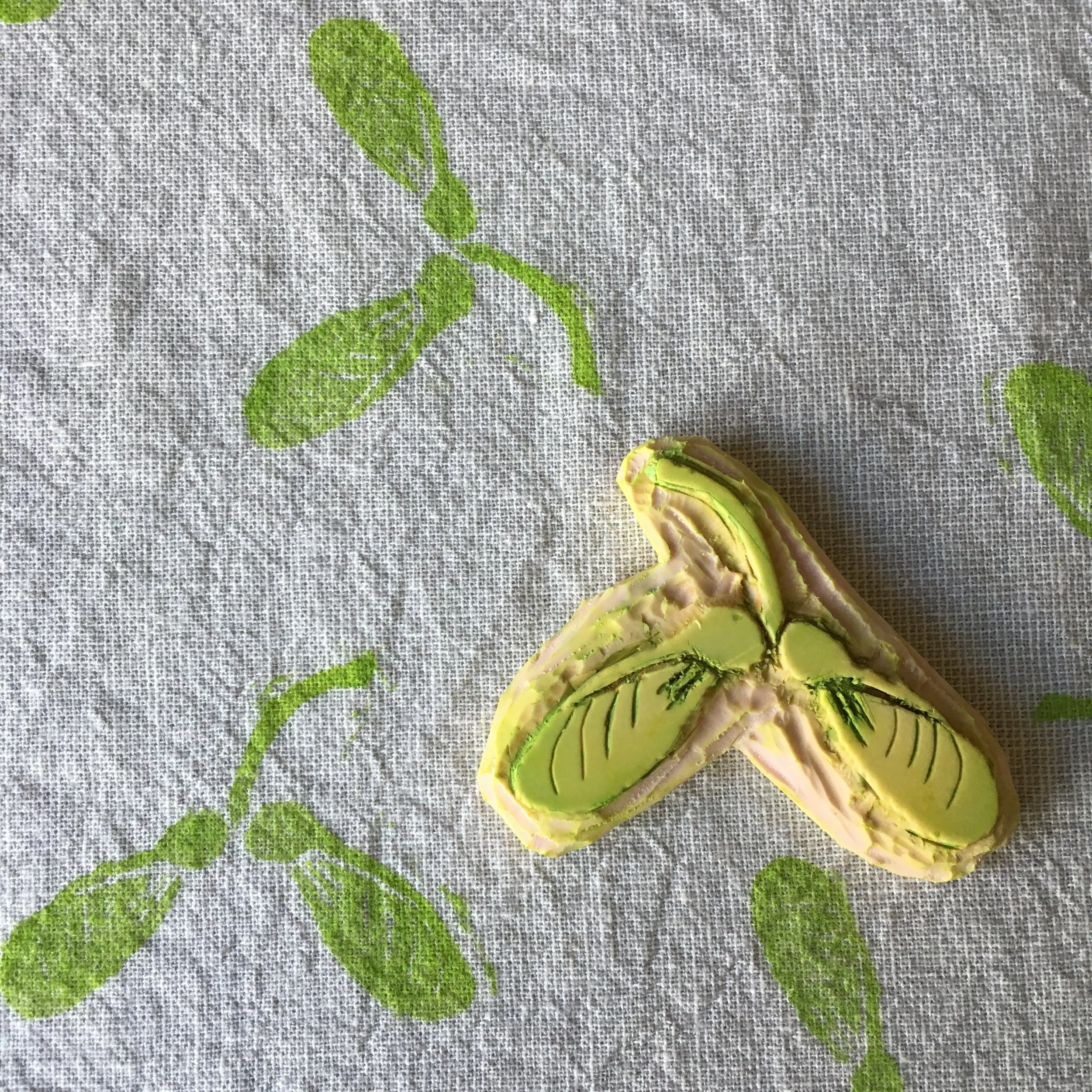
Here’s a close up of the printed fabric (Kaufman Essex Linen ) and my carved block, cleaned up after printing.

IMG_9448.JPG

In my next post, I’ll review the book I mentioned above and show a bag made using a pattern from the book.

TAGS: Block Printing for Surface Design, Block Printing Fabric, Block Printing, "Print Pattern Sew" by Jen Hewett


May 2, 2019

Gnome Hat Pattern for Peg Dolls

by Judy Tucker in Free Pattern


Winter Gnome Peg Dolls

Winter Gnome Peg Dolls

Winter Gnome Peg Dolls

Winter Gnome Peg Dolls

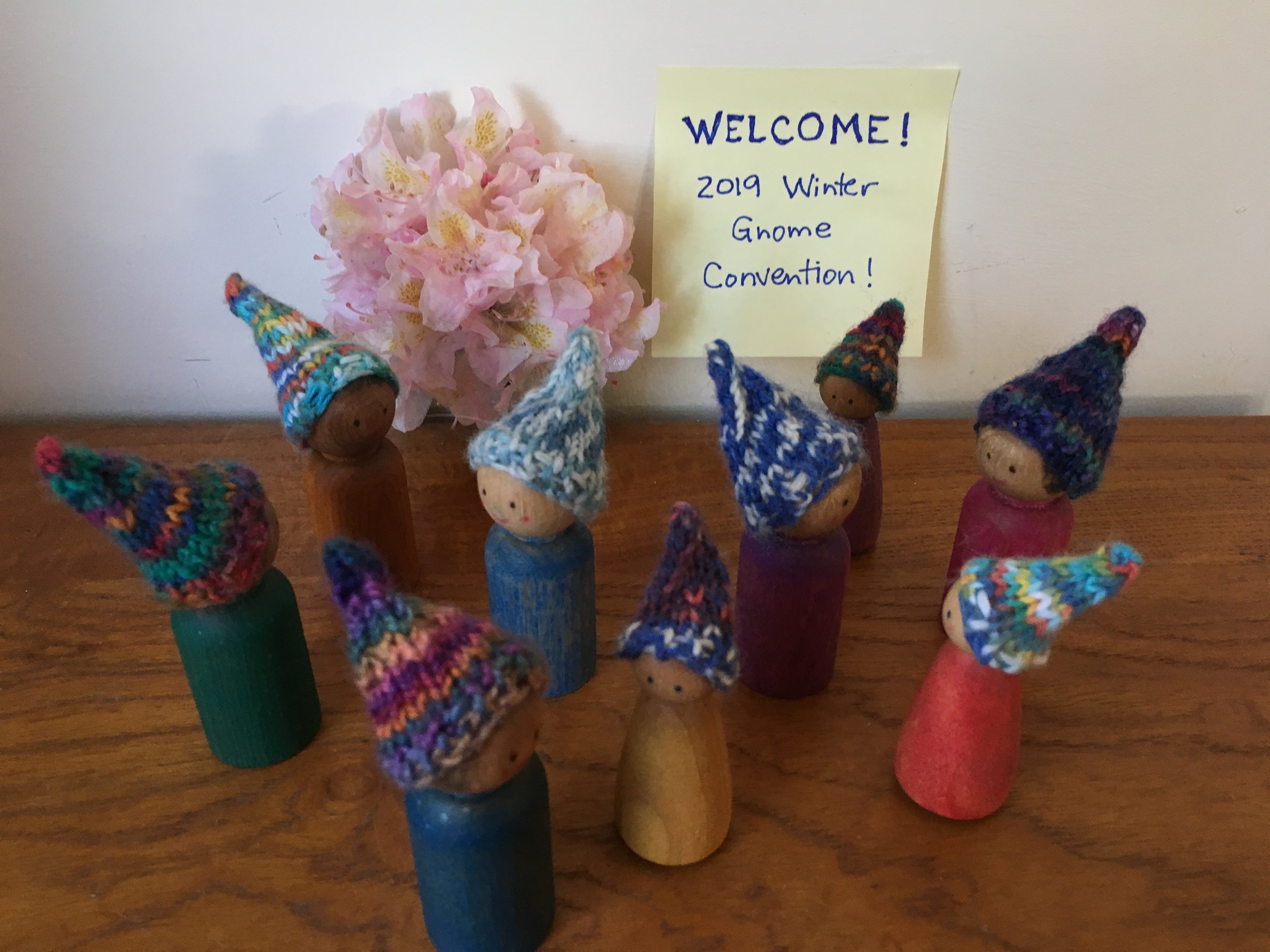
May is a quiet season for the Winter Gnomes, so this is the time they get together for their annual convention! They are having a great time relaxing and catching up all with all their friends!

They wanted me to share a pattern for a knit hat for the standard size peg doll, 2 3/8 inches (6cm). It doesn’t take very long to knit up one of these little gnome hats.

Supplies: #1 US double pointed knitting needles, fingerling sock yarn, darning needle

Gnome Hat (short cone shape)

  • Cast on 18 stitches, divide among 4 needles to work in a round.

  • Row 1 and 2—Knit 1 Perl 1 (K1P1) around the 4 needles x 2 rows

  • Rows 3—8 Knit around

  • Row 9—Knit to the last 2 stitches on the first needle, knit the last 2 stitches on the needle together (K2T), repeat on each of the 4 needles. There will be 14 stitches at the end of this round.

  • Row 10—Knit around.

  • Repeat instructions for Row 9 and Row 10 until only 2 stitches remain. Cut the yarn about 5 inches away from the last 2 stitches.

  • Using the darning needle, thread the yarn tail and weave it through the last 2 stitches and pull tight to close. Tuck the tail into the inside of hat and weave the tail into the knit.

  • Weave in the tail from the start of the hat into the stitches on the inside of the hat.

Because they are so little, and hence easy to loose, I glue the hats on the peg dolls with a craft tacky glue.

If you want to make the same hat for an angel peg/girl peg doll:

  • Cast on 12 stitches and divide among just 3 needles.

  • Follow the same directions for the standard hat.

Winter Peg Dolls standing next to one of the arches from Grimm’s Sunset Rainbow puzzle set.  (Link is to the German manufacturer but many shops that sell Waldorf toys also sell Grimm toys so you probably can find a shop in your country).

Winter Peg Dolls standing next to one of the arches from Grimm’s Sunset Rainbow puzzle set. (Link is to the German manufacturer but many shops that sell Waldorf toys also sell Grimm toys so you probably can find a shop in your country).

NOTE: I created the pattern for this tiny gnome hat. Feel free to use this peg doll gnome hat pattern to make hat for your own peg dolls . You may also make hats to sell individually or on peg gnome dolls that you make from your own small online shop (ie. Etsy.com or your own website) or at craft fairs. You may also share this pattern with other knitters. Please do not copy and sell this pattern as your own or sell these hats commercially. Thanks!

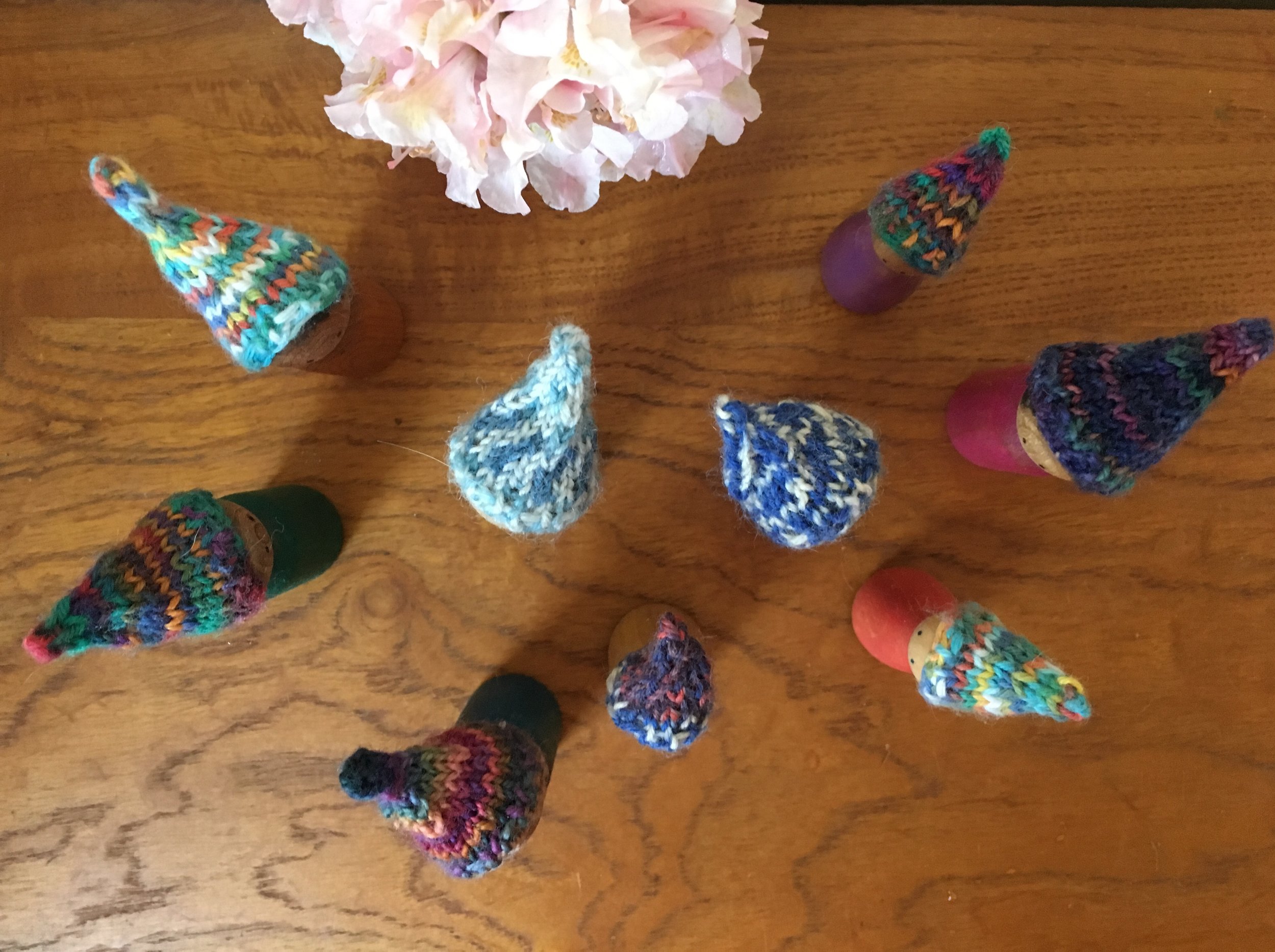
Drone view of the 2019 Winter Gnome Convention!

Drone view of the 2019 Winter Gnome Convention!

Notice: This blog is not monetized: I do not use affiliate links. When there are links in a post, they are to give credit to another creative person, because I like or have used a product, or to help the reader easily find supplies for a project.
TAGS: Knit Gnome Hat, Waldorf type gnome, Pattern for knit gnome hat for a peg doll, peg doll knit gnome hat pattern, Peg doll knit hat, Peg Dolls


April 25, 2019

Book Review: "In Celebration of Plain Weave" by Annie MacHale

by Judy Tucker


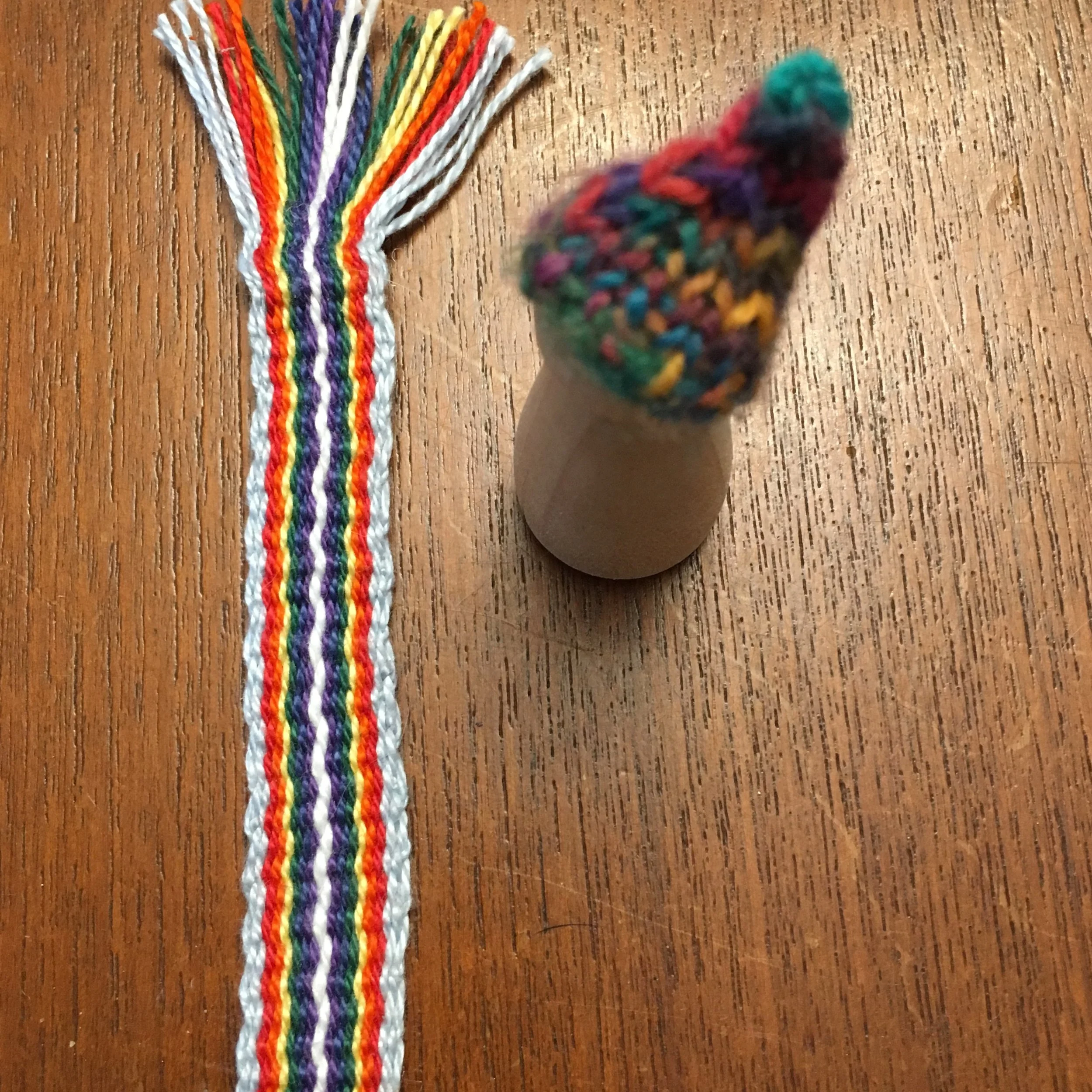
Rainbow striped book marker and peg gnome

Rainbow striped book marker and peg gnome

Rainbow striped book marker and peg gnome

Rainbow striped book marker and peg gnome

I’ve been following Annie MacHale, @aspinnerweaver, on Instagram for a while now. She weaves bands on an inkle loom and sells guitar straps, key chains and other items that use woven bands.

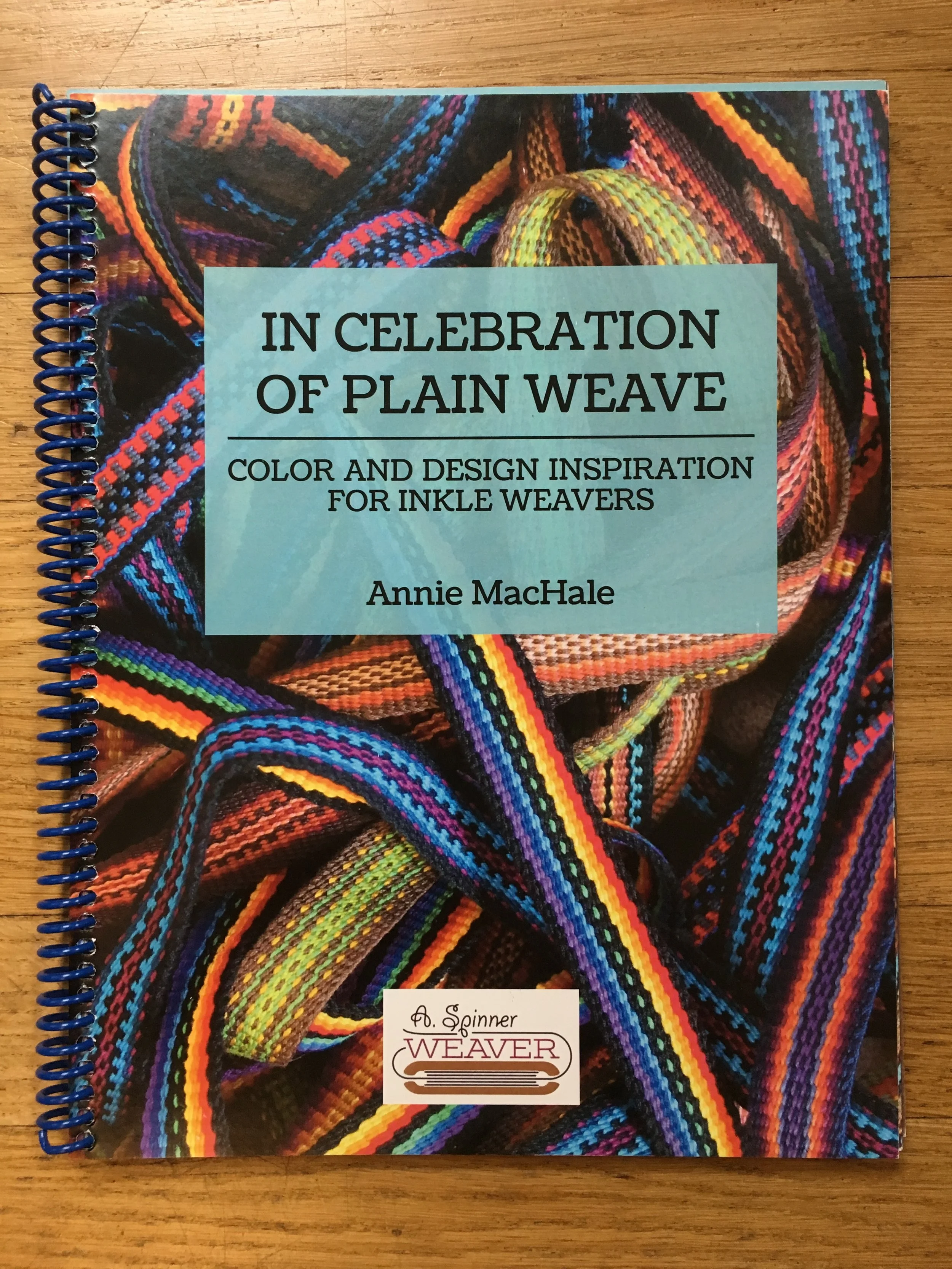
She recently published a book on plain weaving, the simplest weave done with an inkle loom. But simple doesn’t mean plain or dull. The options for pattern and color variations are endless. Her book is In Celebration of Plain Weave: Color and Design Inspiration for Inkle Weavers.

Book cover

Book cover

The first 32 pages of the book are all about color theory. She discusses how to mix colors and use of available on-line tools for picking and previewing color combinations. Her discussion of color theory is excellent—easy to understand and fun to read with the great accompanying photos.

The second part of the book defines the basic pattern elements that can be woven using plain weave. She talks about how to combine the elements to design a pattern for weaving a band.

The main part of the book has 200 plain weave designs that can be used to weave bands on an inkle loom. She has patterns using 39 to 79 warp threads, so narrow to wide bands. All of the patterns are in full color. You can weave them in her colors but of course you can totally change the colors too. The last part of the book discusses how to change the patterns.

What a great resource! When I first got my inkle loom, I was all excited and learned how to do a variety of bands using complex patterns using a variety of heddles. But when I picked up the loom again last year, I’d forgotten how to do the more complex weaving and my bands were a sorry sight! I’d already decided to go back to basics and work in plain weave for a while when I saw Annie post about her new book. It was perfect timing for me.

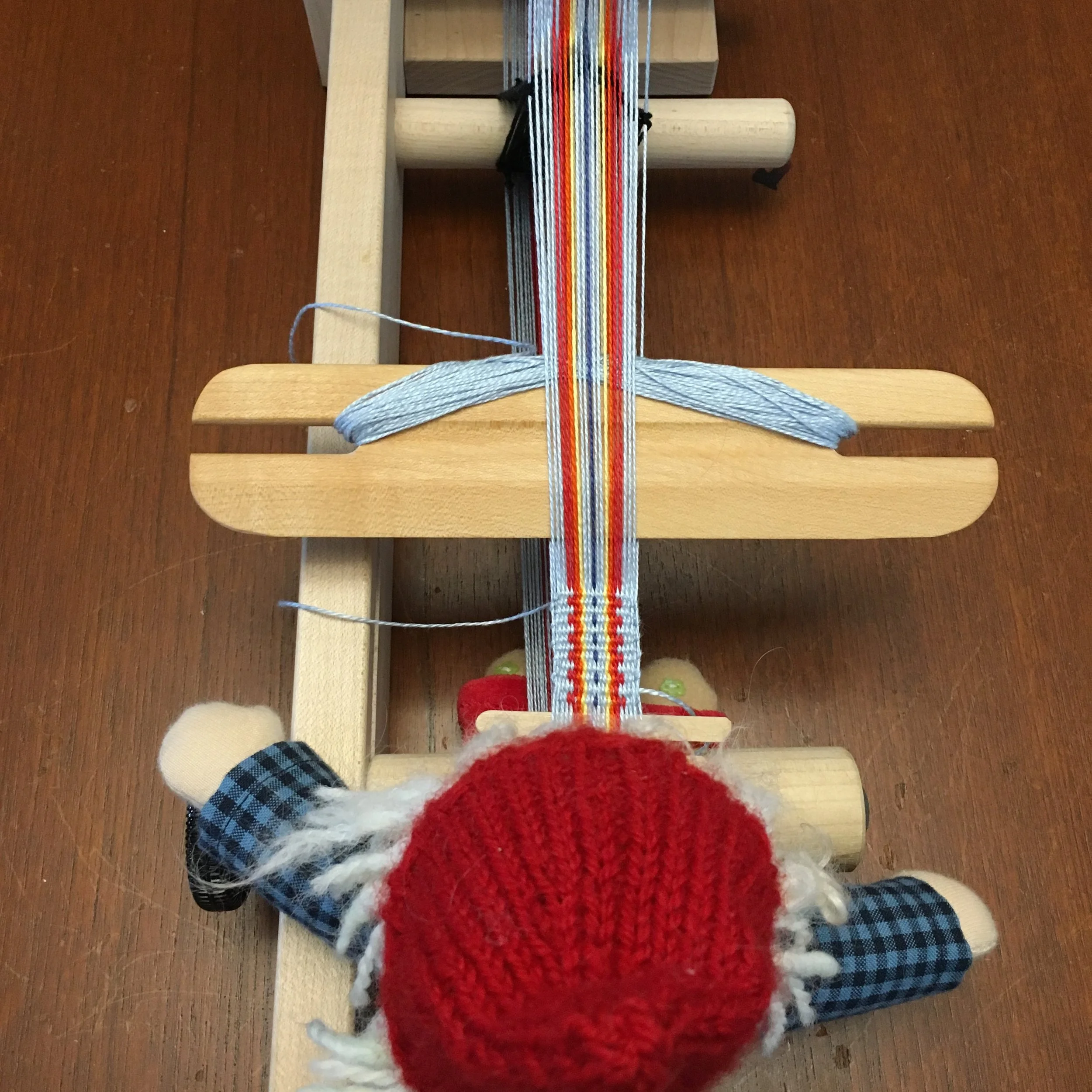
At the top is a little book mark that was the first thing I wove after purchasing the book. I misread the pattern so it isn’t exactly any of the patterns in the book. But the band on the inkle loom below, is Pattern #51 from the book, but woven with my own colorway.

Pattern #51 from “In Celebration of Plain Weave” on the inkle loom.  (Has Cloudberry been weaving at night?)

Pattern #51 from “In Celebration of Plain Weave” on the inkle loom. (Has Cloudberry been weaving at night?)

I highly recommend this book if you weave bands on an inkle loom or if you are just thinking about whether or not you want to purchase a loom or aren’t sure what you can do if you get a loom.

(About the gnomes that photo-bombed the pictures in this post. The Waldorf type doll at the loom is Cloudberry, and the peg doll above is one of the Winter Gnomes. The Winter Gnomes have been at their off-season spring convention. More to follow about that in another post)!

Notice: This blog is not monetized: I do not use affiliate links. When there are links in a post, they are to give credit to another creative person, because I like or have used a product, or to help the reader easily find supplies for a project.


TAGS: "In Celebration of Plain Weave" by Annie MacHale, Inkle loom, patterns for weaving inkle bands, Book Review, weaving on an inkle loom, Color theory


April 18, 2019

Using my 1930's Fabrics for Clothing, not Quilts!

by Judy Tucker


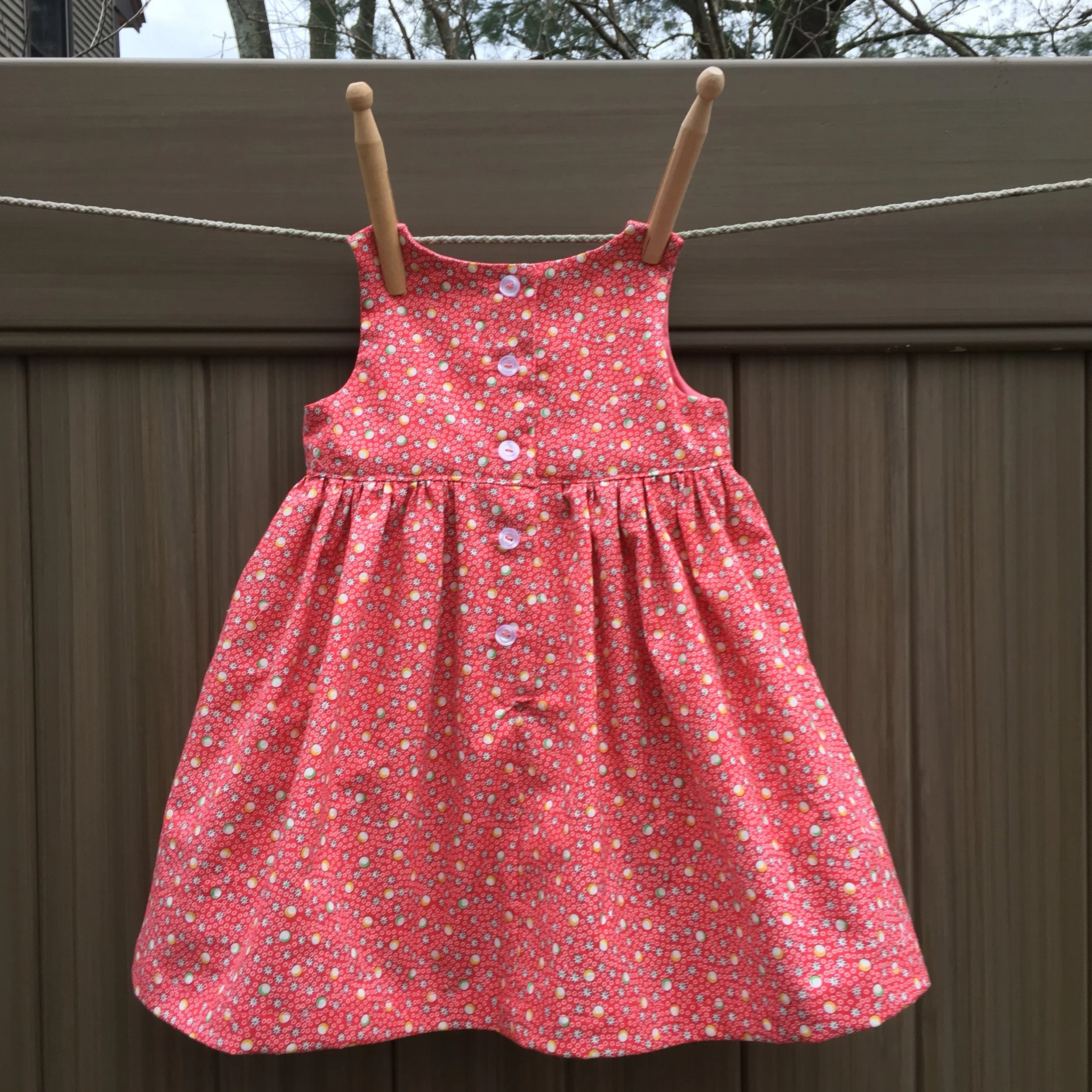
Baby Dress, Size Small (13-18 lbs), NEWLOOK 6568

Baby Dress, Size Small (13-18 lbs), NEWLOOK 6568

Baby Dress, Size Small (13-18 lbs), NEWLOOK 6568

Baby Dress, Size Small (13-18 lbs), NEWLOOK 6568

I’ve been digging around in my quilting stash for fabrics to make other projects. I just made 2 projects using my stash of reproduction 1930s fabrics. I love these reproduction fabrics, but since most of my recent quilts have had a modern edge, I just haven’t been using them.

The baby dress above, is made with one of the 1930s reproduction fabrics, with a solid cotton as the interfacing. The pattern is NEWLOOK 6568. This baby dress is a lot like the doll clothes I make. Except, it has a button closure in back, not velcro.

Gasp. Buttons mean making button holes. That’s not a skill in the quilter’s wheelhouse! I knew my second hand Bernina wasn’t up to the task. So I got out my newer Janome Memory Craft 6700P machine, watched a couple YouTube segments and now I can make button holes! Easy Peasy!

Buttons!  The button holes aren’t “perfect” but they definitely are good enough!

Buttons! The button holes aren’t “perfect” but they definitely are good enough!

There is lots of gathering in this sweet little baby dress and I love the flair they give the skirt!

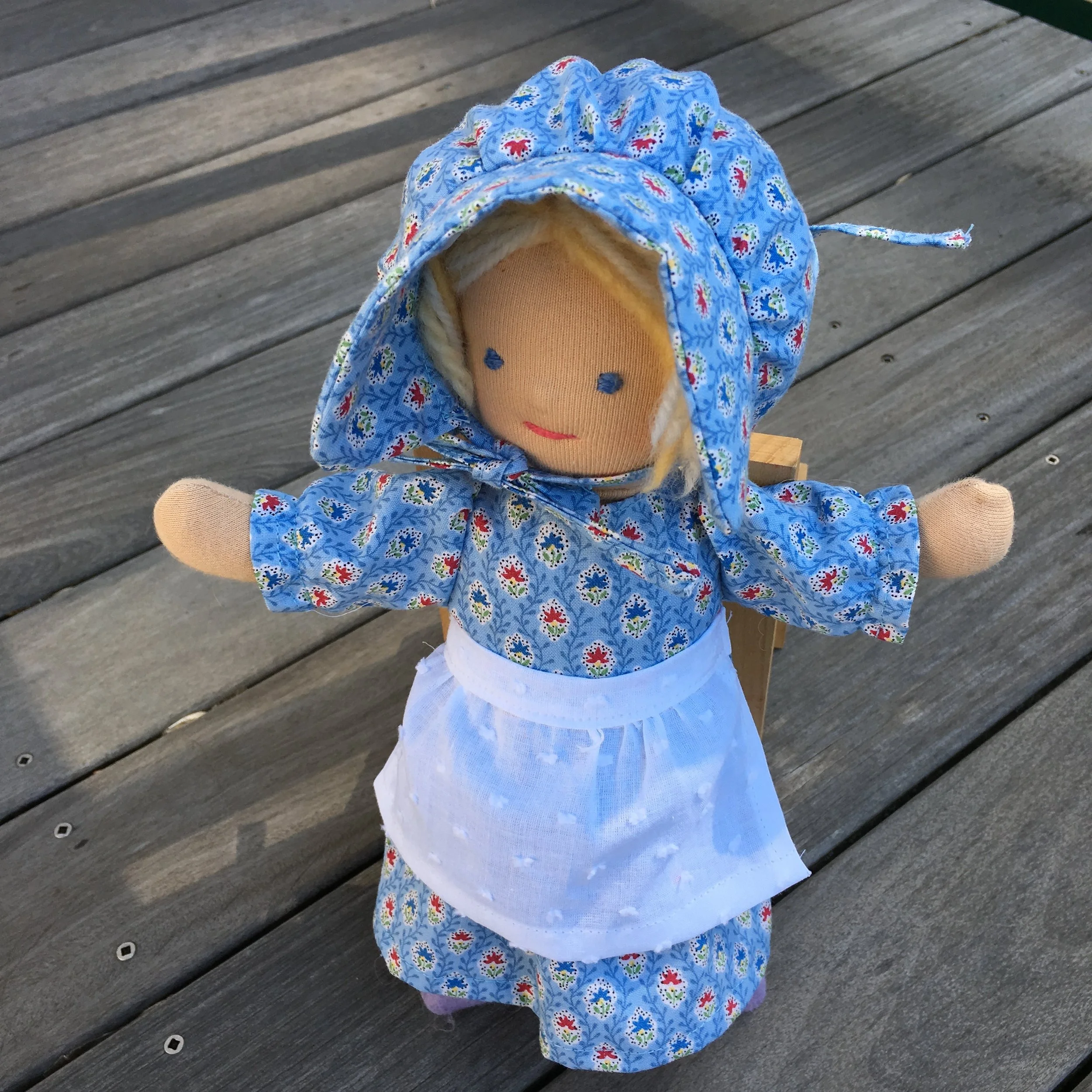
Here’s the other outfit using reproduction 1930s fabrics that I’ve finished recently. This is for the little Waldorf baby doll I designed. it’s a little pioneer outfit.

Prairie outfit for a little Waldorf type doll

Prairie outfit for a little Waldorf type doll

I used the tutorial for making prairie bonnet pattern from the blog ScatteredThoughtsofaCraftyMom to draft a tiny bonnet for this doll. Jamie’s instructions are for a custom fit bonnet so it was super simple to use it to make a doll bonnet.

I drafted my own patterns for the dress and apron.

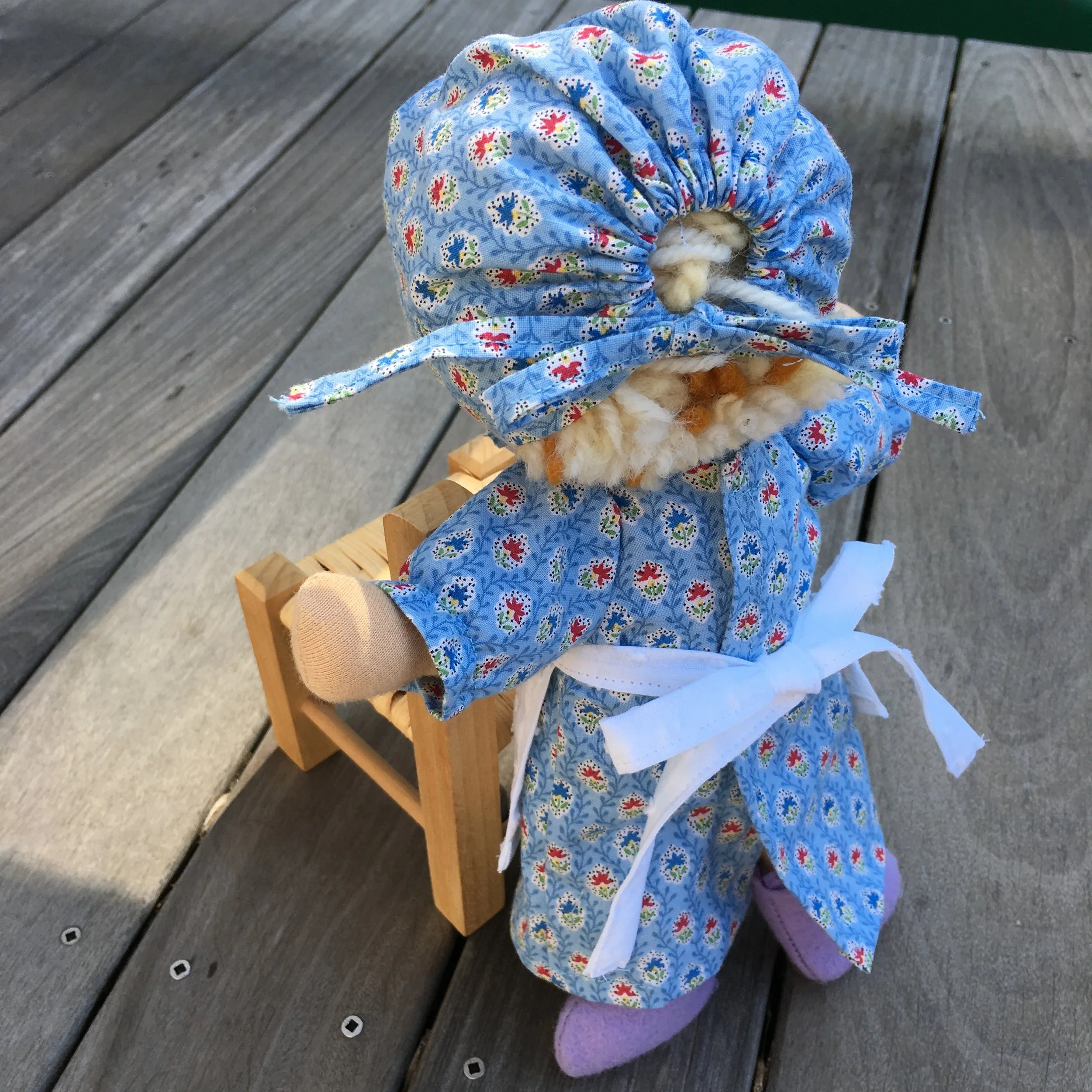
Here’s the back of the Prairie outfit.

Here’s the back of the Prairie outfit.

This tiny 1930s print is just perfect for this little doll!

I just pulled out another 1930s reproduction, a black fabric with dogs, to make a child’s skirt. I have the perfect pattern….and it has lots of buttons!! So I’ll get more practice making button holes soon!

Notice: This blog is not monetized: I do not use affiliate links. When there are links in a post, they are to give credit to another creative person, because I like or have used a product, or to help the reader easily find supplies for a project.


TAGS: Reproduction 1930s fabrics, 1930s fabrics for clothing, 1930s fabrics, Waldorf doll clothes, Praire outfit for a doll, Prairie bonnet for a doll, baby dress, NEWLOOK 6568 Baby dress


April 11, 2019

Finding Commerical Patterns Online

by Judy Tucker


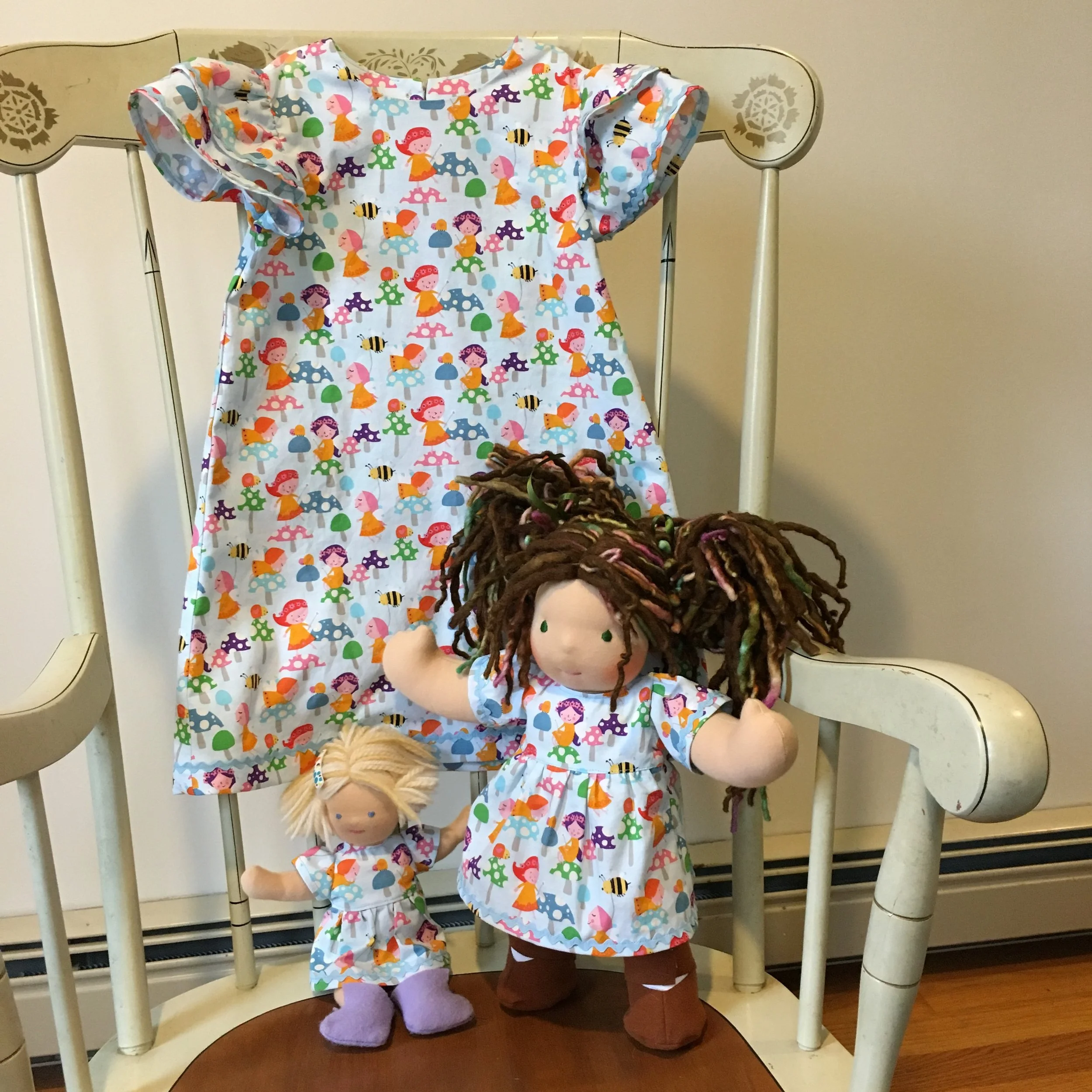
Child’s size 4 dress, Simplicity S8897. The dolls are wearing clothes I drafted.

Child’s size 4 dress, Simplicity S8897. The dolls are wearing clothes I drafted.

Child’s size 4 dress, Simplicity S8897. The dolls are wearing clothes I drafted.

Child’s size 4 dress, Simplicity S8897. The dolls are wearing clothes I drafted.

Our favorite discount fabric store often cuts “generous” yards. I purchased this whimsical mushroom and fairies fabric to make doll clothes. But I had way more fabric than I needed, so I decided to make a matching dress for a young friend.

I looked at my books which have patterns for children’s dresses but didn’t see anything I liked for this project. Our local Joann’s closed a couple years ago and the nearest one is a hike. A doable hike, but it’s now an outing, not a quick errand. So, I decided to see if I could find a commercial pattern on line. And no surprise, you can!

I found this dress pattern and two others at www.simplicity.com. And several days later, they were in my mailbox. Pretty awesome!

The flutter sleeves on the girl’s dress make me smile. It’s Simplicity pattern S8897. The rick rack trim is shown on the pattern package and I love rick rack.

I’d already made the two doll dresses (which are patterns I drafted myself) but I went back and added the rick rack to the hem of both doll dresses and sleeves of the larger dress. So now my young friend will have two dolls with dresses that match hers.

The Waldorf type doll models live at my house. You’ve seen the little blonde before. She’s Lucy Birch, and I drew the pattern for her body and all her clothes. The larger doll is Clover. She’s a Sitting Friend, made by Bamboletta.

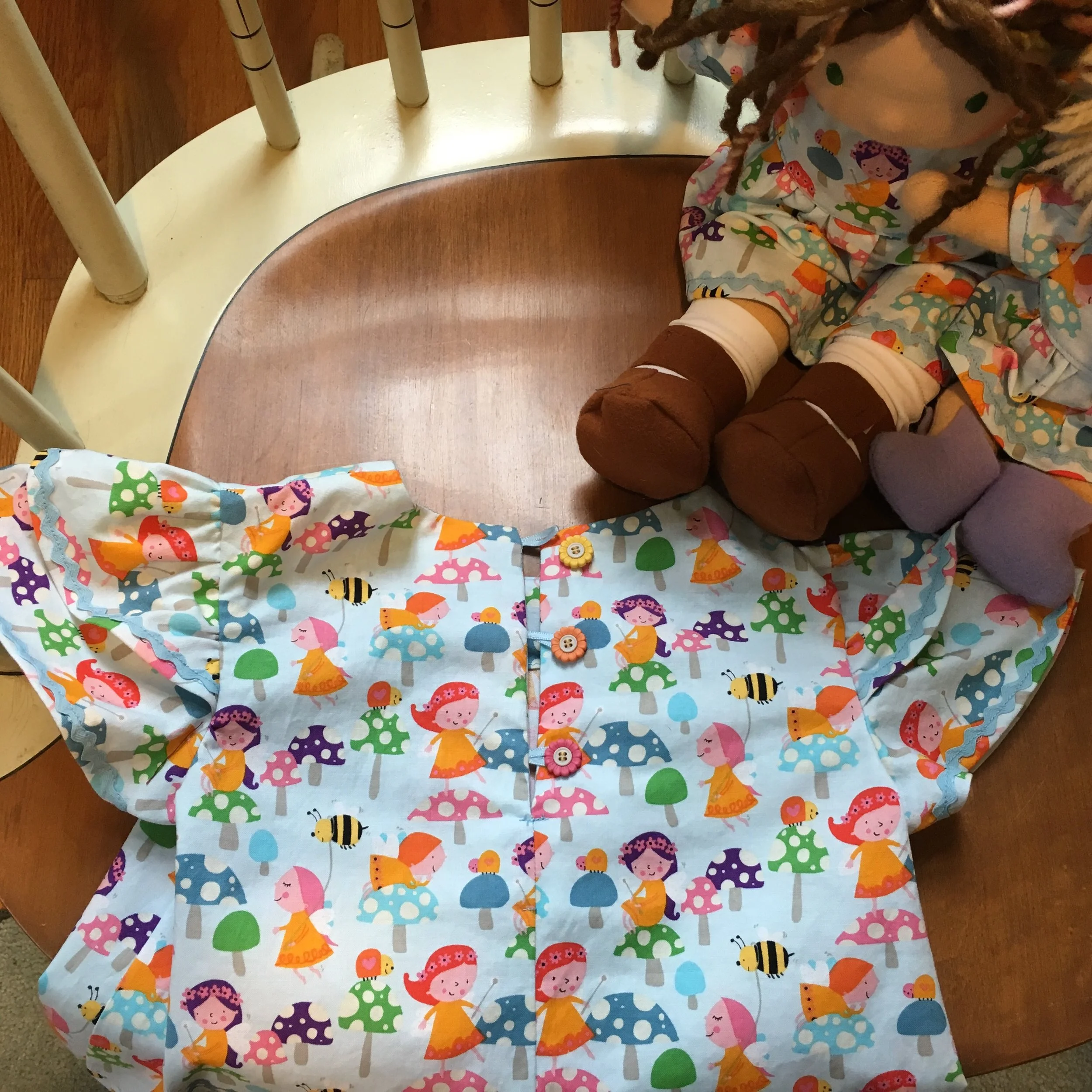
Here’s a detail of the back of the dress, which is closed with 3 loops. I used flower buttons, to match the colors in the dress.

Back closure of the dress

Back closure of the dress

Oh to be 5 again, so I could put on this dress and take my dolls out for an adventure. Then again, making these dresses made me just as happy!

Notice: This blog is not monetized: I do not use affiliate links. When there are links in a post, they are to give credit to another creative person, because I like or have used a product, or to help the reader easily find supplies for a project.

TAGS: Simplicity Patterns online, Buying dress patterns online, Matching child and doll dresses, Waldorf doll clothes


April 4, 2019

Flying Geese + Rail Fence Quilt

by Judy Tucker


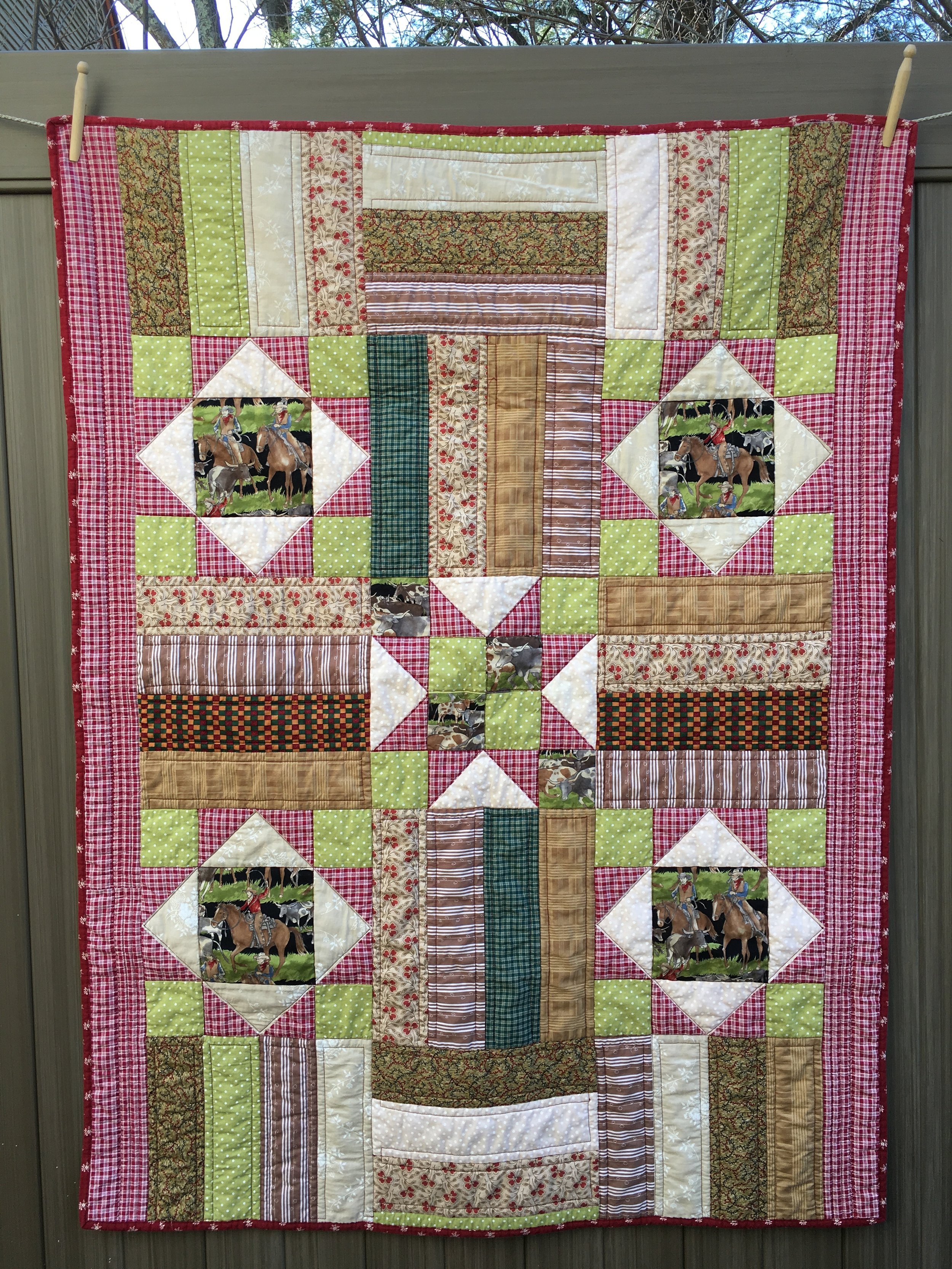
“Don’t Fence Me In” Flying Geese + Rail Fence Quilt,  approximate 42 inches x 55 inches.

“Don’t Fence Me In” Flying Geese + Rail Fence Quilt, approximate 42 inches x 55 inches.

“Don’t Fence Me In” Flying Geese + Rail Fence Quilt,  approximate 42 inches x 55 inches.

“Don’t Fence Me In” Flying Geese + Rail Fence Quilt, approximate 42 inches x 55 inches.

A good friend of mine gave me a stack of fat quarters recently. The fabrics were mostly beige and brown with some red and green accents. There was a single “surprise” fat quarter with cowboys herding cattle on the prairie in the stack! That presented a great challenge.

I decided it would make a fun comfort quilt for a child in a daycare. So I dove into my stash and found the three red and green checkered fabrics and the green polka dots to augment the set.

I designed this pattern. I wanted to accent the cowboys and maximize the use of the fabrics in the fat quarters. I mixed 12 inch (finished) flying geese blocks with 12 inch rail fence blocks.

The cowboys were fussy cut at 6 1/2 inches, the flying geese blocks are 6 1/2 inches, and the corner blocks were cut at 3 1/2 inches. These are are the unfinished measurements.

The strips for the rails were all cut a 3 1/2 inches x 12 1/2 inches, unfinished.

The center block in the quilt is a 4 patch (cut at 3 1/2 inches) and the flying geese are set to form a star. I used the four patch block because that’s all the cowboy fabric I had left after I fussy cut the 4 large patches! For the 4 large cowboy blocks, I turned the flying geese to form a “window” (forming a square in a square) to highlight the feature fabric. It was fun setting the flying geese blocks two different ways in this quilt.

The quilt went together really quickly. When I finished it, it just seemed a bit long for it’s width. So I trimmed off about 2 1/2 inches from the two narrow ends of the quilt. The only fabric I needed to purchase was the backing, which I also used as the binding.

I really like this design and would happily use it to make other quilts.

TAGS: Flying Geese + Split Rail blocks in a quilt, Flying Geese, Split rail blocks, Charity quilt, Quick Charity Quilt


March 28, 2019

Lent Quilted Pulpit Banners

by Judy Tucker


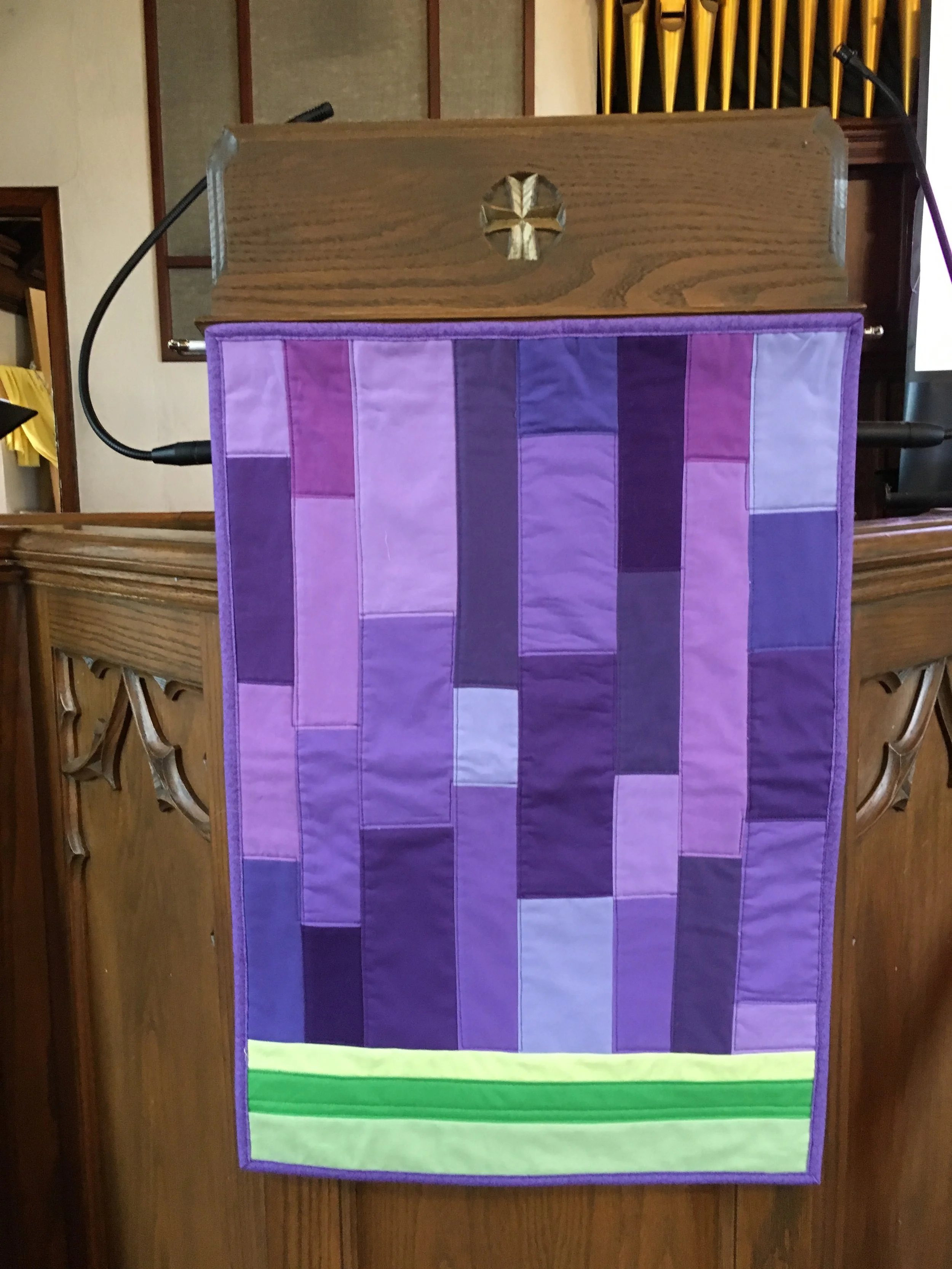
Lent pulpit banner 18 1/2 x 25 inches

Lent pulpit banner 18 1/2 x 25 inches

Lent pulpit banner 18 1/2 x 25 inches

Lent pulpit banner 18 1/2 x 25 inches

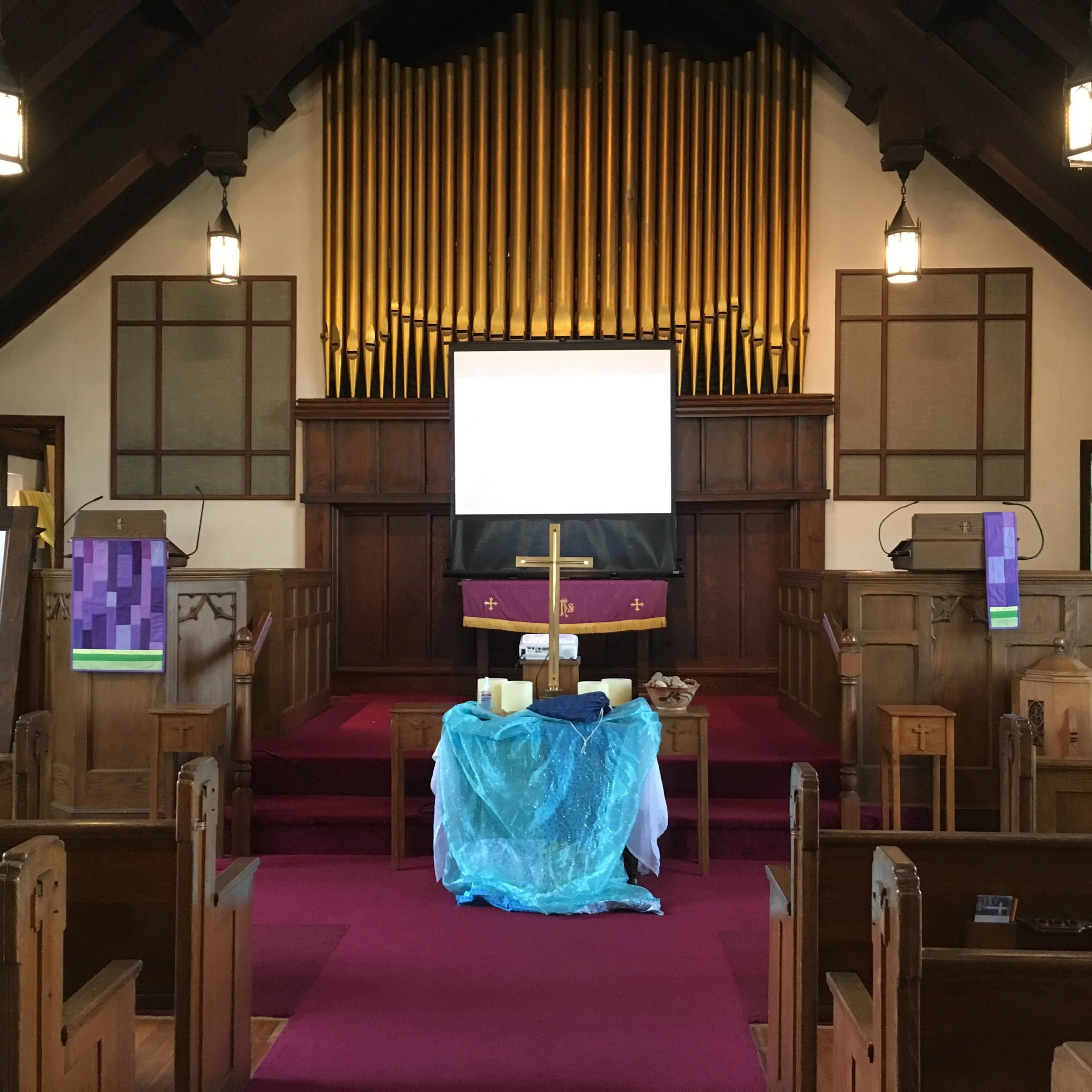
One of the pastors at my church liked the Advent pulpit banners that I designed and asked if I would make a pair for Lent. Both Advent and Lent are penitential seasons in the church calendar and the color is for both seasons is purple. I asked if I could modify the totally purple theme and the pastor said that was fine with her. (I did give her an idea where I was going color wise so I didn’t exactly have carte blanche)!

For the pulpit hanging, I cut strips that were 3 1/2 inch wide and 2 1/2 inches wide. I pieced them in a random though semi-curated pattern. It was random enough that I didn’t have a good feel for the pattern until I sat in my regular pew and saw the finished hanging in place! I really liked what I was seeing.

I added 3 strips of green to the bottom of the hanging. Green in the church calendar is for everyday, ordinary times. It’s the color that is used during most of the church year. So why did I add it to the purple?

Lent is a season of preparation for new growth/rebirth/resurrection. I had been thinking a lot about the green shoots that bulbs often put up on a warm day in the middle of winter. It’s not their season to bloom and they are guaranteed to get buried in deep snow multiple times before they get their chance to bloom. The landscape is dark and brown, but here and there are light green tips of bulb, reminders that even in the depth of winter, growth is occurring.

I find Lent to be a hard season, and I know I’m not alone. The light green reminds me this deep purple season is really about hope and growth.

Our other pastor spontaneously picked on my second reason. She looked at them last Sunday and commented, that she likes the green because “the everyday” is a part of every season.

And one final reason is purely about color—green plays really well with purple!

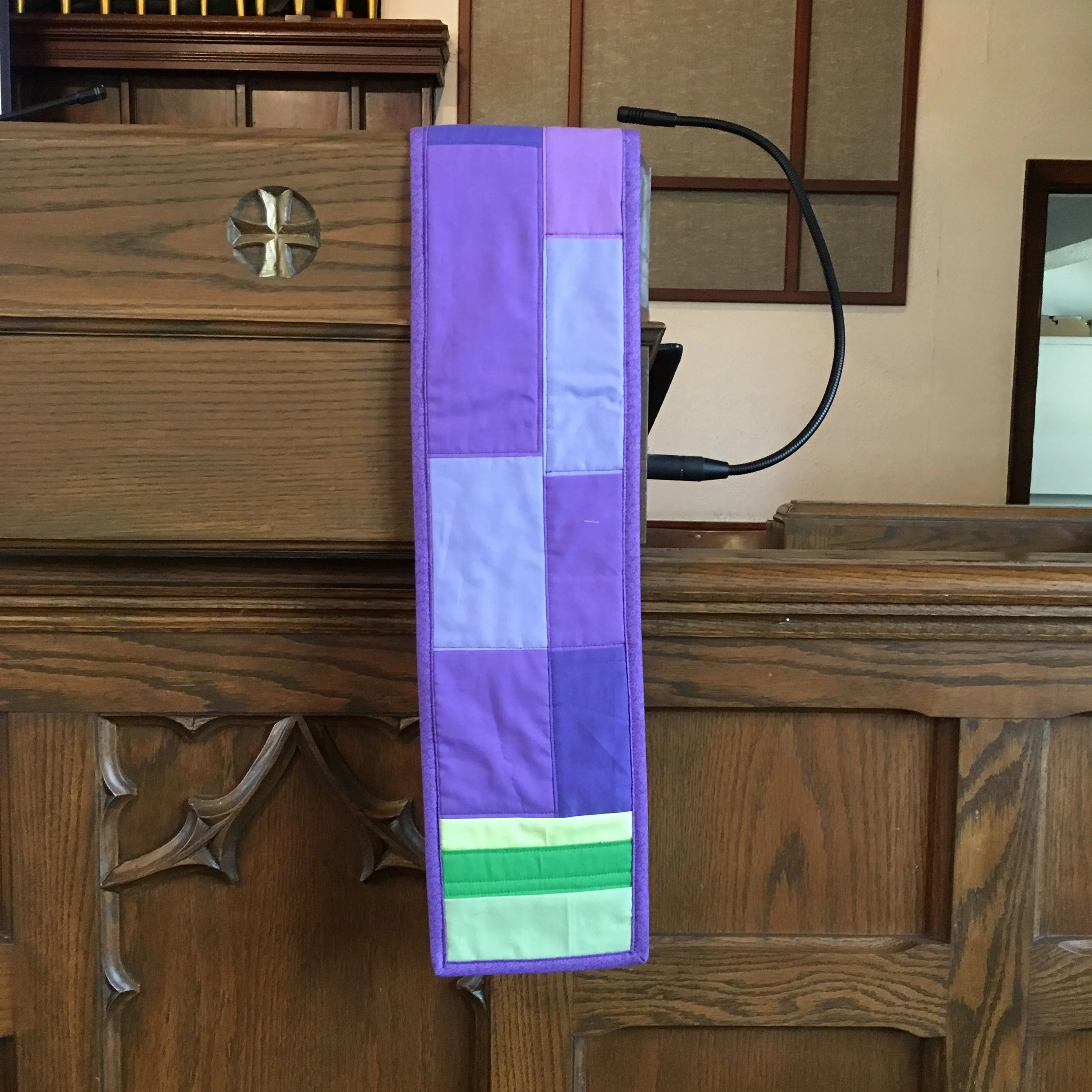
On the lectern is a single thin hanging, 5 3/4 x 29 inches. I cut 3 inch strips and 2 1/2 inch strips for the lectern hanging.

Lent lectern hanging, 5 3/4 x 29 inches.

Lent lectern hanging, 5 3/4 x 29 inches.

Both hangings have narrow 1 1/2 inch sleeve on the back side. A thin metal rod slips through the channel to hang them.

LentPulpitHangings.jpg

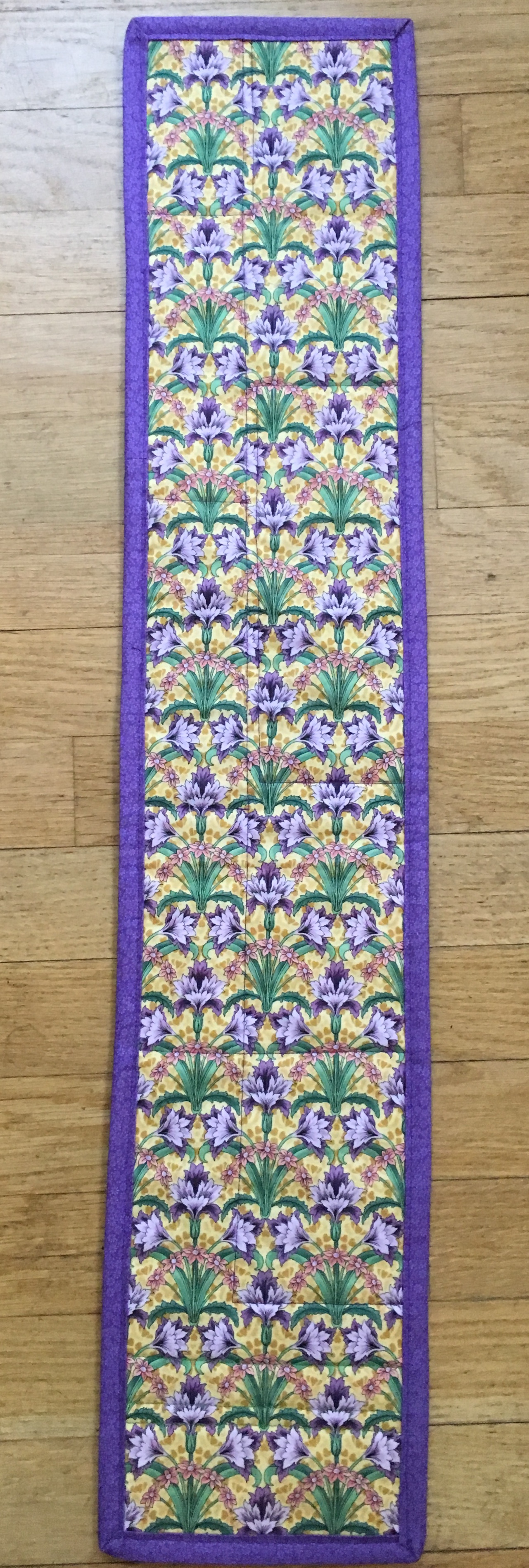
And on the subject of the back, look what’s on the back of both pulpit hangings!

Here’s the back of the lectern hanging before I put the sleeve on it.

Here’s the back of the lectern hanging before I put the sleeve on it.

TAGS: Lent Pulpit Hangings, Lent Quilted Pulpit Hanging, Quilted Church hanings


March 21, 2019

Waldorf Type Doll, 12 inch Boy

by Judy Tucker


Declan, 12 inch Waldorf type doll

Declan, 12 inch Waldorf type doll

Declan, 12 inch Waldorf type doll

Declan, 12 inch Waldorf type doll

Show and Tell today!

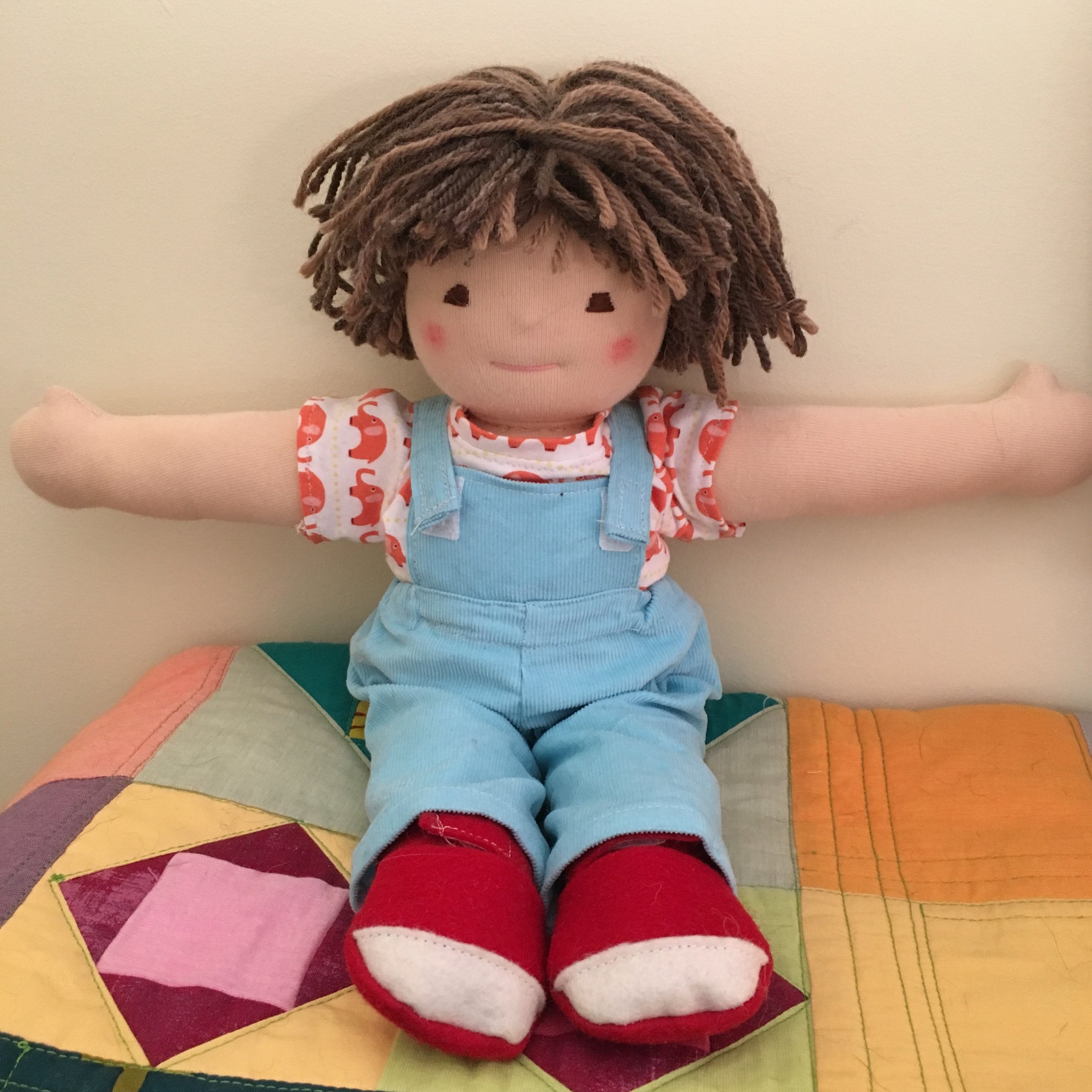
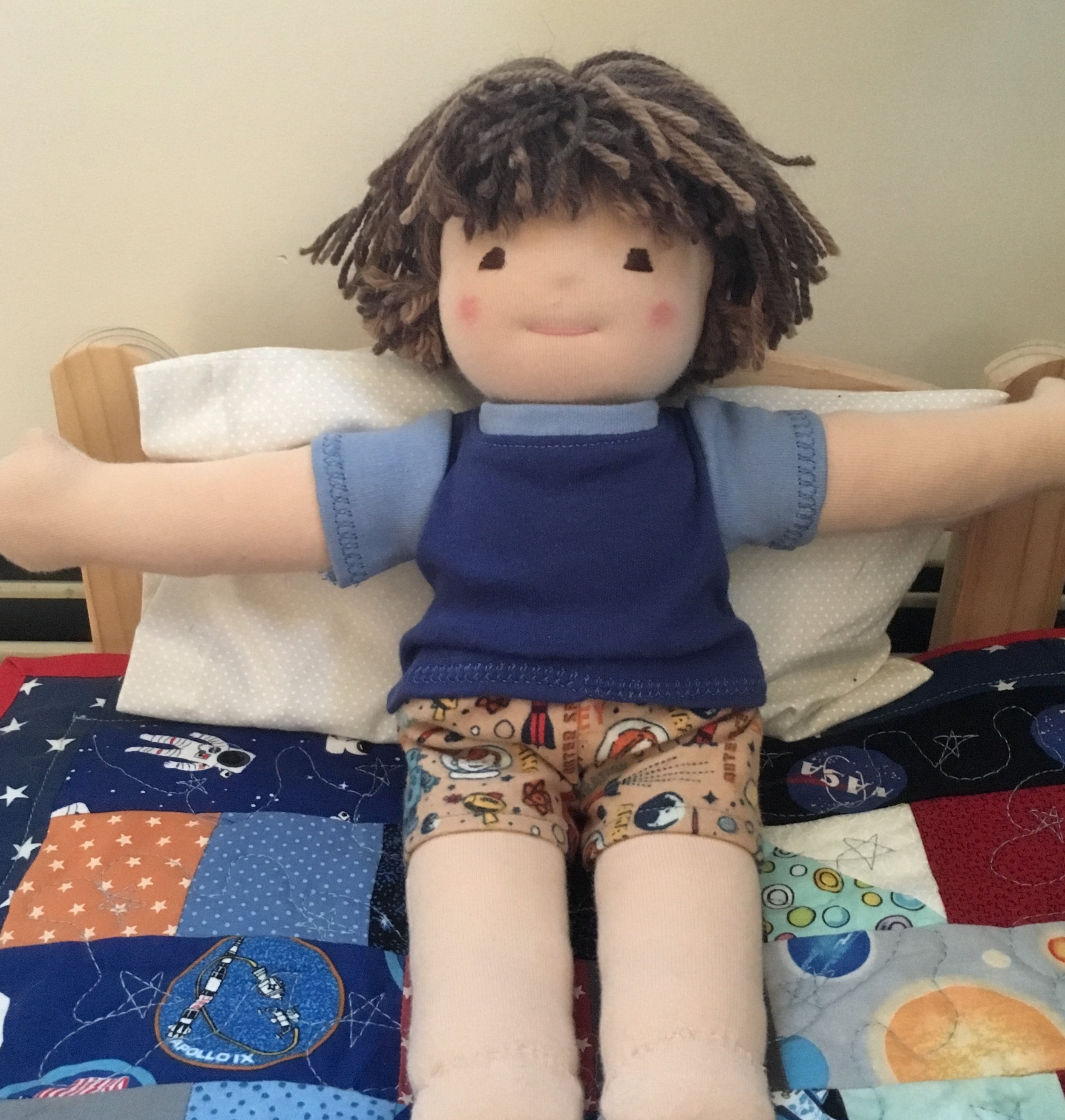
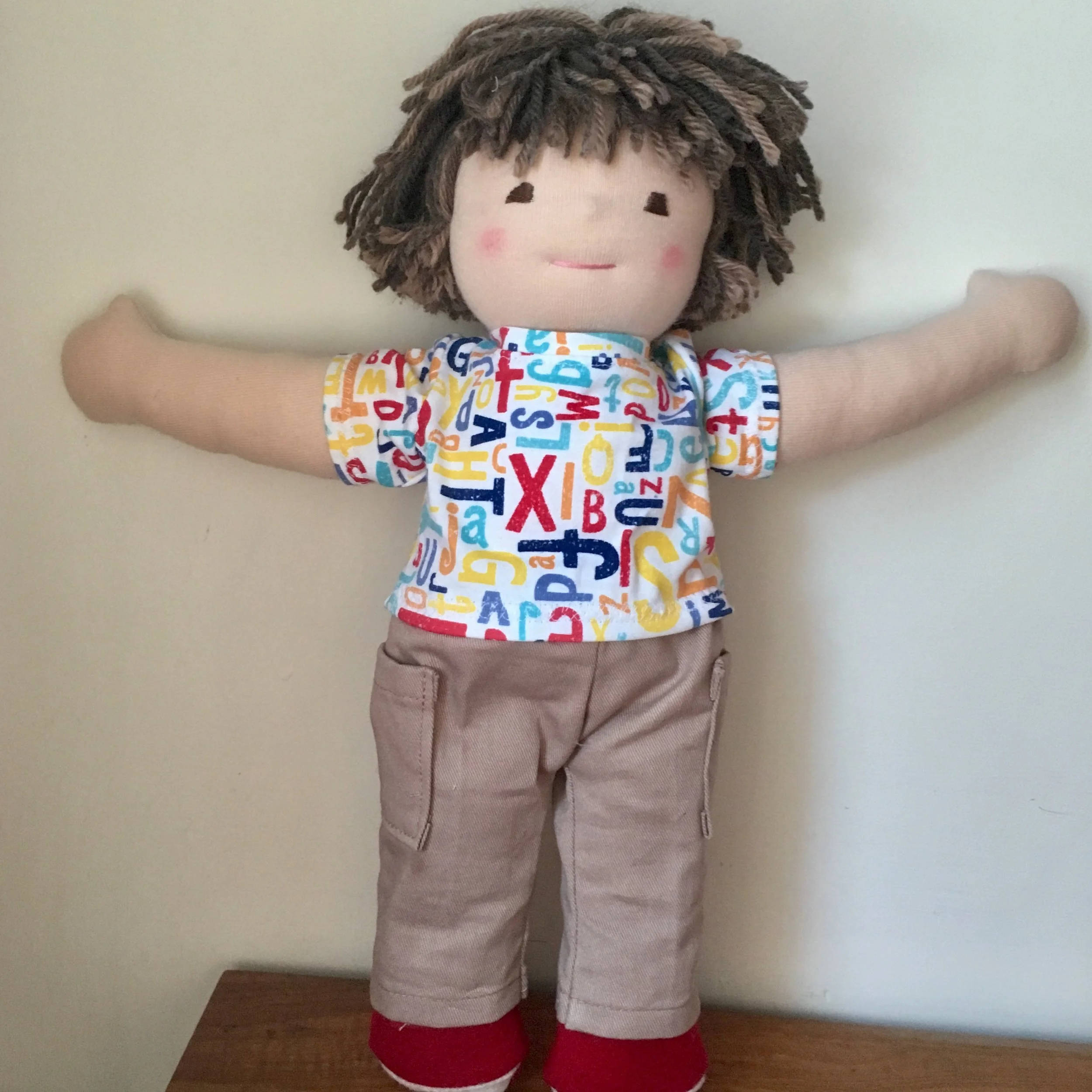
It’s been a while since I made a Waldorf type doll. This 12 inch boy was made using pattern for the middle size doll in Maricristin Sealey’s book, Making Waldorf Dolls. He’s a “mini-me” for a little fellow I know. The little boy just turned 3 years old—the perfect age to bond with a doll like this.

The red bumper sneakers are new pattern that I designed for this doll. I think they are really cute. He’s gone off to his new home with overalls for play, cargo pants and an alphabet shirt for school and church, and rocket/space jammies. (I drafted the patterns for all his clothes).

fullsizeoutput_1152.jpeg
fullsizeoutput_1155.jpeg

He has arms that are wide open because I attached them with the seams at the top and bottom of the arm. They would be more relaxed if the arm was turned 90 degrees so that the seam is facing front and back. I like the dolls both ways. It just happened out that Declan wanted to be a doll who welcomes everyone! I think Declan is doing a great job!

Notice: This blog is not monetized: I do not use affiliate links. When there are links in a post, they are to give credit to another creative person, because I like or have used a product, or to help the reader easily find supplies for a project.
TAGS: Waldorf type doll, Waldorf type boy doll, waldorf type doll clothes, Making Waldorf Dolls by Maricristin Sealey


March 14, 2019

Peg Dolls: Dogs--Springers Spaniels and a Labrador Retriever

by Judy Tucker


Springers painted with acrylics and a Black Labrador painted with watercolors

Springers painted with acrylics and a Black Labrador painted with watercolors

Springers painted with acrylics and a Black Labrador painted with watercolors

Springers painted with acrylics and a Black Labrador painted with watercolors

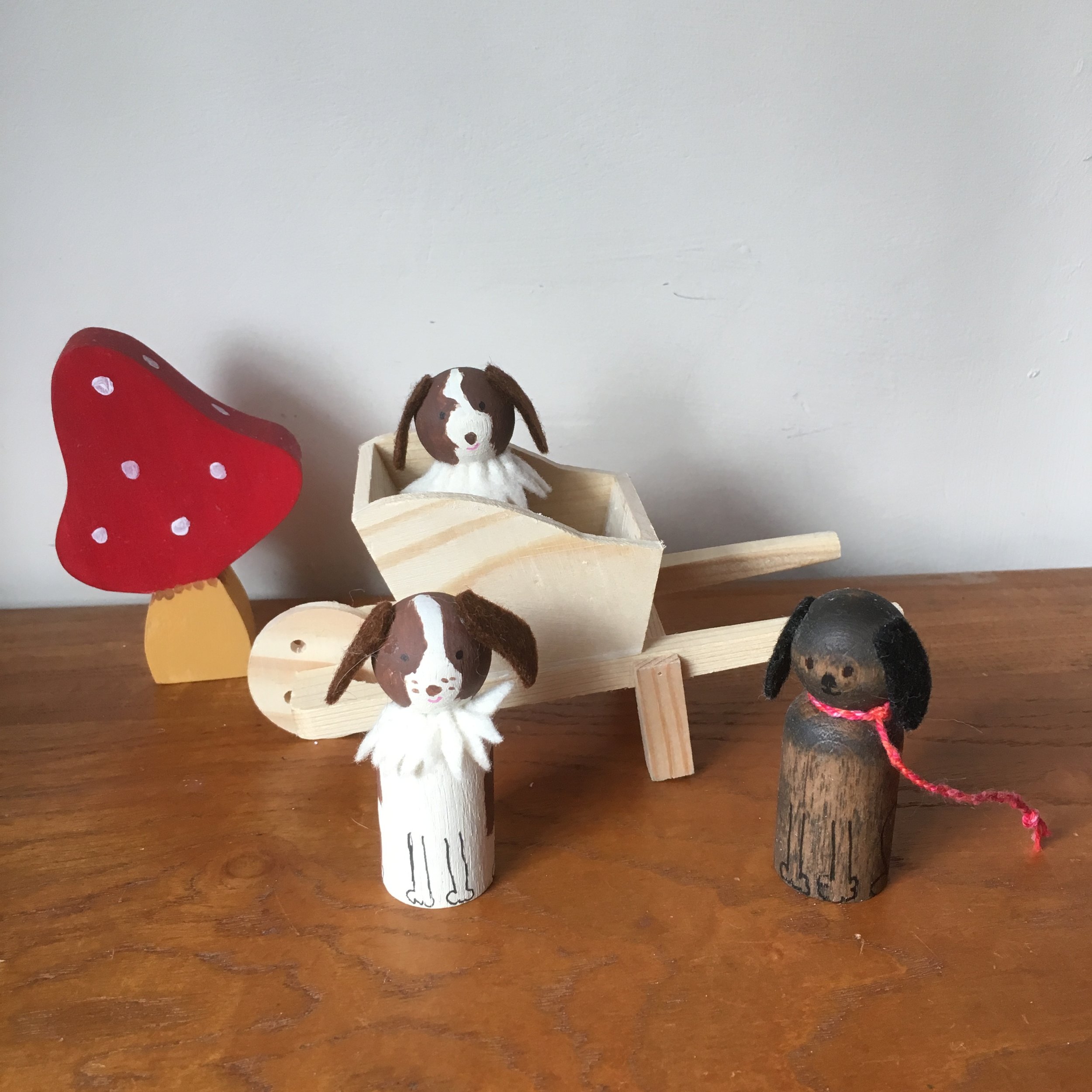
This was a fun project. These dog pegs are my original designs. I used watercolors to paint the Black Lab so that I could add details. It would have been difficult to add the details if I had painted it with black acrylic paint.

The Labrador has a collar and lead made by braiding 3 strands off varigated hot pink Perle Cotton.

But for the Springer Spaniels, I made one set using acrylic paint and another with watercolors. I like both sets but they are really different.

Watercolor painted springers

Watercolor painted springers

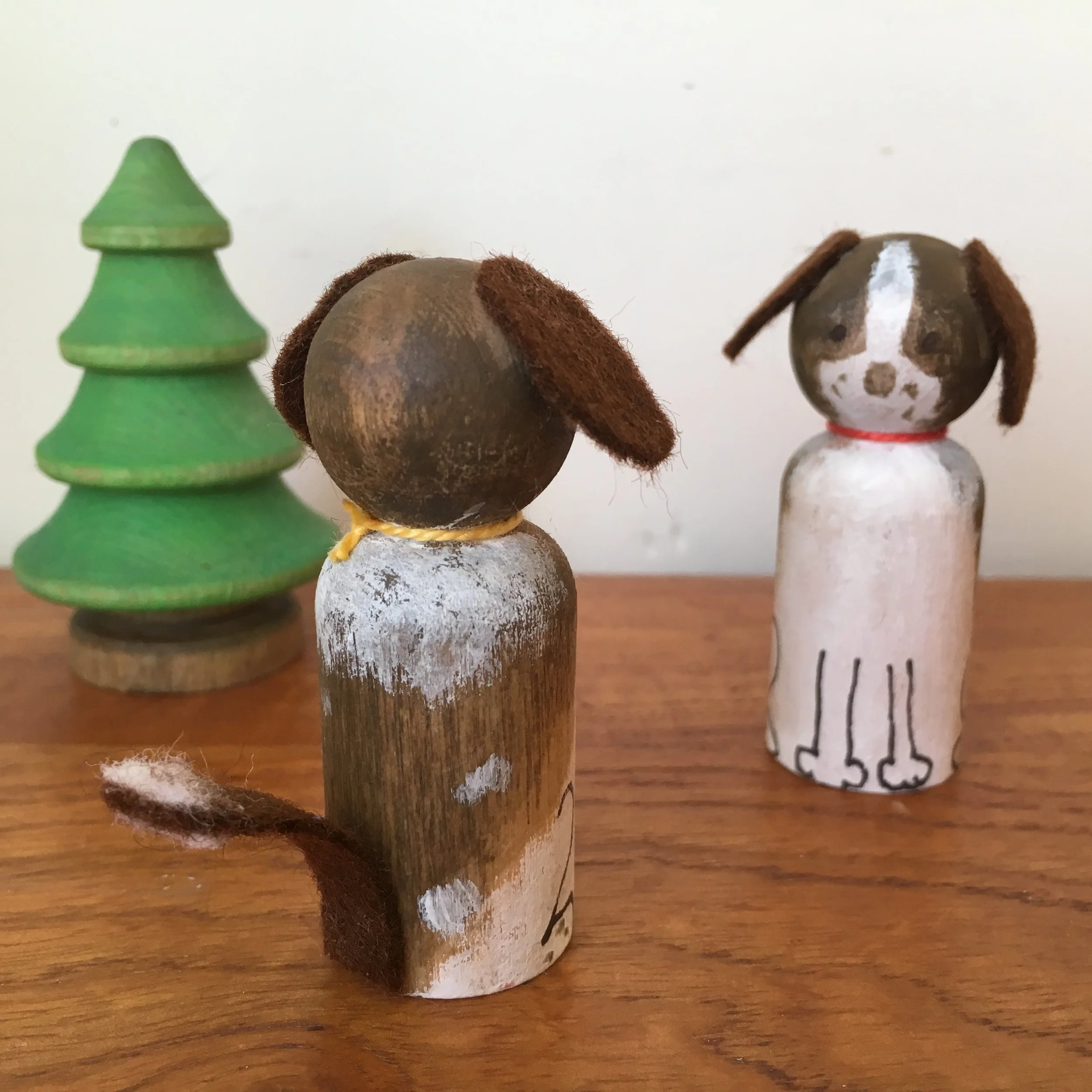
The watercolor Springers have a more fur-like texture. I like the watercolor Springers with just a collar made from a single strand of Perle Cotton. The springers painted with acrylic paint have great color but the paint is flat and doesn’t look like fur. The little cream wool felt ruff adds just the right touch for these dogs!

One of my Springers has a tail. So I put a tail on one of the watercolor Springers. I added a white tip to the tail using two little pieces of white felt attached to both sides of the tail with a felting needle. I attached the white to one side of the tail and then added the second piece.

I painted the dogs I know best. But clearly, the sky’s the limit for peg dogs!


TAGS: Peg Dolls, Wooden Peg Dolls, Wood Peg Dogs, Peg Dogs


March 7, 2019

Peg Dolls: Medieval Fun

by Judy Tucker


Knights, Fair Maiden and the Page Boy on the castle walls and a Dragon peeking around the corner

Knights, Fair Maiden and the Page Boy on the castle walls and a Dragon peeking around the corner

Knights, Fair Maiden and the Page Boy on the castle walls and a Dragon peeking around the corner

Knights, Fair Maiden and the Page Boy on the castle walls and a Dragon peeking around the corner

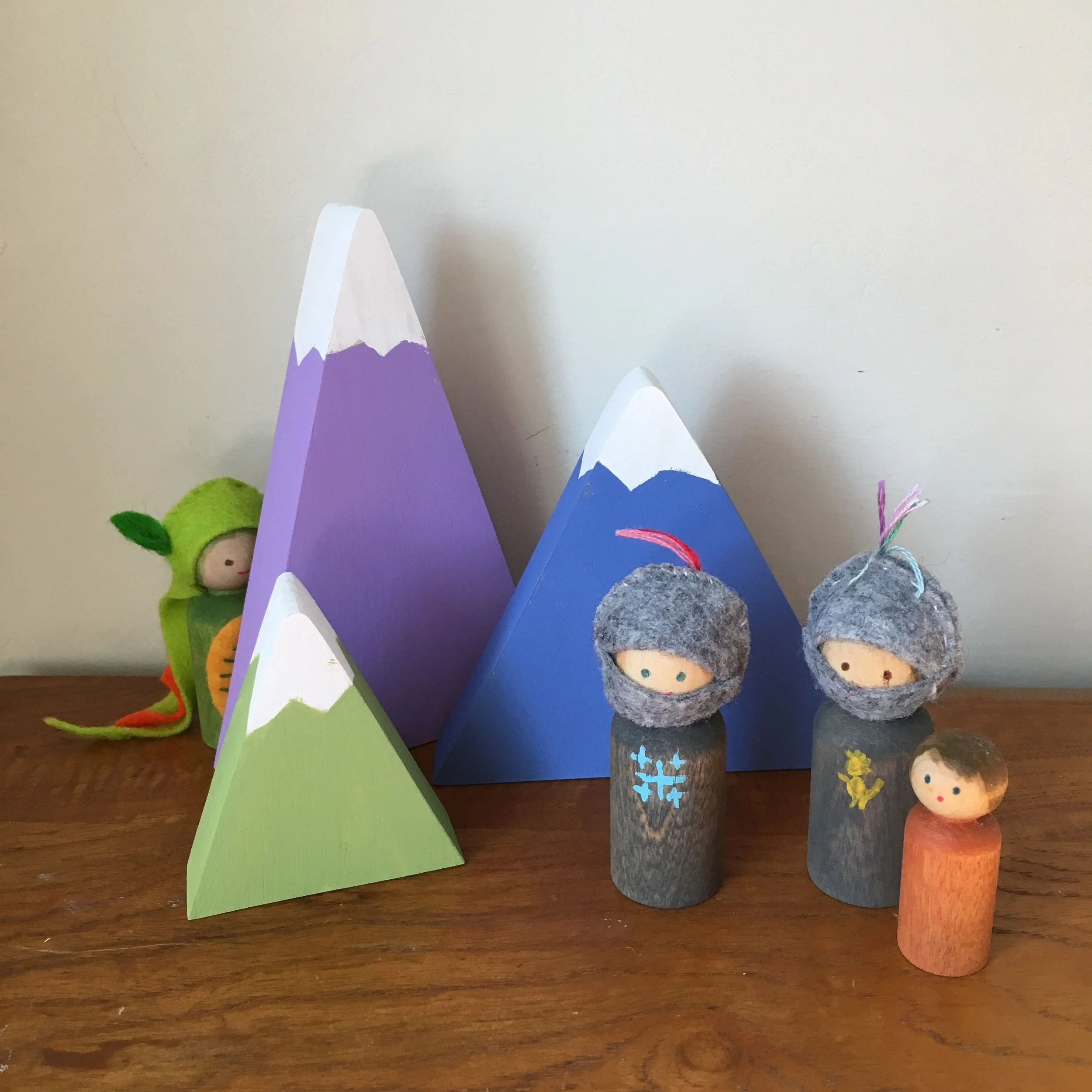
Knights in fine armor! My knights and the dragon are based on the ones in Margret Bloom’s book, Making Peg Dolls, but I did some things differently. I have a book from my childhood which has a knight running away from a castle, across a snowy field, his white surcoat with flapping behind him. So I wanted my knights to have surcoats too,

Surcoats slip over the head and can be worn over armor—they don’t have sleeves. I made these two sided so they woudn’t fray. It’s not quite the look I wanted, Using light weight voile fabric would have been a better choice.

I ended up taking these surcoats off and painting on their armor. I like the Jerusalem cross but a bit of imagination is needed to see the other knight’s rampant lion!

On a quest. The dragon is peaking out from behind the mountains. The two knights have part of their coat of arms painted on their armor.

On a quest. The dragon is peaking out from behind the mountains. The two knights have part of their coat of arms painted on their armor.

I cut the center of the dragon’s tail and embedded the orange raised ridge, And I skipped the snout in that is sewn to the head piece of the dragon in the book. He’s a very shy dragon. Not causing anyone any trouble! I like him a lot!

While exploring places to buy the unfinished peg dolls, I discovered the wonderful world of unfinished wooden structures, blocks, toys and puzzle figures. The mountains and the castle blocks came from the Etsy shop, ClickityClack that is located in Michigan. They sell the peg dolls and a huge assortment of other items that they design and cut with a jigsaw.

I really like the painted mountains but can’t decide about the castle. I like the bare wood, but can also seen them painted to look like stone walls with roses climbing on them! For now, I’m enjoying them as is!

Notice: This blog is not monetized: I do not use affiliate links. When there are links in a post, they are to give credit to another creative person, because I like or have used a product, or to help the reader easily find supplies for a project.

TAGS: Peg Dolls, Wooden Peg Dolls, Cut out wood shape, Block castle, Peg doll Dragon, Peg Doll Knight


February 28, 2019

Visible Mending on a Mitten

by Judy Tucker


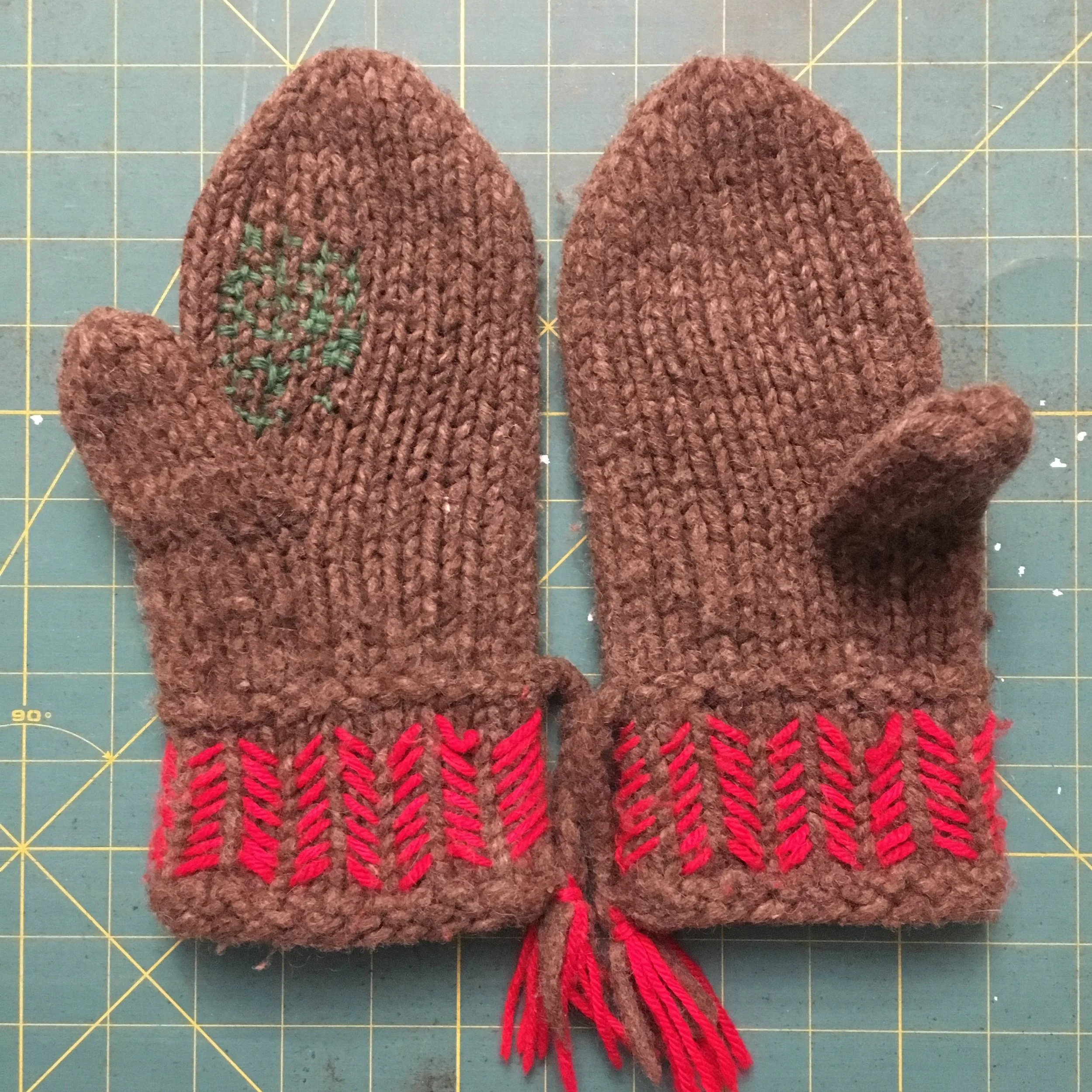
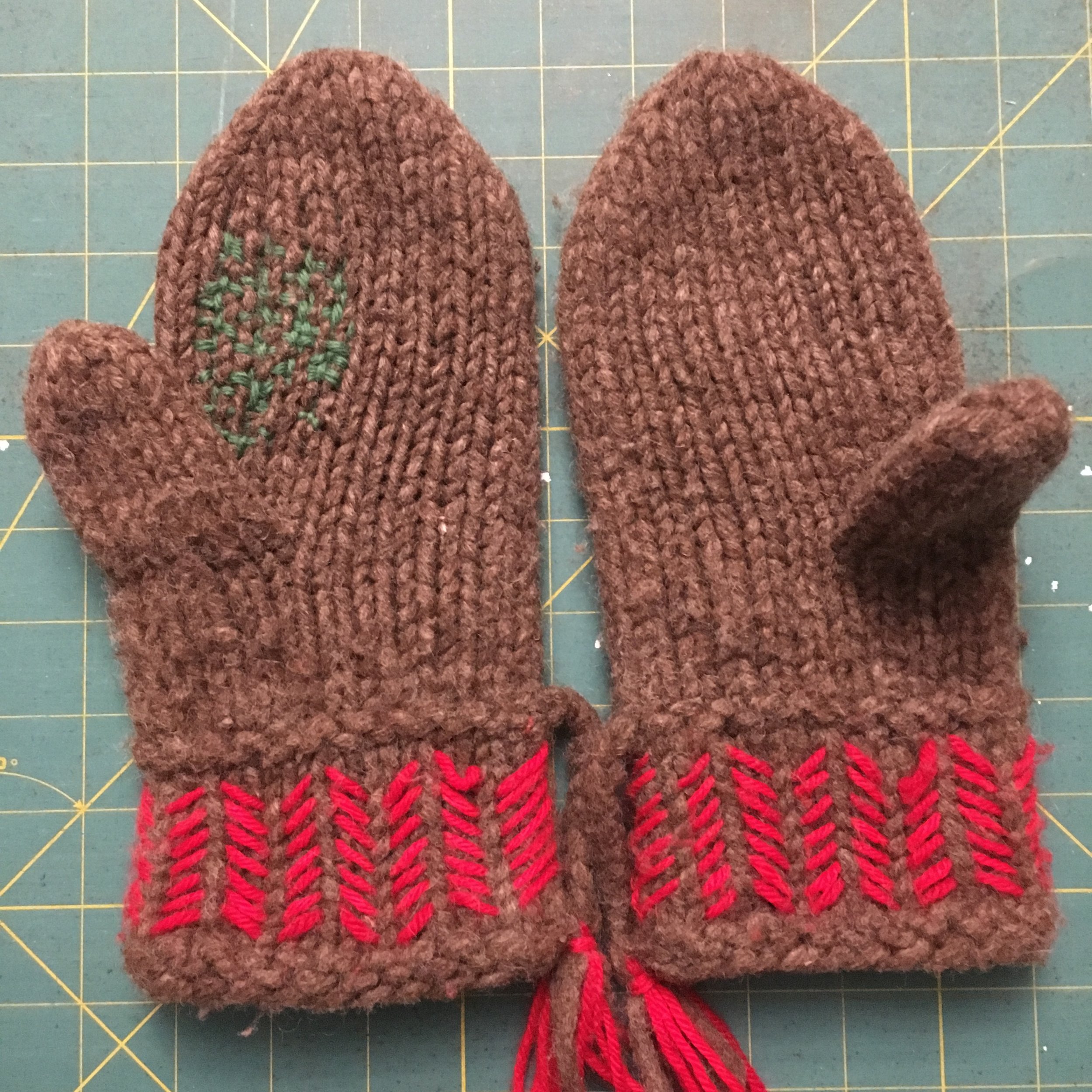
Darning repair of a wool mitten

Darning repair of a wool mitten

Darning repair of a wool mitten

Darning repair of a wool mitten

My niece gave me this pair of hand knit mittens for Christmas a few years ago. I often wear them to walk the dogs.

I use a two hand hold on dog leads. The right hand holds the lead with the handle loop over my right right thumb. The left hand holds the lead on the side that is attached to the dog. It allows me a very secure hold and allows me to steer the dog, to bring her closer to be or let her have more length. As a result, the lead slides along the palm of the left mitten a lot.

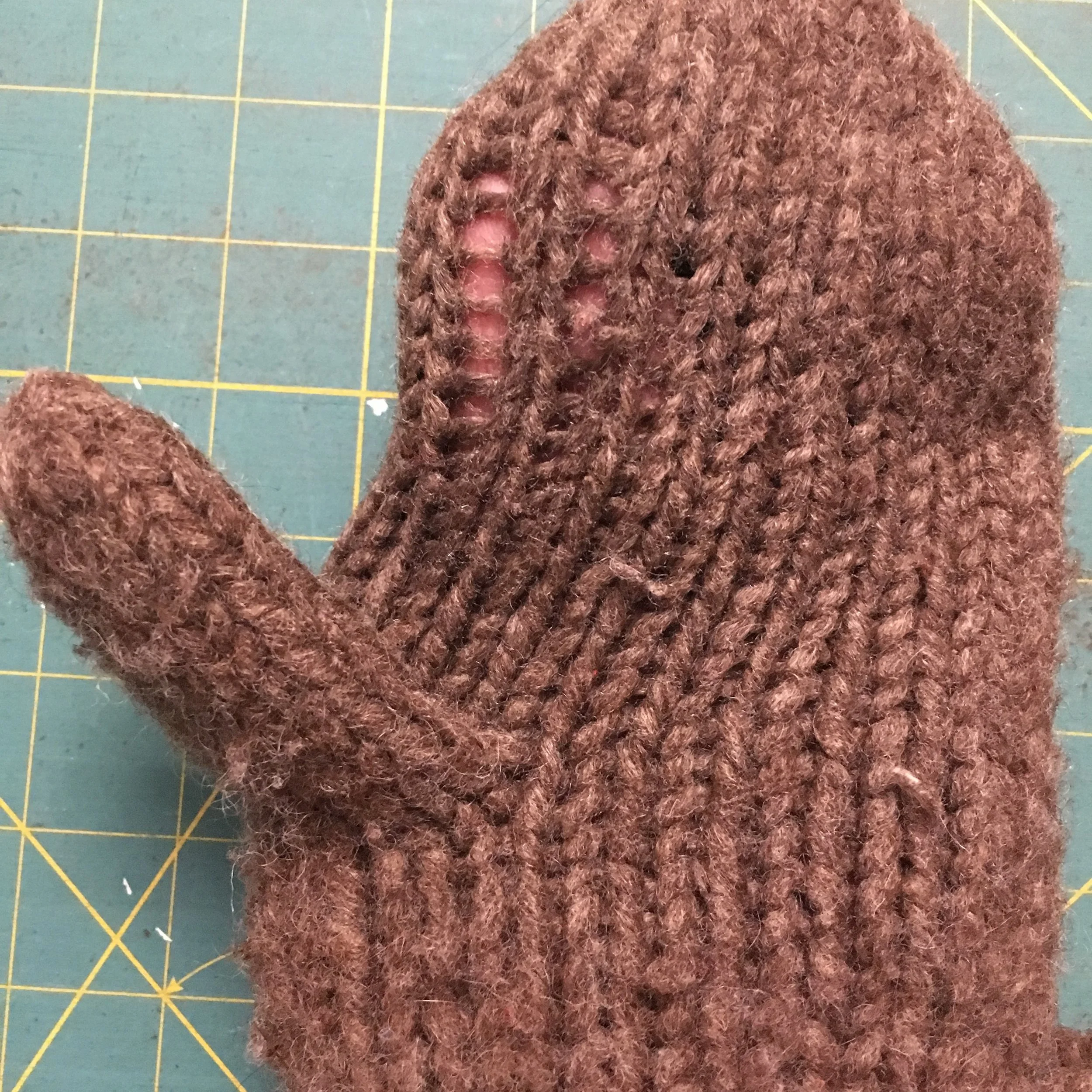
With time, the yarn on the left palm was getting thin. And even worse, the mitten was getting drafty!

Thinning yarn on a mitten

Thinning yarn on a mitten

For this repair I referenced Visible Mending by Jenny Wilding Cardon and Tom van Deijnen’s great mending blog, tomofholland .

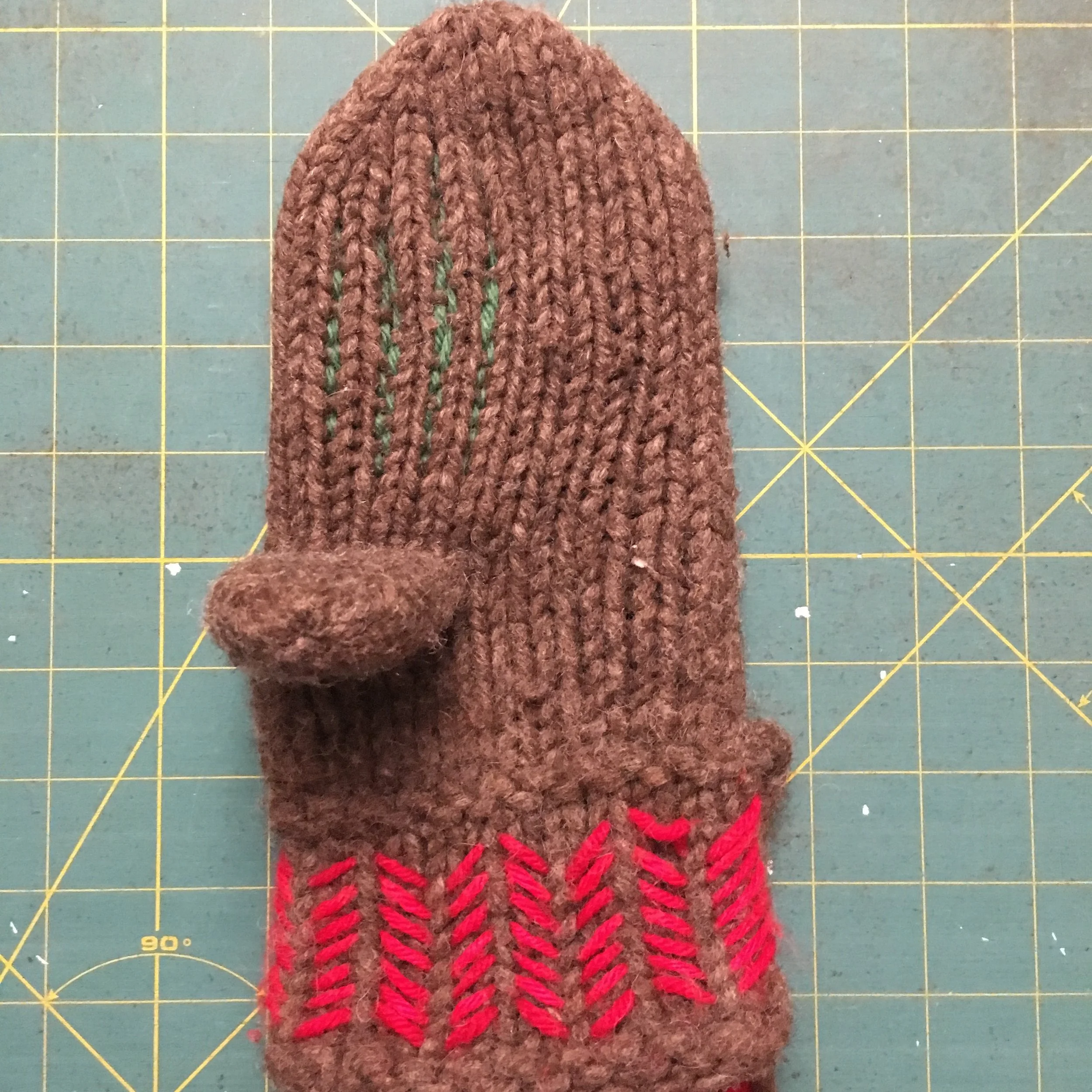
I used a basic woven darn. I used plain green worsted wool yarn which I knew would felt from the heat of my hands as I wear the mitten. In fact, after just a few days, the repair is already starting to settle and felt into the brown wool of the mitten!

I stitched an vertical in-and-out on the “ladders” between the rows. After doing that in all the threadbare areas, I wove in and out across horizontally across the rows. It was a bit tricky—the horizontal green yarn kept sliding under the larger brown yarn. As a result, my darning isn’t perfectly woven, but it has turned out to be just fine.

IMG_8871.JPG
IMG_8873.JPG

This project wraps up my mending month of February! I had a lot of fun learning more about mending and am happy to have repaired a pair of pants, a mitten and a quilt!

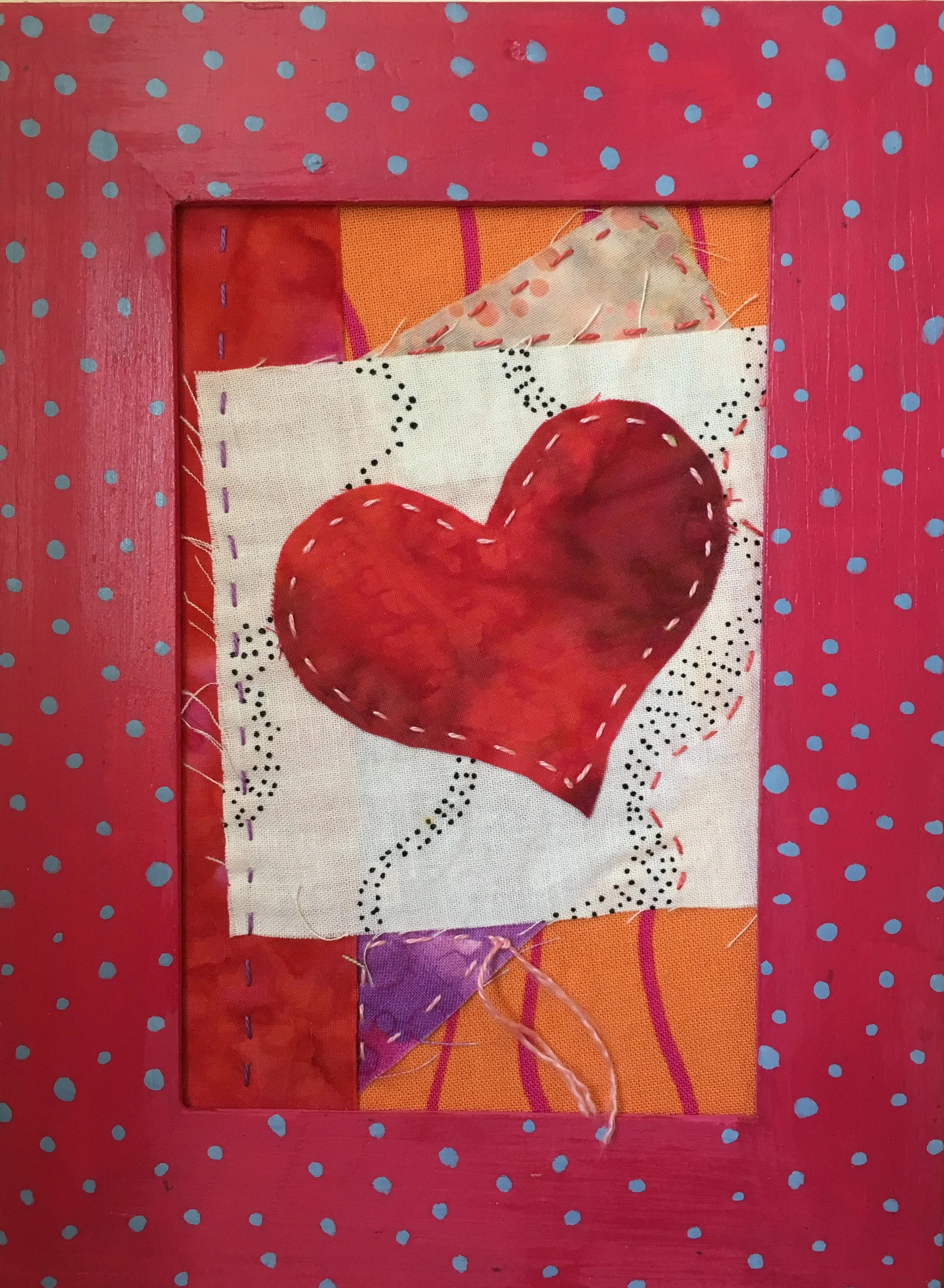
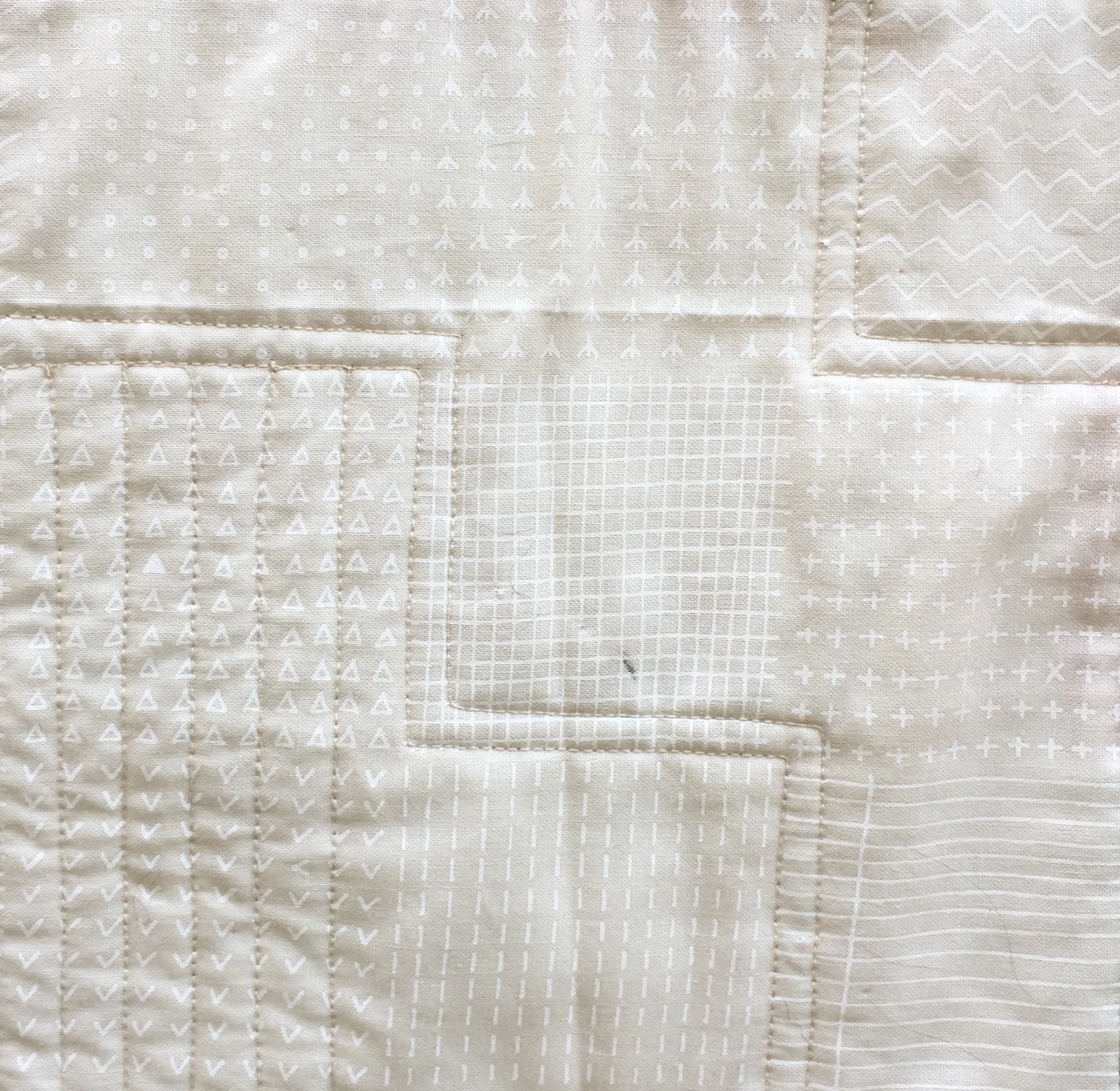
And that’s not all! At the Proper Bostonian Quilt Guild meeting the day before Valentine’s Day, we had a hands-on workshop on Japanese Boro mending which uses multiple layers of patches with sashiko stitching. We were told there was going to be a Valentine workshop but not what we where going to be doing. So I was delighted to find out it was another take on what I’d been doing all month!

Here is my Boro Valentine. All supplies, including the hand-painted wood frame, were supplied by the woman running the workshop. Pretty sweet!!

BoroValentine.jpg


Notice: This blog is not monetized: I do not use affiliate links. When there are links in a post, they are to give credit to another creative person, because I like or have used a product, or to help the reader easily find supplies for a project.
TAGS: Visible Mending, Mending visibly, Visible mending knit mitten, Visible mending of a knit, Boro mending, sashiko mending, sashiko, Darning repair of a mitten, Darning mitten repair


February 21, 2019

Visible Mending on a Quilt

by Judy Tucker


Close up of Visible Mending on a quilt. The cats seems to approve of the new addition!

Close up of Visible Mending on a quilt. The cats seems to approve of the new addition!

Close up of Visible Mending on a quilt. The cats seems to approve of the new addition!

Close up of Visible Mending on a quilt. The cats seems to approve of the new addition!

For years I had a delightful neighbor who was older and at home most of the time. She loved all animals and asked to look in on my puppies which was completely awesome back in the day when there weren’t many dog walkers. As she got older, my neighbors and I shoveled the snow off her sidewalk, picked up occasional groceries that she needed and regularly stopped to chat with her.

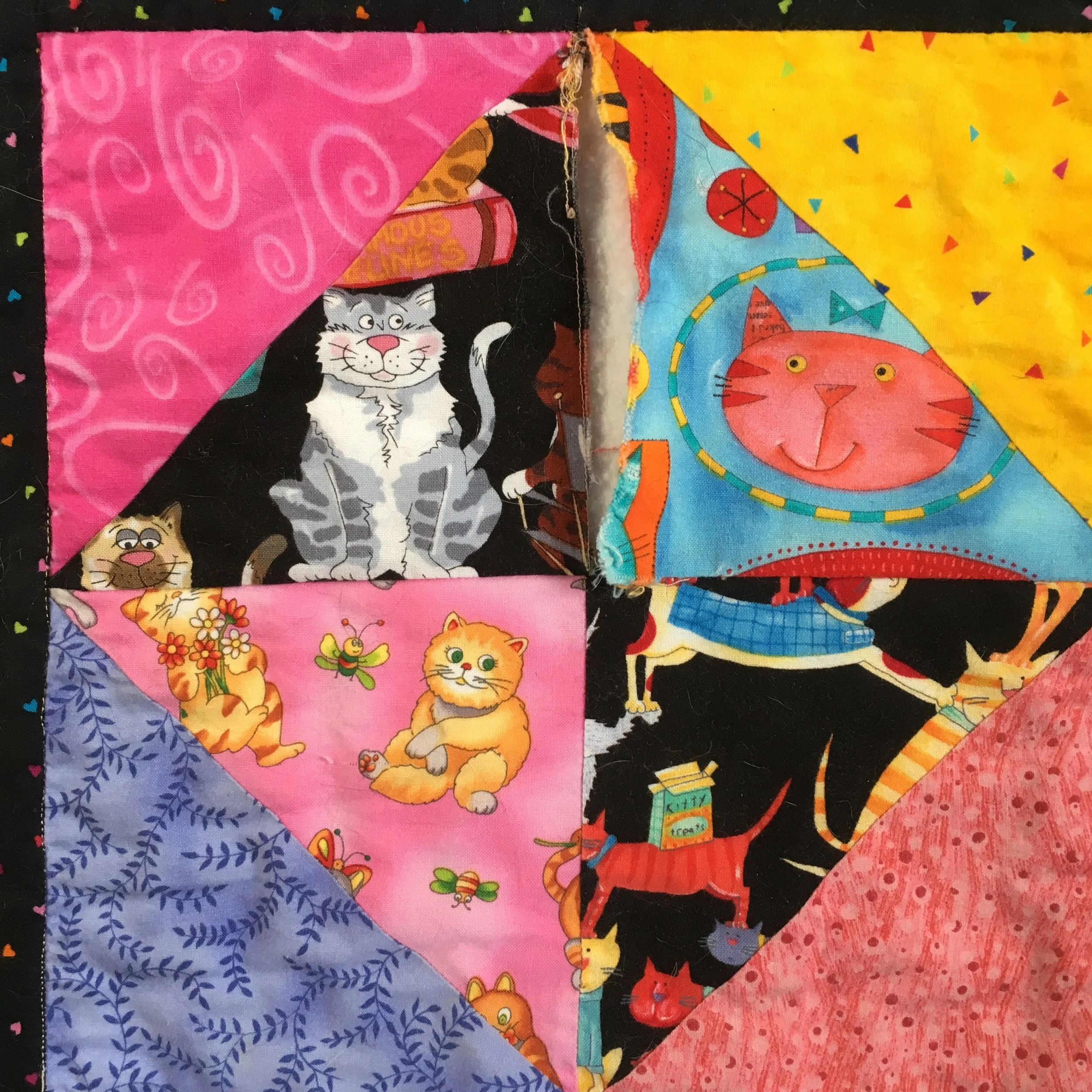
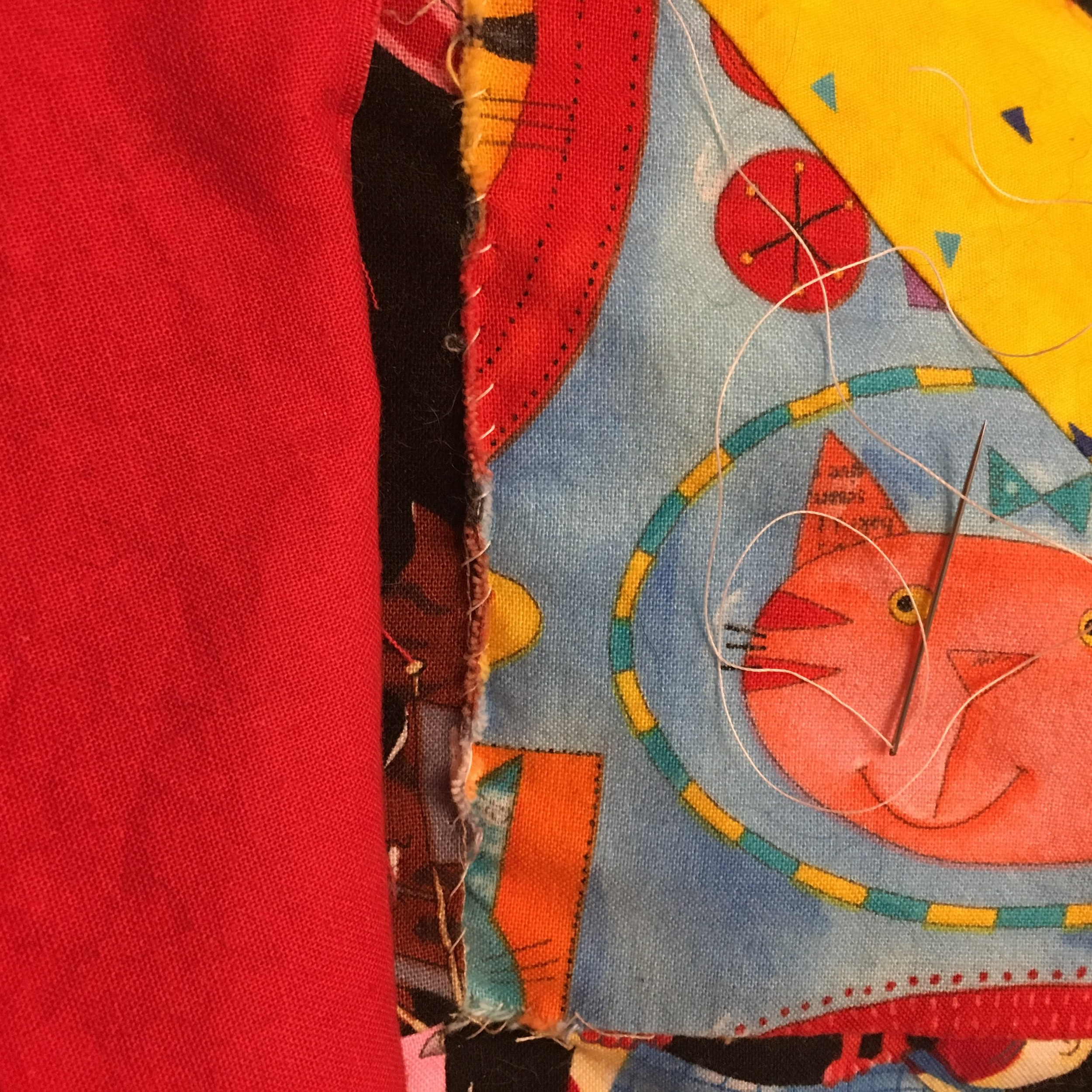
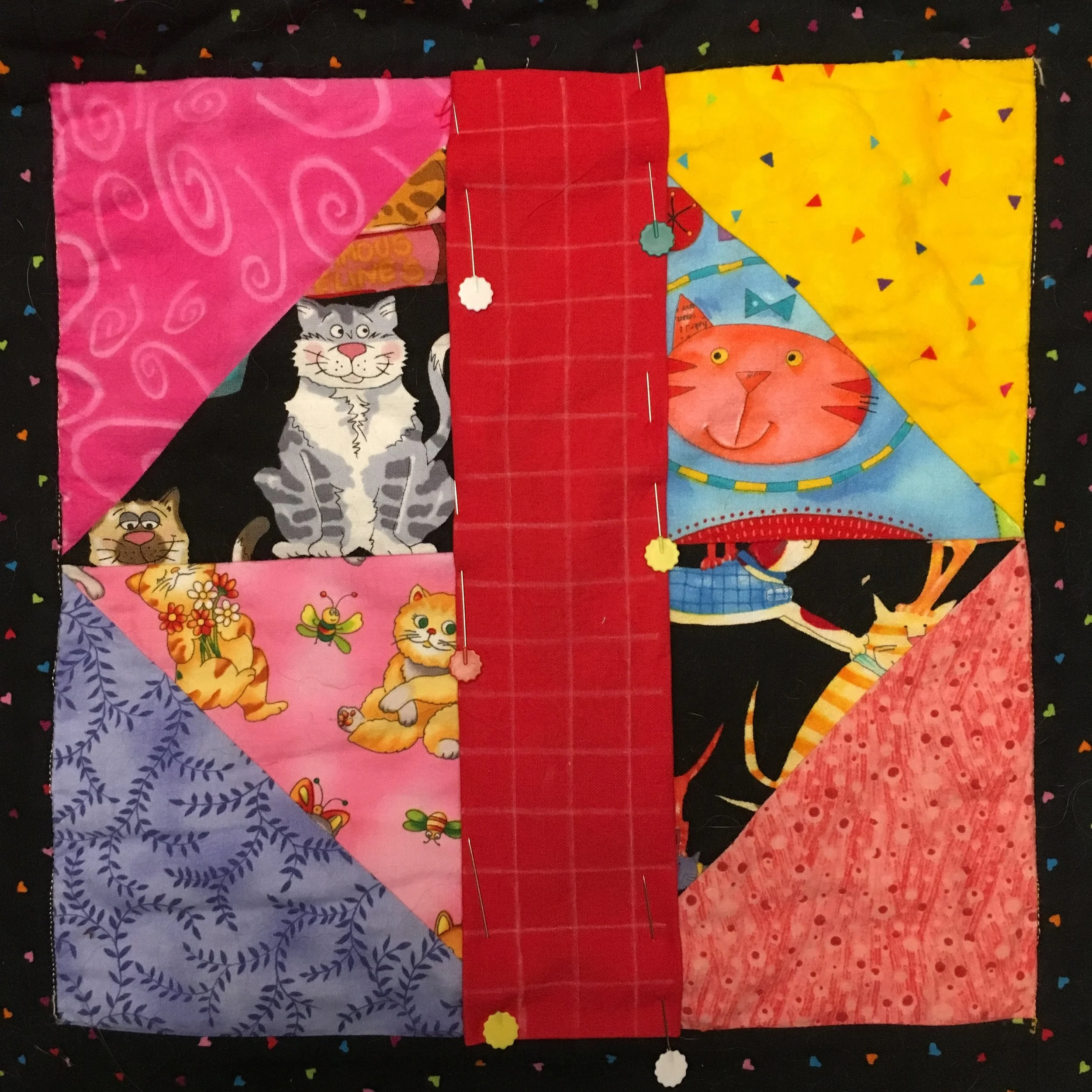
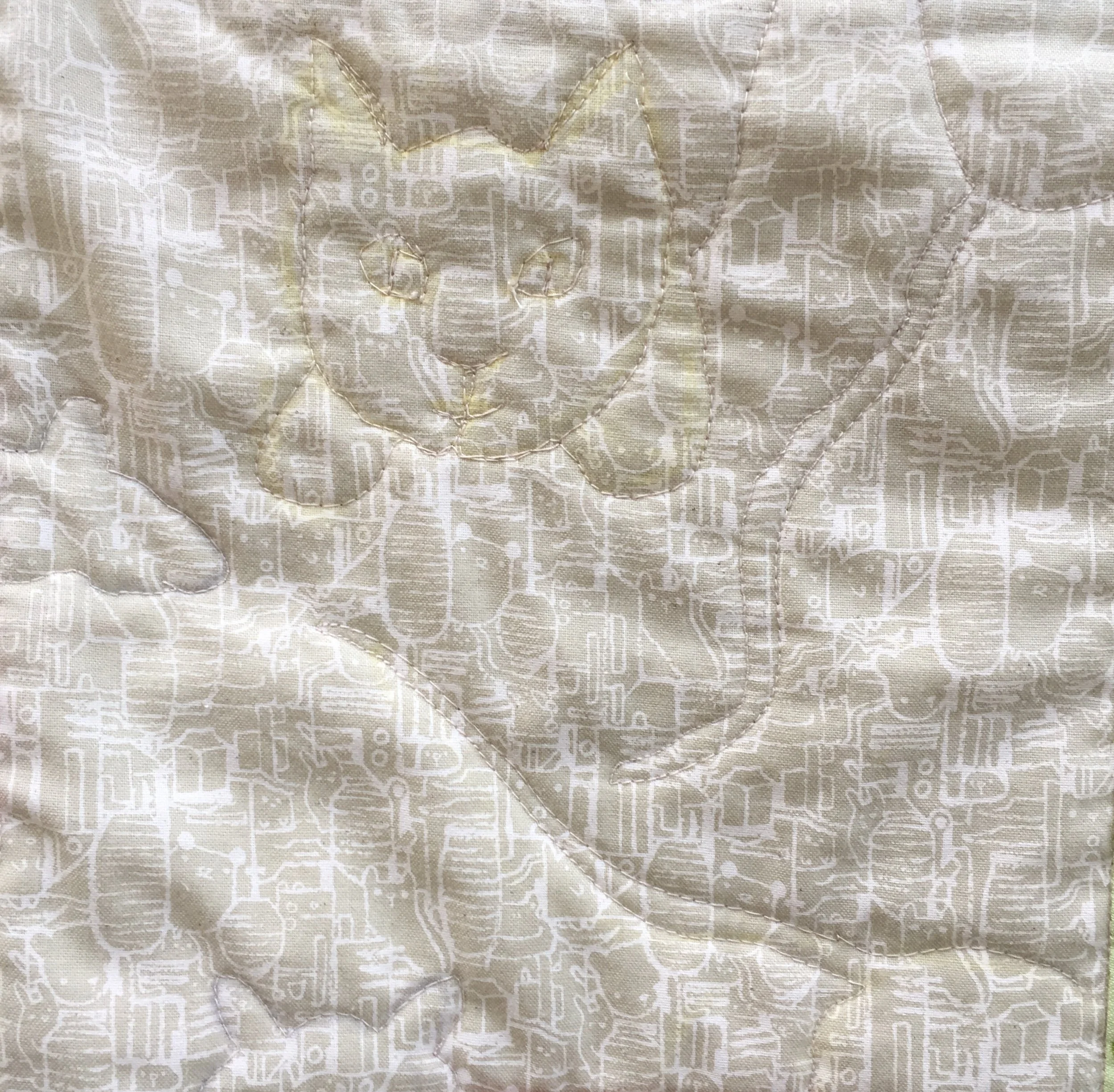
Just before she moved to senior housing, one of her daughters made each of us a quilt to say thanks. Recently I noticed one of the seams in a block had failed. There wasn’t enough fabric to recreate a new 1/4 inch seam. Visible mending seemed like the perfect solution to repair the fractured block.

Separated seam in a quilt block, top center of the block.

Separated seam in a quilt block, top center of the block.

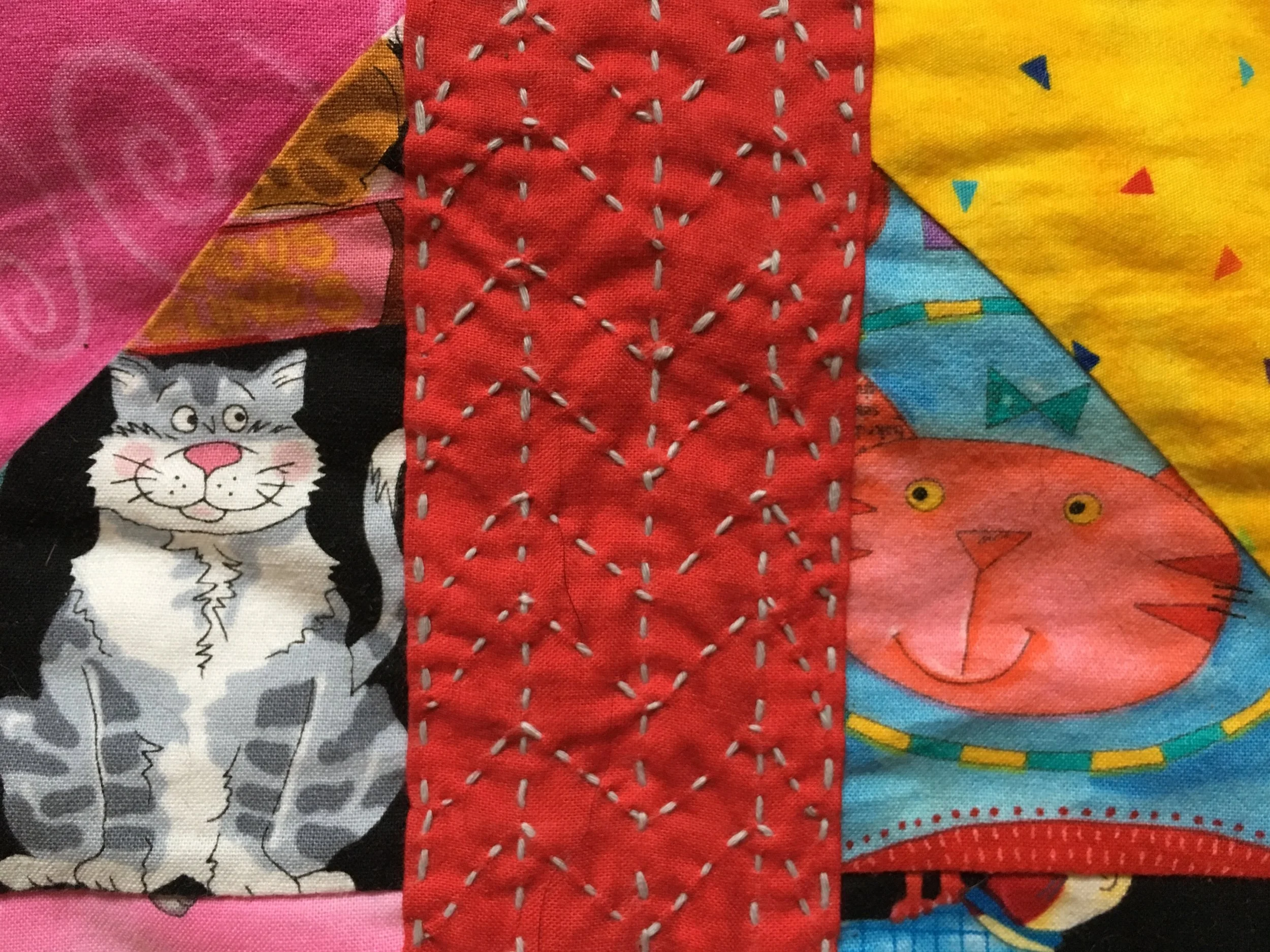
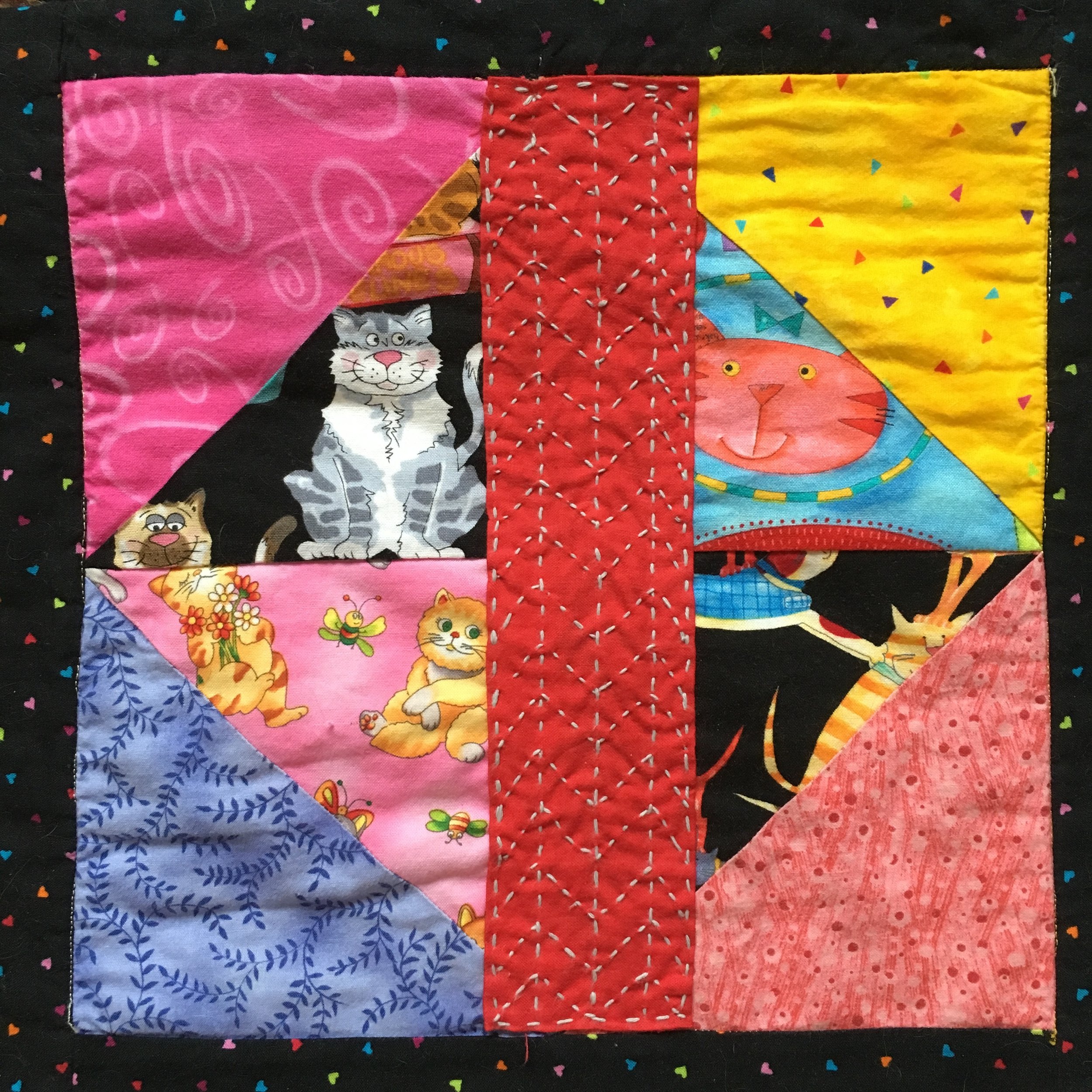
I used Jessica Marquez’s Make and Mend as the resource for the sashiko design and information on sewing the patch. I picked the zigzag pattern and used grey sashiko thread for the stitching. (It took me a while to find some readily available sashiko thread but i finally found a wonderful collection of sashiko thread in multiple colors that were in stock and ready to ship at Purl Soho).

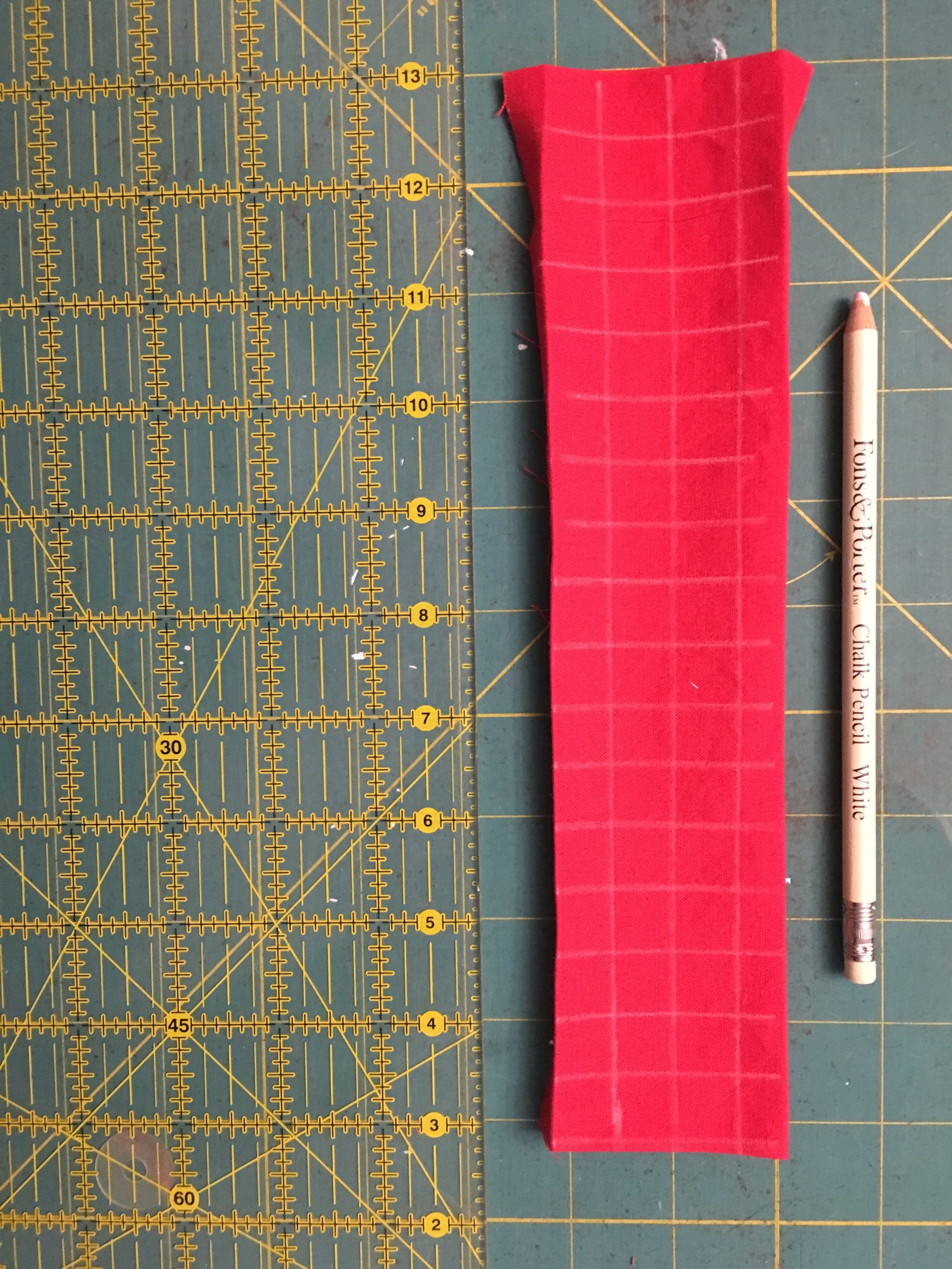
First I did a slip stitch to bring together the two fabrics in the open seam. Then I measured a cut a patch from a solid red cotton for the patch. Then I drew a 1/2 inch grid on the block with a Fons & Porter chalk pencil and pinned it to the quilt block.

Then I stitched the sashiko pattern per the instructions in the book. It only took me two hours to do all the stitching. I was surprised how quickly it stitched up!

IMG_8850.JPG
IMG_8832.JPG
IMG_8838.JPG
IMG_8853.JPG

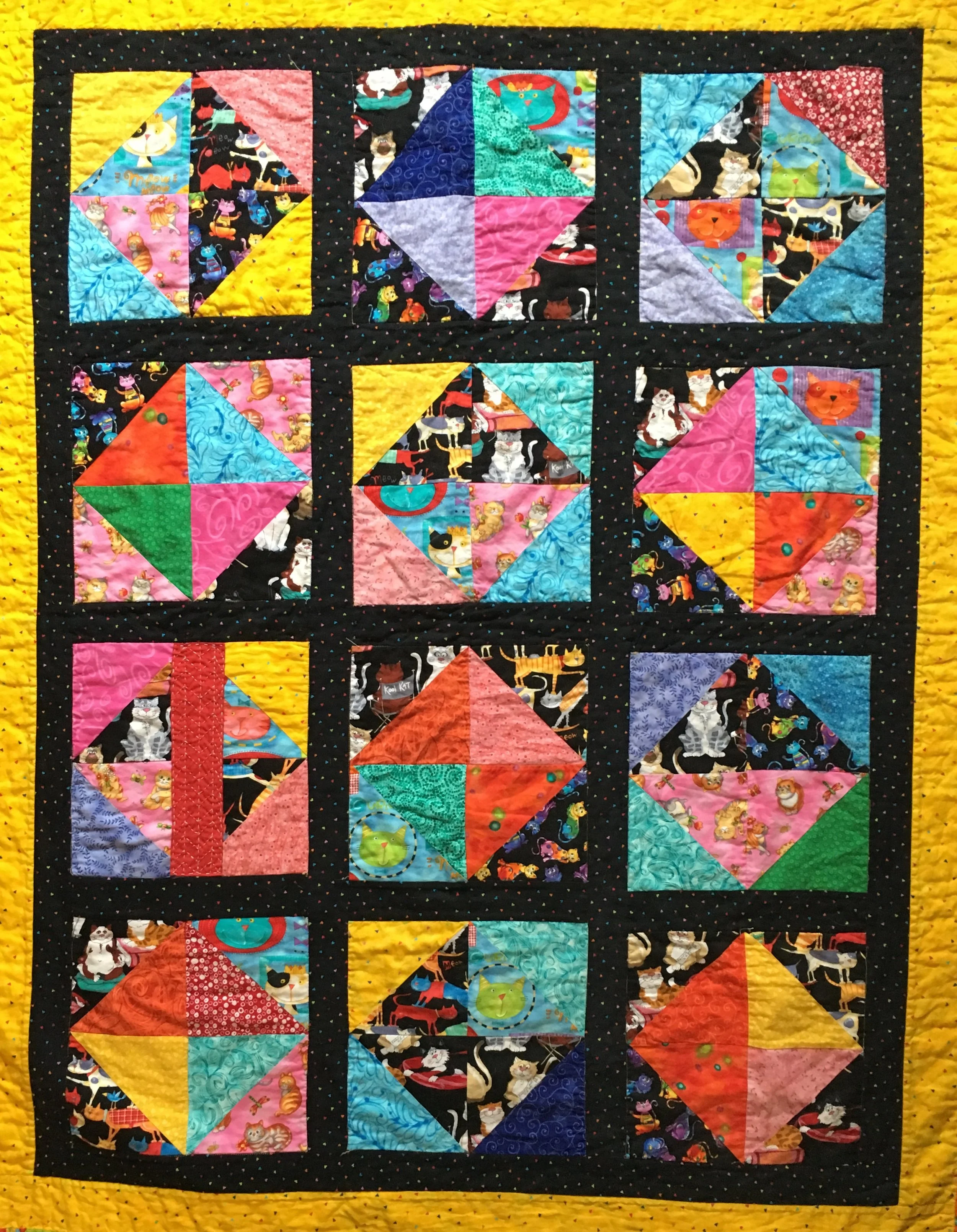
Here is the quilt with the repaired patch. I’m really happy with the repair. Rather than being a detraction, it adds interest to this special quilt.

The sashiko mend plays happily with the blocks in this quilt.  (Its in the far left rowd, 3rd block down).

The sashiko mend plays happily with the blocks in this quilt. (Its in the far left rowd, 3rd block down).

Next time I’ll share a repair on a knit—-a mitten I use for dog walks.

Notice: This blog is not monetized: I do not use affiliate links. When there are links in a post, they are to give credit to another creative person, because I like or have used a product, or to help the reader easily find supplies for a project.

TAGS: Visible Mending, Mending visibly, Mending quilts, Visible Mending on an Quilt, sashiko mending, Make and Mend by Jessica Marquez


February 14, 2019

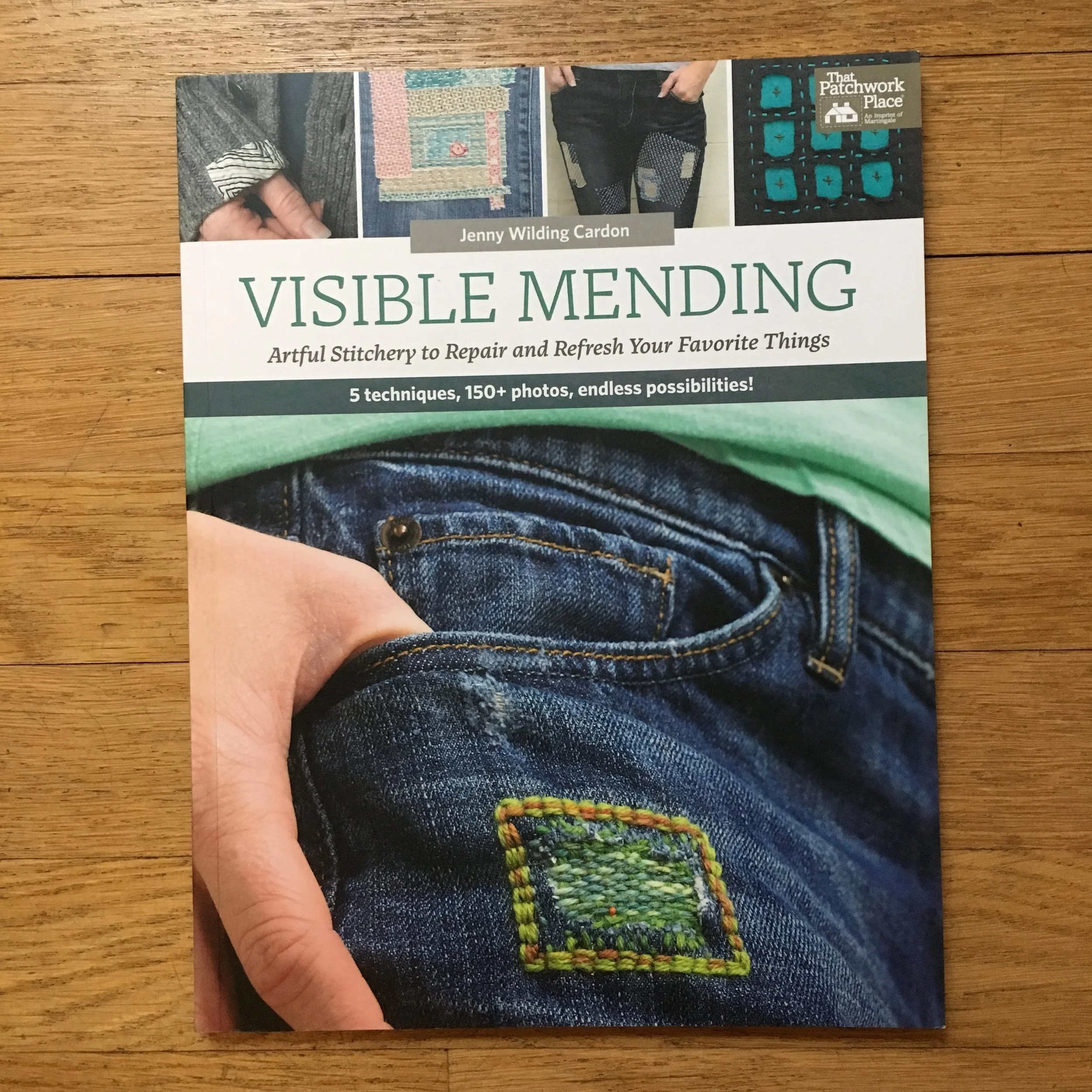
Book Review: "Visible Mending, Artful Stitchery to Repair and Refresh Your Favorite Things"

by Judy Tucker


IMG_8788.JPG
IMG_8788.JPG

More on mending! Visible Mending, Artful Stitchery to Repair and Refresh Your Favorite Things , by Jenny Wilding Cardon, is a great resource for anyone who wants to mend their own clothes, thrift store finds, and stained or torn children’s clothes.
This is a fun book which covers 5 different types of mending—Japanese Boro menidng which uses sashiko type stitching, hand embroidery, patches, darning and using a sewing machine to mend.

Each of the techniques has a list of supplies that will be needed and clear, tutorial-type photo illustrations of each step in the repair.

I love the author’s story about a repair on her son’s T-shirt (see above, the bright teal grid of squares in upper right corner). He loved it so much he wanted to wear it to school the next day. He couldn’t because it was needed as an illustration for this book, but she sent him off to look in his drawers to find another shirt in need of repair! If that’s not a vote of confidence, I don’t know what is!

Jenny has some really fun repairs: inset circles, holes left in place but turned into features with embroidery stitches that accent while stabilizing the hole, and woven darned repairs.

She doesn’t just have repairs for clothes. There is one on a the rubber of a pair of beloved sneakers and other on an American flag (with information about what repairs can and can not be done on a flag).

And finally, for folks who don’t want to do hand repairs, there a collection of machine mends with instruction s on how to do them.

This is a very useful book and I’m happy to own it because many of the techniques resonate with techniques used in quilting. It is also a book that will be great for a busy parent or a thrifter who is recycling and accenting old clothes.

IMG_8789.jpg


TAGS: Mending, Mending visibly, Visible Mending, Mending clothes, Mending and decorating too, Patching holes


  • Newer
  • Older

Powered by Squarespace 7