Search
  • Information
    • About
    • Contact
    • Privacy Policy
  • Blog
  • Subscribe
  • Tutorials
    • Tutorials
    • Doll Clothes: Photos and some Patterns
  • Suggested Reading
  • Quilts: My Original Designs
  • Gallery: Color Studies
  • Gallery: Quilts I've Made
  • Doll Making Blog Posts
  • Recent blog posts
  • Quilts Based on The Improv Handbook for Modern Quilters
Close
Menu
Search
Close
  • Information
    • About
    • Contact
    • Privacy Policy
  • Blog
  • Subscribe
  • Tutorials
    • Tutorials
    • Doll Clothes: Photos and some Patterns
  • Suggested Reading
  • Quilts: My Original Designs
  • Gallery: Color Studies
  • Gallery: Quilts I've Made
  • Doll Making Blog Posts
  • Recent blog posts
  • Quilts Based on The Improv Handbook for Modern Quilters
Menu

Sleeping Dog Quilts

SLEEPING DOG QUILTS

September 26, 2019

"Triple Barnstar" Quilt top, a Work-in-Progress

by Judy Tucker


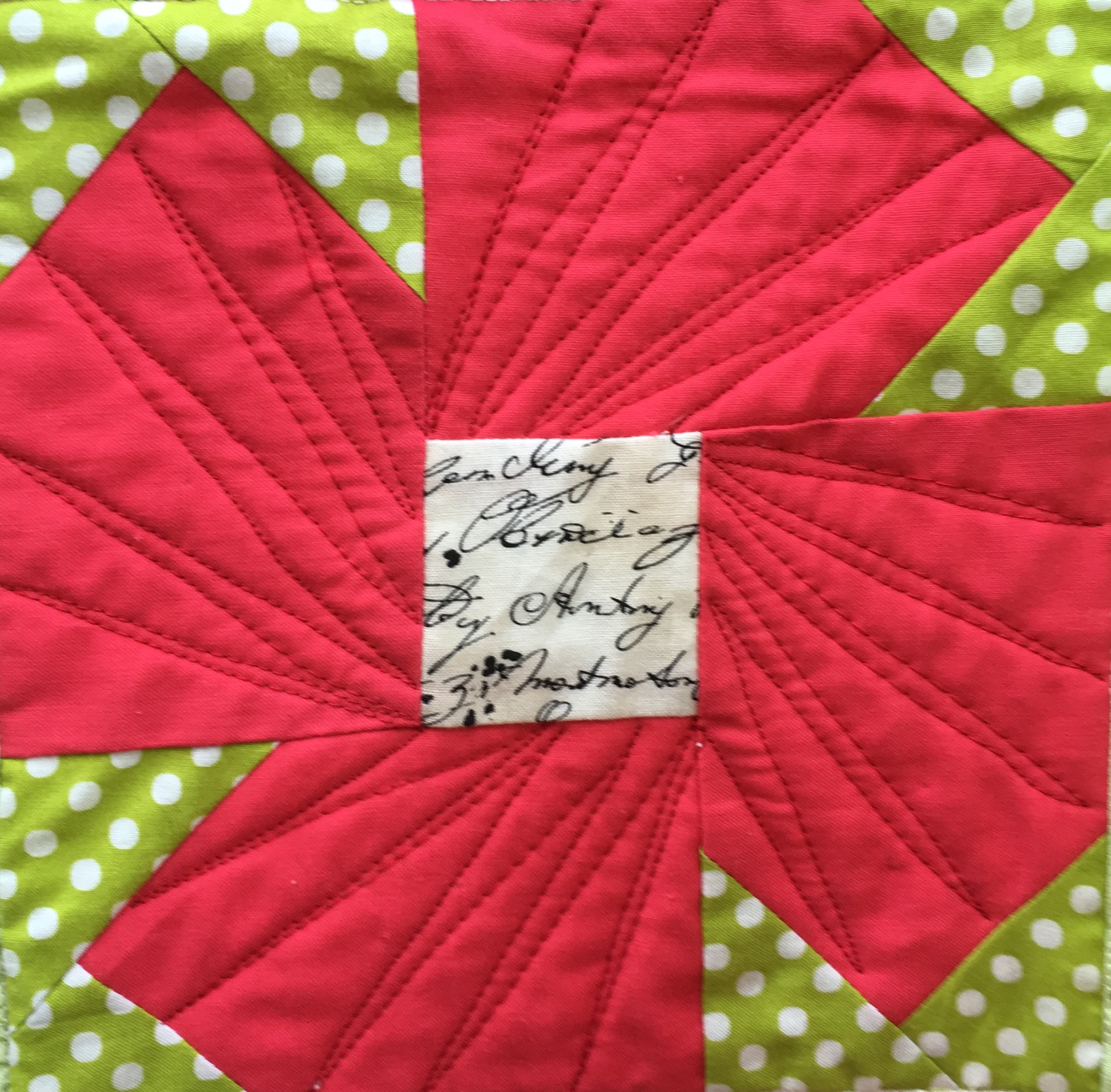
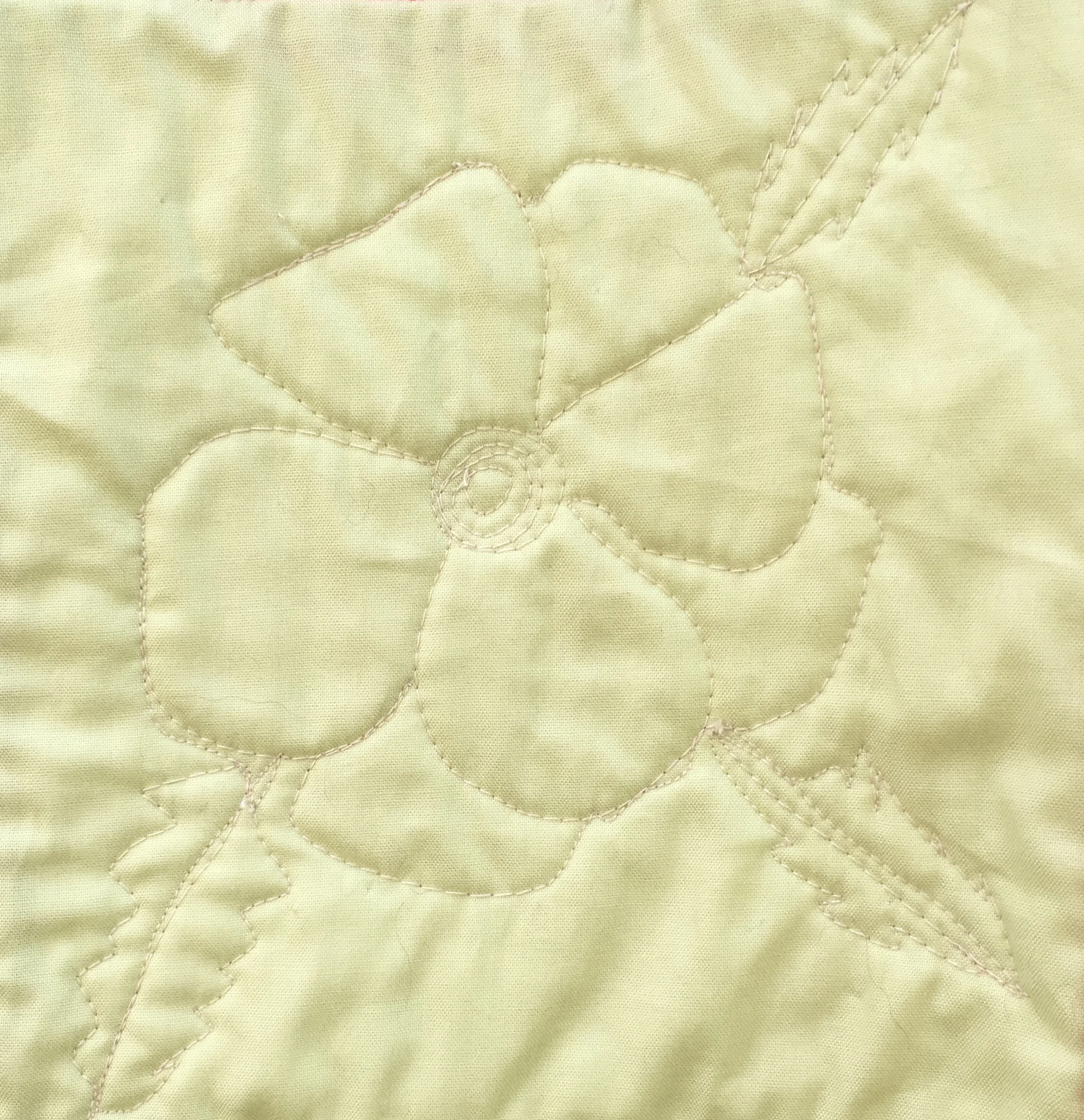
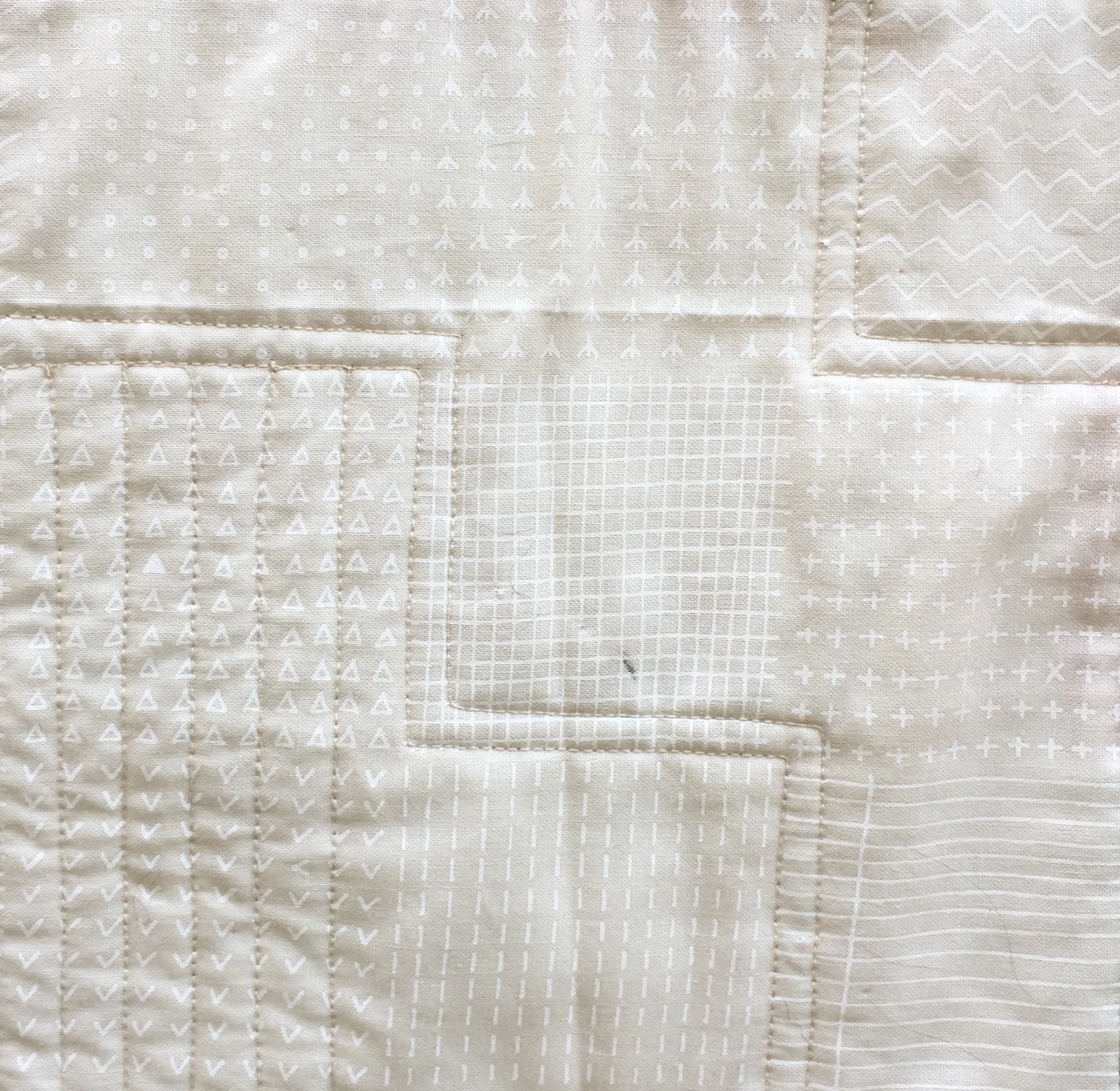
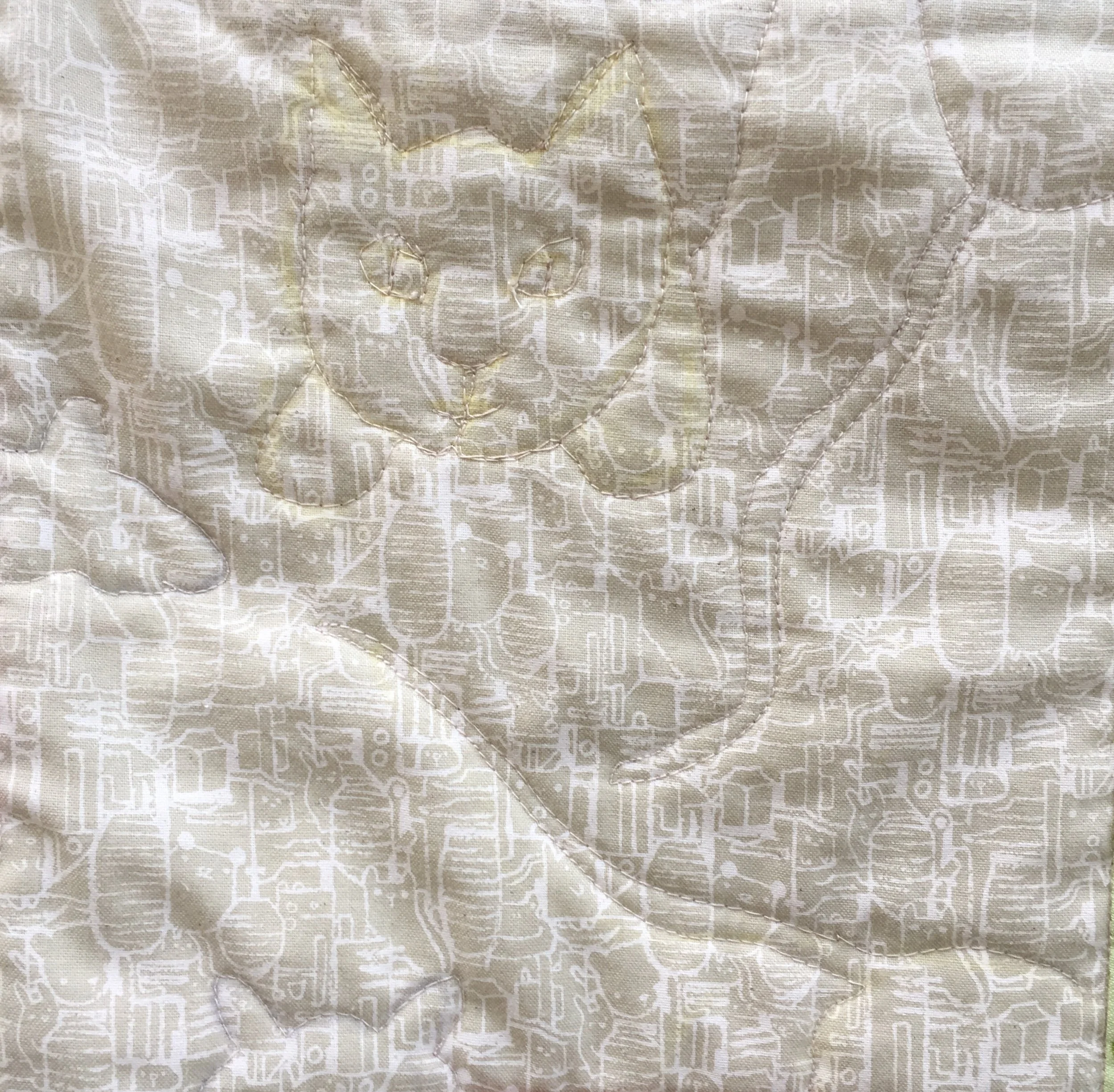
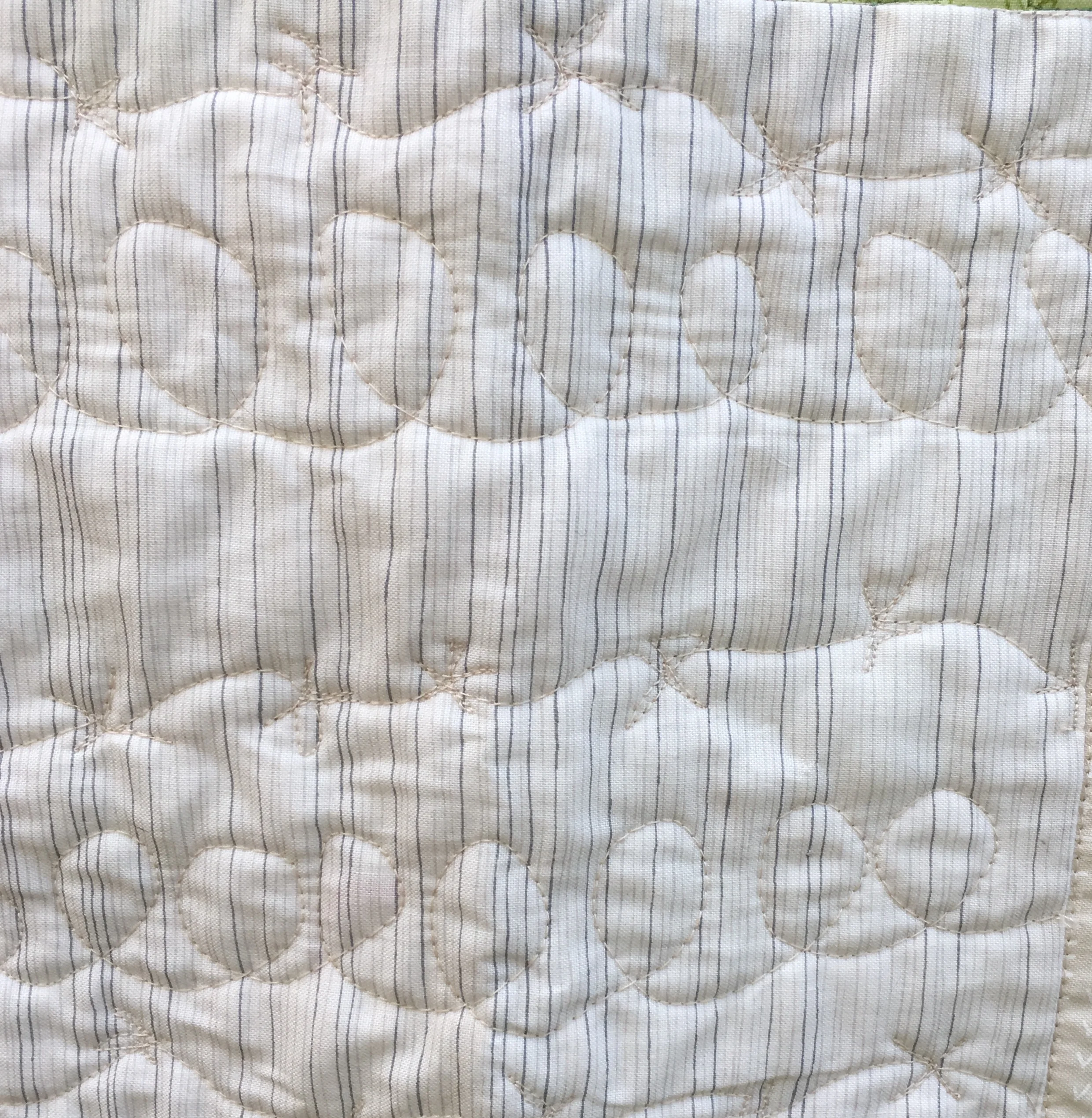
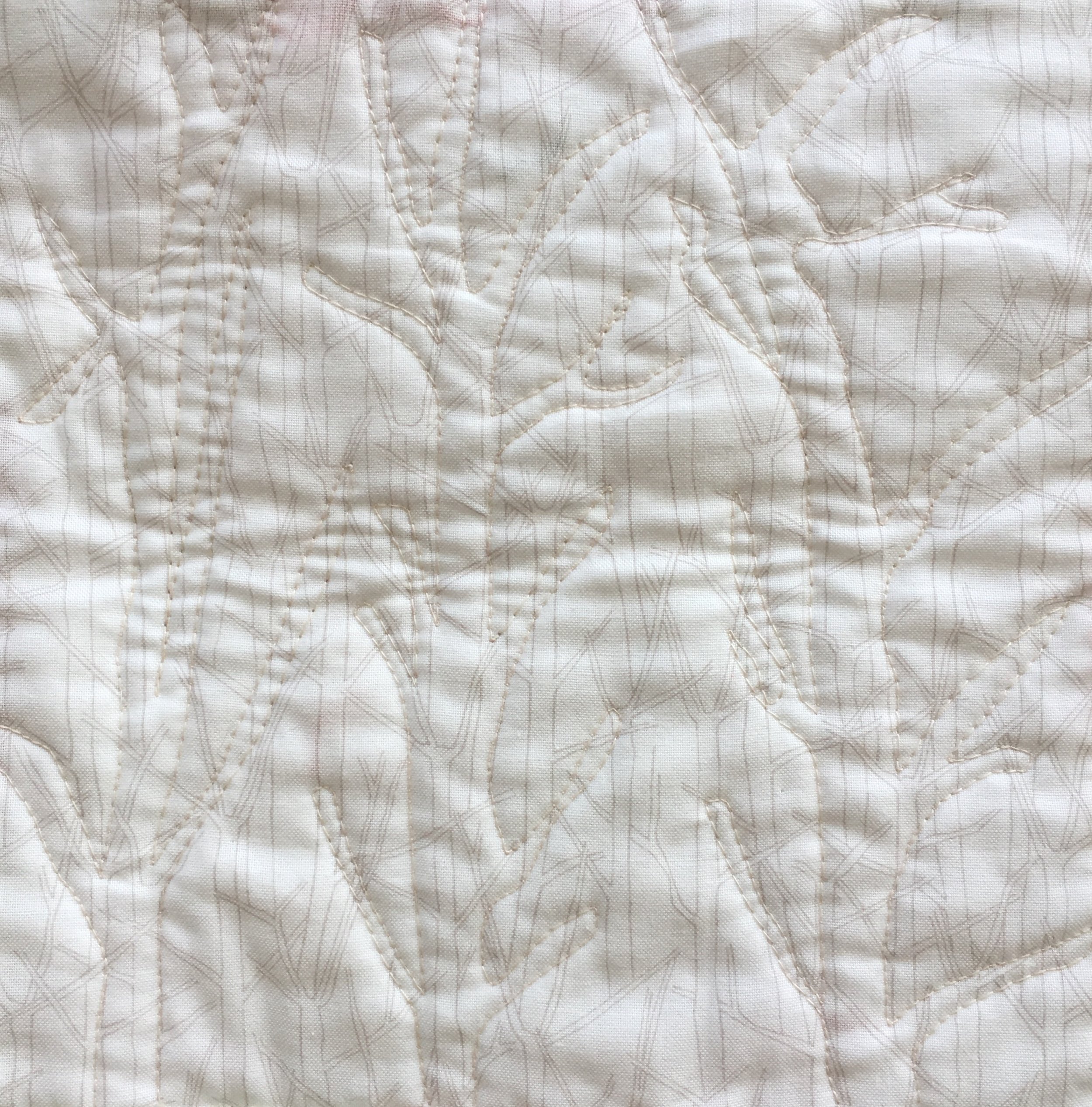
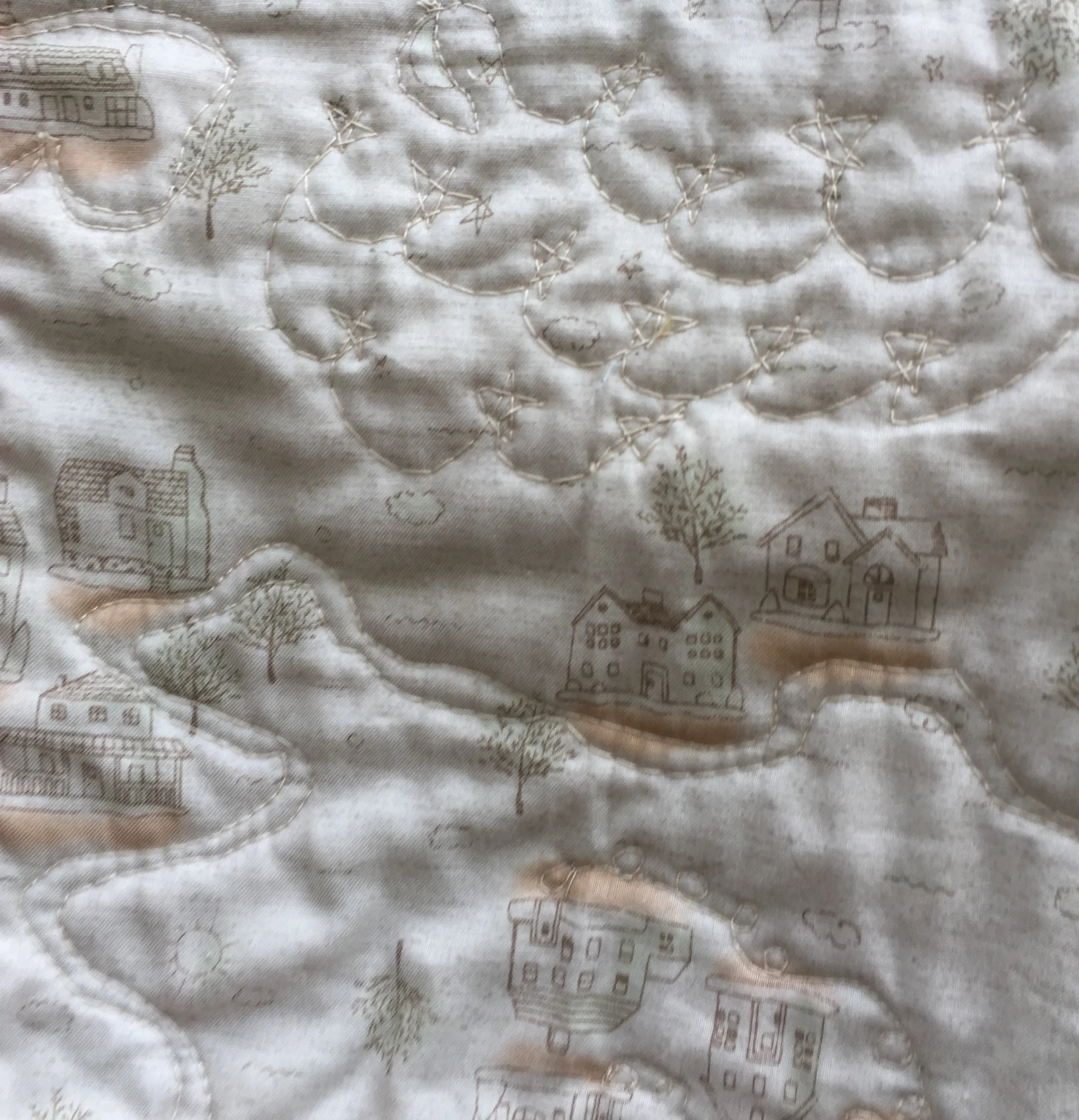
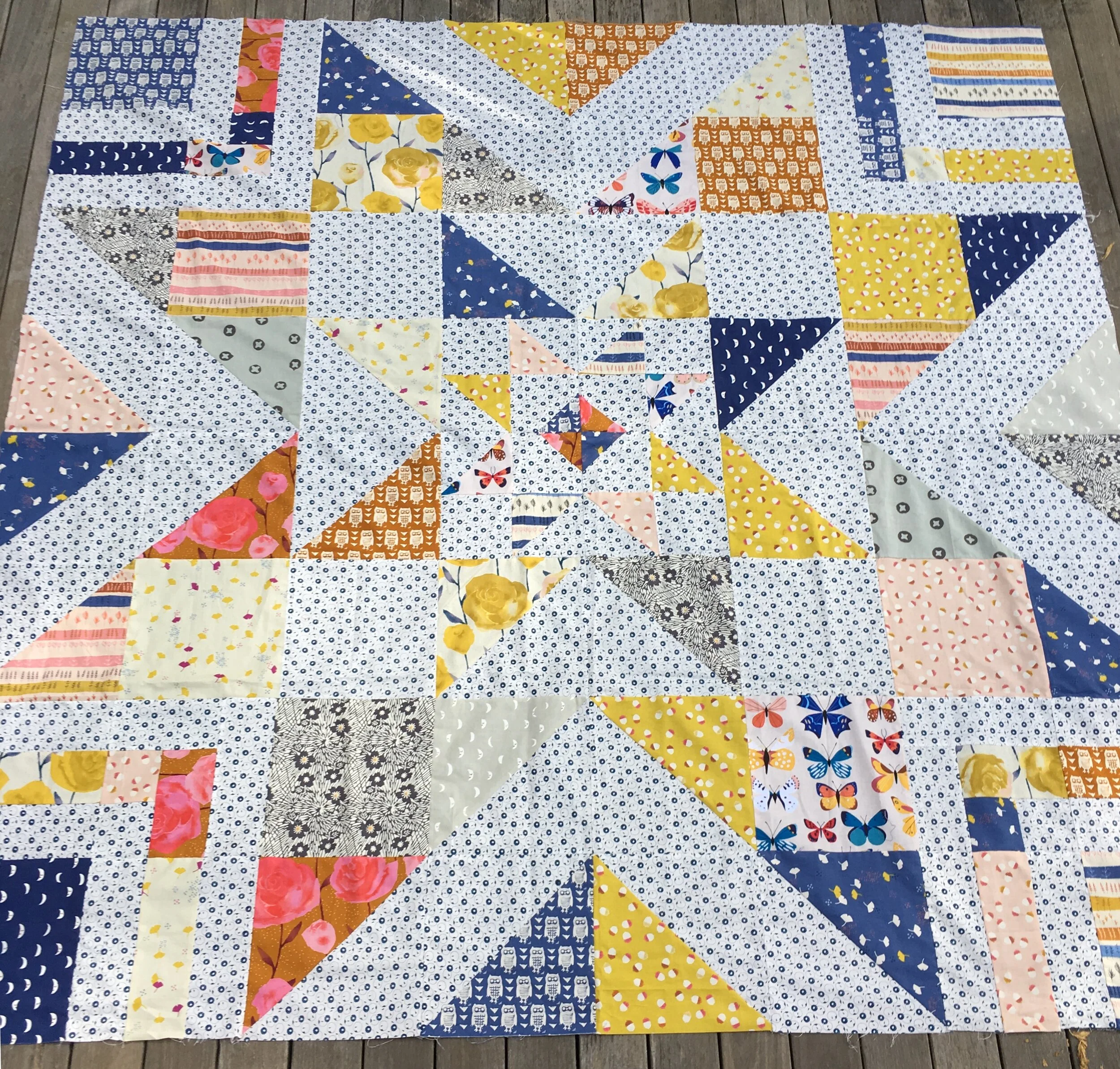
“Triple Barnstar” Queen size quilt top, work in progress

“Triple Barnstar” Queen size quilt top, work in progress

“Triple Barnstar” Queen size quilt top, work in progress

“Triple Barnstar” Queen size quilt top, work in progress

Here’s the quilt top I’m working on. It is a pattern by Amy Gibson of Stitchery Dickory Dock and called “Triple Barnstar”. (Look carefully and you’ll see that there is a star, in a star in a star). I think this is going to become the quilt I use during the Fall.

The pattern is for a throw or a queen size quilt. I started to make the throw but discovered it really covered the top of my bed, so I’m going to add on a scrappy border of the feature fabrics I have left over and call it a queen.

Despite the fact that I’ve been working on this quilt on and off all summer, it really does come together quickly. I like this quilt but it really doesn’t show off the star design very well.

If I make it again, I think it would be fun to use bold solid colored fabrics. One color for each star, and another for the designs between the star points of the largest star and the center square. While white or off-white would be the obvious choice for the background of that quilt, I think using that a low volume print as I did uin this quilt, would be fun.

Here is a photo of the two inner stars and center square so you can see more of the detail in the fabrics.
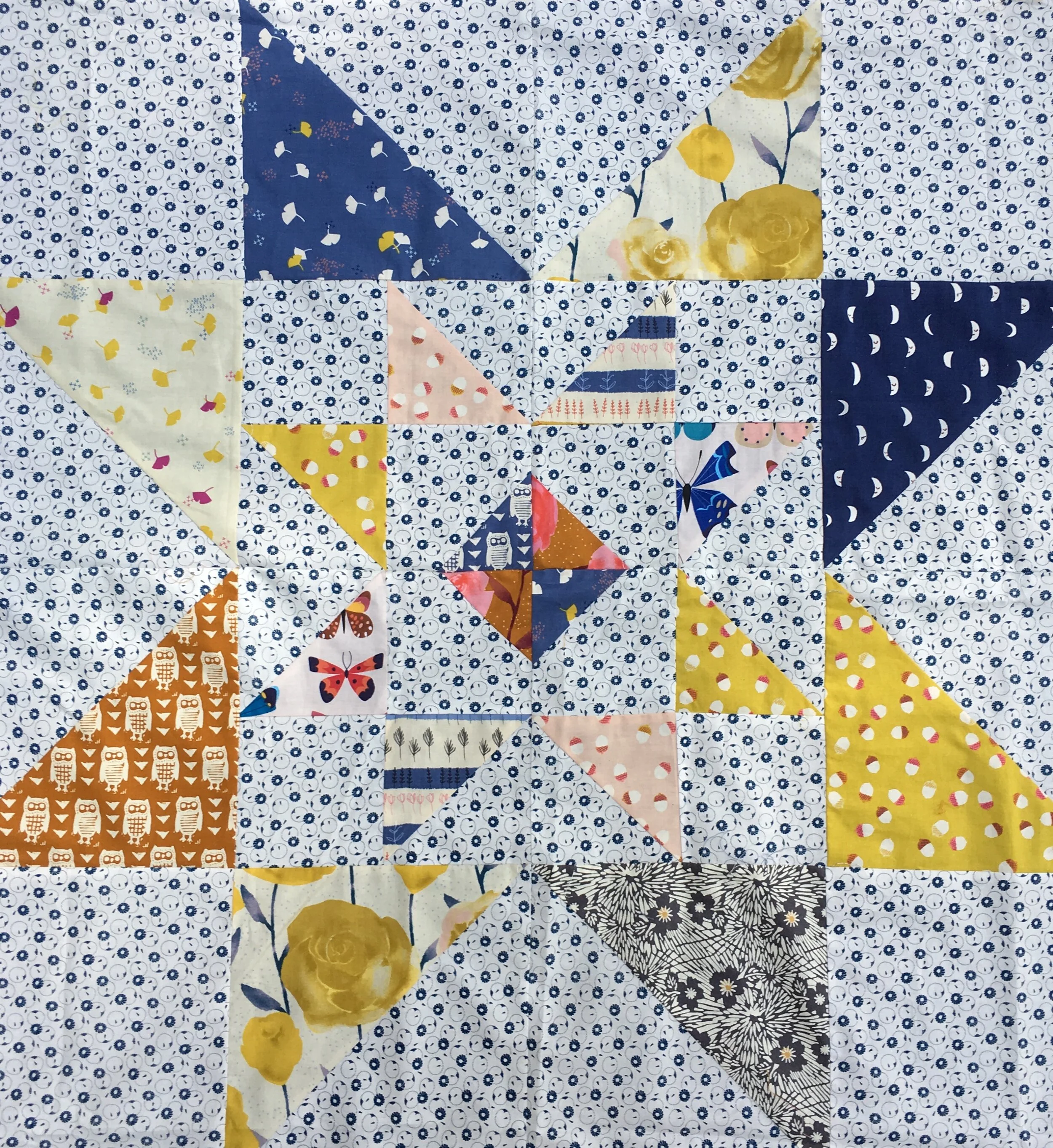
TripleBarnstarInnerTwoStars.jpg

I’m off to go sew on the outer borders! This is a big quilt, so it will be a while before it’s done!
TAGS: "Triple Barnstar" Quilt Top by Amy Gibson, Amy Gibson, low volume fabrics


September 12, 2019

Lunar Felt Playscape with Peg Doll Astronauts

by Judy Tucker


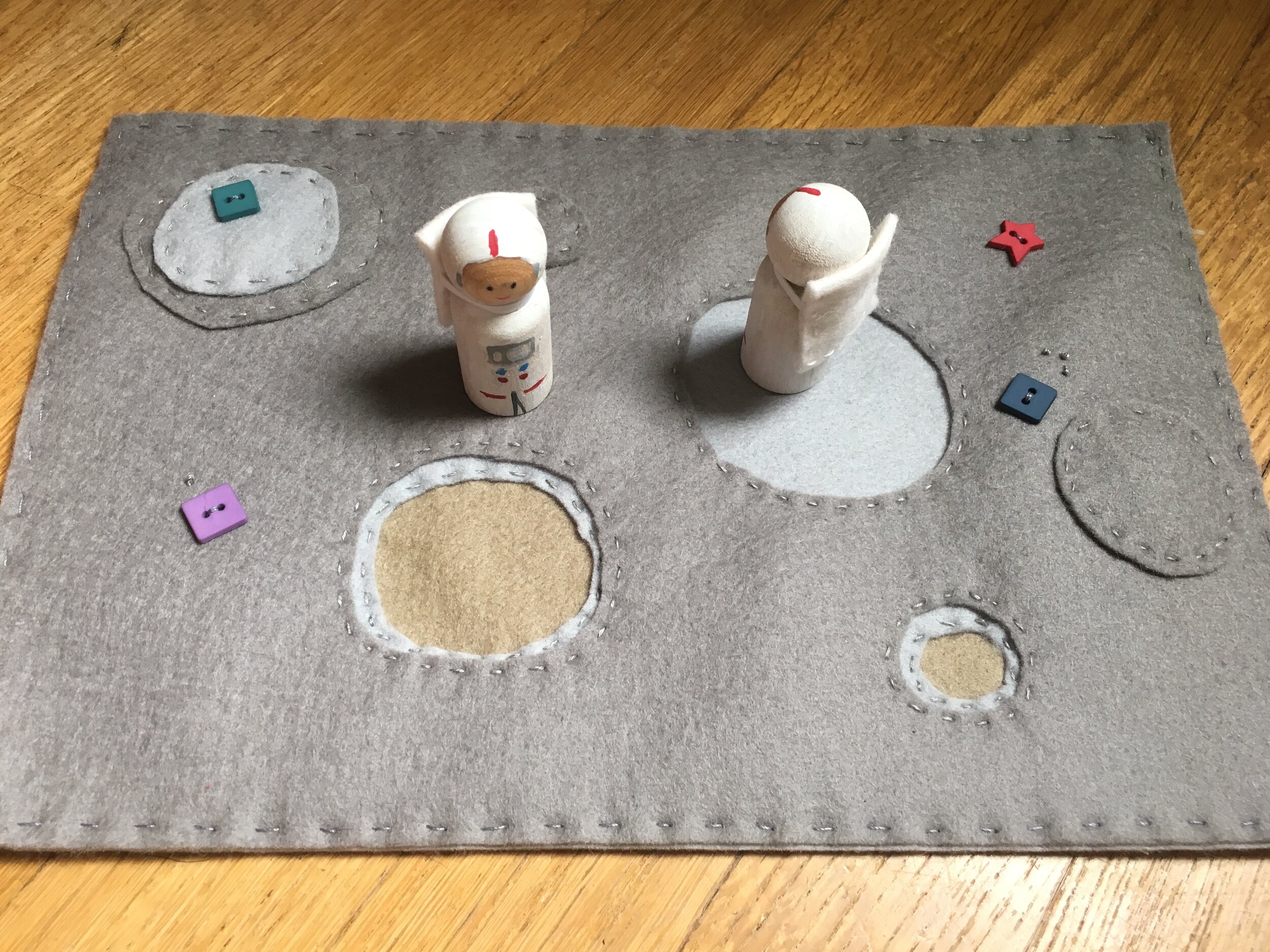
Felt lunar playscape with standard peg doll astronauts

Felt lunar playscape with standard peg doll astronauts

Felt lunar playscape with standard peg doll astronauts

Felt lunar playscape with standard peg doll astronauts

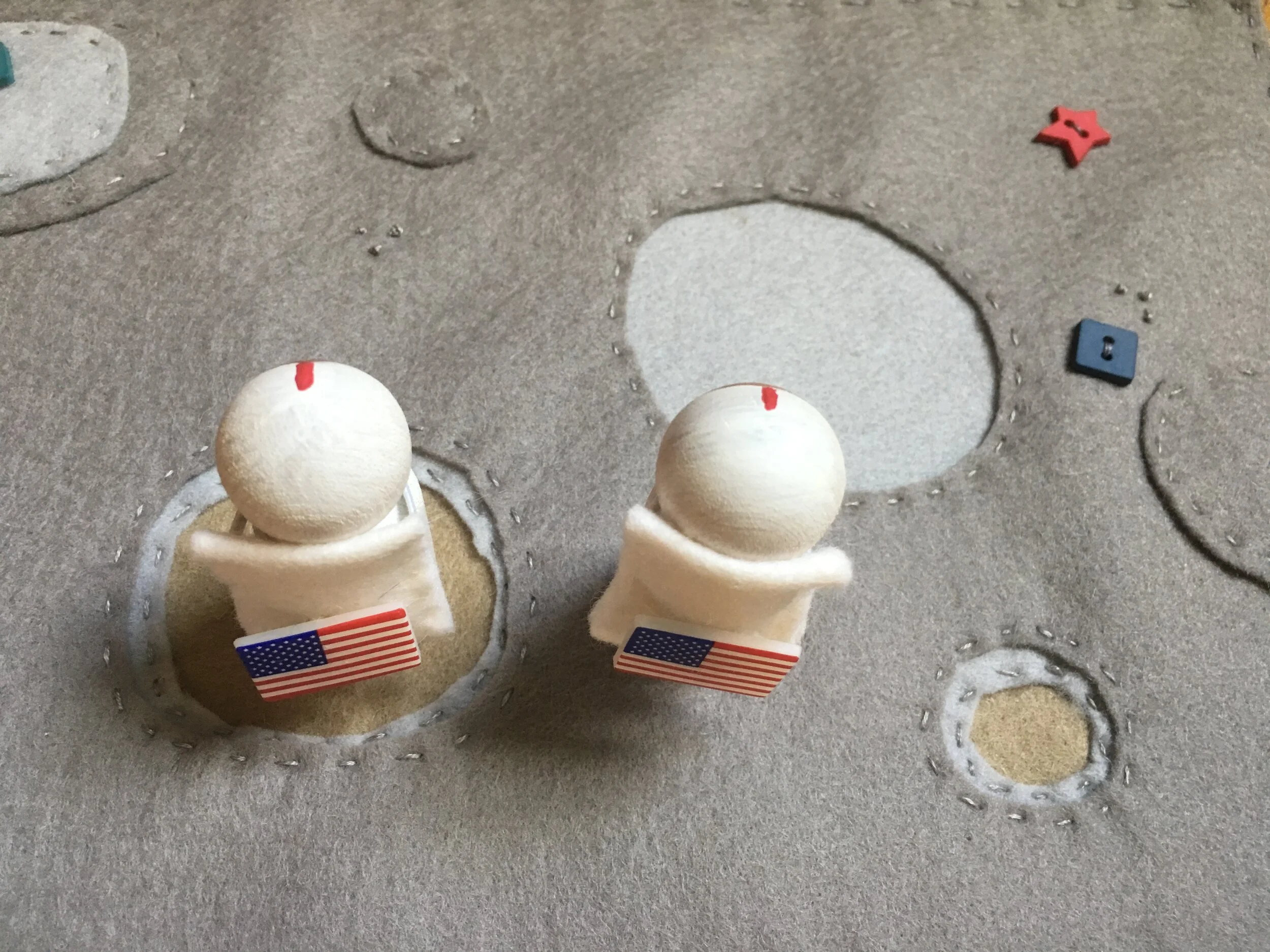
After making the felt meadow and brook playscape, I decided to make a lunar playscape with a couple of peg doll astronauts. Last week I sewed features on top of the base. This week I layered 3 sheets of wool felt and did cut-outs to the 2nd light grey layer and the 3rd light brown layer. Then I sewed the cut out felt scrapes to the top layer to create rocks and hills in the landscape.

This is a very grey landscape! I sewed on a few “mineral rock” buttons and a little bit of space “junk” (the red star) that must have fallen off the rocket!

It was so much fun making the peg dolls. I used the standard size pegs. I picked Apollo era type suits and made felt life packs. The life pack is held on the doll by a 1/4 inch white elastic around the neck.

Astronaut without the life pack on the left and the one on the right wearing it.

Astronaut without the life pack on the left and the one on the right wearing it.

After I had everything made, I found the tiny American flag buttons at a craft store. So I added those to the life packs.

Life Packs with the flag buttons

Life Packs with the flag buttons

I have a wood rocket ship I found on Etsy.com (which hasn’t arrived yet) to add to the set. The seven year old who will be the recipient lives near the ocean so I am going to suggest that he add some beach rocks for added interest.

Next week….maybe I’ll have be a quilt top to share. There is one nearly complete.


TAGS: Felt Lunar Playscape, Felt Playscape, Astronaut peg dolls, Imaginative play


September 5, 2019

Making a Felt Playscape

by Judy Tucker


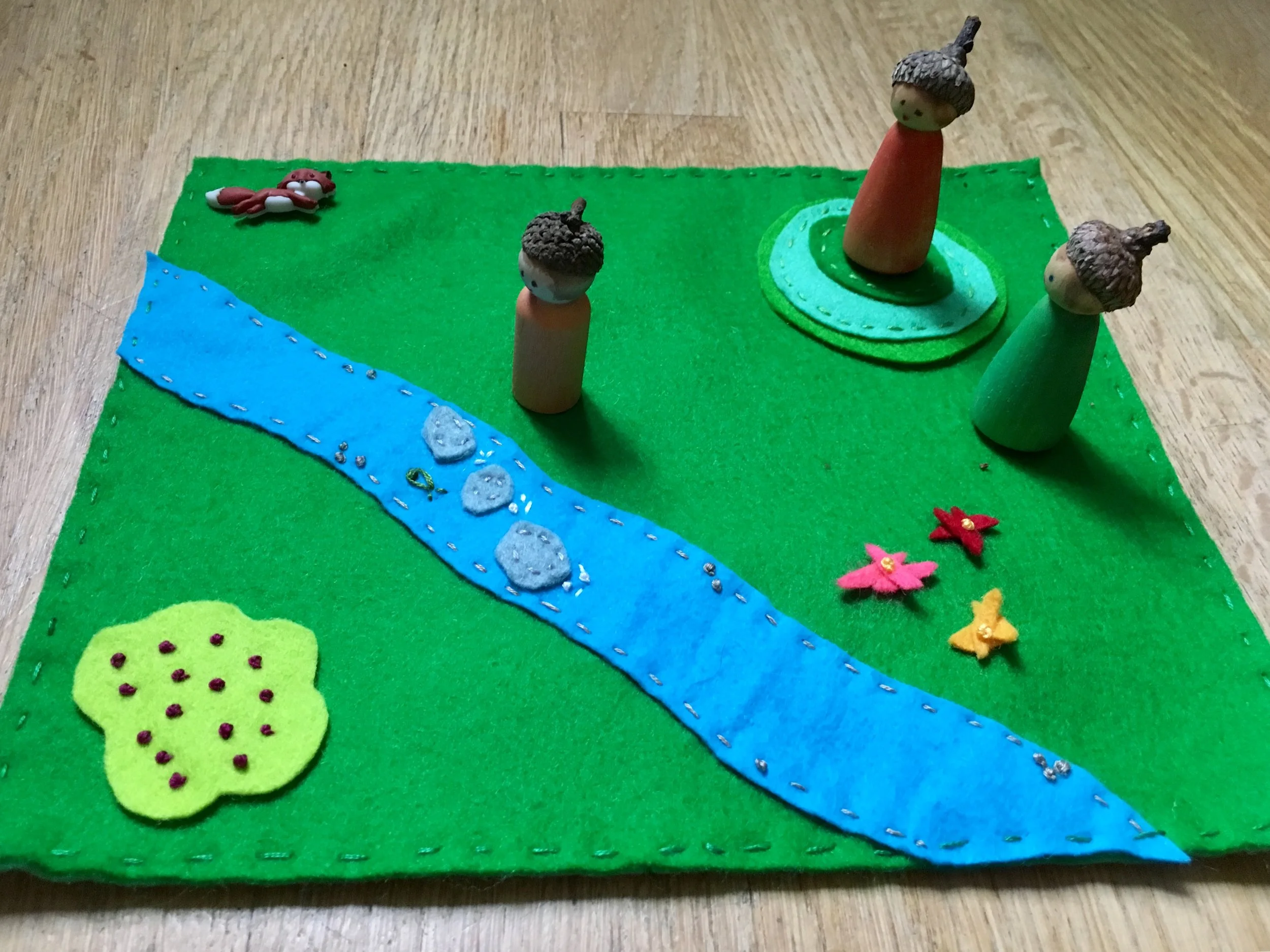
Felt Playscape, 9 x 8 inches

Felt Playscape, 9 x 8 inches

Felt Playscape, 9 x 8 inches

Felt Playscape, 9 x 8 inches

A photo of a felt playscape of a beach popped up on my Instagram feed this weekend. Wow. What a fun idea. It turns out there are lots of playscapes available on Etsy.com. (I actually purchased one that was amazing). But it’s really fun to make one with exactly the features you want.

I have a stash of wool felt but the greens and blues all had “nibbles” taken out of them from making peg doll outfits. Standard 8 x 12 inch felt rectangles would be ideal but I could only cobble together enough 8 x 9 inch pieces, so that’s how big mine I made it.

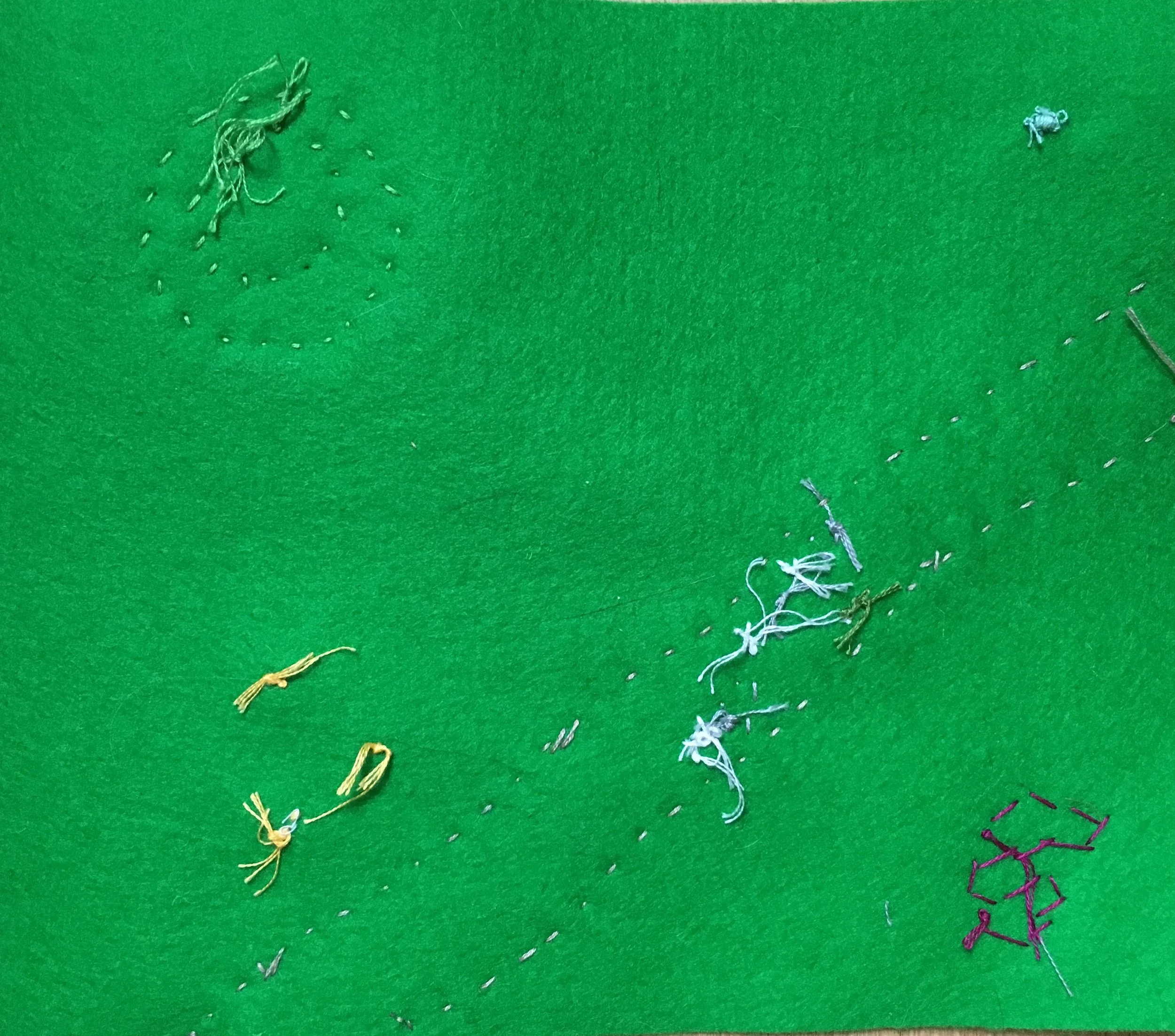
You need two pieces the same size for the base. I sewed the felt landscape components on with 3 strands of embroidery thread, using a running stitch and French knots. That left a lot of knots and loose threads on the back. So the 2nd piece of felt covers all that up and makes the playscape sturdier.

Back of the playscape base showing the stitching

Back of the playscape base showing the stitching

Here are my landscape components:

  • a hill, made by using 3 different size circles. The bottom two circles can be placed one on top of the other and sewn to the base together. Then the third circle is sewn on top of them.

  • a brook, with 3 stepping stones.

  • flowers made with scraps. Cute, but I think not sturdy enough to hold up to play. Next time I’ll just cut wavy circles and fasten them with French knots.

  • a trout, hiding near the stones in the brook

  • a blackberry bush

  • a fox that’s a button. The button has a loop on the back, so I cut a tiny slit with a craft knife and pushed the loop through and fastened it on the wrong side of the base. Safety note: do not use buttons if the playscape is for a child under 3 years old.

The dolls on the mat are 2 angel pegs and one boy peg that I made.

This is a great project for a child who has some basic hand sewing skills. And it also has STEAM potential for homeschoolers. Using my design a child can explore these topics:

  • Landscape design

  • Topographical maps

  • Foraging for berries (there are wild blackberries and wild blueberries near my house)

  • Fluid dynamics—I attempted to make eddies around the rocks in the stream and the fish is in a quiet space behind one of he rocks

  • Art—use of color, sewing as decoration

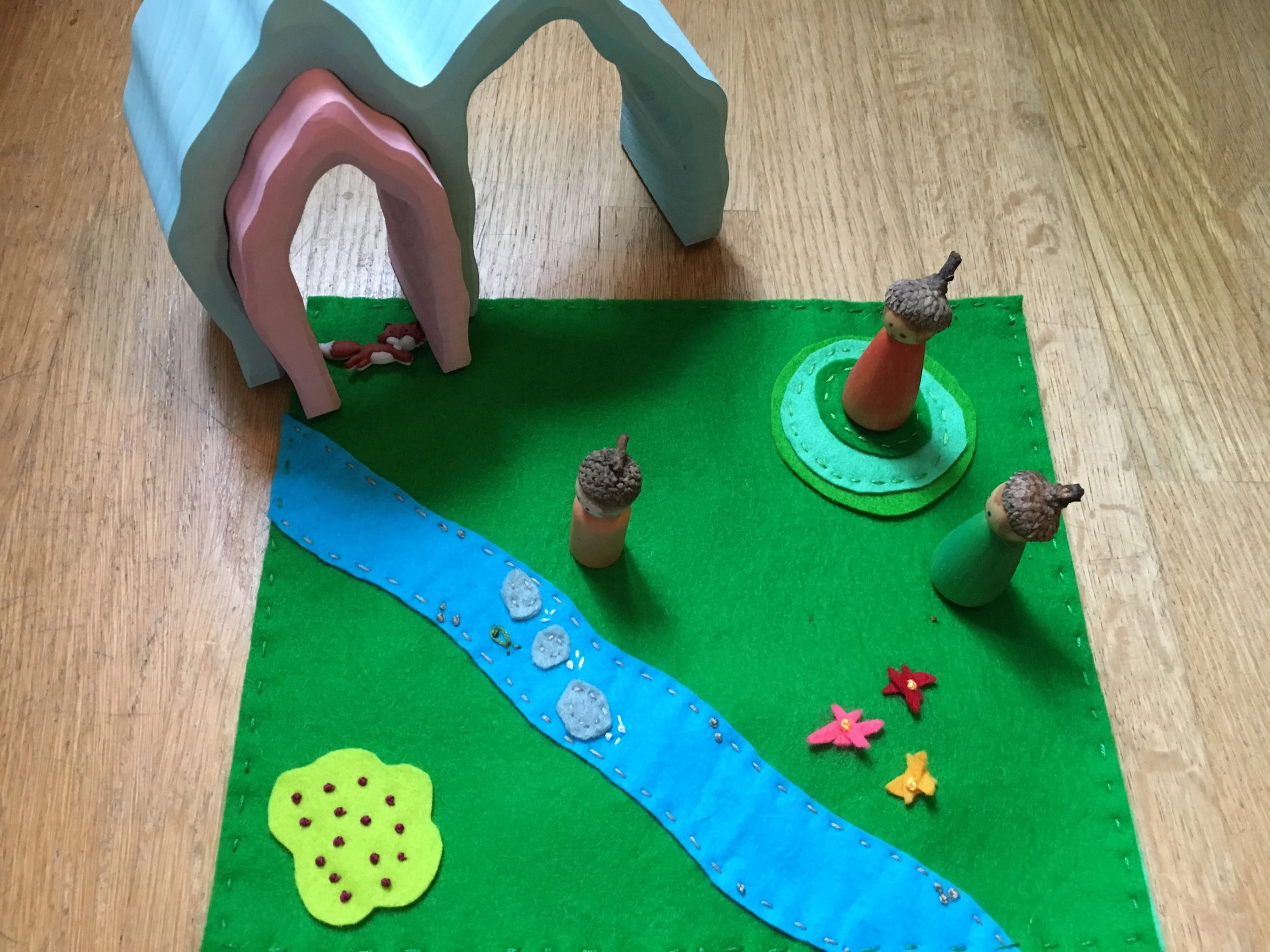
Adding other components makes the playscape even more exciting.

Playscape with 2 wooden arches from a Grimm Blue Grotto puzzle

Playscape with 2 wooden arches from a Grimm Blue Grotto puzzle

When designing felt playscapes, the sky’s really the limit. In fact, I’m planning to design a moonscape for my next one!


TAGS: Felt Playscape, Playscape, Making a felt playscape, Peg Dolls, STEAM project, Meadow Playscape, Meadow with a brook and hill playscape


August 22, 2019

Tutorial: Peg Doll Mermaid

by Judy Tucker in Tutorial


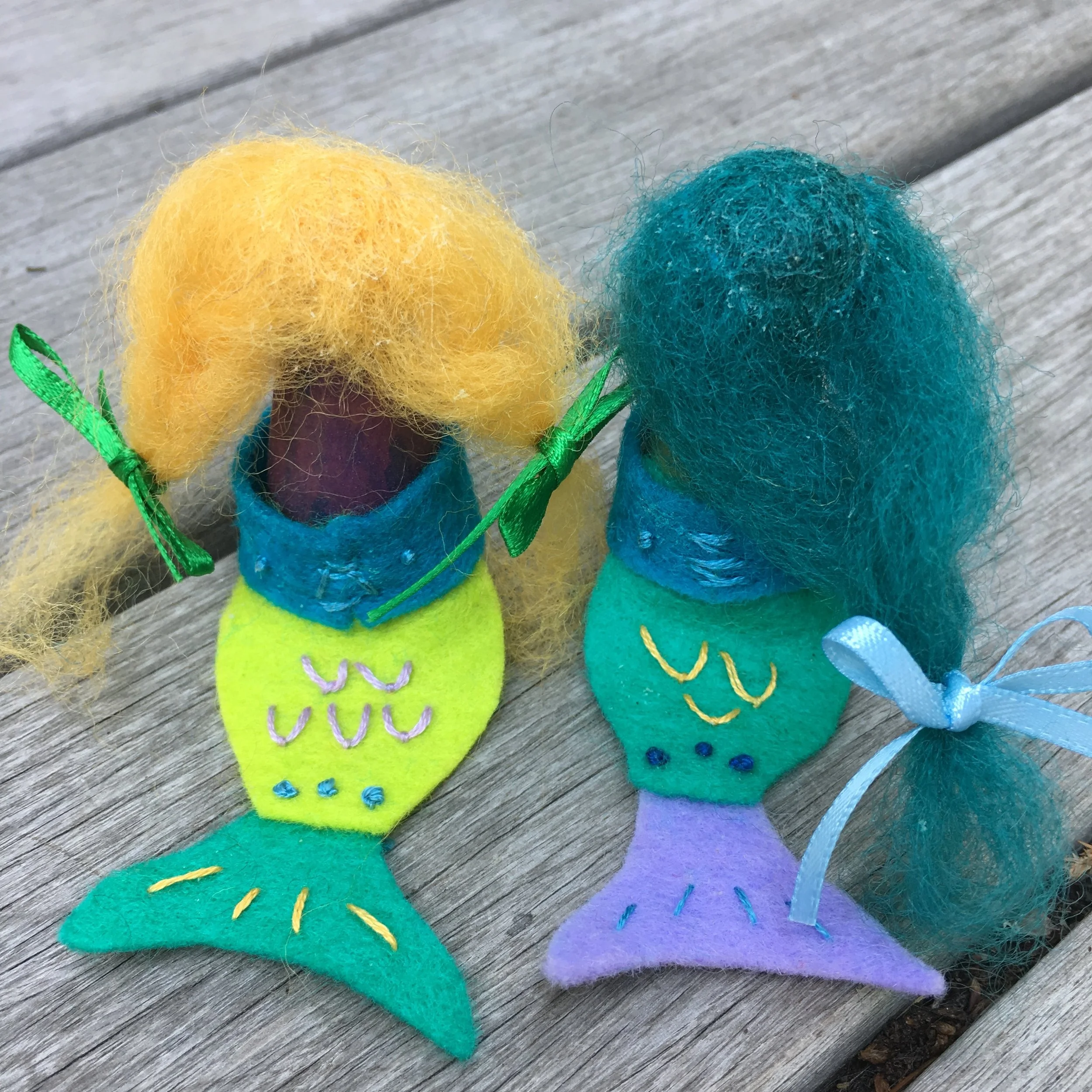
Peg Doll Mermaids

Peg Doll Mermaids

Peg Doll Mermaids

Peg Doll Mermaids

Before summer slips into autumn, I thought it would be fun to design a peg doll mermaid. I used angel/girl 2 inch tall pegs dolls. I painted them with Lyra opaque watercolors. I’m finding it’s great to layer several colors while the paint is still wet, so that the colors run together.

Their tails are attached to the body of the doll with a 1/2 inch band. This band can be glued to the doll, or left loose, allowing the tail to be removed.

NOTE: Because of the small size of the this peg doll, this mermaid is only for children age 3 and older.

PegDollMermaidsFrontView.jpg

One of my mermaids is going to a school age child so I’ve chosen not to glue on the tail. The mermaid told me that sometimes, especially on Thursday, she likes to step out of her tail and hitchhike to school in a child’s pocket!! She’s very interested in geography!

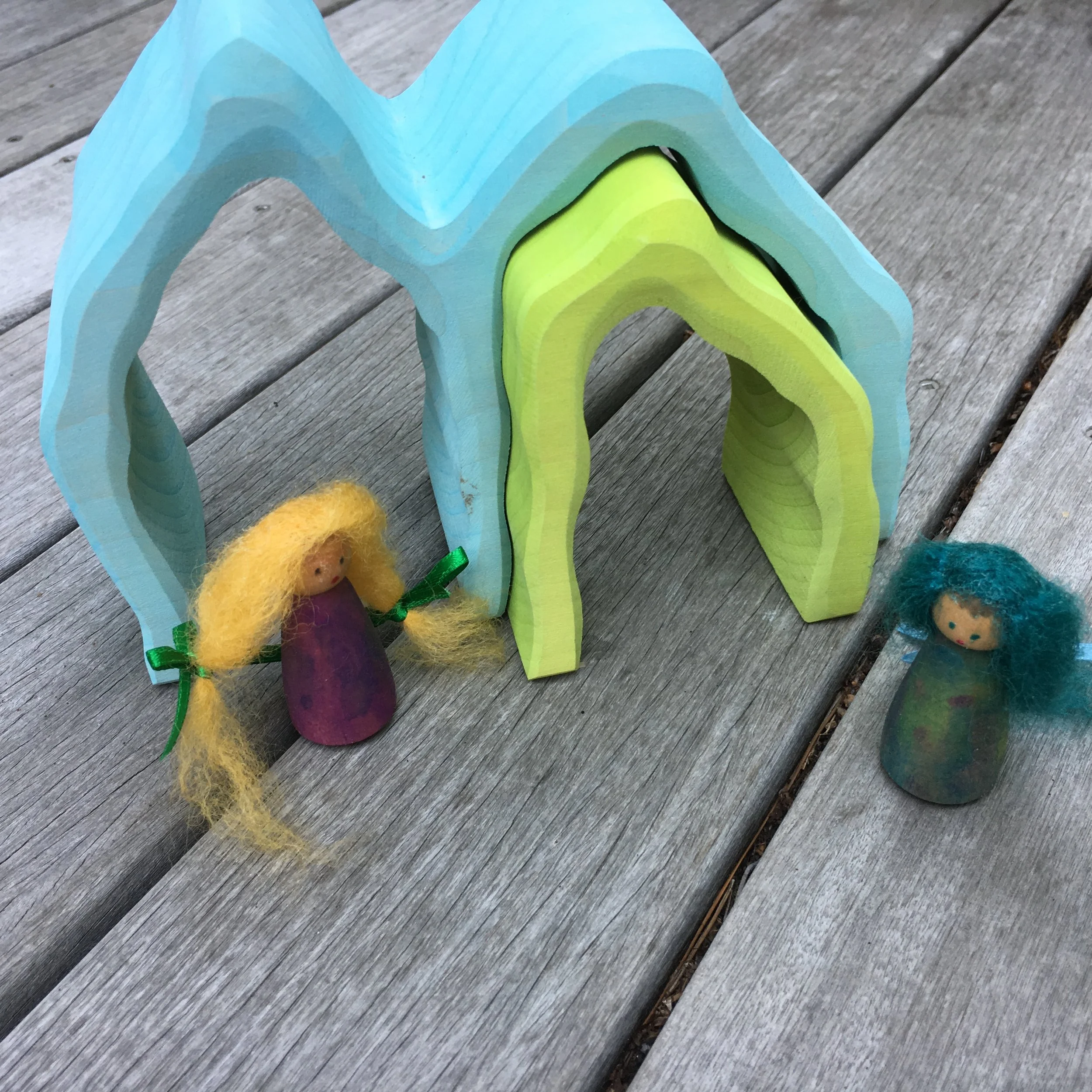
The mermaids without their tails, waiting for a ride to school, in front of two arches of a Grimm’s Playful Blue Grotto puzzle toy.

The mermaids without their tails, waiting for a ride to school, in front of two arches of a Grimm’s Playful Blue Grotto puzzle toy.

Instructions To Make a Peg Doll Mermaid

Supplies

  • 2 inch Angel/Girl/Women Wood Peg Dolls

  • Watercolor paints

  • Beeswax polish

  • Fine tip markers

  • Wool Felt

  • Embroidery thread

  • Wool roving and 1/8 inch ribbon if you want to add hair to the mermaid, felting needle and foam felting mat

  • Craft glue if desired

Instructions

  • Paint the peg doll and hair. Leave the face blank.

  • When the paint has tried, polish with beeswax polish. Allow to sit for an hour. Rub with a soft cloth (an old cotton sock is perfect) to remove the excess polish and give a mermaid a slight shine.

  • Using fine tip markers, give the mermaid eyes and a mouth.

  • Print the MERMAID PEG DOLL PDF pattern at 100% on your printer. Make sure the 1 inch gauge on your printed pattern measures 1 inch. Cut out the felt for the mermaid’s tail, fin and body band.

  • Embroider them as desired. I used french knots and an open daisy stitch

  • Sew the fin onto the tail. Then attach the tail to the body band, bringing the 2 ends of the body band to meet over the tail. Pin. Sew with simple over lapping stitches or a decorative design with embroidery thread.

  • Slip the band over the mermaid’s head and bring it down to where the tail can lie flat behind the mermaid. Blue to body if desired.

  • If adding roving for hair, pull off a piece of roving the desired length. At the center of the length of roving, gently felt a small section with the felting needle over the foam felting pad just until the strands of wool come together. Apply craft glue the felted section of the roving and glue it to the the mermaid’s head. Add a bow of 1/8 inch ribbon if desired.

Time to go to the beach! (Or to school, hidden in a pocket)!

Here’s a mermaid with painted hair,. I think she is every bit as sweet as the mermaids with roving hair. And probably better for 3-5 year children.

Here’s a mermaid with painted hair,. I think she is every bit as sweet as the mermaids with roving hair. And probably better for 3-5 year children.

TAGS: Mermaid Peg Doll, Mermaid Peg Doll with Removable Tail, Peg Dolls, Mermaid Peg Doll Tutorial


August 15, 2019

Tutorial: Bamboletta Baby Doll Dress with FREE pattern

by Judy Tucker in Tutorial


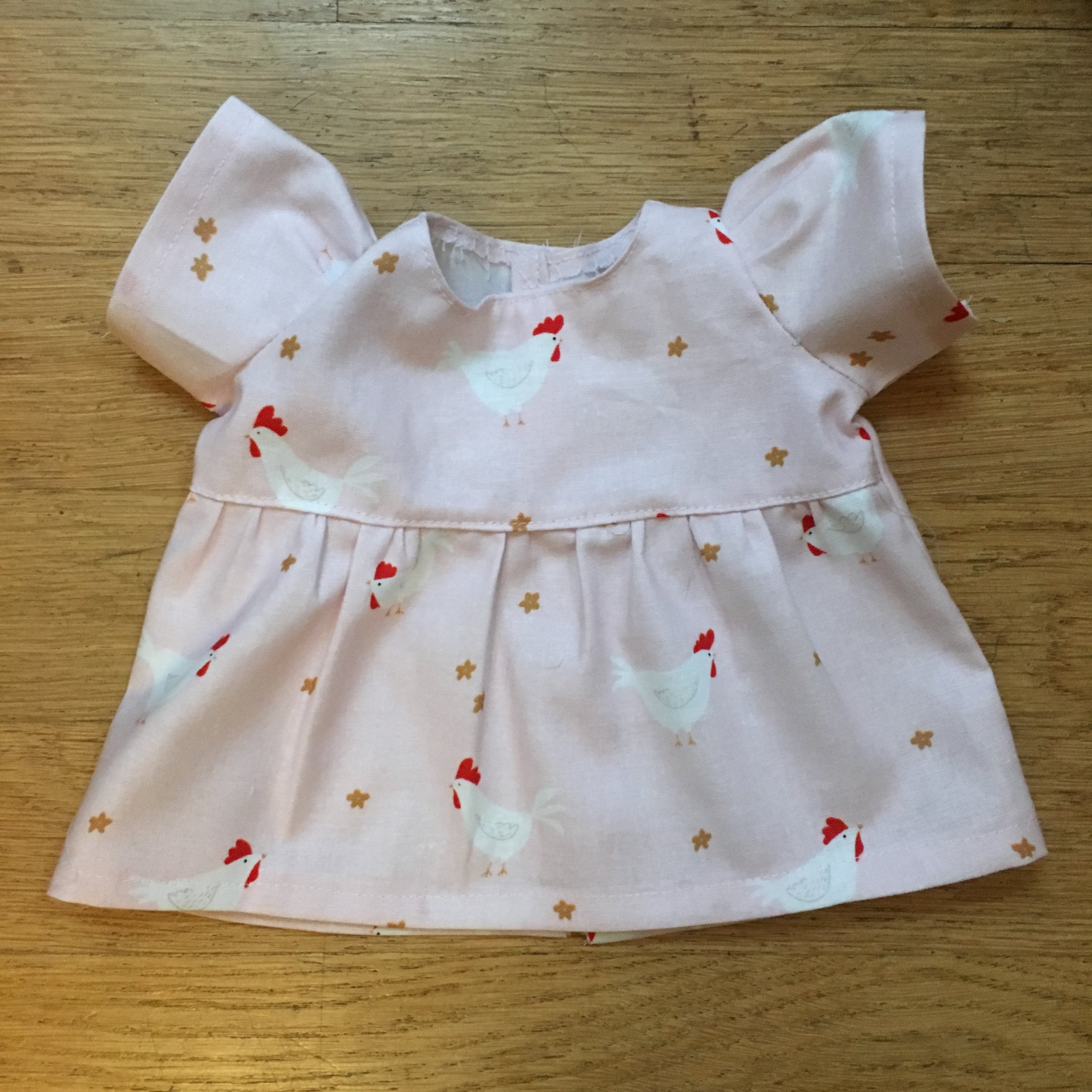
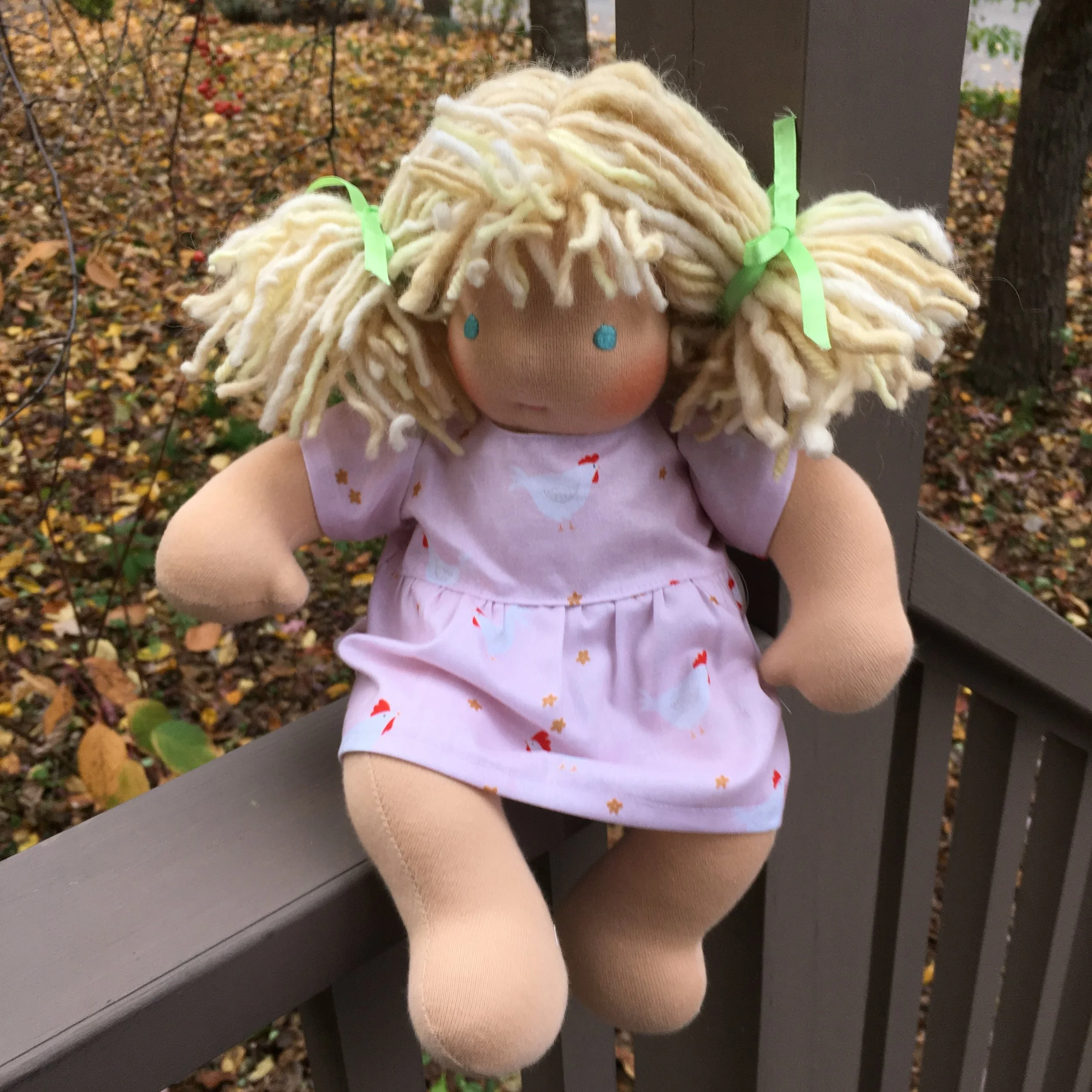
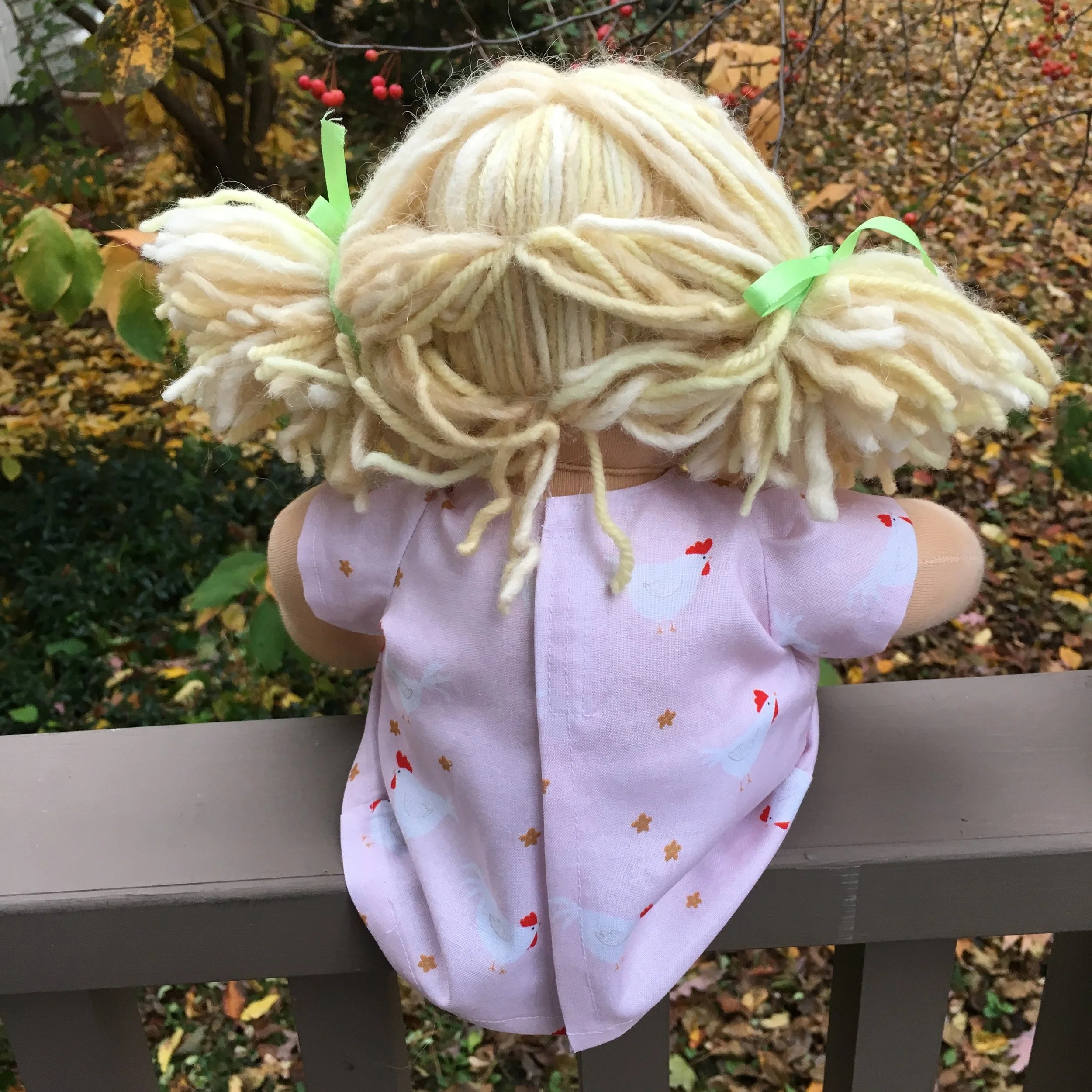
Bamboletta Baby Doll Lily, modeling her chicken dress

Bamboletta Baby Doll Lily, modeling her chicken dress

Bamboletta Baby Doll Lily, modeling her chicken dress

Bamboletta Baby Doll Lily, modeling her chicken dress

This is a tutorial to make a dress for a 12-13 inch Bamboletta Baby Doll. Bamboletta sells Cuddle Doll dresses which often fit their baby doll. But sometimes it’s a pretty tight squeeze! This dress pattern allows for a bit more wiggle room and may make it easier for a young child to dress the baby doll.

Bamboletta Baby Doll Dress Pattern

Supplies:

— 1/2 yard of woven cotton fabric. Quilting weight cotton is perfect.

— Thread to match the fabric

— 3/4 inch sew-on hook and loop tape.

— Sewing scissors and paper scissors

— Sewing pins

— Sewing machine.

— Iron and a surface to iron on

The dress is longer in the back than the front to allow for the baby’s ample bottom! The dress’s hem should look straight once on the doll.

Directions:

ALL seams are 1/4 inch.

1. PRINT the PDF pattern pieces at 100%. Once the pages are printed check the to be sure the one inch gauges on the pattern measure 1 inch.

2. Cut out the pattern pieces with paper scissors.

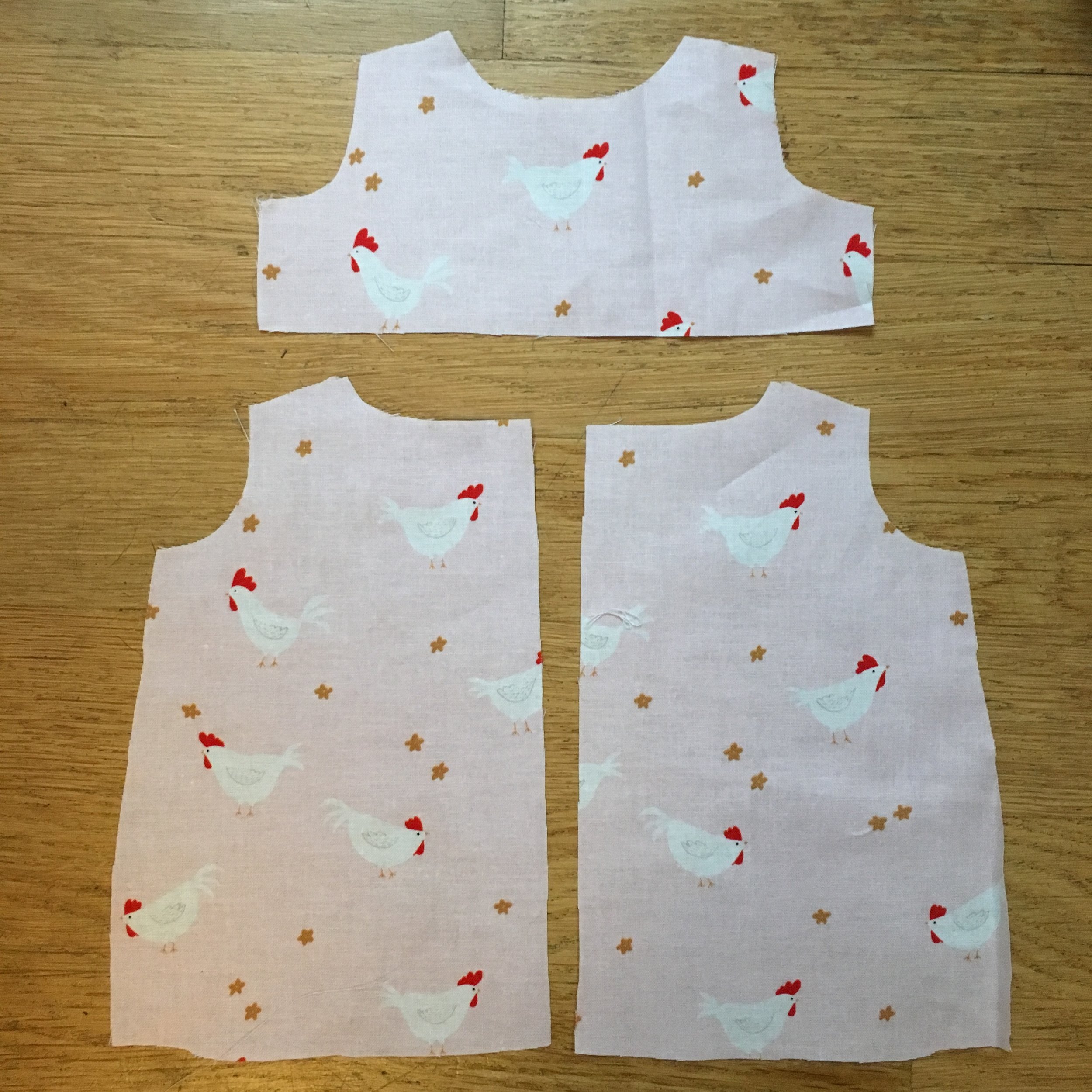
3. Pin the pattern to the fabric, making sure the long arrows on the pattern pieces are parallel with the fabric’s grain. (That’s the same as the selvedge edges). If your fabric has an interesting pattern, try to cut the bodice so that a focal point of the fabric is located at the middle of the pattern piece. Make sure that the feature you want it is at least 1/2 inch away from both the neck edge and the seam at the bottom of the bodice pattern piece. For example. Your fabric may have a cute rabbit. Position the pattern piece so that the rabbit is centered.

Note: Make sure you have enough fabric for all the other pattern pieces before you fussy cut the bodice piece.

Bodice and back pattern pieces. Note that the chicken is centered on the bodice.

Bodice and back pattern pieces. Note that the chicken is centered on the bodice.

4. Finish the raw edges of the neck on the bodice and back pieces with a zig-zag stitch or an overlock stitch if your sewing machine has one.

This is the overcast stitch on my sewing machine

This is the overcast stitch on my sewing machine

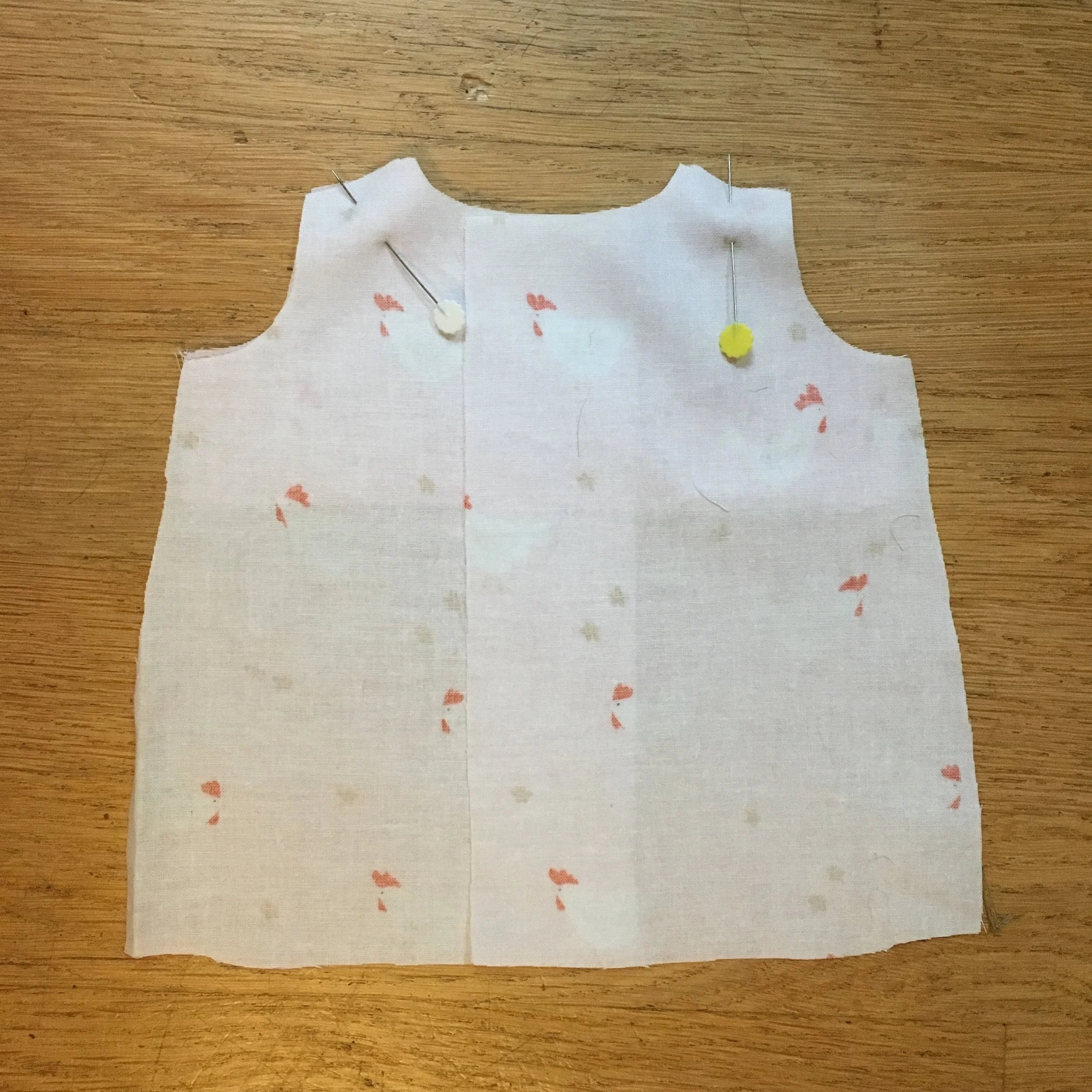
5. Pin the shoulder seams of the bodice and the two back pieces, RIGHT sides together.

fullsizeoutput_15c3.jpeg

Sew the shoulder seams using a 1/4 inch seam. Press.

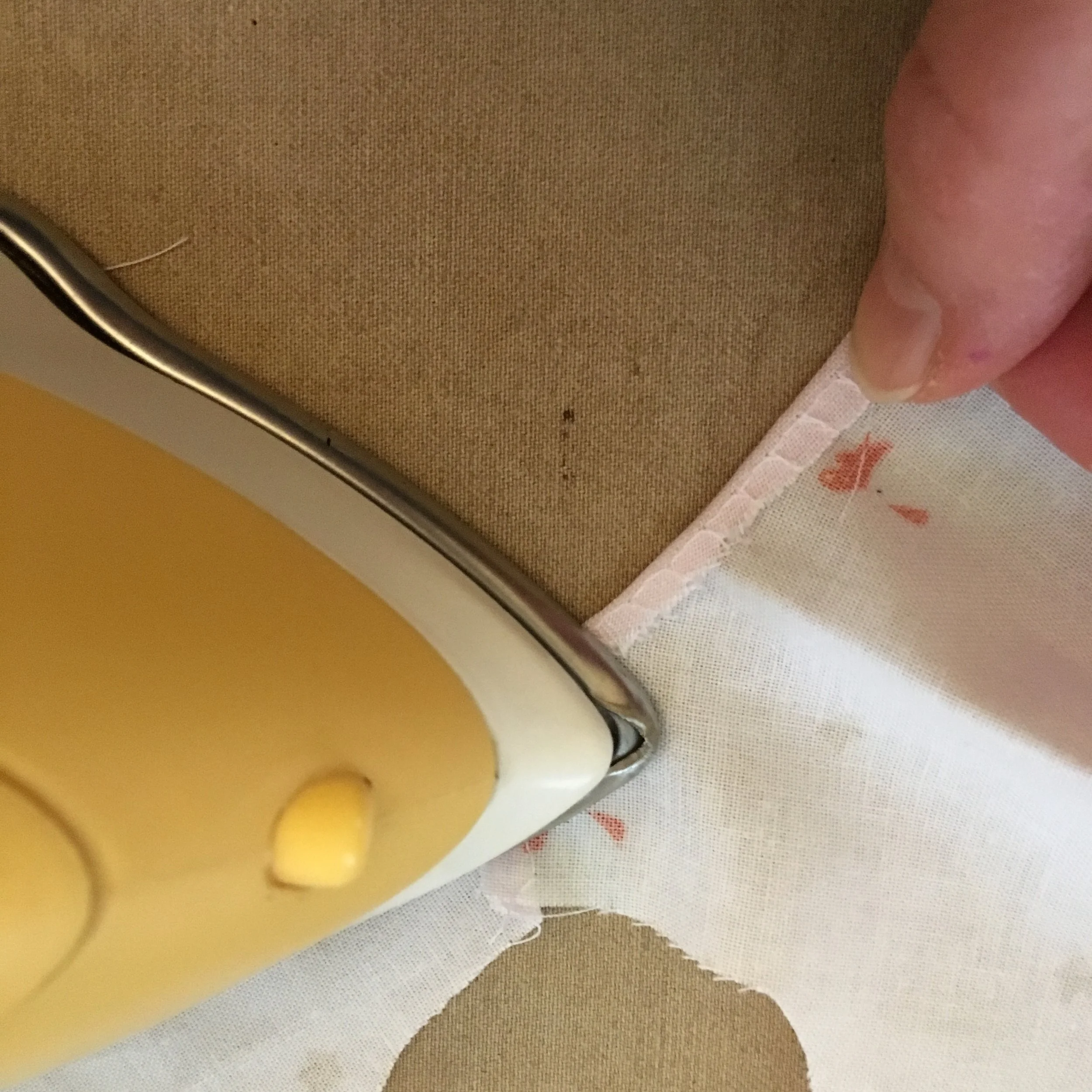
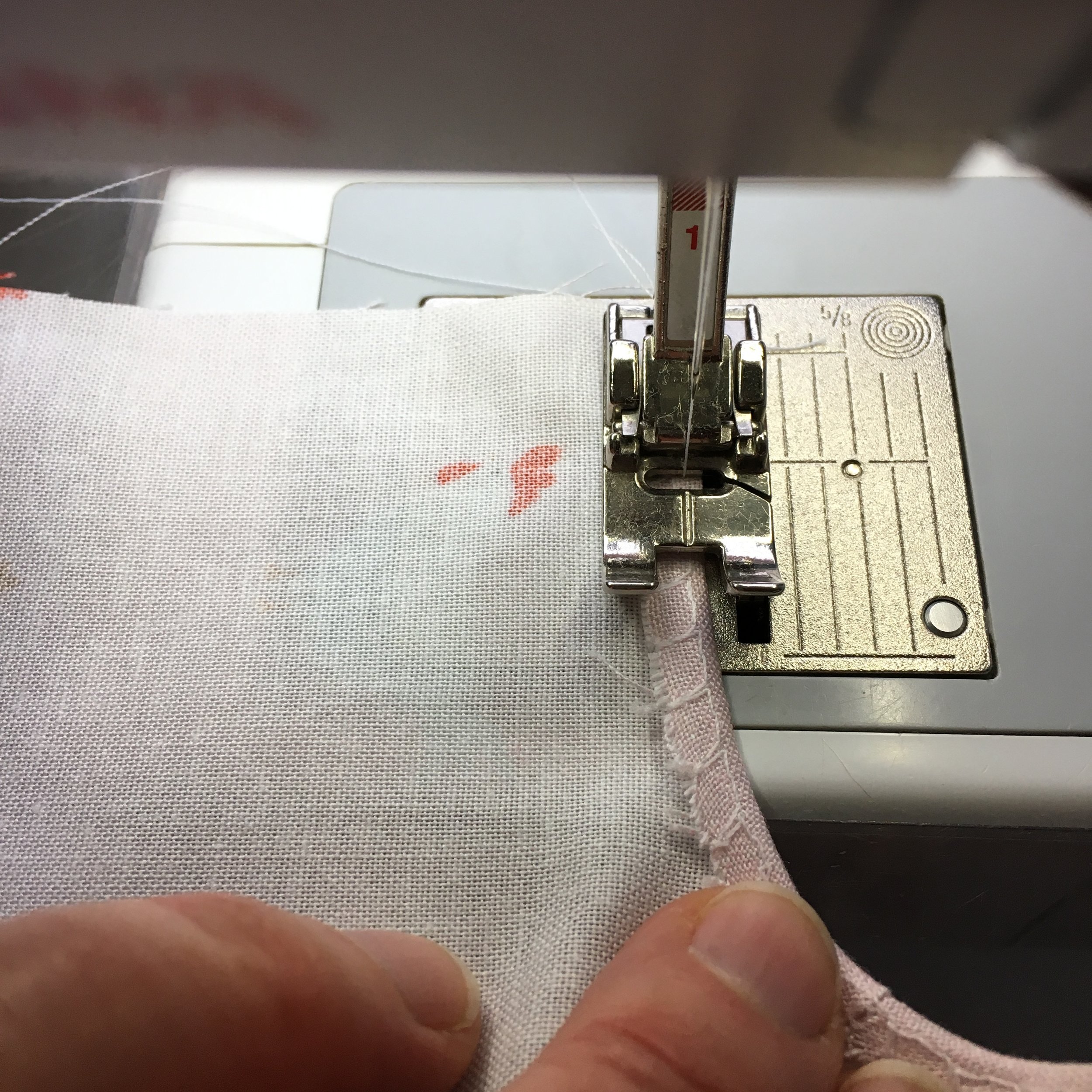
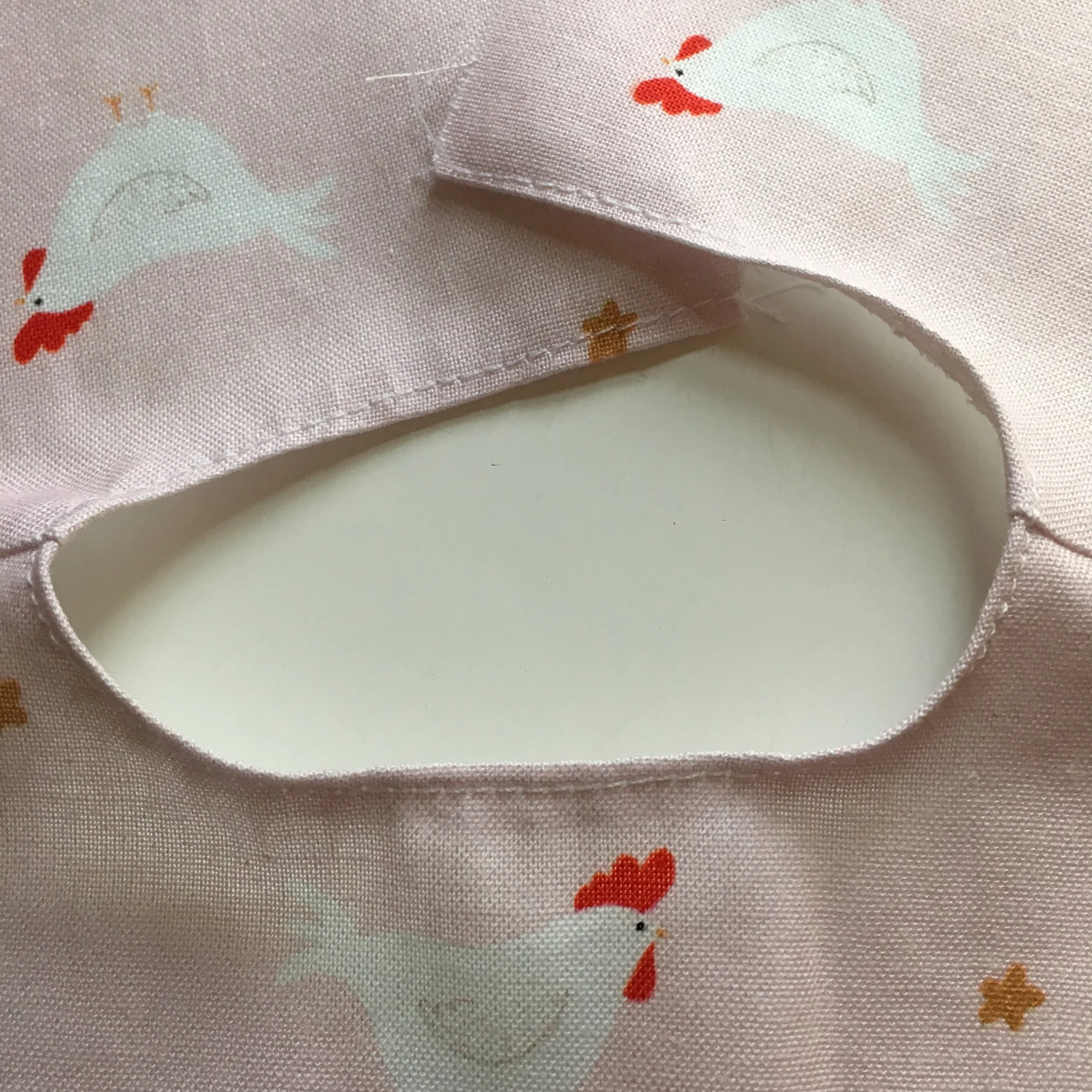
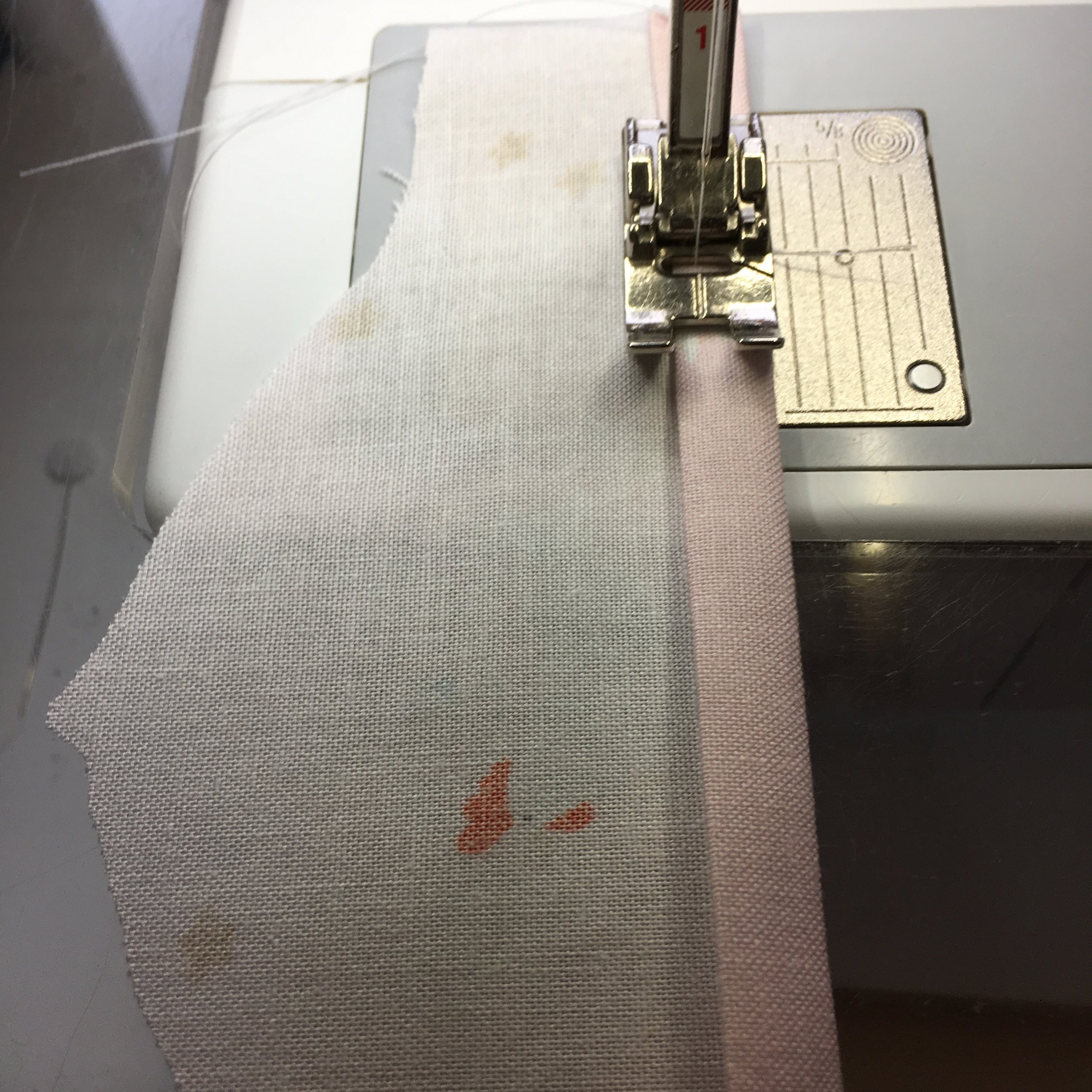
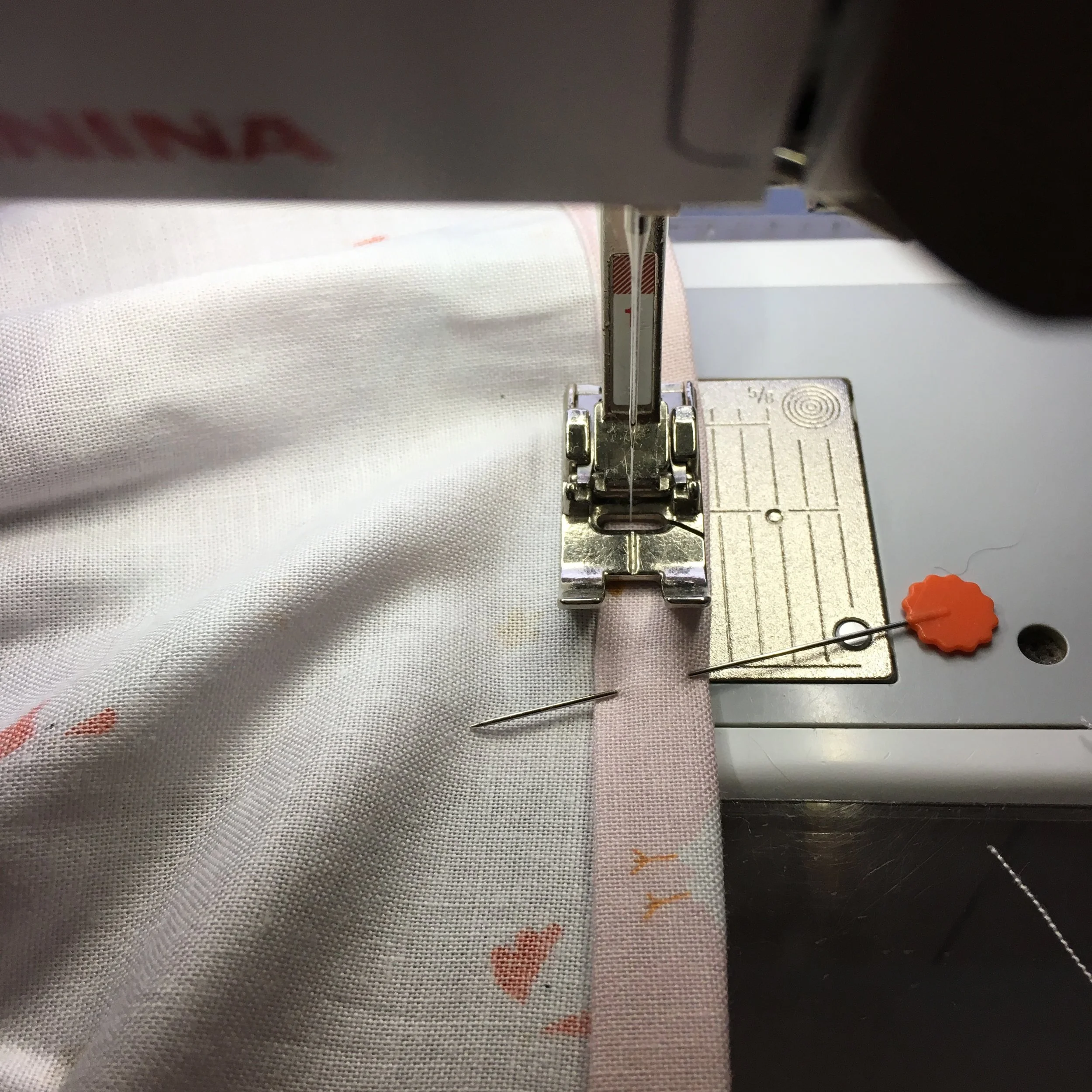
6. Turn the edges of the neck under 1/4 inch, along the dotted lines of the pattern with WRONG sides together. Press. An adult should do this pressing. Top stitch along the edge of the neck seam.

IMG_8101.JPG
IMG_8102.JPG
IMG_8103.JPG

7. Turn the hem of the sleeve under 1/4 inch. Repeat, enclosing the raw edge of the fabric. Press. On the INSIDE of the sleeve, sew along the folded edge.

IMG_8104.JPG


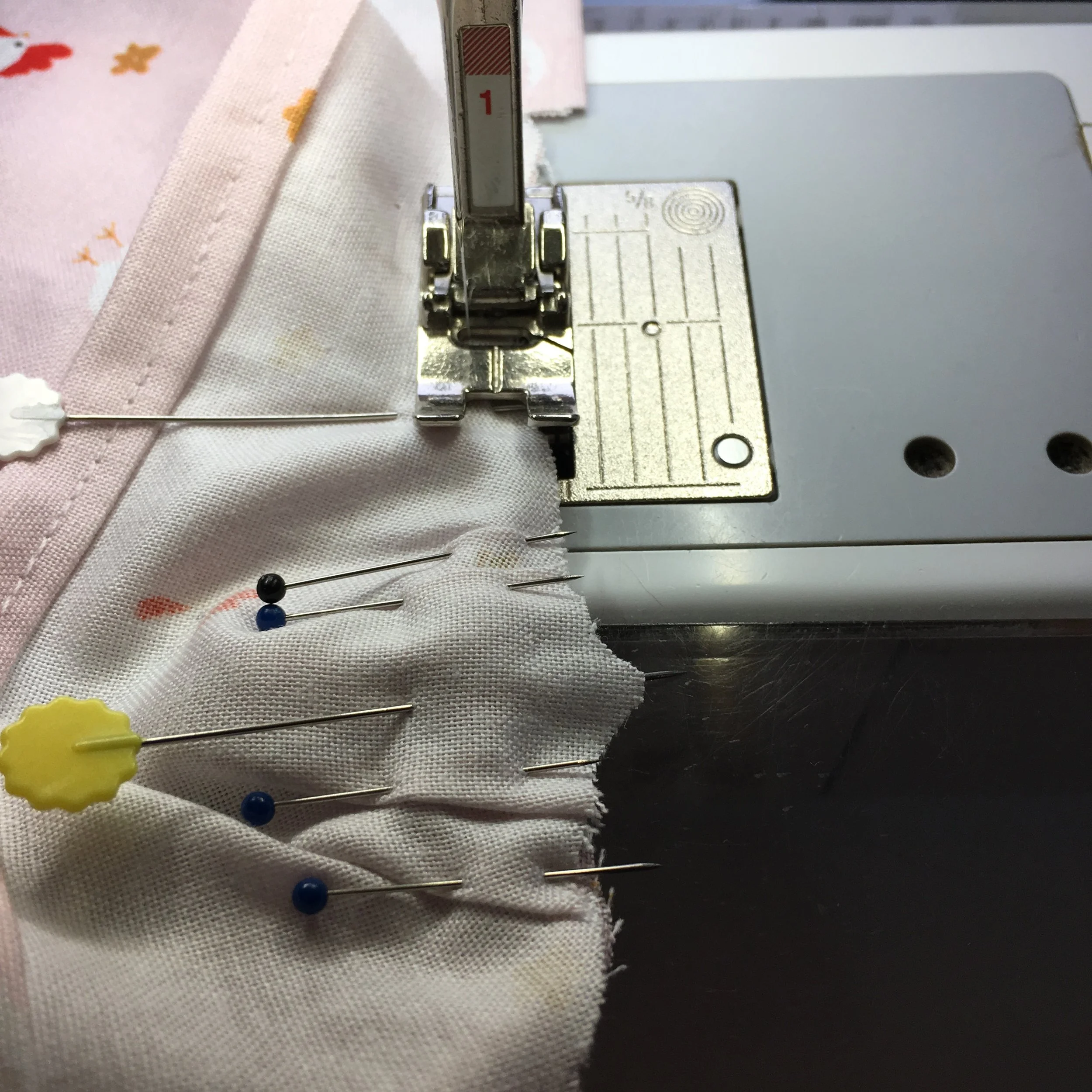
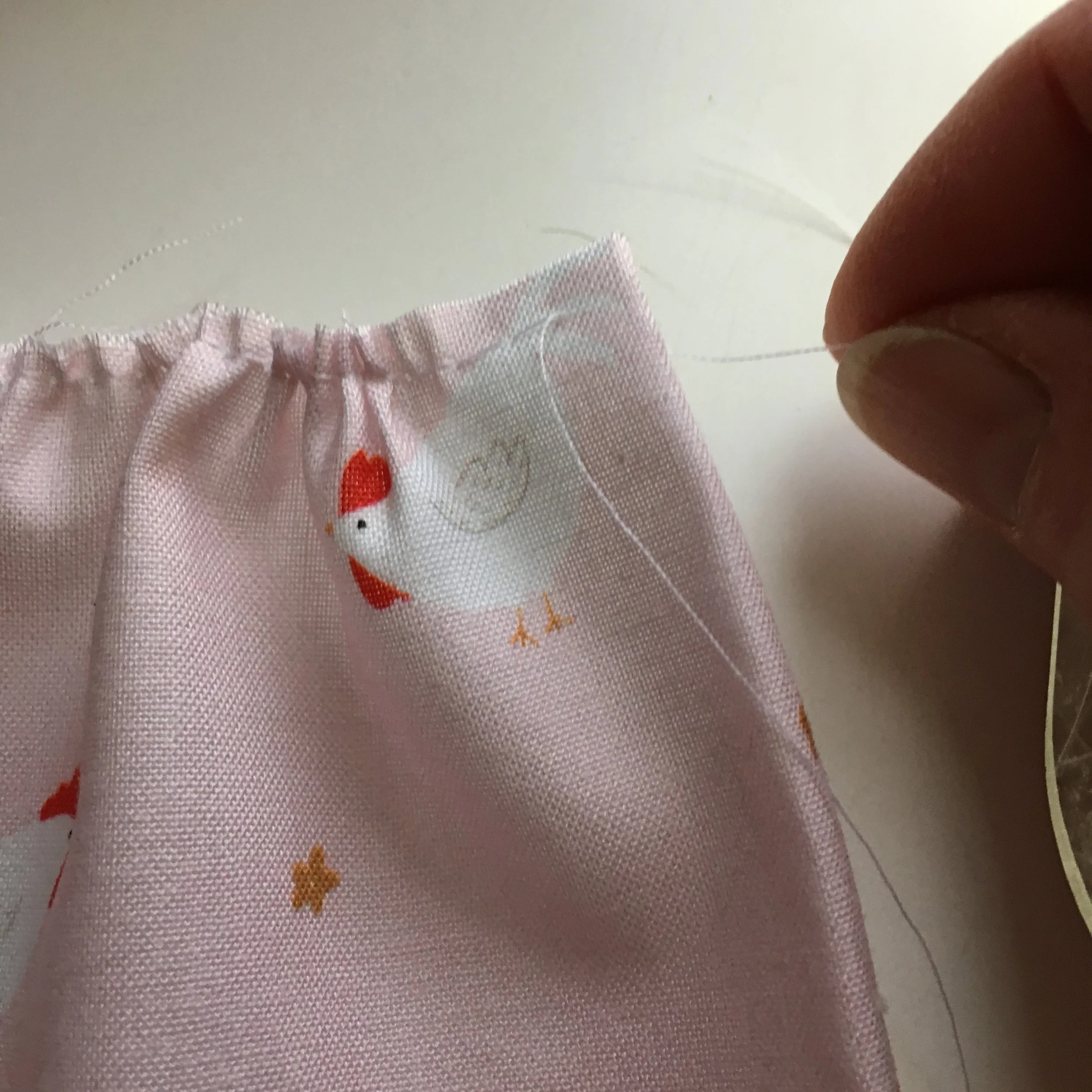
8. If you wish to gather your sleeve, set your stitch length to the longest number it has. Starting at the mark on the sleeve pattern, sew a couple stitches, then BACK STITCH 2 stitches to lock the gather stitches. Sew to the second mark on the sleeve. Do NOT back stitch here. Leave long tails on both threads when you cut them.

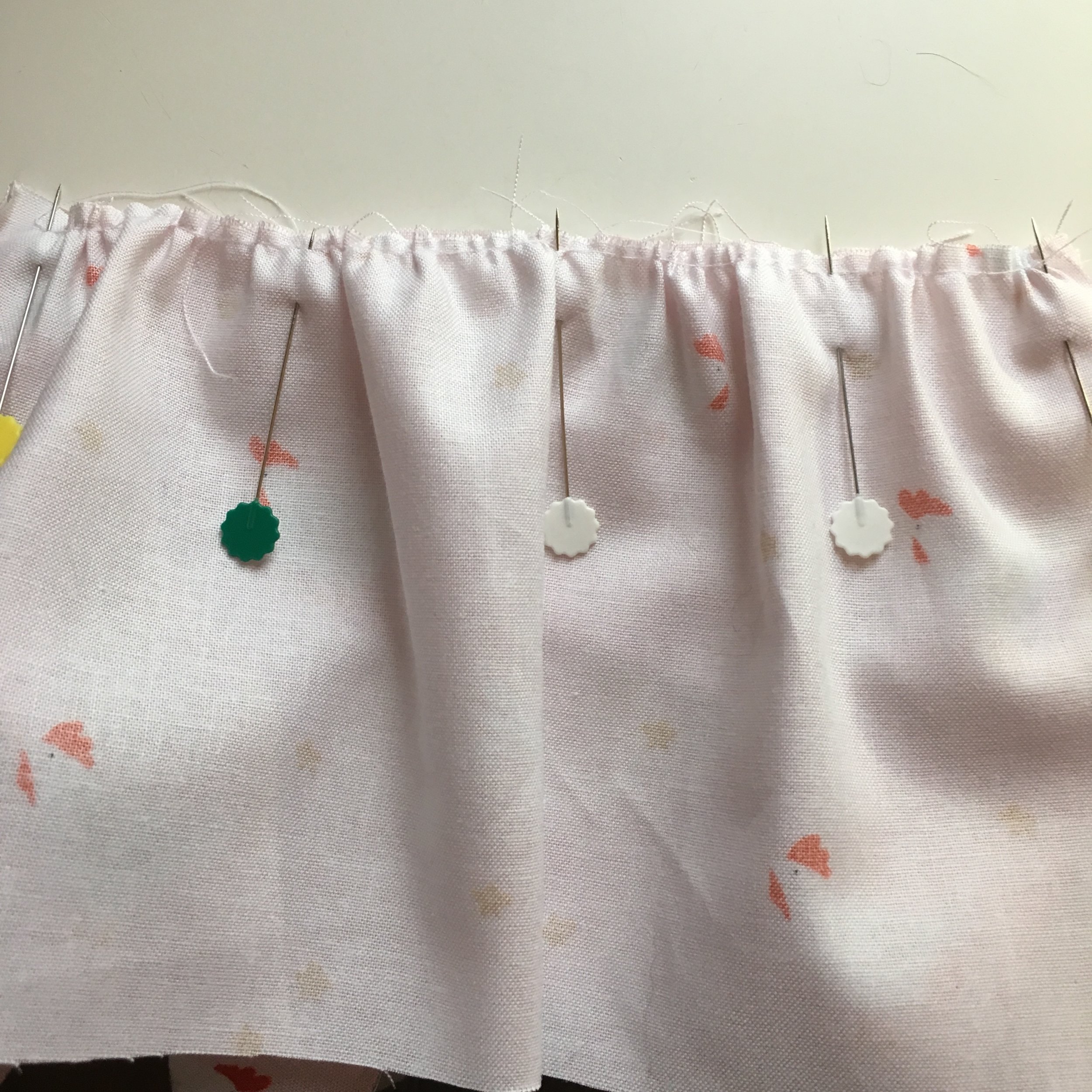
9. While your machine is set for a gathering stitch, sew along the top of the dress’s front skirt piece, starting 1/2 inch from side of the skirt and stopping 1/2 inch from the opposite side. Now set your machine back to the normal stitch length.

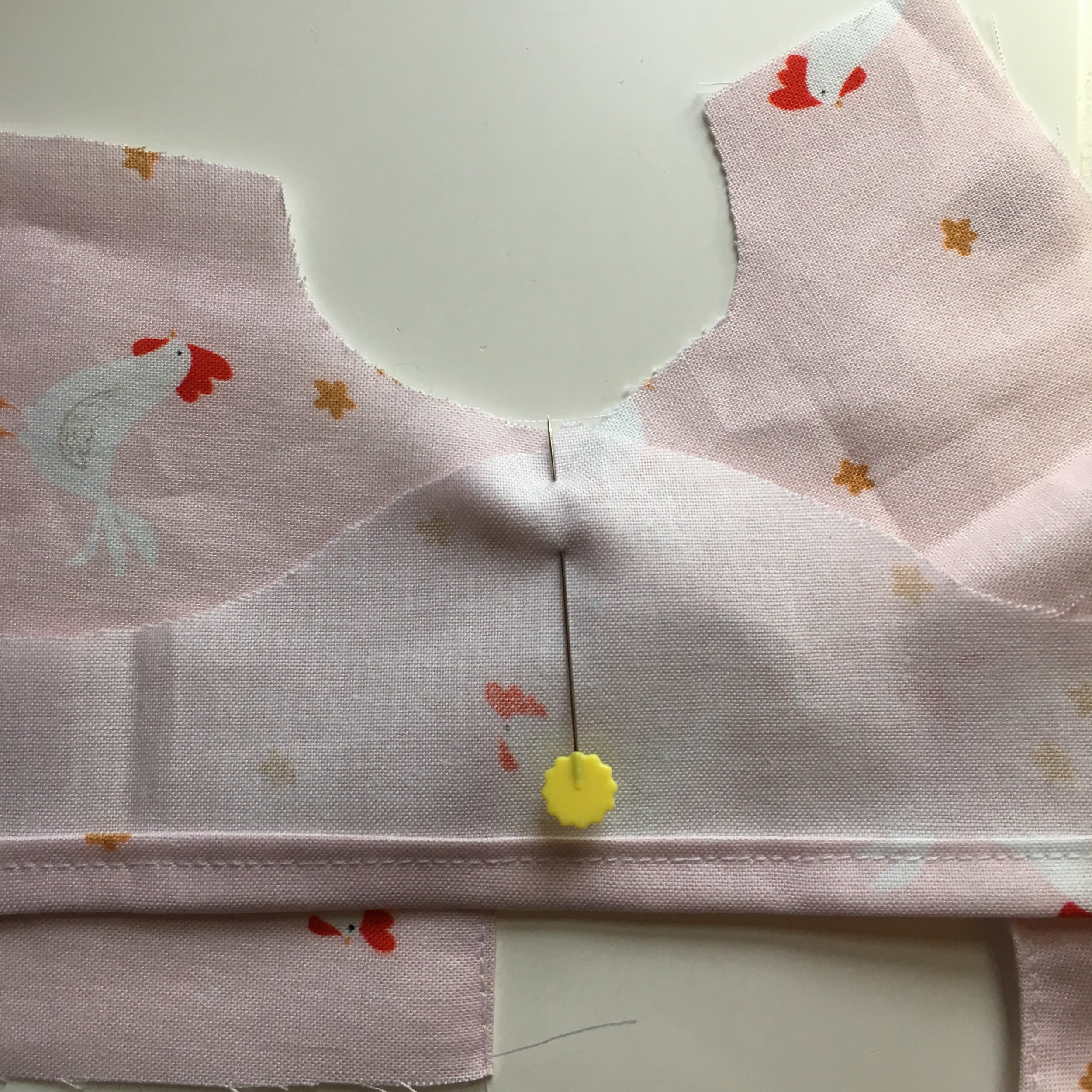
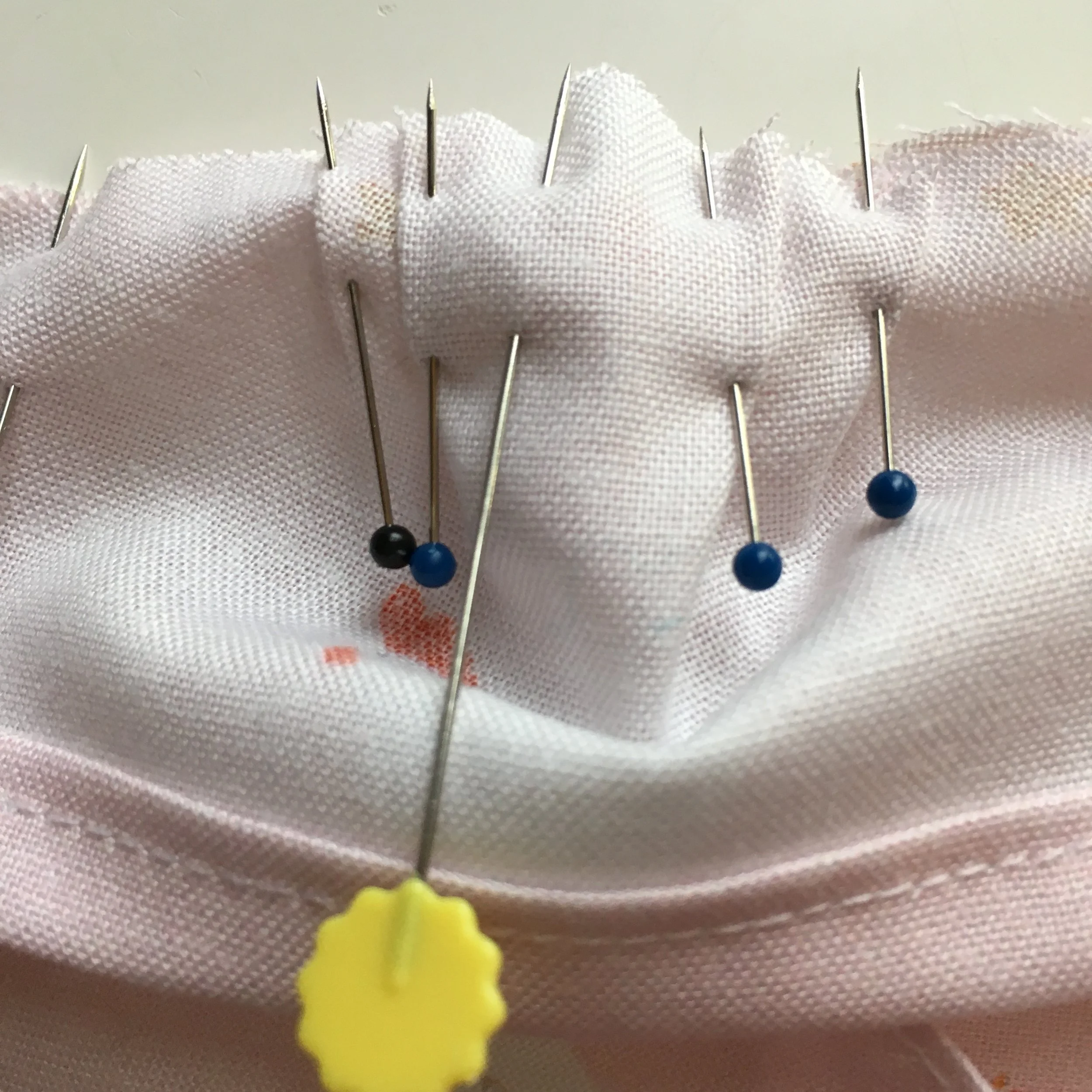
10. Attach to sleeve to the body of the dress, matching the notch on the sleeve with the shoulder seam. Pin the two pieces at the notch. Pin the short edges of the sleeves to the lower edge of the sleeve openings the body of the dress. Pin again about 1 inch from that pin. Now take the gathering thread on the WRONG side of the sleeve and gently pull it, gathering the upper edge of the sleeve until it matches the length of the arm hole of the dress. Pin those edges together. (If you prefer, you can also make several folds in the sleeve to match the sleeve opening instead of gathering it).

IMG_8105.JPG
IMG_8107.JPG
IMG_8109.JPG
IMG_8110.JPG

11. Sew the sleeve to the dress. Repeat for the second sleeve.

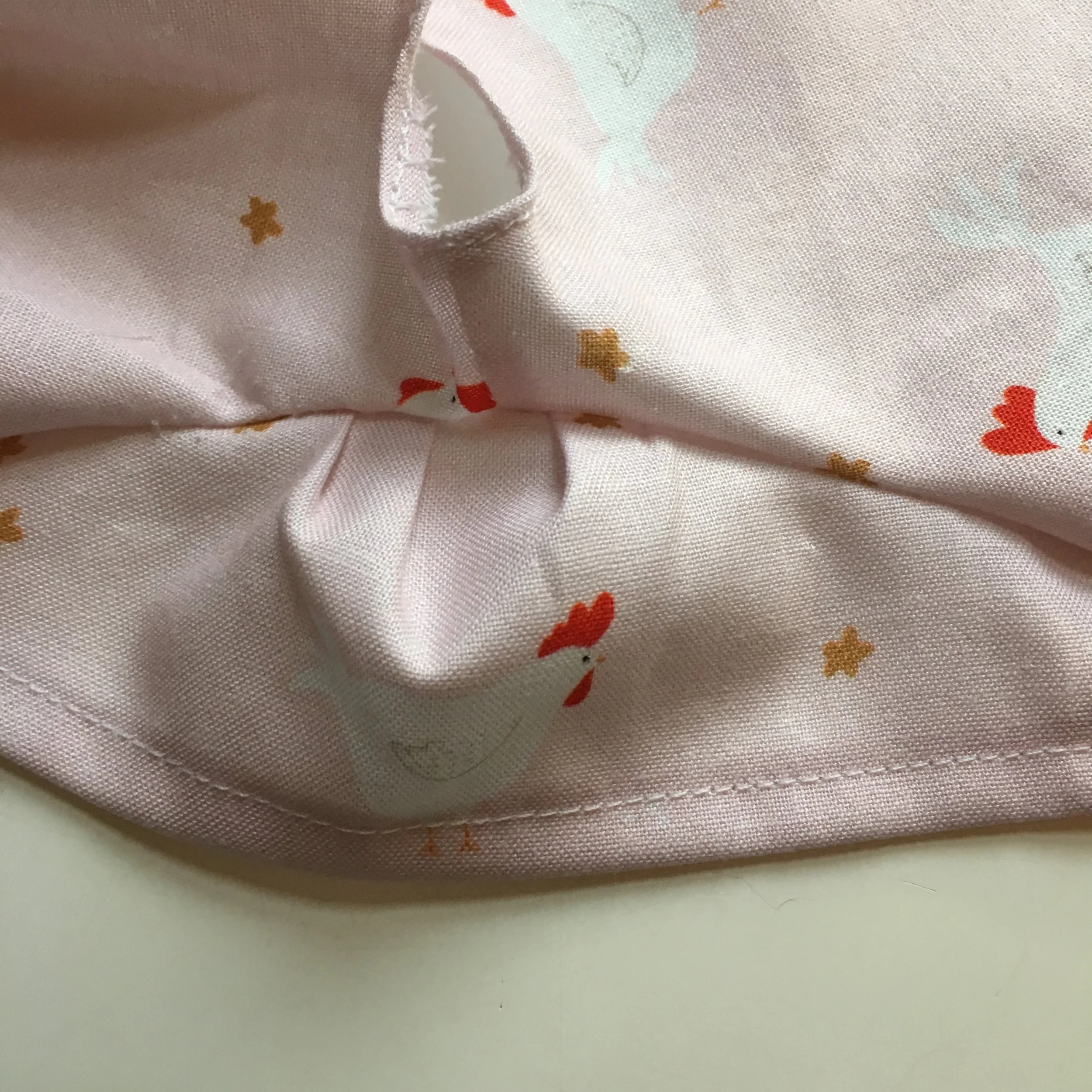
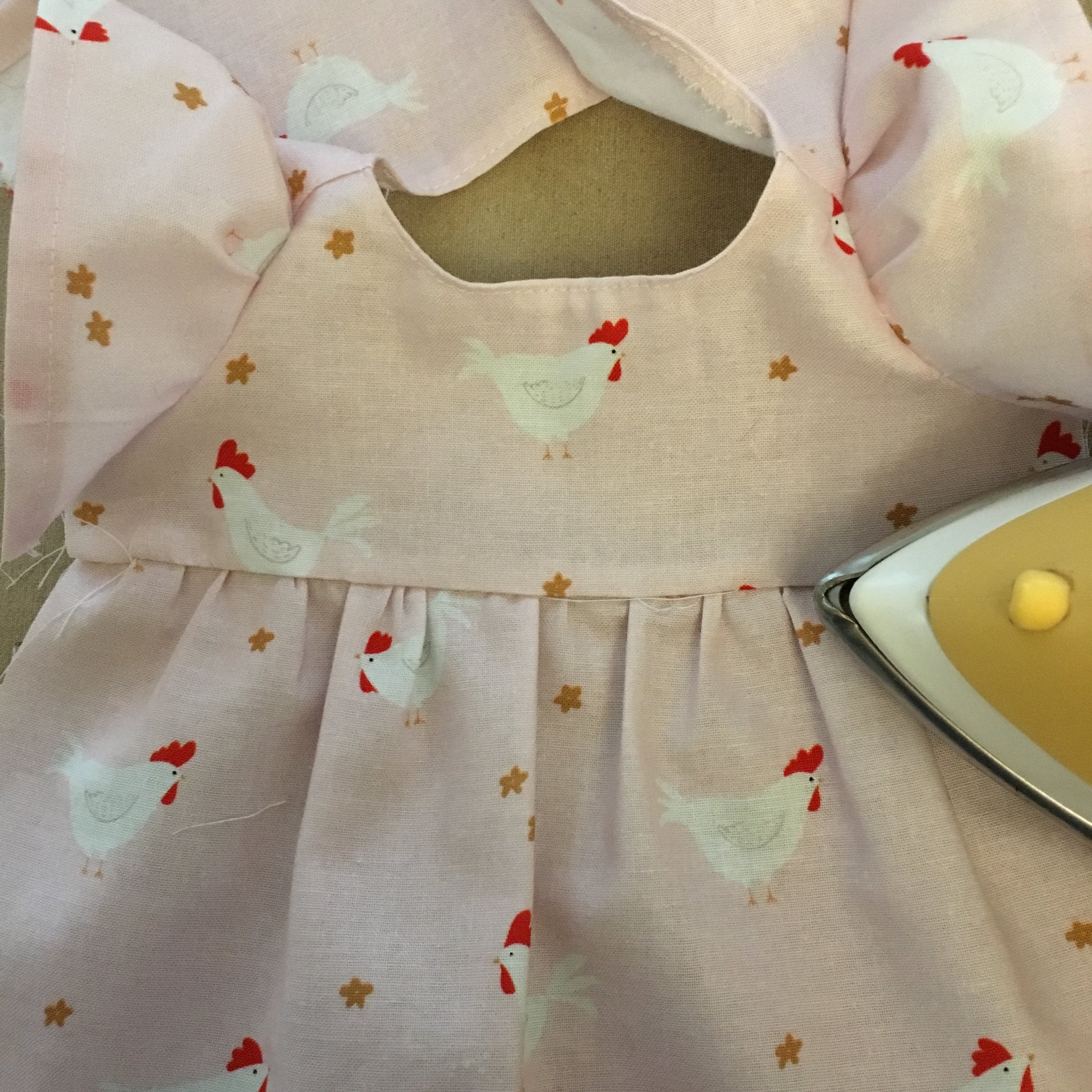
12. With RIGHT sides together, pin the front skirt to the lower edge of the bodice. Pull in gathering stitch thread on the wrong side of the skirt until the skirt measures the same width as the bodice. Even out the gathers and pin. Stitch the top the skirt to the bodice. A straight stitch is fine, but using an overlock stitch is better if your machine has one.

IMG_8114.JPG
IMG_8116.JPG
IMG_8117.JPG

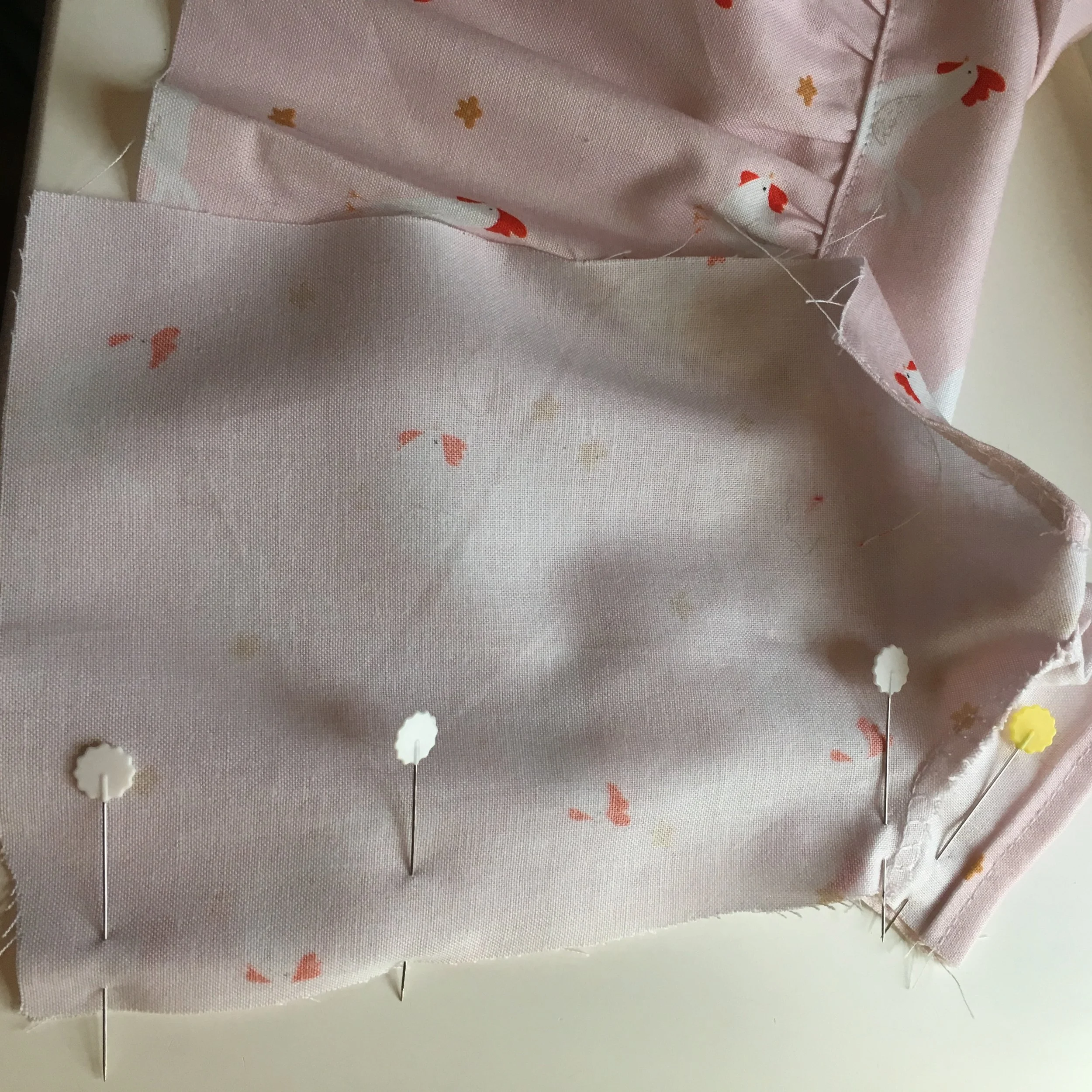
13. With RIGHT sides together, fold the sleeve in half. Pin at the sleeve edge. Match the side seams of the skirt with the side seams of the back pieces. Pin. Sew with a straight stitch or an overlock stitch.

IMG_8121.JPG

14. Fold the raw edges of the dress back under 1/4 inch, then 3/8 inch. Press. Pin. Stitch along in inner fold on both back pieces.

IMG_8124.JPG
IMG_8127.JPG

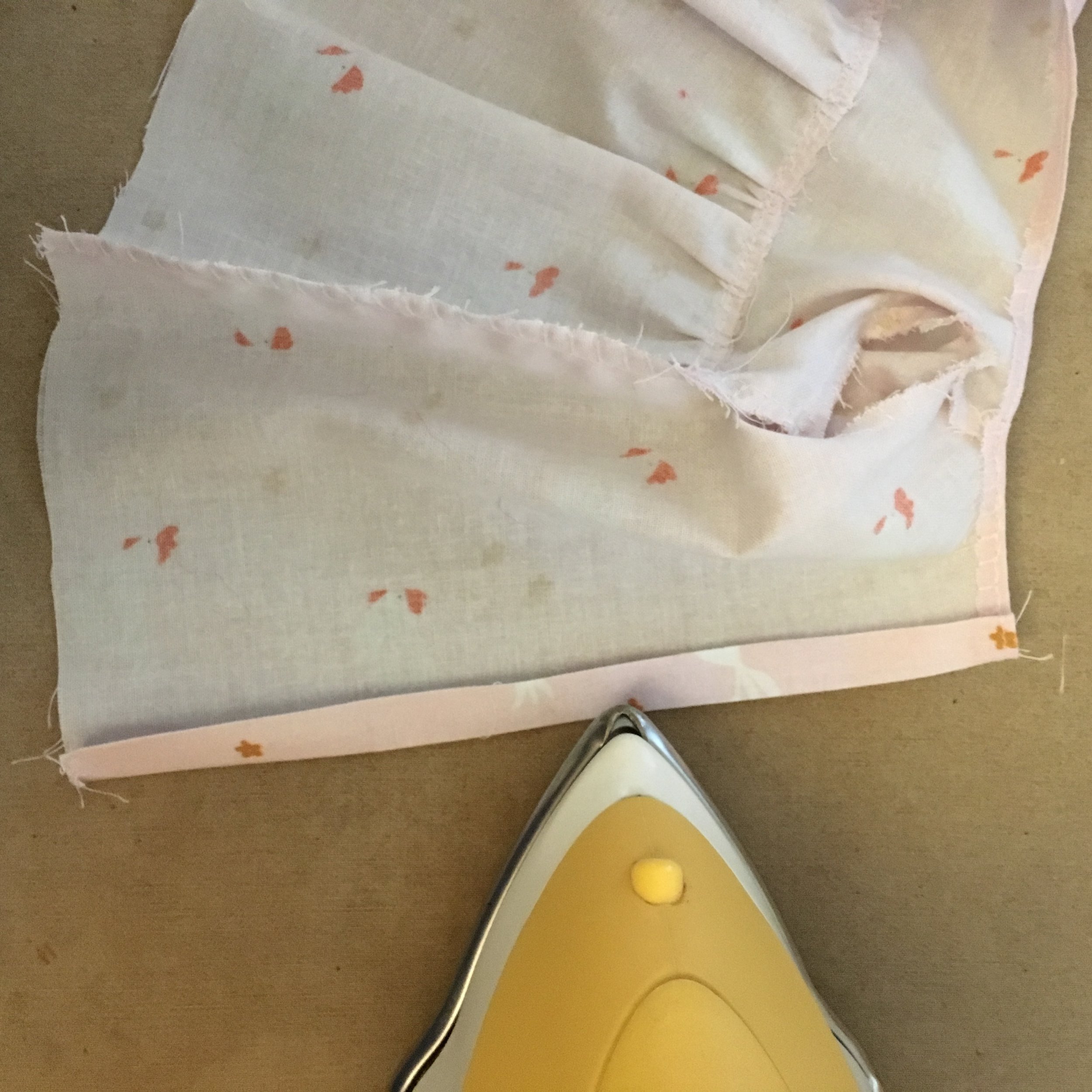
15. Turn up the hem 1/4 inch. Repeat doing another 1/4 inch fold. Press. Pin. Sew the hem along the folded edge of the hem.

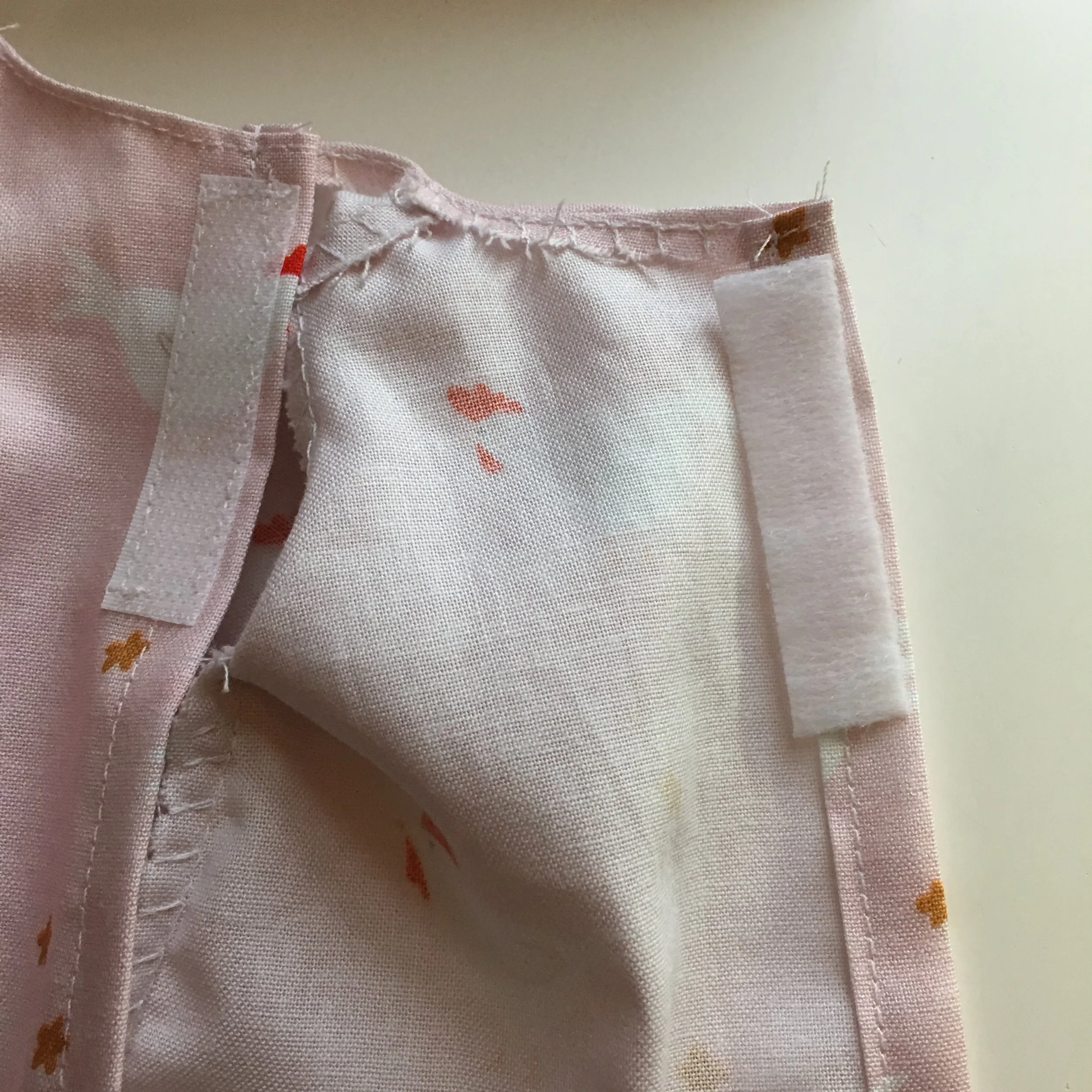
16. Cut a 1 1/2 inch piece of the 3/4 inch hook and loop fastener. Trim the WIDTH down to 1/2 inch. Sew the rough hook piece to the upper edge of the LEFT back on the RIGHT SIDE of the fabric. Then sew the soft loop piece to the upper edge of the RIGHT back on the WRONG side of the fabric. An adult should sew on the hook and loop tapes.

IMG_8130.JPG

All done! Great job! Hope your Bamboletta Baby loves her new dress.
fullsizeoutput_15c4.jpeg
IMG_8140.JPG
IMG_8135.JPG

Click on this link to download a PDF of the free Bamboletta Baby Doll Dress Pattern.

NOTE: This pattern is for individual use only. Feel free to sell dresses you make at small craft fairs. Doll clothes made with this pattern are NOT for commercial use nor for sale on sites like Etsy.com without my permission. Please do NOT copy and SELL this pattern but feel free to share it with your doll friends. Thanks.

fullsizeoutput_15cb.jpeg
IMG_8012.JPG
IMG_8001.JPG
IMG_8002.JPG

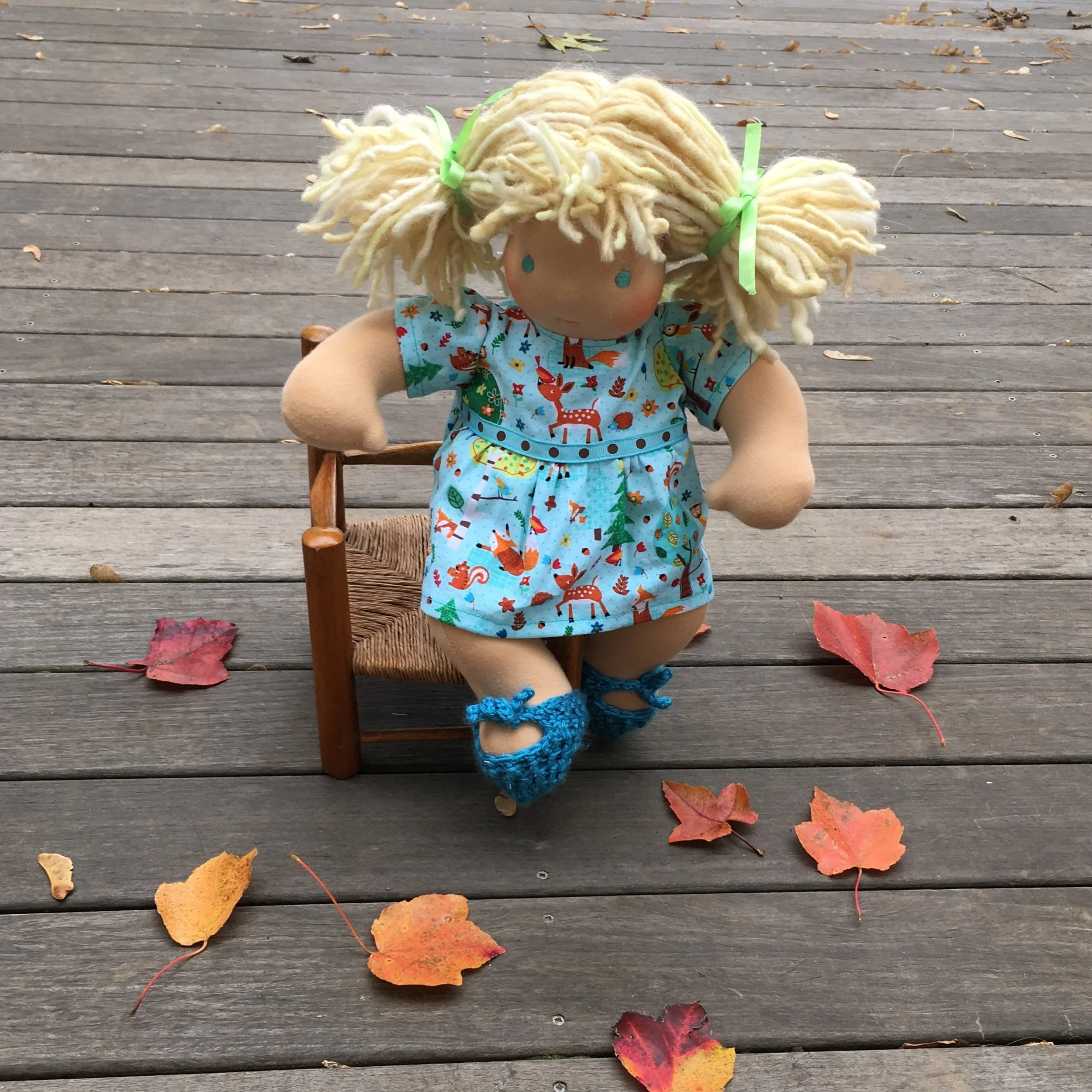
This dress has a ribbon sewn on the edge of the bodice. If you wish to do this, sew on the ribbon before sewing the side seams of the dress.

Notice: This blog is not monetized: I do not use affiliate links. When there are links in a post, they are to give credit to another creative person, because I like or have used a product, or to help the reader easily find supplies for a project.


TAGS: Free Bamboletta Baby Doll Doll Pattern, Bamboletta Baby Doll Dress Pattern, Bamboletta Baby Doll, Bamboletta doll clothes pattern, Bamboletta Doll Clothes


August 8, 2019

Doll Flower Girl Outfit

by Judy Tucker


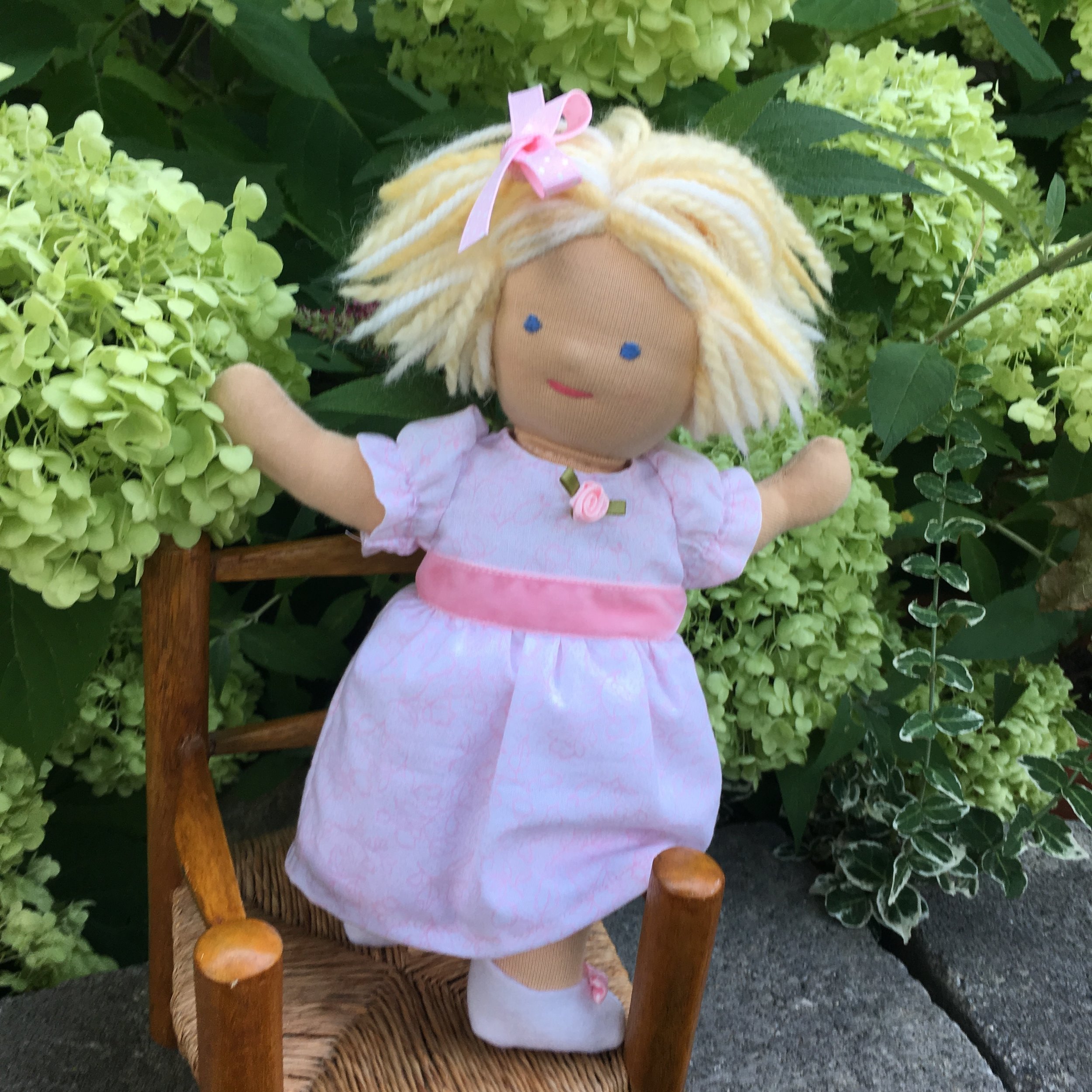
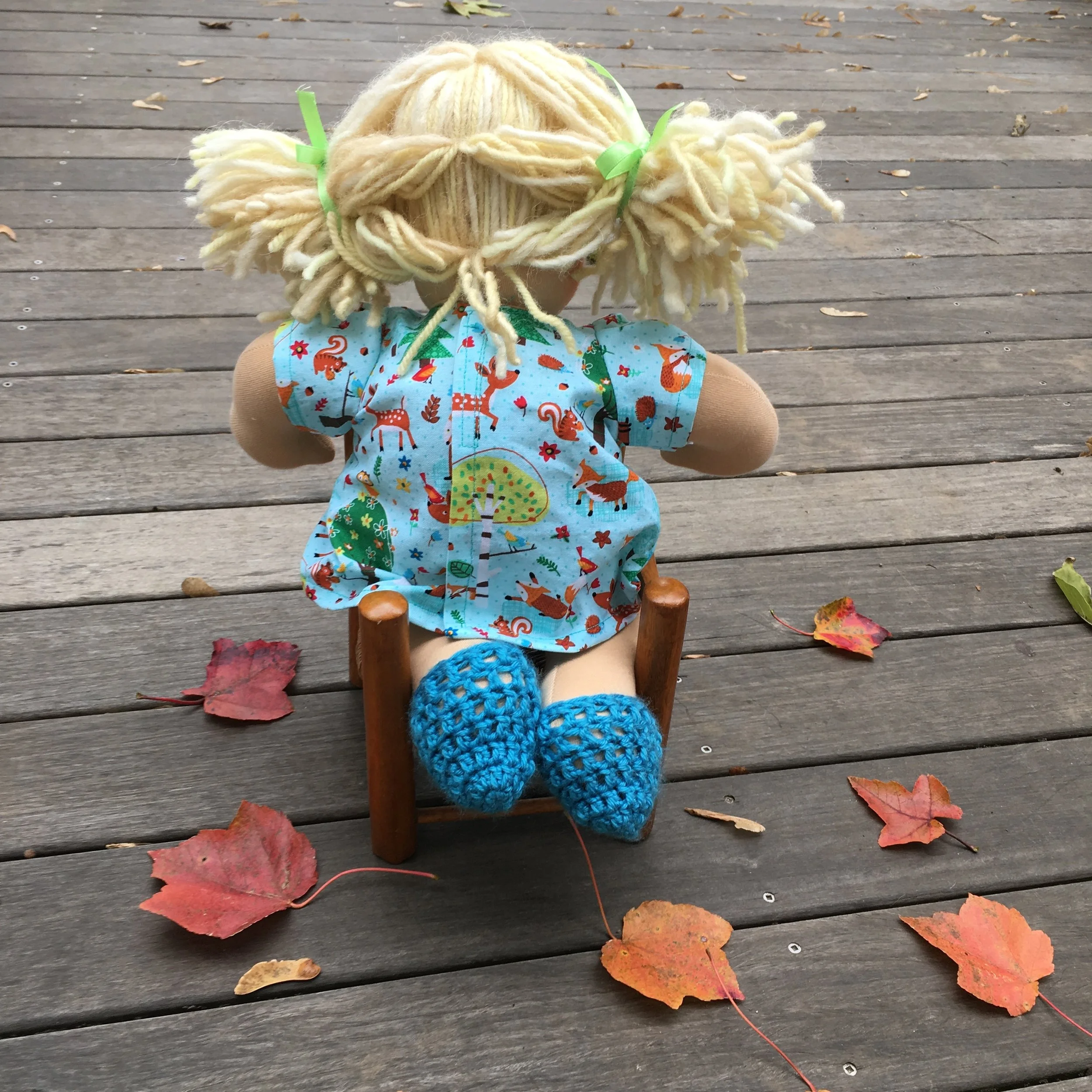
Doll  of the Flower Girl’s Outfit (without the shoes because she standing on a chair)!

Doll of the Flower Girl’s Outfit (without the shoes because she standing on a chair)!

Doll  of the Flower Girl’s Outfit (without the shoes because she standing on a chair)!

Doll of the Flower Girl’s Outfit (without the shoes because she standing on a chair)!

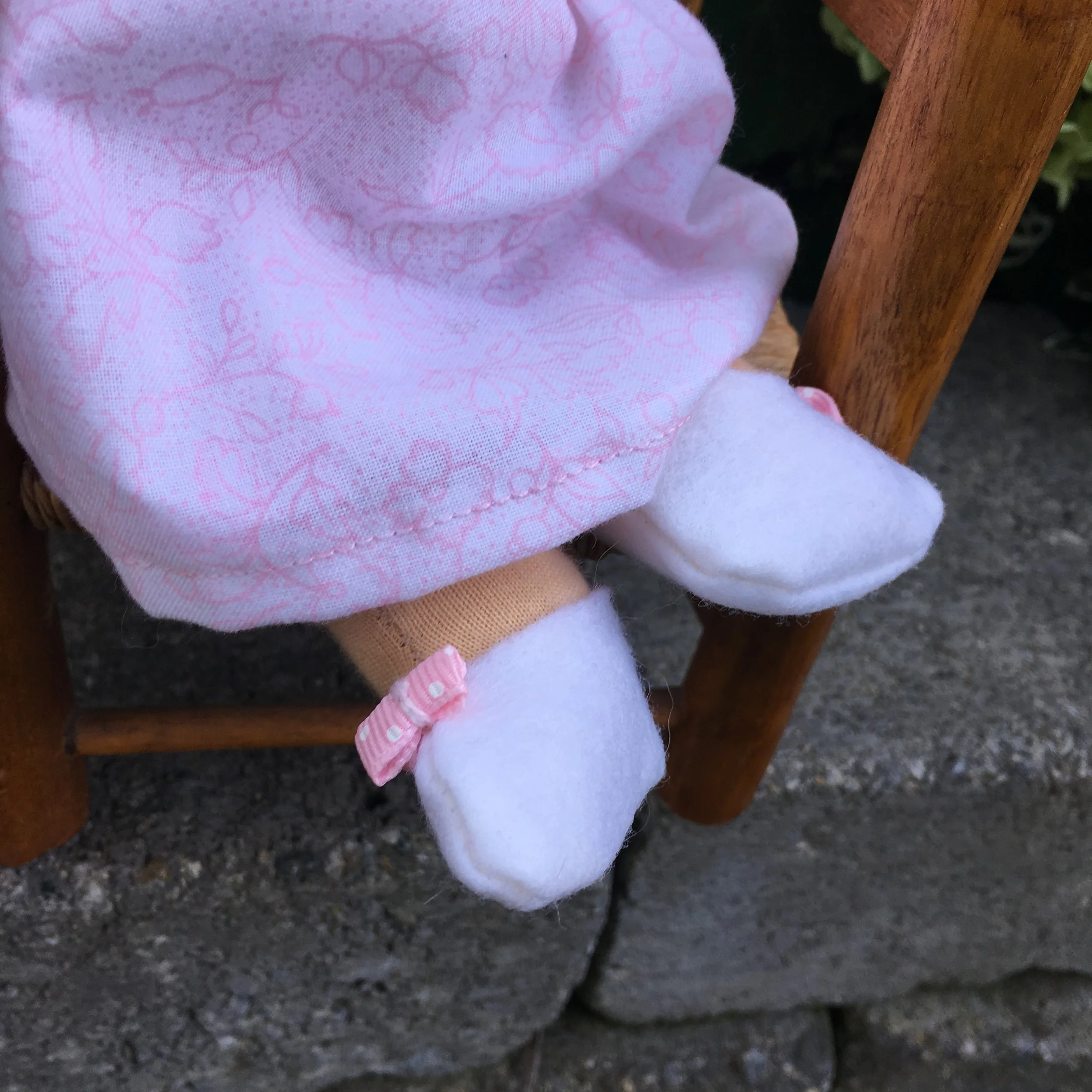
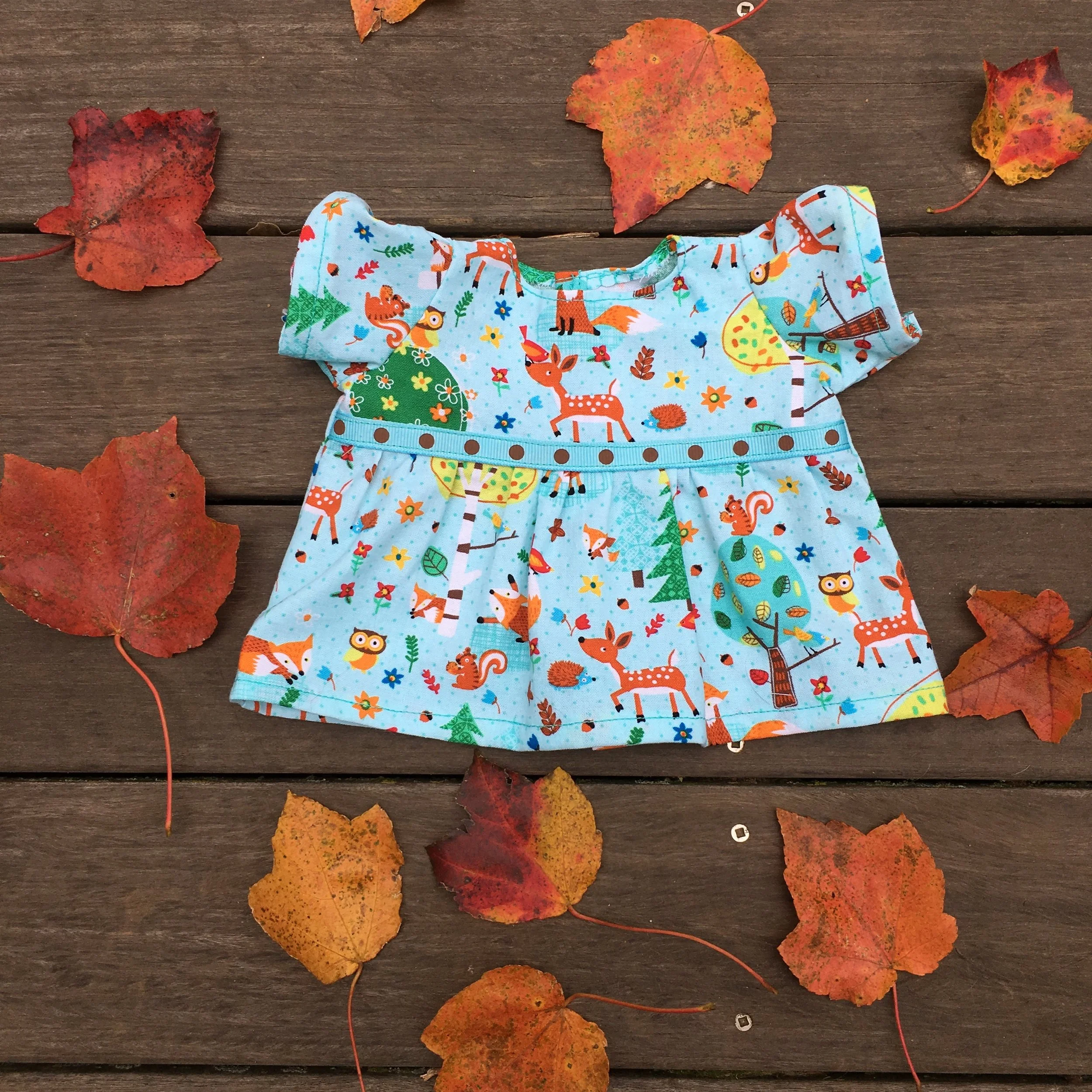
I’ve got a show-and-tell today. I made an outfit for the doll of a young flower girl. She really, really, wants to take her doll to the wedding. So of course the doll needs an appropriate outfit, including white slip-on shoes with tiny pink bows! (Modeling this outfit is my doll, a 9 inch Waldorf style baby doll. I also made the doll going to the wedding).

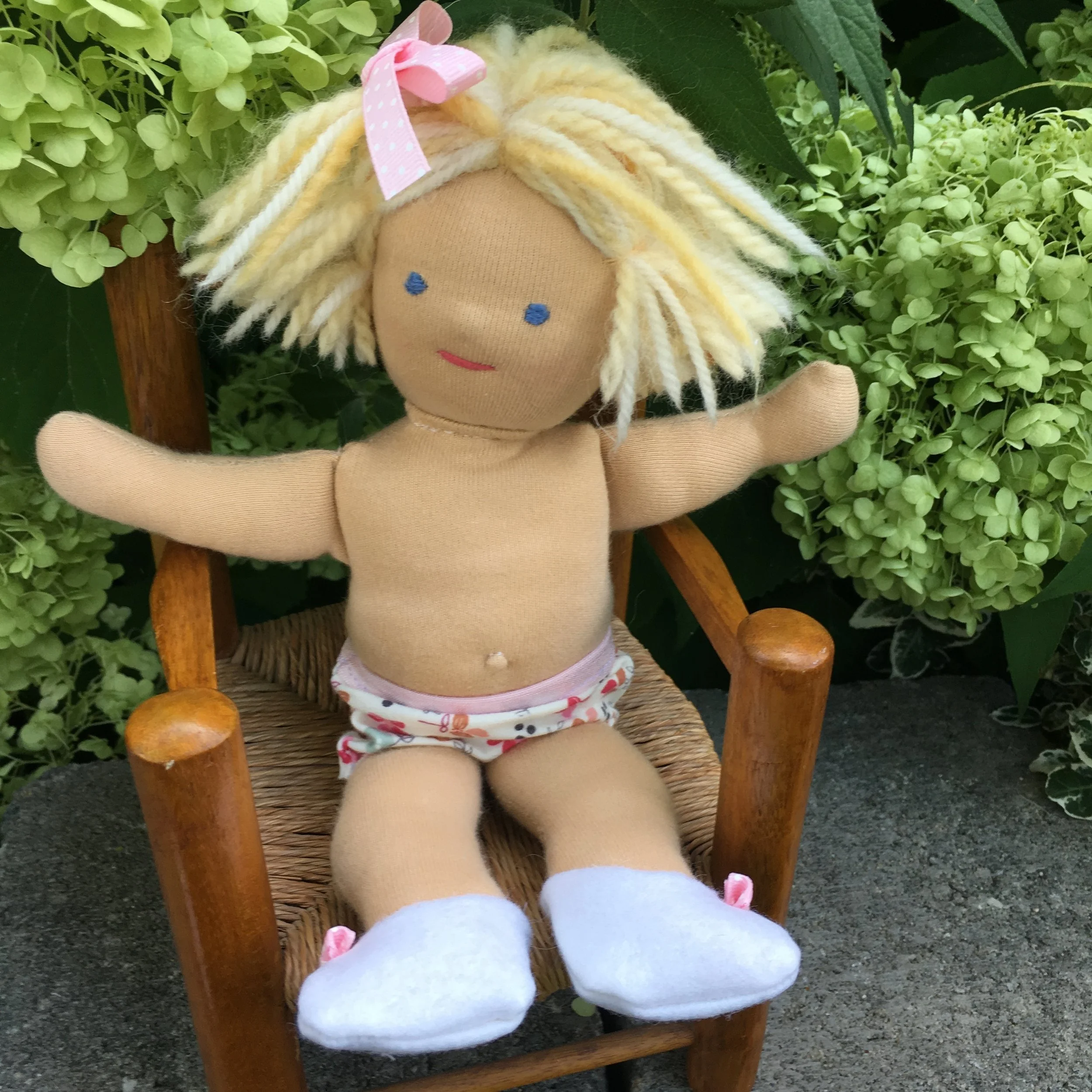
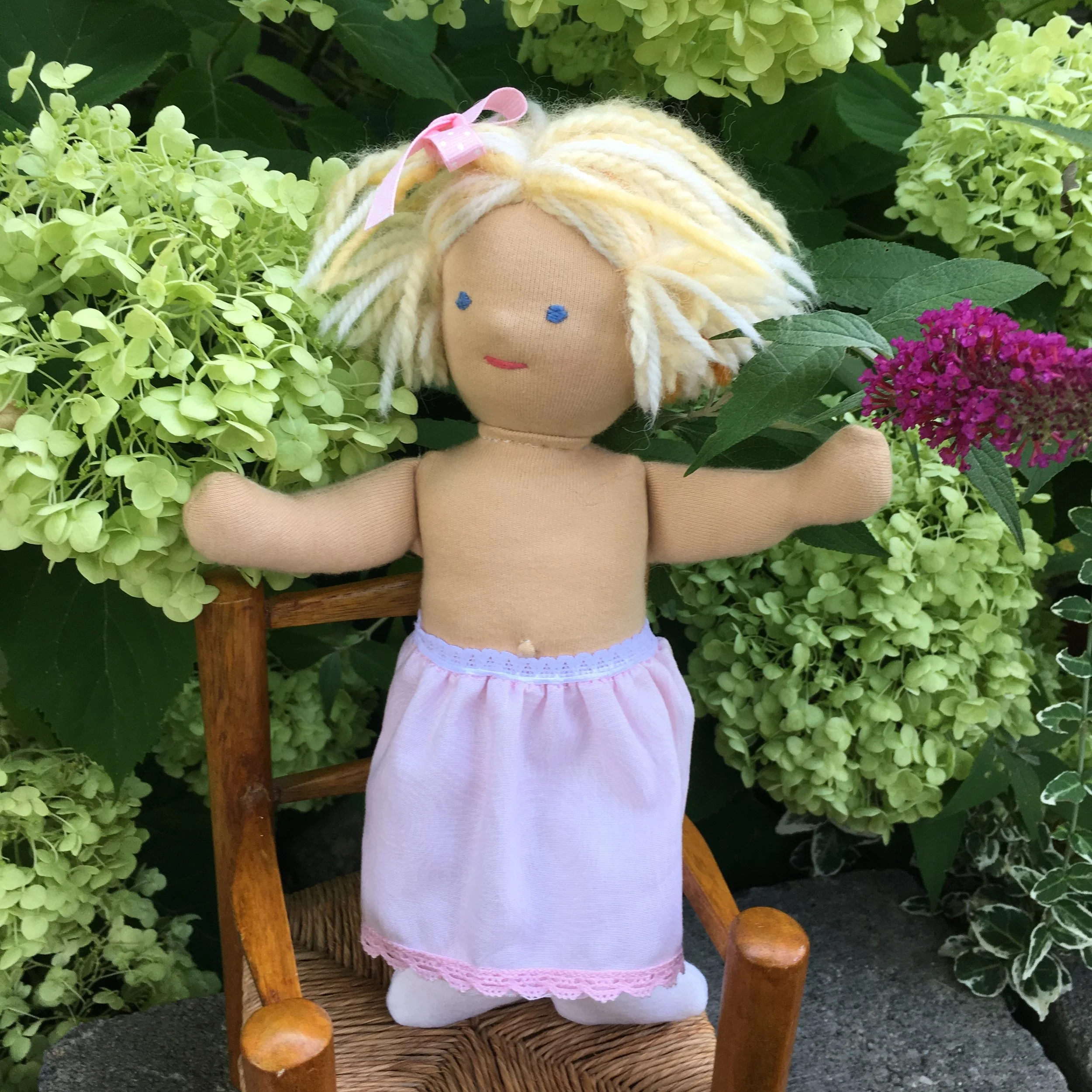
Here is Lucy Birch trying on all the pieces of the Doll of the Flower Girl’s Outfit. She’s a baby doll and normally wear diapers, but Lucy Birch thought she really should, (yes, I CAN!) , wear big girl pants to go to a wedding!

IMG_0351.JPG
IMG_0349.JPG
IMG_0346.JPG
IMG_0347.JPG

The wedding is still a ways off, but I can’t wait to hear how this all works out!

TAGS: Flower Girl Doll Dress, Waldorf style baby doll, Waldorf type baby doll, Waldorf doll clothes


August 1, 2019

Doll Sleeping Bag with Quilted Top and a Fleece Back

by Judy Tucker


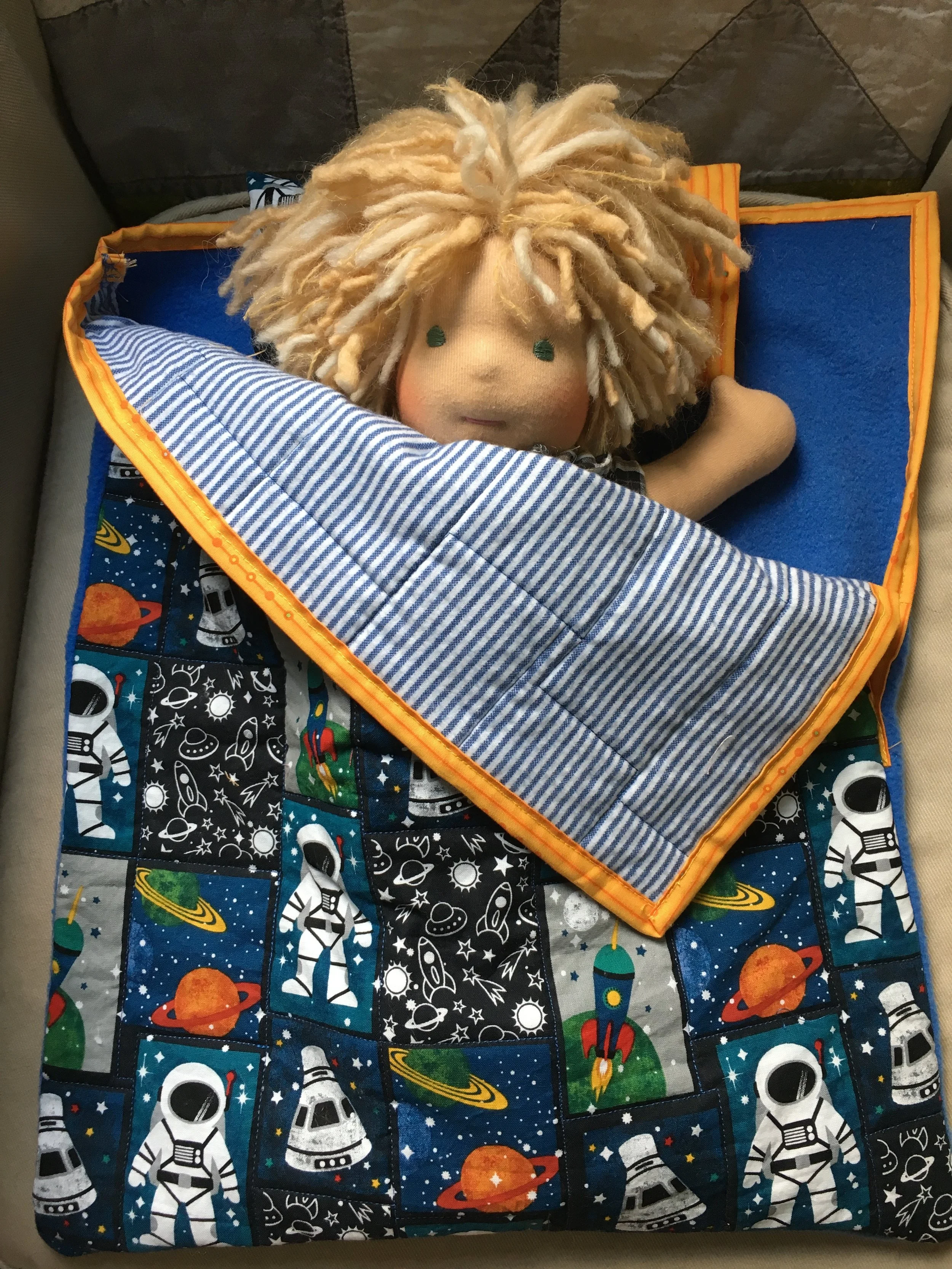
Quilted Doll’s Sleeping Bag with a Bamboletta Cuddle Doll

Quilted Doll’s Sleeping Bag with a Bamboletta Cuddle Doll

Quilted Doll’s Sleeping Bag with a Bamboletta Cuddle Doll

Quilted Doll’s Sleeping Bag with a Bamboletta Cuddle Doll

One of my young friends is having a birthday soon. He has a Bamboletta Cuddle Doll whom he loves and takes everywhere. I decided to make a quilt for him with a half yard of space-themed fabric I’d been given. The pattern of pictures in boxes was perfect for making a sort of cheater quilt.

I cut out a piece of space fabric 15 x 18 inches as well as batting and flannel backing the same size. I sandwiched the three layers and quilted along to black lines of the boxes.

About half way done, I realized that although there are at least 4 doll beds at his house, the likelihood that his doll would be sleeping in one of them was just about zilch! (He has a sister who has a lot of dolls)! I know the doll is in his room with him at night, so I decided to make it into a sleeping bag instead.

I cut out a back of blue fleece the same size as the top. Then I bound the top of both quilt and and the fleece half way down one side. Then putting the quilt and the fleece right sides together, I sewed them together using an overcast stitch along all the raw edges without the binding. Then I turned it right side out, revealing a super cute space sleeping bag!

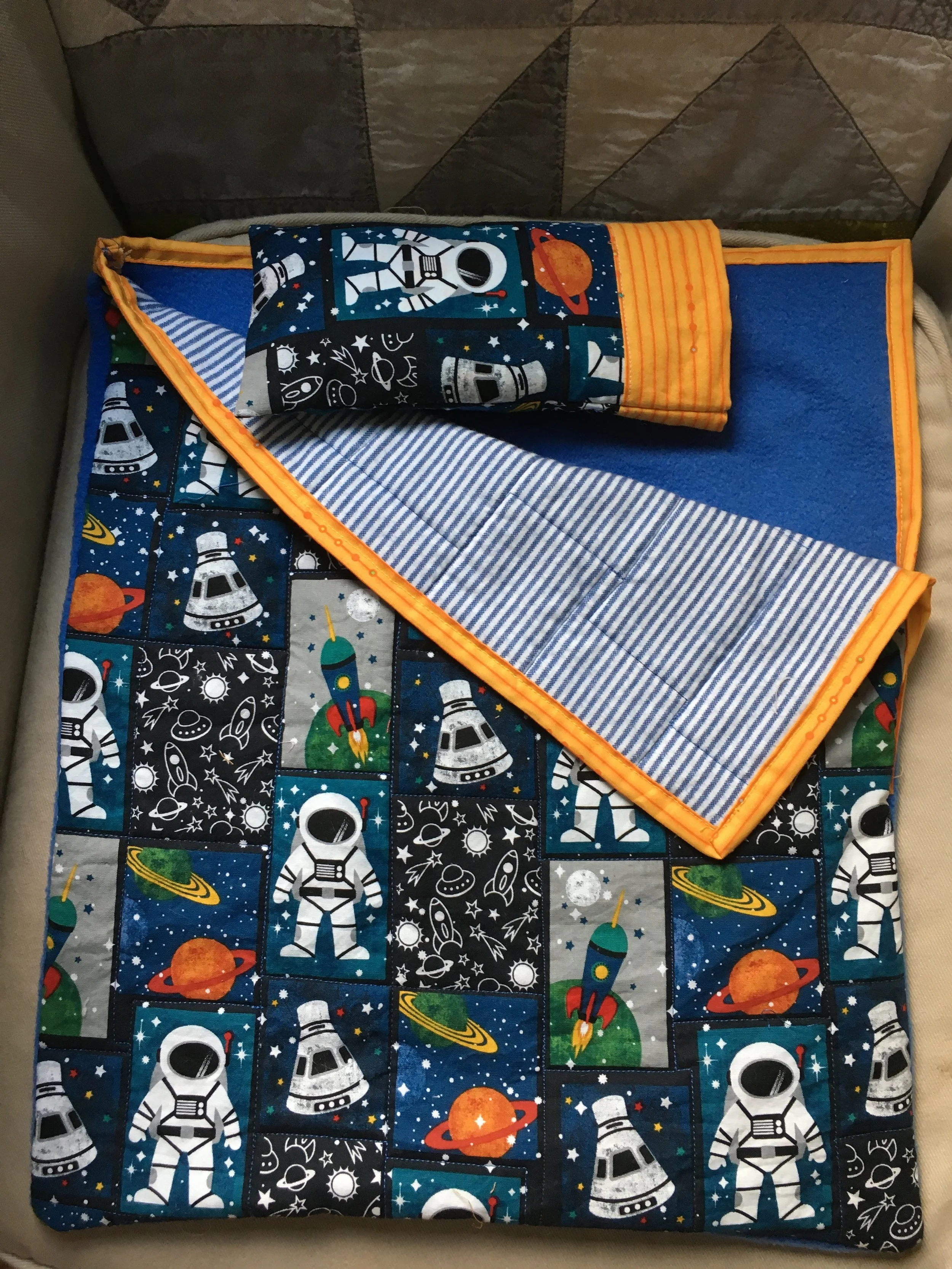
Using some of the left over fabrics, I also made a pillow and a matching pillowcase. I think my little buddy is going to like this a lot!

This sleeping bag will fit a 12 to 15 inch doll.

Buying quilted fabric (or re-purposing a vintage quilt or quilted bathrobe) is an even easier way to make a doll’s sleeping bag with the added bonus that both the top and the bottom of the sleeping bag would be quilted.

Quilted doll sleeping bag and matching pillow.

Quilted doll sleeping bag and matching pillow.


TAGS: Doll Sleeping Bag, Quilted doll sleeping bag, How to make an easy doll sleeping bag


July 25, 2019

Water Color Salt Technique: A Tutorial

by Judy Tucker in Tutorial


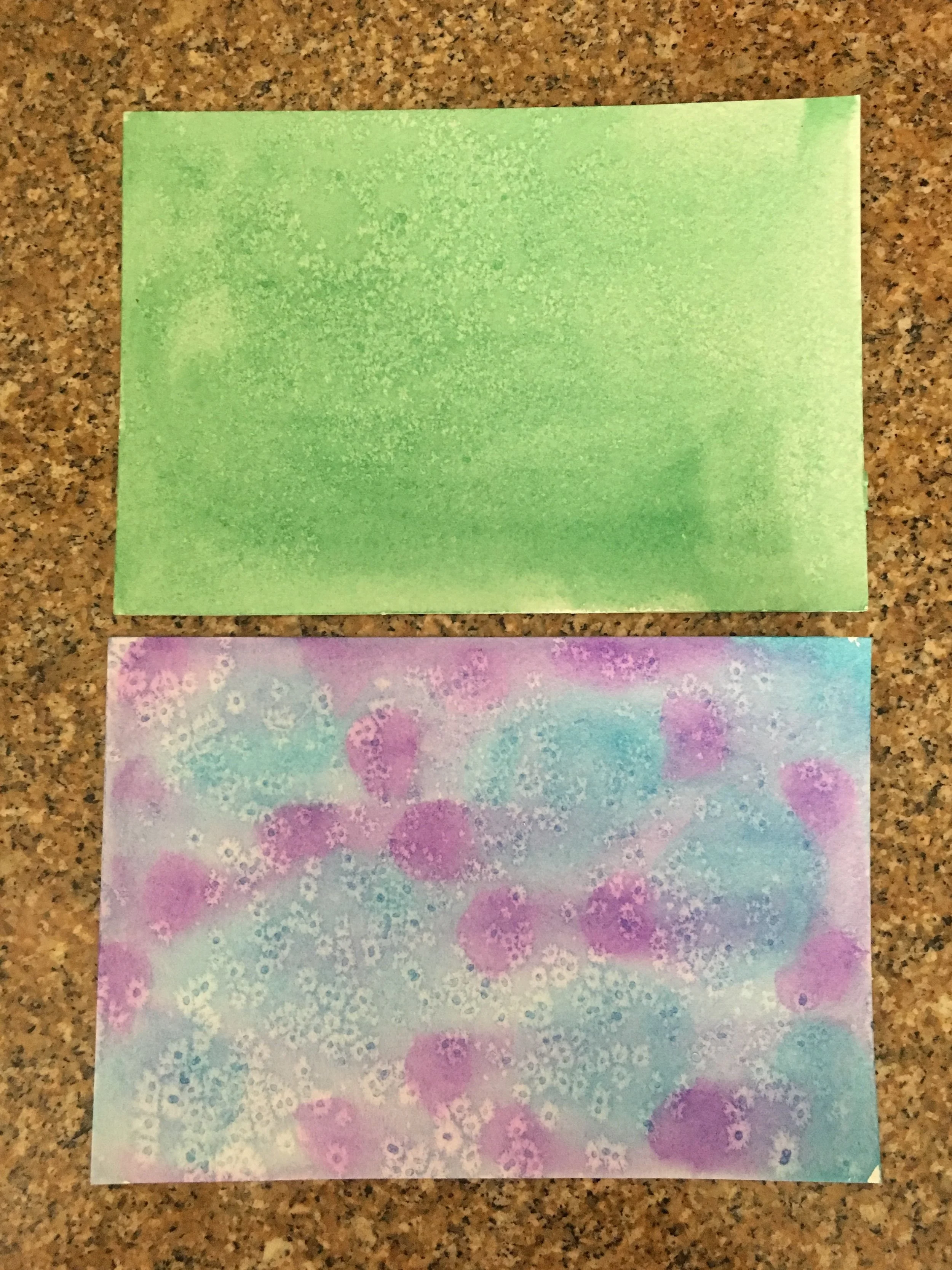
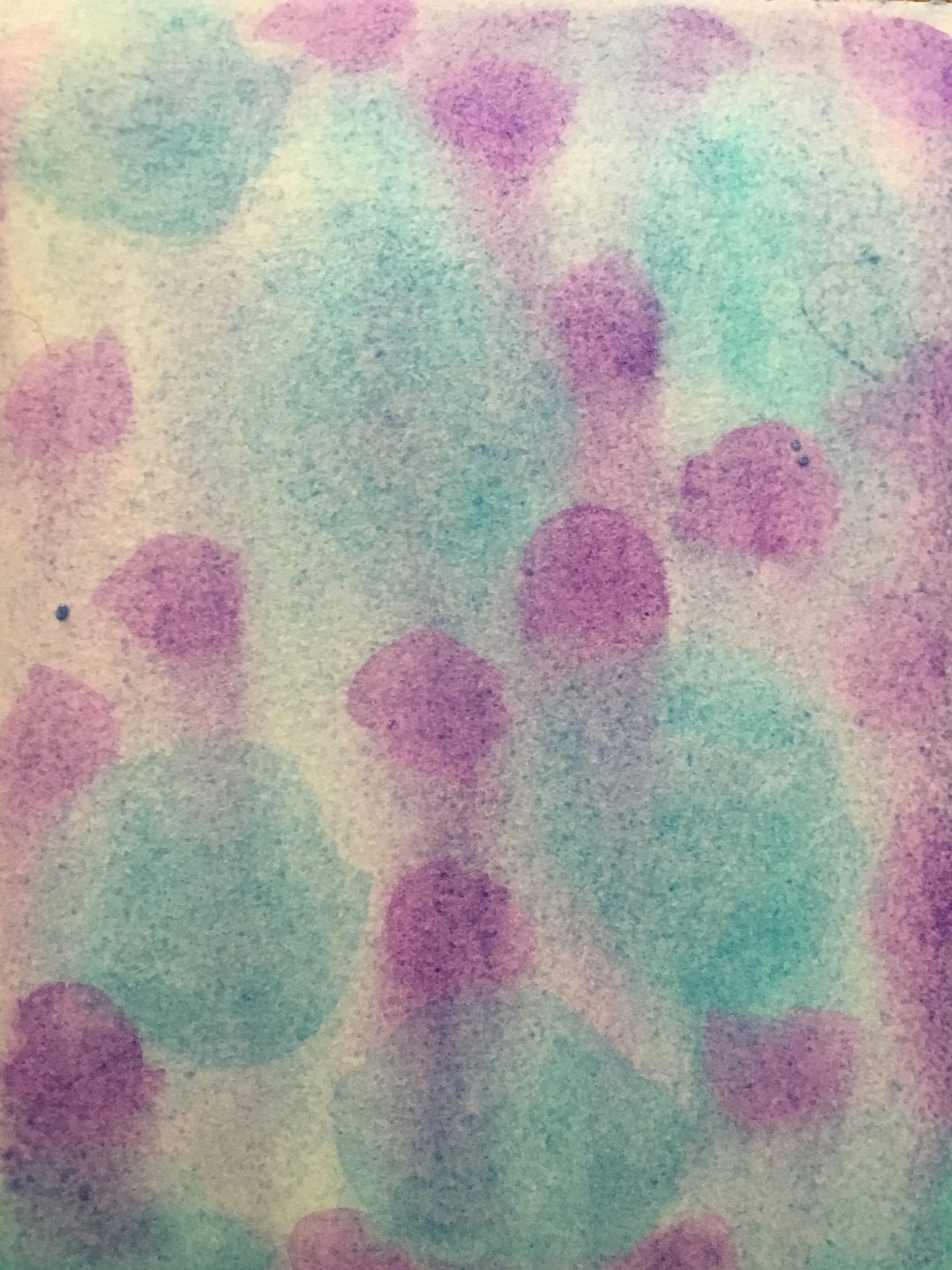
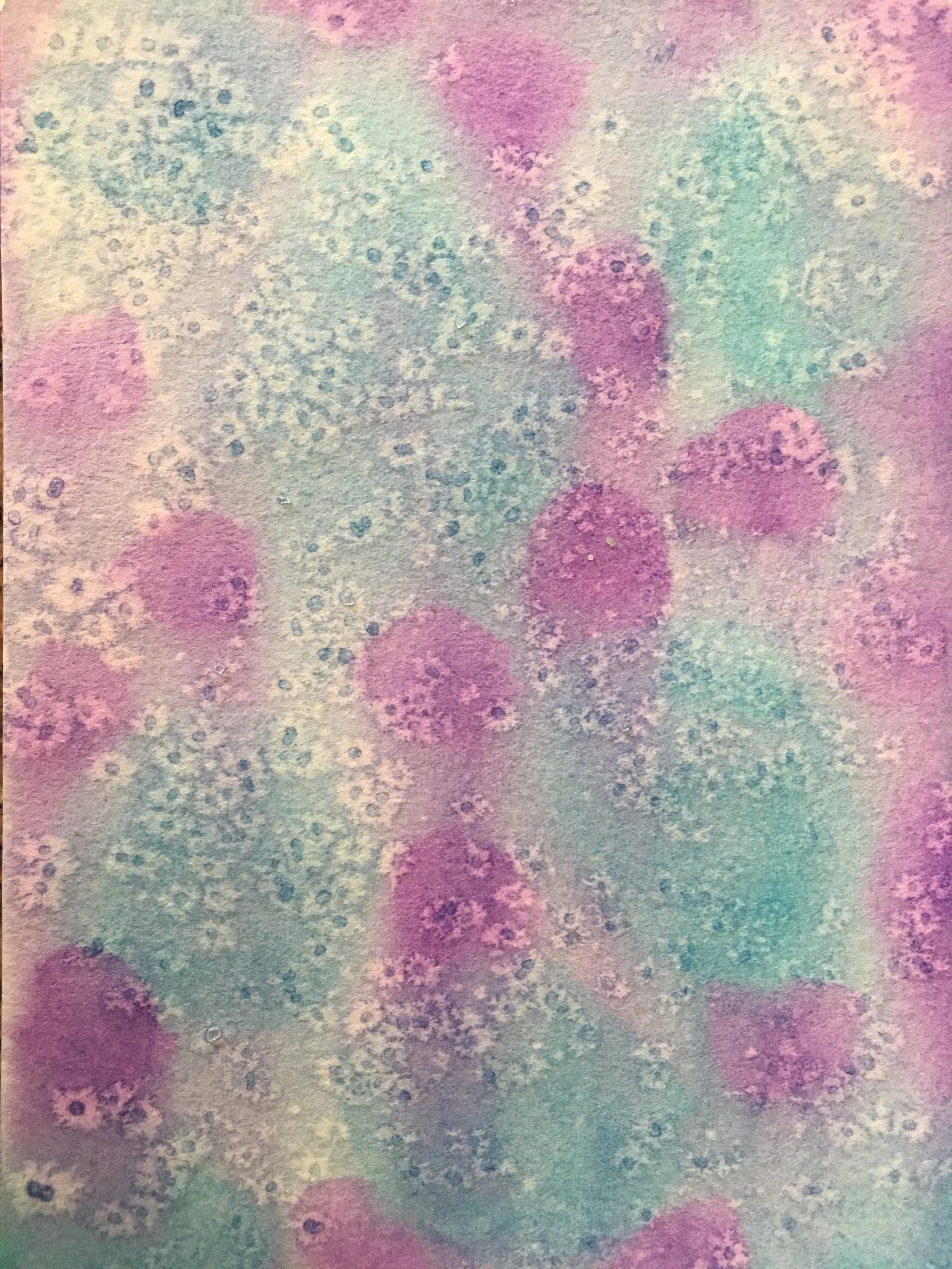
Two Papers created using a Watercolor Salt Technique

Two Papers created using a Watercolor Salt Technique

Two Papers created using a Watercolor Salt Technique

Two Papers created using a Watercolor Salt Technique

The covers of the Flag book in my last post were created using a watercolor salt technique. Watercolor salt technique is fast, fun and anyone, young or old, can do it. Here’s how I created my designs using this technique.

Supplies

  • Paper that can stand up to getting wet without buckling or rolling up. I used white watercolor paper but mixed media paper and other papers will work too.

  • Watercolor paint. Any will do, but watercolors or gouache (opaque water colors) in tubes are a easier to dilute with water.

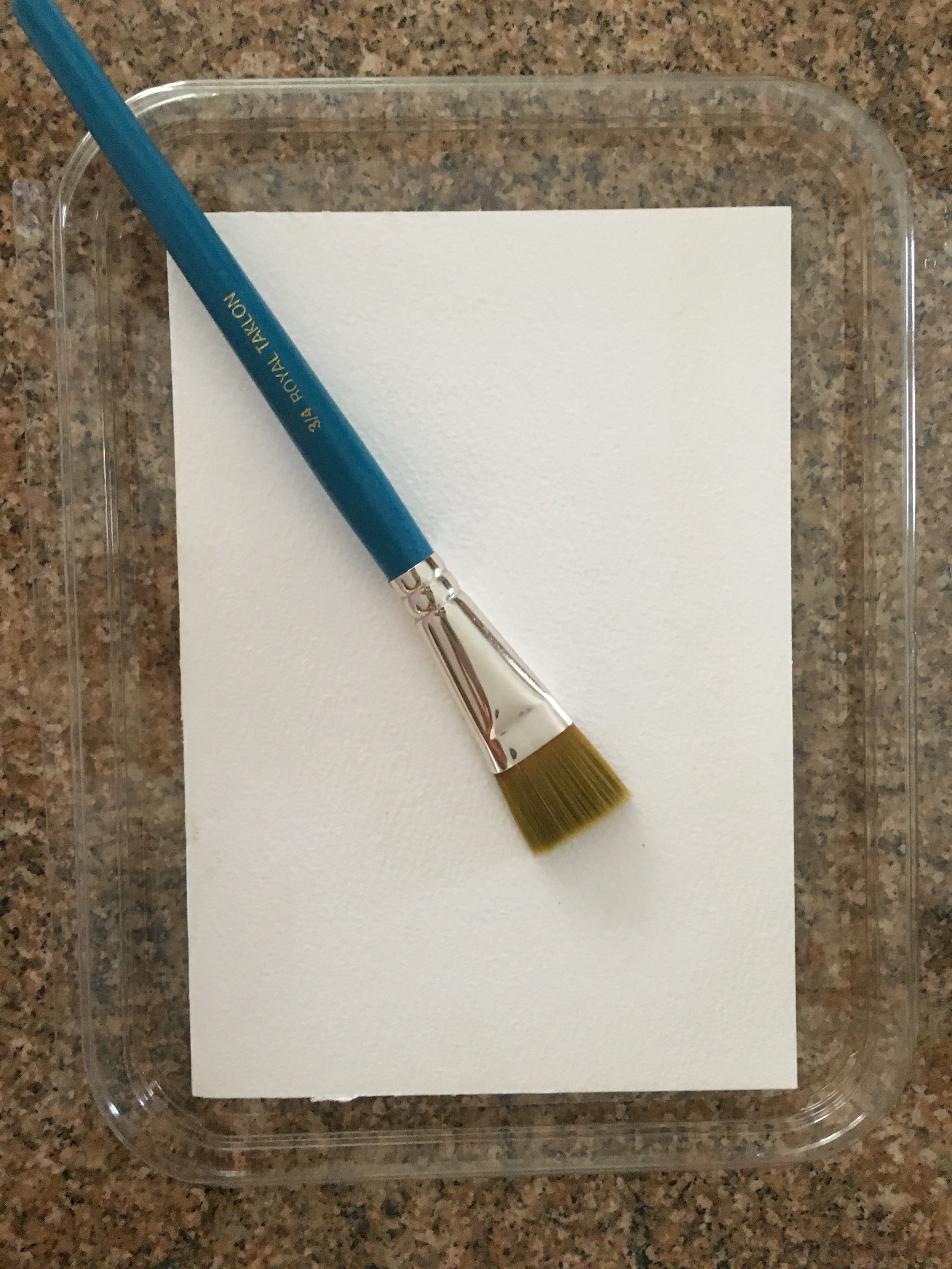
  • A paint brush and surface to dilute the watercolors—the watercolor paint box lid or a plastic or enamel palate.

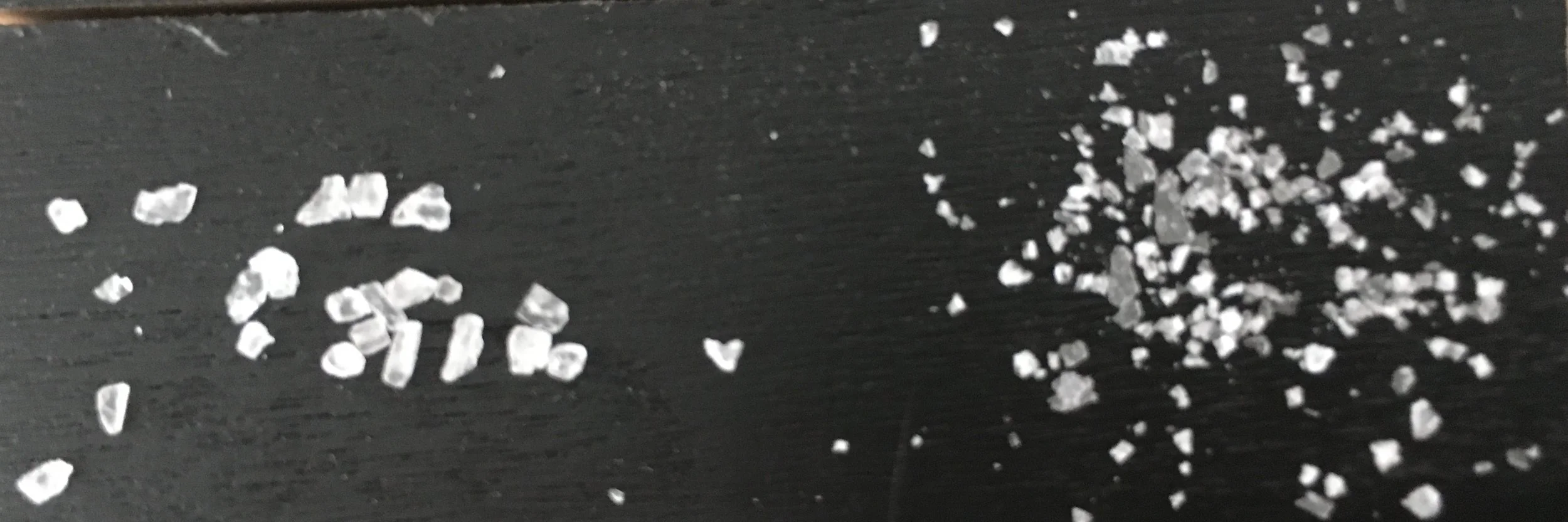
  • Salt. The coarser the salt, the bolder the resulting pattern will be. I used Diamond Kosher Crystal Salt on the green sheet and Whole Food’s 365 Coarse Sea Salt on the aqua and purple sheet.

  • A flat surface where the paper can dry completely.

Whole Food’s 365 Sea Salt—coarse Diamond Crystal Kosher Salt

Whole Food’s 365 Sea Salt—coarse Diamond Crystal Kosher Salt

Instructions:

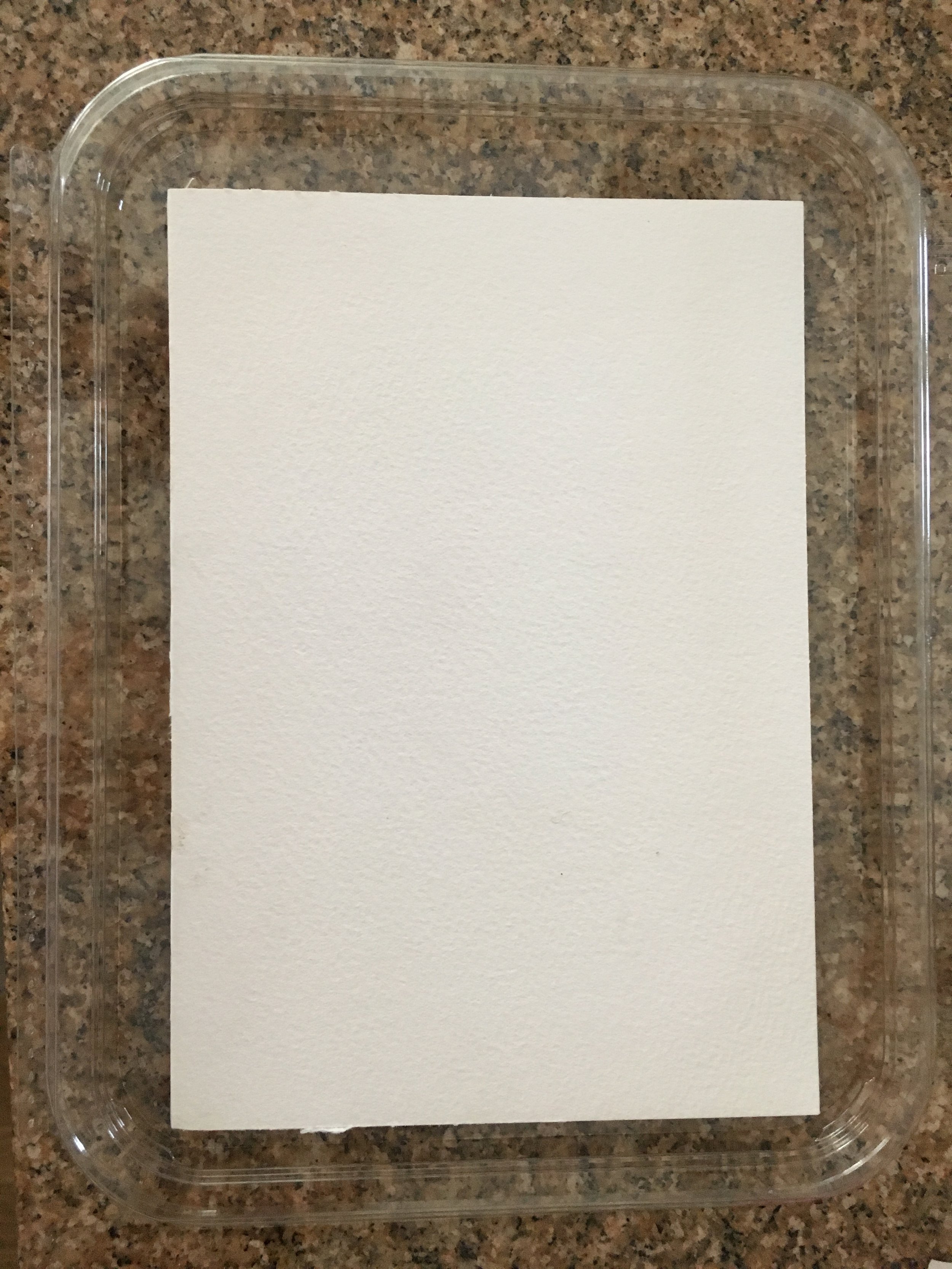
  1. Set up your work area, covering it with a protective layer of paper or plastic. My papers for this tutorial were 5 x 7 inches. I used the top of plastic lettuce box as my work area.

  2. Using clean water, dilute a color on a paintbox lid or plastic palate to the an easily spreadable consistency and the density of color you want for your design.

  3. For a solid color sheet, cover the entire piece of paper with watercolor paint. Or if you wish a design with more than one color paint or drop color on the paper anyway you wish. The sheet needs to stay wet, so it’s easier initially to just use a couple colors.

  4. While the watercolor paint is still wet on the paper, scatter salt over the paper. I covered the entire sheets but you can create an secondary design with the placement of the salt on the wet paper.

  5. Set the salted paper aside. Allow it to dry completely before preceding.

  6. Shake or gently brush the salt off the paper to reveal the design you created with the watercolor salt technique.

  7. That’s it! Enjoy your new water color designs!

IMG_0226.JPG
IMG_0228.JPG
IMG_0230.JPG
IMG_0243.JPG

Notice: This blog is not monetized: I do not use affiliate links. When there are links in a post, they are to give credit to another creative person, because I like or have used a product, or to help the reader easily find supplies for a project.

TAGS: watercolor salt technique, creating watercolor effects using salt, creating designs using watercolors and salt


July 18, 2019

Simple Flag Book

by Judy Tucker


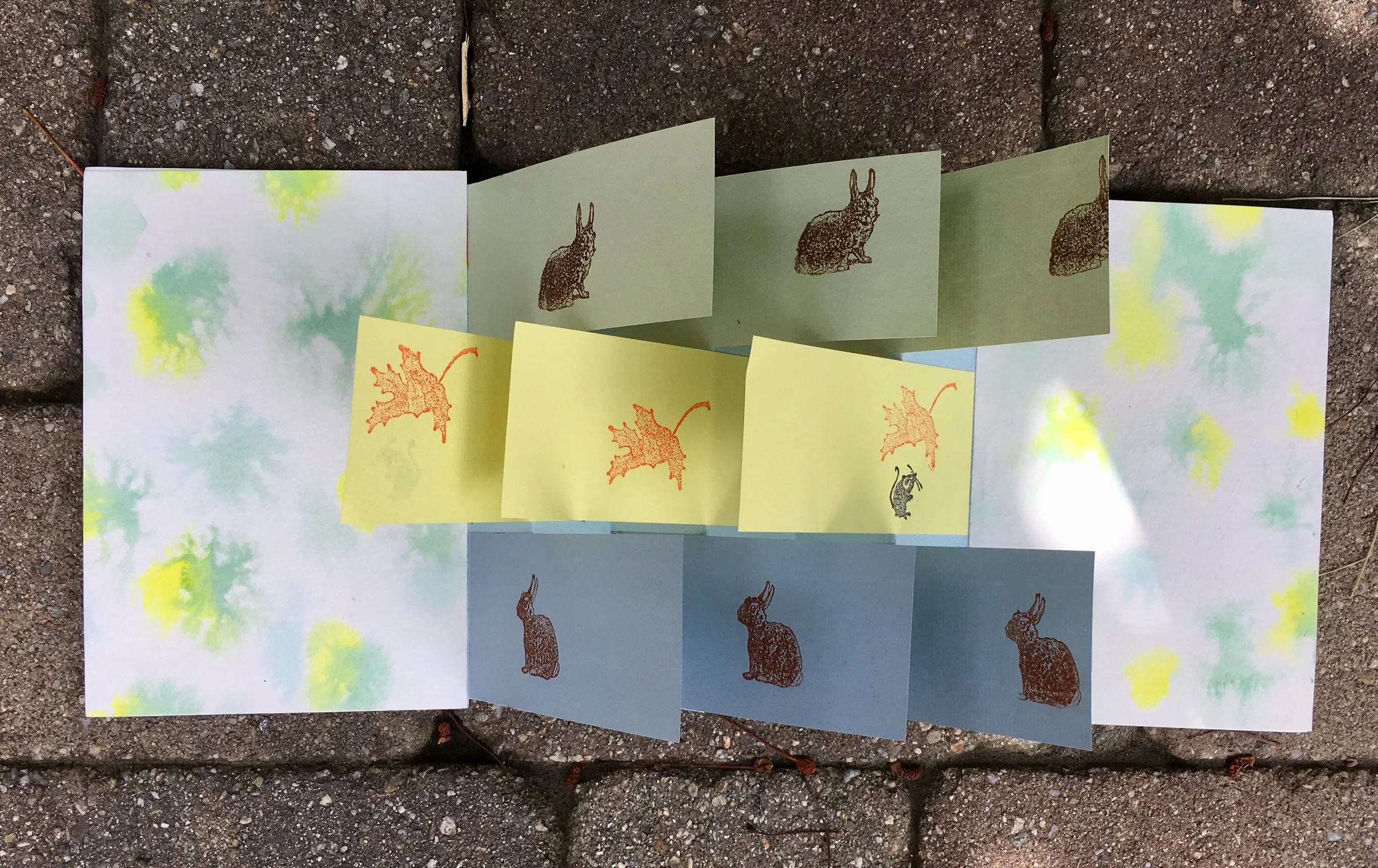
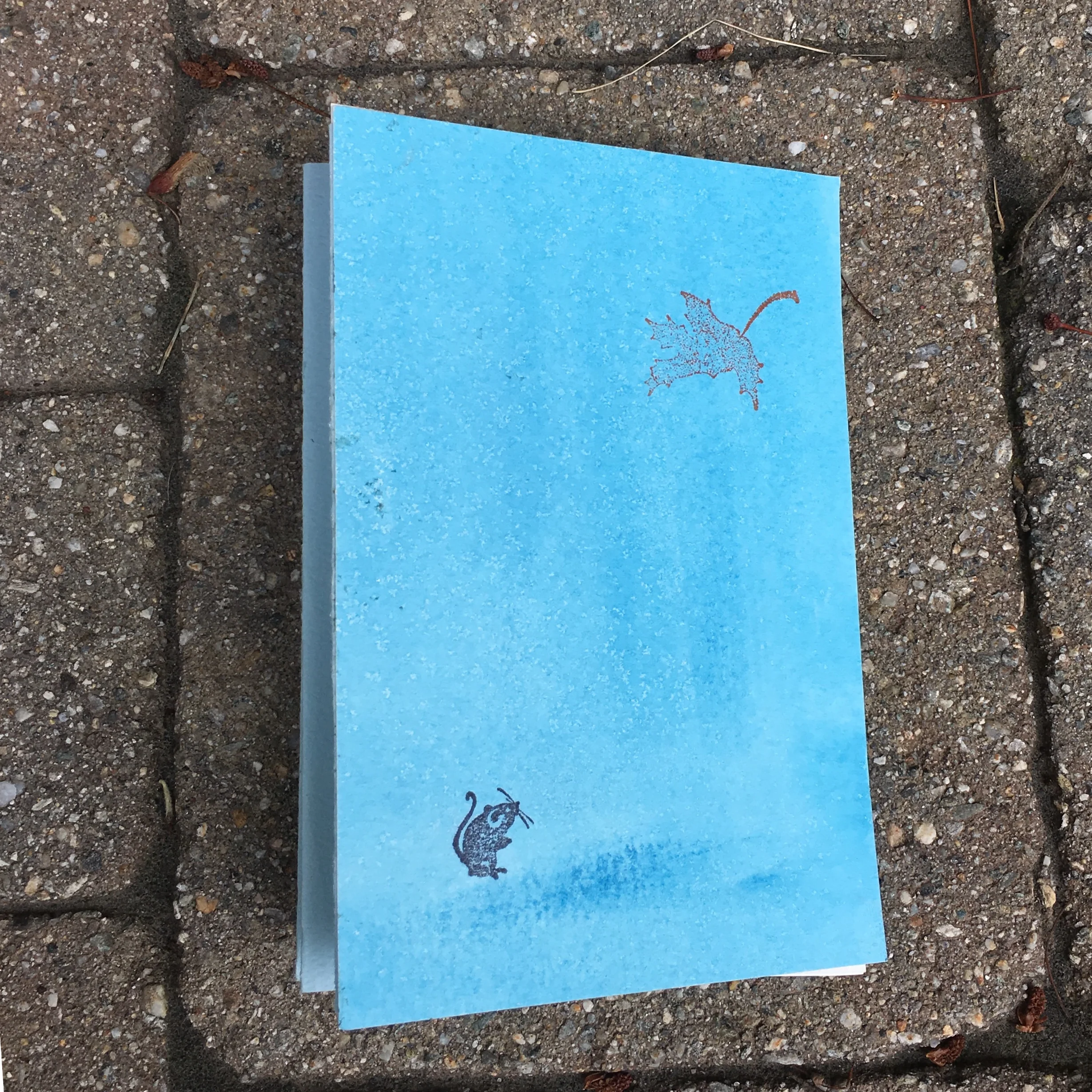
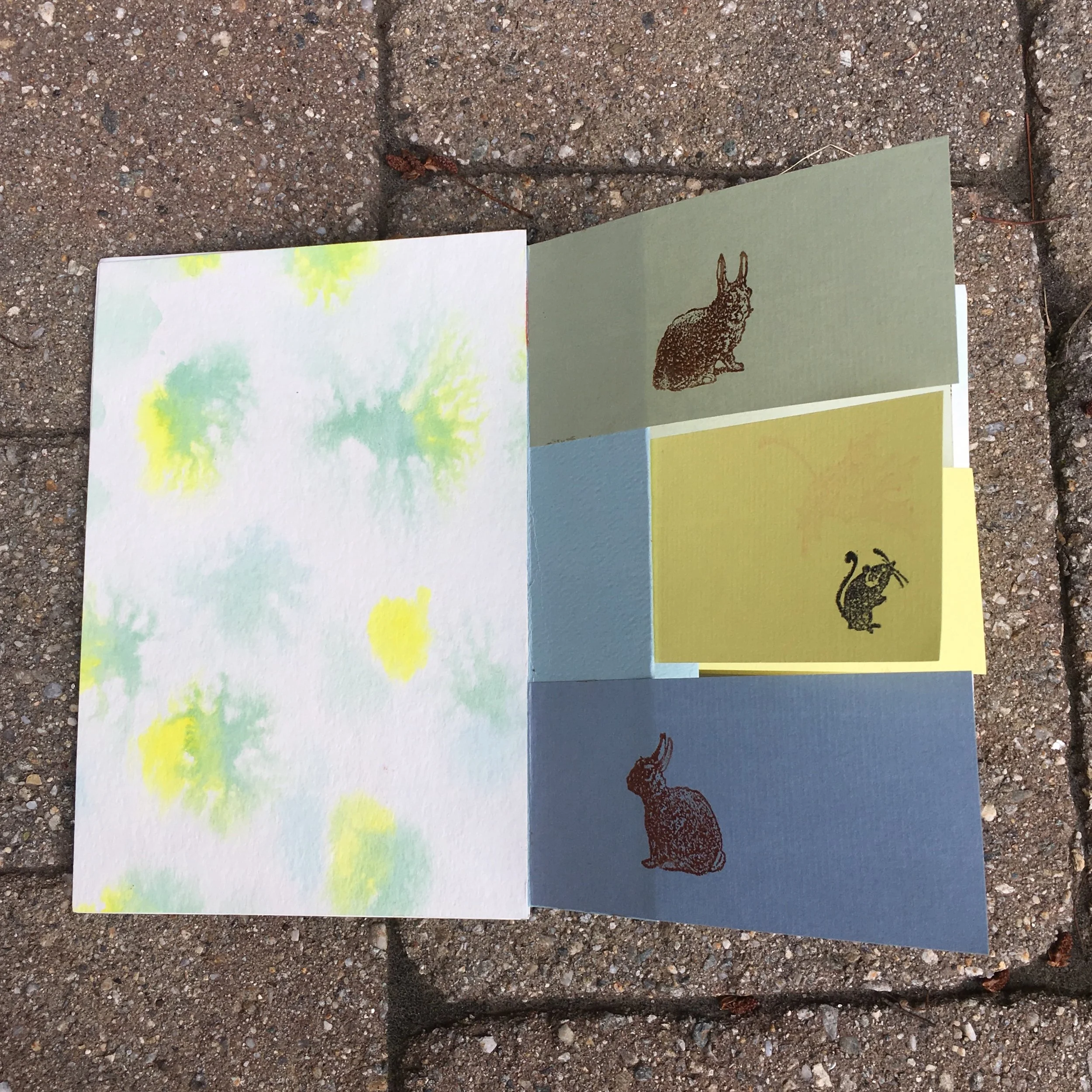
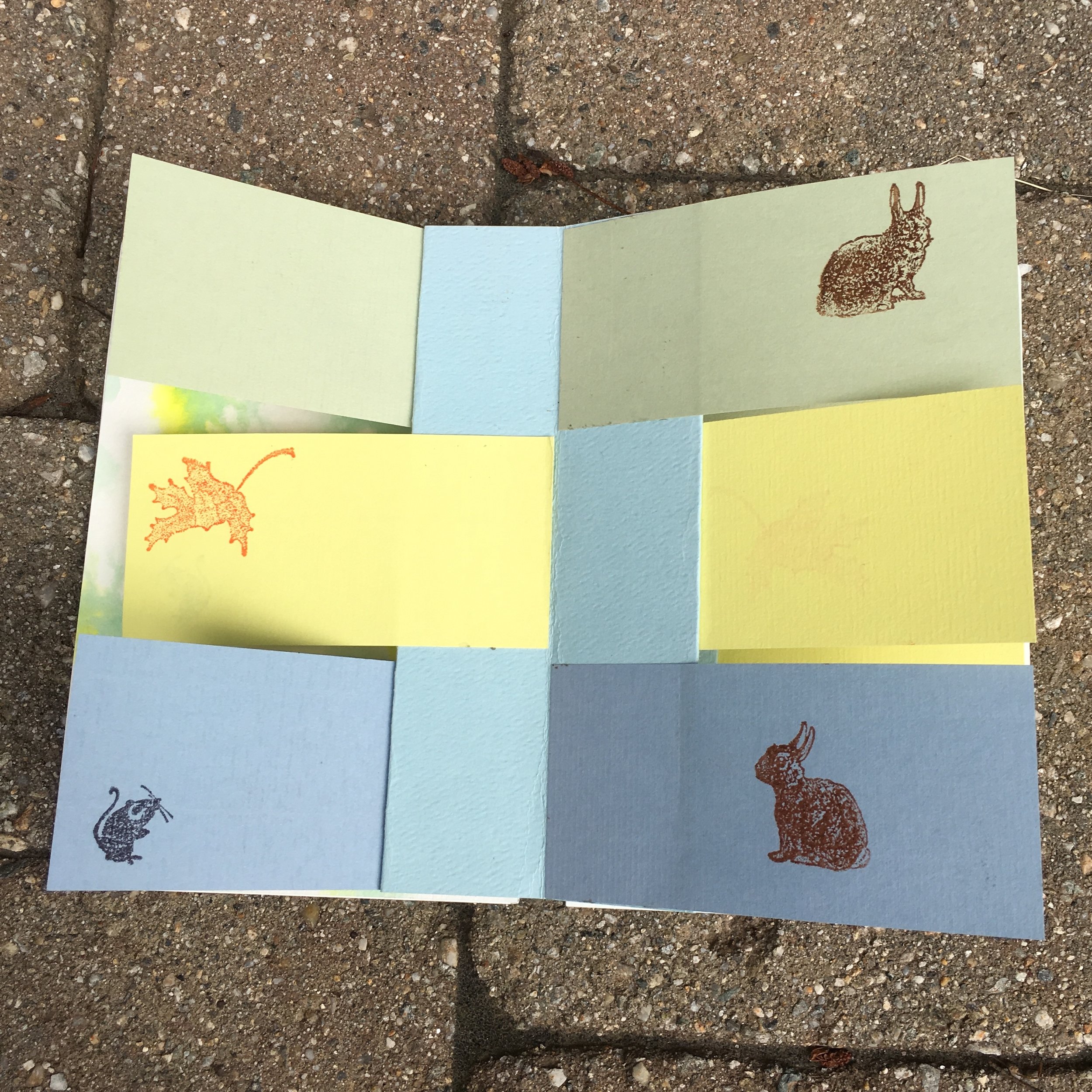
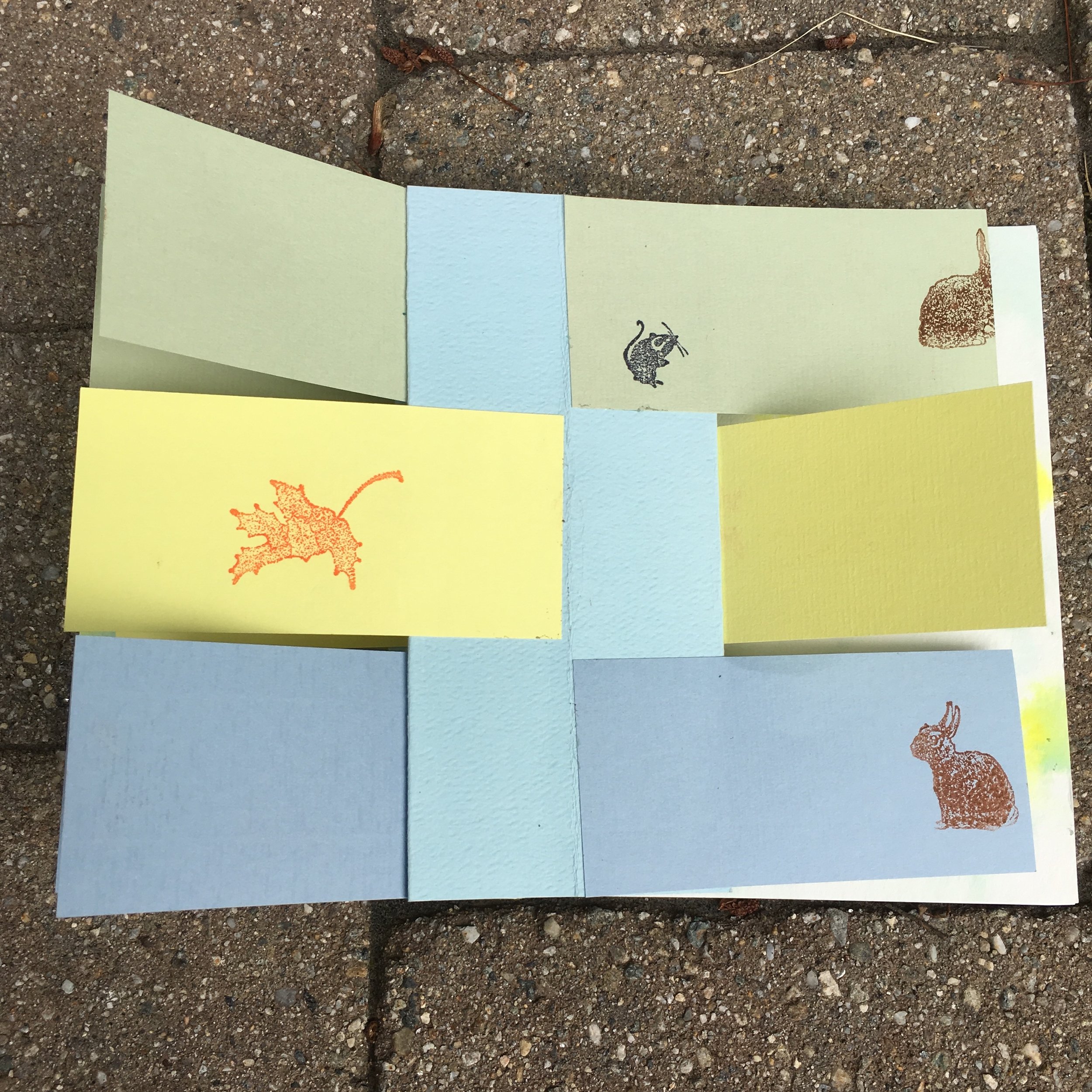
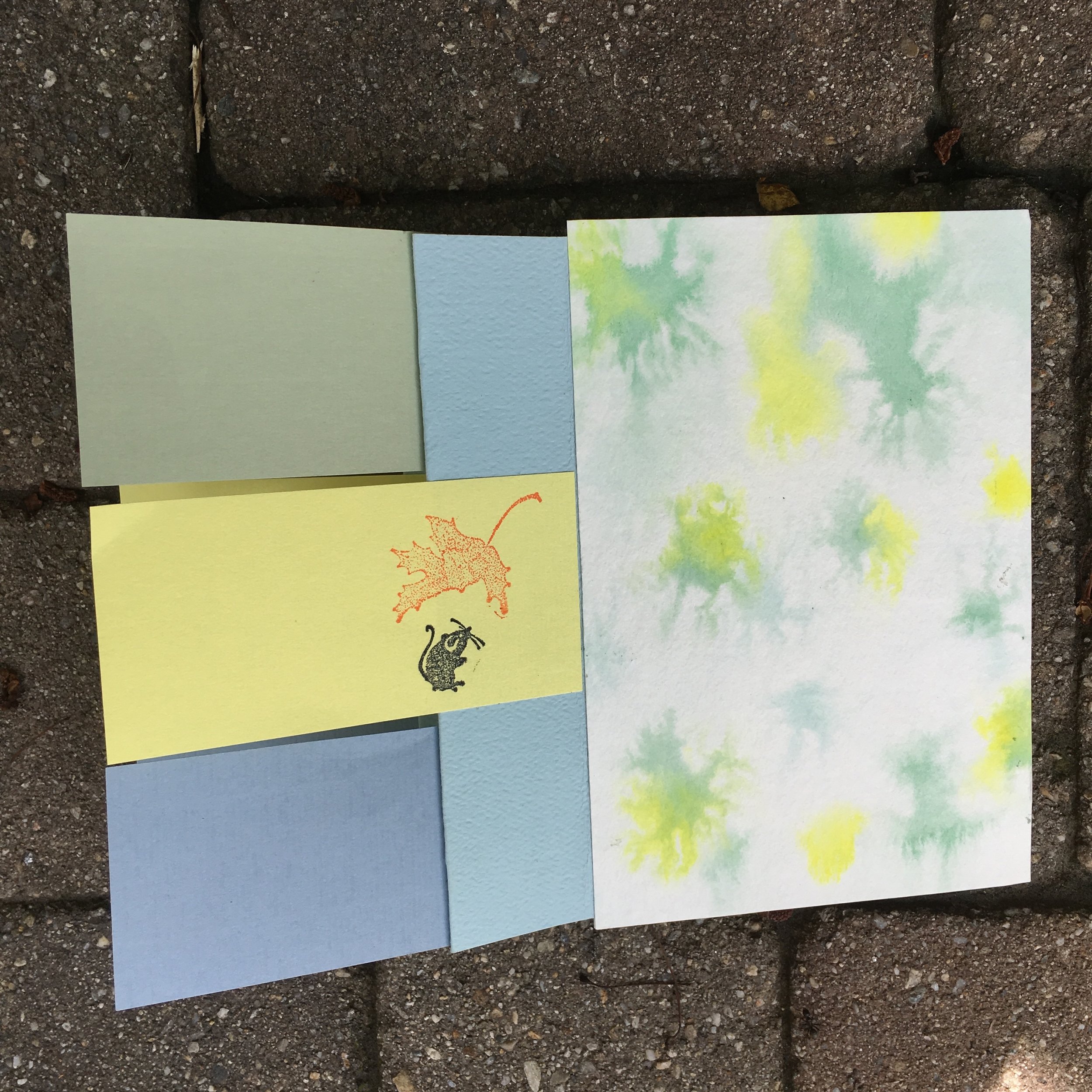
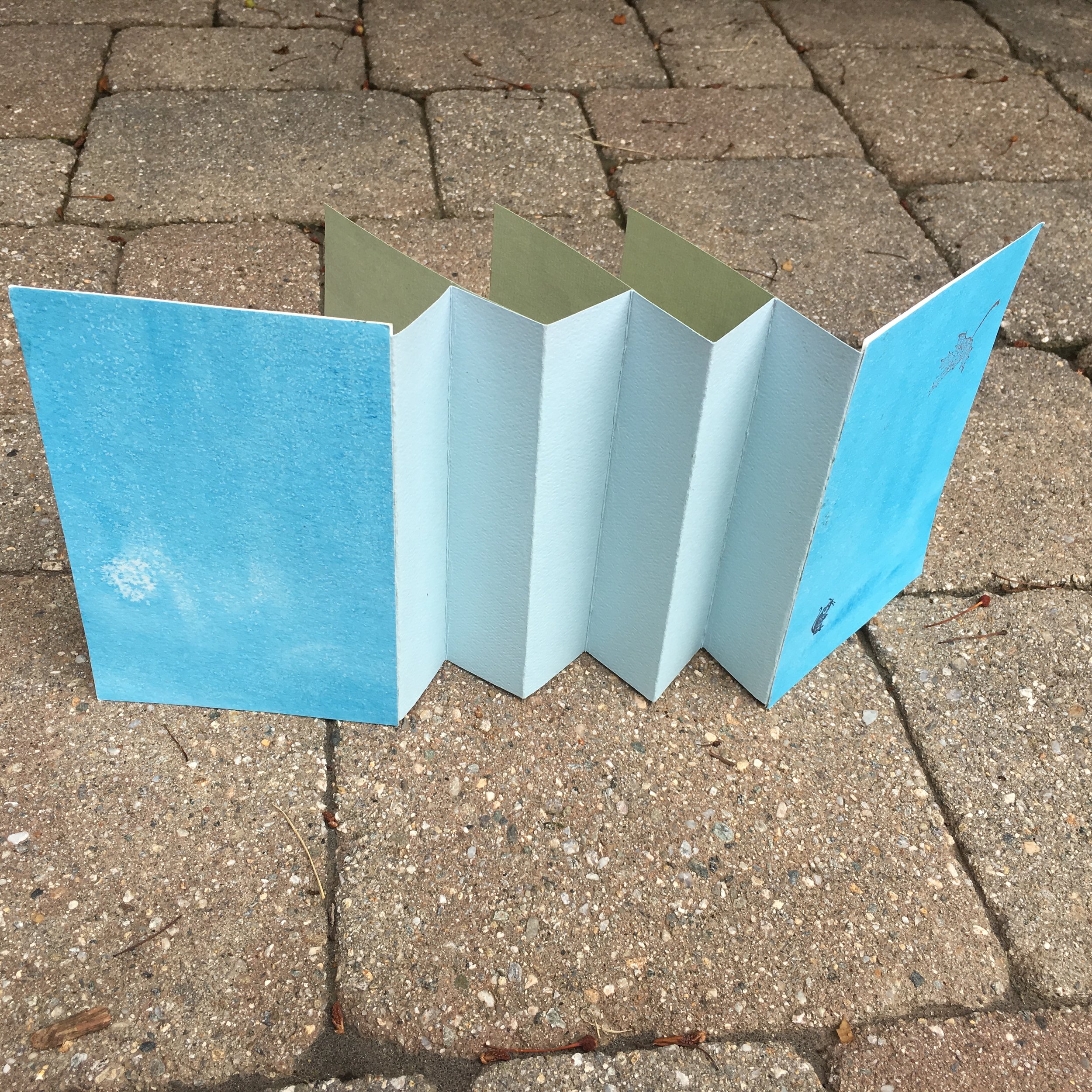
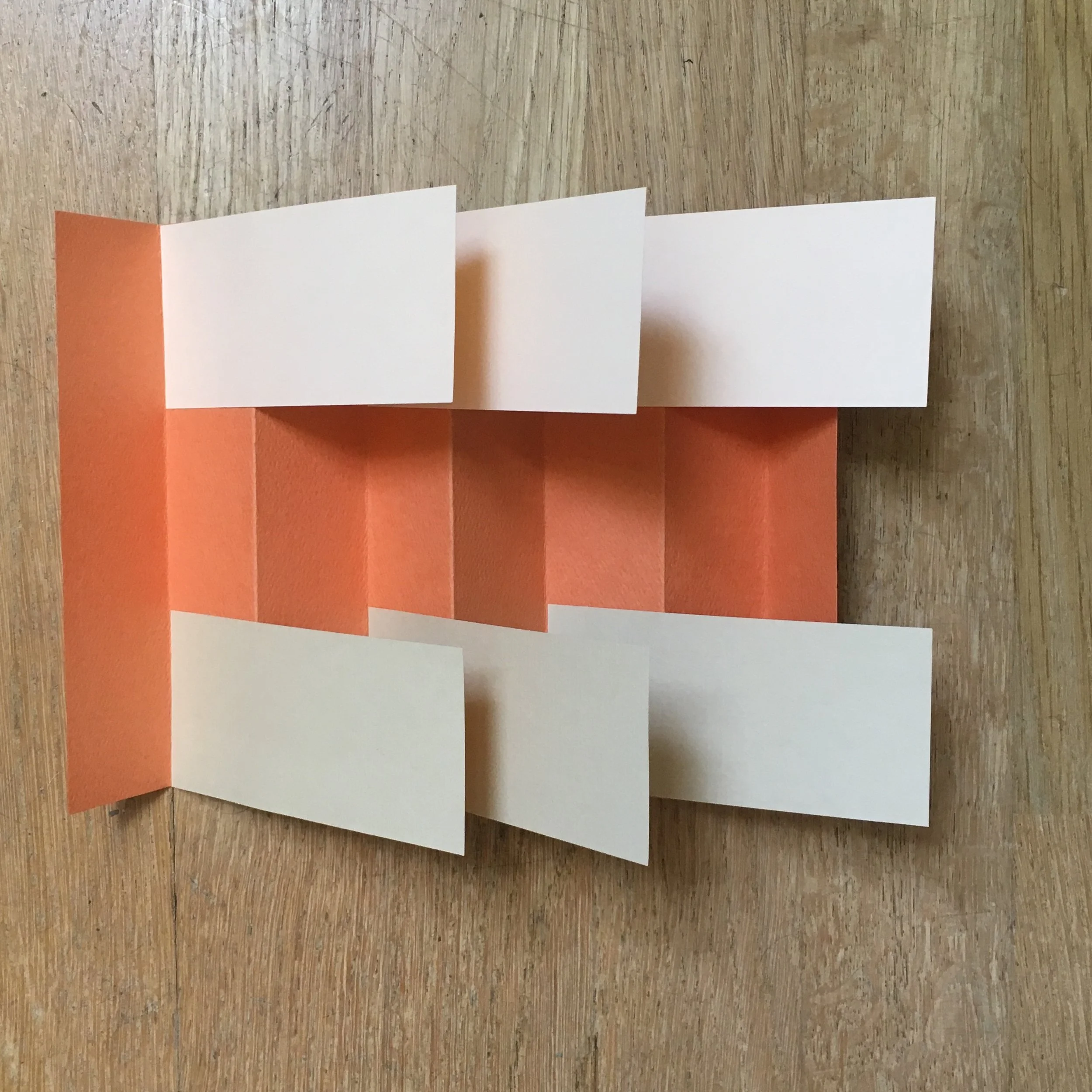
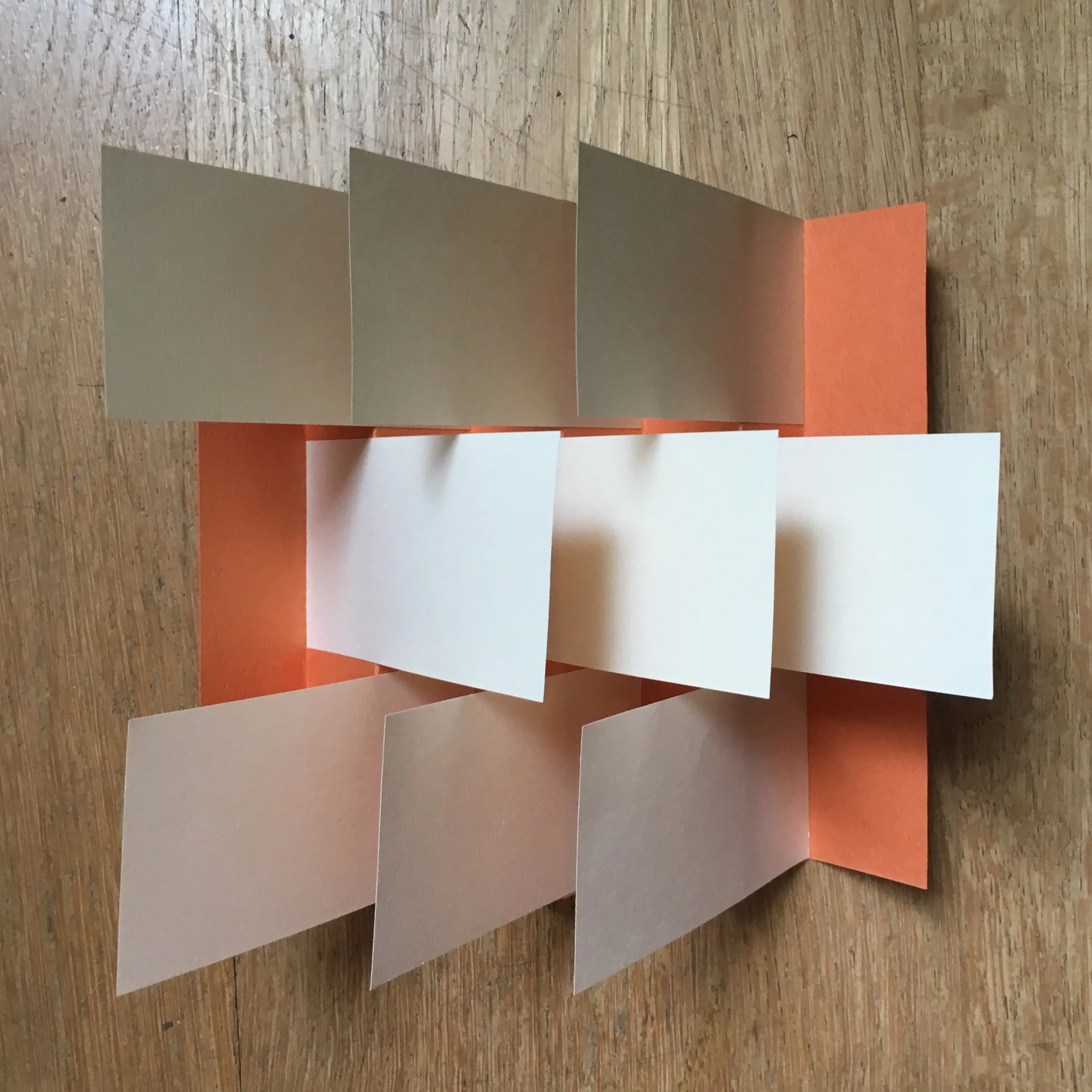
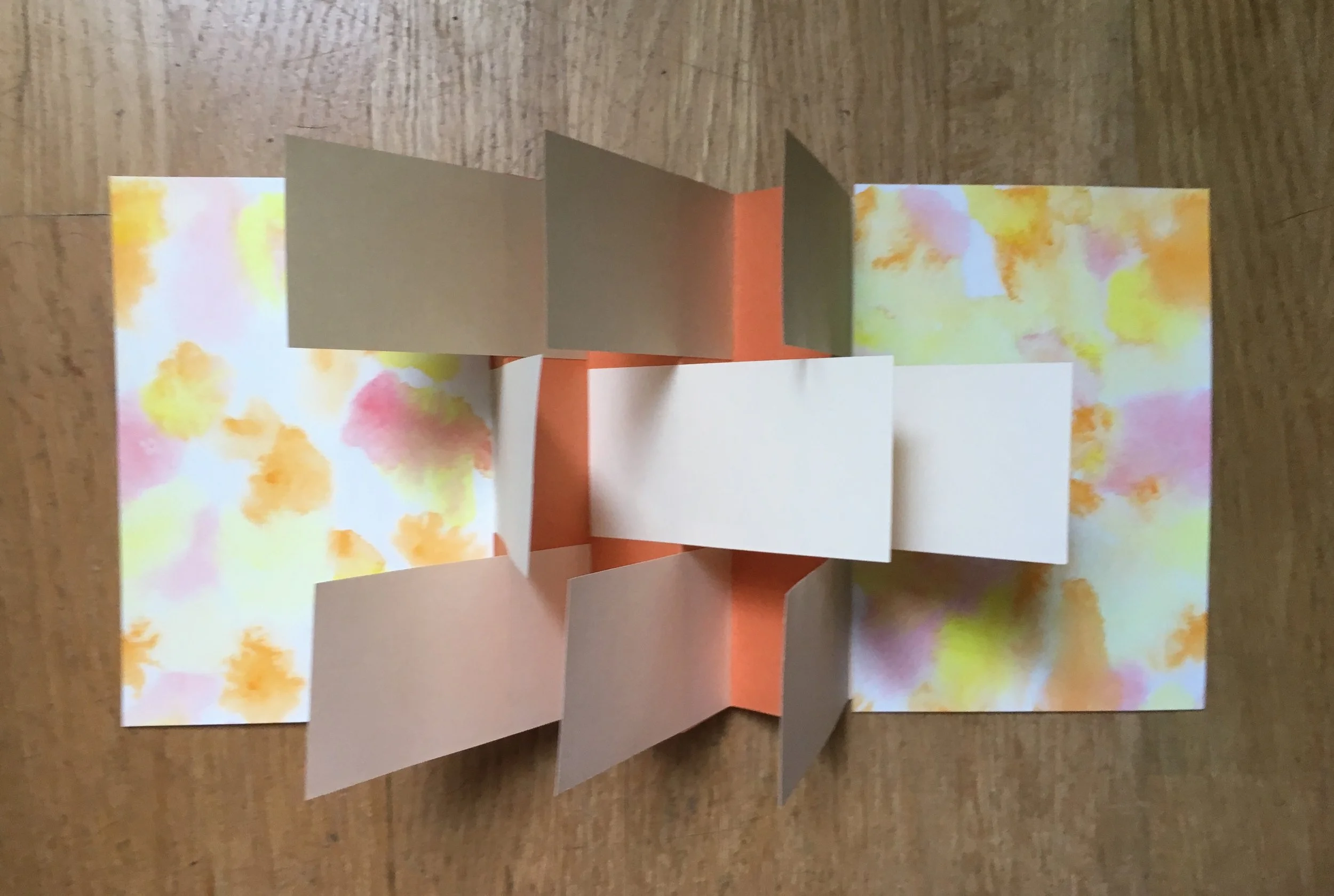
Three page flag book with soft covers

Three page flag book with soft covers

Three page flag book with soft covers

Three page flag book with soft covers

While the appliance repairman was working on my washing machine the other day, I picked up my copy of the beautiful book, The Art of the Fold - How to Make Innovative Books and Paper Structures by Hedi Kyle and Ulla Warchol. The flag book chapter caught my eye. Making a flag book has been on my project bucket list for a while. The instructions in the book are excellent. I also googled some sources online and I watched the flag book segment of Faith Hale’s “innovative Book Structures” on Creativebug.com. Faith’s demonstration is excellent and definitely worth watching.

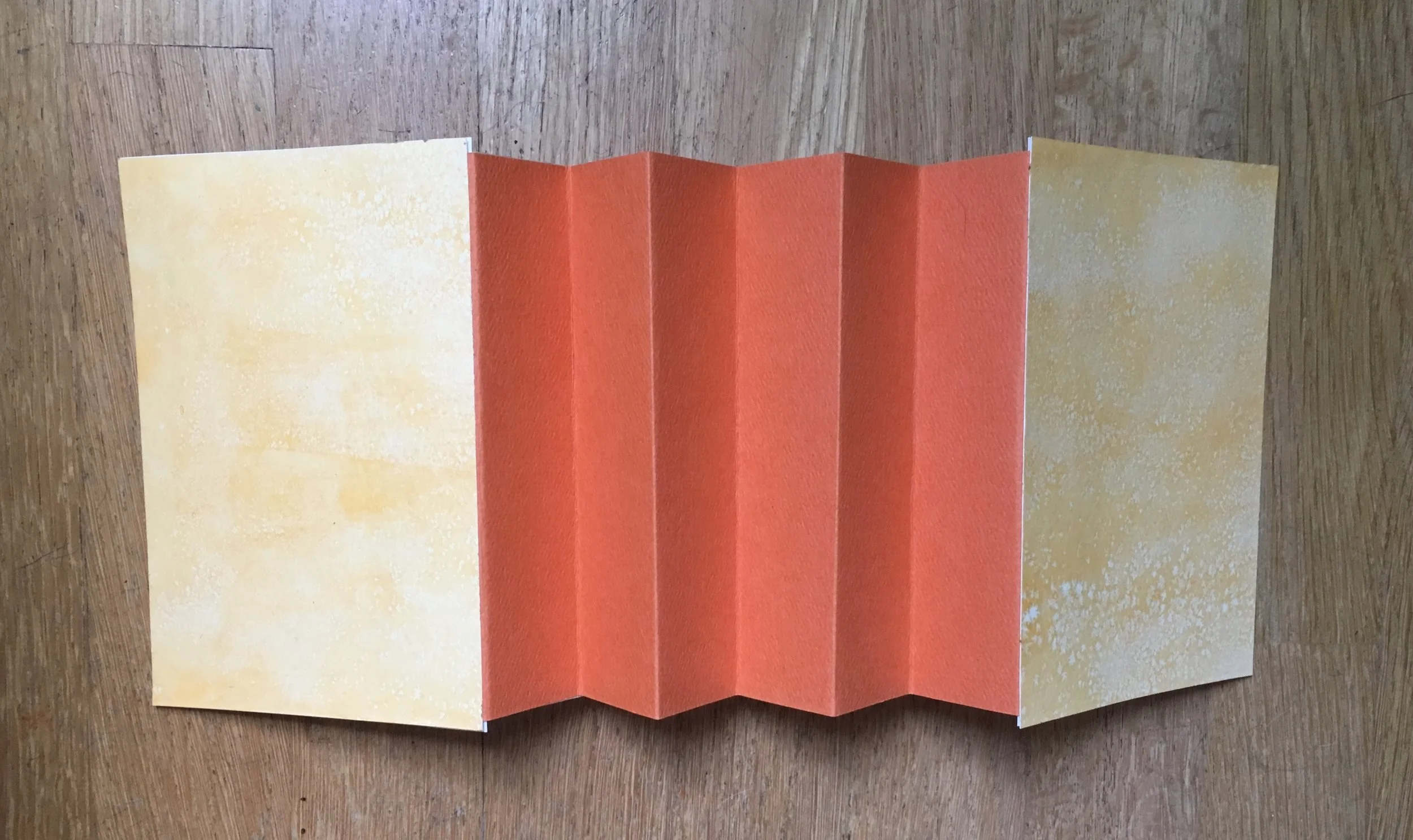
I used the book dimensions from Faith’s video but ended up modifying the flag book to have just 3 pages ( 9 flags) and soft covers. If an adult pre-cut the paper (you really need to use a paper cutter), a child could happily fold and assemble this simplified three page flag book. The final size is 6 1/4 x 4 1/4 inches.

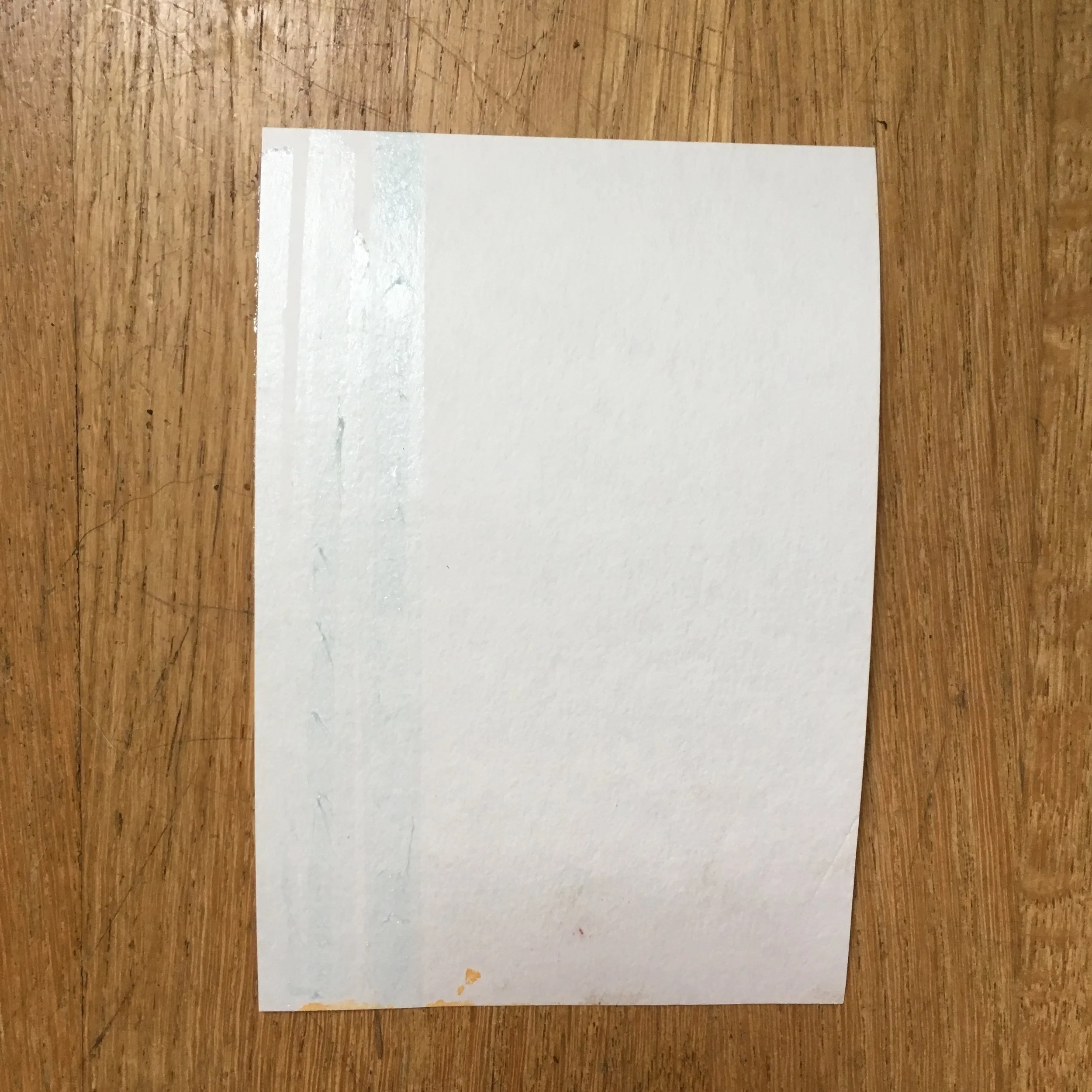
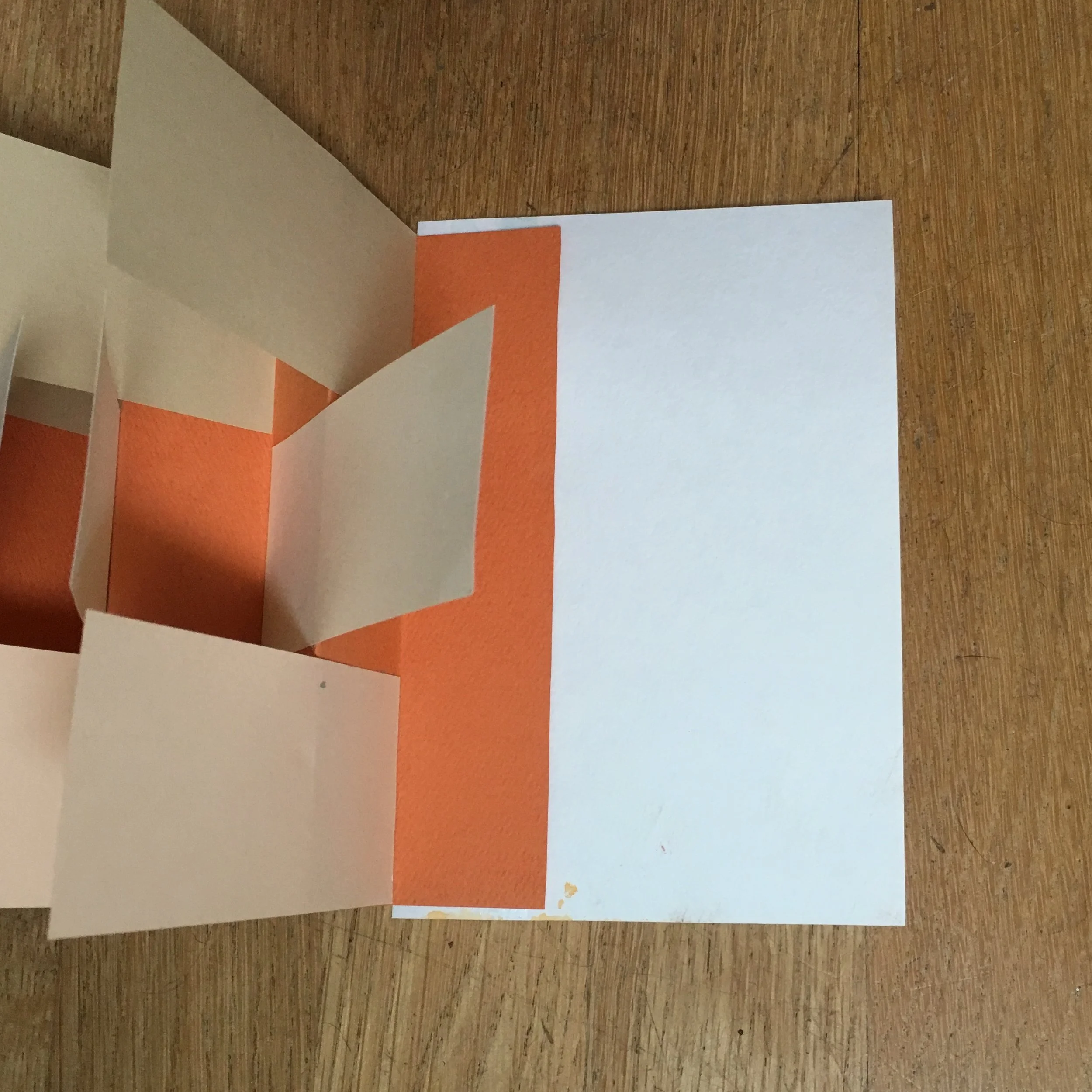
I used paper from a book of printer’s samples for the book’s pages and spine and water color paper for the covers. I used water colors treated with salt to decorate the covers and end pages. It’s so easy and really fun to make.

Here are the pages in the book above. The book can be read conventionally, page by page, or pulled open as seen above. I used rubber stamps to illustrate my pages.

fullsizeoutput_14f4.jpeg
fullsizeoutput_14f5.jpeg
fullsizeoutput_14ee.jpeg
fullsizeoutput_14f2.jpeg
fullsizeoutput_14f1.jpeg
IMG_0173.JPG

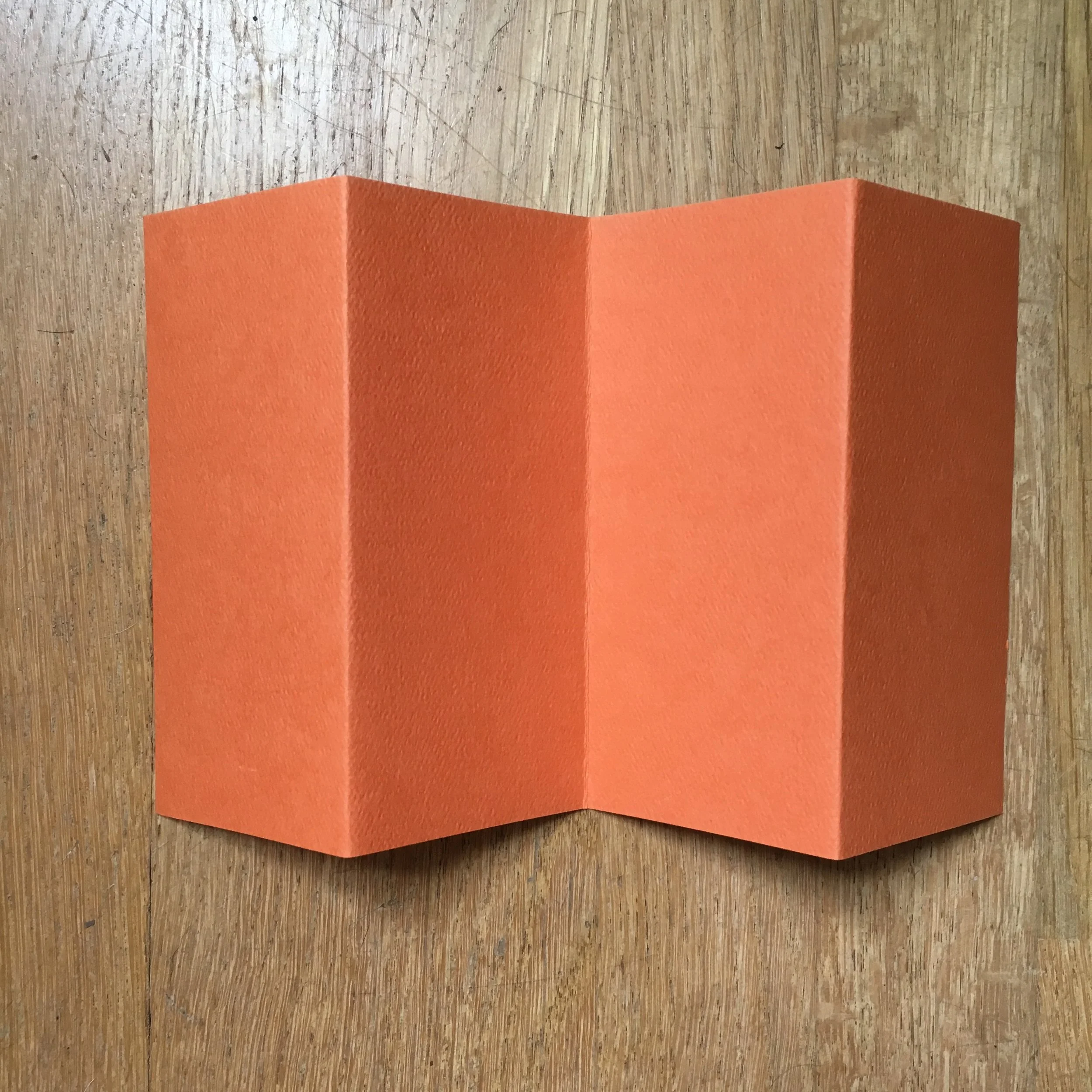
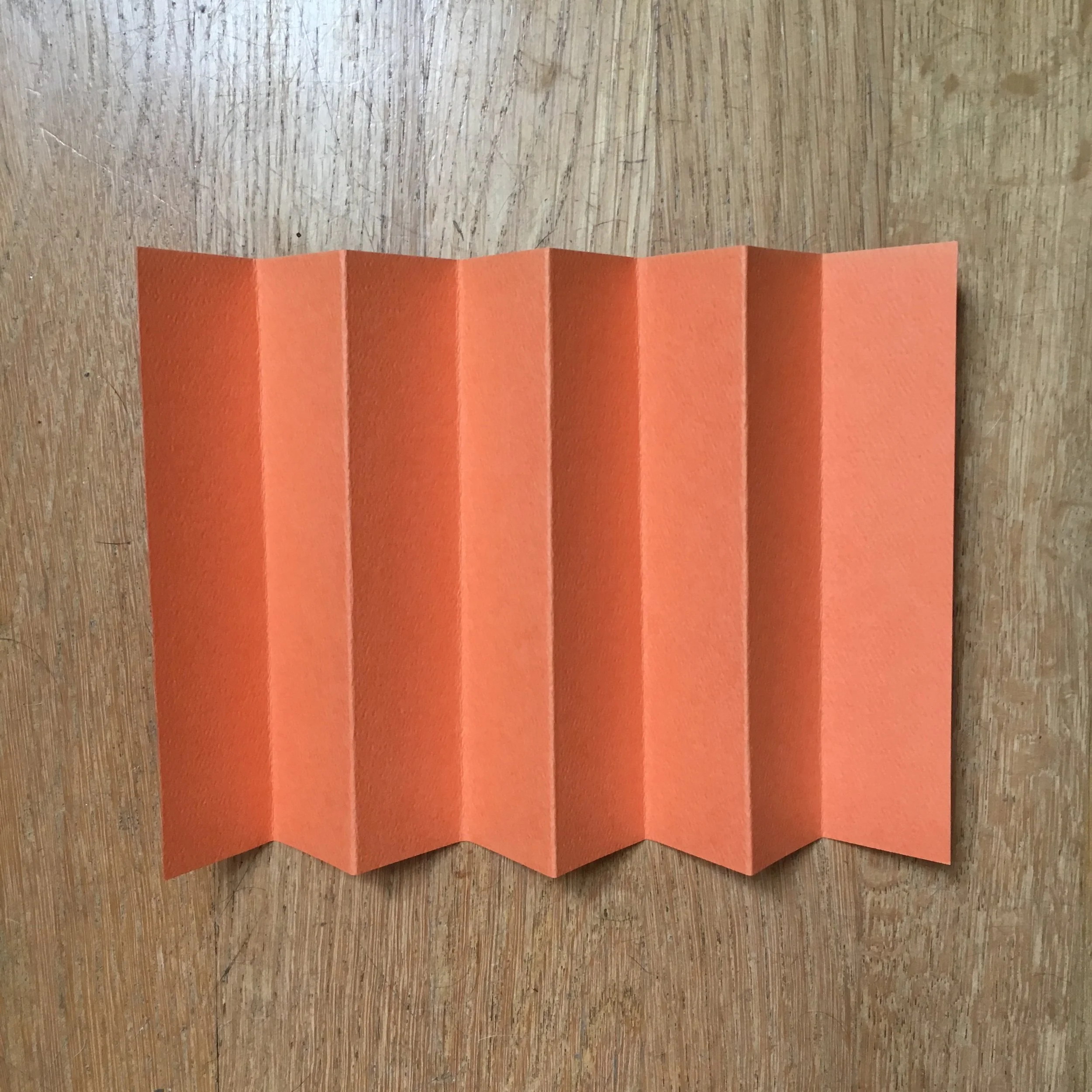
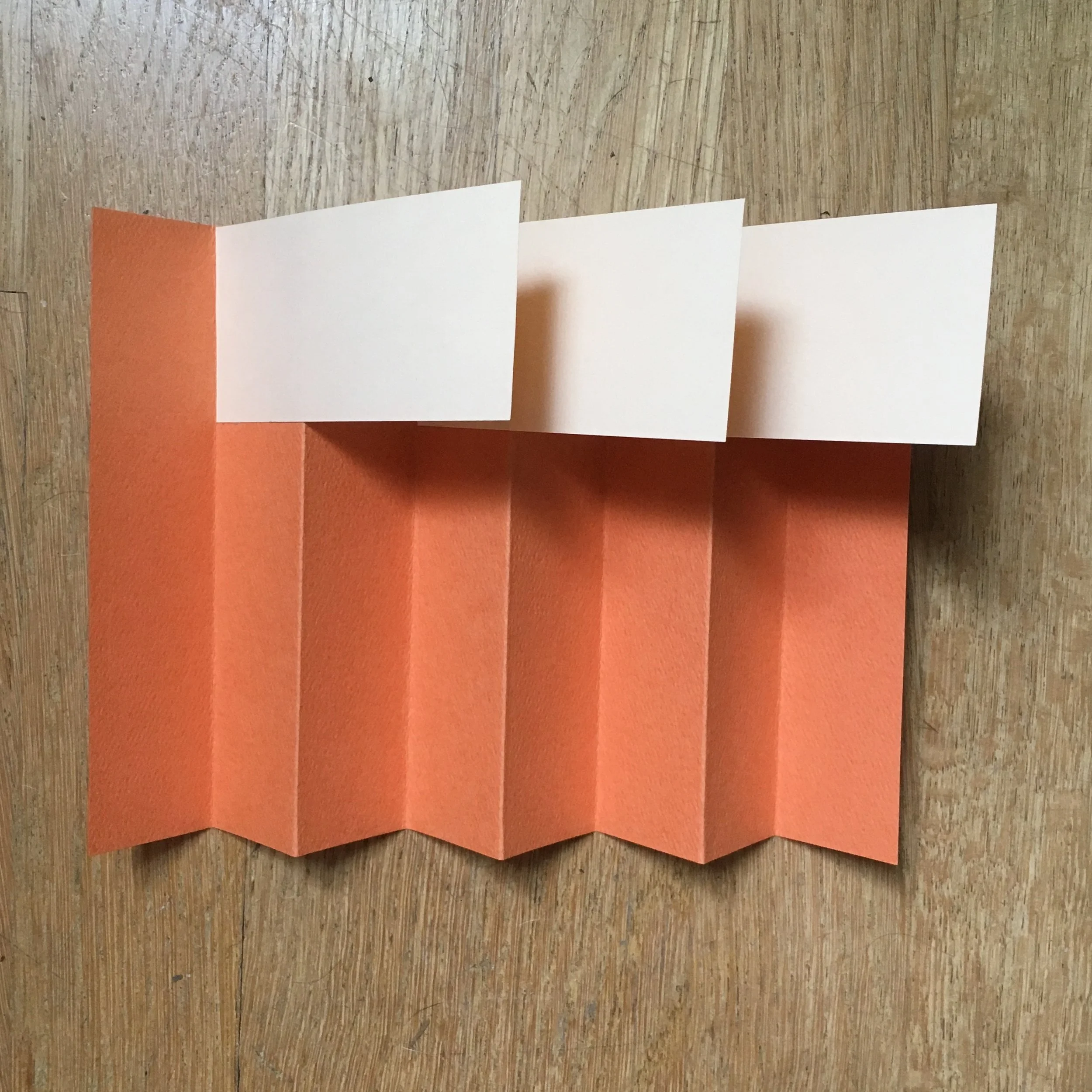
Here are photos of the process of assembling a flag book. Because I used Faith’s instructions to cut the papers for this book, I’m not going to do a tutorial. She’s already done it beautifully! But here are my variations—my spine has half the number of folds as hers so mine only 3 has pages (9 flags in total) , while hers has 7 pages (21 flags). If are making a flag book using Faith’s video, but you want to use soft covers like mine, cut 2 pieces of heavy paper 4 1/4 x 6 1/4 inches for the front and back covers, and 2 end papers of the same size. (I used the heavy watercolor paper for both). The cover is glued on first, and then the end pages are glued to the covers on the inside of the book. I find this soft cover to be totally satisfactory. It also skips the step of covering book board with paper so the project can be completed in just a couple hours.

fullsizeoutput_14ed.jpeg
fullsizeoutput_14f3.jpeg
fullsizeoutput_14f8.jpeg
fullsizeoutput_14f7.jpeg
fullsizeoutput_14f9.jpeg
fullsizeoutput_14fa.jpeg
fullsizeoutput_14fc.jpeg
fullsizeoutput_14fd.jpeg
fullsizeoutput_14ff.jpeg

The first time I illustrated my pages and then glued them into the book. That really complicated the book assembly and I found that the animals didn’t always have the best placement on a page. I actually removed the illustrated last page in the book and re-did it. What looked good as a page lying flat on the table wasn’t as great as a page in the book.

So I recommend illustrating the pages after the book has been assembled. I used rubber stamps, but drawings, photos and stickers would all make fun illustrations for a flag book.

Give it a try! It looks more complicated than it actually is. It really is such a great project.

TAGS: Flag Book, CreativeBug.com, The Art of the Fold, The Art of The Fold, The Art of The Fold by Hedi Kyle and Ulla Warchol, Simplified flag book, Flag book with soft covers, 3 page flag book


July 11, 2019

Child and Doll Skirts Featuring Another 1930s Reproduction Fabric

by Judy Tucker


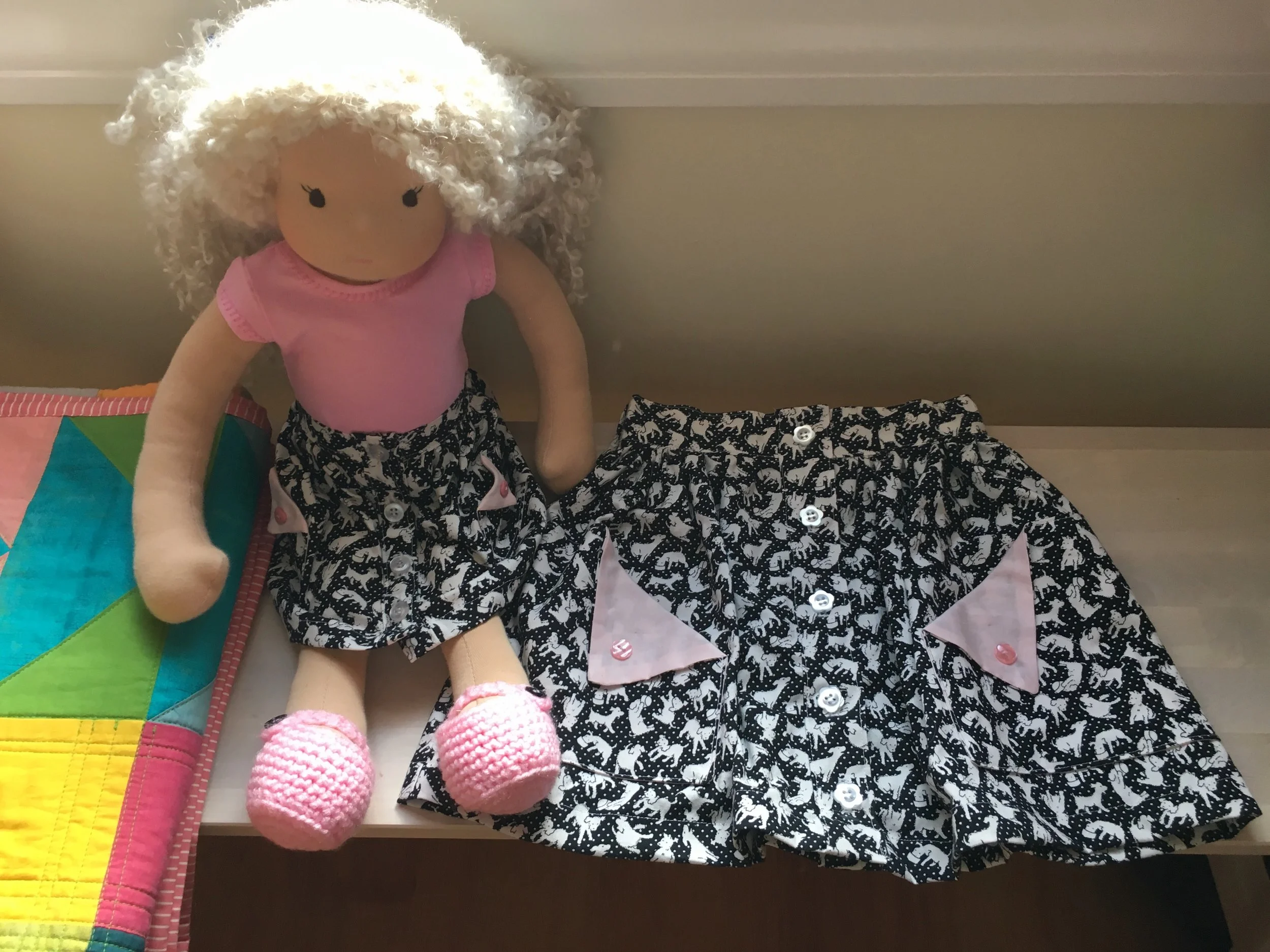
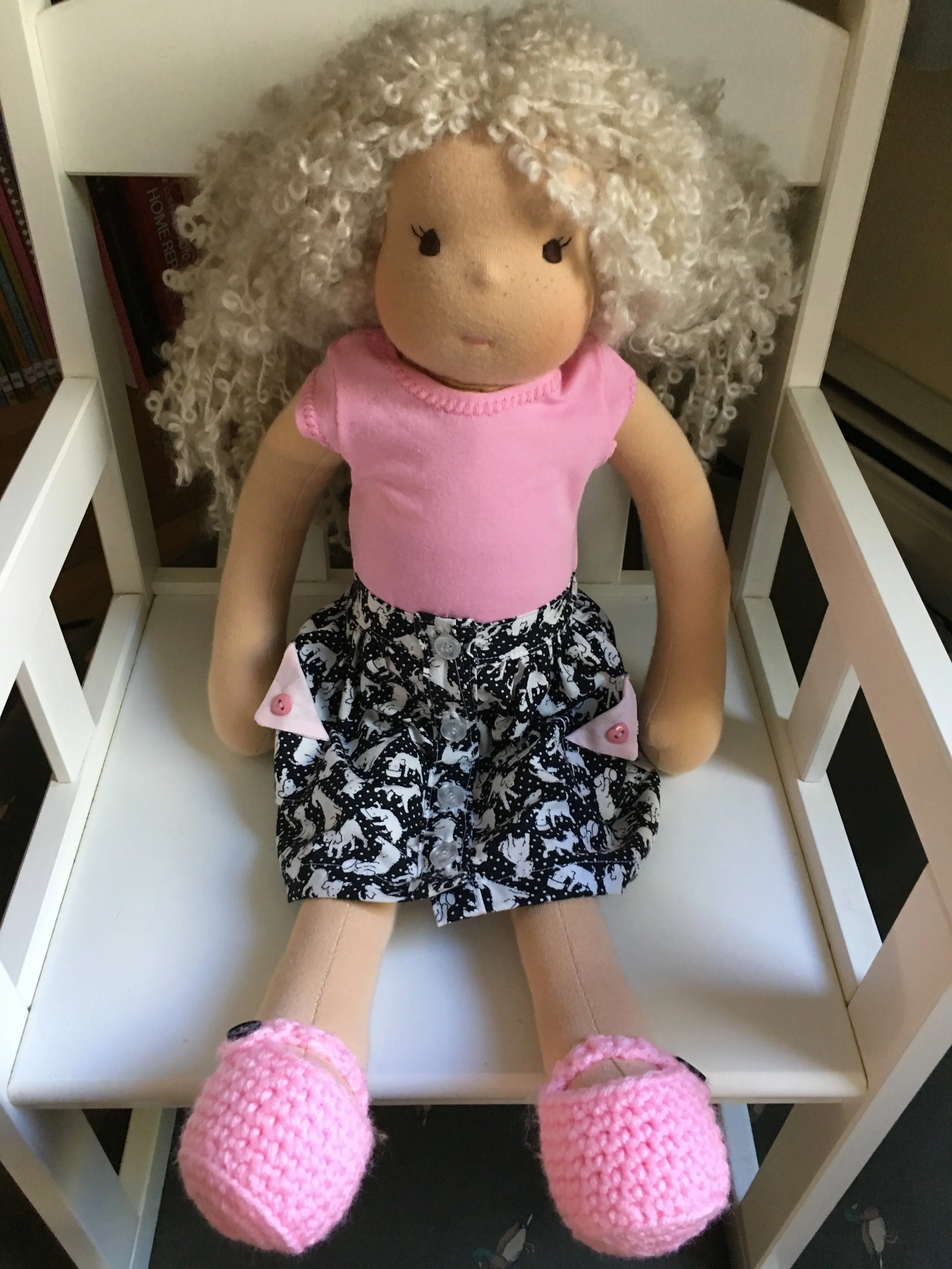
Olive ann designs Buttons Skirts and Pixie Faire T shirt. The doll is a Bamboletta Forever Friend.

Olive ann designs Buttons Skirts and Pixie Faire T shirt. The doll is a Bamboletta Forever Friend.

Olive ann designs Buttons Skirts and Pixie Faire T shirt. The doll is a Bamboletta Forever Friend.

Olive ann designs Buttons Skirts and Pixie Faire T shirt. The doll is a Bamboletta Forever Friend.

I’ve had this delightful 1930’s reproduction dog fabric for several years. It never called out to me to use it in a quilt, probably because black and white quilts are just not in my wheelhouse.

But it’s perfect fabric for a birthday present for a dog-loving neice and her American Girl Doll!

The skirt pattern is the Bubbles & Buttons Skirts and Doll Skirts, OAD 86, sizes 1-8 and an 18 inch doll, by olive ann designs. This is full skirt that has elastic in the back waistband. The child’s and doll’s skirts are made exactly the same way. Those are functional buttons on the doll’s skirt! No hook and loop tape in sight!

I added the contrasting color on the inside of the pockets. I really like the light pink accent on the black and white fabric.

I has happy to discover that even though the doll skirt is intended for an 18 inch doll, with the waistband elastic a bit looser, it perfectly fits a 20 inch Bamboletta Forever Friend. I don’t have an 18” doll, so looking around my house for a doll to act as a model, I tried it on my Bamboletta Forever Friend. It fit! So exciting because I usually have to draft patterns for clothes the Bamboletta dolls. And even more fun because I wouldn’t draft this detailed an skirt for doll.

The T shirt is a free pattern from Pixie Faire. It’s a great pattern and went together quickly and easily.

I’m so happy that this dog fabric finally found a perfect home in this twin project!

BambolettaForeverFriendModelingDollClothes.jpg


TAGS: olive ann designs Bubble and Buttons Skirt pattern, Child/doll matching skirt patterns, Matching child and doll dresses, Pattern that fits a Bamboletta Forever Friend doll, Reproduction 1930s fabrics, 1930s fabrics for clothing


June 27, 2019

Peg Dolls - Pea Sprouts: A Tutorial

by Judy Tucker in Tutorial


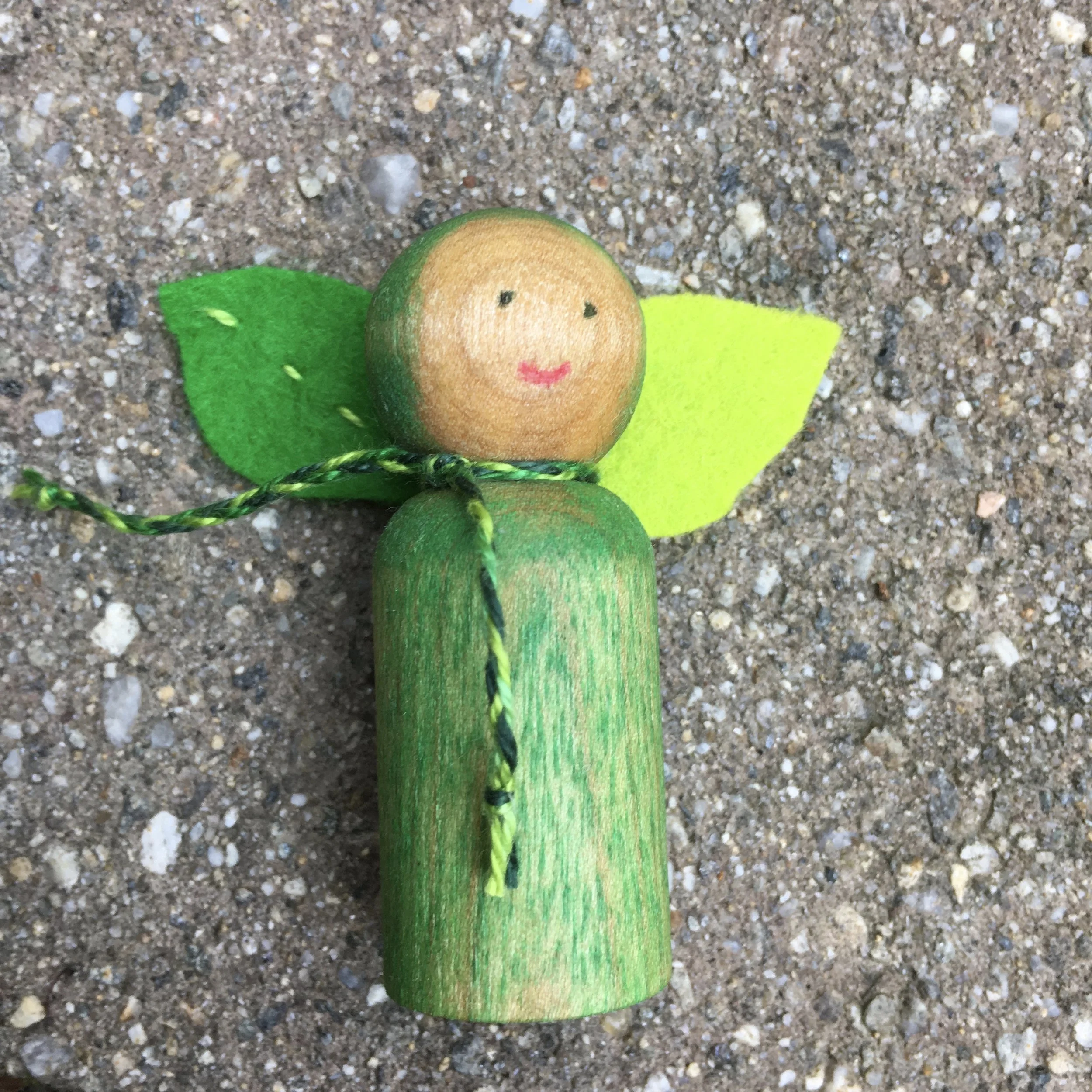
Peg Doll Pea Sprouts

Peg Doll Pea Sprouts

Peg Doll Pea Sprouts

Peg Doll Pea Sprouts

Ever since I planted my sugar snap peas in my kitchen garden at the beginning of April, I’ve been planning to make peg doll Pea Sprouts. And this week, I finally did! While I used a leaf from my sugar snaps to make the doll leaves, these dolls could be almost any kind of seeding. They are really simple to make.

You will need:

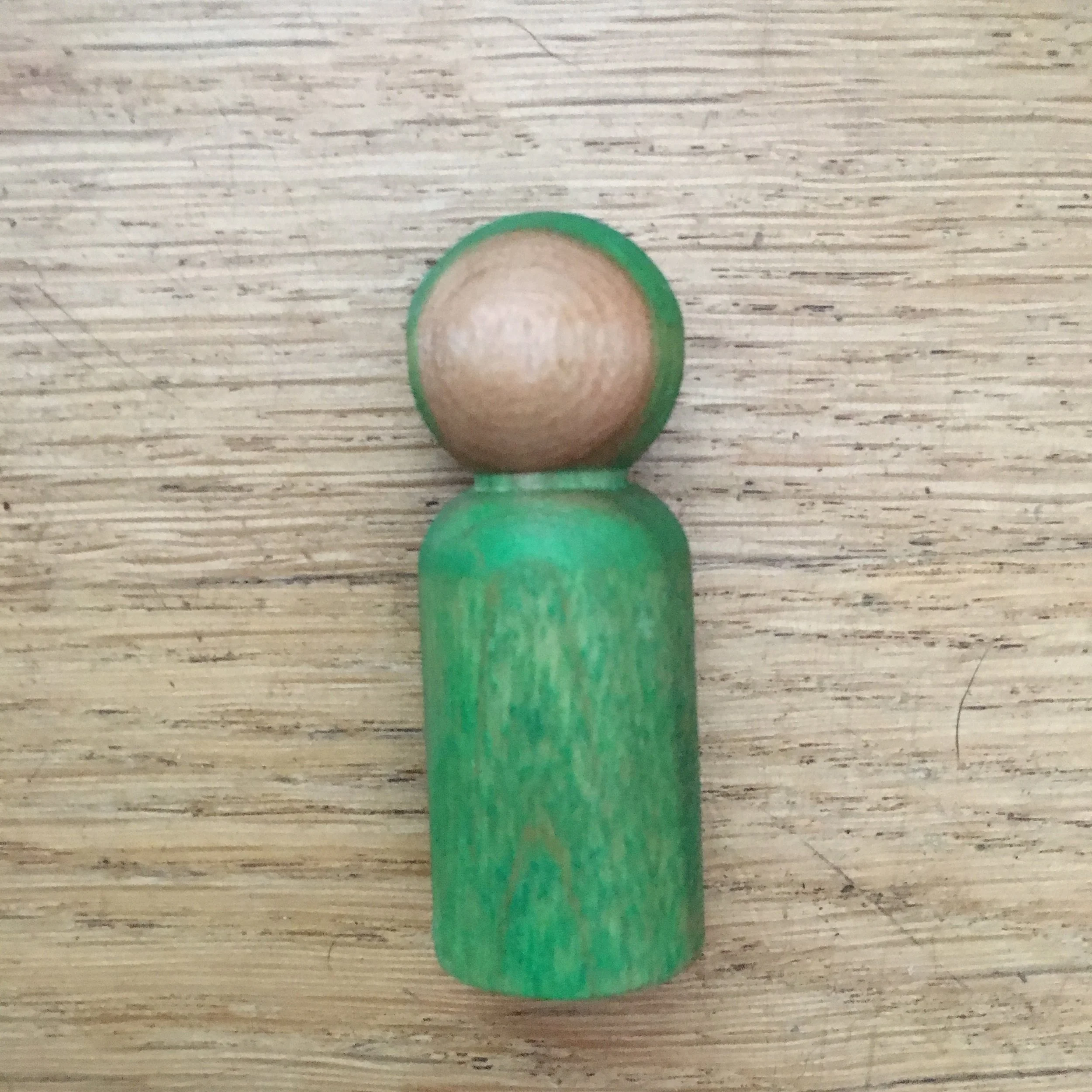
  • Peg dolls. These are large regular pegs dolls, 2 3/8 inches tall

  • Fine sandpaper

  • Non-toxic watercolor paints

  • Beeswax polish

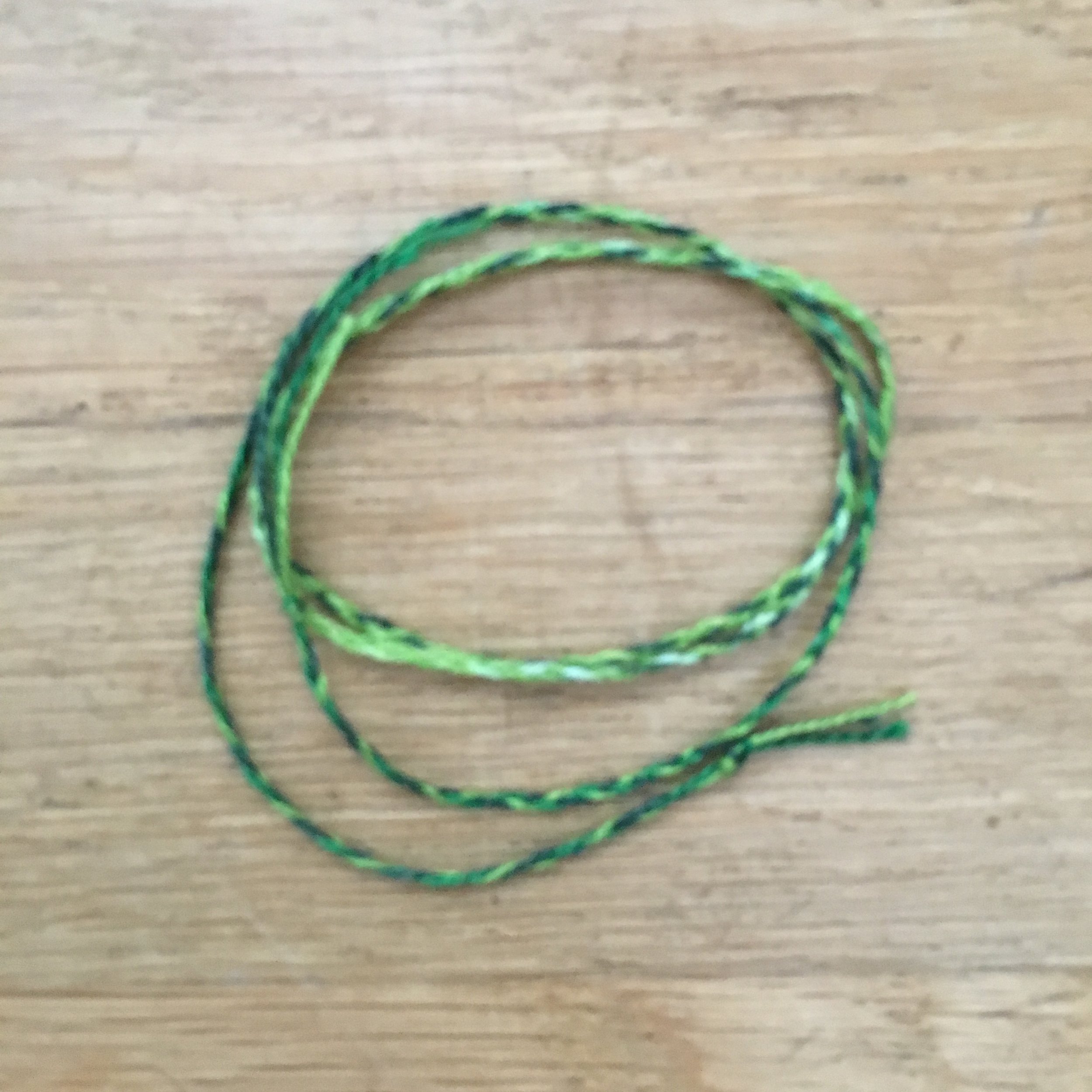
  • Green Perle Cotton or Embroidery Thread or 1/8 inch ribbon with a needle with a large eye

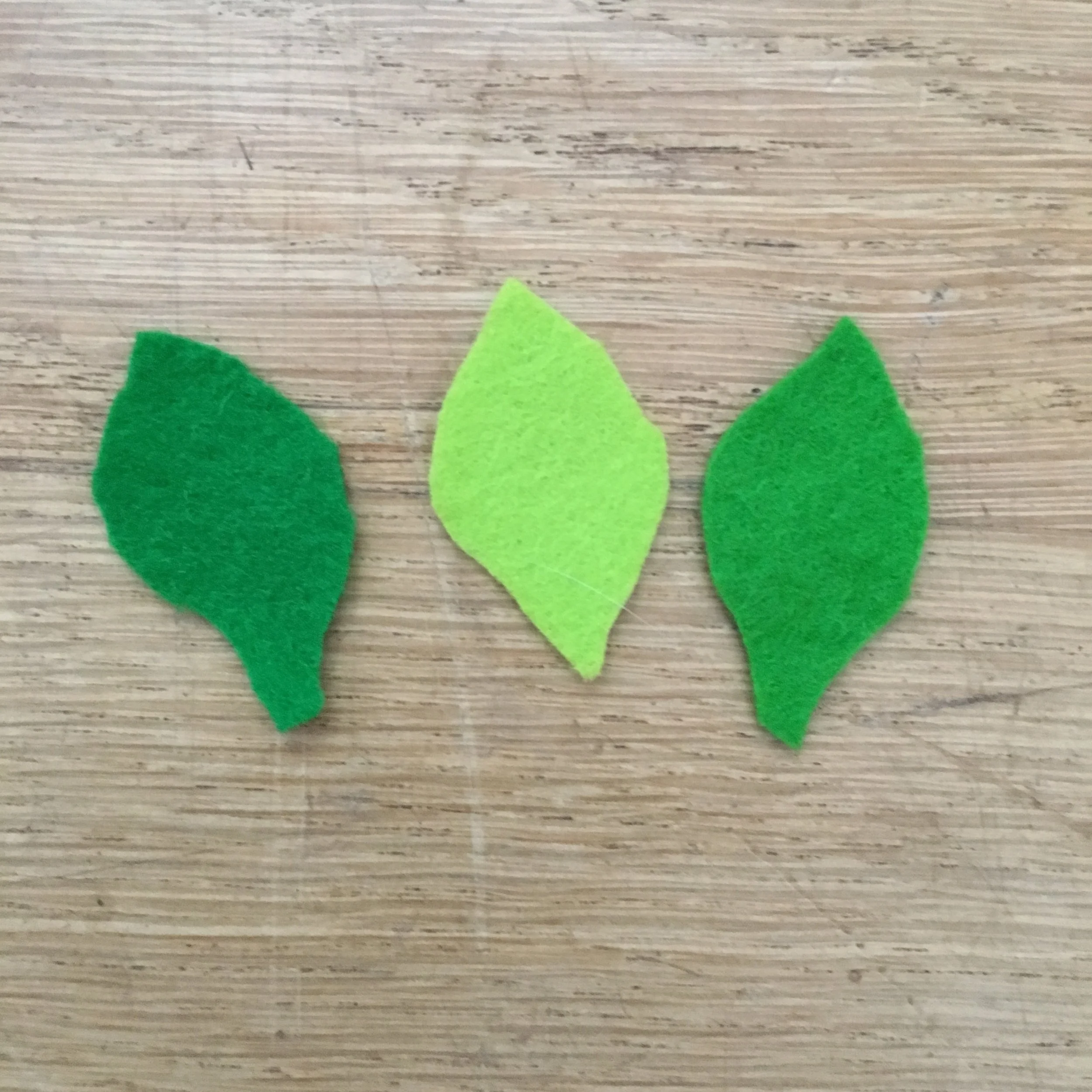
  • Green felt. Wool felt is my favorite

  • Markers to draw the face if you want facial features

  • Scissors and an craft knife with a sharp blade. (Safety note: The craft knife should only be used by an adult).

Instructions:

  1. If your pegs feel rough, smooth them with fine grain sandpaper, following the wood grain.

  2. Paint the pegs with the water color paints, leaving an unpainted circle for the face. The wood grain on the peg often can be used as as a guide for the facial placement. I used two different shades of green, applying one green and then the other next to each other on the peg. Allow them to completely dry before preceding.

  3. Apply the beeswax polish to the entire peg, including the face. The watercolors look brighter and deeper in color after the polish is applied. Allow the polish to soak in for several hours, or overnight. Then rub the peg with a soft rag before continuing to assemble the doll.

  4. While you are waiting for the bees wax polish to soak into the wood, cut out out the leaves for the pea shoots. Each leaf is about 1 1/4 inch long and 3/4 inches wide. You can draw a template or just cut them freehand if you feel comfortable doing that.

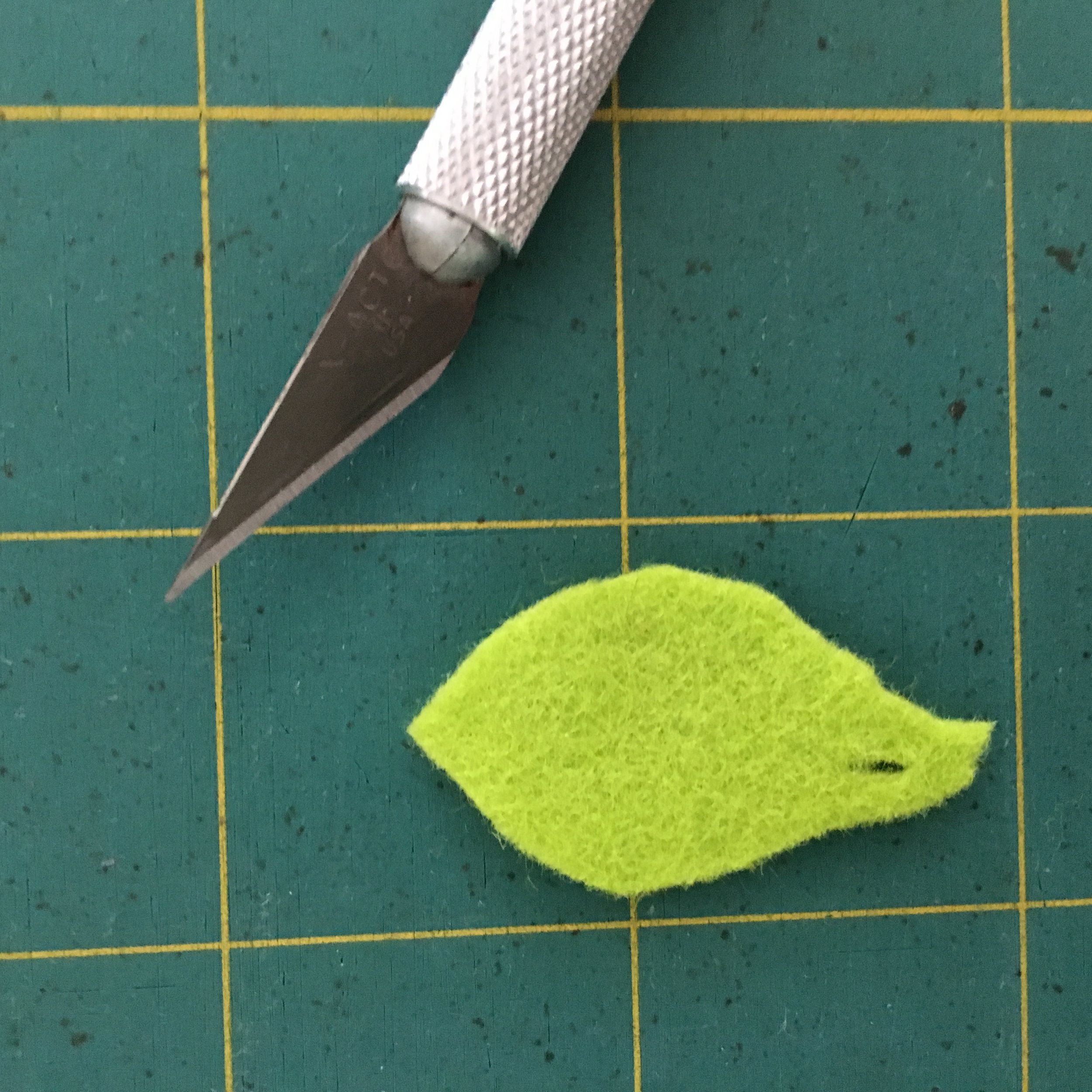
  5. Using the craft knife, cut a 1/4 inch slit at the base of each leaf so that you can run the braid or ribbon through it.

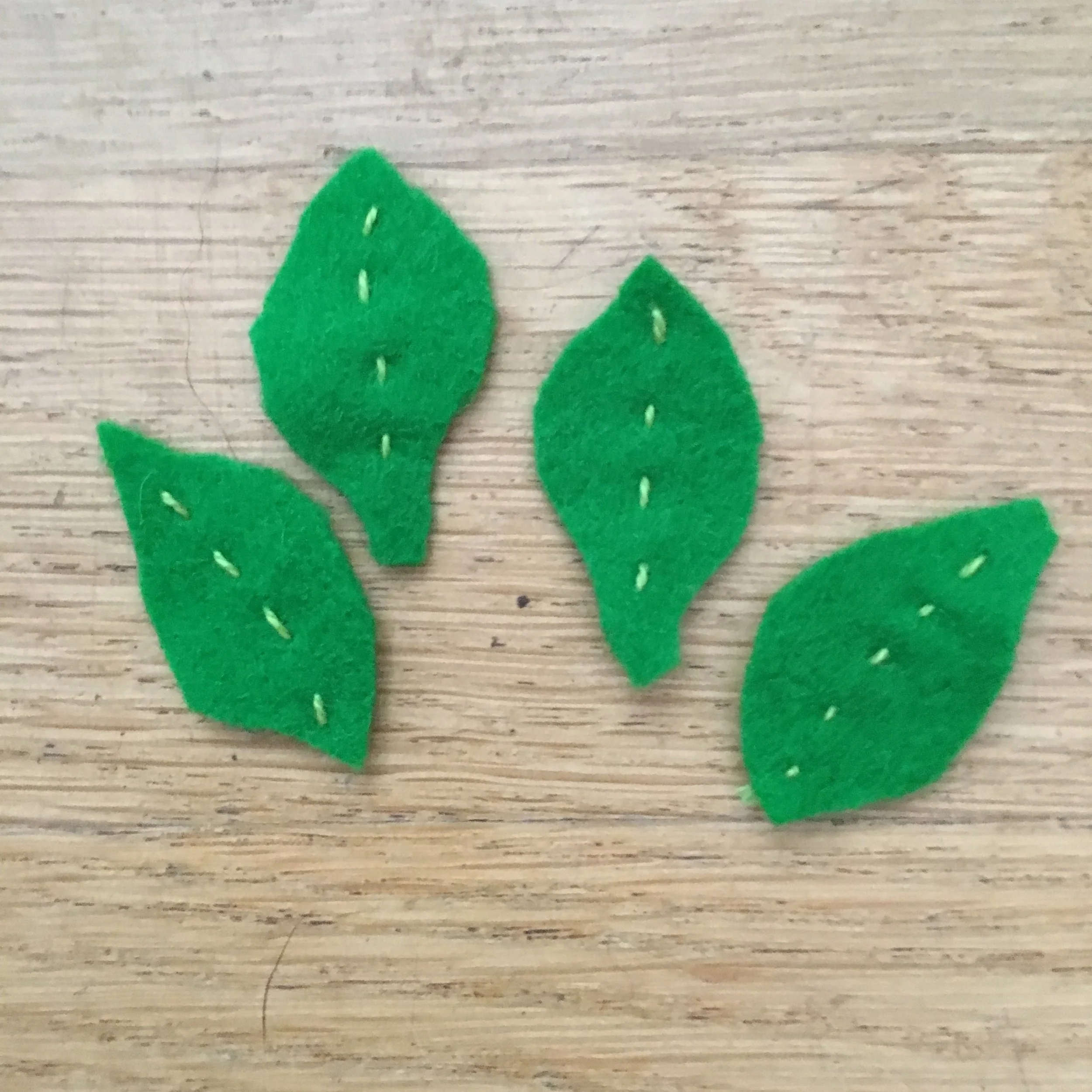
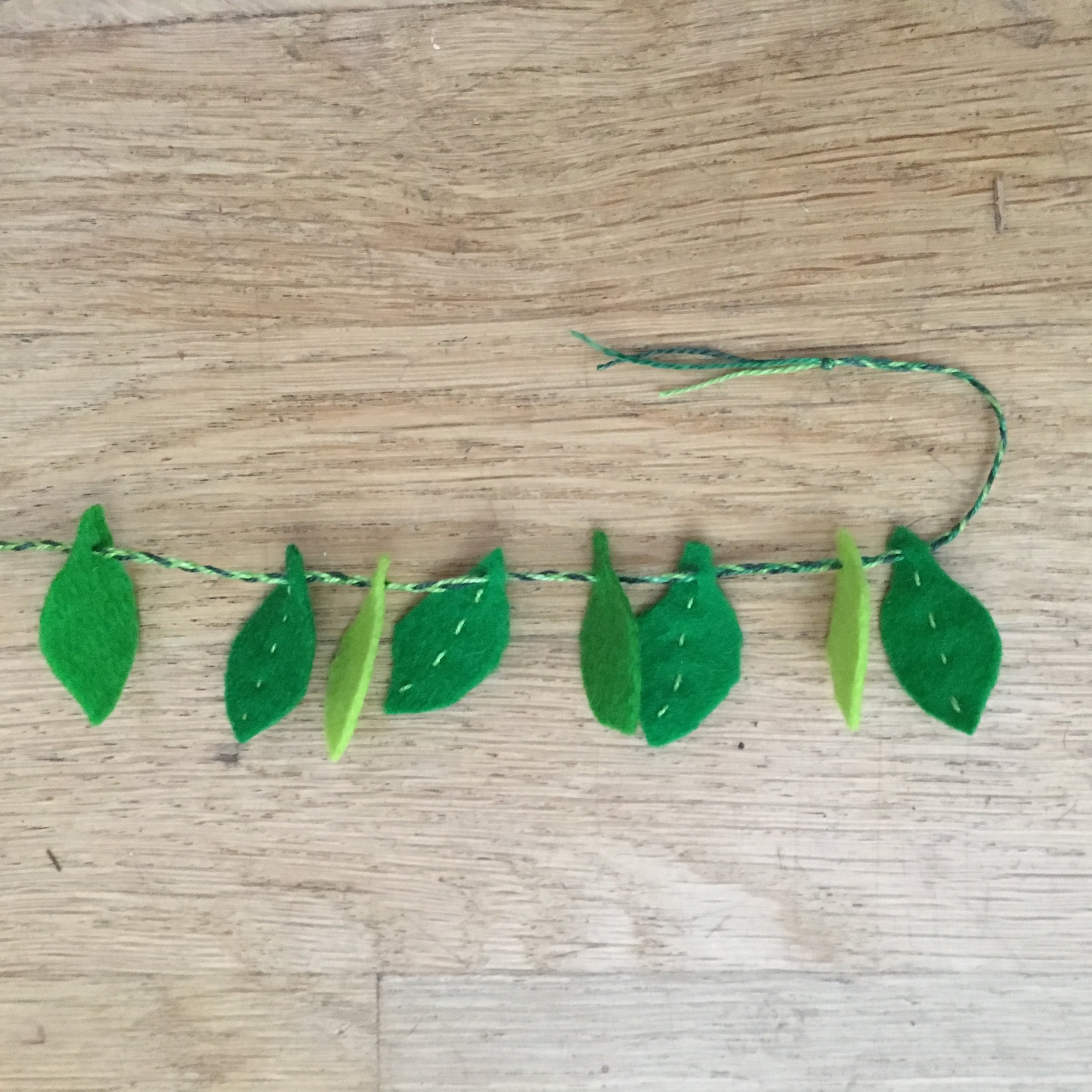
  6. If you wish, use embroidery thread to embellish the leaves. I used a simple running stitch down the center of half of the leaves.

  7. Cut three strands of the Perle cotton. I used strands about the length of my forearm and that made a braid long enough for 4 peg dolls. Braid the 3 strands of thread. (I you use embroidery thread, use 3 strands for each piece. If you use ribbon, you can cut that the length you want when you assemble the dolls).

  8. Thread all the leaves onto the braid you just made. Pull two leaves the toward one end of the braid, away from the other leaves. Using that end, tie the braid around the doll’s neck, with two leaves behind the head. Cut the braid the length desired and immediately tie a knot in the end on the doll’s side and the new end on the braid with the rest of the leaves. I was worried the braid with unravel right away, but found I had time to tie both knots without any problem.

  9. Complete the rest of the dolls if you are making more than one.

  10. Draw a face on the dolls using makers if desired. I found that the markers don’t run into the wood grain and can still draw well on wood sealed with the beeswax polish.

IMG_9979.JPG
IMG_9975.JPG
IMG_9980.JPG
IMG_9983.JPG
IMG_9985.JPG
IMG_9986.JPG

I wish I could tell you that I’m enjoying eating the sugar snap peas that I planted in April. So far I’ve only harvested 4 delicious sugar snap pea pods. As it turns out, the neighborhood groundhog thought the pea shoots were very tasty and ate the tips off most of the plants. The peas are in the process of recovering. I’m seeing some blossoms, so there is hope if we don’t have a heat wave too soon.

In the meantime, I am enjoying my little Peg Sprouts.

Completed Pea Sprout Peg Doll

Completed Pea Sprout Peg Doll

Notice: This blog is not monetized: I do not use affiliate links. When there are links in a post, they are to give credit to another creative person, because I like or have used a product, or to help the reader easily find supplies for a project.


TAGS: Peg Dolls, Pea Sprout Peg Dolls, Plant Peg Dolls, Wooden Peg Dolls, Painting faces on wooden peg dolls


June 20, 2019

Ordinary Time Pulpit Banners

by Judy Tucker


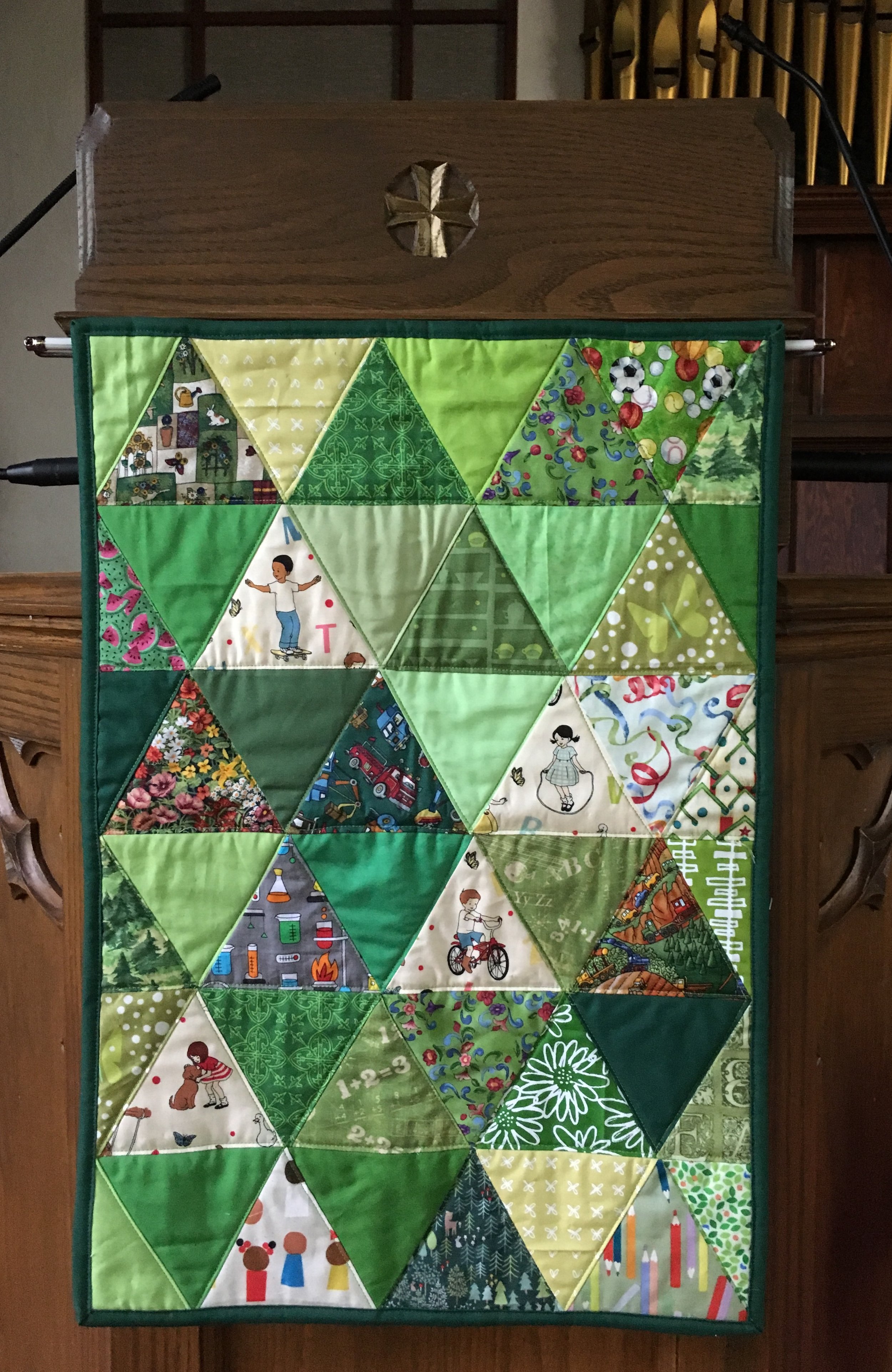
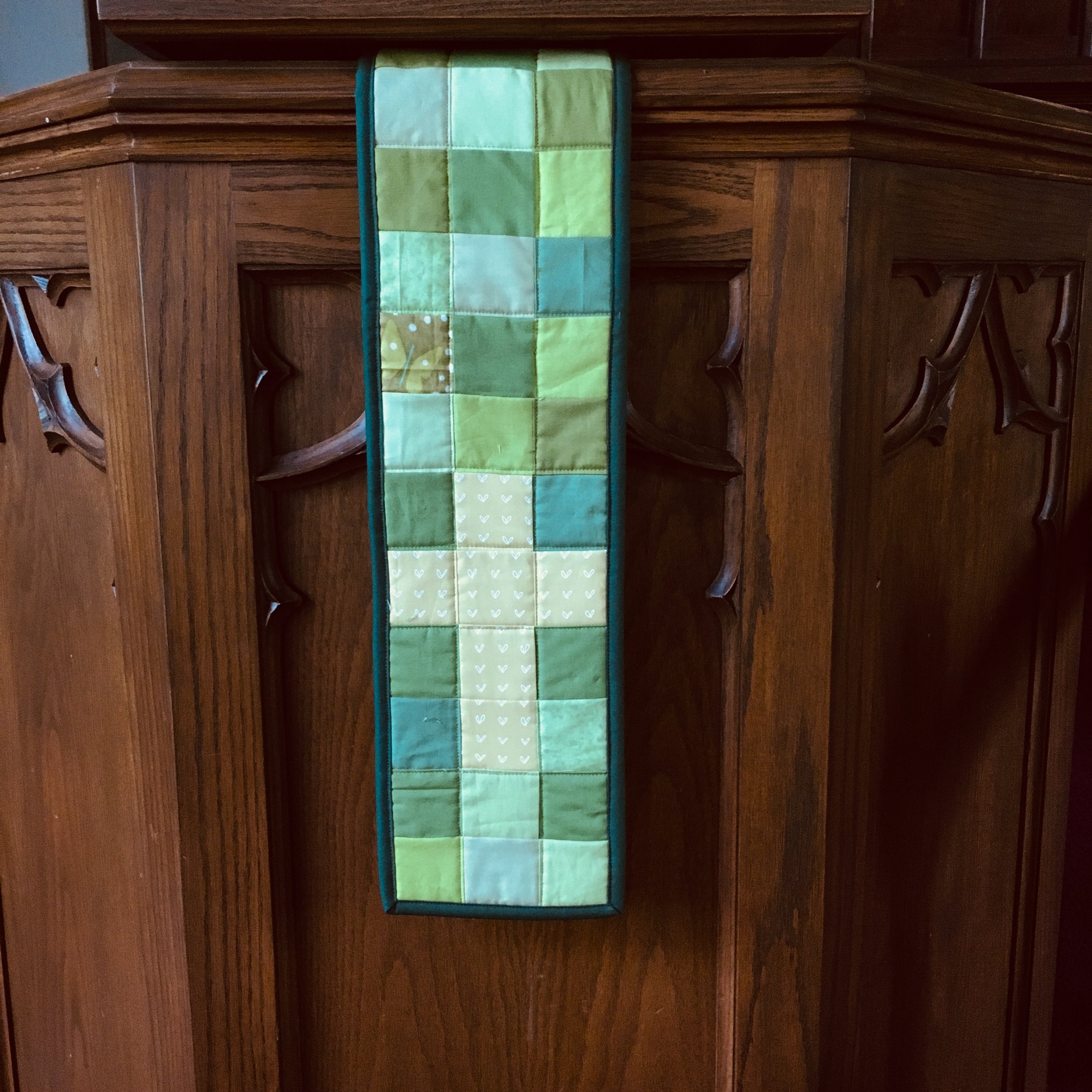
Pulpit Hanging for Ordinary Time

Pulpit Hanging for Ordinary Time

Pulpit Hanging for Ordinary Time

Pulpit Hanging for Ordinary Time

I’ve made one more set of pulpit hangings. This set is for Ordinary Time, weeks in the liturgical calendar that start the Sunday after Pentecost and extend until the first Sunday in Advent. The liturgical color for Ordinary Time is green.

I wanted to have ordinary time reflect the gifts and talents of the congregation of our church. And I wanted it to be fun for the children. So there are children of various ethnic groups in the blocks, doing a variety of fun activities. Also to be found:

  • a numbers block for the accountants and mathematicians

  • a fire truck for first responders

  • test tubes for the doctors, nurses and scientists

  • construction trucks for the builders

  • colored pencils for artists

  • cups and saucers for homemakers, cooks and wait staff

  • a dog for all the dog people!

  • gardening equipment for gardeners and landscapers

  • balls for athletes

  • ribbons for celebrations

  • and a butterfly which is a symbol of Christ’s Resurrection

For the lectern side, a Cross and a butterfly

OrdinaryTimesLecternHaning.jpg


The pulpit hanging is much simpler to make than it looks. The blocks are cut out using a 60 degree quilting triangle ruler. Then the triangles are sewn together, one the point up, the next with a flat side at the top. These alternating patches make a straight strip. The strips need to be two triangles wider than the finished piece so that the sides can be trimmed straight, cutting through the outermost triangles on each side.

If the fabrics that are used are directional prints, pay very careful attention so that they don’t accidentally end up upside down!

TAGS: Pulpit Hangings for the weeks after Pentecost, Pulpit hanging for Ordinary Times, Quilted Pulpit Hanging, 60 degree triangle quilted pulpit hanging


June 13, 2019

Pinwheel Baby Quilt

by Judy Tucker


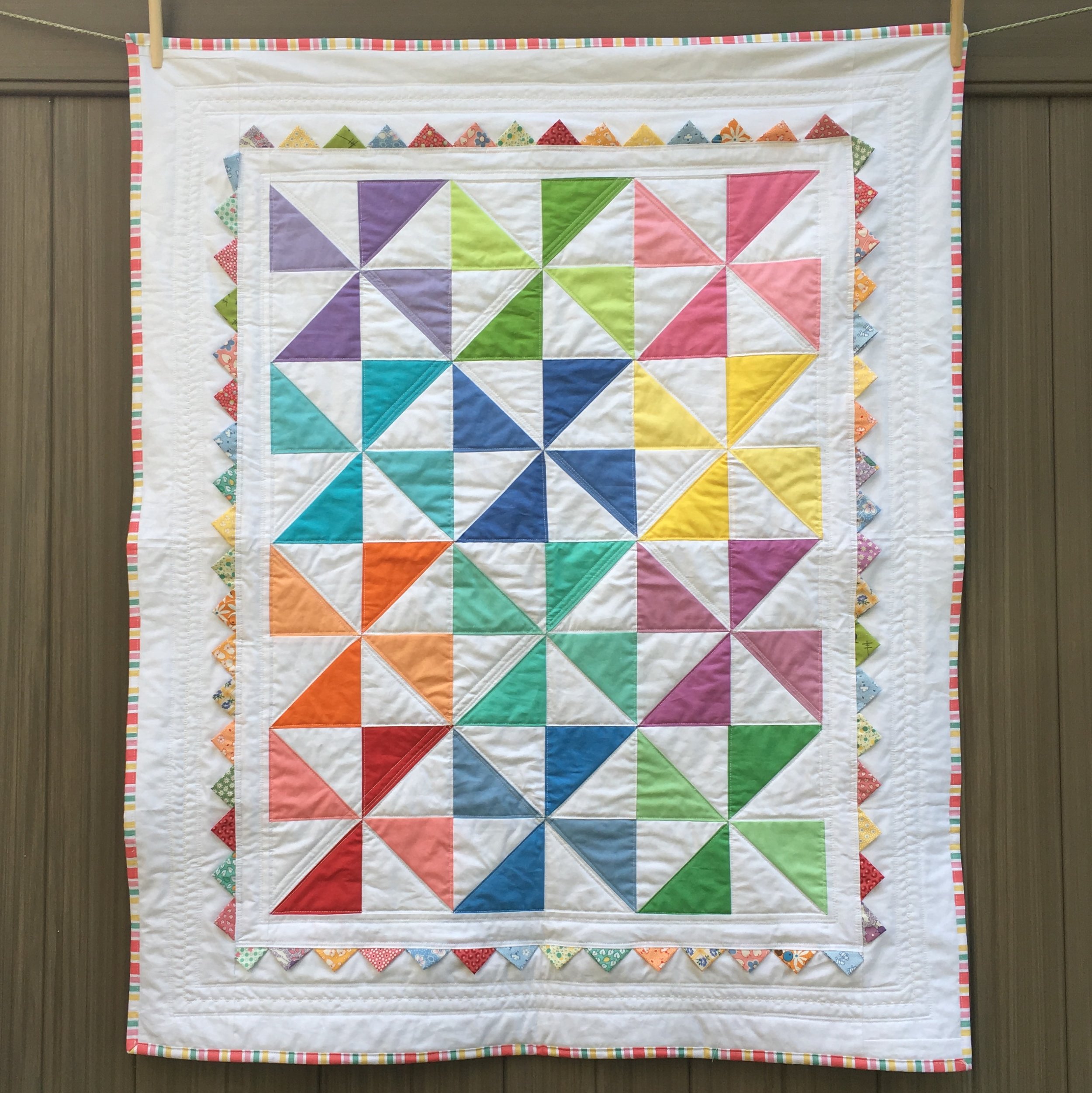
“Pinwheel Baby Quilt” by Jodi for Moda Bake Shop, 36 x 44 inches

“Pinwheel Baby Quilt” by Jodi for Moda Bake Shop, 36 x 44 inches

“Pinwheel Baby Quilt” by Jodi for Moda Bake Shop, 36 x 44 inches

“Pinwheel Baby Quilt” by Jodi for Moda Bake Shop, 36 x 44 inches

After my serious Poppy Quilt, I made this quilt just for the pure fun of it!

The Pinwheel Baby Quilt* is a pattern by Jodi from the Moda Bakeshop. The solids are from Connecting Threads. I used 5 inch Color-Wheel Solids charm squares. I bought a set of true rainbow colors and a set of pastel rainbow squares. The little triangle in the border are 2 1/2 inch squares which are folded on the diagonal twice. The are called prairie points. I made the prairie points from 1930s reproduction fabrics that I had in my stash.

Bamboletta Big Baby enjoying a little time in some dappled sunlight under our Crab apple tree.

Bamboletta Big Baby enjoying a little time in some dappled sunlight under our Crab apple tree.

I have to say, I just love this quilt!

*Okay. This is just sad. I found this quilt pattern on Pinterest a couple months ago and was able to link to the pattern at Moda Bakeshop website. The quilt is still on Pinterest but the link is no longer live. Neither does the pattern doesn’t come up on a search of modabakeshop.com. Looks like it’s been officially retired.

Notice: This blog is not monetized: I do not use affiliate links. When there are links in a post, they are to give credit to another creative person, because I like or have used a product, or to help the reader easily find supplies for a project.


June 6, 2019

Easy Baby Gift: T Shirt Applique

by Judy Tucker


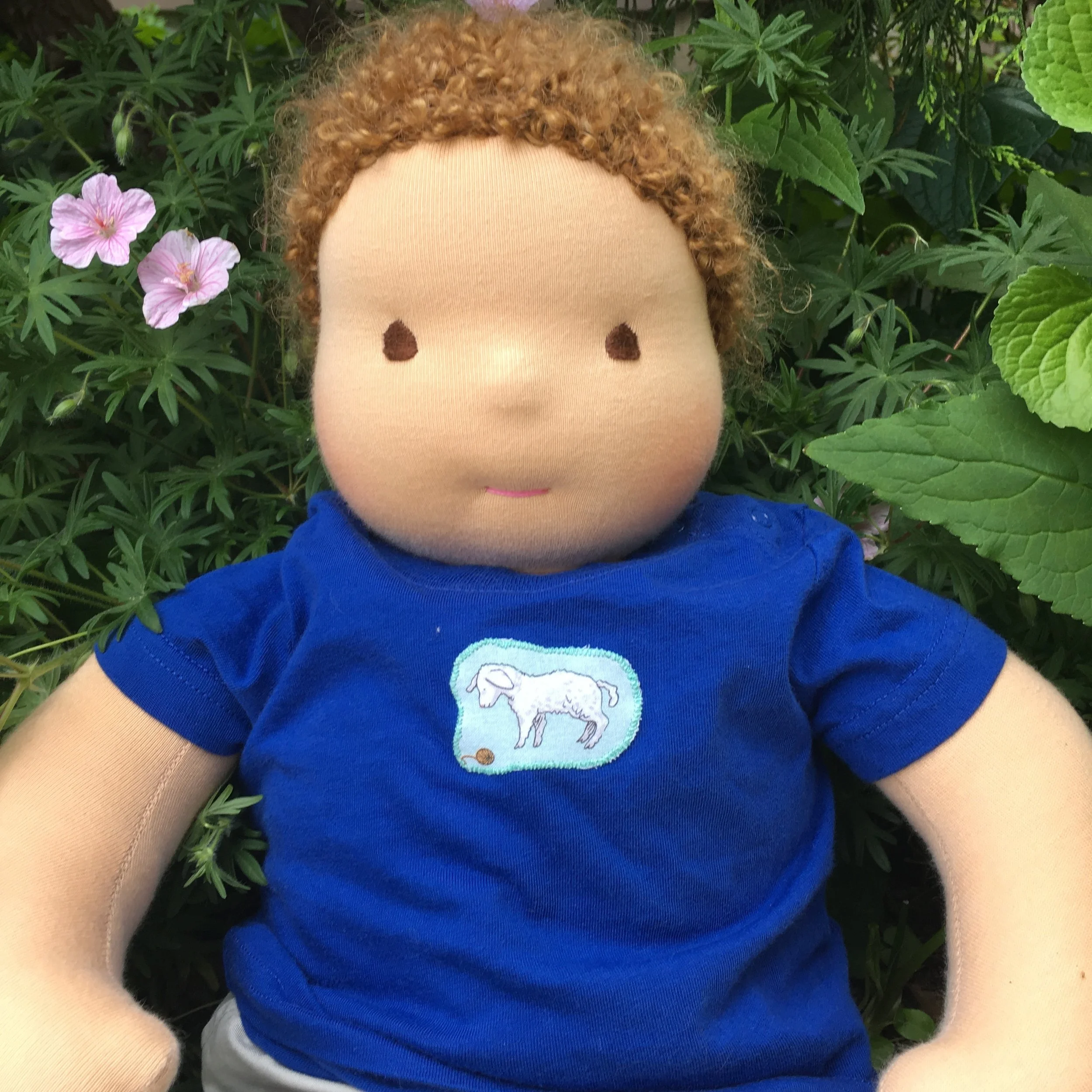
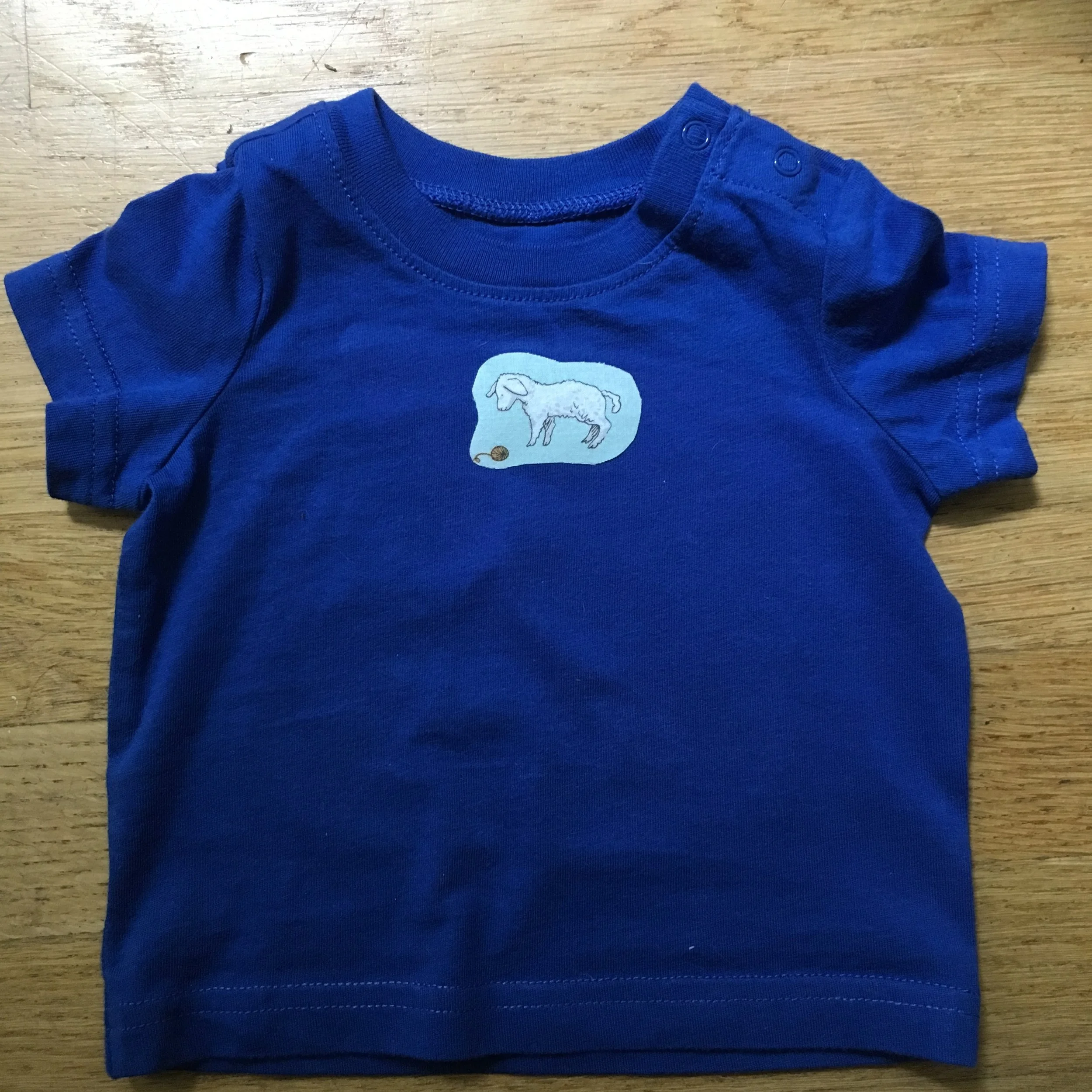
Bamboletta “Big Baby”, sitting in for a real baby, wearing a T Shirt with an Applique

Bamboletta “Big Baby”, sitting in for a real baby, wearing a T Shirt with an Applique

Bamboletta “Big Baby”, sitting in for a real baby, wearing a T Shirt with an Applique

Bamboletta “Big Baby”, sitting in for a real baby, wearing a T Shirt with an Applique

Handmade items for newborn babies are such a nice gift. I’ve made lots of baby quilts and some baby clothes, mostly for family and close friends. But what about the folks that you may not be so close too, but still want to make something special for their new baby?

An appliqued T shirt or body suit is a quick and fun present. Two shirts are just as easy to make as one. Most of the time making them is spent collecting the supplies that are needed.

Here is a list of things you need:

  • A couple of cute fabrics with designs that can be fussy cut

  • A pair of scissors

  • An Iron-on adhesive. I like Heat n Bond Lite . (It does require sewing around the outside edge of the applique, but I think that is important for something that is going to be washed a lot).

  • An iron

  • A sewing machine with zig-zag stitch

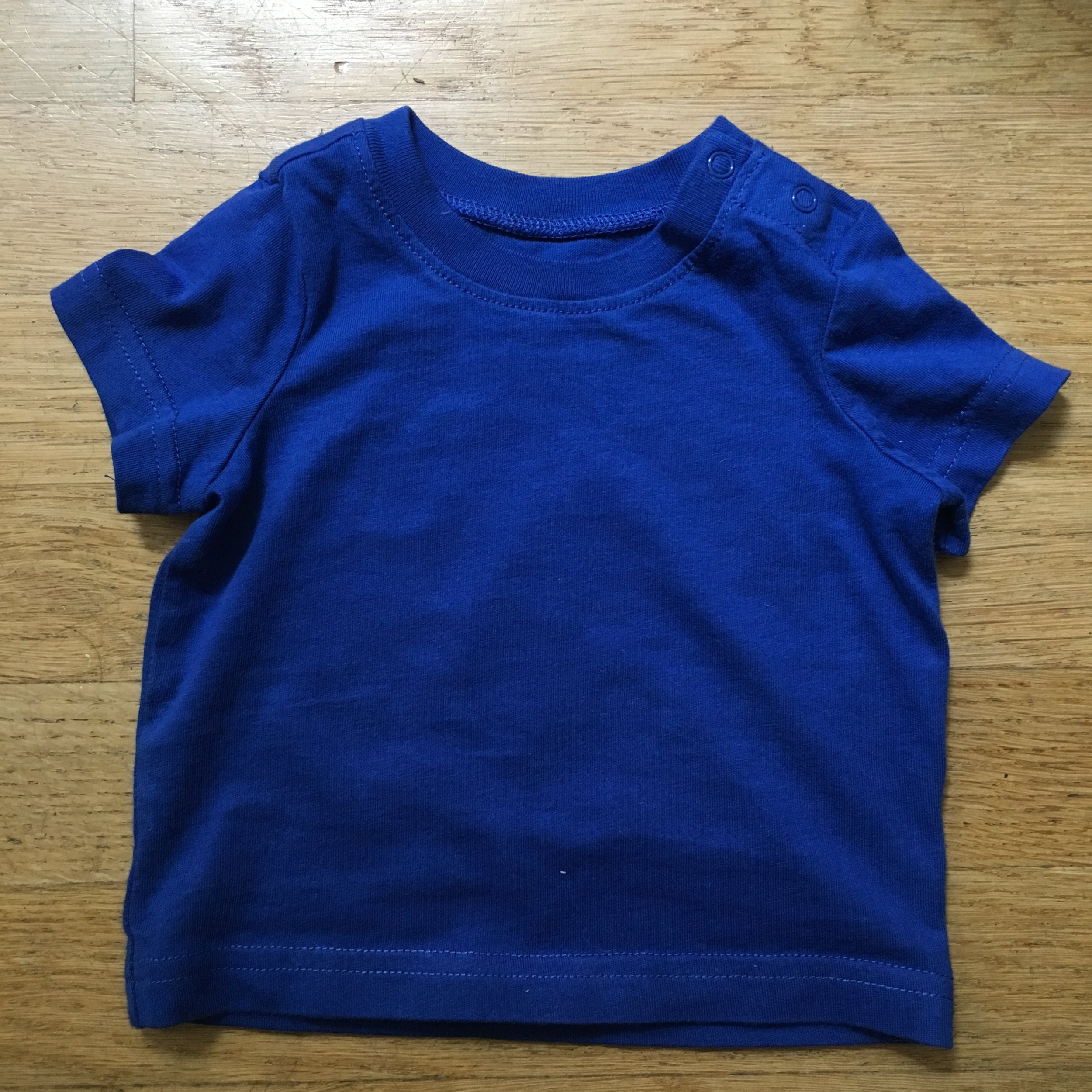
  • T Shirts or body shirts, size 0-3 or 3-6 months. I used a The Baby Tee from Primary.com. They are lovely quality solid color T shirts, with 2 shoulder snaps for easy on-off, and their clothes never have logos on them.

Instructions:

  • Cut out the motif you wish to applique onto the shirt. Cut the piece of fabric with the motif larger than the finished size you plan to use. The motif will get trimmed to size later.

  • Cut a piece of the fusible adhesive to match the size of the fabric. Don’t cut it larger or you may accidentally fuse the adhesive product to your ironing board cover. Not a good outcome!

  • Following the instructions on the fusible adhesive product, fuse the the adhesive product to the WRONG side of the motif.

  • Now trim the motif to the finished size and shape your want.

  • Fold the T-shirt in half and gently press the fold with your finger. That fold line will be your guide to placing the motif in the front center of the shirt.

  • Remove the paper on the fusible adhesive product. Follow the directions and fuse it to the T Shirt.

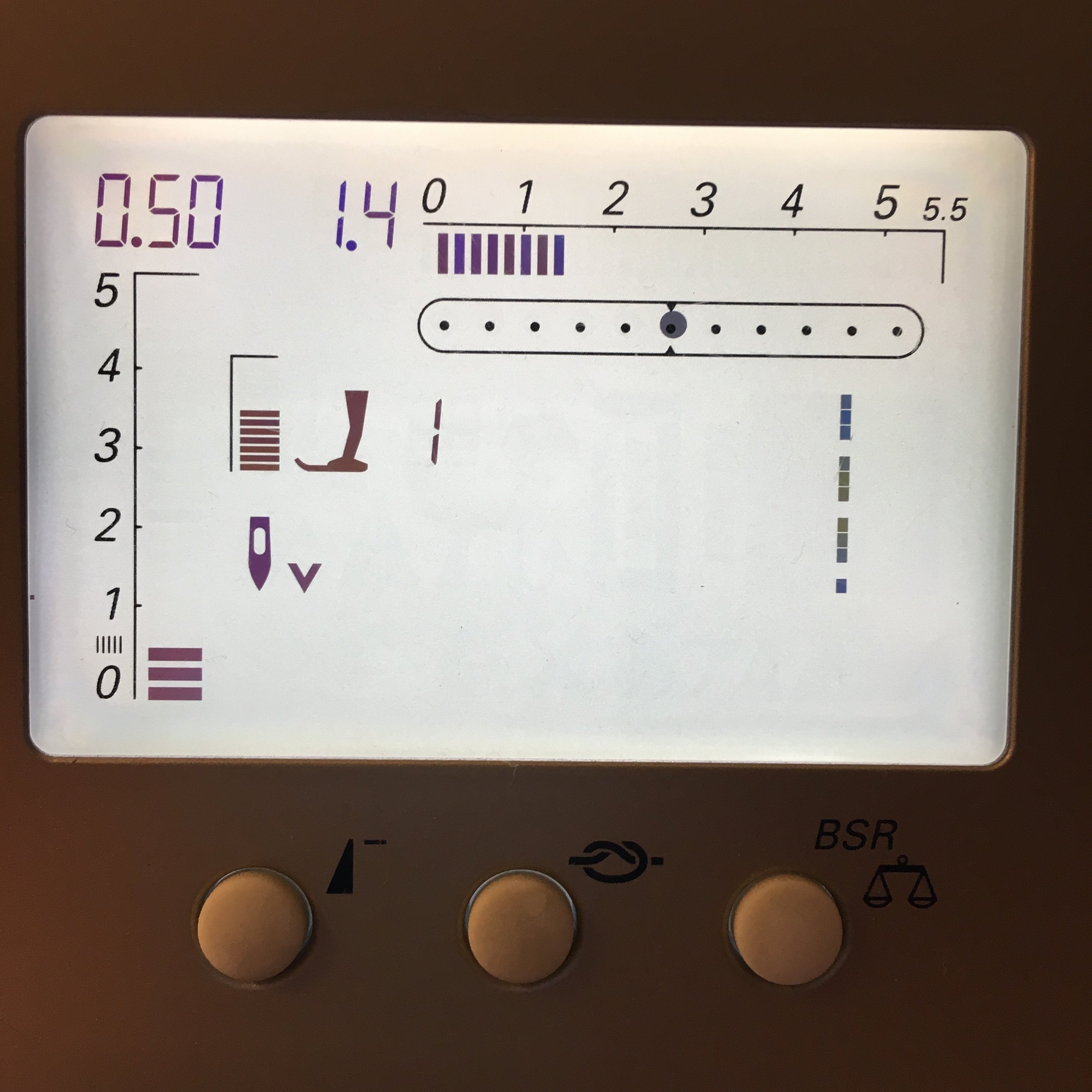
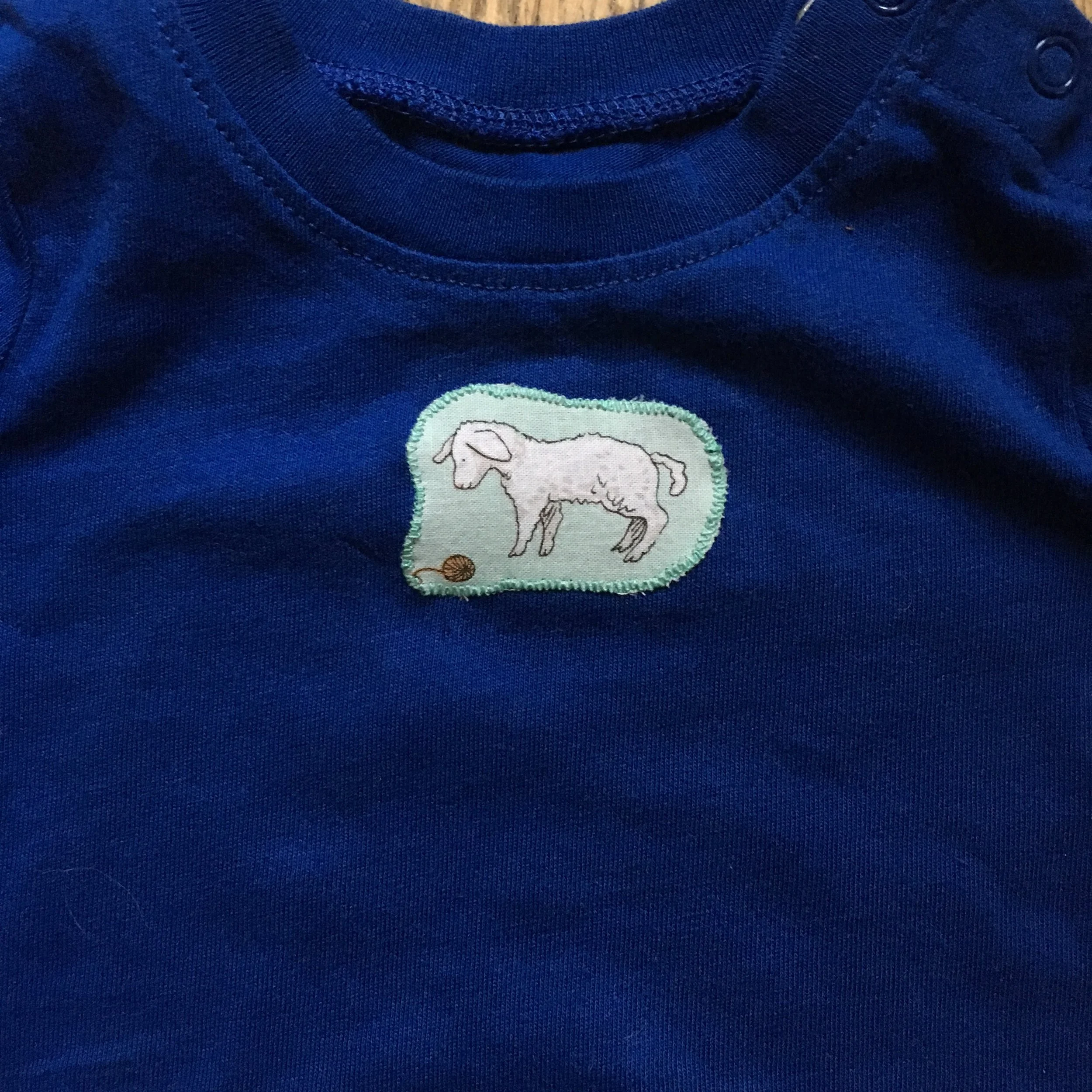
  • Run a tight, narrow zig-zag stitch along the edge of the fabric fused to the T shirt. ( I set stitch length on my machine set at 0.5, stitch width at 1.4. You machine may have other recommendations for sewing appliques. Check your machine’s booklet or look online).

  • You’re done! Isn’t this a fun, easy, homemade baby gift?
IMG_9706.JPG
IMG_9707.JPG
IMG_9753.JPG
IMG_9754.JPG

Notice: This blog is not monetized: I do not use affiliate links. When there are links in a post, they are to give credit to another creative person, because I like or have used a product, or to help the reader easily find supplies for a project.


TAGS: Applique baby T Shirt, Easy Applique Baby Present, Easy Baby GIft: T shirt Applique


May 27, 2019

Poppy Quilt, Thoughts on Memorial Day 2019

by Judy Tucker


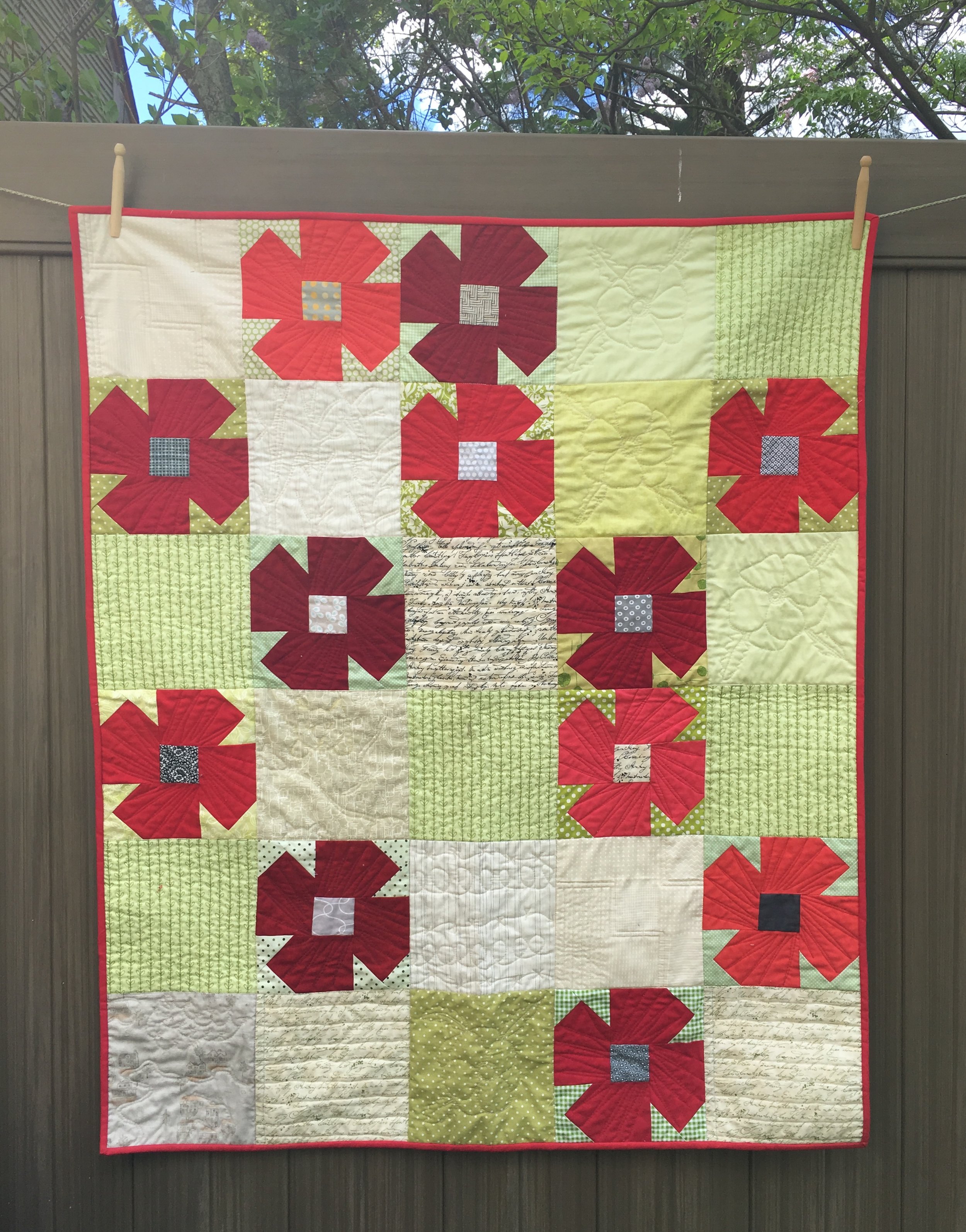
Poppy Quilt, 39.5 x 47 inches

Poppy Quilt, 39.5 x 47 inches

Poppy Quilt, 39.5 x 47 inches

Poppy Quilt, 39.5 x 47 inches

Proper Bostonian Quilters Guild is running a Mystery Sampler Quilt comprised of flower blocks this year. The member running this project said she looked at lots of flower blocks on the internet and then designed the flower blocks for this sampler. She says the flowers are a composite of the designs she has found. She stated that this poppy block can’t be attributed to any specific designer nor can she claim it her own original block.

The first flower block distributed to the guild was this poppy, It was the fall of 2018, just before the 100th anniversary of the Armistice that ended World War I on November 11, 1918. This poppy block resonated with me on many levels. I decided to make a quilt with just poppies, honoring soldiers, veterans and their families.

There are red poppies in this quilt, like those in Flanders Field, that mark the loss of a solider. They are also quilted “shadow poppies” for soldiers who died and were never found, and for sailors lost at sea whose graves are usually never seen.

In the fabrics used and in the quilting here are some things you can find.

  • There are trenches

  • There is barbed wire

  • There are bars of straight line quilting which can be the timbers holding up the trench walls or the walls of prisoner of war camps

  • There are trench rats and cats to catch them Yes, cats really were used in the trenches to kill vermin

  • There are fabrics with handwritten words, honoring the letters sent home to family and writing done in the trenches by soldiers and officers

  • There are bare trees, deforestation from the fighting and from chemical warfare

  • There are houses at home, some waiting hopefully, some turned upside down by loss. The stars that shine over these homes also shine on the soldiers on the battlefield

fullsizeoutput_13b0.jpeg
fullsizeoutput_13b1.jpeg
fullsizeoutput_13af.jpeg
fullsizeoutput_13ad.jpeg
fullsizeoutput_13ae.jpeg
fullsizeoutput_13b3.jpeg
fullsizeoutput_13b2.jpeg

Poppies are associated with World War I and with those who died in combat because of the poem, “In Flander’s Field” , which was written a dressing station in Belgium, by Canadian Army doctor Major John McCrae in May, 1915.

But poppies are associated with other wars in other places. They grow in Afghanistan, where the longest war in American history is still being fought, and on other battlefields too.

Poppy flowers are the source of morphine that dulls the pain of injuries sustained in combat. Heroin, morphine derivative, has been used by troops too, with long-lasting consequences for them, for their loved ones, and for our country.

Poppies are as much part of the fabric of a battlefield as they are of the fabric of this quilt. I wish I had a happy way to conclude this post. I don’t.

Memorial Day is about remembering, and this remembering is hard.


TAGS: Poppy Quilt, Memorial Day Quilt


May 23, 2019

Block Printed Scarf in Three Colors

by Judy Tucker


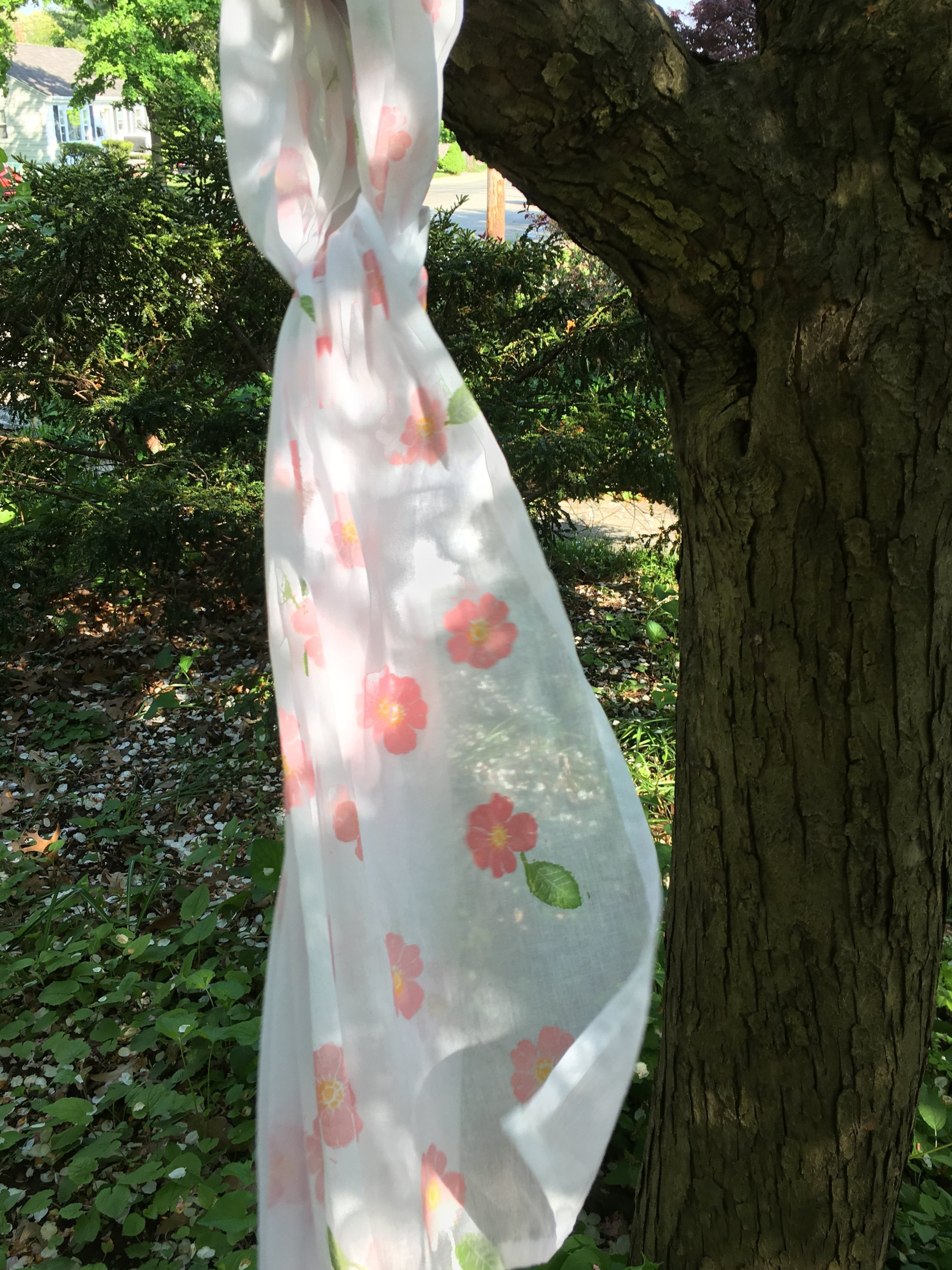
“Wild Roses” Voile Rectangular Scarf  72 x 21 inches

“Wild Roses” Voile Rectangular Scarf 72 x 21 inches

“Wild Roses” Voile Rectangular Scarf  72 x 21 inches

“Wild Roses” Voile Rectangular Scarf 72 x 21 inches

My previous two posts were about making a one color block print on fabric and then using that fabric to sew a bag and a zip pouch.

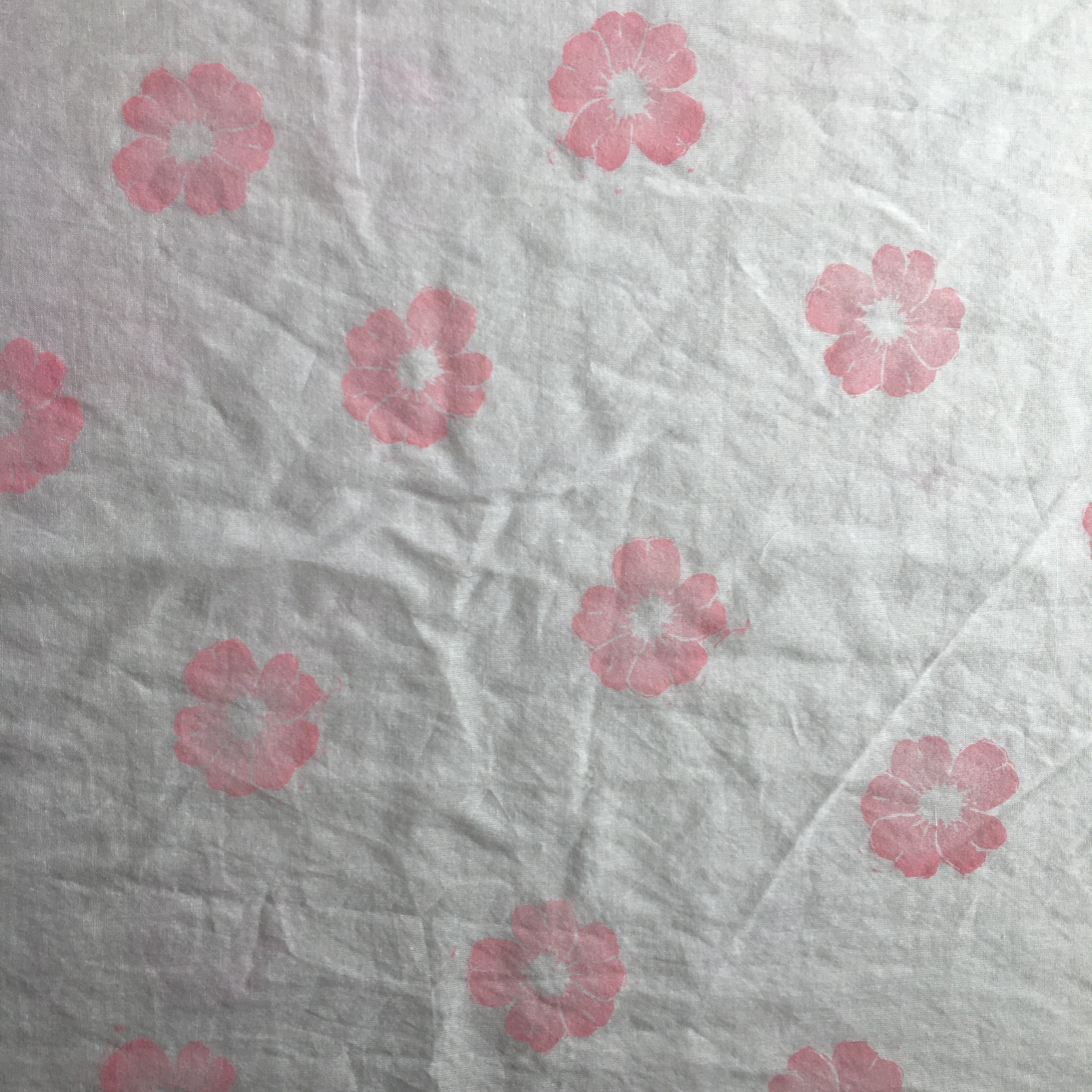
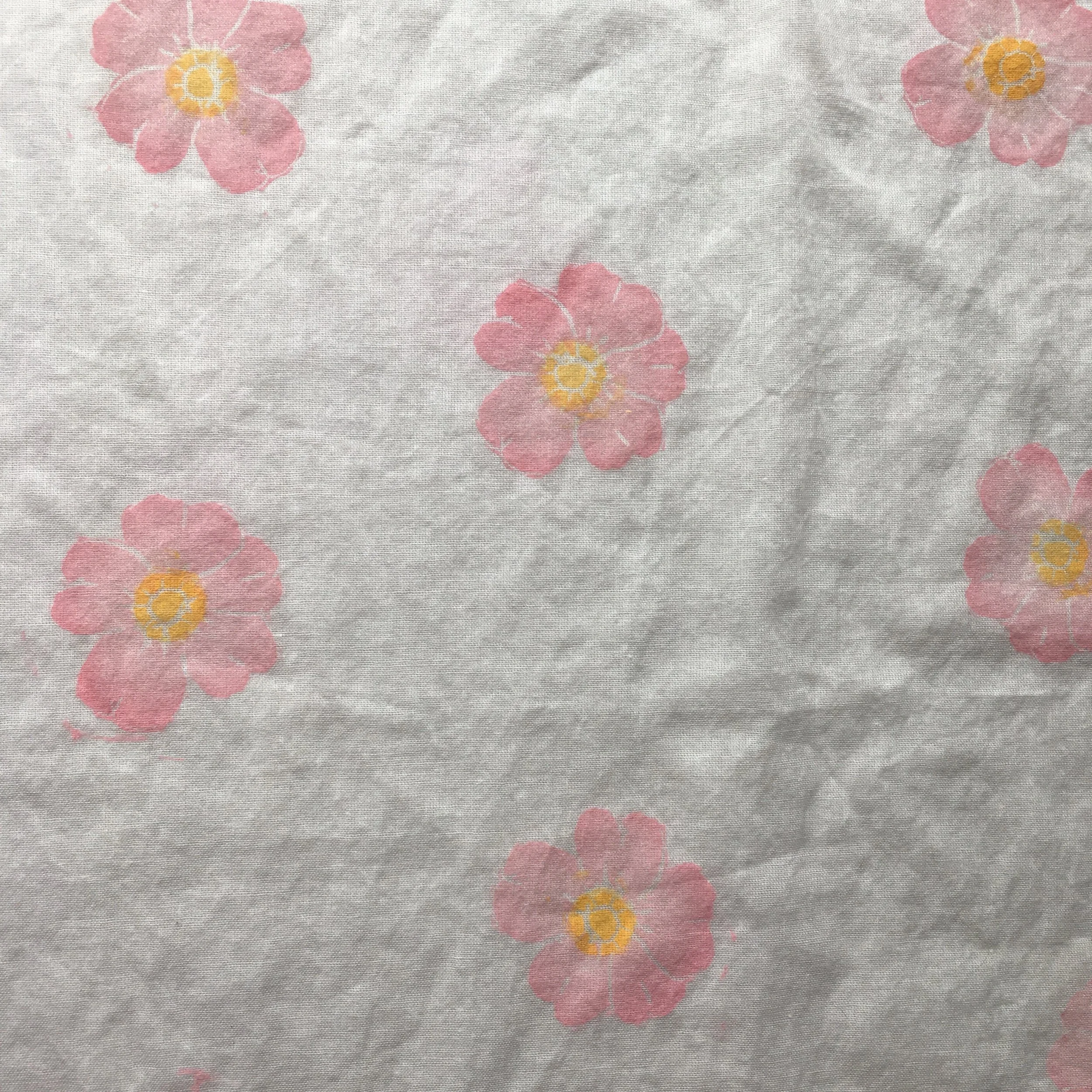
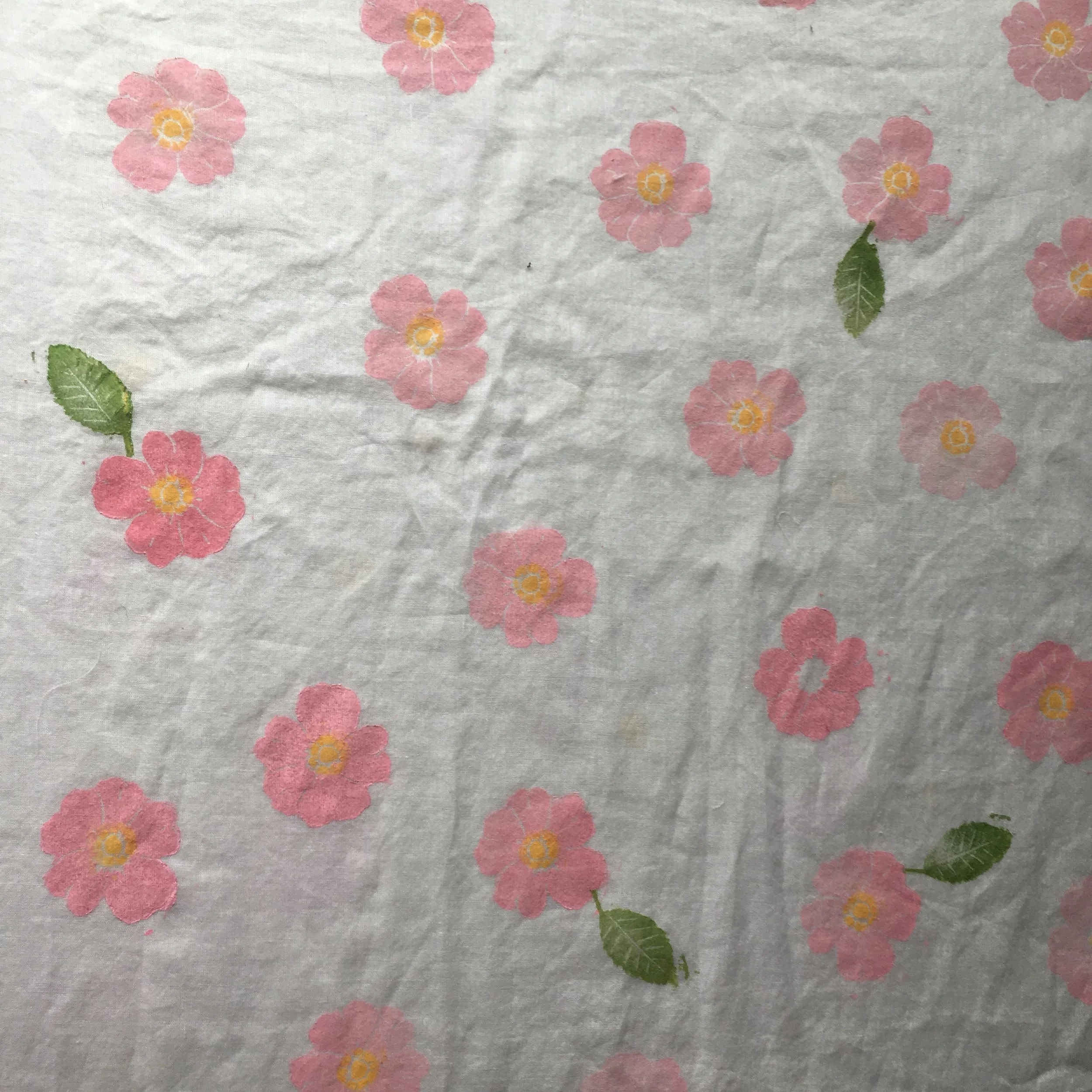
For my second block printing project, I upped the ante and printed a three color design, “Wild Roses.” Each color in the design has its own block and is printed separately. I started with the petals of the roses, then added the stamen, and finally added some leaves to some of the roses.

IMG_9561.JPG
IMG_9566.JPG
IMG_9569.JPG

I printed this design on voile, a very thin fabric. The ink dried very quickly on the voile, so I was able to move from one color to the next as soon as I was done printing a color. Usually the fabric will need more time to dry between different color prints.

I made the rectangular scarf from the book, Print Pattern Sew by Jen Hewett. I shorted the length of the scarf because it felt more comfortable shorter.

This scarf is a gift. I might have to make another one to keep!

TAGS: Block Printing Fabric, block printed fabric, "Print Pattern Sew" by Jen Hewett, Three color block printing on fabric, three color block printing., Block printed voile scarf


May 16, 2019

Block Printed Cross-Body Bag from "Print Pattern Sew" by Jen Hewett

by Judy Tucker


fullsizeoutput_133a.jpeg

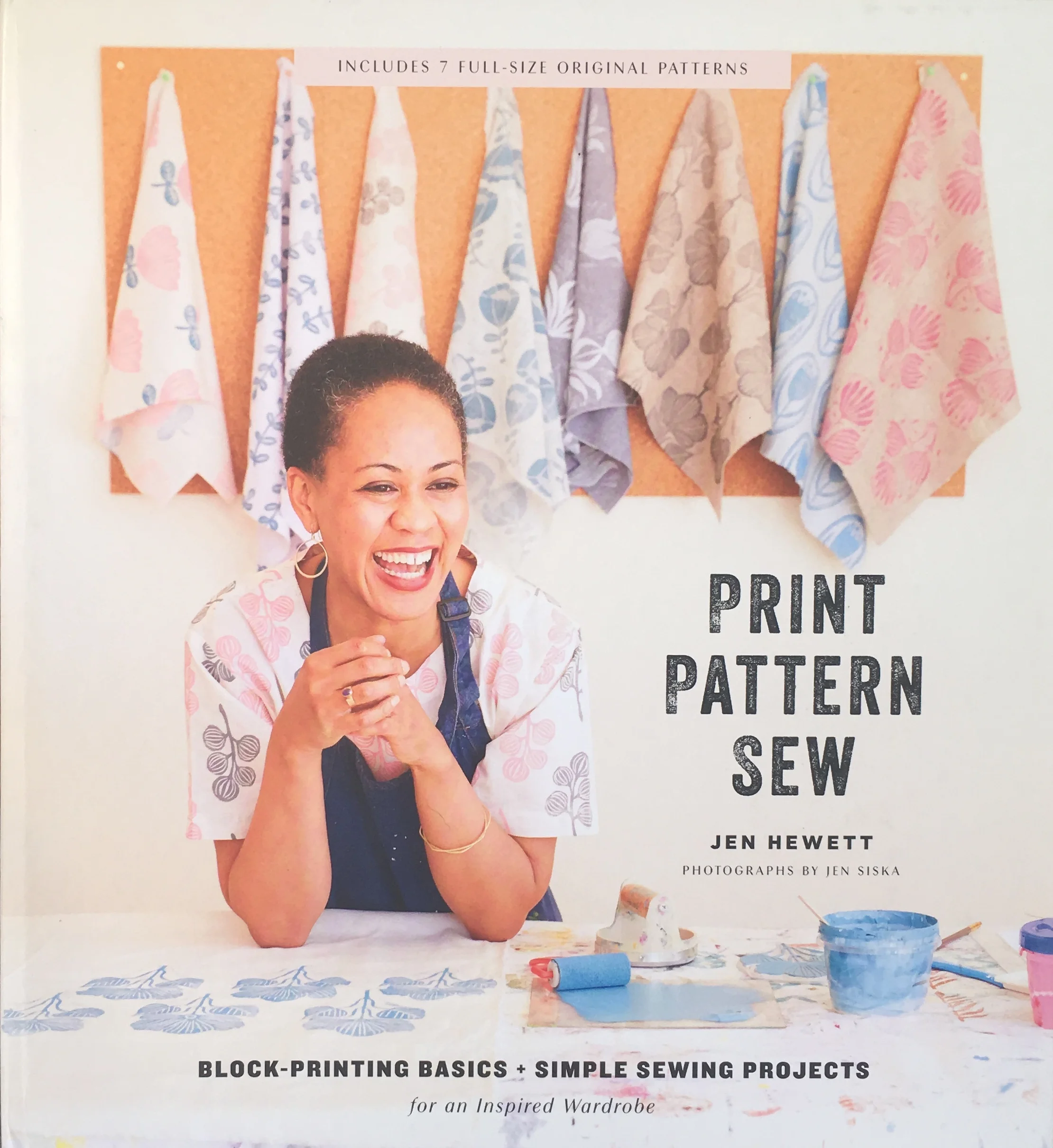
In my last post I mentioned that I had recently purchased a copy of Print Pattern Sew by Jen Hewett. This is a beautifully illustrated spiral bound book that delivers exactly what its title says. There are excellent instructions on how to cut and print blocks. She includes designs for blocks which you can trace and use if you choose. There is a whole chapter on creating and printing repeat patterns—a skill critical for surface design for textiles. And finally there are full size paper patterns so you can sew a variety of simple but classic outfits, as well as some other items, from fabric that you’ve printed.

(NOTE: To save paper, the printed patterns sometimes overlap. You will need to trace the pattern onto Swedish Tracing Paper-Sewing Transfer Paper or Pellon 380 Easy Pattern and use traced pattern for cutting your fabric. If you sew clothes, it’s great to have one of these products on hand. I used the Swedish Tracing Paper all the time. It allows me to trace and use multiple sizes printed on commercial tissue paper patterns. The tracing paper is sturdy and can be reused multiple times).

Book cover

Book cover

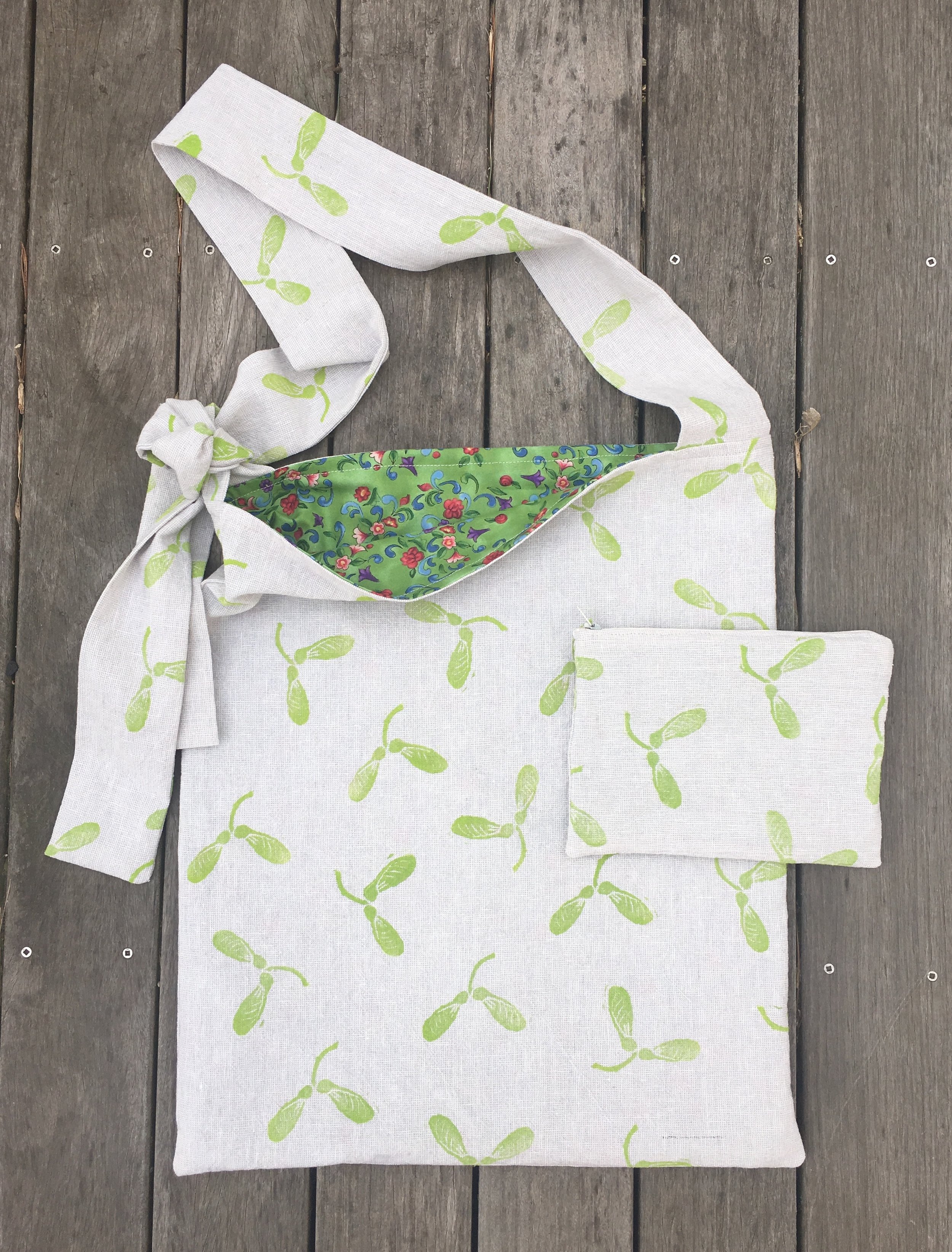
I used the yard of Kaufman Essex Linen I printed with maple seeds in my last post to make the Cross-Body Bag from the pattern in the book. It calls for 1 1/2 yards but I only printed 1 yard. I decreased the size of the pieces for the bag to 15 x 17 1/2 inches and cut the straps 6 inches wide instead of 8 inches. I accidentally cut 2 short straps pieces so I used the extra strap piece to make a matching zipper bag. I still have with a good sized remnant (18 x 18 plus inches) which I can use to make something else.

I’m so pleased with the way that this block-printed cross-body bag turned out. The finished size is 13 3/4 x 15 inches. A tablet and whatever else you need will easily fit in this bag.

If you are interested in learning to block print your own fabrics, I highly recommend Jen’s book!

Notice: This blog is not monetized: I do not use affiliate links. When there are links in a post, they are to give credit to another creative person, because I like or have used a product, or to help the reader easily find supplies for a project.


TAGS: Block printed cross-body bag, "Print Pattern Sew" by Jen Hewett, block printed fabric, learning to block print fabric, Book Review


May 9, 2019

Block Printing for Surface Design

by Judy Tucker


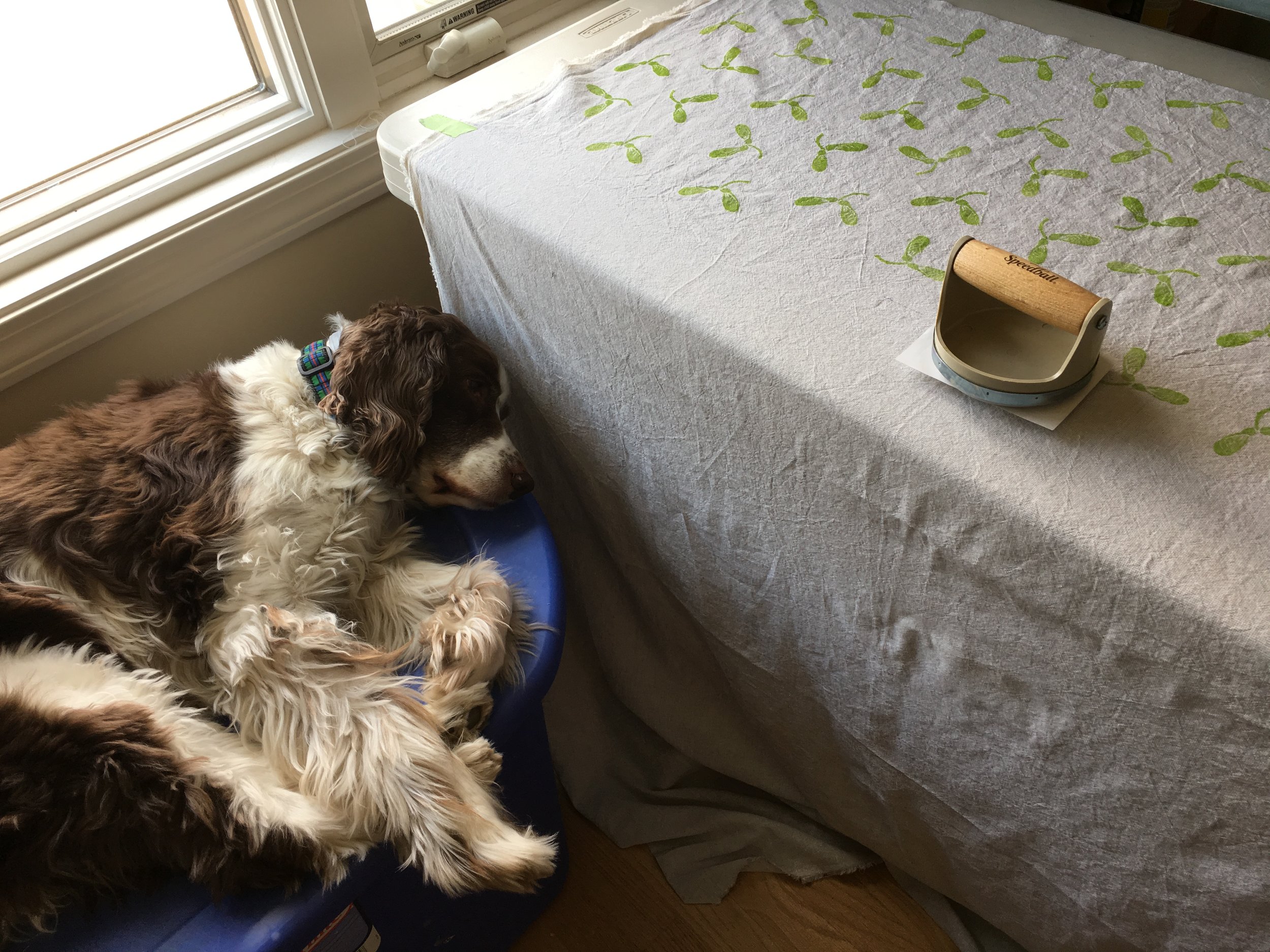
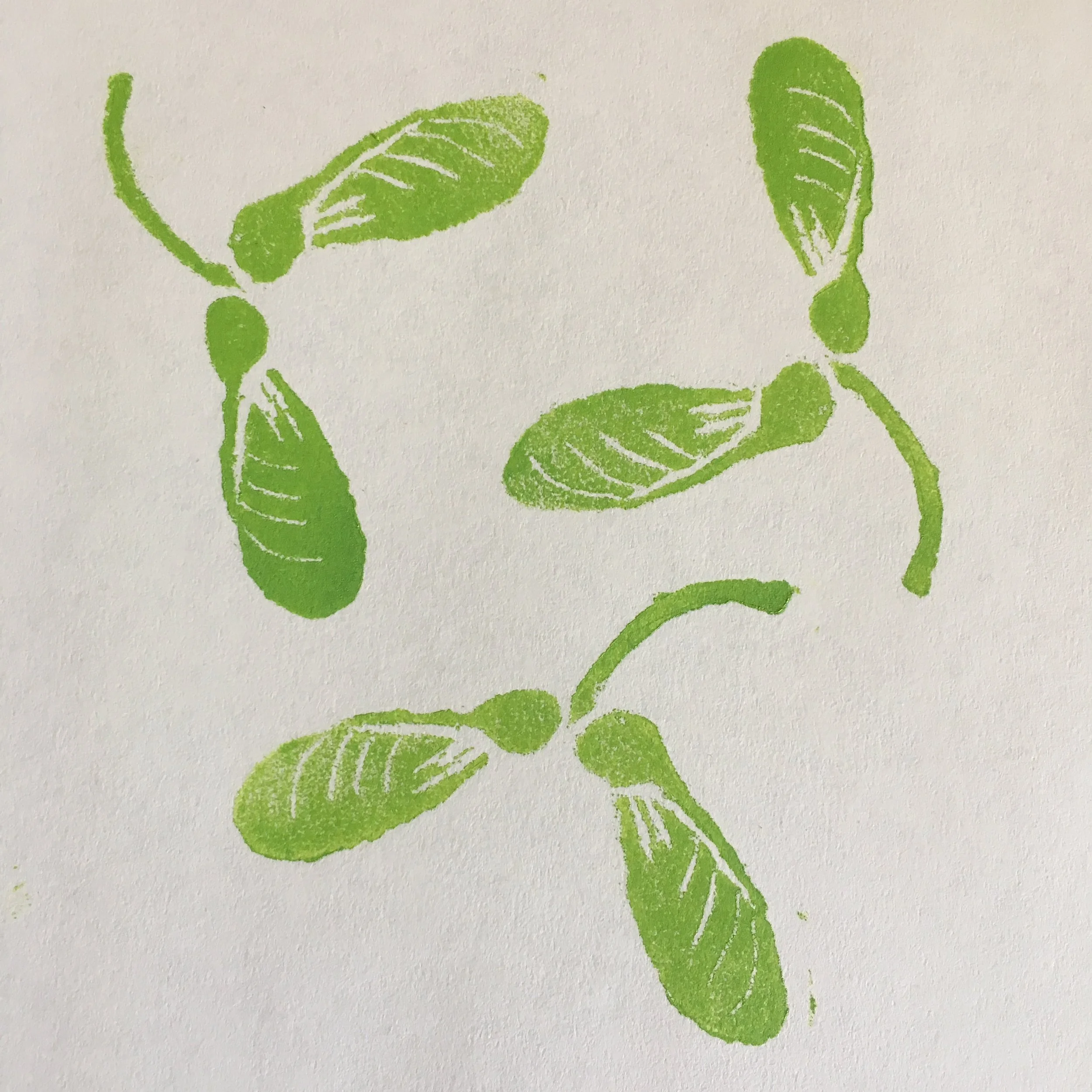
Block print on paper,  “Maple Helicopters”

Block print on paper, “Maple Helicopters”

Block print on paper,  “Maple Helicopters”

Block print on paper, “Maple Helicopters”

It has been years since I last did any printing of any sort, other than using rubber stamps. I recently picked up a book Print Pattern Sew by Jen Hewett and decided to give block printing a try again. Now that there are a variety of blocks made of softer material, it’s a lot easier, and faster, to carve a block. I used Tosnail Rubber Stamp Carving Blocks because they were relatively inexpensive and I didn’t want to spend a lot on a project that I wasn’t certain was going to turn out.

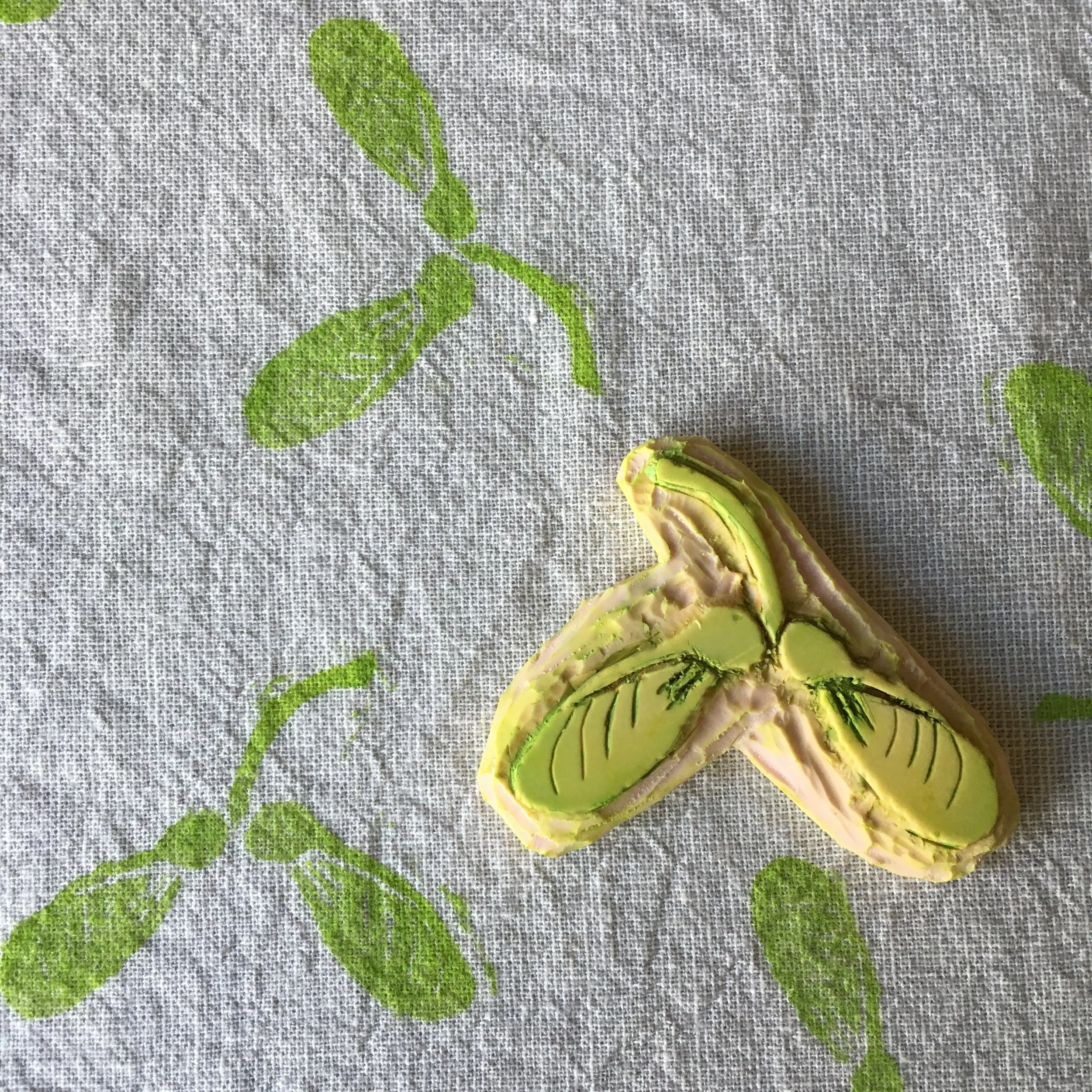
I decided to pick a design that could be printed in a random pattern so didn’t need to any registration marks. Maple seeds (also known as maple helicopters) fascinate me that’s what I decided to used as my motif.

I had an old set of Japanese wood carving tools which I used to start carving this block. But they weren’t very sharp any more and none of the blades in the set was fine enough to cut fine lines. So I purchased a Speedball Linoleum Cutter which had the perfect blades for my design.

Because I planned to print on fabric, I also purchased Speedball Fabric Block Printing Ink. I found it prints beautifully on both fabric and paper.

It turns out that I think block printing on fabric is lots of fun!

The Block Printers Helper!

The Block Printers Helper!

Here’s a close up of the printed fabric (Kaufman Essex Linen ) and my carved block, cleaned up after printing.

IMG_9448.JPG

In my next post, I’ll review the book I mentioned above and show a bag made using a pattern from the book.

TAGS: Block Printing for Surface Design, Block Printing Fabric, Block Printing, "Print Pattern Sew" by Jen Hewett


May 2, 2019

Gnome Hat Pattern for Peg Dolls

by Judy Tucker in Free Pattern


Winter Gnome Peg Dolls

Winter Gnome Peg Dolls

Winter Gnome Peg Dolls

Winter Gnome Peg Dolls

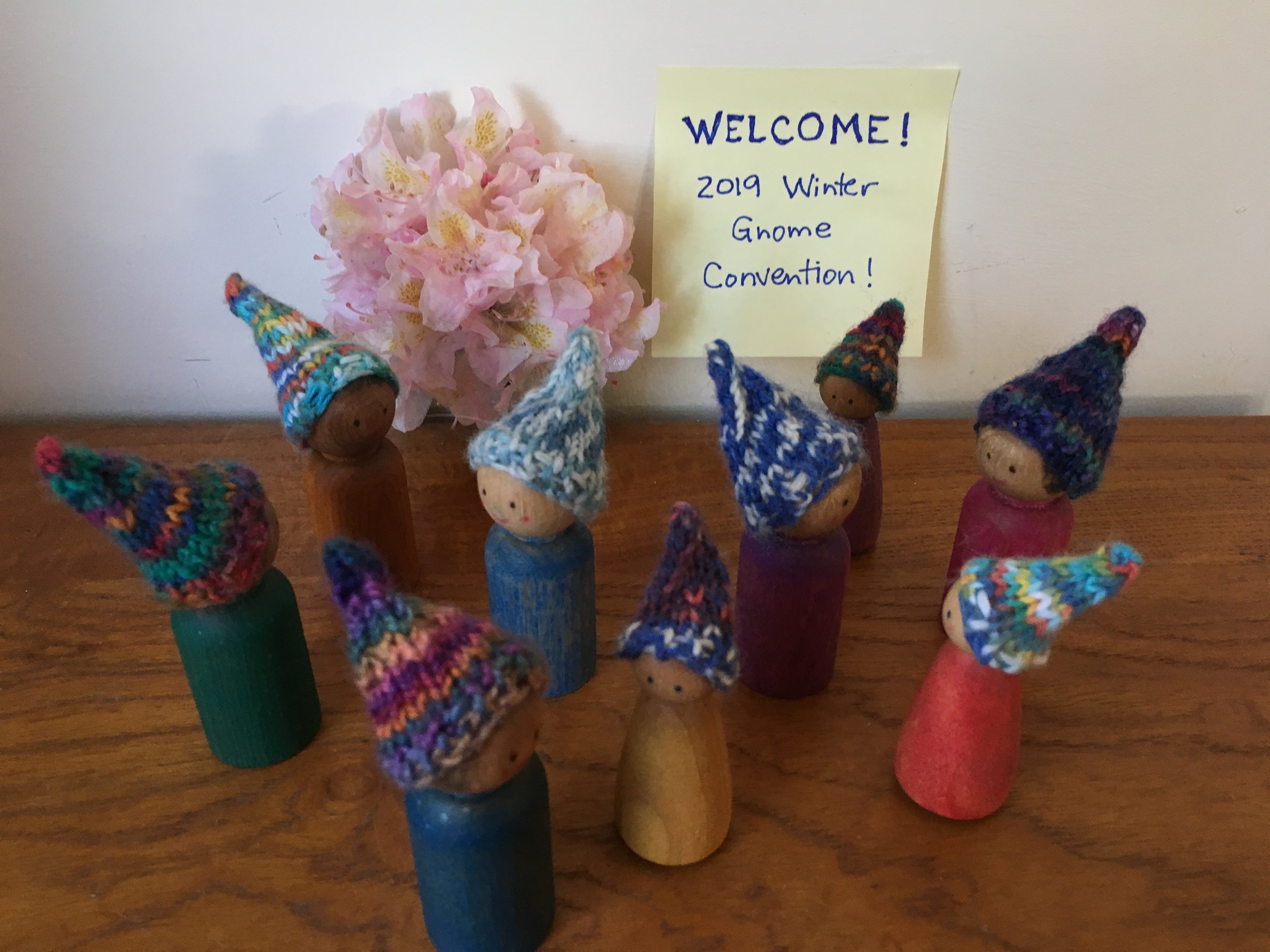
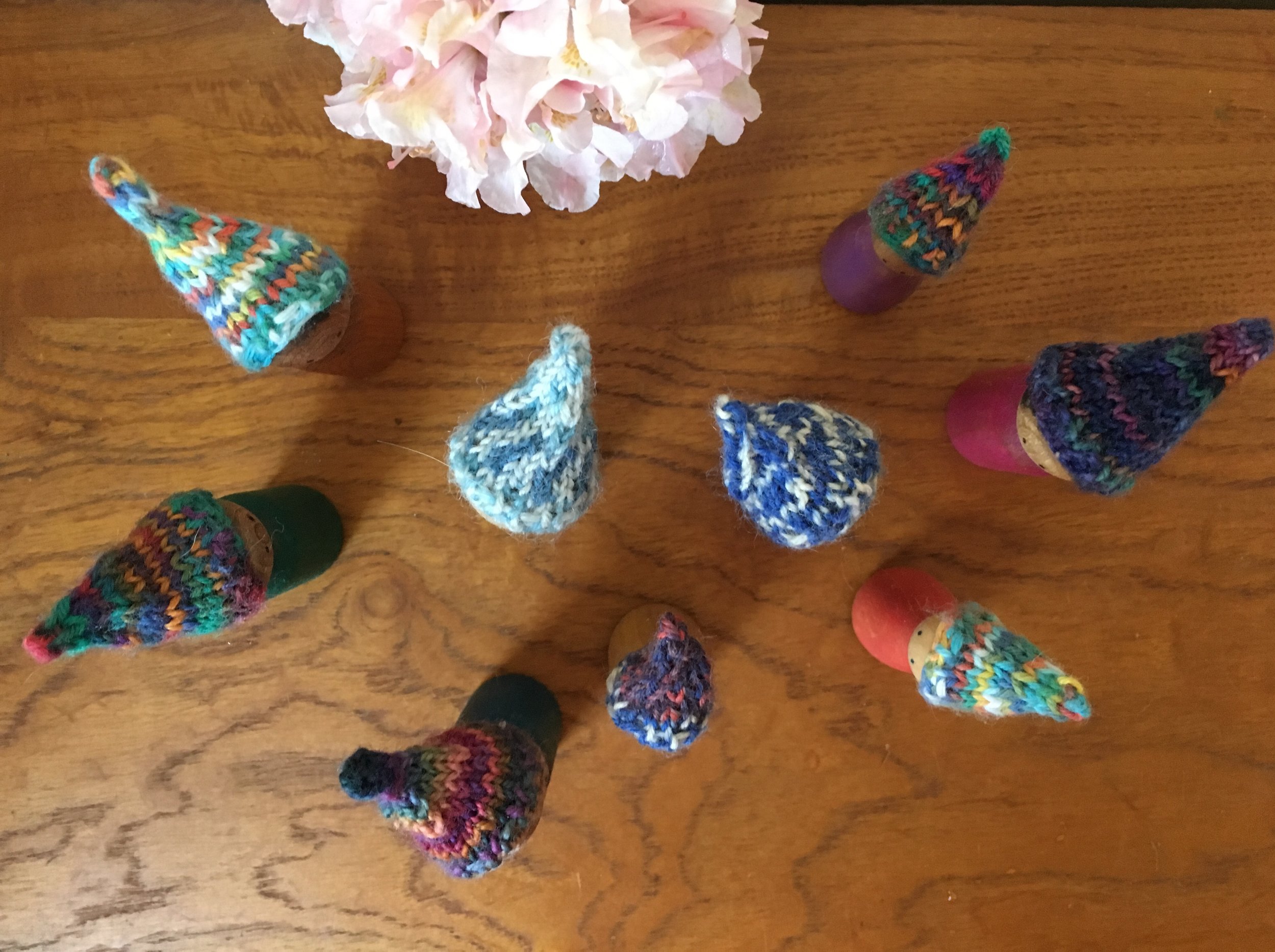
May is a quiet season for the Winter Gnomes, so this is the time they get together for their annual convention! They are having a great time relaxing and catching up all with all their friends!

They wanted me to share a pattern for a knit hat for the standard size peg doll, 2 3/8 inches (6cm). It doesn’t take very long to knit up one of these little gnome hats.

Supplies: #1 US double pointed knitting needles, fingerling sock yarn, darning needle

Gnome Hat (short cone shape)

  • Cast on 18 stitches, divide among 4 needles to work in a round.

  • Row 1 and 2—Knit 1 Perl 1 (K1P1) around the 4 needles x 2 rows

  • Rows 3—8 Knit around

  • Row 9—Knit to the last 2 stitches on the first needle, knit the last 2 stitches on the needle together (K2T), repeat on each of the 4 needles. There will be 14 stitches at the end of this round.

  • Row 10—Knit around.

  • Repeat instructions for Row 9 and Row 10 until only 2 stitches remain. Cut the yarn about 5 inches away from the last 2 stitches.

  • Using the darning needle, thread the yarn tail and weave it through the last 2 stitches and pull tight to close. Tuck the tail into the inside of hat and weave the tail into the knit.

  • Weave in the tail from the start of the hat into the stitches on the inside of the hat.

Because they are so little, and hence easy to loose, I glue the hats on the peg dolls with a craft tacky glue.

If you want to make the same hat for an angel peg/girl peg doll:

  • Cast on 12 stitches and divide among just 3 needles.

  • Follow the same directions for the standard hat.

Winter Peg Dolls standing next to one of the arches from Grimm’s Sunset Rainbow puzzle set.  (Link is to the German manufacturer but many shops that sell Waldorf toys also sell Grimm toys so you probably can find a shop in your country).

Winter Peg Dolls standing next to one of the arches from Grimm’s Sunset Rainbow puzzle set. (Link is to the German manufacturer but many shops that sell Waldorf toys also sell Grimm toys so you probably can find a shop in your country).

NOTE: I created the pattern for this tiny gnome hat. Feel free to use this peg doll gnome hat pattern to make hat for your own peg dolls . You may also make hats to sell individually or on peg gnome dolls that you make from your own small online shop (ie. Etsy.com or your own website) or at craft fairs. You may also share this pattern with other knitters. Please do not copy and sell this pattern as your own or sell these hats commercially. Thanks!

Drone view of the 2019 Winter Gnome Convention!

Drone view of the 2019 Winter Gnome Convention!

Notice: This blog is not monetized: I do not use affiliate links. When there are links in a post, they are to give credit to another creative person, because I like or have used a product, or to help the reader easily find supplies for a project.

TAGS: Knit Gnome Hat, Waldorf type gnome, Pattern for knit gnome hat for a peg doll, peg doll knit gnome hat pattern, Peg doll knit hat, Peg Dolls


April 25, 2019

Book Review: "In Celebration of Plain Weave" by Annie MacHale

by Judy Tucker


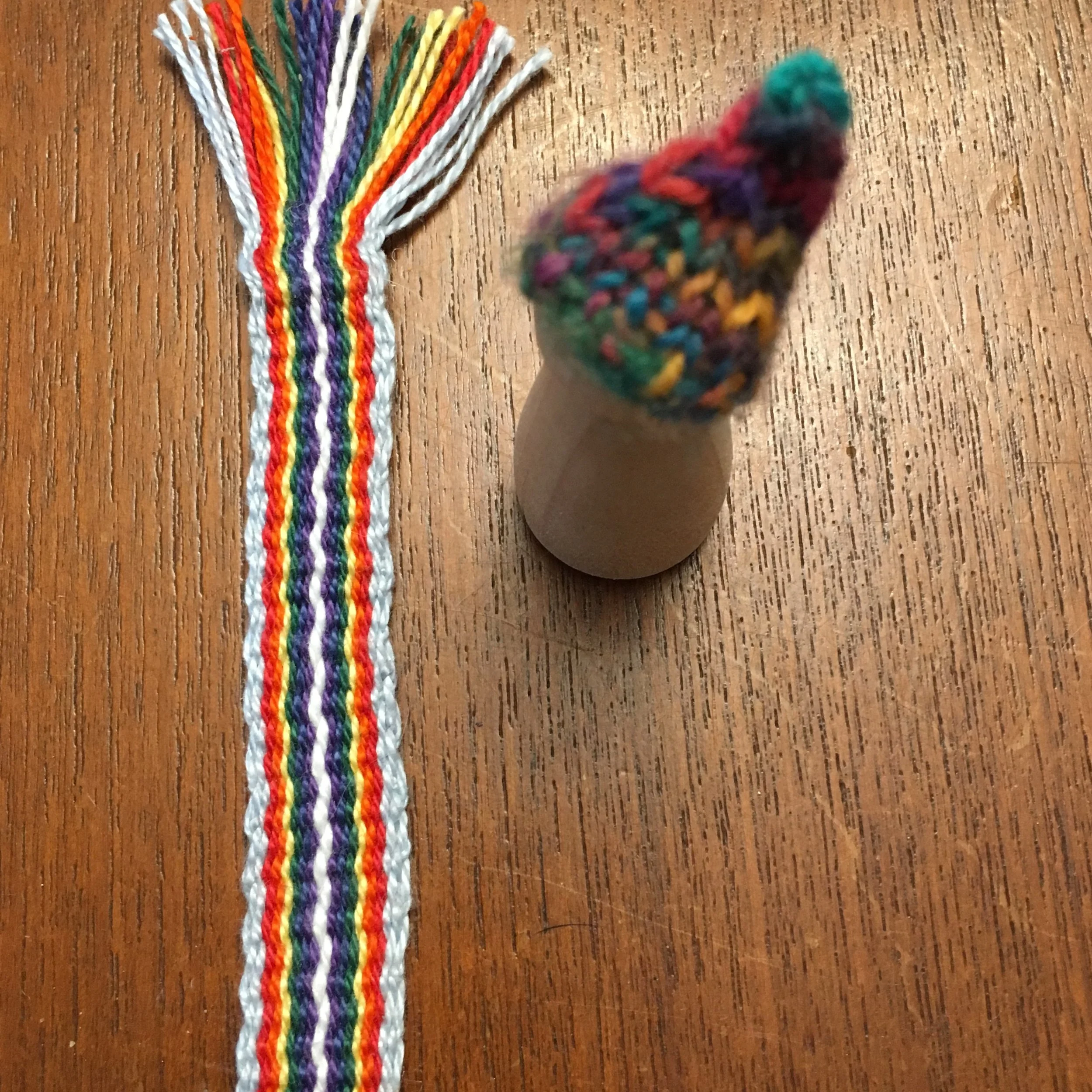
Rainbow striped book marker and peg gnome

Rainbow striped book marker and peg gnome

Rainbow striped book marker and peg gnome

Rainbow striped book marker and peg gnome

I’ve been following Annie MacHale, @aspinnerweaver, on Instagram for a while now. She weaves bands on an inkle loom and sells guitar straps, key chains and other items that use woven bands.

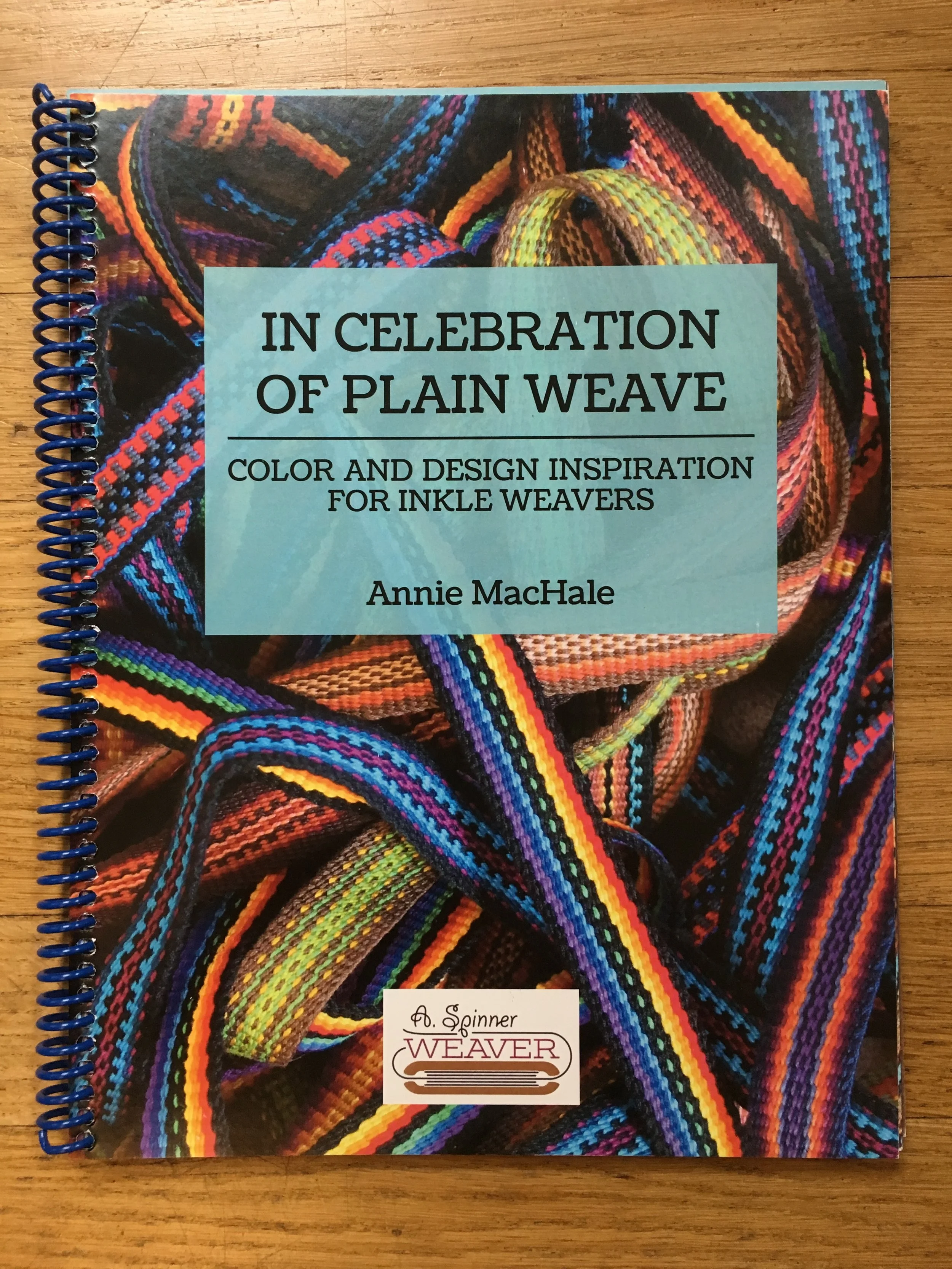
She recently published a book on plain weaving, the simplest weave done with an inkle loom. But simple doesn’t mean plain or dull. The options for pattern and color variations are endless. Her book is In Celebration of Plain Weave: Color and Design Inspiration for Inkle Weavers.

Book cover

Book cover

The first 32 pages of the book are all about color theory. She discusses how to mix colors and use of available on-line tools for picking and previewing color combinations. Her discussion of color theory is excellent—easy to understand and fun to read with the great accompanying photos.

The second part of the book defines the basic pattern elements that can be woven using plain weave. She talks about how to combine the elements to design a pattern for weaving a band.

The main part of the book has 200 plain weave designs that can be used to weave bands on an inkle loom. She has patterns using 39 to 79 warp threads, so narrow to wide bands. All of the patterns are in full color. You can weave them in her colors but of course you can totally change the colors too. The last part of the book discusses how to change the patterns.

What a great resource! When I first got my inkle loom, I was all excited and learned how to do a variety of bands using complex patterns using a variety of heddles. But when I picked up the loom again last year, I’d forgotten how to do the more complex weaving and my bands were a sorry sight! I’d already decided to go back to basics and work in plain weave for a while when I saw Annie post about her new book. It was perfect timing for me.
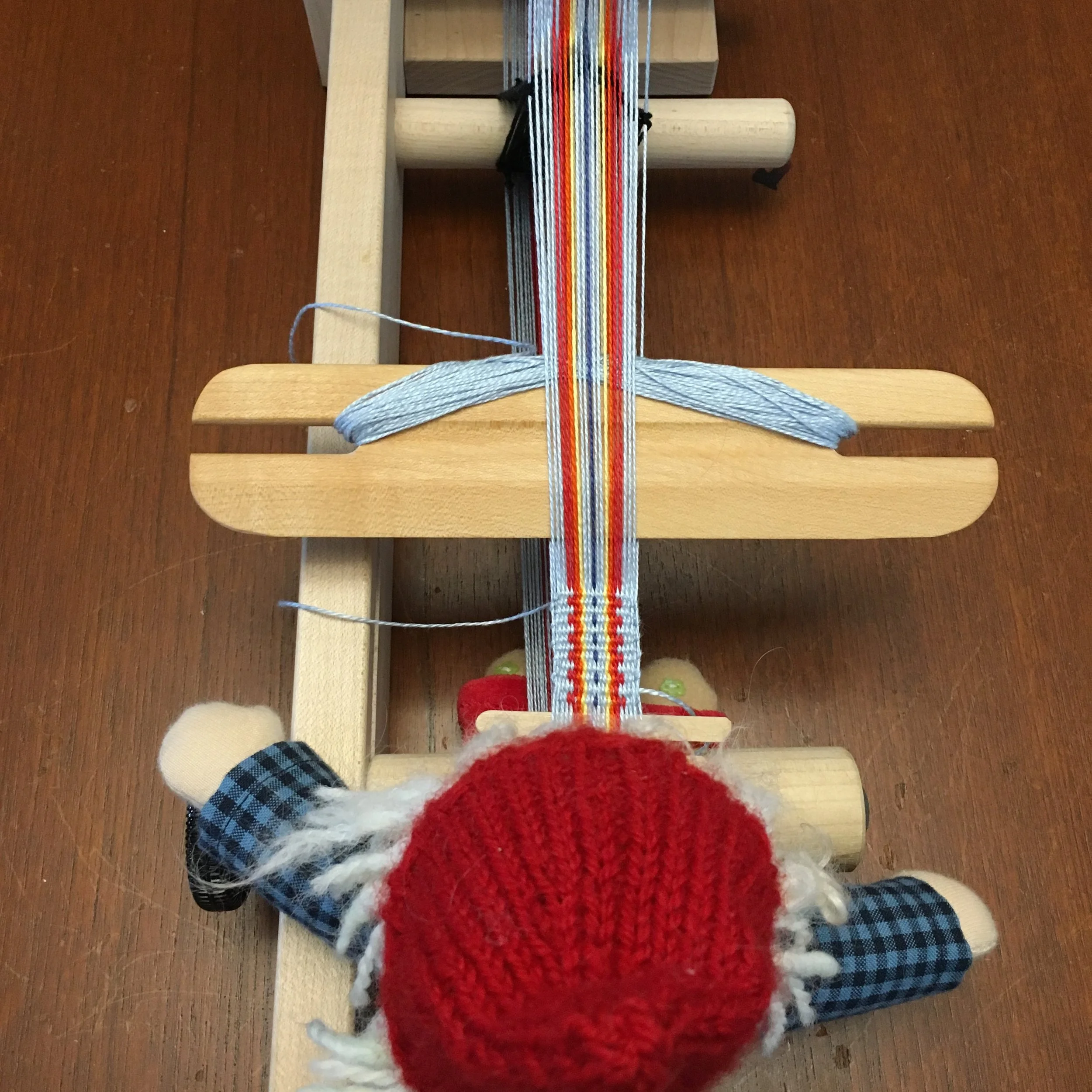
At the top is a little book mark that was the first thing I wove after purchasing the book. I misread the pattern so it isn’t exactly any of the patterns in the book. But the band on the inkle loom below, is Pattern #51 from the book, but woven with my own colorway.

Pattern #51 from “In Celebration of Plain Weave” on the inkle loom.  (Has Cloudberry been weaving at night?)

Pattern #51 from “In Celebration of Plain Weave” on the inkle loom. (Has Cloudberry been weaving at night?)

I highly recommend this book if you weave bands on an inkle loom or if you are just thinking about whether or not you want to purchase a loom or aren’t sure what you can do if you get a loom.

(About the gnomes that photo-bombed the pictures in this post. The Waldorf type doll at the loom is Cloudberry, and the peg doll above is one of the Winter Gnomes. The Winter Gnomes have been at their off-season spring convention. More to follow about that in another post)!
Notice: This blog is not monetized: I do not use affiliate links. When there are links in a post, they are to give credit to another creative person, because I like or have used a product, or to help the reader easily find supplies for a project.


TAGS: "In Celebration of Plain Weave" by Annie MacHale, Inkle loom, patterns for weaving inkle bands, Book Review, weaving on an inkle loom, Color theory


  • Newer
  • Older

Powered by Squarespace 7