Search
  • Information
    • About
    • Contact
    • Privacy Policy
  • Blog
  • Subscribe
  • Tutorials
    • Tutorials
    • Doll Clothes: Photos and some Patterns
  • Suggested Reading
  • Quilts: My Original Designs
  • Gallery: Color Studies
  • Gallery: Quilts I've Made
  • Doll Making Blog Posts
  • Recent blog posts
  • Quilts Based on The Improv Handbook for Modern Quilters
Close
Menu
Search
Close
  • Information
    • About
    • Contact
    • Privacy Policy
  • Blog
  • Subscribe
  • Tutorials
    • Tutorials
    • Doll Clothes: Photos and some Patterns
  • Suggested Reading
  • Quilts: My Original Designs
  • Gallery: Color Studies
  • Gallery: Quilts I've Made
  • Doll Making Blog Posts
  • Recent blog posts
  • Quilts Based on The Improv Handbook for Modern Quilters
Menu

Sleeping Dog Quilts

SLEEPING DOG QUILTS

May 2, 2019

Gnome Hat Pattern for Peg Dolls

by Judy Tucker in Free Pattern


Winter Gnome Peg Dolls

Winter Gnome Peg Dolls

Winter Gnome Peg Dolls

Winter Gnome Peg Dolls

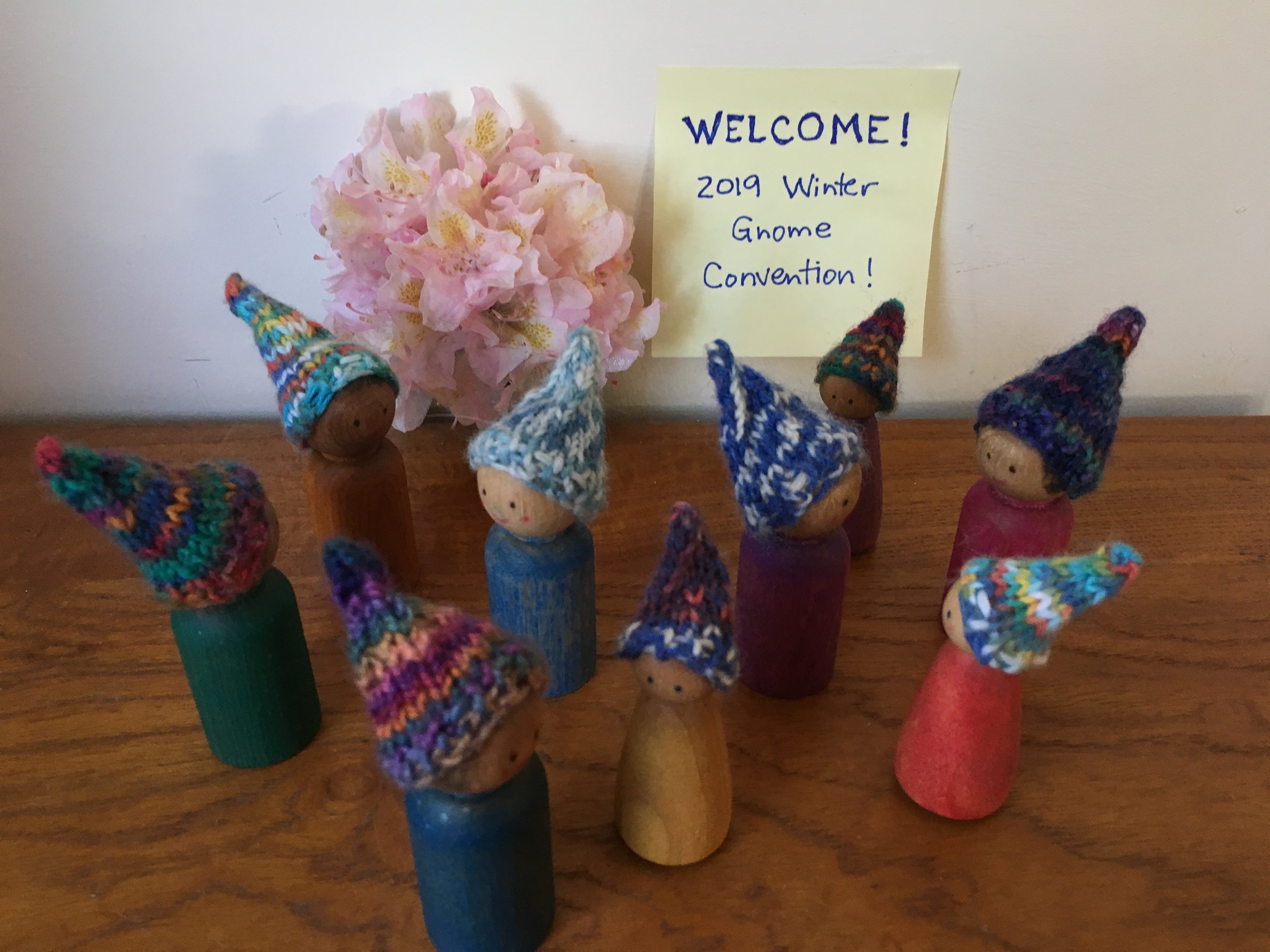
May is a quiet season for the Winter Gnomes, so this is the time they get together for their annual convention! They are having a great time relaxing and catching up all with all their friends!

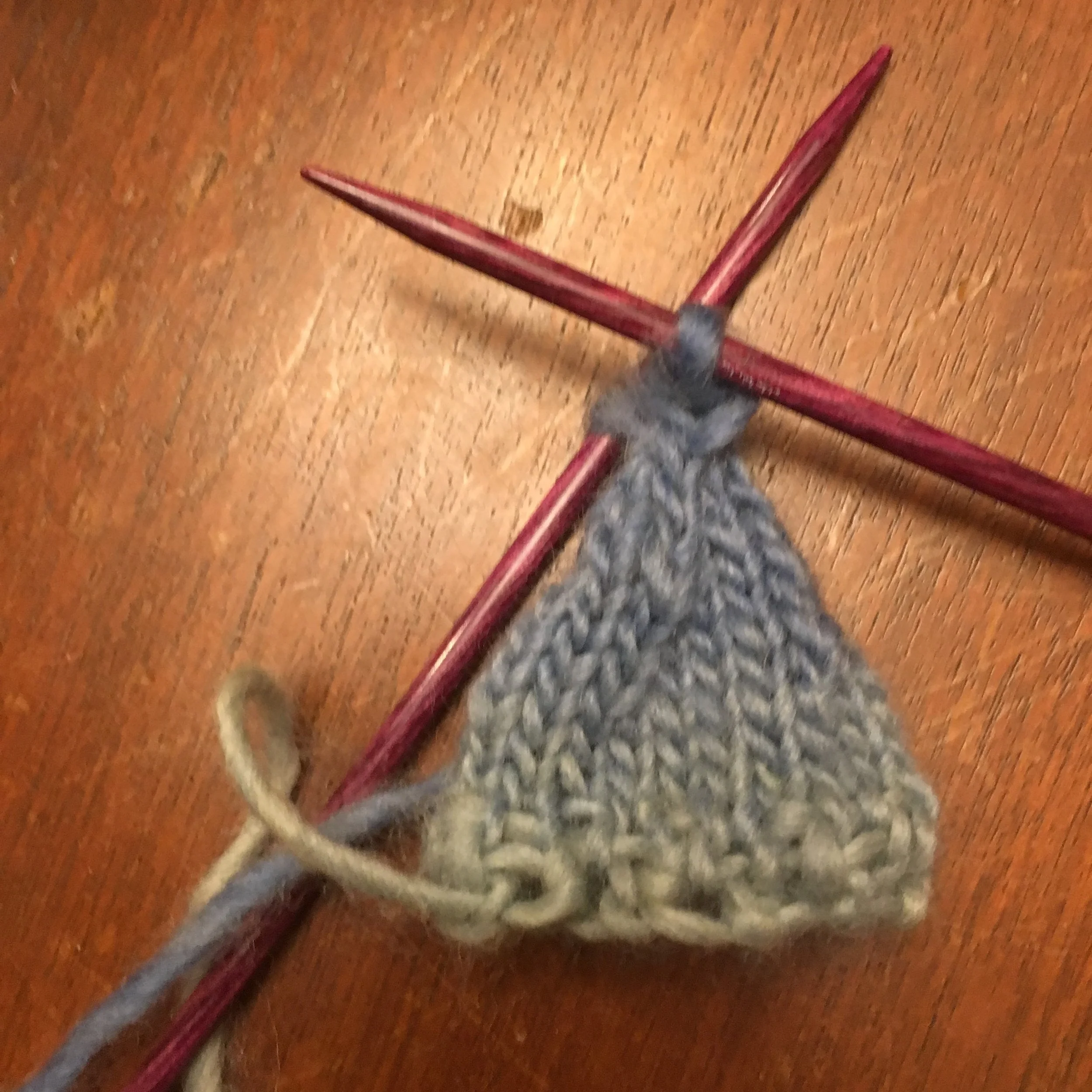
They wanted me to share a pattern for a knit hat for the standard size peg doll, 2 3/8 inches (6cm). It doesn’t take very long to knit up one of these little gnome hats.

Supplies: #1 US double pointed knitting needles, fingerling sock yarn, darning needle

Gnome Hat (short cone shape)

  • Cast on 18 stitches, divide among 4 needles to work in a round.

  • Row 1 and 2—Knit 1 Perl 1 (K1P1) around the 4 needles x 2 rows

  • Rows 3—8 Knit around

  • Row 9—Knit to the last 2 stitches on the first needle, knit the last 2 stitches on the needle together (K2T), repeat on each of the 4 needles. There will be 14 stitches at the end of this round.

  • Row 10—Knit around.

  • Repeat instructions for Row 9 and Row 10 until only 2 stitches remain. Cut the yarn about 5 inches away from the last 2 stitches.

  • Using the darning needle, thread the yarn tail and weave it through the last 2 stitches and pull tight to close. Tuck the tail into the inside of hat and weave the tail into the knit.

  • Weave in the tail from the start of the hat into the stitches on the inside of the hat.

Because they are so little, and hence easy to loose, I glue the hats on the peg dolls with a craft tacky glue.

If you want to make the same hat for an angel peg/girl peg doll:

  • Cast on 12 stitches and divide among just 3 needles.

  • Follow the same directions for the standard hat.

Winter Peg Dolls standing next to one of the arches from Grimm’s Sunset Rainbow puzzle set.  (Link is to the German manufacturer but many shops that sell Waldorf toys also sell Grimm toys so you probably can find a shop in your country).

Winter Peg Dolls standing next to one of the arches from Grimm’s Sunset Rainbow puzzle set. (Link is to the German manufacturer but many shops that sell Waldorf toys also sell Grimm toys so you probably can find a shop in your country).

NOTE: I created the pattern for this tiny gnome hat. Feel free to use this peg doll gnome hat pattern to make hat for your own peg dolls . You may also make hats to sell individually or on peg gnome dolls that you make from your own small online shop (ie. Etsy.com or your own website) or at craft fairs. You may also share this pattern with other knitters. Please do not copy and sell this pattern as your own or sell these hats commercially. Thanks!
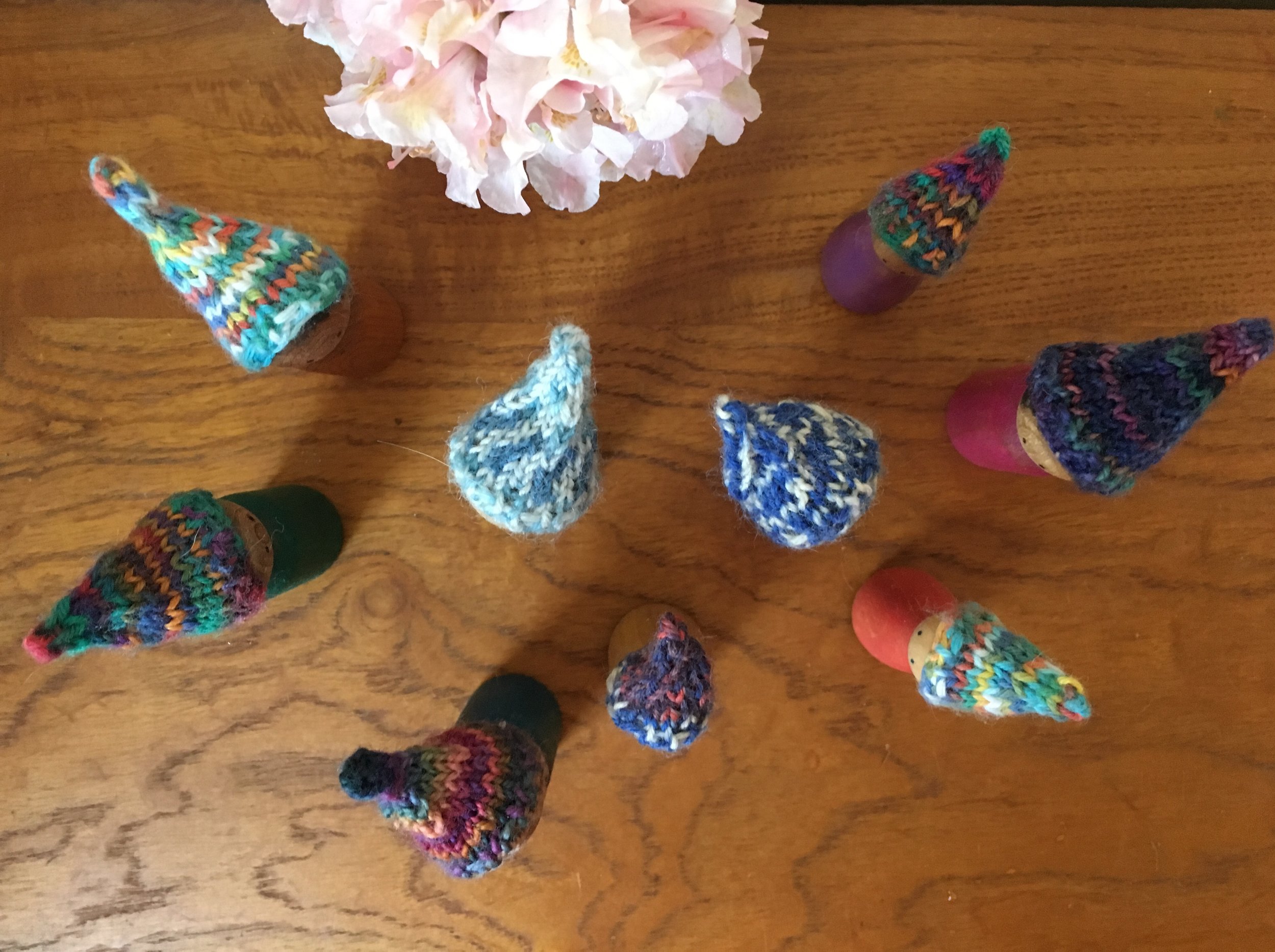
Drone view of the 2019 Winter Gnome Convention!

Drone view of the 2019 Winter Gnome Convention!

Notice: This blog is not monetized: I do not use affiliate links. When there are links in a post, they are to give credit to another creative person, because I like or have used a product, or to help the reader easily find supplies for a project.

TAGS: Knit Gnome Hat, Waldorf type gnome, Pattern for knit gnome hat for a peg doll, peg doll knit gnome hat pattern, Peg doll knit hat, Peg Dolls


March 22, 2018

Tiny knit hat for a Waldorf Type doll with a 4 inch head

by Judy Tucker in Free Pattern


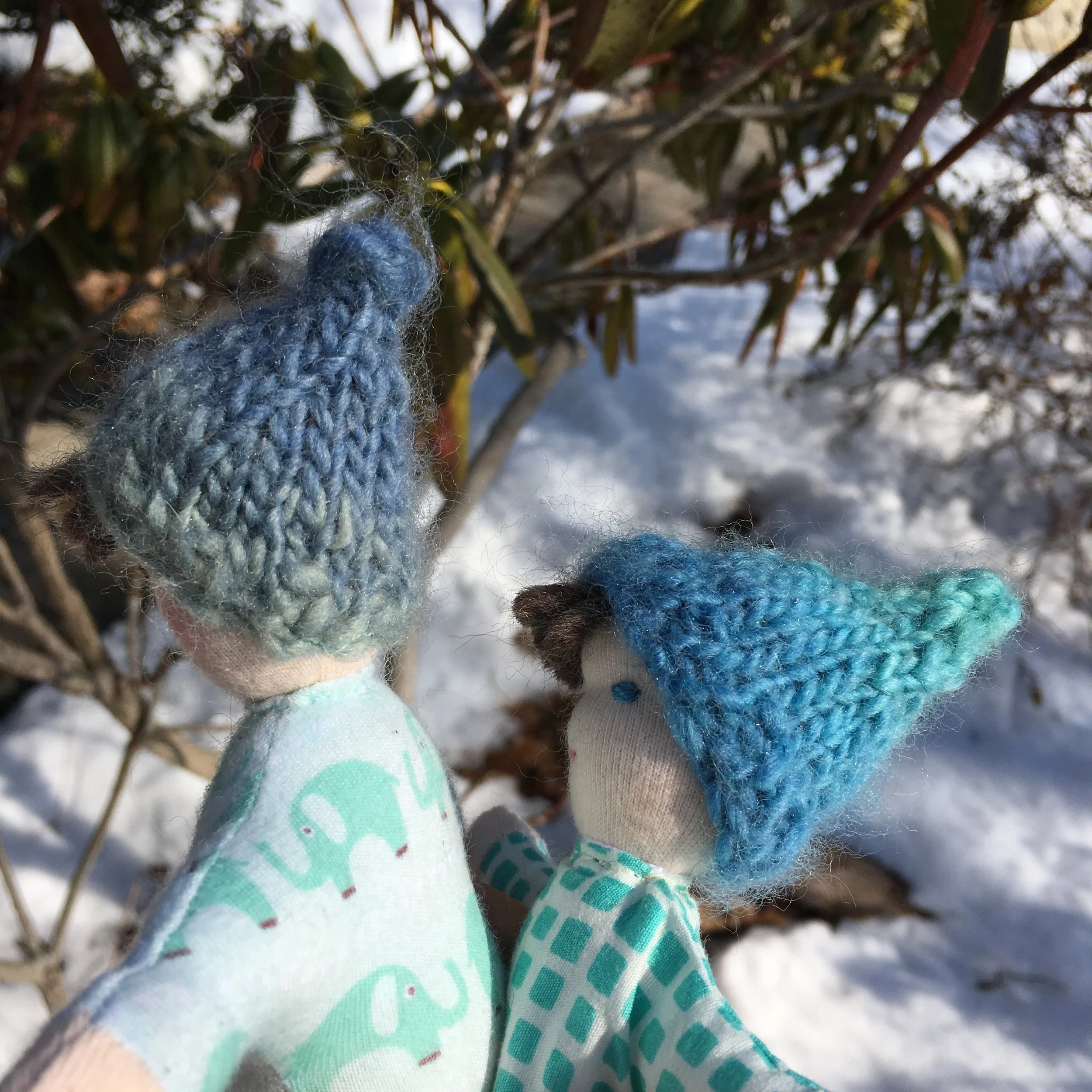
Oops! Somebody lost his hat in the rhododendron!

Oops! Somebody lost his hat in the rhododendron!

Oops! Somebody lost his hat in the rhododendron!

Oops! Somebody lost his hat in the rhododendron!

Tiny Knit Hat for a Waldorf Type doll with a 4 1/2 inch head circumference.

Supplies:

  • US 6 - 4.00 mm double pointed knitting (DP) needles. Set of 5 DP needles.
  • Mochi Plus or similar yarn with 4-4.5 sts/onch on 9-10.5 US needles
  • Yarn needle
  1. Cast on 20 stitches on 1 DP knitting needle
  2. Divide stitches evenly on the 4 DP needles (5 stitches/DP needle)
  3. Knit stockinette (Knit. Purl) for 3 rounds (rows 1-3)
  4. Knit for 5 rounds (rows 4-8)
  5. Row 9- Knit 3 stitches, knit 2 together at the end of needle. Repeat on each of the remaining 3 needles. (16 stitches)
  6. Row 10 Knit around
  7. Row 11 Knit 2 stitches, knit 2 together. Repeat on the each of the remaining 3 needles. (12 stitches)
  8. Row 12 Knit around
  9. Row 13 Knit 1 stitch, knit 2 together. Repeat on each of the remaining 3 needles. (8 stitches)
  10. Row 14 Knit around
  11. Row 15 Knit 2 together around. Decrease the number of needles to 2 as you knit. (4 stitches)
  12. Row 16 Knit around
  13. Knit 2 together until just 2 stitches remain
  14. Cut yarn leaving an 8-10 tail. Using the yarn needle, run the tail through the 2 remaining stitches. Pull tight.
  15. Weave in the 2 loose tails

Now your tiny Waldorf Doll will have a warm head!

If you use finer yarn (such as a #4 yarn using US 5 - 3.75mm needles) or want a slightly larger hat for a 5 inch circumference head, cast on 24 stitches and divide them, putting 6 stitches on each needle.  Starting in step 5, knit 1 additional stitch before knitting the last 2 stitches together at the end of each needle. Continue with knitting with cast-off row, followed by 1 knit around row until just 2 stitches remain as in step 13.

KnittingATinyHatForAWaldorfTypeDoll
TwoTinyKnitWaldorfHats.jpg

TAGS: Knit Hat Pattern for a Tiny Waldorf Type Doll, Tiny Knit Hat, Waldorf type doll, Waldorf typed doll clothes


June 20, 2016

Doll's Cap Pattern from June 1858 Godey's Lady's Book

by Judy Tucker in Free Pattern


Doll cap from 1858 magazine pattern

Doll cap from 1858 magazine pattern

Doll cap from 1858 magazine pattern

Doll cap from 1858 magazine pattern

My faithful readers will no doubt have noticed that I haven't been posting any quilts recently.  There's been some much needed home maintenance going on at my house. Think plaster, dust, paint.  Everything is in bins and since I didn't move out, the bins have been moving from room to room as the work progresses. I can sew small projects but not quilts since my quilting room is all packed up. I have plans for quilts...but they are only being constructed in my imagination at the moment.

This week I packed up a bookcase.  There were a couple tattered magazines next to some old Bibles that I have moved on numerous occasions. I've never looked at them. Turns out I was missing a DYI gold mine!

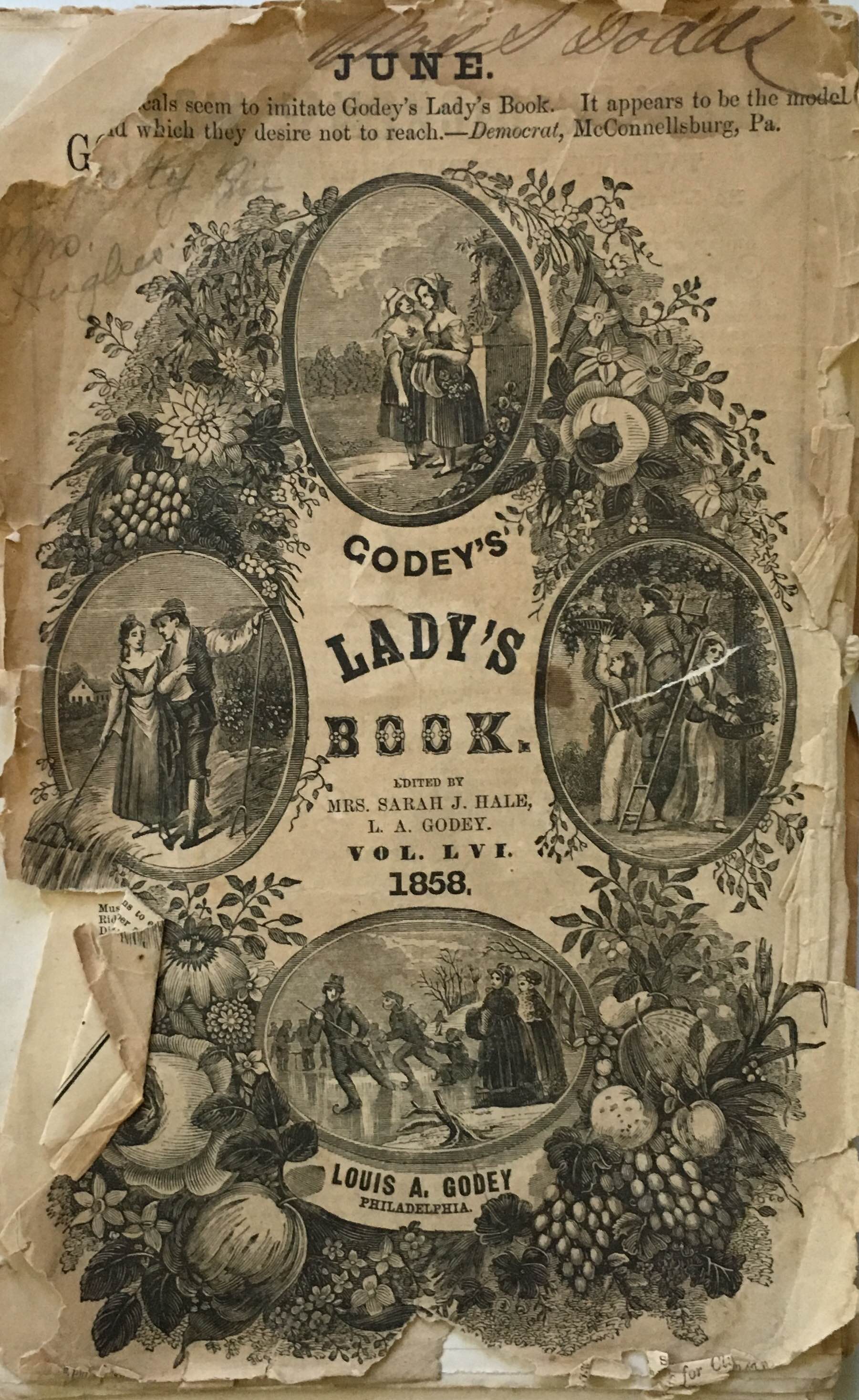
Cover of June 1858 of Godey's Lady's Book

Cover of June 1858 of Godey's Lady's Book

The 1858 June edition of Godey's Lady's Book is packed with patterns for sewing, handwork, recipes, menus and a drawing lesson. And there are tips for the nursery/sick room and illustrations of the latest fashions. I do wonder how the publisher could afford to pack so many features into one issue!

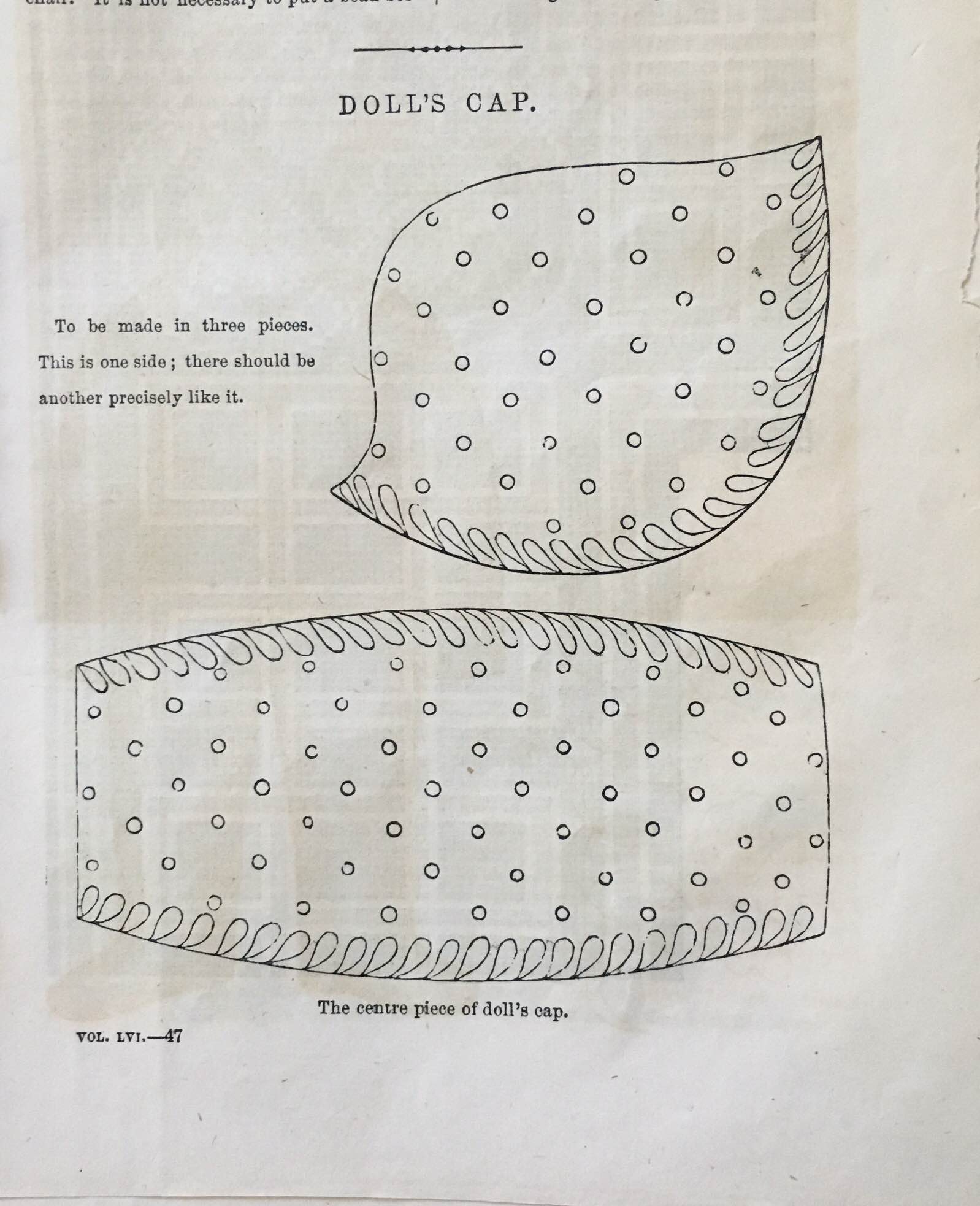
When I pulled this magazine off my bookshelf it opened to a page with a pattern for a doll's cap.  That stopped me in my tracks. (And stopped the packing of books into boxes for a while too)!

Vintage doll cap pattern.jpg
Doll Vintage cap side.jpg


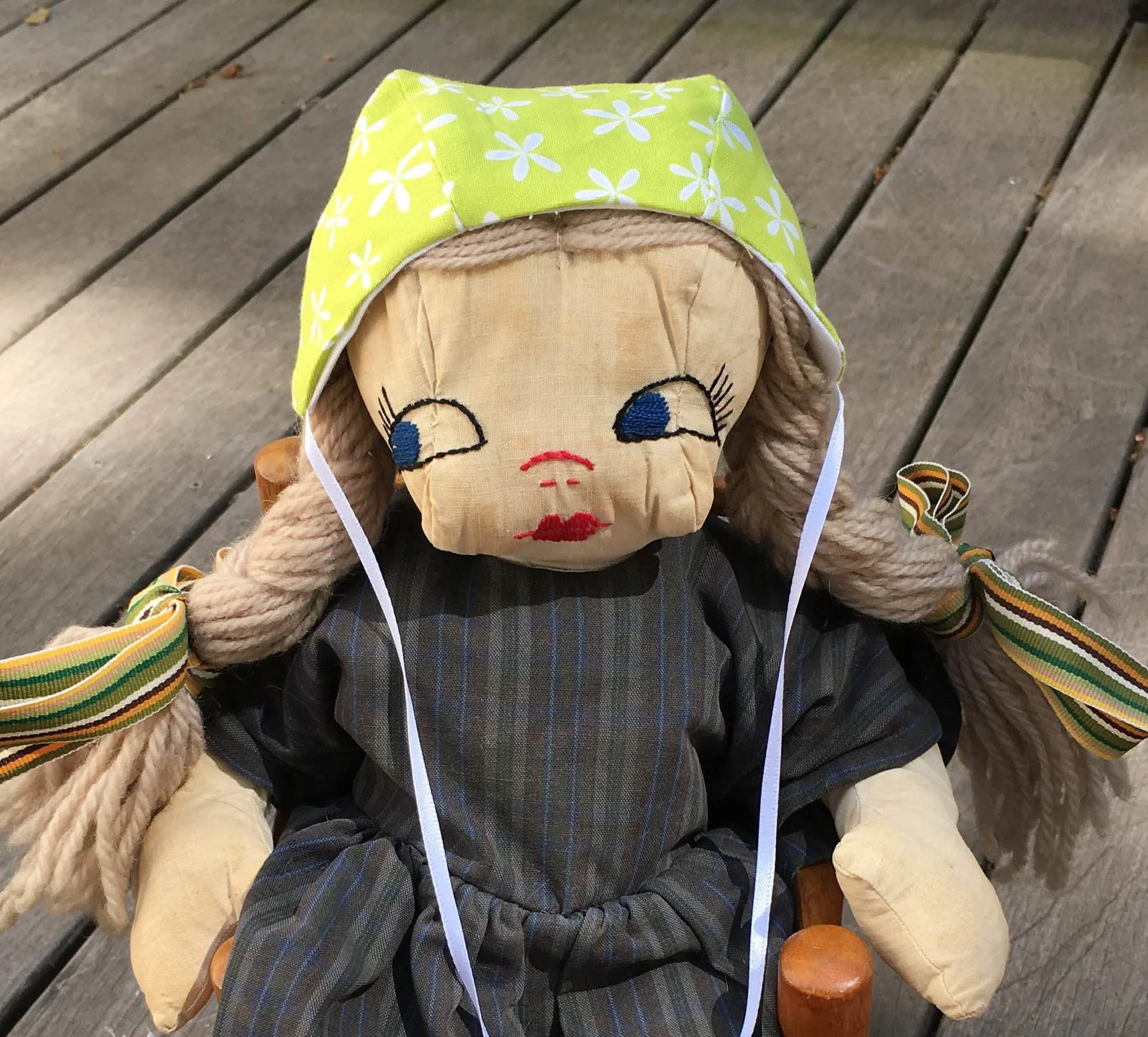
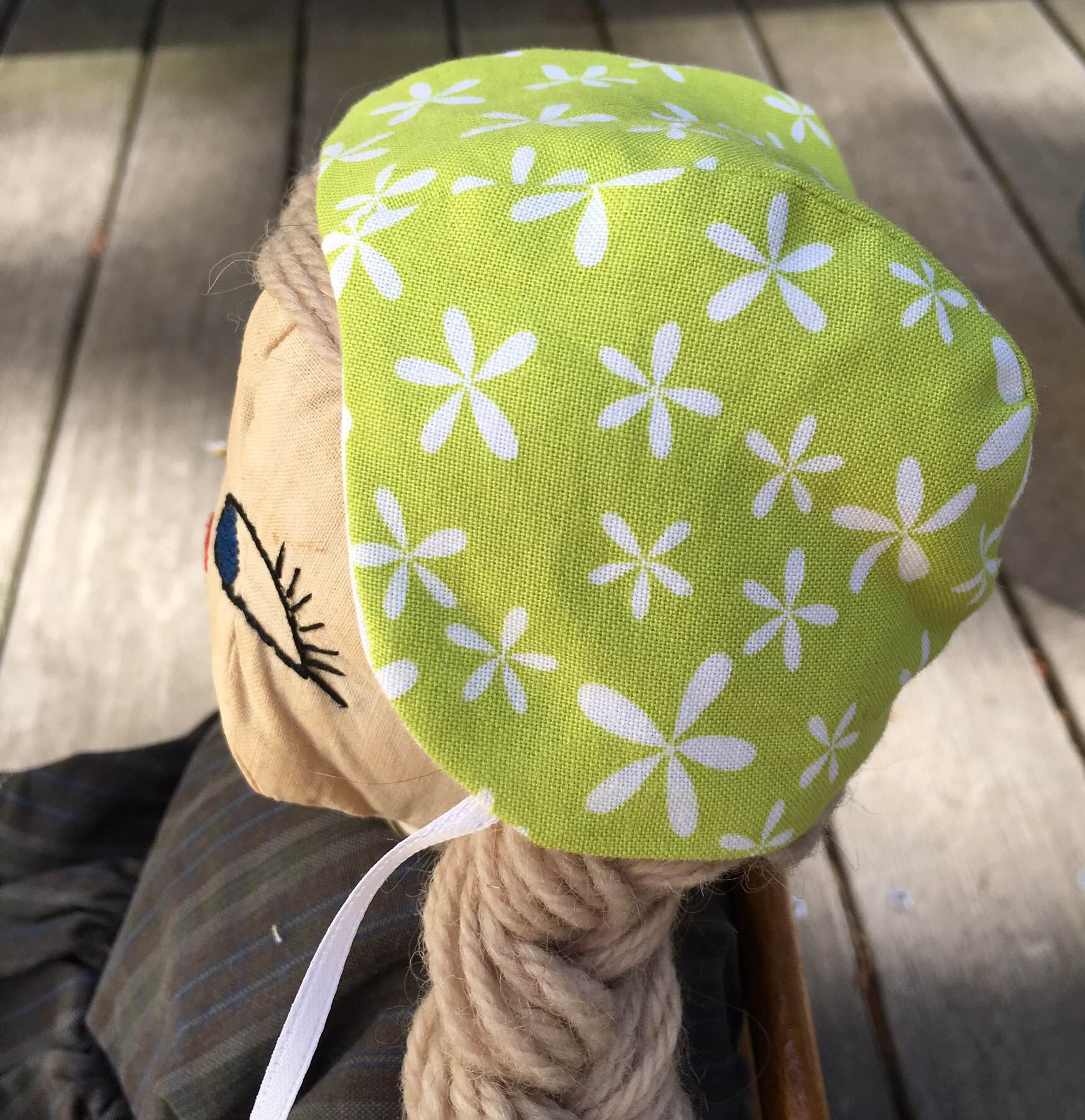
Yesterday I copied the doll's cap pattern at 120% and cut it out allowing for 1/4 inch seams.  This will fit a doll with a head circumference of 12 1/2 inches.  The pattern is great. The center section eases onto the curves of the sides of the caps beautifully.  The pattern designer clearly knew what she was doing. (Click the link to get a PDF of the pattern in its original size).  I made a reversible cap--the green daisy on the outside and white on the inside.

My Blue Ridge Mountain 1960 doll is modeling the cap in the photo at the top of this post. She didn't want the ties done!  I think she's very cute in her new cap!

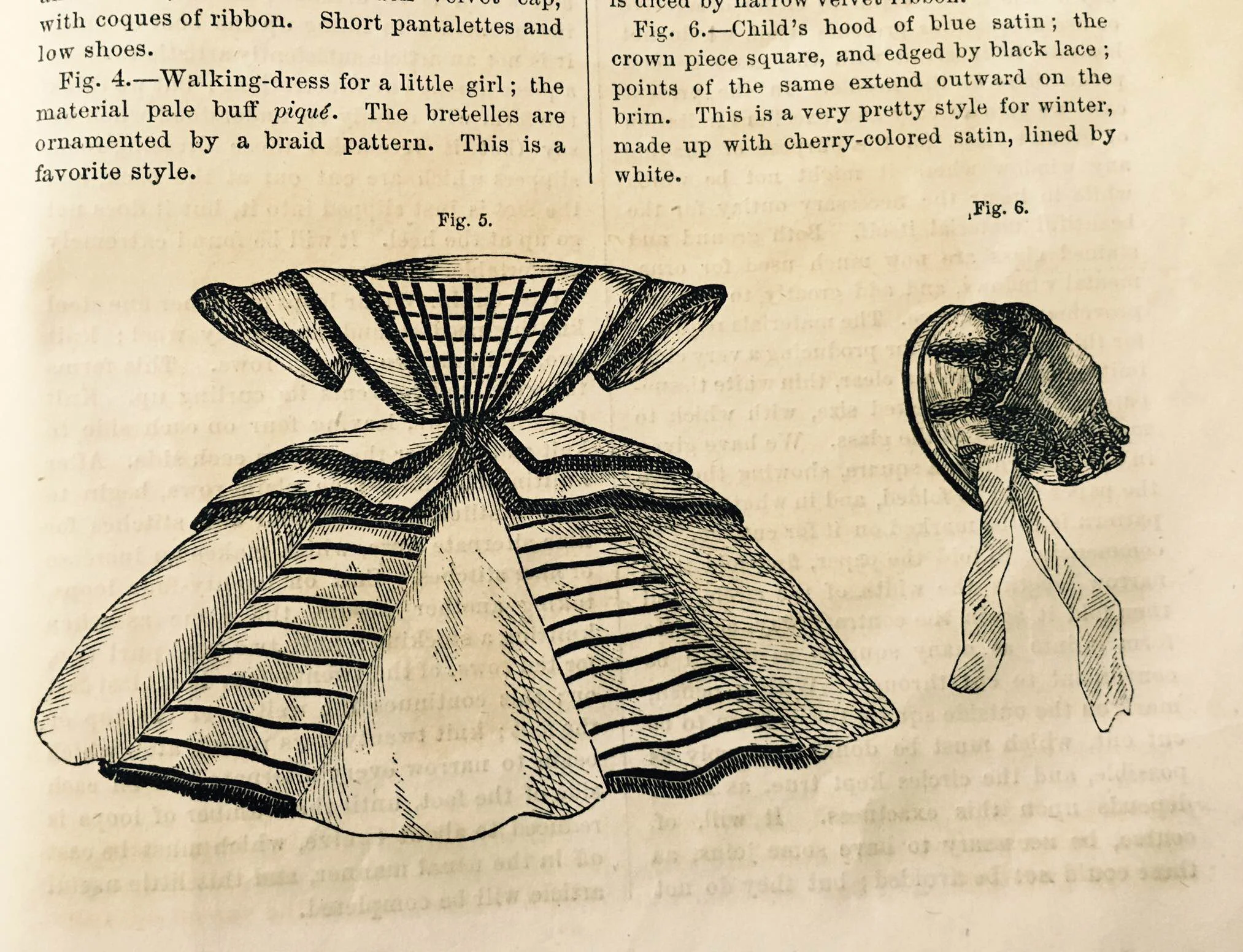
Here's a photo of what the doll's owner might have been wearing. Note the text...the design is for the coming winter. With everything made by hand, that's is very realistic.

1858 child's dress and hood

1858 child's dress and hood

Clearly little girls in the 1850s weren't climbing jungle gyms or riding bikes!

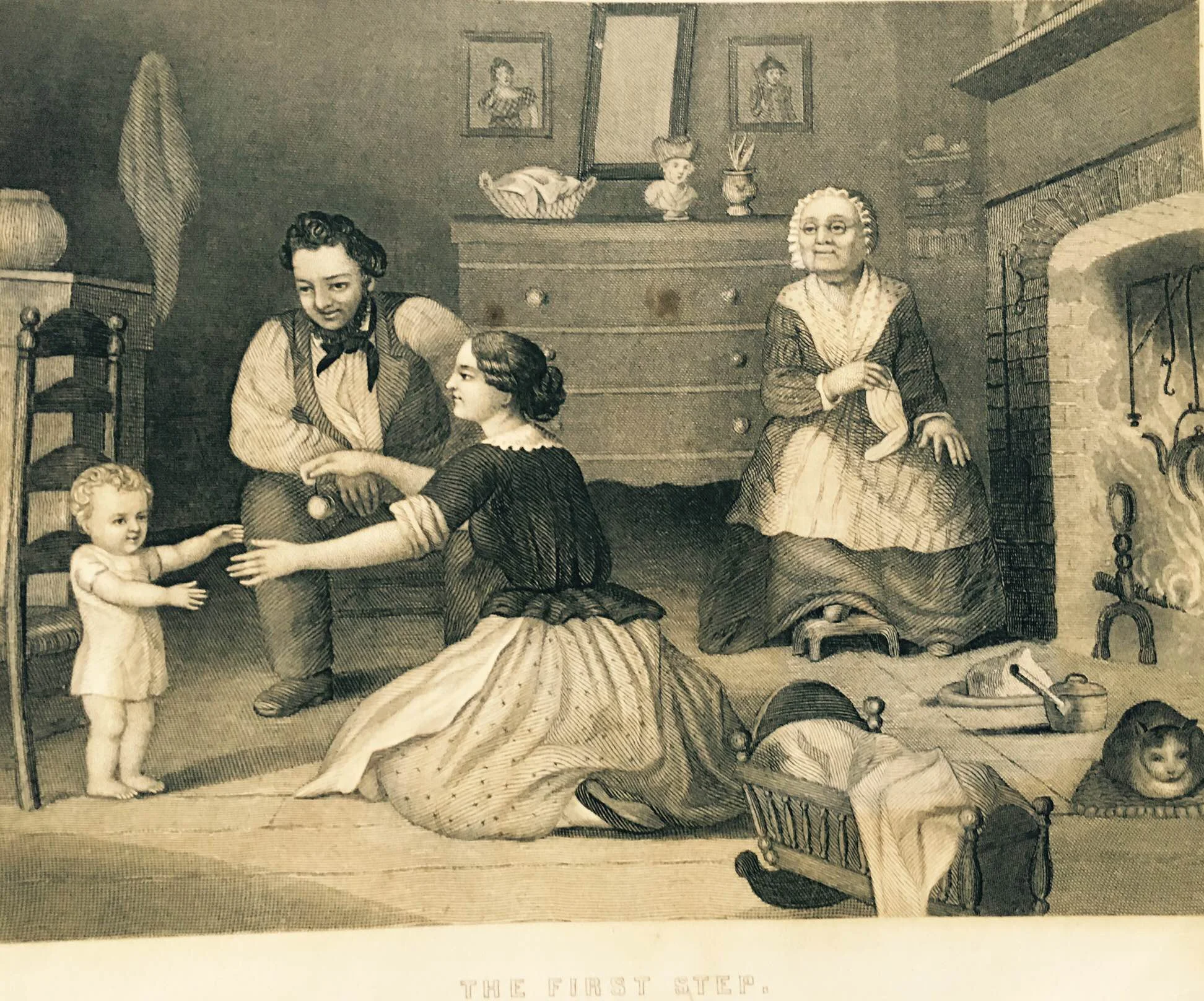
Here is a look at a home scene.

"The First Step" 1858.

"The First Step" 1858.

A bit more from this magazine in my next post--some embroidery designs, fashions plates, and ad for Charles Dickens' books!  Anyone interested in recipes for rhubarb wine? It's got those too!!

I promise to get back to quilting...but may be a while before the dust finally settles!

TAGS: Godey's Ladys Book June 1858, Pattern for Doll's Cap, Pattern for antique doll cap


November 23, 2015

Wheelchair Quilt Pattern: Flower Box or Tool Box 36 x 36 inches

by Judy Tucker in Free Pattern


Tool box Quilts

Tool box Quilts

Tool box Quilts

Tool box Quilts

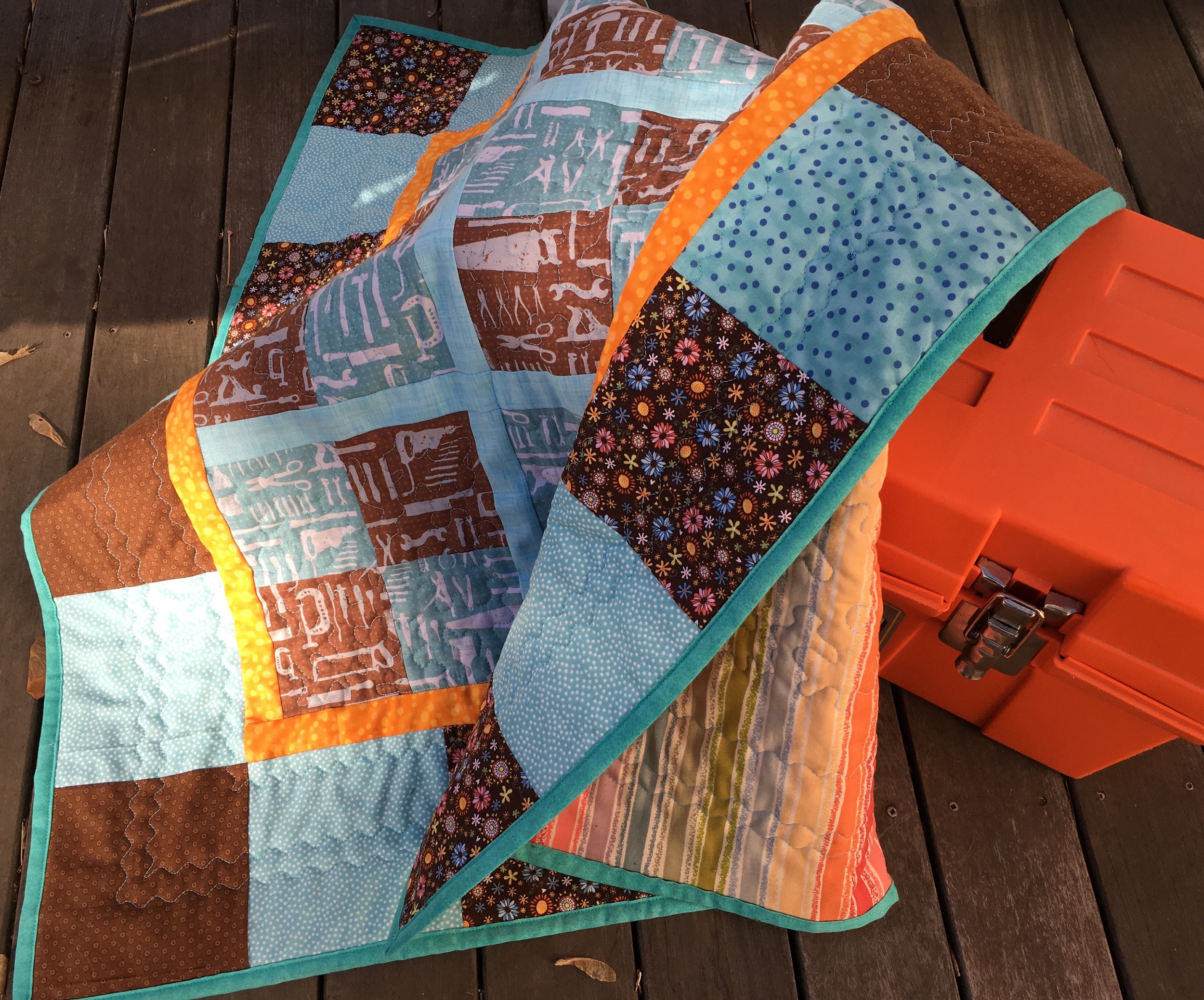
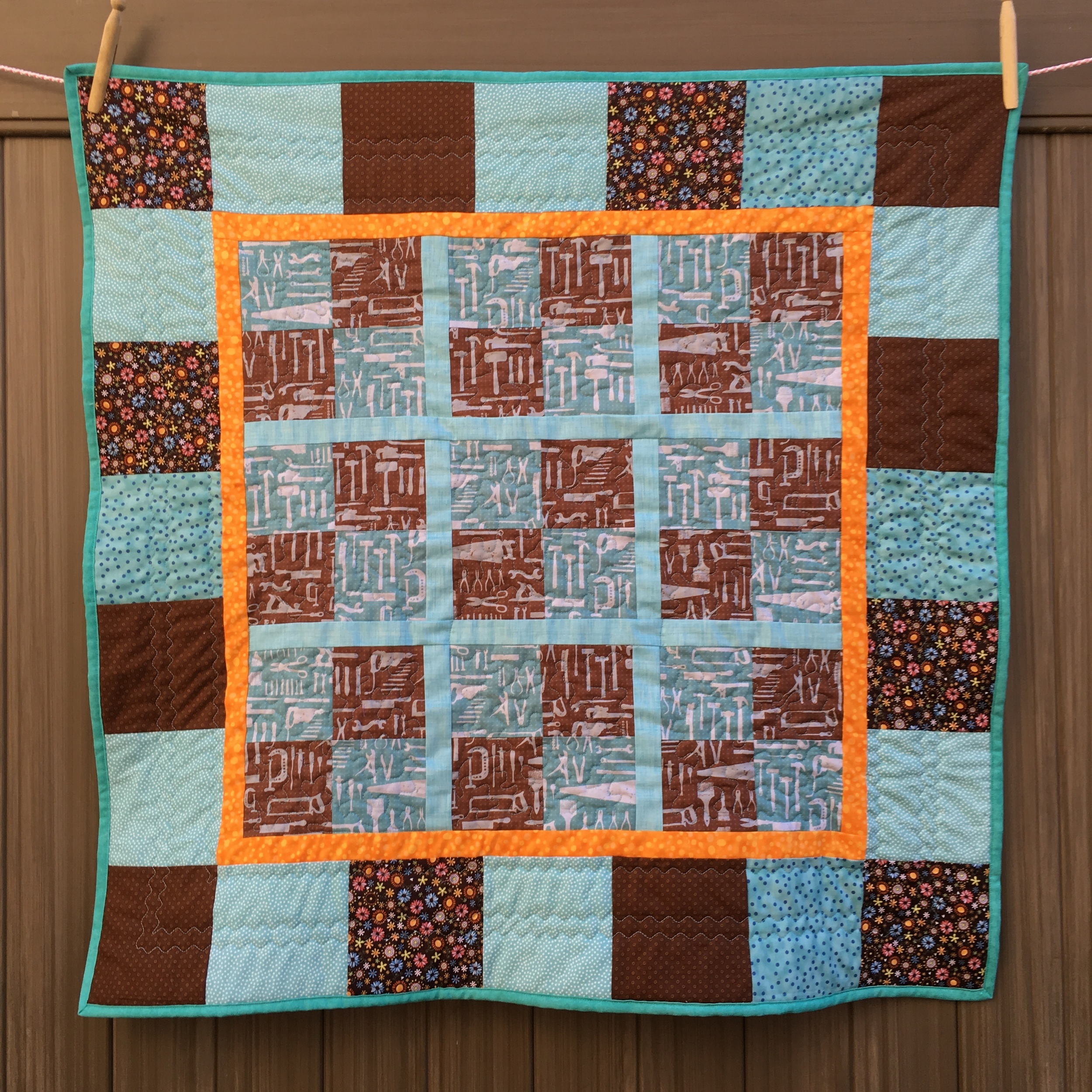
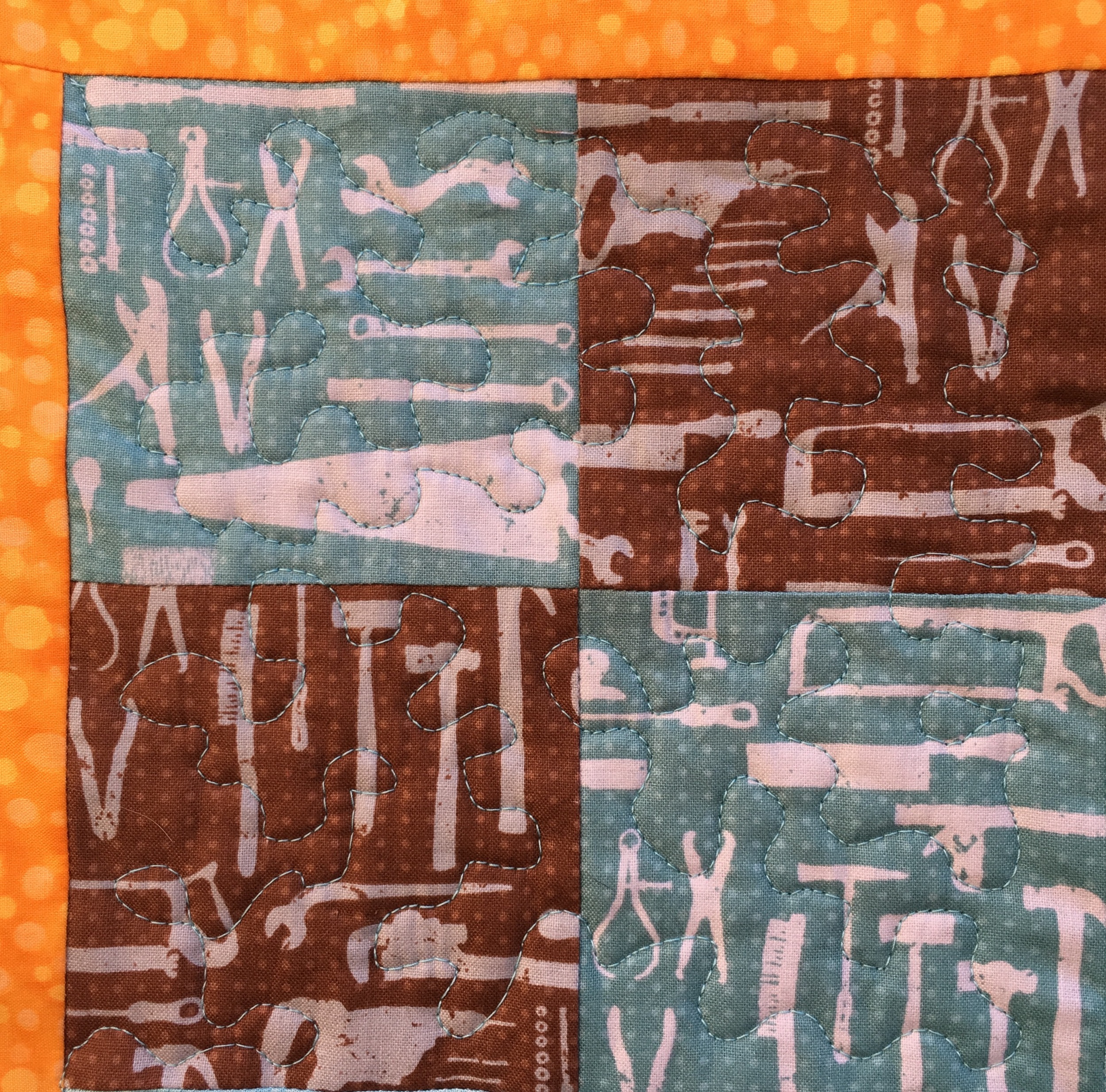
This is the guy's version of the Flower Box or Tool Box Wheelchair Quilt.  The Flower Box quilt can be seen in my post on November 16, 2015.  

The pattern for this quilt is at the bottom of this post.  It's a great scrappy quilt, using 36 4 x 4 inch squares!

This pattern is free for individual use and use by quilt guilds and other groups making quilts for people using wheelchairs.  It is NOT for commercial use.  Thanks!   Happy Sewing and Happy Sharing!

Quilt Wheelchair Toolbox square.jpg
Quilt Wheelchair Toolbox detail.jpg

Wheelchair Quilt: Flower Box or Tool Box 36 x 36 inches

Recommended sizes for wheelchair quilts are 36 x 36 inches to 36 x 40 inches. This pattern is ideal for using up fabric from your scrap bag.

Supplies:

• 36 squares, 4 x 4 inches (1/2 yard)

• 24 squares, 5 1⁄2 x 5 1⁄2 inches (3/4 yard)

• 6 sashing strips 1 1⁄2 x 7 1⁄2 inches (1/4 yard

for sashing strips)

• 2 sashing strips 1 1⁄2 x 23 1⁄2 inches

• 2 border strips 1 1⁄2 x 23 1⁄2 inches for outer

border (1/4 yard for border strips)

• 2 border strips 1 1⁄2 x 25 1⁄2 inches

• 4 strips 2 1⁄2 inch wide strips x width of fabric

for binding (1/2 yard)

• Backing 1 1⁄4 yard

• Quilt batting 40 x 40 inches

Directions:

1. Sew 12 4-patch blocks from the 36 4 x 4 inch squares by sewing 2 pairs of 2 squares. Press seams to one side. Sew each pair of squares together.

2. Sew a 1 1⁄2 x 7 1⁄2 inch sashing to the left side of 6 4-patch blocks.

3. Each strip in the center of the quilt is composed of 2 4-patch blocks with sashing and one without. Sew the 2 4-patch blocks with sashing together, keeping the sashing strips on the left side of the blocks. Attach the 4-patch block without a sashing strip.

4. Repeat for the other 2 rows.

5. Sew a 1 1⁄2 x 24 1⁄2 sashing strip to the bottom edge of 2 of the rows with 3 4-patch blocks and vertical sashing.

6. Sew the 3 rows of 4-patch blocks together. The top 2 rows will have sashing on the lower edge of the row. The bottom row doesn’t have a sashing strip.

7. The center of the quilt is now complete.

8. Sew border strips 1 1⁄2 x 23 1⁄2 strips to the 4 sides of the quilt center, trimming strips as needed to fit.

9. Sew 2 rows of 7 5 1⁄2 x 5 1⁄2 inch squares and 2 rows of 5

5 1⁄2 x 5 1⁄2 inch squares.

10. Sew the rows of 5 blocks to the top and bottom of the quilt, and the rows of 7 blocks to each side of the quilt.

11. Layer quilt top, batting and quilt backing. Quilt as desired.

12. Make the binding and attach it to the quilt!!

For a scrappier quilt: Piece a 23 1⁄2 x 23 1⁄2 inch slab for the center of the quilt. Then attach 1 1⁄2 inch inner border and outer border of 5 1⁄2 inch squares.

This pattern is free for use by quilt guilds and individuals. Not for commercial use.


TAGS: Wheelchair quilt pattern, Wheelchair quilt, Tool Box quilt, Flower Box Quilt, Free Wheelchair quilt pattern


January 1, 2015

Baby Quilt in a Weekend #2: "Giraffe Party!"

by Judy Tucker in Free Pattern


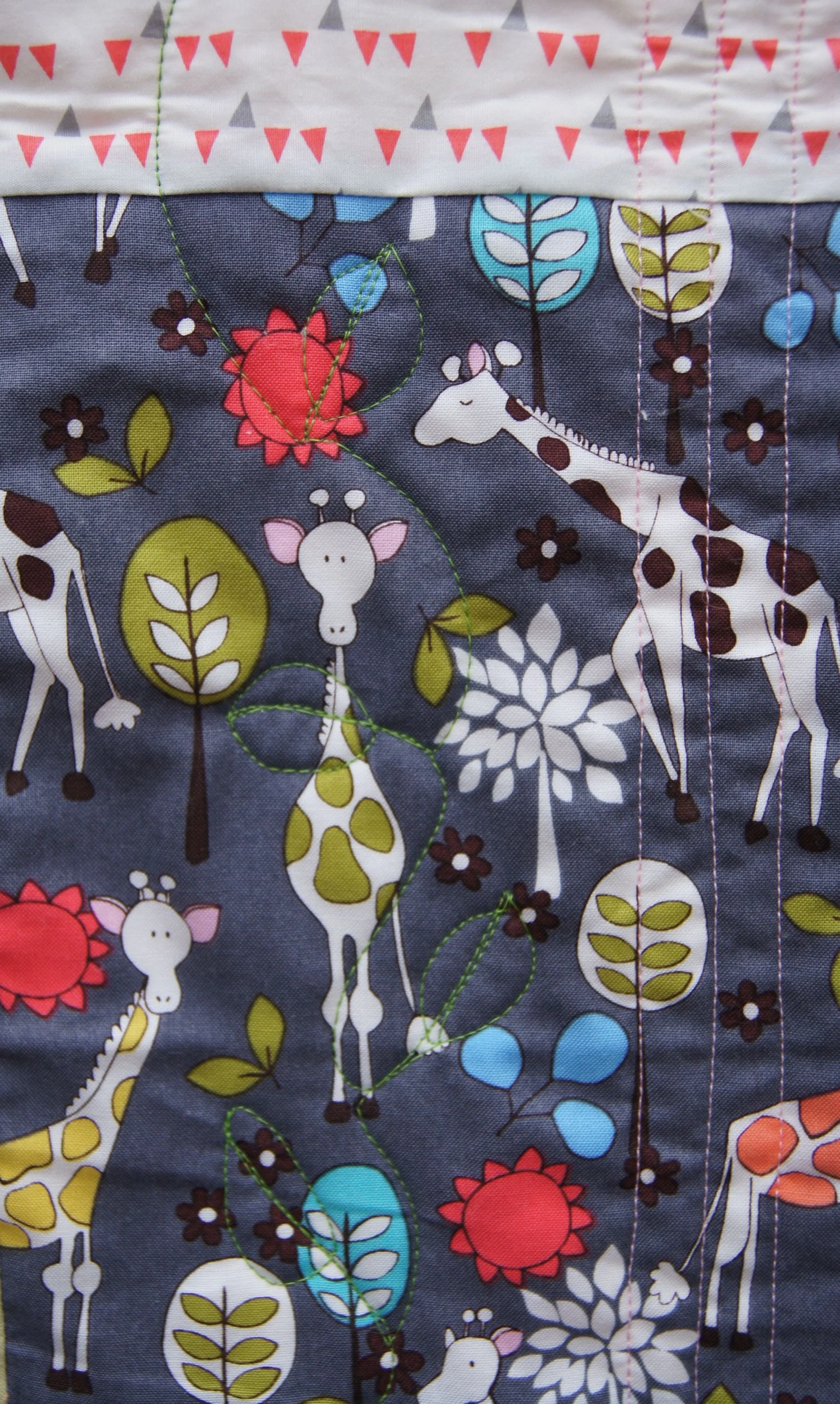
Quilting Detail on the focus fabric

Quilting Detail on the focus fabric

Quilting Detail on the focus fabric

Quilting Detail on the focus fabric

Happy New Year's!  Here's a baby quilt pattern to welcome in 2015. 

We've all had this happen...we need a baby quilt and we need it yesterday!   Here is the 2nd in a series of Baby Quilts in a Weekend.  With a bit of diligence, this quilt can be completed in just 2 days.  The dishes may not get washed but the quilt will be finished and ready to wrap! 

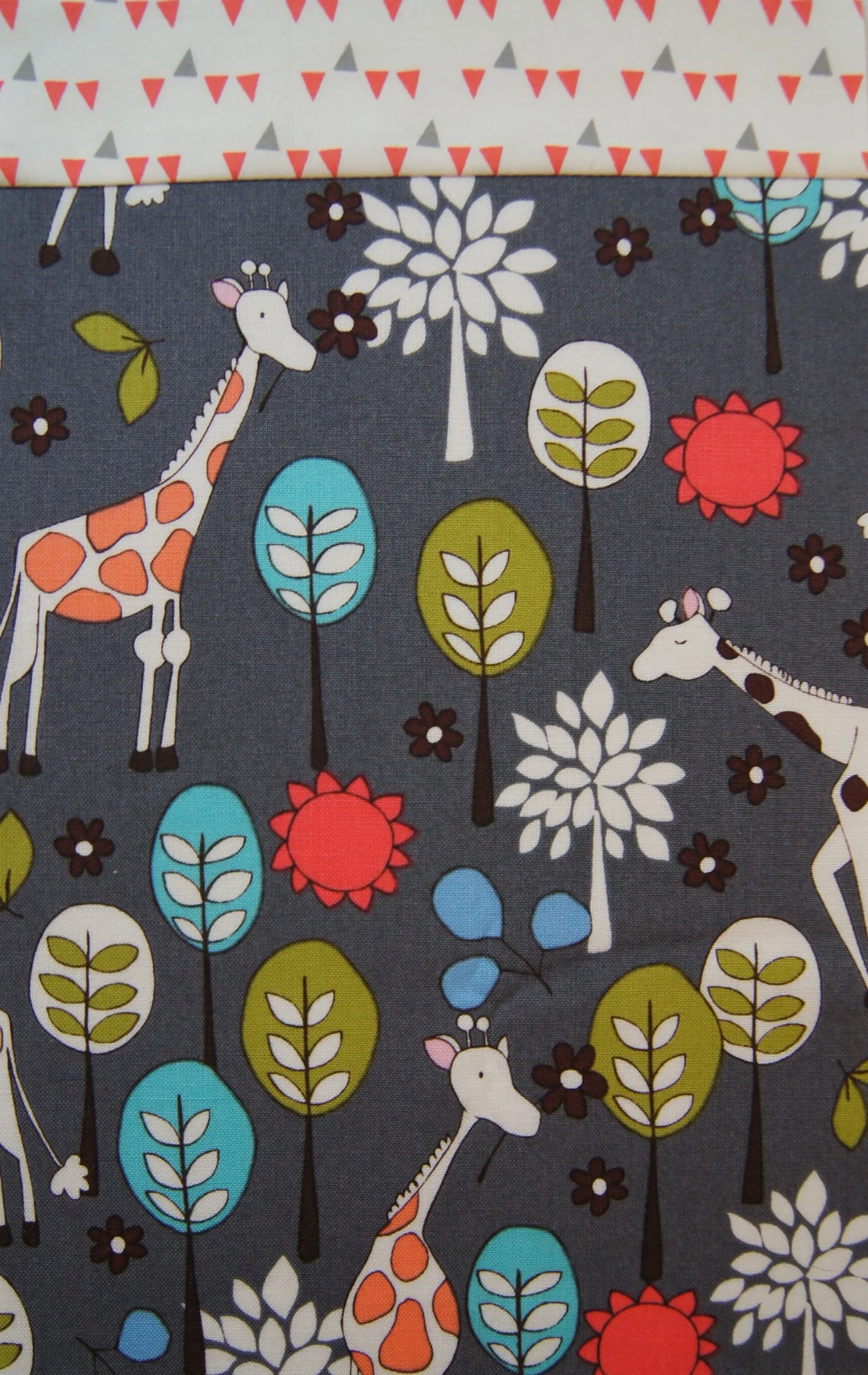
I've had this the giraffe fabric in my stash for several years.  I found it on a excursion to Keepsake Quilting, long before grey had become a hot color for baby's rooms.  The fabric was so unique.  I knew that it would make a cute baby quilt for the right family some day. 

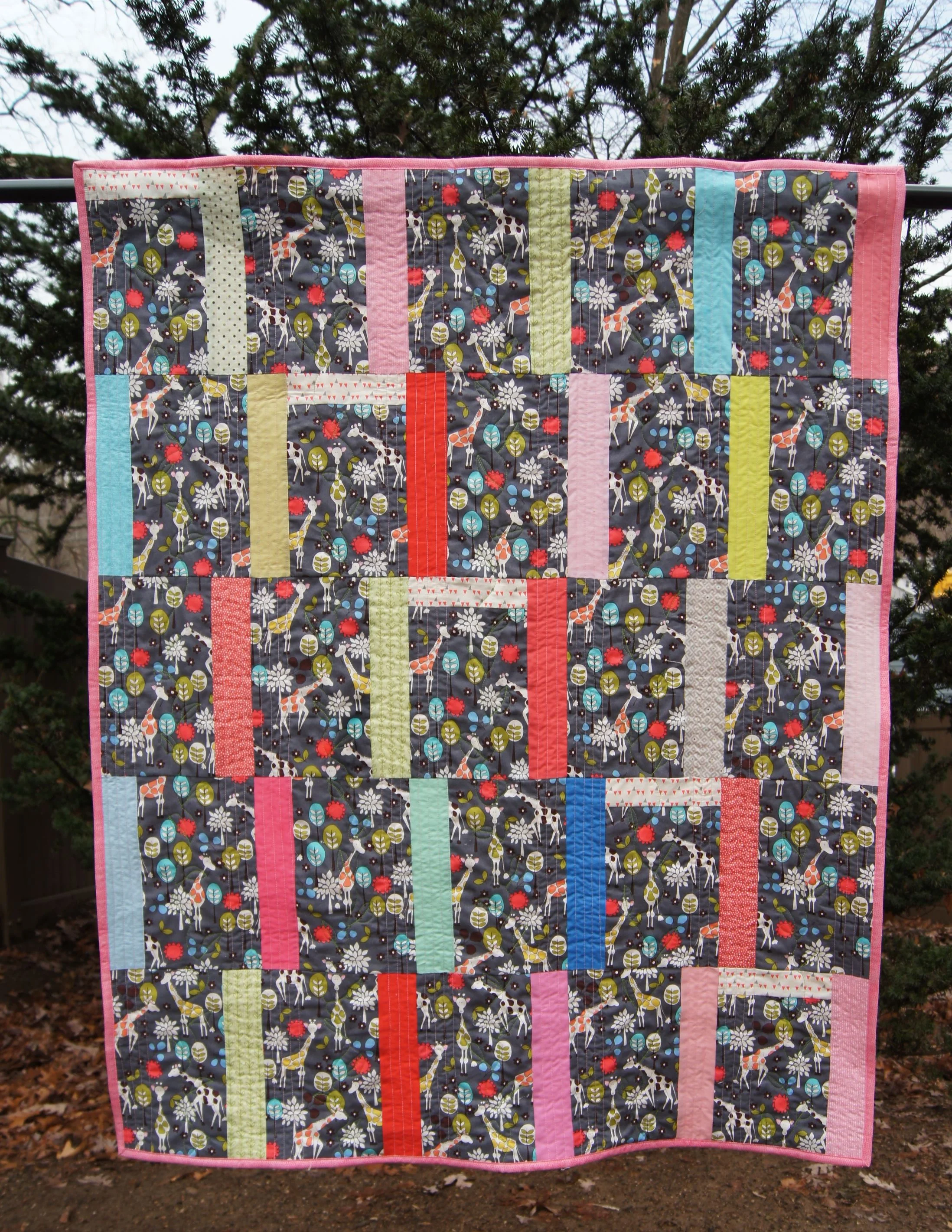
Because there are giraffes in the focus fabric, I wanted everything about the quilt to be T-A-L-L!  The blocks are tall and the quilting design is vertical.

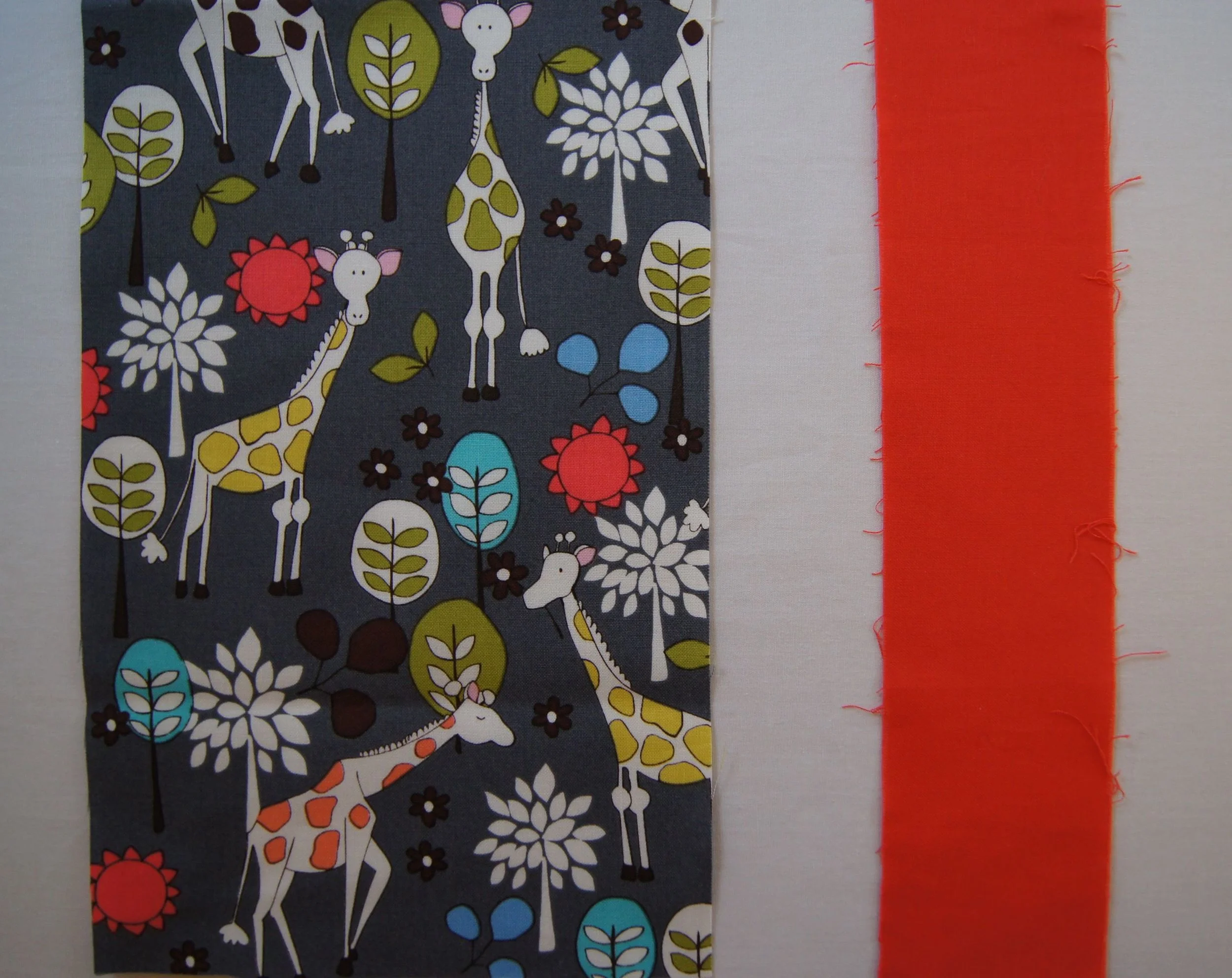
The quilt blocks are simple rectangles with a 2 1/2 inch strip of Kona cotton used as an accent color.

Block of the focus fabric with the strip of accent fabric, ready for sewing

Block of the focus fabric with the strip of accent fabric, ready for sewing

The colored strips are on opposite sides of the focus fabric in each horizontal row.  Row 1 has the strips on the right, Row 2 has them on the left.  There are 5 rows in the quilt, so there are an uneven number of right and left blocks.

The mother of the baby receiving this quilt loves celebrations. I had some fabric with tiny peach and grey pennants which matched the focus fabric. I added to to the top of one block in each row of the quilt.  They are the reason why this quilt is named "Giraffe Party"!    
 

While I love the strips with the pennants on individual blocks, and while I really did want them in this quilt, I won't use them when I make this pattern again.  I think the white strips running down the quilt in a stair-step pattern detracts from the verticality of the quilt's design.  I think the quilt is a lot more interesting in use than it is hanging up for a photograph.

Giraffe Party!  40 x 50 inches

Giraffe Party!  40 x 50 inches

I did part of the quilting with my walking foot and part by free motion quilting. All the quilting is vertical, running from top to bottom of the quilt. 

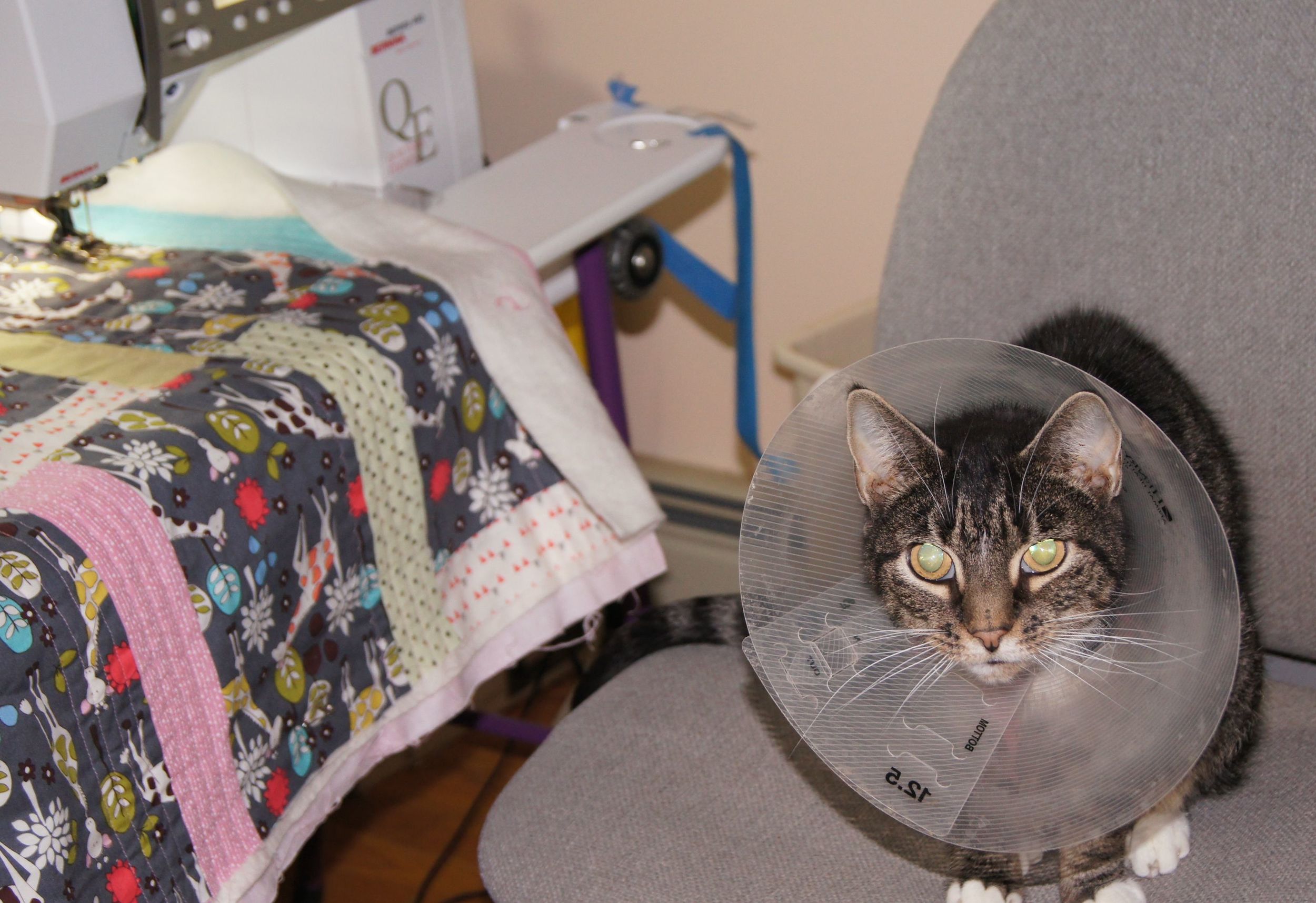
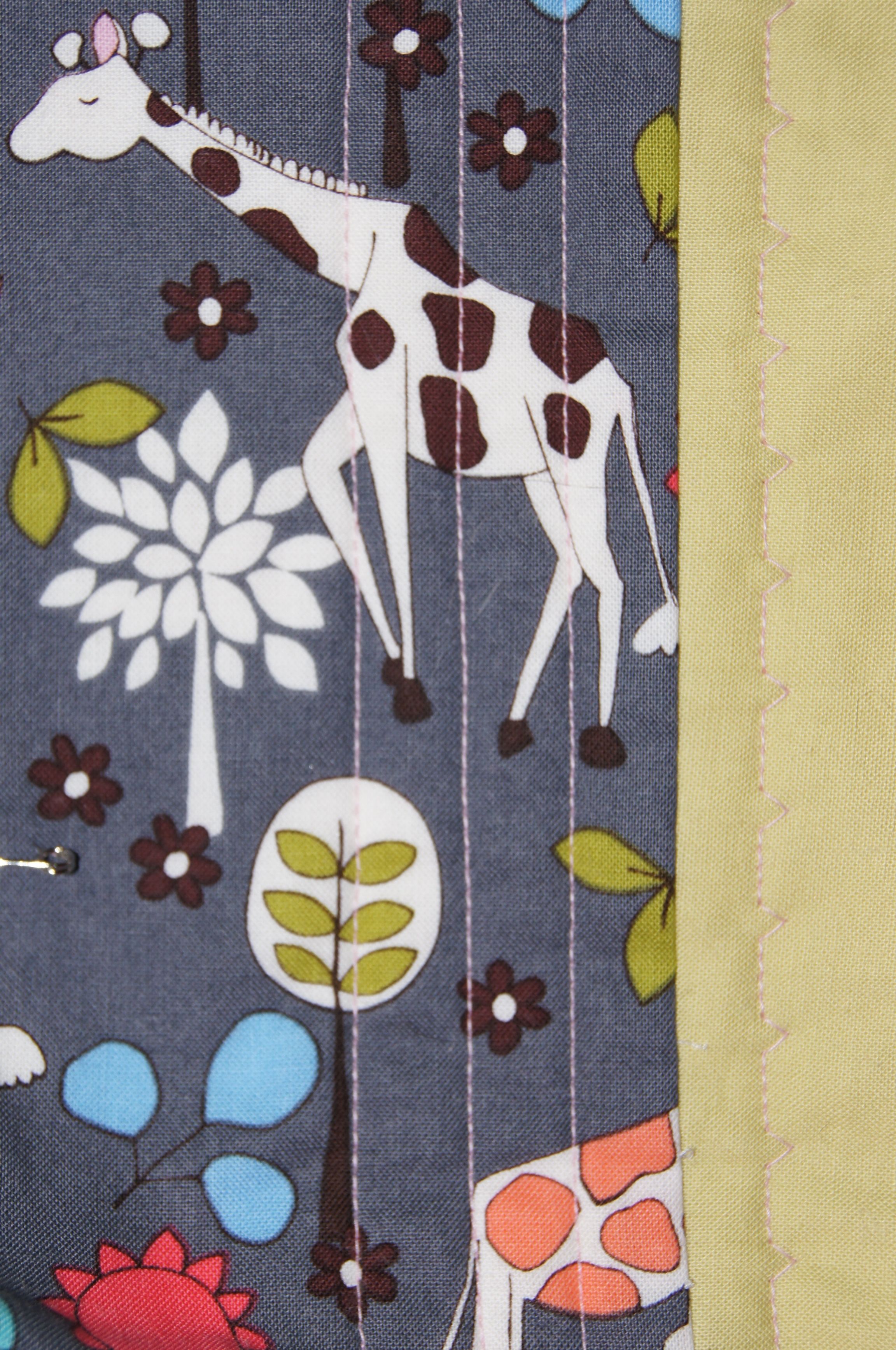
My cat, Chester, had had surgery the week I was working on this quilt. He came to sit beside me on my chair while I was doing the quilting. It's always a tight fit when he does this, but even tighter due to the Elizabethan Collar he was wearing. (The collar kept him from reaching, and removing the stitches at the surgical site).   At one point he must have leaned forward bumped one of the stitch choice buttons on the front of my machine.  I was quite surprised when I reached the end of my row and realized that Chester had made a design change (a hemming stitch) without my permission!  I got a good chuckle about his creativity and then did a bit of un-sewing!

Quilt Giraffe Party Chester with e-collar.jpg
Quilt Giraffe Party Chester's choice of pattern.jpg

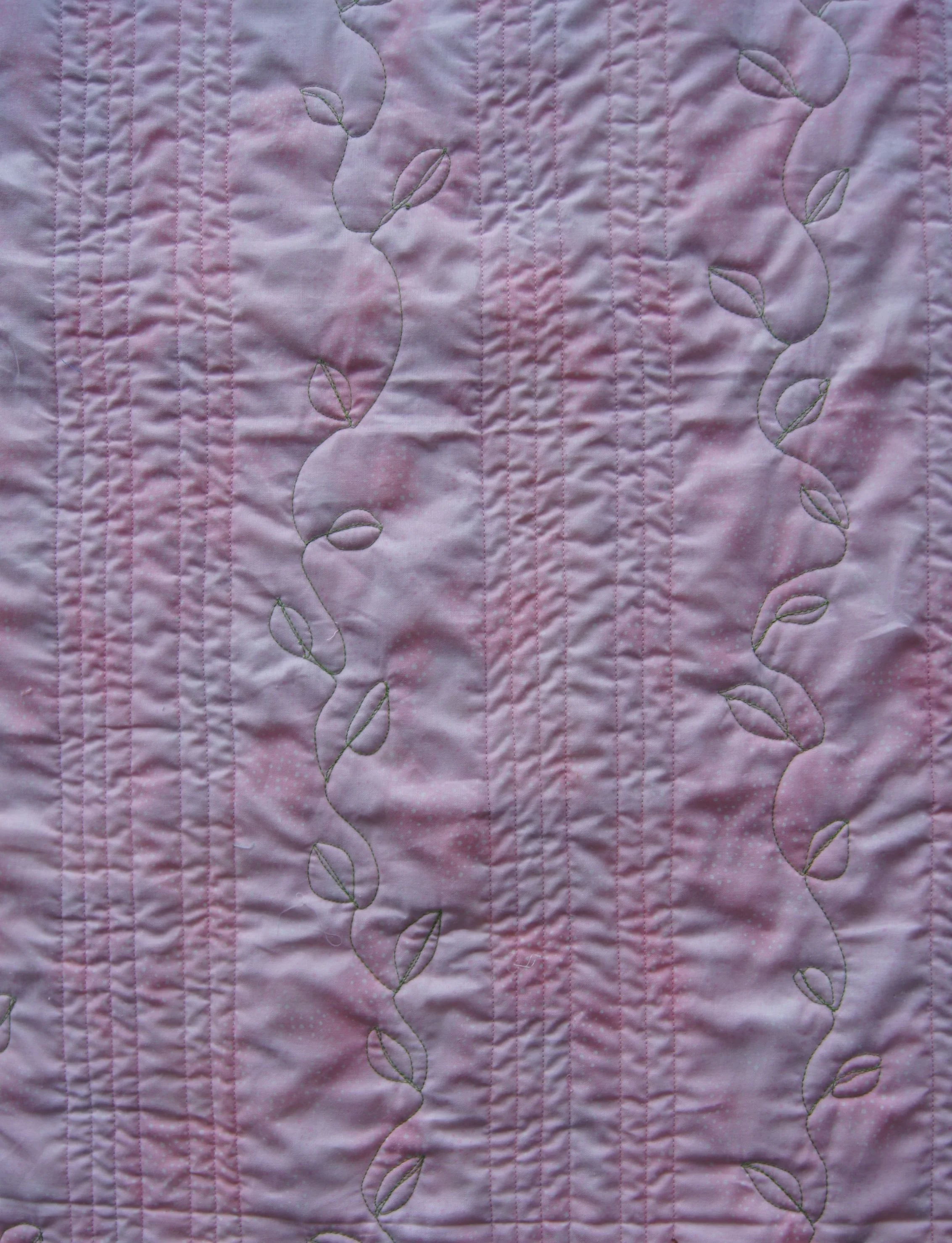
The basic quilting is straight lines with varying numbers of parallel lines and varying distance between some of the adjacent lines.  I chose to do a vine and leaf free motion design through the center of the blocks of focus fabric, seen in the photo at the top of this post. When you flip the quilt over to the back, it looks like a whole cloth quilt design. It's really beautiful, making this quilt truly reversible. 

Quilting on the back of the quilt

Quilting on the back of the quilt

To make this quilt:

Yardage:

  • Focus fabric: 1 1/2 yards
  • Assorted solid color strips: 25 strips 2 1/2 inches x 10 1/2 inches (3/4 yard if the solid color strips are to be all the same color)
  • Binding:  1/2 yard
  • Backing: 1 3/4 yards
  • 1 crib size quilt batting  45 x 60 inches

Instructions:

  1. Cut 25 blocks 6 1/2 inches wide x 10 1/2 inches long from the focus fabric
  2. Sew a 2 1/2 inch x 10 1/2 inch strip of the solid color fabric to the RIGHT side of 15 of the focus fabric rectangles
  3. Sew a 2 1/2 inch x 10 1/2 inch strip of the solid color fabrics to the LEFT side of the remaining 10 focus fabric rectangles.
  4. Sew the quilt together in horizontal rows--5 blocks to each row, starting with blocks with the colored strip on the RIGHT side of the block.  In row 2 the colored strips will be on the LEFT side of the block.
  5. Sew the 5 completed rows together to finish the quilt top.
  6. Sandwich the quilt top, quilt batting and backing fabric and quilt as desired. 
  7. Cut 5  strips of the binding fabric,  2 1/2 inches x Width of fabric (40 inches).  Sew strips together to make the binding. Fold the binding in half across the 2 1/2 width and press.  Attach binding to your quilt. 
  8. Add a label!  You're done!


TAGS: Baby Quilt in a Weekend, Giraffe Party!, Free motion Quilting, Walking Foot quilting, Quilt Pattern, Baby quilt


Powered by Squarespace 7